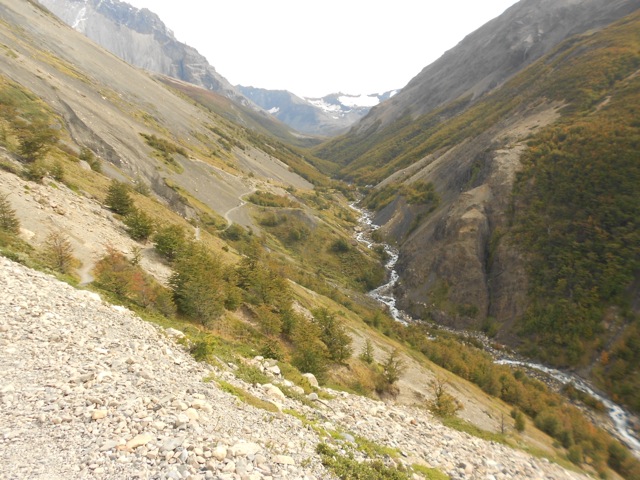
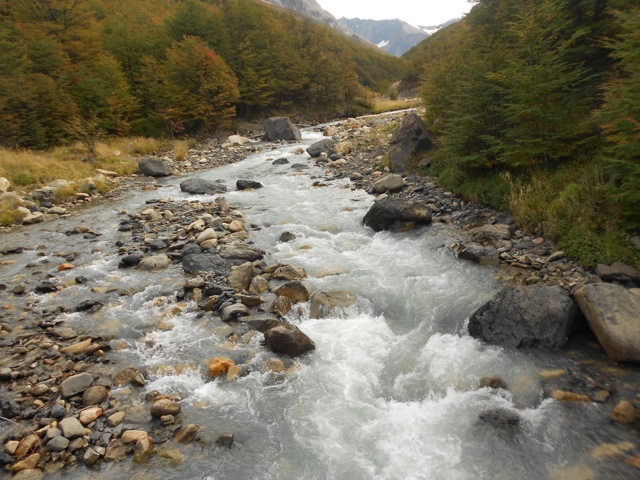
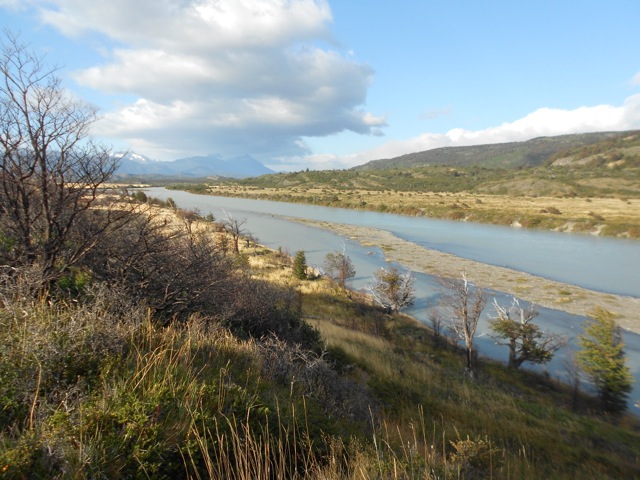
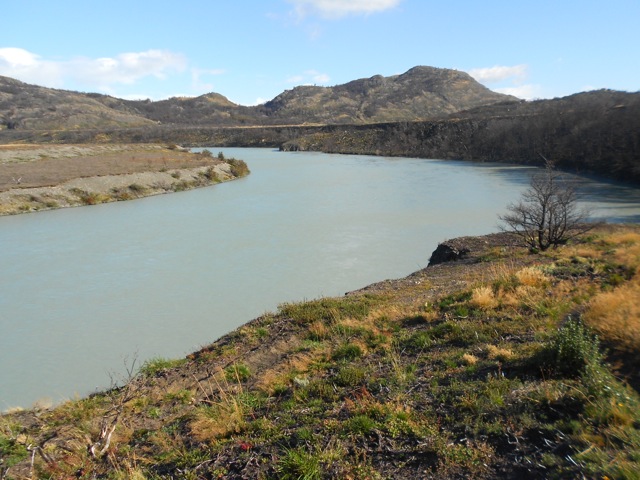
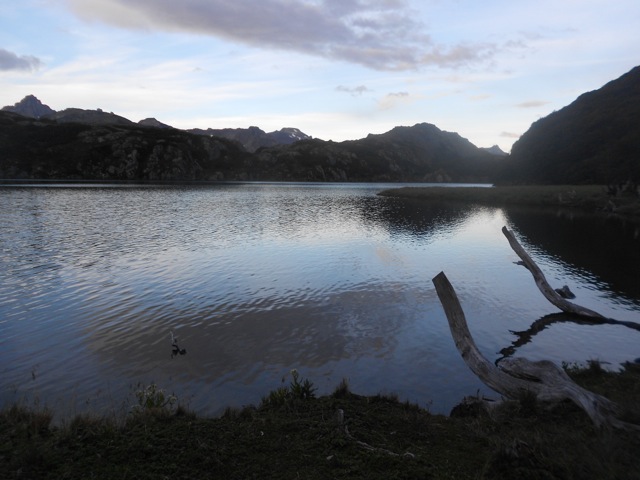
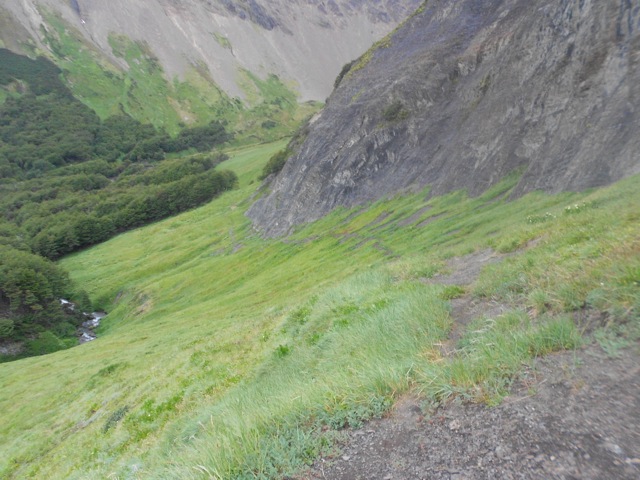
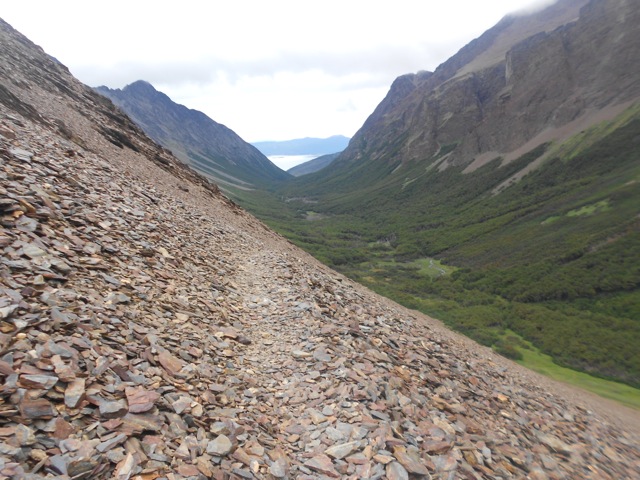
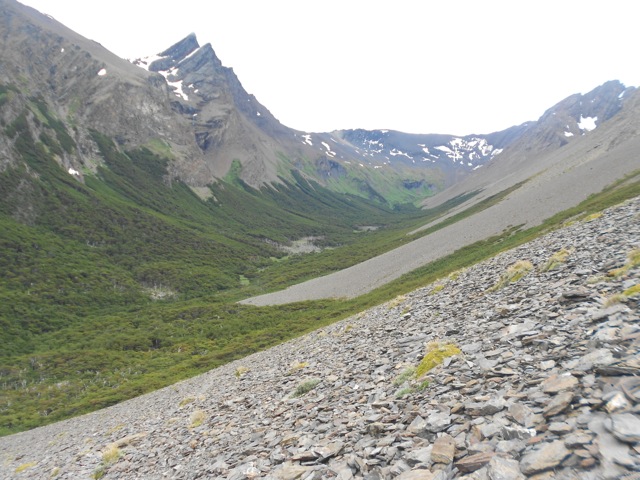
Category Archives: Hike

Parque Nacional Torres del Paine – Days 5, 6 and 7

Day 5 – Campamento Los Torres to Campamento Seron

While most people climbed to see the towers, I slept in. Then as they began to return, I headed out of camp. The trip back down the mountain is far easier than the walk up, plus I was fresher than yesterday. I stopped for a brief break at Chileno, then climbed the hill to where my trail yesterday met the main trail. I took a break before heading down, aiming for Hotel Los Torres at the bottom. With good poles, the trip down was easy and I passed many day walkers going the there way.
wpid-dscn1971-2013-04-6-17-09.jpg

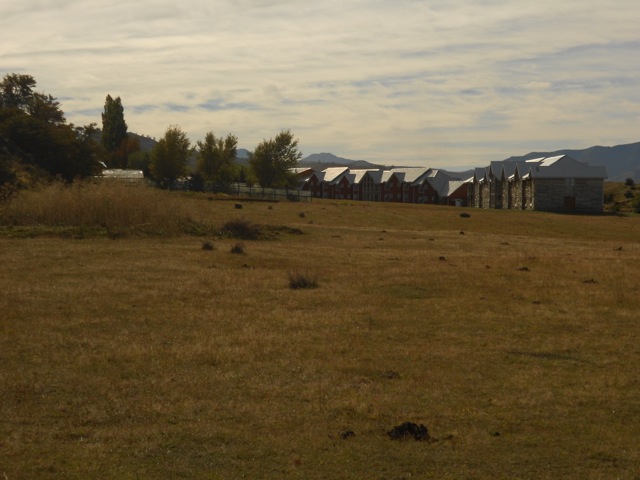
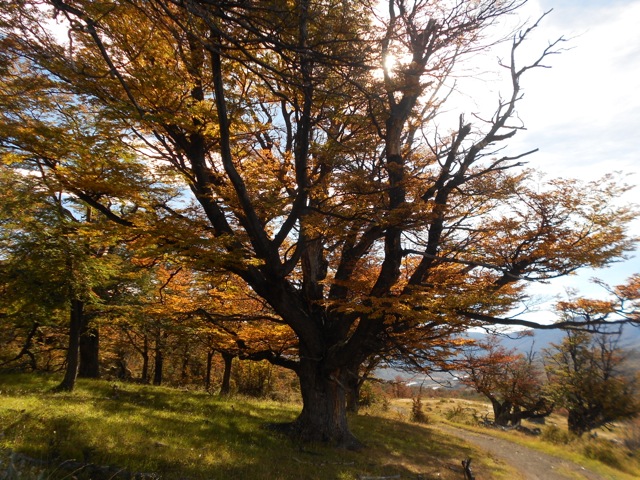
The Hotel is extravagant, some calling it an eyesore, and there are a set of refugios not far from it for hikers to stay. I stopped for a coke, then headed on. From here on, I’m officially on the back of the park and there are less people. In fact, the only person I see until I reach camp is a man running – yes running – the other way early on. The trail led up a hill along a fence and through a forest of autumn colours on a 4WD track.
wpid-dscn1976-2013-04-6-17-09.jpg

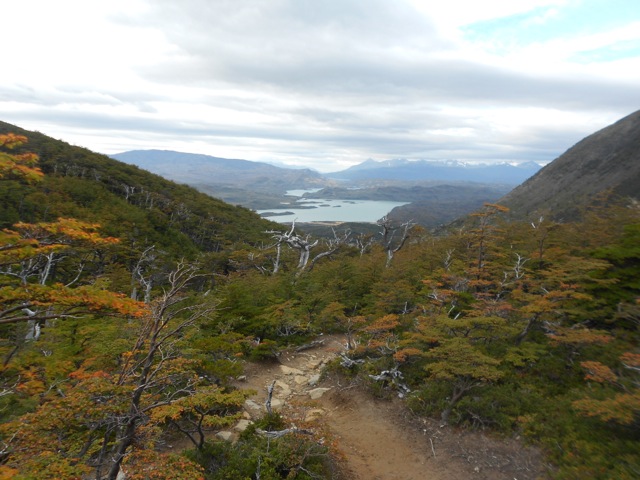
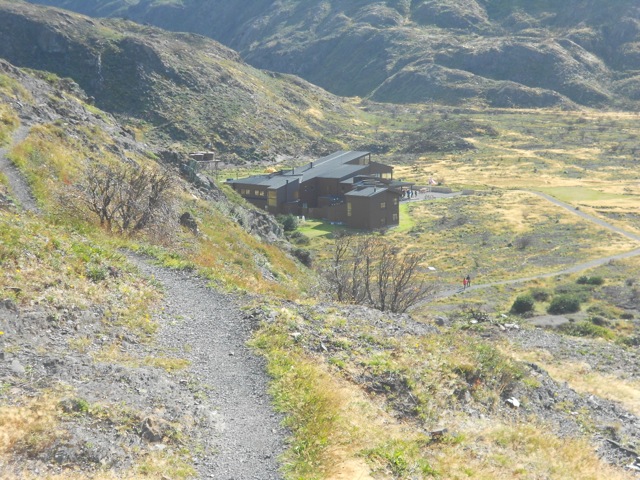
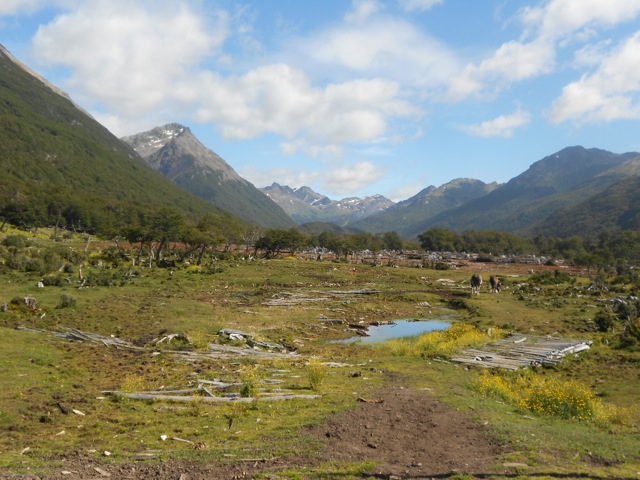
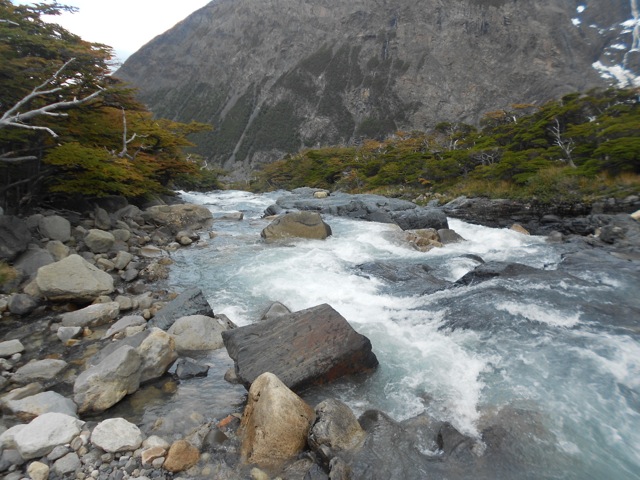
It reminded me very much of walking in Australia. As I came down the hill an hour later in the hot beaming sunlight, I could see the beautiful yellow plains with Rio Paine weaving its blue green way through it. I could also see the shining roof of the camp building.
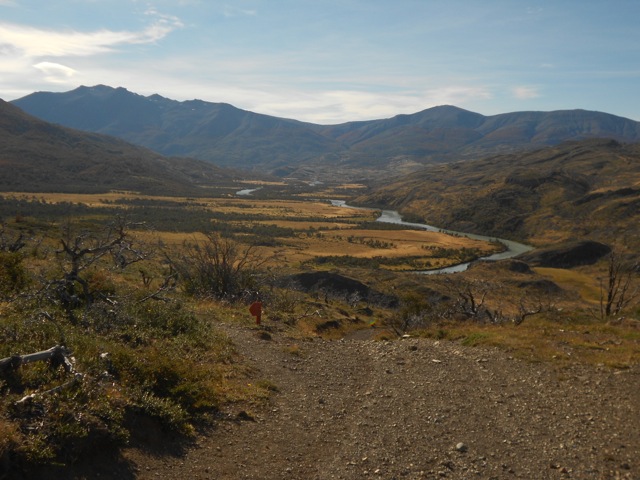
wpid-dscn1980-2013-04-6-17-09.jpg

I arrived on the plains and while it doesn’t look long, the walk just seemed to go on and on, mainly because there was little change in scenery and I was expectant of finding the camp after my long day of walking in the sun.
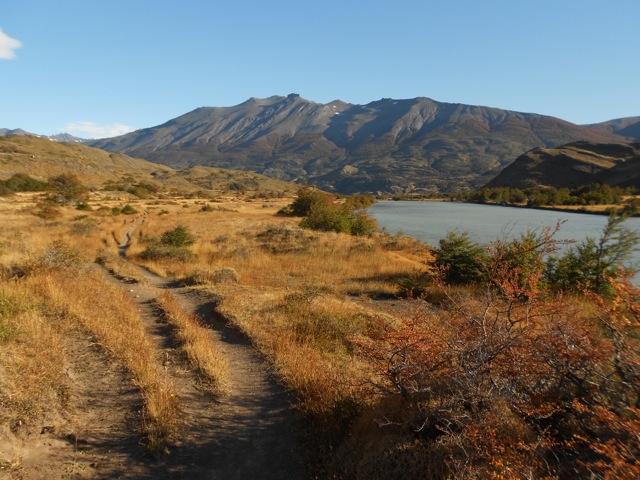
wpid-dscn1985-2013-04-6-17-09.jpg

Eventually I arrived at camp to find 5 other walkers already camping, today being their first day. It would seem that my little group of five is growing.

I set up camp and met my new travelling companions.

Day 6 – Campamento Seron to Refugio Dickson

The night was warm and I was woken at one point by a rabbit who must have mistaken my green tent for the grass in the moonlight; I heard it bounce off and go bounding away. Then later in the morning a puma was sighted in the field, but not by me. Gusts of warm wind began buffeting my tent as I began to get ready for the day, a vast difference to the cold winds of days past.

wpid-dscn1986-2013-04-6-17-09.jpg

The trail followed the river around initially on the plains, but quickly began rising into the hills and up the side of one particularly tall hill. At the top, the wind was gusting so heavily it was hard to walk, but we got a great view of Lago Paine with Rio Paine winding into the distance.
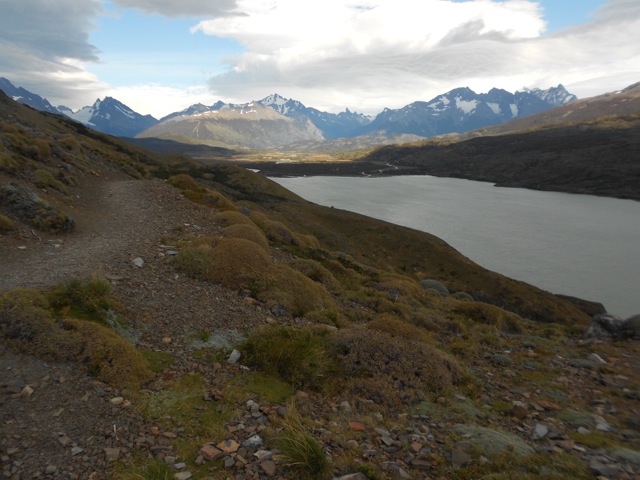
wpid-dscn1989-2013-04-6-17-09.jpg

Angry clouds rolled past the tall mountains at the other end of the valley, making odd shapes as they crossed the peaks, thankfully not heading towards us.
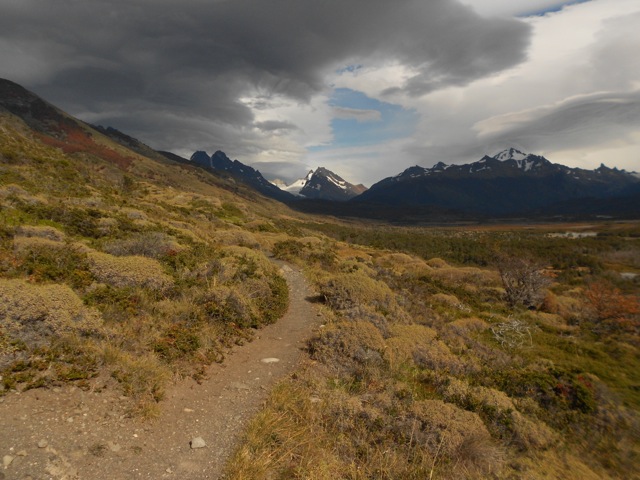
wpid-dscn1992-2013-04-6-17-09.jpg

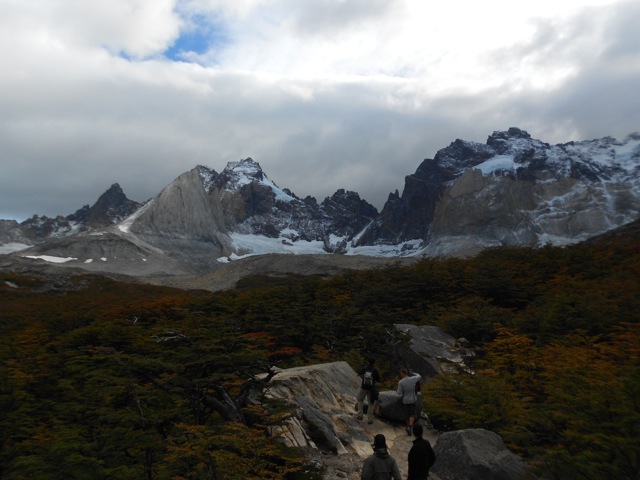
We continued across the wind blasted hilltops before weaving our way along the side of the mountains at the edge of the plains. These mountains are the back of those we got close and personal with on the other side of the park. They look vastly different from here.

As we walked, the Patagonian Ice Field came into view at one end of the mountains, reminding me of my Antarctic trip not two weeks ago now. This was truly an unexpected and fantastic sight.

wpid-dscn2006-2013-04-6-17-09.jpg

We walked on and at the end of the plains we crossed a muddy valley and came to a sign that said ’45 minutes to camp’. After a rest, we continued, crossing beams of wood that had been placed to help us not get so mud soaked. We climbed a final hill and saw Refugio Dickson sitting at the end of a flat peninsula jutting into Lago Dickson, and a river wending past it.

wpid-dscn1999-2013-04-6-17-09.jpg

It was about here that the slight rain started. We crossed the hill and after a steep climb down, we made our way to the Refugio, where over a beer we stopped to wait out the rain. We then hurriedly erected our tents and went back to the refugio where the cook was hand making a meat and egg pie. It looked so delicious that I decided to sit in on the meal. It turned out to be an excellent decision.

Day 7 – Refugio Dickson to Campamento Los Perros

During the night it had been warm and I’d stripped off most my night clothes off. But at some point in the night there was a change and I got very cold, having to put everything on again and I still wasn’t warm. There was frost on the ground outside when I emerged. But along with the frost came blue skies and wispy white clouds.

Today’s an easy walk of only 9km and slightly up hill through a forest. Being short serves nicely as a warmup for tomorrow’s hard climb up and over Paso John Gardner.

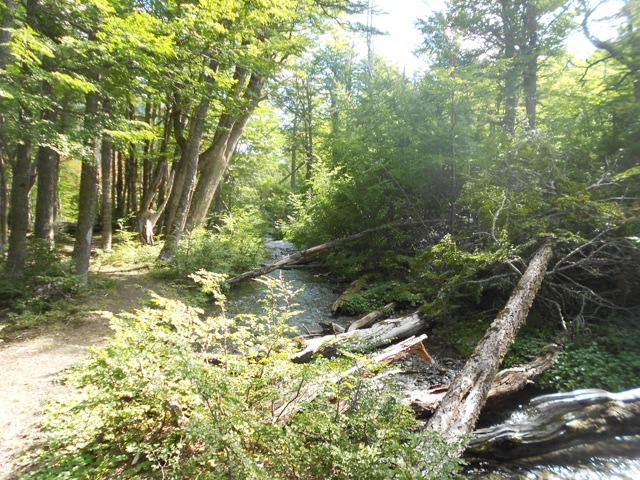
We began walking around the hill that we’d climbed down last night in the rain and began the slow climb into the forest towards the most obvious pass through the mountains. At one point we came to a small rocky area which allowed us awesome views back to the ice field, then it was back into the trees. We climbed for most of the morning, vaguely following Rio Los Perros. The trail meandered through the forest before going around a large patch of the red moss I’d seen in Tierra del Fuego on the Paso de la Oveja hike.
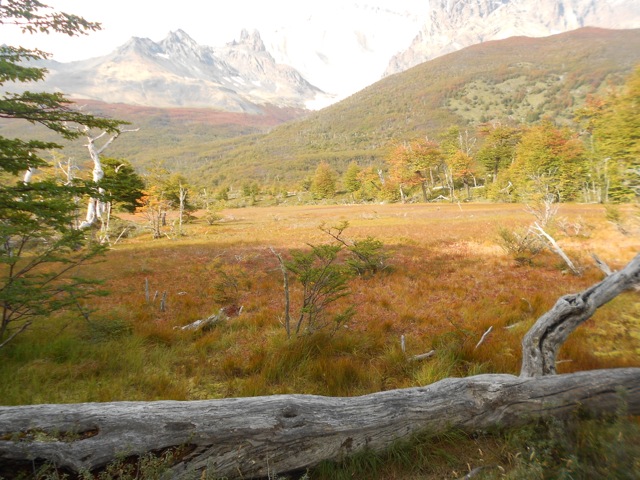
wpid-dscn2008-2013-04-6-17-09.jpg

The trail then went down the hill to a bridge crossing a stream that fed into the river. After walking for a while we soon came to a waterfall…
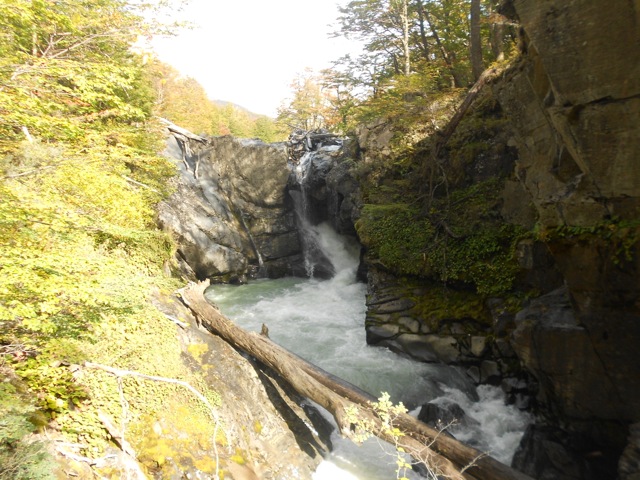
wpid-dscn2011-2013-04-6-17-09.jpg

…where the Rio fed down into a narrow channel.
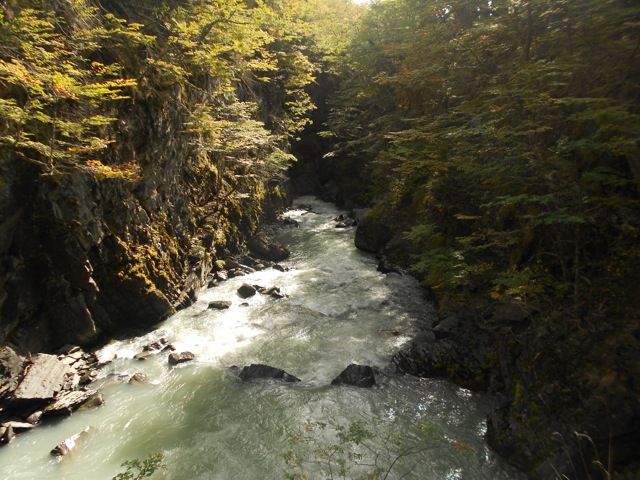
wpid-dscn2012-2013-04-6-17-09.jpg

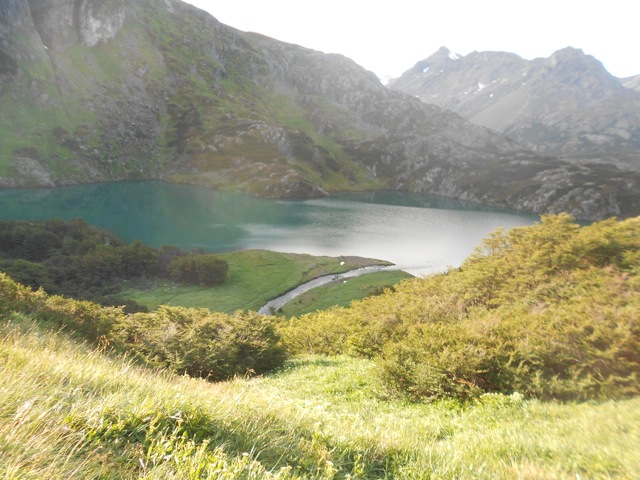
We stopped for a look and a break before charging on. The forest flattened out and I somehow managed to leave my companion behind. An hour passed and before I knew it I’d crossed a pair of bridges and was out of the forest and climbing up a field of rock towards the Galcier Los Perros. After a stiff climb, zig zagging up the slope, I eventually arrived at the top and looked down across the glacier lake to the glacier itself.
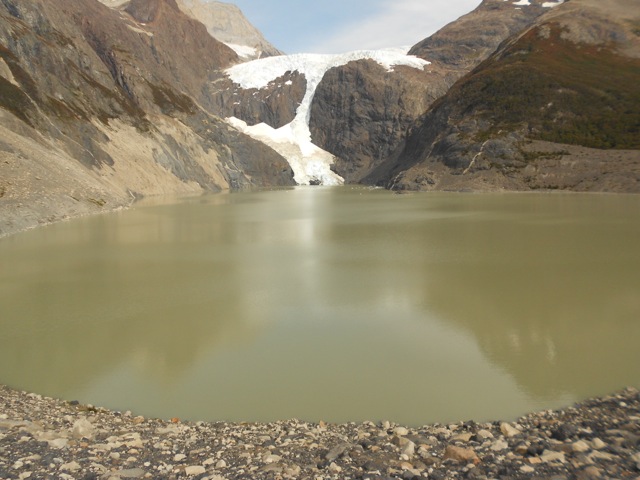
wpid-dscn2021-2013-04-6-17-09.jpg

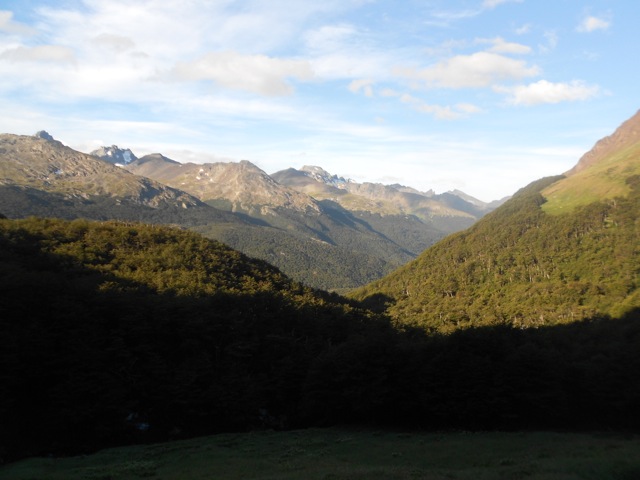
The view back down the valley where I’d come was just as impressive.

wpid-dscn2018-2013-04-6-17-09.jpg

From here it was another 20 min walk picking my way around the lake and across another rocky field before entering the forest to arrive at Campamento Los Perros.

The Lone Trail Wanderer
Parque Nacional Torres del Paine – Days 3 and 4

Day 3 – Campamento Italiano to Refugio Los Cuernos

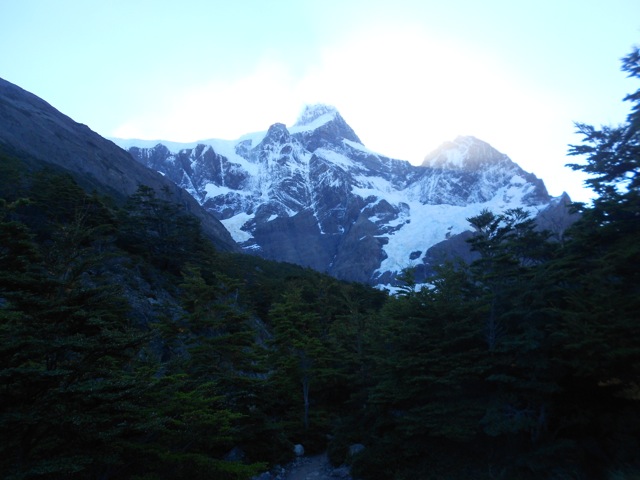
Most of today will be spent climbing along the length of Valle del Frances. French Valley is the central park of the W and is a fairly rocky climb all the way to the top. The good thing about the valley is you must come back the same way meaning there’s no need to carry your pack. So with a day pack and some water we headed off up the valley. The climb is fairly strenuous, starting out by climb up through the forest alongside the glacier where every now and again a loud thunderous crack would announce another piece of ice falling from it.

The trail followed Rio del Frances up to a large tarn at the base of the glacier previously unseen. After crossing a gully with a small waterfall, the terrain grew rockier and headed further up the side of the river which was crashing down across the rocks.

wpid-dscn1872-2013-04-6-11-57.jpg

Looking back, the plains below started to open up and we could see the lagos at the base of the mountains.

wpid-dscn1870-2013-04-6-11-57.jpg

The trail headed into the forest again, this time steeper.
After a while, we popped out at an open rocky area and looked to to see we were surrounded by mountains. The view here was amazing in all directions. Ten minutes further on we arrived at the closed Campamento Britanico. We pushed on further for ten minutes to arrive at the mirador, a small peak set in the middle of the mountains.

wpid-dscn1885-2013-04-6-11-57.jpg

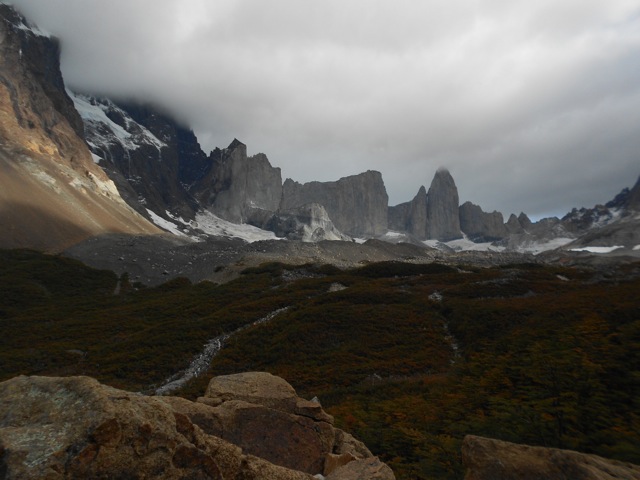
Standing on the peak, it felt like we were standing on the tongue of the mountains surrounded by teeth with the molars behind us to the jagged incisors ahead of us. Unfortunately no picture could truly capture the sense of being surround by these peaks.

wpid-dscn1884-2013-04-6-11-57.jpg

There was a sign telling us that we had reached the end of the mountain trail with a rather obvious trail going beyond it. My companion and I followed it for a while to another rubbly peak a little higher.

It took us about an hour to make our way back down again. Back at camp, we packed up and headed on to Refugio Cuernos. This next Refugio is the most expensive of the Parque Nacional and my companion decided to walk on to the next camp beyond it instead of paying the price – another 5 hours walk – so I walked on alone. The rest of the trail wasn’t too difficult, along the edge of Lago Nordernskjold.

wpid-dscn1920-2013-04-6-11-57.jpg

I crossed a pair of hills before arriving at the Refugio Los Cuernos where they had platforms available to pitch tents upon. The wind was too strong to use my camp stove, so I opted for dinner at the refugio, but for the amount I paid it wasn’t that great. As darkness fell, I headed to bed with the hardest part of the W ahead of me.

Day 4 – Refugio Y Campamento Los Cuernos to Campamento Los Torres

Overnight the sky cleared and the full moon was bright in the sky. Camping on platforms among trees sheltered my tent from the slight wind. I’d expected rain overnight too but none came and today I’m greeted by a slightly cloudy day. The weather has been great so far, thankfully.

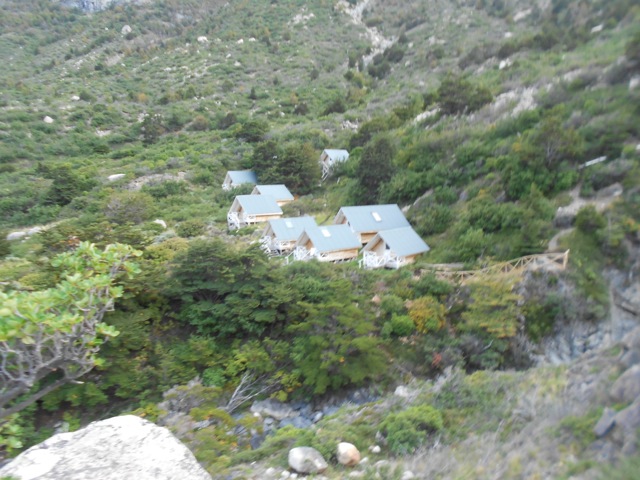
I headed out of camp and up a hill, looking back across the refugio and the small chalets that are part of it.

wpid-dscn1909-2013-04-6-11-57.jpg

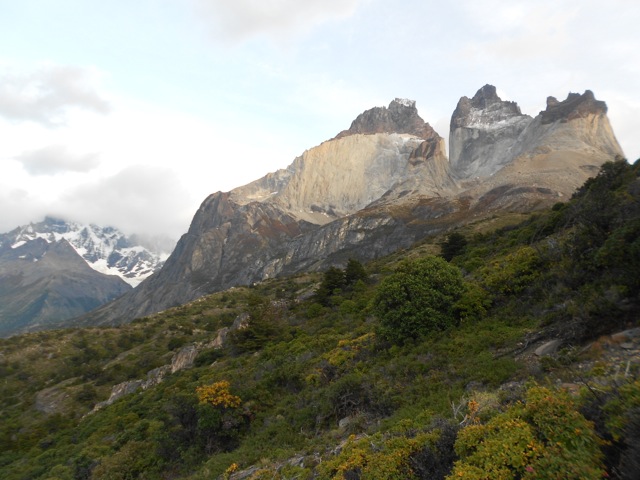
My morning was spent walking up and down slight hills as I worked my way alongside Lago Nordenskjold and under the peaks of Cuernos del Paine.
wpid-dscn1917-2013-04-6-11-57.jpg

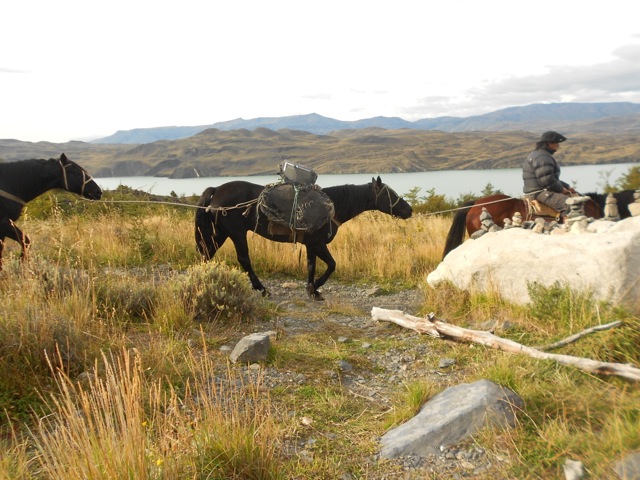
At the top of some of the hills there are good views of the lake in both directions. The trail plodded on and I had to step aside on occasion for a train of horses heading one way or the other along the trail.

wpid-dscn1929-2013-04-6-11-57.jpg

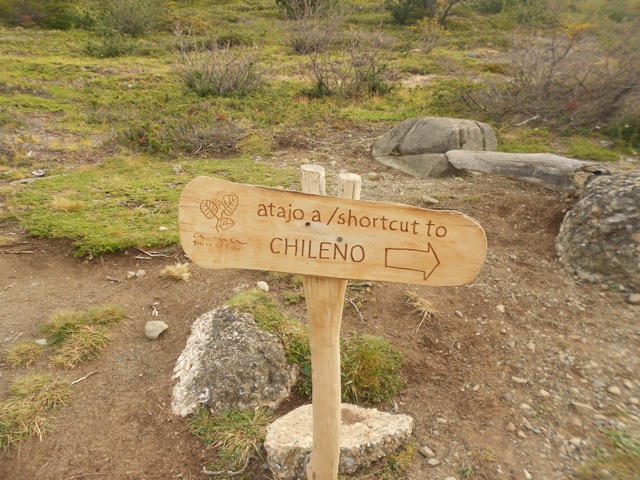
We have been told of a shortcut and I came to the sign about three quarters of the way to Hotel Los Torres and followed it.

wpid-dscn1931-2013-04-6-11-57.jpg

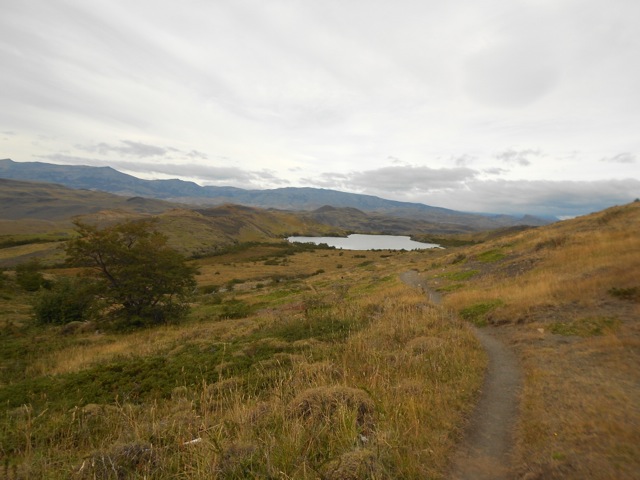
It seemed to run parallel to the other trail for a while then began climbing the hill towards Refugio Chileno. The terrain changed as I walked, from the yellow grass into flowing green grasslands. I looked back to see a small lake.

wpid-dscn1936-2013-04-6-11-57.jpg

The climb isn’t steep, but it climbs steadily, which can be worse. Thankfully there is the occasional flat area giving some respite. Soon the path connects with the one coming from the Hotel Los Torres, the path changes and there are more day walkers. There’s a short steep climb before it heads down equally steeply towards Chileno, just visible where the river meets the forest.

wpid-dscn1941-2013-04-6-11-57.jpg

The refugio is now closed for the season but it’s still a good place to stop for lunch. I crossed the river and dropped my pack at a picnic table, sitting in the sun. After 30 minutes I headed on for the last part of the day’s walk.

wpid-dscn1945-2013-04-6-11-57.jpg

Within 5 minutes, the trail crossed back across the river and was a difficult climb for 90 minutes through the forest. I veritably crawled into Campamento Los Torres and after a rest, I set up my tent. I then decided to climb further up the mountain to see the towers in the afternoon light.

While they say it’s best at sunrise and most people will be climbing up in the morning, my walk tomorrow is long and I don’t wish to add to it. The track begins climbing steeply through the forest and is hard work, I sit and rest after 15 minutes before continuing up a rocky section of the track which meanders through the boulders for another 30 minutes before eventually coming out at the towers and the glacier lake below it. The view in the afternoon sun is still stunning. I walk down to the edge of the pristine blue green lake and drink from the water.

wpid-dscn1955-2013-04-6-11-57.jpg

After enjoying the view for a while, I headed down again.

The Lone Trail Wanderer
Parque Nacional Torres del Paine – Introduction and Days 1 & 2

The Parque Nacional Torres del Paine is the most famous national park in Chile. The Torres del Paine – The Towers of Paine – is technically part of the Patagonian Andes Mountain range, but isn’t actually part of the main Andes chain. It’s also the second most expensive hiking area in South America after Machu Picchu.

wpid-dscn1808-2013-04-5-09-18.jpg

There are three main hikes in the Parque Nacional, the W, the O and the Q.

The W is the main reason the park is so popular. It sees hundred of thousands of walkers a year, sometimes with a hundred tents at each camping site each day during peak times – December to March. It’s called the W because of the distinctive W shape that it makes from one end to the other. On average it takes between 3 and 5 days to hike and there are refugios – small hotel facilities that rent beds, provide food etc – along the way, so not all travellers have to carry equipment or camp if they choose not to. You must pay to camp and most camping sites and they provide facilities such as toilets. During the low season, some of the campsites are closed – you can still camp there, it’s free, but the facilities are all closed.

The Paine Circuit, is called the O because it walks you around the entire Paine Massif. It’s not really in the shape of an O, as it includes the W and takes 8-10 days to complete. It’s where hikers go to both avoid the crowds of the W and to get a more hardcore experience – the paso John Gardner. During peak seasons, though, there can still be plentiful people on the O, sometimes up to 50 tents at the the one Refugio on the other side.

The Q, is simply the O, but with the extension added, a small ‘tail’ heading from the Administration building, for almost 20km to the beginning of the W. This adds another day to the O.

For my hike, I decided to do the Q and went along to the daily information session at the Erratic Rock, a hostel in Puerto Natales, to find other hikers to do it with. There were 4 others that I joined up with and while I’d only be walking with one other during the day, we’d hang out together as a group at each campsite. Walking alone is not recommended when doing the circuit, as Paso John Gardner can be challenging. We also planned to do the hike over 10 days, although that could change as we go depending on whether and length of some sections. At Erratic Rock, there were 30 other people that were planning to do the W. It’s low season, but it will still be fairly busy.

Day 1 – Administrativa to Campamento Las Carretas

We designed today to be a short day along the tail of the Q and as an initial warm up for the coming days.

At 7:30am the bus picked up the masses from around town to head the 2 hour journey to the entrance of the Parque Nacional. While it’s the end of the season, there are still 5 buses going. We stop at the entrance – Porteria Y Guardia Laguna Amarga – where we pay the entrance fee and watch a short ‘be nice to our parque’ video. Some walkers leave from here via a short van ride to the Hotel Las Torres – the official eastern starting point of the hike – but most continue on to the western start point, via catamaran across the Lago Pehoe – another 30 minutes on the bus.

wpid-dscn1809-2013-04-5-09-18.jpg

Then on a single bus, my little team of five, continue for yet another 30 minutes to the parque administrativa centre and the beginning of the Q.

wpid-dscn1810-2013-04-5-09-18.jpg

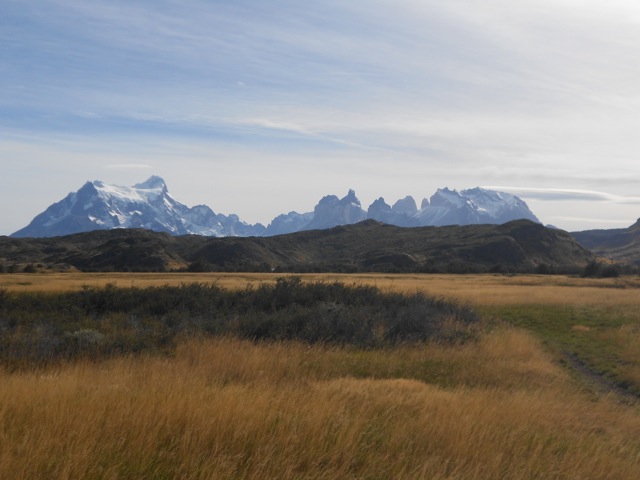
After some last minute preparation, we walked out across the flat grassy plain with the entire massif in the distance. Most of the two hours of todays hike was flat until the last couple of hundred metres where hills ran up the side of Rio Grey.

wpid-dscn1811-2013-04-5-09-18.jpg

As we walk, we split into two teams, myself and an American guy walk together, while the others are two Australians – a guy and girl – and a female Brit. It doesn’t take us long to arrive at the camp site and we set up our tents and check out the place. There are only a small number of tent sites, a cooking shelter and a toilet, that we promptly ban anyone from using, preferring the wilderness latrine style of digging a hole. The day had been beautiful, so the five of us hung out as we cooked dinner and chatted until it grew dark.

While we were there, we met a Polish couple going the other way. They had just done the W and it had rained for all 5 days. We are hoping for a better experience.

Overnight it did rain a little and we were woken by brisk winds blasting at our tents. While the wind remained in the morning, there were blue skies.

wpid-dscn1814-2013-04-5-09-18.jpg

Day 2 – Campamento Las Carretas to Campamento Italiano

We headed out into the brisk wind through the hills above Rio Grey. We weaved along the side of the river for some time eventually taking a break in a protected valley as the rio turned off.
wpid-dscn1817-2013-04-5-09-18.jpg

The hill then led down onto a yellow grass plain where wind hurtled towards us with such force that at times we couldn’t move forward. With packs on, the wind can really blow you around. We struggled on towards the main towers of Cerro Paine Grande.

wpid-dscn1815-2013-04-5-09-18.jpg

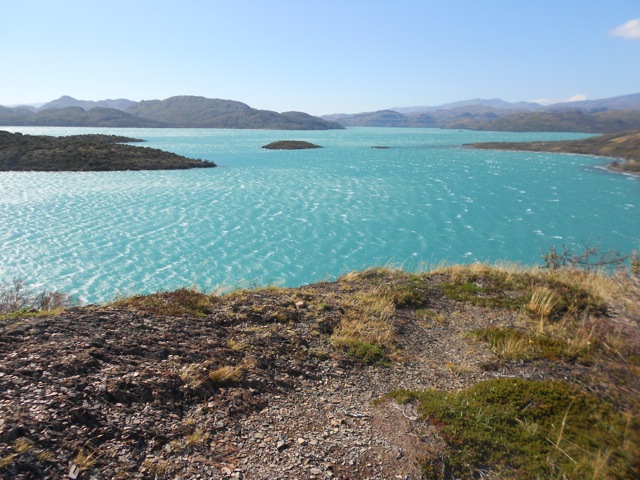
Eventually we arrived at Mirador Pehoe – a lookout across Lago Pehoe – the aqua waters being hammered by the winds.
wpid-dscn1826-2013-04-5-09-18.jpg

We spied the midday catamaran crossing the lake to deliver a new load of hikers to the refugio. From the mirador the terrain became more hilly and we climbed up and down through burnt forest. We eventually came down a steep hill and arrived at Refugio Paine Grande where we stopped for lunch.
wpid-dscn1827-2013-04-5-09-18.jpg

The refugio has a shop and I enjoyed a coke and some chocolate before we headed off again. The terrain became fairly hilly as we headed for the next campsite under the 3km tall towering mass of Cerro Paine Grande – the tallest peak of the massif. We passed several groups of people, going in both directions. The next couple of days is going to be busy as we’re on the W, the most popular part of the hike. We then walked along the length of the Lago Skottsberg, it’s water a totally different blue…

wpid-dscn1832-2013-04-5-09-18.jpg

We took a break as the trail began to get a little muddy. It was here that the burnt trees stopped and living trees began again. We set off again towards the rocky spires of Cuernos del Paine, which will be above tonight’s campsite.
wpid-dscn1834-2013-04-5-09-18.jpg

A one point, a group of guys came past and between them a guy sitting on a specially designed wheeled carriage, obviously specially designed for him. It was great to see how the group had found a way for their less able friend to hike with them. We continued on passing the snow covered glacier face of Cumbre Principle – the main peak of Cerro Paine Grande. We arrived at a river and crossed into Campamento Italiano. After setting up camp, our little group of five sat at the river watching pieces of the glacier calve off from the mountain.

wpid-dscn1850-2013-04-5-09-18.jpg

The Trail Wanderer

Laguna Esmaralda

The weather of the last couple of days hasn’t been welcoming enough to hike and last night it was icy enough to sprinkle the mountains with a new set of snow. Today, it’s all blue skies, so together with an Australian couple and a trio of Israeli girls fresh out of their military service, I set off to see Esmaralda Lagoon.

Once our minibus arrived, the six of us were on our way. But nothing here can be done without at least a little drama… As we exited the city, the minibus was pulled over at a police roadworthy station and because one of our headlamps was not functioning, we were turned back. The driver headed back into town, to a mechanic, where he bought a new bulb and we sat waiting as he replaced it. Then, 30 minutes later, we were off again.

Laguna Esmaralda is on private land and the minibus dropped us at the owner’s place, Refugio Valle Los Lobos – a Siberian Husky breeder – where we paid 10 peso each – $1 Australian – to enter the area.

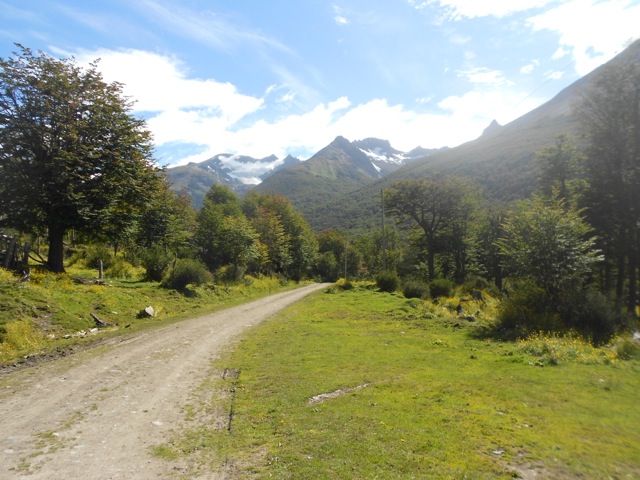
We headed off past the dog kennels and along a dirt road towards the mountains that held the laguna and the glacier – Glaciar del Albino – that feeds it…

wpid-dscn1585-2013-03-8-17-07.jpg

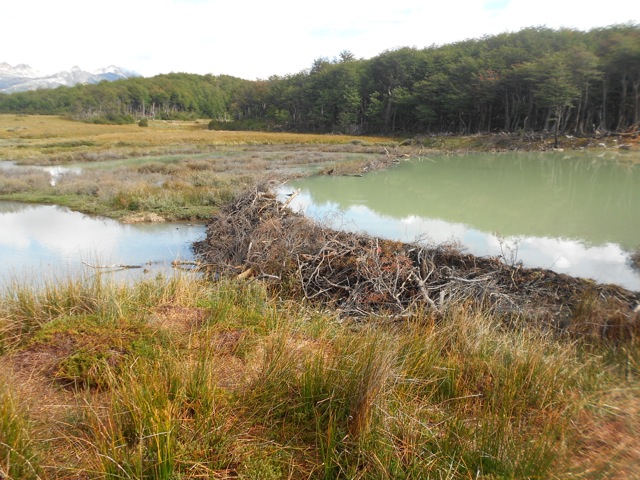
The road was a little muddy, but the worst was yet to come… We passed a pair of beaver dams, although we didn’t see any beavers as they only come out late in the afternoon.

wpid-dscn1590-2013-03-8-17-07.jpg

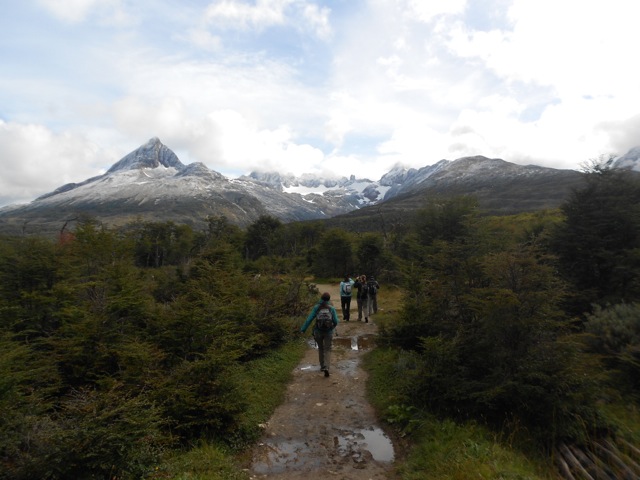
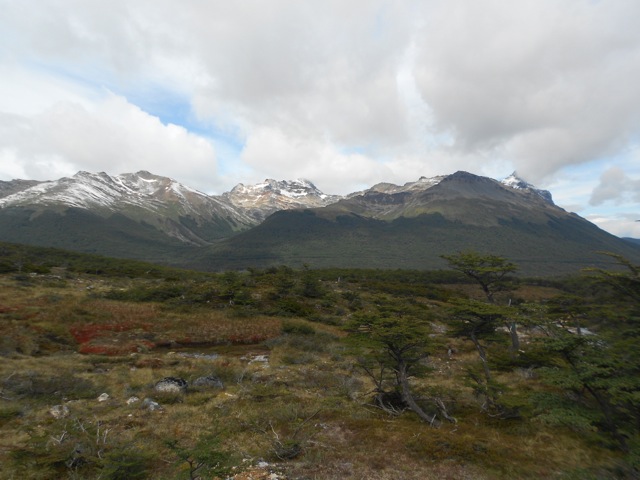
We crossed an arroyo and though a forest before heading out across a peat field where most of our steps were soggy. Thankfully my leather hiking boots do a awesome job keeping out the water. On all sides as we crossed the field were snow capped mountains and a subarctic wind.

wpid-dscn1597-2013-03-8-17-07.jpg

The arroyo wound its way across the field and we found the least muddy and wet ground was alongside it where there were plentiful stones to stand on.

wpid-dscn1598-2013-03-8-17-07.jpg

The hike itself is only 3 hours return but it’s slow going, as every step has to be made with caution to ensure you don’t sink too deeply in the mud or peat, and you don’t slip off branches that had been laid across said wet patches. Eventually, the arroyo leads to a small waterfall and we climb up the short rocky cliff…

wpid-dscn1600-2013-03-8-17-07.jpg

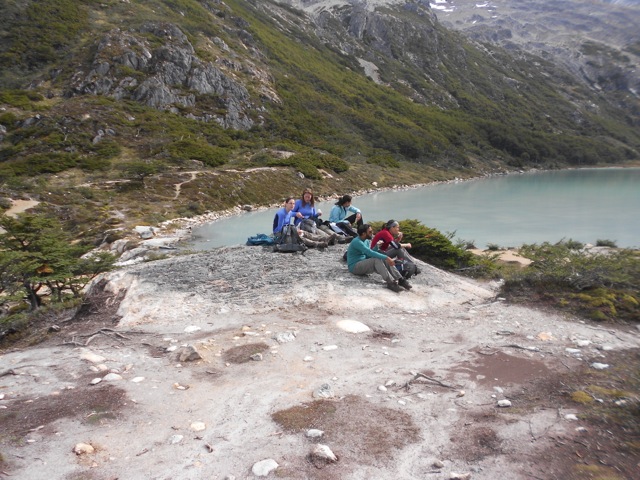
As we breach the top of the cliff we see Laguna Esmaralda below us, tinged blue-green by the million year old minerals flowing down from the glacier. Across the lagoon, the Albino Glacier flowed down the side of the mountain and into the laguna.

wpid-dscn1601-2013-03-8-17-07.jpg

The six of us stopped for lunch, but it was a little chilly and after a while the cold began to get to the girls, so we headed back. There was only one guy there when we arrived and he seemed to be acting a little odd – he went for a run around the lagoon and when he got back stood dancing to himself with his headphones on. We joked that he must have eaten one of the mushrooms we’d seen growing in many places across the field.

wpid-dscn1603-2013-03-8-17-07.jpg

The return trail was easier to cross as we had a better idea where we were going but it still ended up being a slow process of watching every step. We made it back to the breeder’s place, passing perhaps three dozen other people heading to see the lake. We were glad we went when we did and as we pretty much had it all to ourselves – except for the one strange guy.

Tomorrow I make my final preparations for my trip to Antarctica.

The Trail Wanderer

Paso de la Oveja – Tierra Del Fuego – Argentine Patagonia

Paso de la Oveja – Sheep Pass – is a two day hike starting to the east of Ushuaia and cutting a circuit around the Martial mountains, running 25kms along Valle de Andorra to end at the west side of the city. This is my first overnight hike in Patagonia and the only one I’ll be doing this far south.

I was a little nervous about this hike as I brought my tent and sleeping bag from Australia. While they did the job on that continent, they’re not designed for the cold climate. Leading up to the hike, I investigated many of the adventure stores in Ushuaia’s Centro district looking for a means to add warmth to the sleeping bag without spending a thousand or more pesos buying a new one. I didn’t find anything so took the light fleece blanket from my bed in my hostel.

Day 1 – Turbera Valle Andorra to Laguna del Caminante

To get to the beginning of the hike, I took a taxi from my hostel around the side of the Martial Mountains to a locked gate. While my spanish isn’t very good, I figured I’d show the driver the map and point out my destination. For some reason he got the idea I was wanting to be dropped off at the end!? I corrected him and he eventually delivered me to my start point. Past a locked gate I headed out along a dirt road towards the mountains with another glacier in view.

wpid-dscn1501-2013-03-5-18-222.jpg

My directions said to walk 5 minutes to a set of shacks and take a faint 4WD track to the right. I did and it led me into a set of peat fields where horses grazed.

wpid-dscn1502-2013-03-5-18-22.jpg

But after a while I discovered that the peat fields were rather soggy. By discovered I mean going knee deep into a bog. YAY! By the sounds of the description of the hike I was following, I wasn’t where I was supposed to be. So, I headed towards the mountains, picking my way through boggy grass. This took me some time but I eventually made it into forest. But this still didn’t feel right, and was also rather boggy with more knee high mud. I kept going towards the mountains and eventually found a not very faint but still rather muddy 4WD track. I followed it for a couple of kilometres through the forest with the occasional view of a mountain top.

The 4WD track eventually petered out at a sign announcing my entry into Parque Nacional Tierra del Fuego. The trail crossed an arroyo – stream – that came down from the back of the Martial Glacier.

wpid-dscn1514-2013-03-5-18-22.jpg

It then followed the arroyo for some time through the forest…

wpid-dscn1517-2013-03-5-18-22.jpg

At one point I came to an opening that led into a large red tinged field. This was off track, but as it gave good views of the mountains, I decided to head onto it. After only a step I discovered the field was in fact a growth of reddish green moss the size of a rugby field. It was spongy below my feet but supported my weight.

wpid-dscn1521-2013-03-5-18-22.jpg

I pushed on along the trail for another couple of kilometres through the forest, with the occasional show of towering rock above the trees.

wpid-dscn1544-2013-03-5-18-22.jpg

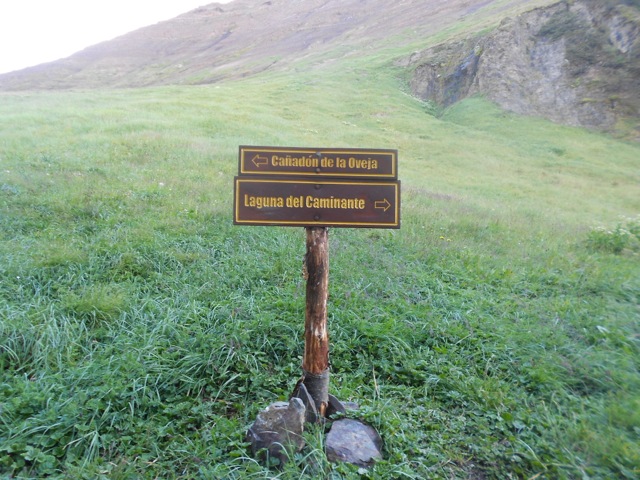
Late in the afternoon I arrived at a set of cascades in the river. Up until now Valle de Andorra had been flat, but according to my map the cascades marked the beginning of a 4km long climb. Nothing too high, just a constant climb. I crossed the arroyo several times on makeshift log bridges and wound my way up the side of the mountain. I broke the tree line and came to a T-junction and a sign.

wpid-dscn1546-2013-03-5-18-22.jpg

I headed right, towards the Laguna climbing along the top of a steep grassy bank with a fast flowing arroyo at the bottom. The trail was difficult and I made my way carefully to ensure I didn’t end up tumbling 50m to the stream. As I began along the track, I heard voices and a group of six other hikers appeared out of the forest behind. I hadn’t seen a single other person since starting, so they must have held just behind me all day. At a highpoint on the trail I got views back along the Valle de Andorra.

wpid-dscn1553-2013-03-5-18-22.jpg

A short distance on, I came around a jutting rocky outcrop to see the lake nestled below me…

wpid-dscn1556-2013-03-5-18-22.jpg

To get down to it, I had to descend along a muddy bank and a rocky stream bed, watching each of my steps until I arrived at the bottom beside a waterfall. I walked along the arroyo that led to the lake and around a section of trees to locate a perfect campsite on the edge of the lake. There was already one set of hikers and the group of six arrived shortly after. Over the course of the next hour 3 other pairs arrived, but there was plenty of room and only the tents of the large group were close together.

As the sun went down, I sat in my tent and looked out over the lake.

wpid-dscn1557-2013-03-5-18-22.jpg

Day 2 – Laguna del Caminante to Autodromo Ushuaia
The next morning, as I packed it rained a little, showering the lake surface with ripples. It didn’t last and I was soon off, back tracking along the path above the arroyo to the junction.

wpid-dscn1570-2013-03-5-18-22.jpg

The trail then climbed to the pass where the grass gave way to a slate like rocky area with plentiful cairns to show the way. A 250m climb later I reached the top of the pass that gives this hike it’s name and a tall cairn. I’m not sure why it’s called Sheep Pass as there aren’t any sheep here. Perhaps in times past…

wpid-dscn1575-2013-03-5-18-22.jpg

After taking a break in the pass I pushed on. The trail headed down into Cañadon del la Oveja – Sheep Canyon – where the trail hugged the side of the mountain range hundreds of metres above a grassy area. While the thin trail at times felt precarious, careful progress was all that was needed along the 3km trail before it zig-zagged down the mountain and into the forest.

wpid-dscn1578-2013-03-5-18-22.jpg

Before I was surrounded in trees once more, I looked back along the Cañadon.

wpid-dscn1582-2013-03-5-18-22.jpg

The forest was supposed to be easy, but a portion of it looked to have been thrown about by a storm some time ago. This forced me to spend some time climbing over smashed trunks and broken limbs, a long and arduous task. I eventually got through and came out onto private property where I got a final look at a rocky mountain before heading down the hill towards and old motor racing track – autodromo.

wpid-dscn1583-2013-03-5-18-22.jpg

Overall the hike was amazing with brilliant views and special places. I didn’t end up needing the blanket, but better to have it than not. With only 6 days until I leave for Antarctica, there are a handful of other short hikes I’d like to do if the weather holds up. I’ll see which ones I can fit in.

The Lone Trail Wanderer.

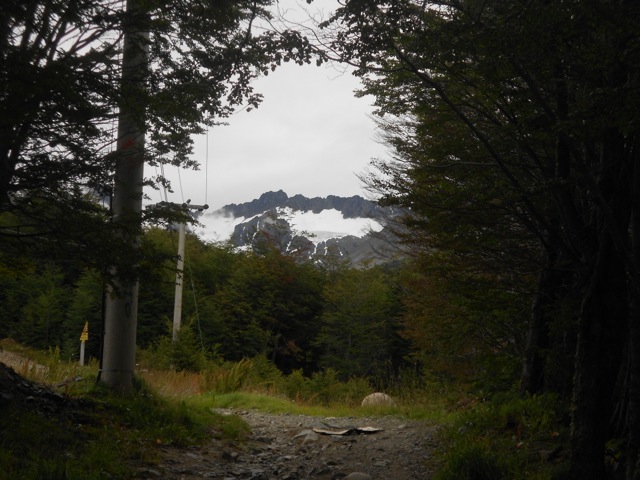
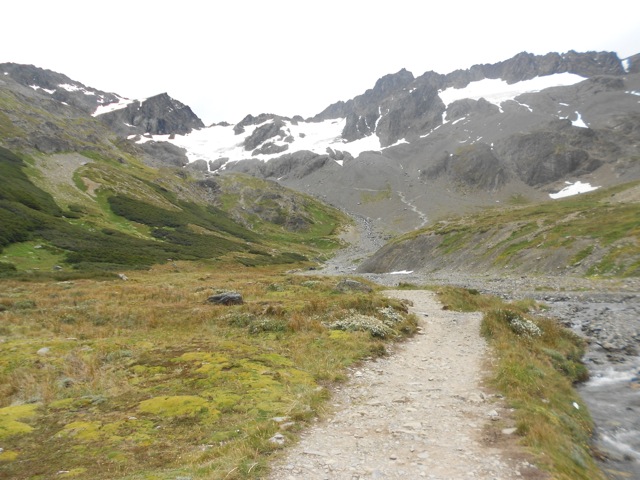
Martial Glacier – Martial Mountains – Tierra del Fuego

wpid-dscn1478-2013-03-1-17-5211.jpg

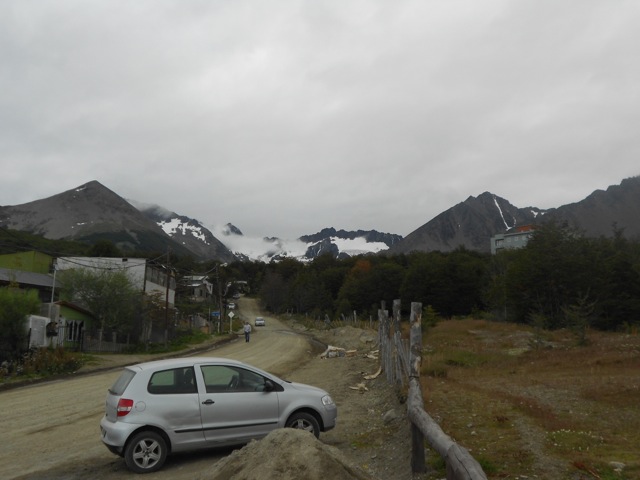
The Martial Mountain range – Montes Martial – is a small range of mountains behind the city of Ushuaia. The city itself is nestled in the foothills where the mountains meet the Beagle Canal. While not as jagged and tooth-like as others in the area, the mountain ramparts are still spectacular when seen from below. During winter much of the range is likely covered in snow, but as it is late summer there are only small dots of dirty white along the range, in all places except where I’m headed today.

wpid-dscn1471-2013-03-1-17-526.jpg

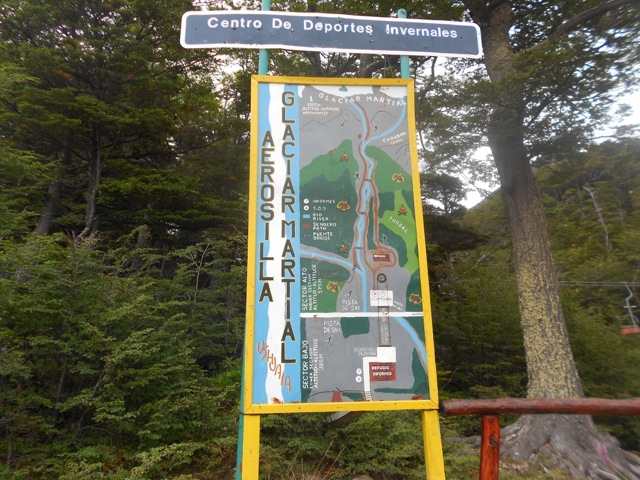
This mass of snow is above the glacier and is where I’ll be walking with a companion from the hostel. Because Ushuaia isn’t a large city we decided to walk from the hostel to the base of the mountains. We work our way through the confusing mass of streets until we cross a bridge that crosses the Arroyo Buena Esperanza – ‘Arroyo’ being spanish for stream – which cuts through the centre of the city to the sea. On the far side begins the road leading up through the short wood covered foothills.

wpid-dscn1472-2013-03-1-17-523.jpg

The road winds its way up the side of the foot hills with the occasional large hotel at the side. The initial trail doesn’t follow the winding road, but takes a more direct route with only the last hundred metres or so following the road to its end at a cafe and chair lift. Above us as we walk is the snow field although it’s sometimes covered in a lazy sweeping low cloud.

wpid-dscn1473-2013-03-1-17-521.jpg

The Arroyo runs down the side of the mountain beside the wide rocky trail with the chair lift of the other side. The trail is not overly steep, but is rises constantly with the occasional wood covered ditch used as a water overflow during the summer melt.

wpid-dscn1496-2013-03-1-17-521.jpg

The chairlift is almost 1,200 metres in length and ends in a tea house. We cross a small bridge below the tea house and stop for lunch on the side of the stream. A couple of hundred more metres above and the trail splits three ways – to the right it leads to the beginning of a ski slope, to the left the top of a jagged peak (we are forbidden to climb without specialised equipment) and straight on to the glacier. This is where I leave my companion and head on alone – she is due elsewhere and heads back down the trail.

wpid-dscn1482-2013-03-1-17-521.jpg

The trail continues beside the stream as I climb between the mountains on either side. After another couple of hundred metres, the wide road-sized trail ends and a very thin trail climbs steeply up the mountain. It doesn’t go far before turning to the left and heading out of view.

wpid-dscn1485-2013-03-1-17-521.jpg

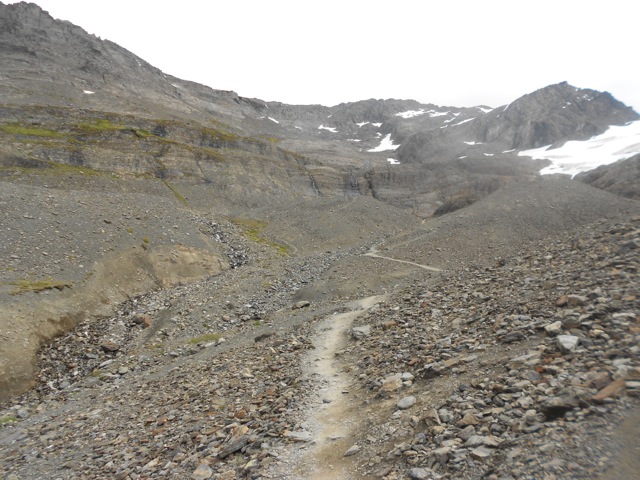
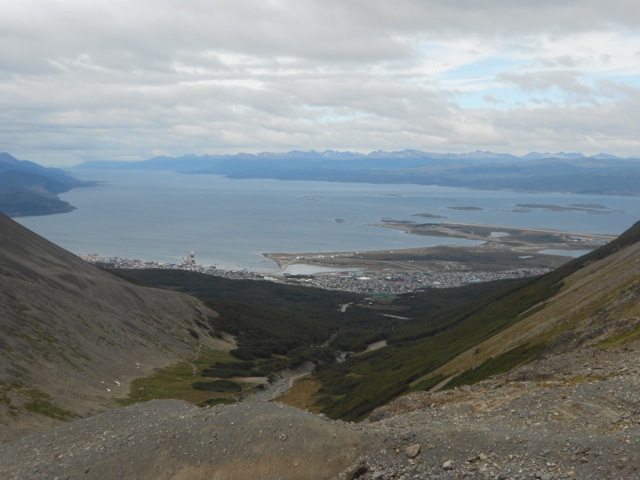
I climb the trail and it is indeed steep. It’s not a stepped climb, but an intense scree slope worn by many feet. I have to rest a couple of times on my ascent until I reach a line of orange markers denoting where the trail heads to the left and over a ridge. With this hardest part of the climb down, I head over the ridge and a further hundred metres or so to the base of the glacier. The views from here of the canal, the city and the surrounding mountains are spectacular, and the cloudy day has even given way to blue skies for this moment.

wpid-dscn1489-2013-03-1-17-52.jpg

The glacier itself is a patch of snow with water running under it, and there are signs forbidding passage beyond a certain point. There were a couple of groups up there and we all ignore the signs and climb a little further to the base of the snow. 50 metres up I sat on a set of rocky shelves, similar to those I climbed in Tasmania and rest after my two and a half hour climb.

wpid-dscn1491-2013-03-1-17-52.jpg

Heading down was easier, as you would expect, with the only difficult part the thin, steep scree trail. After 90 minutes I arrived back at the hostel for a welcoming shower.

Next I head for my first overnight hike in Patagonia, Paso de la Oveja – Pass of the Sheep – which follows a long valley behind the back of Montes Martial.

The Lone Trail Wanderer
Bogong Wilderness – North Kosciusko National Park – NSW

Kosciusko National Park in New South Wales is part of the Great Dividing Range that starts in North Queensland and ends at the Grampians in western Victoria. Kosciusko National Park gets its name from Mt Kosciusko the tallest mountain in Australia, which is situated at the southern end of the park. I’ve climbed that mountain twice now, so for my final hike of my South East Australian adventure tour, I’ll be walking around the north end of the park, an area called the Bogong Wilderness.

wpid-dscn1433-2013-01-17-08-38.jpg

The Bogong Wilderness is a small region of the park around Bogong Mountain. Not Mt Bogong, which is a different mountain – the tallest in Victoria. The Bogong, from which both mountains get their name, is a dark coloured Australian moth, which was apparently used as a food by the aborigines.

The Bogong Wilderness walk is an overnight hike stretching 42km through forest. It’s a linear hike, so I’m hoping someone will give me a lift back to The Pointy Brick tomorrow afternoon.

Day 1 – Prosser Fire Trail to Ring Creek
On the way to the start point, I passed a lookout and stopped for a photo. A sign at the lookout pointed out some features of the wilderness that I’d be passing in my travels. It was like looking at my hiking route from the side.

wpid-dscn1431-2013-01-17-08-38.jpg

I arrived at the beginning of Prosser Fire Trail and donning my pack, headed off into the wilderness.

There’s actually not a lot I can say about the trail. It’s fairly wide and like all fire trails, is designed to allow access for 4WD vehicles into the wilderness in event of a fire. On that note, there are plentiful fires going on throughout New South Wales at the moment, but just not here – I did make sure to check before coming.

wpid-dscn1437-2013-01-17-08-38.jpg

A lot of the 20.5km of today’s walk is climbing and I’m well used to that. The trail meanders – a word I have tried to put in every post so far – through the wilderness, ascending and descending, and crossing the occasional creek.

wpid-dscn1438-2013-01-17-08-38.jpg

The entire day I’m surrounded by forest, so there’s not much to see. I’m constantly hounded by horse flies that try to bite when I stop for breaks. There are now plentiful dead March Flies littered around the area no doubt providing a food source for the ant populations.

At the end of the day, I arrive at a large grassy patch beside Ring Creek and set up for the night.

Day 2 – Ring Creek to Humes Crossing
Unlike yesterday, most of today is down hill. I have the option to climb Bogong Mountain, but it would mean an hour of bush bashing and with 21km ahead of me, I decided not to. While this may have led to some good views of the surrounding forests, it was also forecast to be hot today, and after the last time, I didn’t want to push it.

Again, as per yesterday, there’s not much to be said about the trail. While I was no longer on the Prosser Fire Trail, I was on another fire trail and it looked pretty much the same.

wpid-dscn1440-2013-01-17-08-38.jpg

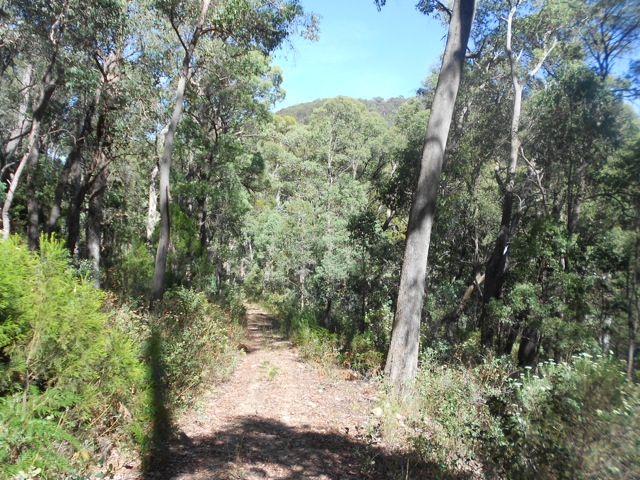
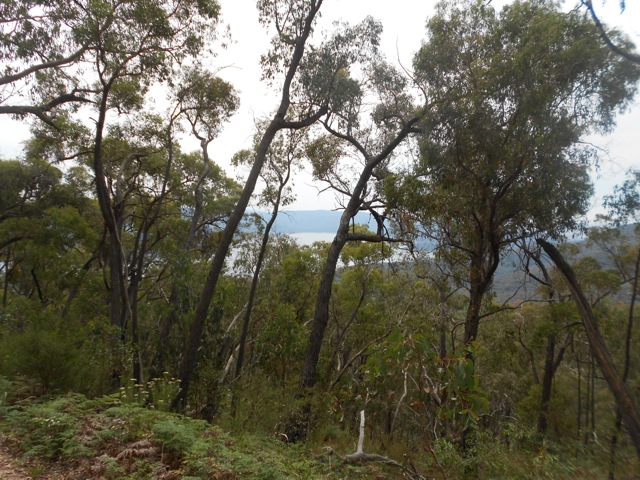
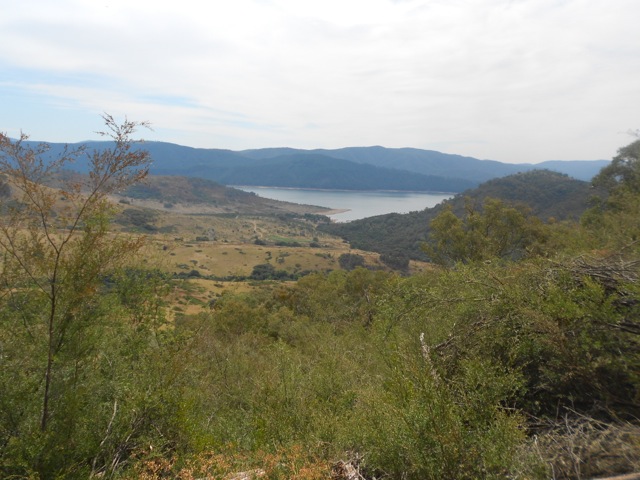
It wasn’t until the final five kilometres that the views began and they were the reason I’d decided on this hike. Looking down off the mountains you see Blowering Reservoir, a beautiful stretch of lake, that while fairly thin, stretches off to either side. The views are minimal at first, the reservoir seen through the trees, but as I descended they got better.

wpid-dscn1444-2013-01-17-08-38.jpg

There’s a catch though… the trail descends very steeply for several kilometres. Normally this wouldn’t be an issue but the surface is light scree over hard dirt. This meant every step had to be carefully made else an uncontrolled slip down the steep trail. This is definitely a place where hiking poles come in handy. The descent took me down 800m steeply, so it was a slow process but with growing views.

wpid-dscn1445-2013-01-17-08-38.jpg

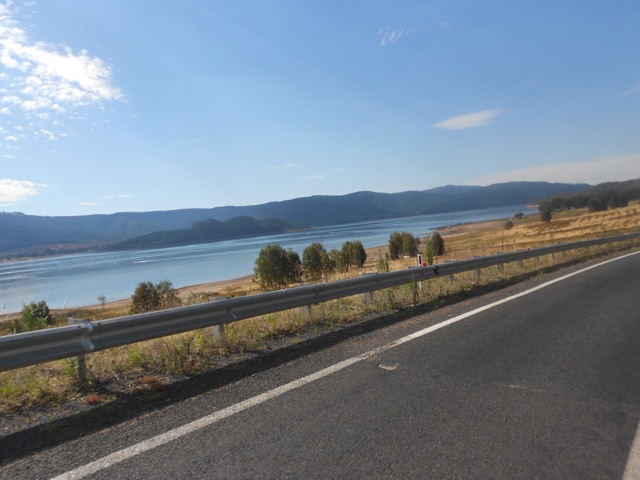
As I broke the tree line I headed out onto dry grassy plains for the last couple of kilometres. But without the shelter of the trees, I began to feel the heat of the day. As I came down, I crossed paths with several groups of kangaroos. After a rest, I made it to the road and began walking towards my van, which was only 27km away. The heat of the bitumen added to that of the day, plus the one thing you don’t notice when driving…roadkilled kangaroo stinks, and there are plenty of them. I did see an Emu crossing the road, though. First time I’ve seen one in the wild. Of course, then I came to an ‘Emu Crossing’ road sign…

wpid-dscn1448-2013-01-17-08-38.jpg

After about 2km – walking on bitumen is fairly speedy – I was picked up and dropped off at The Pointy Brick.

So, here ends my South East Australian adventure. Next, I’m taking a well deserved rest while I wrap up things here in Australia and sell the Pointy Brick. Then it’s off to New Zealand for a couple of weeks before delving into South America, to begin the next leg of my adventure.

Until then,

The Lone Trail Wanderer

Mt Bogong Big River Circuit – Alpine National Park – Central Victoria

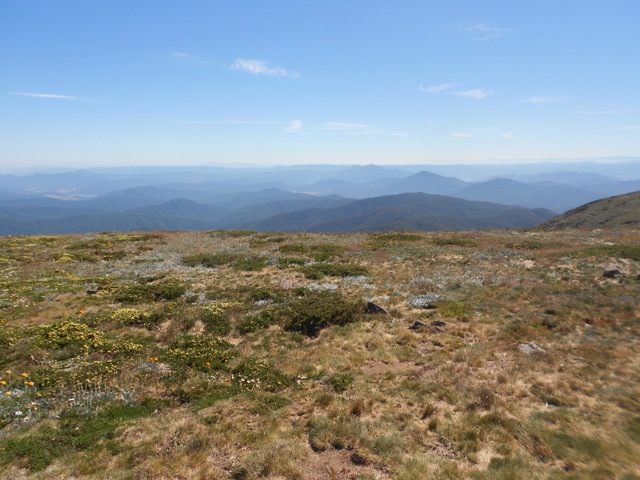
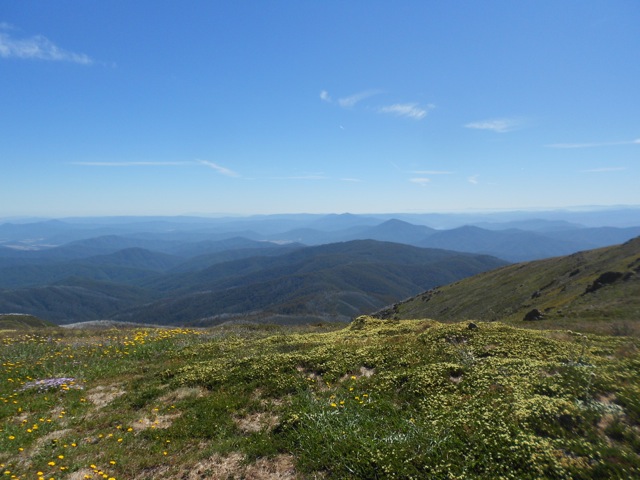
Alpine National Park is in the Central Victorian Highlands and is a well known Victorian skiing area. Mt Bogong is the tallest mountain in Victoria at just under 2000m above sea level.
Day 1 – Watchbed Creek Trailhead to Cole Cleve Memorial Hut
This morning I drove, from where I’d been resting for a few days at Mt Beauty (a township not a mountain), up to the Bogong High Plains and Watchbed Creek Trailhead. The Trailhead is about 1500m from the locked gate that is the beginning of the hike. I parked down the bottom as I didn’t deem the road suitable of the Pointy Brick.

wpid-dscn1380-2013-01-12-14-161.jpg

I was preparing to walk up the track and add the 1.5km to the already 20.5km for the day when an old lady drove up. She asked about the condition of the road and telling me how she used to come here years ago. She decided to drive it and offered to give me a lift.

From the gate, the trail walks out across the grassy high plains gently climbing to a point where it meets the Australian Alps Walking Trail. The AAWT, as it’s known, is a 650km long trail starting in lower Victoria and crossing all of the country’s highest areas to its end point near Canberra. I might do that another time. Maybe.

wpid-dscn1382-2013-01-12-14-161.jpg

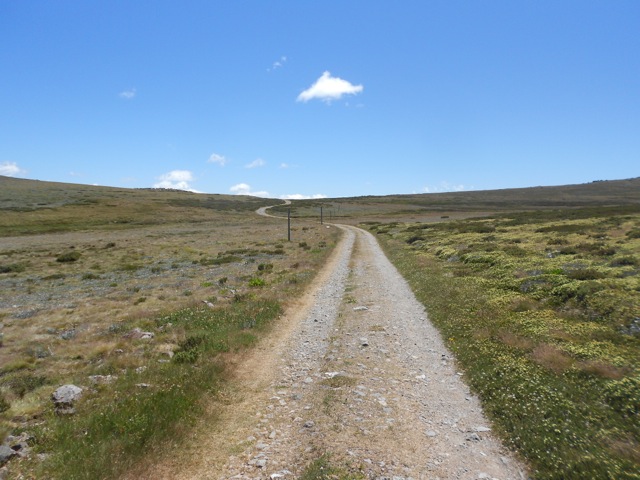
Since the highland is above the tree line, the knolls and knobs are the mountains. Sadly, this makes them not as impressive as the rocky Tasmanian mountains. The trail climbed gently through the mountains with the distant sets of rolling mountains coming into view from time to time in all directions. The track is fairly easy to follow as it’s a 4WD track cut across the grass. The side tracks, of which there are plenty, are harder to see. Along the side of the track are snow posts each 3 metres tall.

wpid-dscn1387-2013-01-12-14-161.jpg

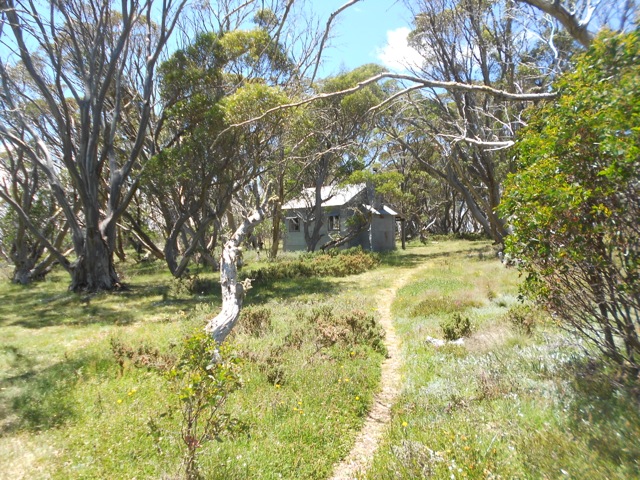
At a junction the track separates and I follow the less defined one. The other is my return track in a couple of days. After a couple of kilometres the trail heads below the tree line and shortly after I arrive at Roper Hut. The hut is surrounded in the white Snow Gum trees, their high branches standing white against the surrounding greenery. The hut itself was burnt down in the 2003 fires, and has been rebuilt. It looks new on the inside.

wpid-dscn1388-2013-01-12-14-161.jpg

The trail from here climbs steeply down 800 metres…

wpid-dscn1392-2013-01-12-14-16.jpg

…to Big River, which is probably a lot bigger during wetter seasons, where I stopped for lunch in preparation for the 800 metre climb on the other side back up the mountain.

wpid-dscn1393-2013-01-12-14-16.jpg

While the climbing was hard, it wasn’t too torturous but did seem to go on until 90 minutes later I arrived at the top and a junction. The AAWT went one way and I went the other to Cole Cleve Memorial Hut, another well set up hut, this one even had running water, a shower and a connecter to enhance your cellphone reception. This far up, I was expecting to be alone, but there were 3 other groups here.

Day 2 – Cole Cleve Memorial Hut to Big River Ford
While it was slightly cold on the highlands overnight, nothing a pair of socks couldn’t fix.

Today’s walk begins with a steep climb up to Mt Bogong, but as it’s above the tree line the time goes past quickly because you can see how much further you have to go.

Following the line of snow poles, I made my way up the mountain. Climbing in the highlands doesn’t have the same grandeur as some other places.

wpid-dscn1398-2013-01-12-14-16.jpg

Yes, I was climbing the tallest mountain in Victoria, but it felt more like I’d just strolled to the top of the neighbourhood grassy hill. There are no rocky fingers or parapets, just a grassy knoll high above everything else. Yup, that’s the high point…

wpid-dscn1406-2013-01-12-14-16.jpg

At the top of Mt Bogong is a giant cairn and 360 degree views.

wpid-dscn1410-2013-01-12-14-16.jpg

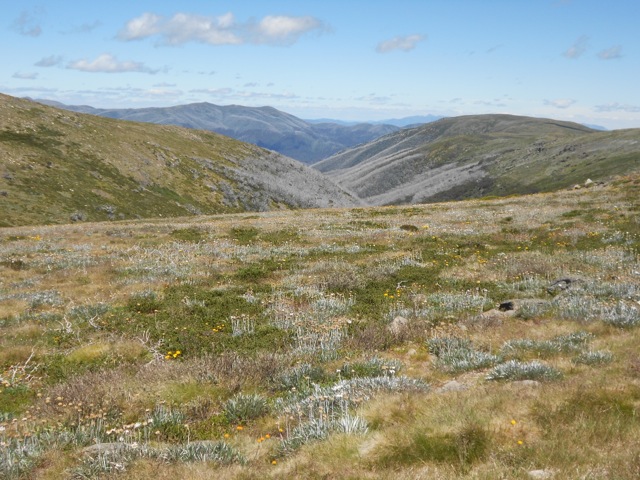
The views are awesome, lines and lines of mountains in all directions…

wpid-dscn1411-2013-01-12-14-16.jpg

and one large valley where sits the township of Mt Beauty.

wpid-dscn1408-2013-01-12-14-16.jpg

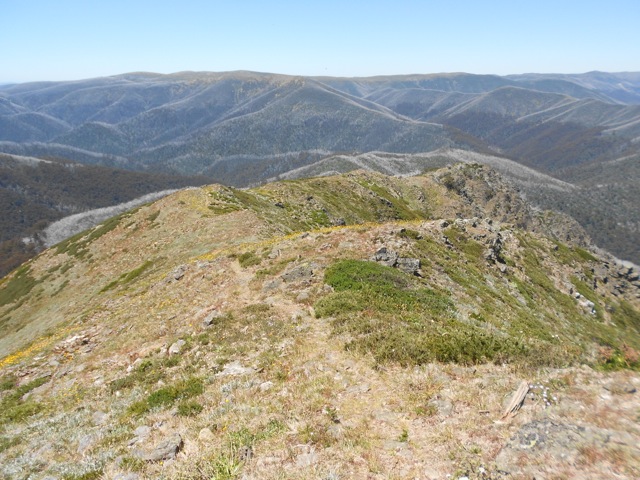
I crossed Hooker Plateau and found a spot for lunch looking along the valley. Then I was off again. The only way down is along Quartz Ridge, and awesome rocky spine. This was the fun part of the day with a deep gully on either side. I climbed along it cautiously.

wpid-dscn1419-2013-01-12-14-16.jpg

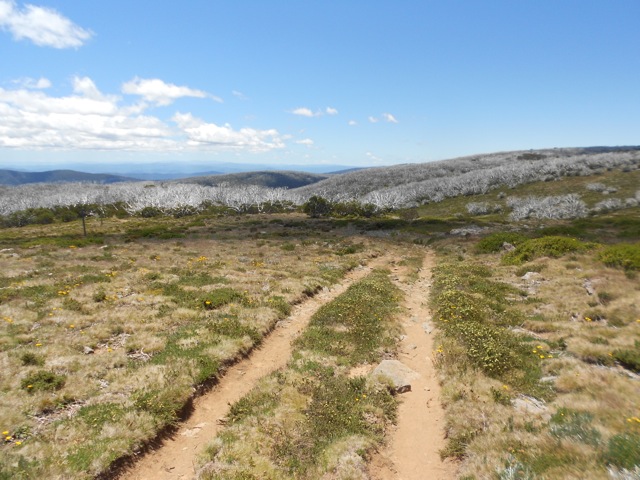
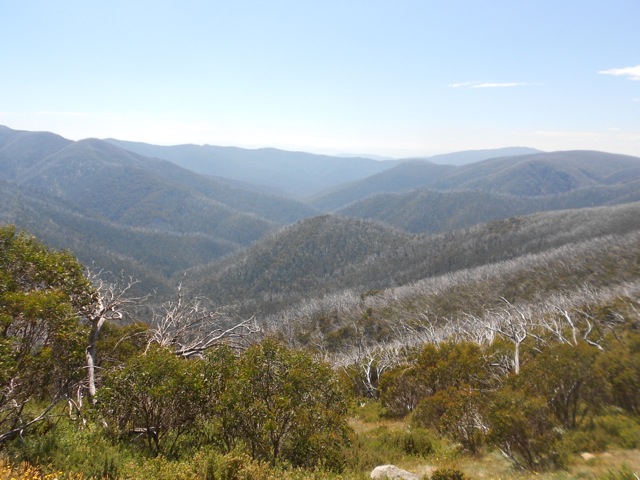
A few hundred metres later I broke the tree line and followed the trail down through the Snow Gums at times feeling like I was walking in a tree graveyard, the white fingers sticking up with growth around the base.

wpid-dscn1423-2013-01-12-14-16.jpg

A couple of tree covered knolls later I came to a junction and followed it for a kilometre to the Big River Fire Trail I’d left yesterday (when I headed to Roper Hut). Another kilometre downhill I came to the Big River at a ford about 8km along from yesterday’s crossing. The fire trail continued on the other side, but there was an open patch of ground that I used as a camping spot. Unlike Cole Cleve Memorial hut, there’s nothing here other than a flattened area of ground and a fire pit. Not even a toilet. I set up the tent and then went down for a dip in the icy river.

Day 3 – Big River Ford to Watchbed Creek Trailhead.
From the ford, the fire trail heads up at a constant slope up to the junction where I left it two days ago. Most of the walk was along the side of the mountains, meandering their way slowly up towards the tree line.

wpid-dscn1426-2013-01-12-14-16.jpg

Once at the junction, it was another 2 and a half hours retracing my steps back across the highlands until I arrived at the locked gate. This time there was no old lady to drive me, so I walked down to The Pointy Brick.

While the hike wasn’t as grand as others I’ve done, I still felt like I achieved a feat. Next, after a couple of days off, I go to the Kosciusko National Park, home of the tallest mountain in Australia, in the highlands of New South Wales. Mt Kosciusko is actually at the southern end of the National Park, but as I’ve already climbed it twice, I’m walking an area called the Bogong Wilderness at the northern end. This is the last hike of my South East Australian adventure, then after a short break, I head to Argentina to continue my travels.

The Lone Trail Wanderer.

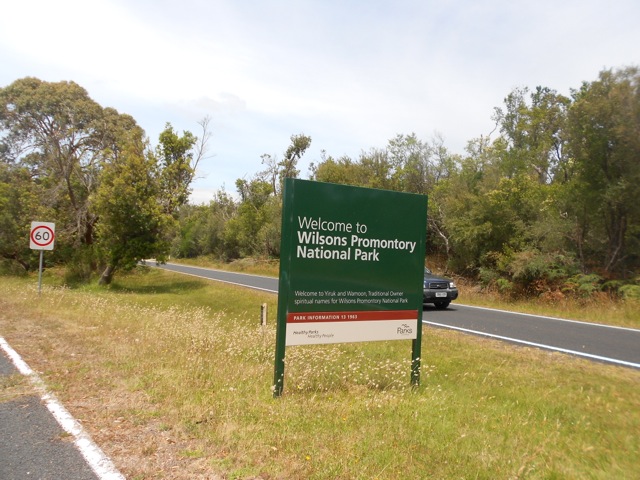
Wilsons Promontory – Victoria

Wilsons Promontory is the southern most tip of mainland Australia and is also known as the South-East Cape. Located about 200km south east of Melbourne, it’s a common holiday destination. In fact, it’s so popular, each year there’s a ballot for the many camping spots at Tidal River, the township on The Prom.

wpid-dscn1209-2013-01-12-12-50.jpg

There are several walking tracks around The Prom on both the north and south sides. I’ll be walking the south side, merging two 2-day hikes into a 3-day one.

Day 1 – Telegraph Saddle to Little Waterloo Bay
I parked The Pointy Brick in the Overnight Hiker’s car park just outside Tidal River and prepared for the walk. A shuttle bus leaves Tidal River via the car park every 15 minutes, so when I was ready, I waited and was transported up the hill to Oberon car park at Telegraph Saddle.

Originally, I was going to walk across The Prom to Sealer’s Cove and around the bay working my way to Little Waterloo Bay, but since the floods of May 2011 – 19 months ago – the track has been closed. I discovered this during the week before and planned accordingly although this meant my first day was shorter and easier.

I headed down the centre of the southern end of The Prom via a gravel road. The road continues all the way to the Lighthouse, which is tomorrow’s lunch destination. I walked along the road gently downhill for about 6km through the mountains.

wpid-dscn1213-2013-01-12-12-50.jpg

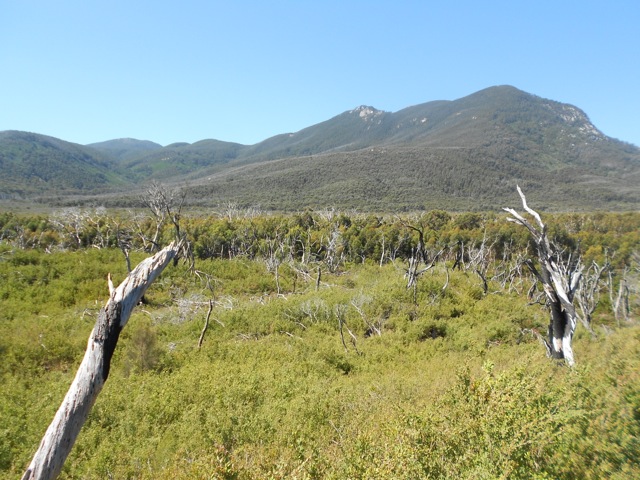
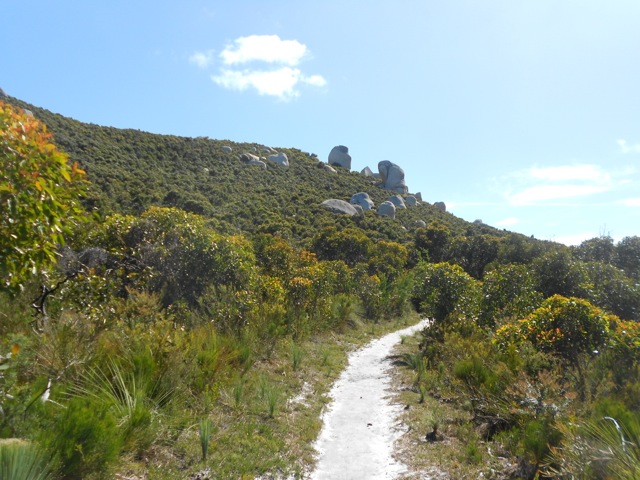
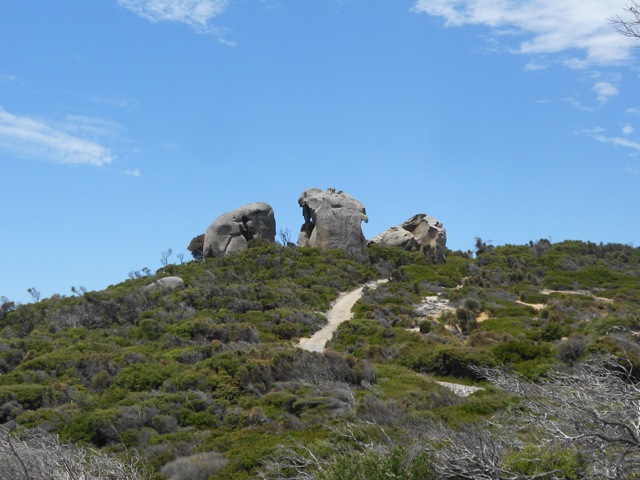
The mountains here are different to those of Tasmania, they’re mainly tree covered and those that aren’t are large smooth boulder covered mounds. In fact, one of the mountains is called Boulder Mountain.

The turn off to Waterloo Bay is a sandy track that meanders gently through a gap in the mountains and past a tree covered rocky outcrop called The Mussolini Rocks, but I don’t see the likeness.

wpid-dscn1216-2013-01-12-12-50.jpg

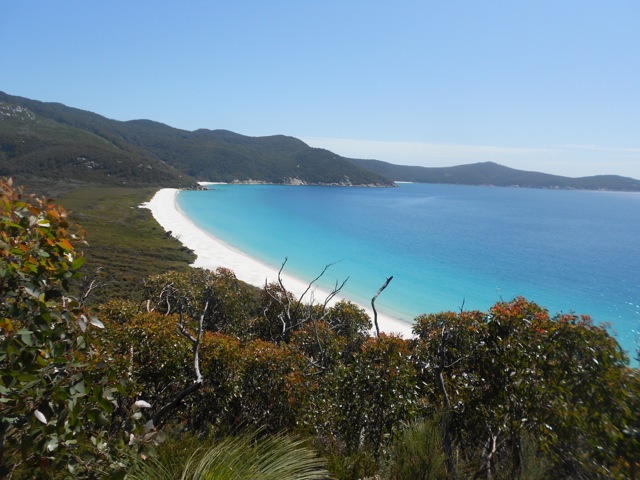
Eventually the track arrived at Waterloo Bay – a beach of pristine white sands and azure blue water.

wpid-dscn1219-2013-01-12-12-50.jpg

Little Waterloo Bay is a kilometre away on the other side of a jutting rocky outcrop. When I arrived, I discovered many people were already here. I found a spot, set up my tent and went to the beach where I sat reading on a set of boulders.

wpid-dscn1226-2013-01-12-12-50.jpg

Day 2 – Little Waterloo Bay to Roaring Meg
Many people had departed before me this morning, most heading around the coast towards Sealer’s Cove (the cove isn’t closed, only the trail to it from Telegraph Saddle).

I walked back to the junction and then along the beach for a kilometre. Sand is perhaps one of the hardest surfaces to walk on and it’s slow going. At the end of the beach the trail headed up the mountain on a sandy path. The constant climbing was a change from none at all yesterday. There were a couple of good vantage points as I walked.

wpid-dscn1227-2013-01-12-12-50.jpg

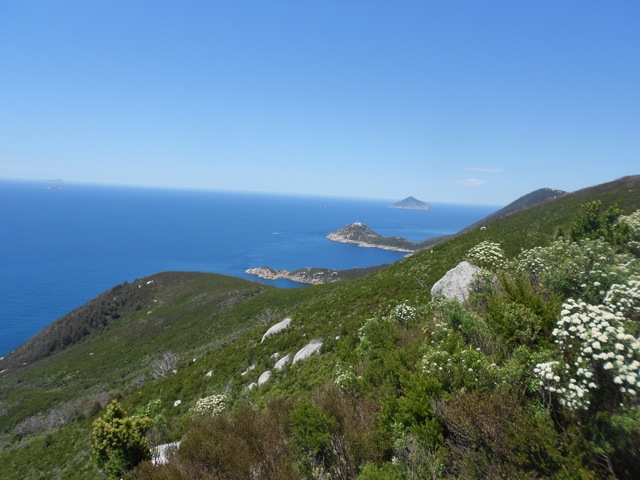
At the top of the mountain the trail flattened out giving some good views out to the south and the small rocky islands in the distance.

wpid-dscn1232-2013-01-12-12-50.jpg

I rested on a large smooth boulder before heading off again, with my aim to be at the lighthouse by lunchtime. The trail began slowly downhill before climbing again around the sides of two other mountains. It cut through the forest and along a steep cliff line before arriving at the junction to the lighthouse.

I hid my pack and with day pack I made my way downhill towards a set of Remarkable Rocks similar to those I’d seen on Kangaroo Island.

wpid-dscn1237-2013-01-12-12-50.jpg

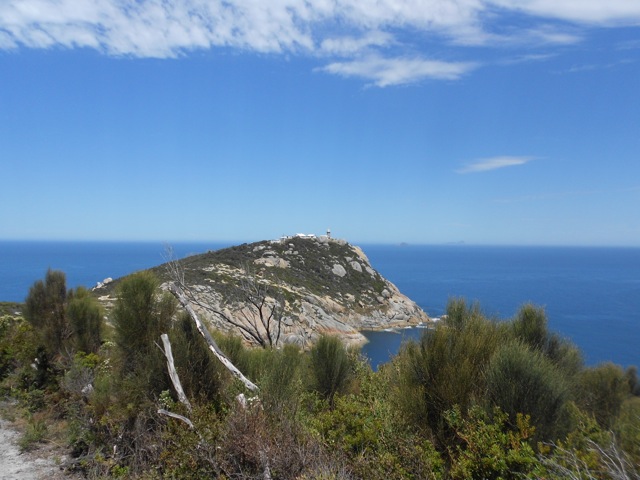
To get to the lighthouse, there’s a very steep concrete road which was used to transport supplies from the beach below. You can book to stay at the lighthouse, but I hadn’t so was just visiting. While I was there, I ran into the ranger who offered me a jug of ice water! Real treated water and ice, it’s almost like having a pub on the trail, just without beer.

wpid-dscn1250-2013-01-12-12-50.jpg

After lunch, I returned to my pack and continued on. For the first hour, I climbed around the mountains at the southern edge of The Prom working my way up to the plateau. After a couple of flat kilometres, there was a series of steep ups and downs before finally crossing a stream via a wooden bridge and into Roaring Meg, a two level camping area.

I set up my tent at the bottom near the stream before being invited for a mug of tea with a couple of older gents who were already camping.

Day 3 – Roaring Meg to Tidal River
Today was forecast to be a hot one, so I was glad my route took me via Oberon Bay beach. The trail headed me briefly uphill before it met the road and then wound its way back to the junction I’d left to get to Waterloo Bay.

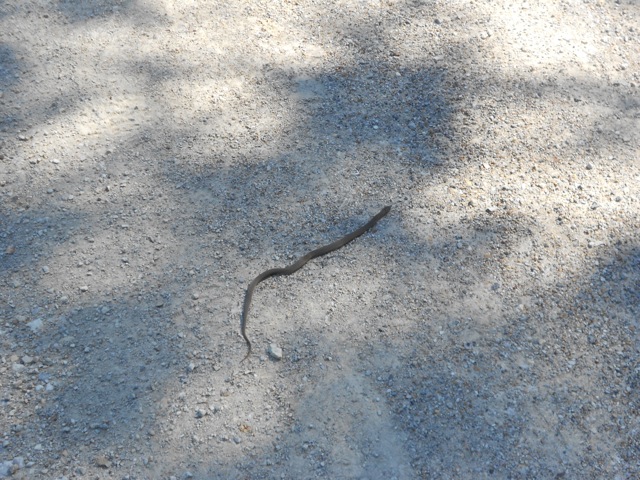
On the way down from the mountains, I came across a foot long grass snake in the middle of the road. I stopped for a brief chat as it slithered across.

wpid-dscn1256-2013-01-12-12-50.jpg

The heat was already in the air as I arrived at Halfway Hut and decided to stop for morning tea. I was sitting on a log at the side of an empty campsite when I looked up to see a metre long Tiger Snake slithering not a metre away. I, of course, followed it but it went into the brush before I could get a photo. Snakes aren’t scary and they generally only bite as a defensive measure, usually when you stand on them. There’s a trick to snakes, don’t stand on them.

wpid-dscn1259-2013-01-12-12-50.jpg

Twenty minutes later I came to the turn off and headed west towards Oberon Bay. The road turned to sand and became hard going. Thankfully there were plentiful tree covered areas for me to stop in the 5km to the beach as it was starting to become very hot.

wpid-dscn1264-2013-01-12-12-50.jpg

At the end of the trail was the beach, not as picturesque as Waterloo Bay, but it was water. I walked 500m to the end before stripping off and getting in. The water was beautiful but by the time I got back to my clothes and dressed I was sweating again. I ate a quick lunch before setting off on the final 7km around the bays to town.

By now, the heat was draining as I reached Little Oberon Bay and crossed it. On the far end, there’s a dune to climb to get back to the trail. The effort took it from me and I had to rest at the end, almost throwing up from the over exertion in the heat. It was only 4km to go and I discovered my water was hot. I sat in some shade at the top of the dune for about 30 minutes trying to dry off and recover. When I was ready, I headed on again. There was more climbing to be done before the end and I dragged myself 500m at a time before having to stop for a rest and cool off.

wpid-dscn1267-2013-01-12-12-50.jpg

I came around the point and could see Norman Beach in front of Tidal River which gave me hope, so I staggered on. I stopped once before the beach, once at the beach and once on the way to the car park. I was relieved when I finally got to the Pointy Brick. After changing, I headed to Tidal River for a cold drink, and ice block and then a swim in the sea.

It turned out to be 44 degrees that day. I decided to take a few days off before my next hike – Mt Bogong and Big River in the Central Victorian Highlands.

The Lone Trail Wanderer.

Overland Track Afterword – The Huts of the Overland Track

While I was planning for the Overland Track I had trouble finding collective information about the huts and camping grounds on the trail. Some I didn’t go to so don’t have any information on. Most other huts are for emergency only.

Overall, All Main Huts:

  • Sleep at least 24
  • Have untreated tank water
  • Have one composting toilet (usually two)
  • NO TOILETS HAVE TOILET PAPER (bring your own)
  • NO RUBBISH BINS PROVIDED (Take your rubbish with you)
  • Have plentiful camping spots for tents
  • Have gas/coal heaters for cooler times (some only work at temps below 10 degrees)
  • Have cooking tables inside the hut
  • Have bookable group camping platforms
  • Have a no open fire policy

Camp 1: Waterfall Valley
There are two huts at Waterfall valley:

Old Hut

  • Is 100m from New Hut.
  • Sleeps 8: two double bunks each sleeping two
  • Has a separate toilet 50m further away
  • No tank water
  • Has Group camping platforms above the waterfall
  • Most camping is on the grass around the hut

New Hut

  • Sleeps 24: 2 platform bunks, each platform sleeps 6
  • There are two tables and 2 cooking benches
  • Plenty of room for sleepers on the floor in wet weather
  • Water tanks
  • Twin externally located composting toilets
  • Bed platforms are in same room as cooking area
  • Gas heater
  • Separate room for wet weather gear

Camp 2: Lake Windemere

  • There is only one hut
  • Sleeps 24. 4 double bunks and 1 quad bunk
  • Sleeping room is separate from cooking room
  • Gas heater
  • 4 cooking tables
  • Water tanks
  • Has Group camping platforms
  • Twin externally located composting toilets
  • Camping is on platforms only
  • Small amount of room for sleeping on floor where necessary

Camp 3: Pelion Plains

  • Sleeps 60 (theoretically 72)
  • 6 separate sleeping rooms
  • 3 double bunks in each room (theoretically 12 people per room)
  • Bedrooms are separated from each other and cooking area by doors
  • 6 cooking tables in massive room
  • Cooking room can be separated in half by roller door
  • 2 gas heaters
  • Water Tanks
  • Has Group camping platforms
  • Twin externally located composting toilets
  • Camping is on platforms only
  • Huge amount of room for sleeping on floor where necessary

Camp 4: Kia Ora hut

  • Sleeps 24: Has 2 platform bunks, each platform sleeps 6
  • Bed platforms are in same room as cooking area
  • Coal heater
  • 2 cooking tables
  • Water tanks
  • Has Group camping platforms
  • Twin externally located composting toilets
  • Camping is on platforms only
  • Very small amount of room for sleeping on floor where necessary

Emergency Hut: Du Cane Hut

  • Sleeps 12: Has platform bunks, each platform sleeps 6
  • Bed platforms are in same room as cooking area
  • Single externally located composting toilets
  • Very small amount of room for sleeping on floor where necessary

Camp 5: Bert Nichols hut

  • Sleeps 36: 3 rooms each with platform bunk. Platforms sleep 6
  • Bedrooms closed by doors
  • Cooking room has 5 cooking tables and two cooking benches
  • Separate room for wet weather gears
  • 2 water tanks
  • Has Group camping platforms
  • Twin externally located composting toilets
  • Camping is on platforms only
  • Coal heater
  • Huge amount of room for sleeping on floor where necessary

Side Camp: Pine Valley

  • Sleeps 24: 2 platform bunks, each platform sleeps 6
  • Bed platforms are in same room as cooking area
  • Coal heater
  • 2 cooking tables
  • Water tanks
  • Single externally located composting toilet
  • Camping is on grass only
  • Very small amount of room for sleeping on floor where necessary

Camp 6: Kia Ora hut

  • Sleeps 24: 2 platform bunks, each platform sleeps 6
  • Bed platforms are in same room as cooking area
  • Coal heater
  • 1 cooking table
  • Water tanks
  • Externally located composting toilets
  • Camping is on platforms only
  • Very small amount of room for sleeping on floor where necessary
  • Radio to communicate with Lake St Clair Information Centre ferry
  • Has resident rats

Camp 6.5: Echo Point Hut

  • Sleeps 8: Has two double bunks each sleeping two
  • Unsure if toilet
  • Unsure if tank water
  • Camping is on sand at side of lake
  • Has resident rats

I hope this is of some use to someone out there