Tag Archives: holiday

Palenque, Mexico – Impressions

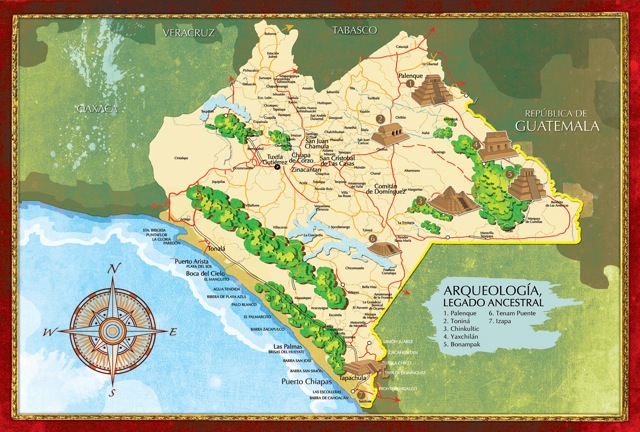
Palenque is a small city in the Chiapas region of southern Mexico on the border of Guatemala. There’s not much going on in the city itself with the city’s recognised monuments all being covered for restoration while I was there. But it’s not the city that draws people to this region, it’s the nearby ruins of the same name only 20 minutes away.
wpid-chiapas-mapa-arqueologia-2014-03-1-19-36.jpg

The Palenque ruins aren’t the only ones in this area though, there’s also Yaxchilán nestled on the Guatemalan border and Bonampak a further 40km south. It’s not difficult to get to any of the sites, with regular collectivos – taxi buses – going to the Palenque ruins every few minutes and daily tours leaving to the other two sites.

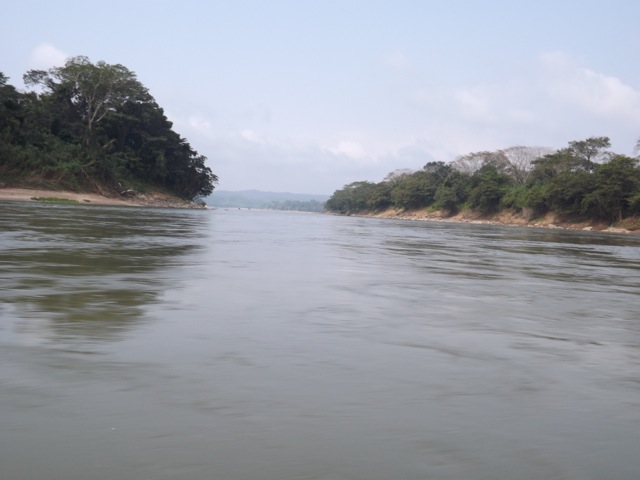
I began with a tour to Yaxchilán, a two and a half tour bus ride south of Palenque. The tour picked me up from my hostel at 6am and delivering me home at 7.30pm, so I prepared for a long day. The roads in Mexico are no better than anywhere else in Central America, but because of the early start I slept through the bumps and regular speed humps. There was even a stop for breakfast along the way, all included in the tour. We eventually arrived at Rio Usumacinta, the river that separates Mexico from Guatemala, and boarded a river boat for a 45 minutes trip.

wpid-dscf3778-2014-03-1-19-36.jpg

The river is wide and deep and is said to contain five metre crocodiles, but we only spied two small ones that were shy at our approach.
wpid-dscf3780-2014-03-1-19-36.jpg

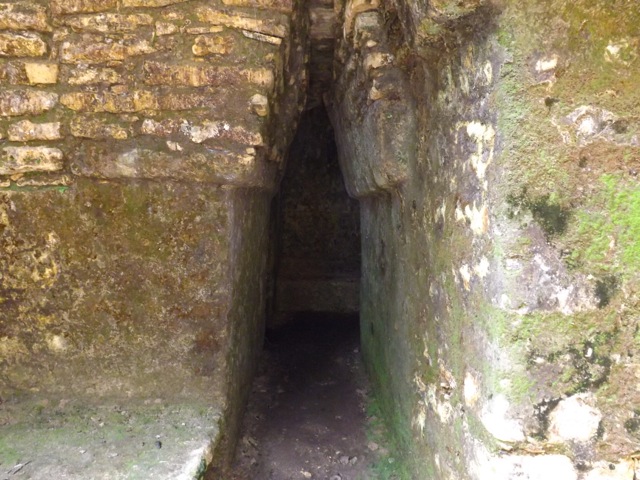
After another nap, we eventually arrived at the Yaxchilán ruins. To get into the site you need to walk through some dark tunnels made by the Mayans around 700AD. The tunnels are said to travel 30-40km to Bonampak to the south, but most are closed. There’s also an ancient ritual associated with the tunnels which involved the ingestion of magic mushrooms and walking through the tunnels in the dark being casted depending on which exit you emerge from.
wpid-dscf3794-2014-03-1-19-36.jpg

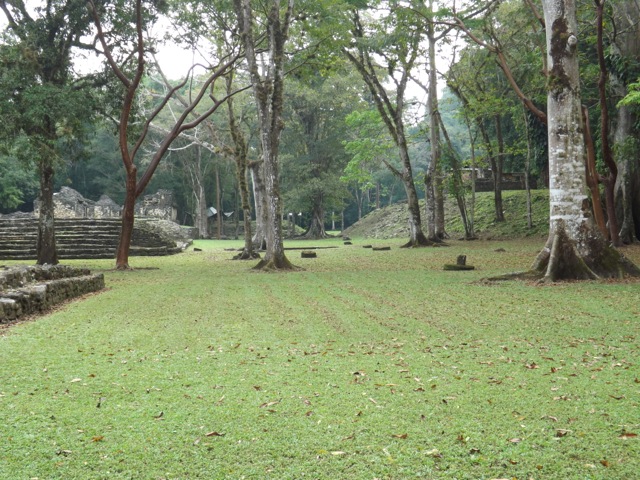
On the other side of the tunnels is the Grand Plaza stretching 750 metres in length with temples and buildings along each side. It was originally an open plaza, the trees have grown in the 14 centuries since the city was built.
wpid-dscf3808-2014-03-1-19-36.jpg

The Mayans had a fascination with ball games, where inevitably one of the players gets his head cut off. If it’s the captured leader of another city and he loses, chop chop and his head becomes the ball, if he wins he’s set free. If the match is between people from the same city then it’s the winner that faces the chop, that’s right, the winner. It’s an honour for him to be beheaded, as he goes forth into the underworld in style.

wpid-dscf3825-2014-03-1-19-36.jpg

In the Mayan world the royal family and priests had to be the fittest people, as they were the only ones allowed to climb the many steps to the temples or to the Grand Acropolis.

wpid-dscf3863-2014-03-1-19-36.jpg

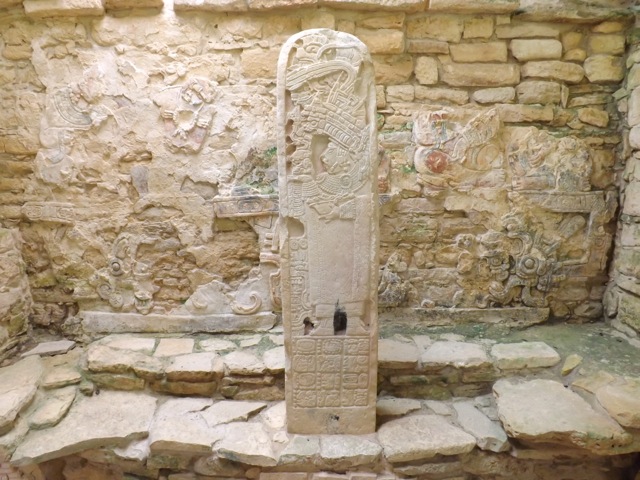
Dotted around the Grand Plaza are several Esteli – carved stone blocks. Most depict members of the royal family in different poses, often giving blood sacrifices such as the queen piercing her tongue and running a two metre rope through it, or the king having his penis pierced. Lovely.
wpid-dscf3860-2014-03-1-19-36.jpg

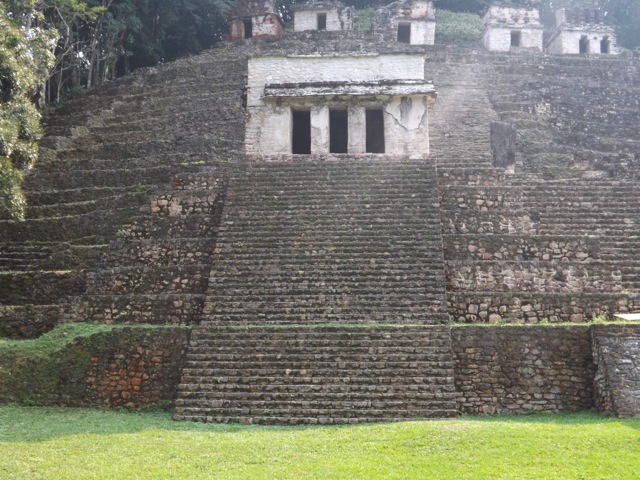
After a couple of hours at the site, we travelled back along the river to the bus then set off to Bonampak, which also has a grand plaza, although smaller than Yixchilán.
wpid-dscf3891-2014-03-1-19-36.jpg

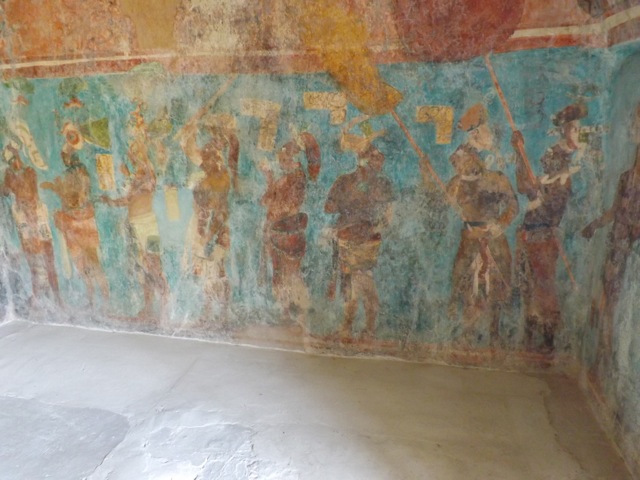
Bonampak was a ceremonial site important to the Yixchilán kings. Bonampak means ‘painted walls’ in the ancient Mayan language as on the inner walls of one acropolis are several full colour paintings.
wpid-dscf3912-2014-03-1-19-36.jpg

We only had an hour at Bonampak before it was time to head back to the city. We were thankful for the air-conditioned tour bus as the last couple of hours of the day became quite humid.

The following day, a couple of us caught a collectivo to the Palenque Ruins.

wpid-dscf3948-2014-03-1-19-36.jpg

But since we arrived an hour before closing, entry was free but meant we had to rush around the complex. Still it was a wondrous place to visit and thankfully quieter near closing time. Similar to Yixchilán they have a grand acropolis, several temples and a palace boasting a tall watch tower.
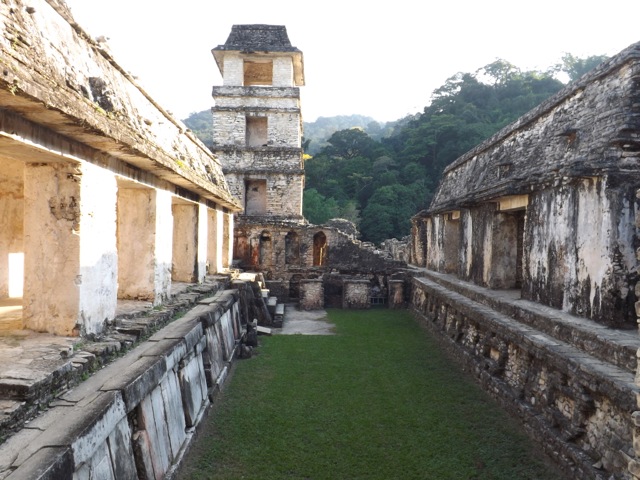
wpid-dscf3977-2014-03-1-19-36.jpg

Next, I head north to the city of the Merida on the Yucatán to explore the ruins of Uxmal.

The World Wanderer
Caye Caulker, Belize – Impressions

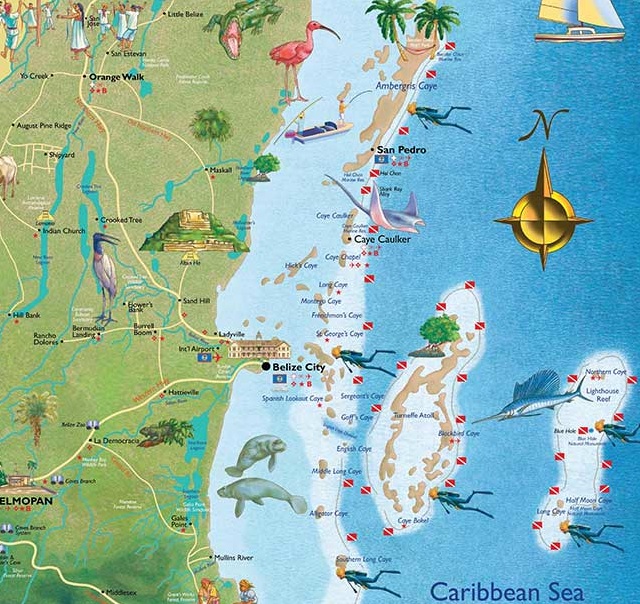
Belize is a small country on the edge of the Yucatan peninsula. Unlike the countries that surround it, where they speak spanish, Belize’s primary language is english. After a year in spanish speaking countries where I couldn’t fully understand the everyday conversations around me, on arriving in an english speaking country it was a little overwhelming. It was like suddenly being able to read the thoughts of everyone around you.

As I’m nearing the end of my Latin American journey, I’ve chosen to spend only three days in Belize and all of that time on the island of Caye Caulker. Thirty kilometres from Belize City by water taxi, Caye Caulker was made popular by hippies travelling through the area in the 1970s. Since then the tourism industry along the coast has blossomed.

wpid-cayecaulker-2014-02-24-15-07.jpg

On first impressions, arriving in Caye Caulker feels like arriving in Jamaica. There’s a strong reggae groove, plenty of locals with dreadlocks wearing rastafarian style clothing and that familiar accent: ‘yeh mon,’ and ‘want some gunga mon.’

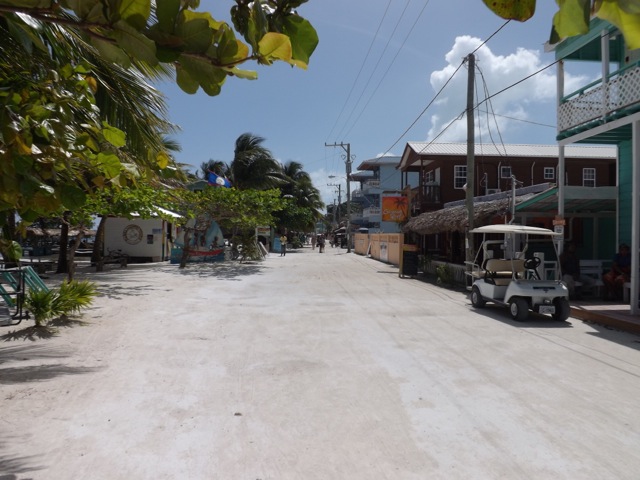
One end of the eight kilometre long island is criss-crossed with white sand roads while the other is still claimed by mangroves. There is an estimated 40 hotels, hostels and boarding houses on the island, with fresh fish on the menu of the many waterfront restaurants.

wpid-dscf3709-2014-02-24-15-07.jpg

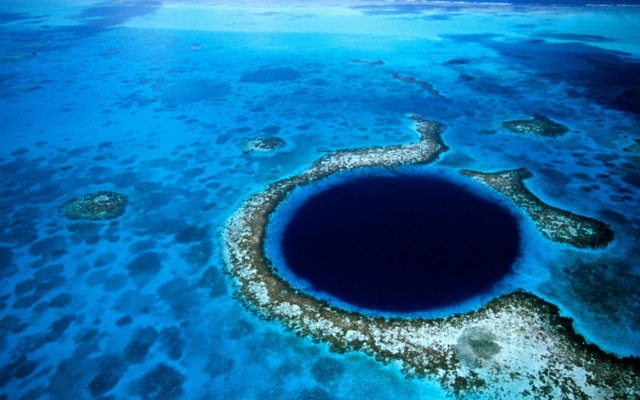
One of the more popular activities in the region is diving with divers hoping to swim in the infamous Great Blue Hole, an underwater sinkhole 300 metres across and 124 metres deep.

wpid-great-blue-hole-belize-13625-2014-02-24-15-07.jpg

But as I don’t dive, I chose to snorkel along the Great Barrier Reef and in Shark Alley. So, booking a tour, I set out with a group of fellow snorkelers for a day in the sun on a boat. And what a day it was… We began in Hol Chan marine reserve where the fish knew our arrival meant feeding time. Schools of large fish swum around the boat as our guide took us on a swim around the reef, spying a lone barracuda, sea turtles and even managing to lure a Moray Eel out from its hole in the rocks.

wpid-p1000167-2014-02-24-15-07.jpg

Along shark alley the Nurse sharks came looking for food. There were probably a dozen of them, some more than three metres long. We were able to ‘pet’ one of them although their scales felt hard to the touch. Then came the Eagle Rays, allowing us to write our names upon their back.

A german girl in a bikini, I mean, a friendly three metre Nurse shark swimming past.

wpid-p1000207-2014-02-24-15-07.jpg

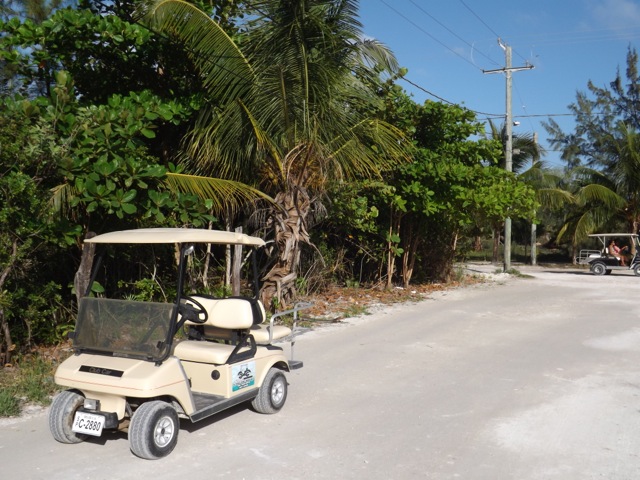
Back on the island, there are several ways to get around. Most people hire cycles and ride around the unsealed, potholed sandy roads but I chose to hire a golf cart, the only powered land vehicle on the island.

wpid-dscf3762-2014-02-24-15-07.jpg

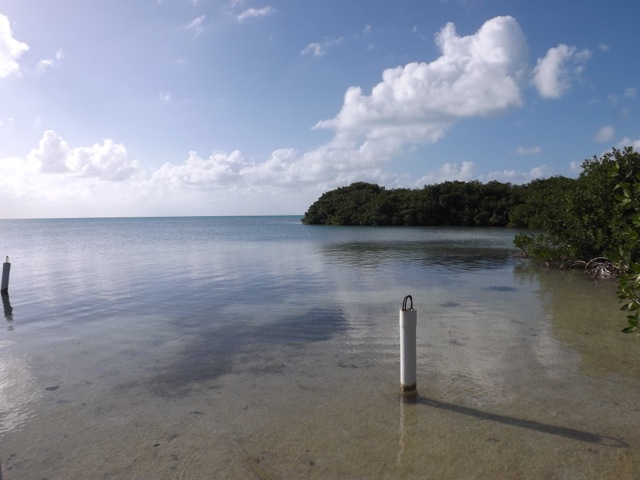
With my ‘wheels’, I toured the quieter end of the island where there were only a few secluded homes and hotels among the plentiful mangroves.

wpid-dscf3752-2014-02-24-15-07.jpg

Overall, Caye Caulker is a great place to spend a few days if you like water activities, seafood, partying or just hanging around with well-tanned beach clad people.

wpid-dscf3733-2014-02-24-15-07.jpg

Next I head into Mexico, my final Latin American country as I follow the trail of the Mayan Ruins.

The World Wanderer

Flores, El Petén, Guatemala – Impressions

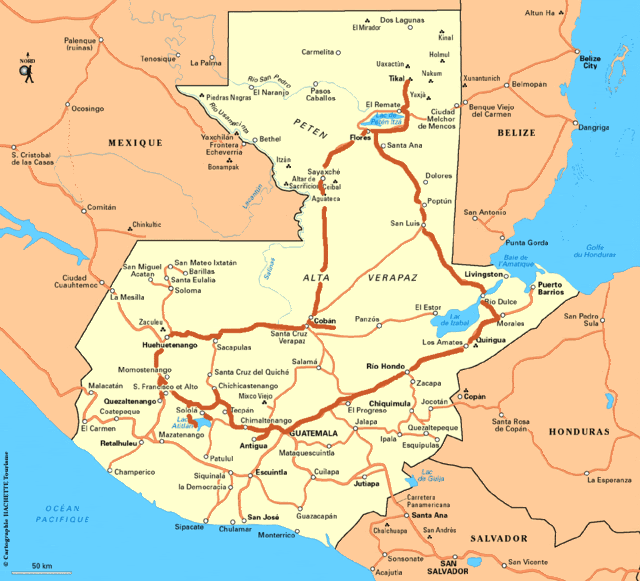
Why the northern province of Guatemala between Mexico and Belize looks like Bart Simpson’s head is anyone’s guess…

wpid-guatemala_map-2014-02-21-18-23.gif

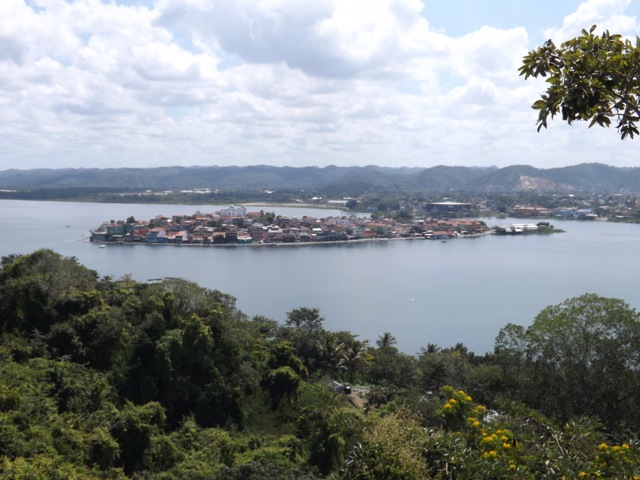
But about where Bart’s eye would be is a lake called Lago de Petén Itzá. And on that lake is the island of Flores.

wpid-dscf3654-2014-02-21-18-23.jpg

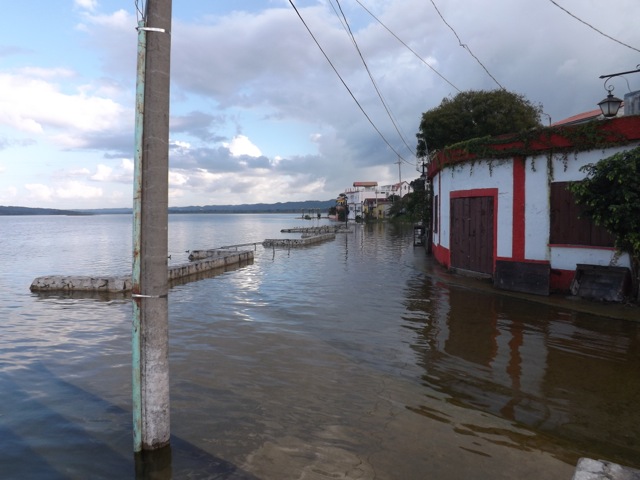
Connected to the mainland by a causeway, Flores is a popular tourist destination with plentiful hotels, hostels, restaurants and bars. The island isn’t that large and is easily walked around in about ten minutes, but unfortunately before my arrival substantial rains had caused the lake’s level to rise, flooding the road that runs around the island in several places.

wpid-dscf3491-2014-02-21-18-23.jpg

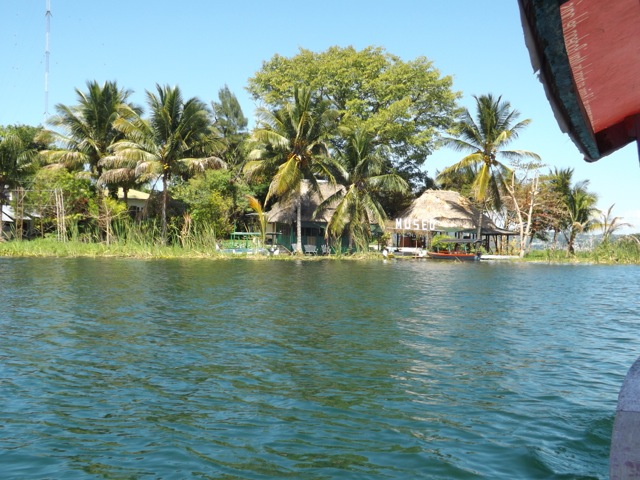
But flooded or not, water taxis transport locals and tourists alike from the island to many locations including the small colourful settlements around the edges of the lake…

wpid-dscf3663-2014-02-21-18-23.jpg

You can also visit the small island of Santa Barbara which holds the local museum, which was unfortunately also flooded when I arrived.

wpid-dscf3643-2014-02-21-18-23.jpg

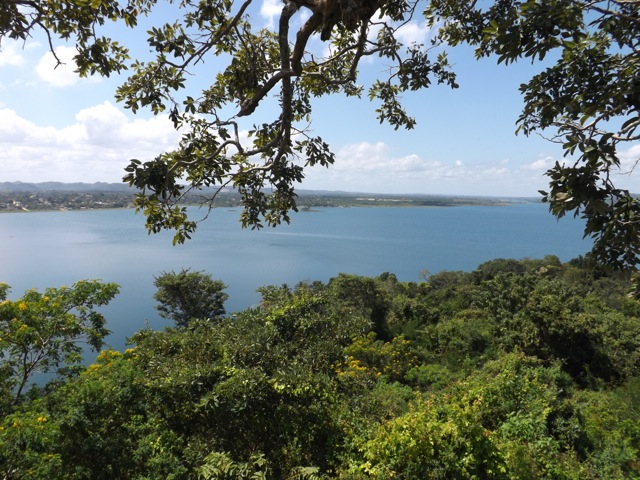
On one side of the lake is a lookout, which after a stiff climb provides impressive views of both the island of Flores and other portions of the lake.

wpid-dscf3660-2014-02-21-18-23.jpg

A short Tuk Tuk ride from Flores is Las Cuevas Actun Kan, a natural system of caves being set up as a tourist attraction. When I visited the complex, which stretch through many caverns both large and small, I was the only one there. The silence underground and the sometimes misleading signs had me walking in circles, which I’m sure would be nerve-wracking for some, but something I thoroughly enjoyed as I eventually navigated my way out.

wpid-dscf3695-2014-02-21-18-23.jpg

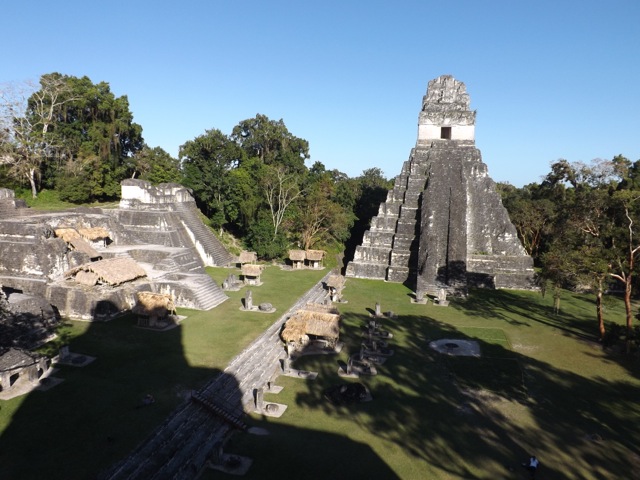
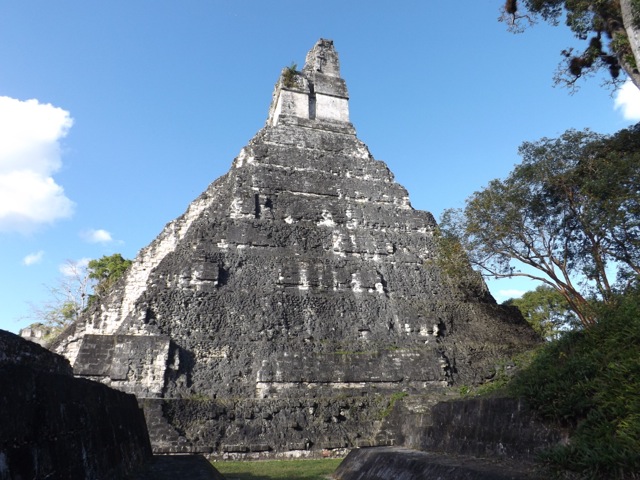
But Flores isn’t the primary reason most people come to this part of Guatemala. Barely an hour by bus north of Flores in the depths of the jungle is Tikal, a set of Mayan temples and ruins dating back before the birth of Christ.

wpid-dscf3567-2014-02-21-18-23.jpg

I chose to take a tour beginning at lunchtime and ending well after dark, walking for several kilometres to various structures in the spread out complex that once housed around ninety thousand people.
wpid-dscf3581-2014-02-21-18-23.jpg

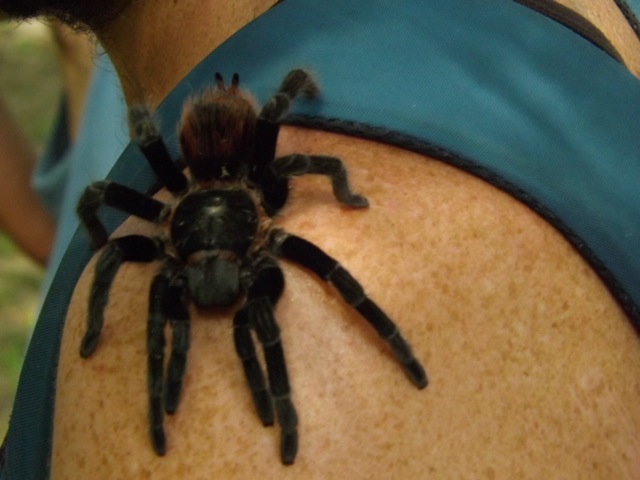
The tour also included encounters with spider monkeys and this cute little guy, a tarantula…

wpid-dscf3528-2014-02-21-18-23.jpg

Then as it began to grow dark we climbed one of the pyramids to watch the sun set across the jungle and the monumental temples rising from the trees.

wpid-dscf3605-2014-02-21-18-23.jpg

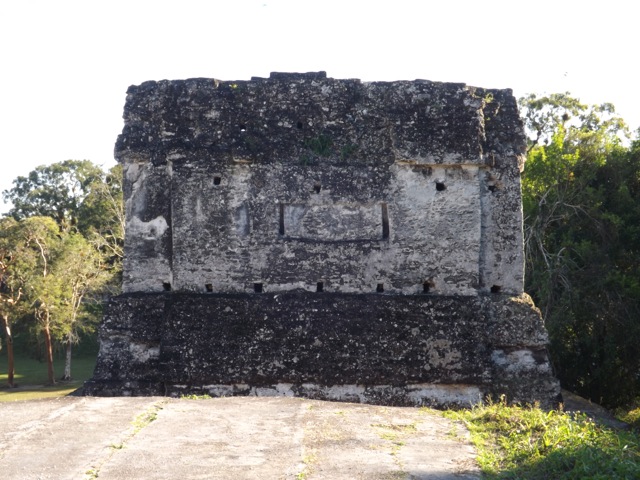
The many temples are a wonder to behold and add to the rich history of Latin America in a similar way as the ruins of Macchu Pichu in Peru, Incapirca in Ecuador and Ciudad Perdida in Colombia.

wpid-dscf3560-2014-02-21-18-23.jpg

My visit to Tikal is the first in a series of Mayan ruins I plan to visit in my last weeks in Latin America.

Next, I travel to the island of Caye Caulker in Belize.

The World Wanderer.

San Pedro la Laguna, Guatemala – Impressions

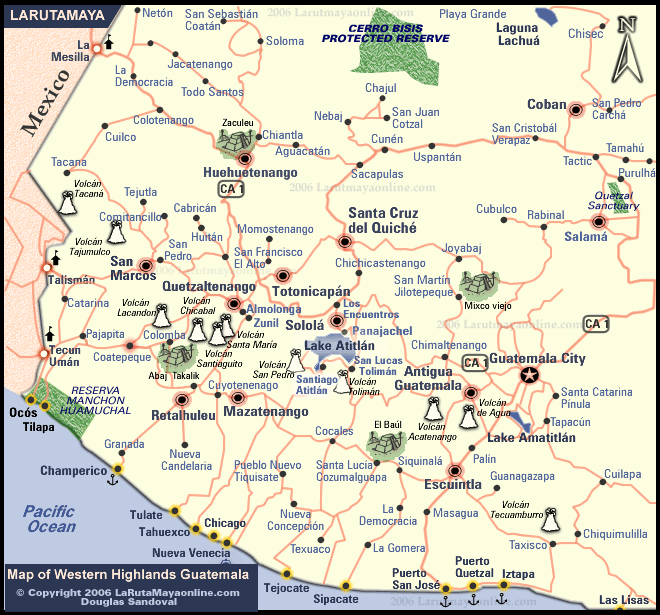
Four hours west of Antigua is Lake Atitlán, the deepest lake in Central America. It was formed 84,000 years ago when a massive volcano collapsed in on itself. There are still three lava filled mounds running along the southern flank of the picturesque lake as part of Volcano Alley.

wpid-guatemala_westernhighlands-2014-02-15-15-29.gif

Of the dozen communities surrounding the lake, of which Santiago Atitlán is the largest, many are not reachable by road.

wpid-dscf3458-2014-02-15-15-29.jpg

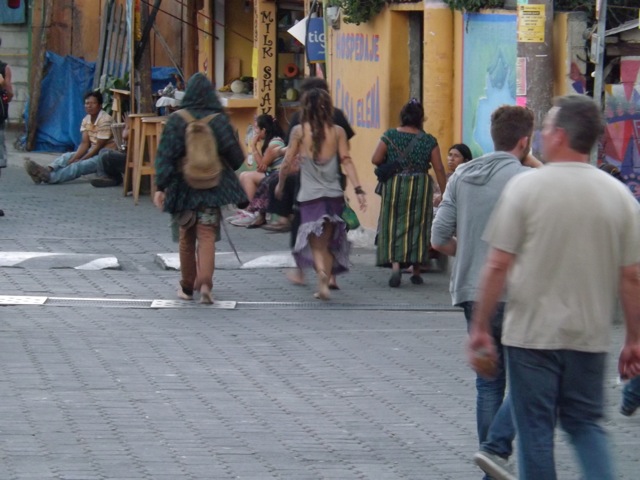
San Pedro la Laguna was the community I chose to visit, but it’s no less touristy than Santiago Atitlán. San Pedro la Laguna has a defined hippy feel to it. Many of the younger locals and long-term visitors not only run art stalls, but in general sport loose-fitting tie-dyed clothing, bare feet, dreadlocks and tattoos. This was due to an influx of ‘hippies’ into the area in the 1960s from the US.

wpid-dscf3482-2014-02-15-15-29.jpg

The streets of San Pedro la Laguna are thin and most don’t accommodate cars or larger vehicles. This leaves the constant sounds of Tuk Tuks and motorbikes zooming about.

wpid-dscf3481-2014-02-15-15-29.jpg

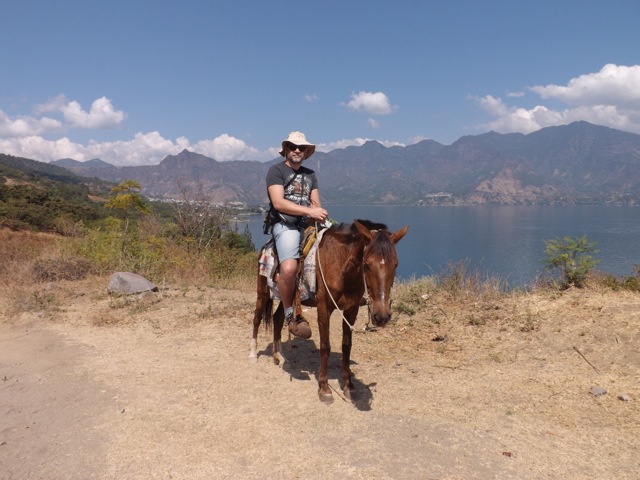
As a quieter means to see some of the sites of the lake I rented a horse and guide…

wpid-dscf3465-2014-02-15-15-29.jpg

We rode for several hours away from the Tuk Tuk horns and the tourists to take in some of the more picturesque sites…

wpid-dscf3469-2014-02-15-15-29.jpg

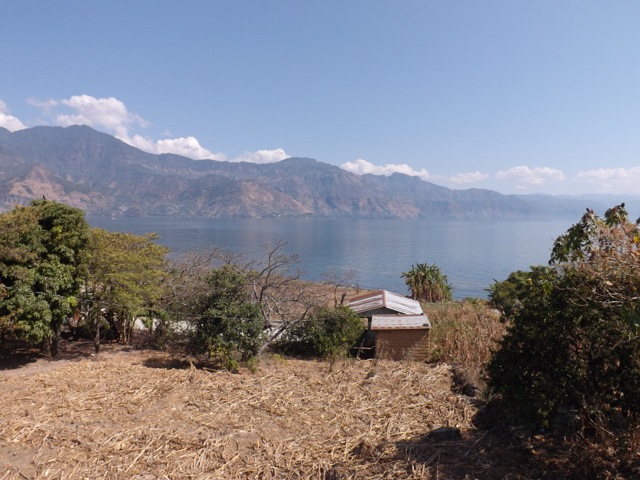
And of course, no view of the lake would be complete without a volcano in the background… Volcán San Pedro.

wpid-dscf3471-2014-02-15-15-29.jpg

After a couple of days relaxing on the lake, I head back to Antigua to plan my trip north to the township of Flores and the Mayan ruins of Tikal.

The World Wanderer
Antigua, Guatemala – Impressions

Nestled under Volcán de Agua in the Guatemalan highlands is the colonial city of Antigua. The city was once capital of Guatemala but has had a rocky history, literally. In 1717 an earthquake destroyed 3000 buildings, then in 1783 another earthquake decimated more of the city, causing those in power to move the capital to the safer Guatemala City.

wpid-guatemala_westernhighlands-2014-02-11-18-02.gif

Because of its location Antigua is a hub to explore Guatemala, with Guatemala City only 45km to the east, the port of San Jose on the Pacific coast an hour south and Lago Atitlan to the west. For those keen enough, a long shuttle ride to the famous Mayan ruins of Tikal far to the north of the country can be organised.

Volcán de Agua…

wpid-dscf3448-2014-02-11-18-02.jpg

The streets themselves are cobbled. But not the perfect jigsaw of cobbles seen in some modern streets, instead a crazy mash of rounded stones that make driving on them in Tuk Tuks a bumpy experience. The city is flat, however, so unless you’re carrying a lot of baggage or just lazy, walking is the best way to get around.

wpid-dscf3434-2014-02-11-18-02.jpg

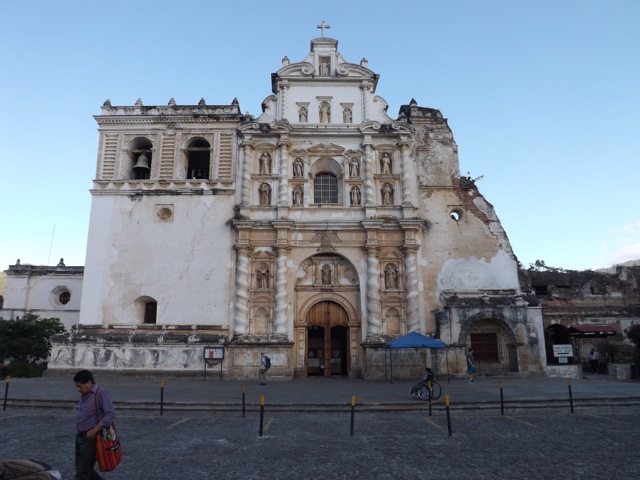
Beyond climbing the volcano it’s the scattered colonial buildings and churches that draw the most interest in the city. While some of the old churches survived the earthquakes…

wpid-dscf3420-2014-02-11-18-02.jpg

… some were not so lucky although still usable.

wpid-dscf3413-2014-02-11-18-02.jpg

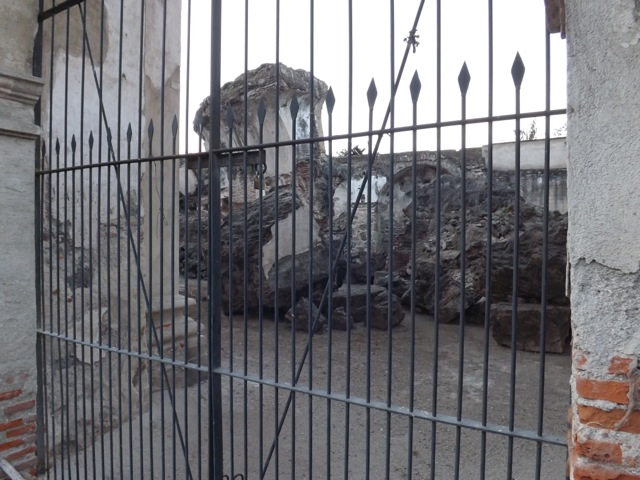
Those that didn’t fare so well have been cordoned off and for good reason.

wpid-dscf3442-2014-02-11-18-02.jpg

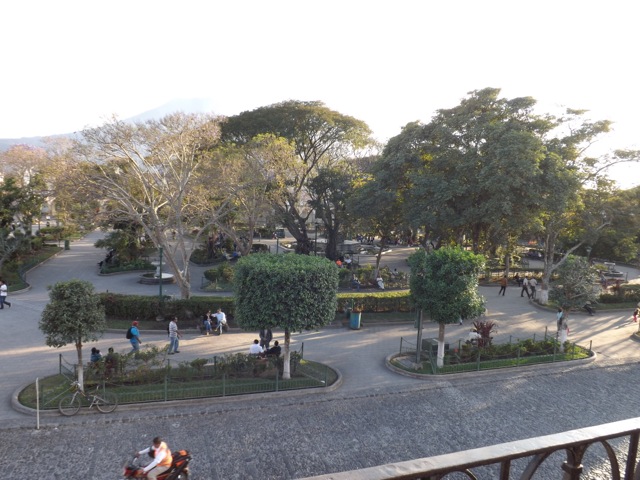
The city does have a touristy feel about to it and because of this it’s more expensive than other places in Guatemala. Around the central park there are many fine restaurants and bars. And for the first time in Central America, a working fountain!

wpid-dscf3424-2014-02-11-18-02.jpg

Next I head west to San Pedro la Laguna on the shores of Lago Atitlan.

The World Wanderer
León, Nicaragaua – Impressions and Volcano Boarding

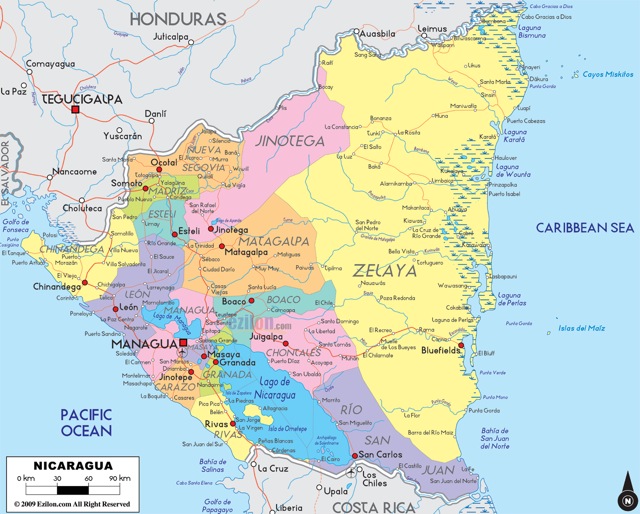
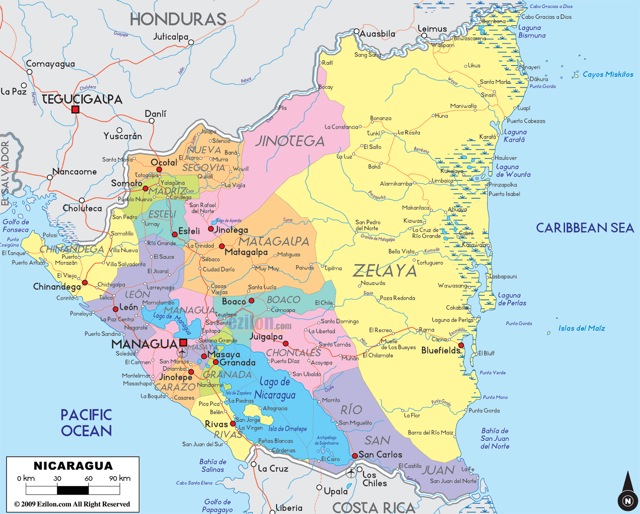
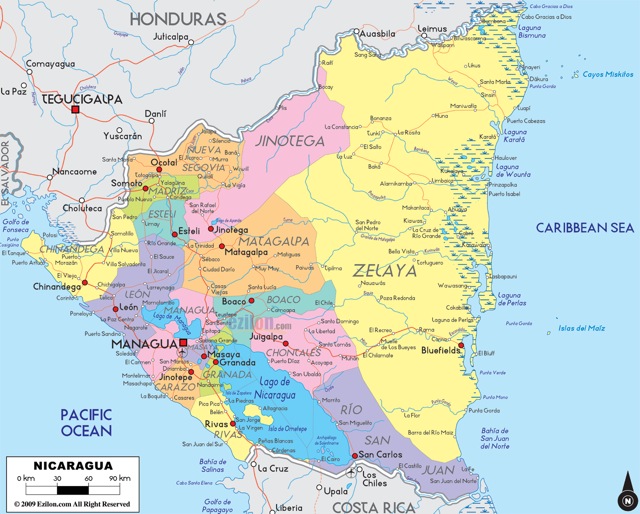
León Nicaragua’s second largest city and was at one point the country’s capital. However, in the 1840s and 50s the capital changed back and forth between León and Granada depending on the political regime at the time. Eventually the capital moved to the city of Managua between the two other cities.

wpid-political-map-of-nicaragua-2014-02-7-21-49.jpg

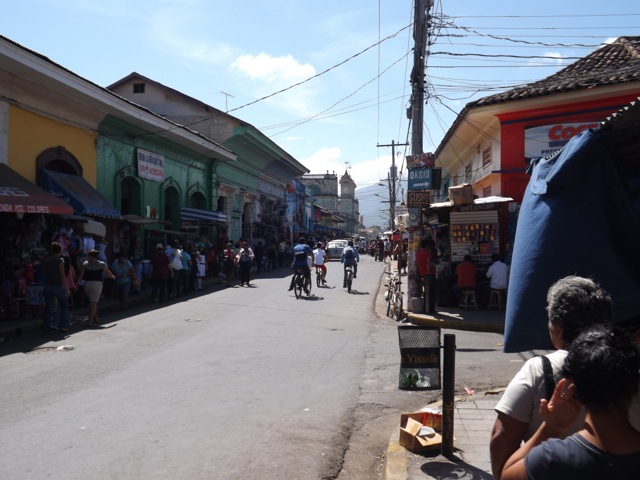
León is similar to Granada in that there’s a large tourist element. While Granada has its central park with a long road of restaurants and bar stretching down to the lake, León bars, restaurants and cafés dot the city, almost hidden among the markets and shops.

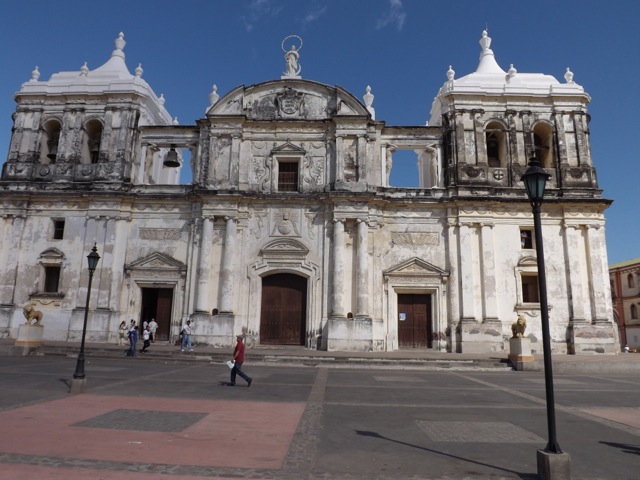
The centre point of the city is the cathedral but at present it doesn’t appear well maintained.

wpid-dscf3407-2014-02-7-21-49.jpg

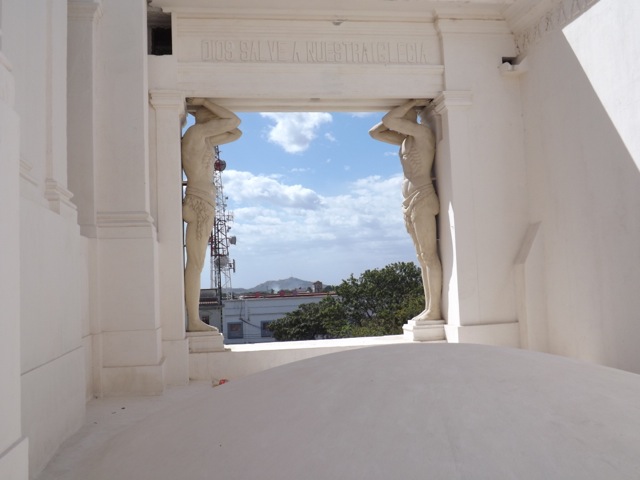
The building is, however, being restored from the roof down. Tourists are able to climb to the newly refurbished rooftop to see the transformation.

wpid-dscf3390-2014-02-7-21-49.jpg

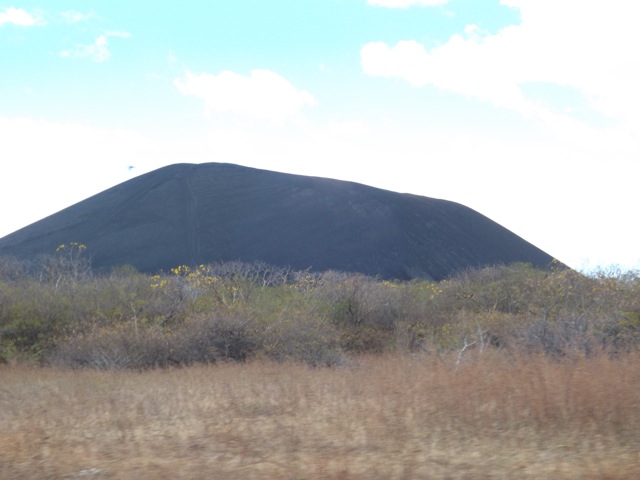
There are several other churches around the city and many are all need of restoration. From the roof of the cathedral there’s a good view across the city and along volcano alley. The shorter dark mound on the left is Nicaragua’s newest volcano and the location of León’s most popular outdoor activity.

wpid-dscf3398-2014-02-7-21-49.jpg

Volcano Boarding
Birthed in the 1850s the small volcano has caused much distress for León, but has also provided the city with a source of tourism – Volcano Boarding.

wpid-dscf3332-2014-02-7-21-49.jpg

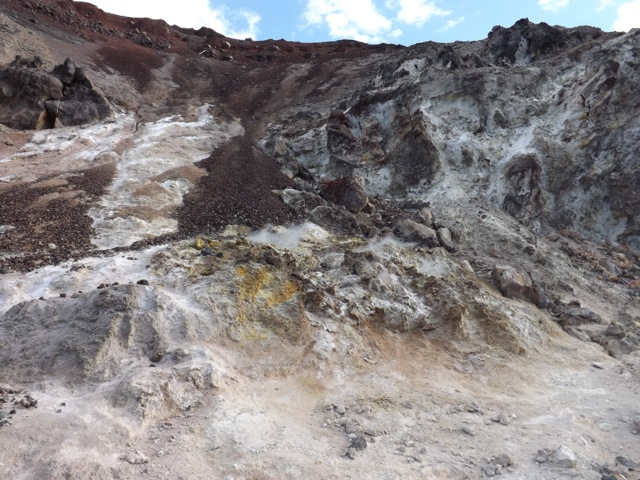
The volcano is only 750m high and made primarily from small rocks and black sands. The summit is inaccessible by vehicle, so getting to the top means climbing though the shifting sands with the volcano board on your back and a bag containing overalls, gloves and goggles. The ascent takes only 45 minutes and climbs through the old crater where stains of sulphur surround smouldering rocks.

wpid-dscf3341-2014-02-7-21-49.jpg

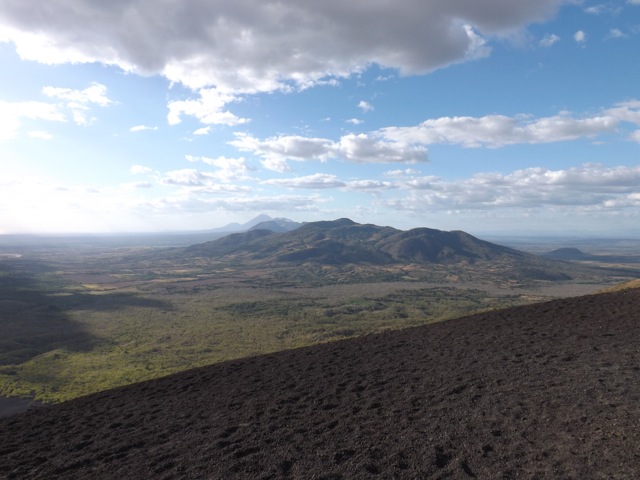
From the top there are magnificent views of the surrounding area, including a view to the Pacific coast and along volcano alley.

wpid-dscf3349-2014-02-7-21-49.jpg

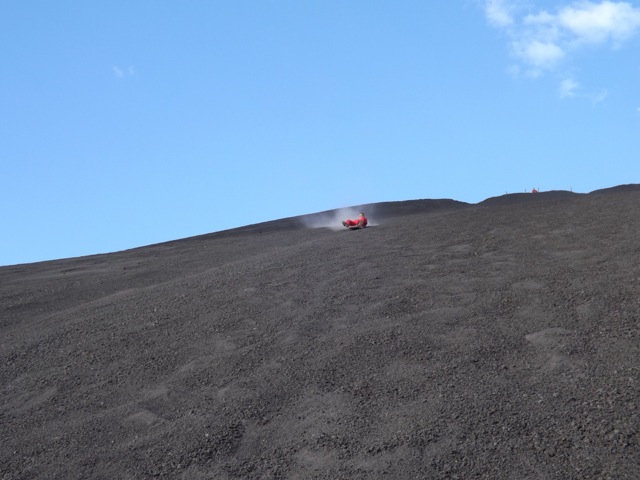
We waited for another group to go down slowly before we donned out red overalls and got our 5 minute training lesson. Then our guide waited for us half way down with camera at the ready. One at a time we pushed over the lip and began the slide down, trying not to collect stones as we went. The first part is moderately steep and allows momentum to be built…

wpid-dscf3375-2014-02-7-21-49.jpg

Then about half way down it gets steeper. The quickest time riding on boards is 93 km/h for men and 80 km/h for women. I managed a meagre 60 km/h and even that was exhilarating. The sand dust flowing behind adds a good effect.

wpid-dscf3378-2014-02-7-21-49.jpg

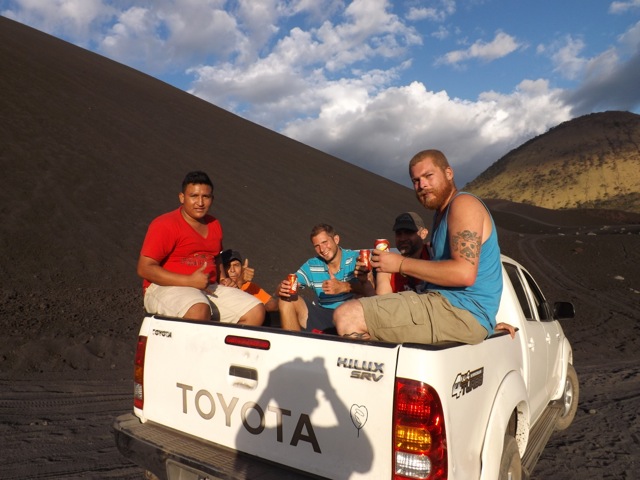
Then at the bottom we are back in the 4WD given a beer and driven back to town.

wpid-dscf3385-2014-02-7-21-49.jpg

Good dirty fun and even though we wore overalls, the dirt and stones get everywhere.

Next, I head north to Guatemala and the colonial city of Antigua.

The World Wanderer
Granada, Nicaragua – Impressions

Situated at the northern end of Lake Nicaragua, the city of Granada claims to be the first city in mainland America settled by Europeans. And while it’s inland and close to the Pacific Ocean it’s still considered a Caribbean port city. This is due to Lake Nicaragua being accessible from the Caribbean Sea by the San Juan river, which runs along the Costa Rican. Indeed, this was the path taken by Caribbean pirates on three separate occasions to attack the city.

wpid-political-map-of-nicaragua-2014-02-4-18-13.jpg

Like many Latin American cities, Granada has dual natures. There is the classic touristy area which sees influxes of people from the US during the northern winter months. Then only a couple of blocks from the tourist centre is the poor market quarter with ramshackle stalls lining the streets.

wpid-dscf3275-2014-02-4-18-13.jpg

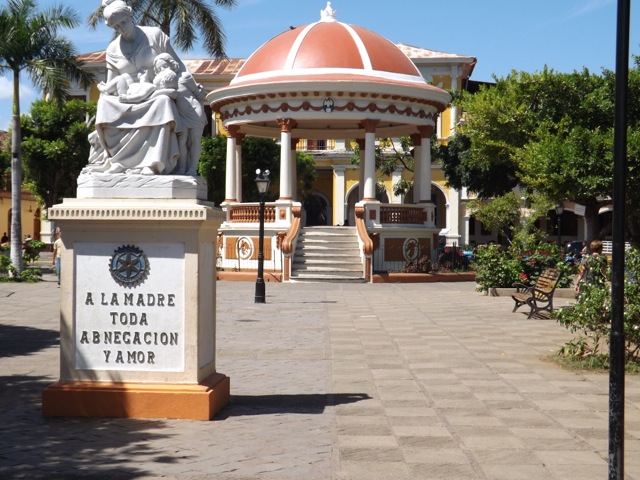
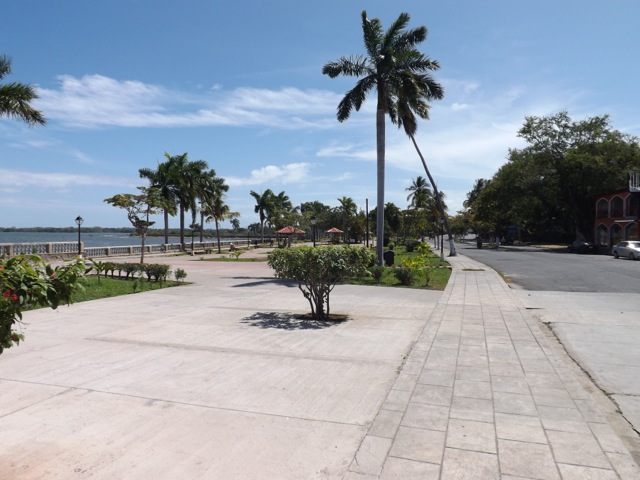
The tourist area begins in the city’s central square which is a well maintained plaza area two blocks long, with cafe’s at each corner.

wpid-dscf3281-2014-02-4-18-13.jpg

Across from the square is the cathedral.

wpid-dscf3283-2014-02-4-18-13.jpg

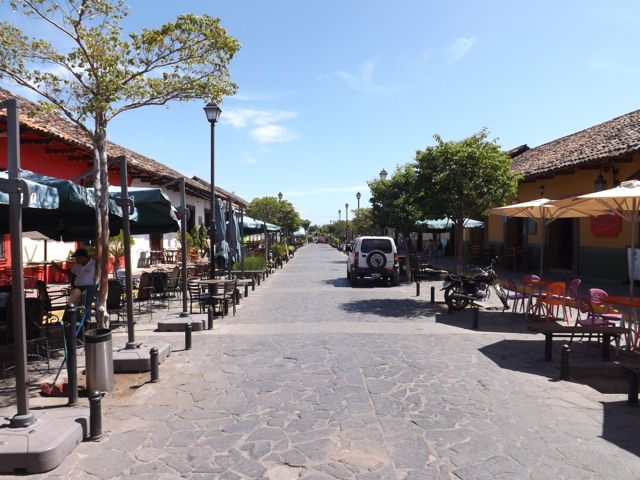
Alongside the cathedral there is a long tourist road, with six blocks of bars and restaurants in hope of catching the tourist dollar.

wpid-dscf3289-2014-02-4-18-13.jpg

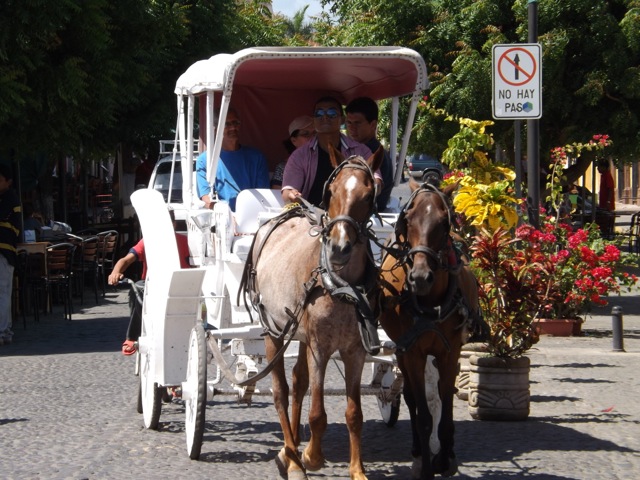
Because of the road’s length, it’s not uncommon to see a horse-drawn carriage laden with tourists traversing it…

wpid-dscf3290-2014-02-4-18-13.jpg

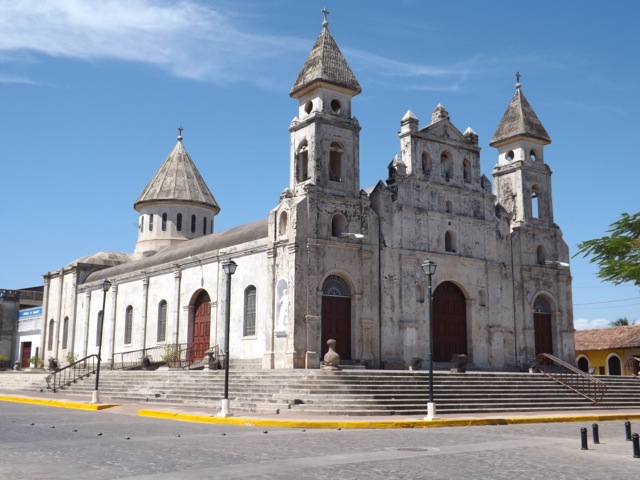
…past a not so well maintained church…

wpid-dscf3292-2014-02-4-18-13.jpg

…to Córdoba Plaza celebrating the city’s founder…

wpid-dscf3297-2014-02-4-18-13.jpg

…to end at the Lake Nicaragua where ferries leave for Isla de Ometepe twice a week.

wpid-dscf3300-2014-02-4-18-13.jpg

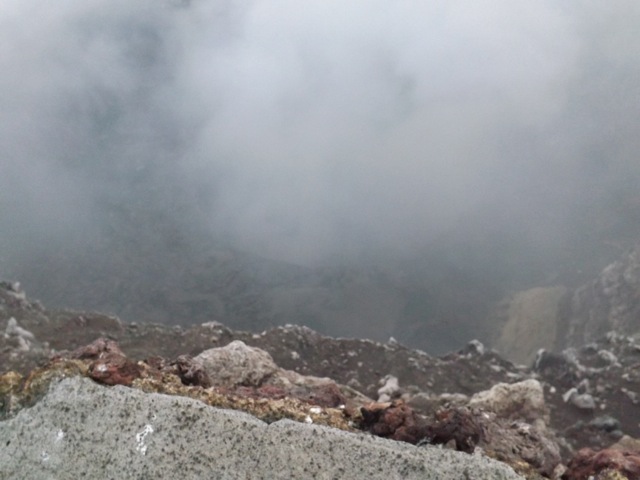
A visit to Granada wouldn’t be complete without a visit to Nicaragua’s most active volcano, Volcán Masaya. While it’s fairly short for a volcano at 600m above sea level, it’s one of 19 volcanoes that make up Nicaragua’s volcano alley. Volcán Masaya weeps acrid smoke constantly from its crater.

wpid-dscf3308-2014-02-4-18-13.jpg

The land around the volcano shows plentiful signs of the devastation it has caused over the years. Around the main crater there are four other craters that were once active, but have since closed over.

wpid-dscf3321-2014-02-4-18-13.jpg

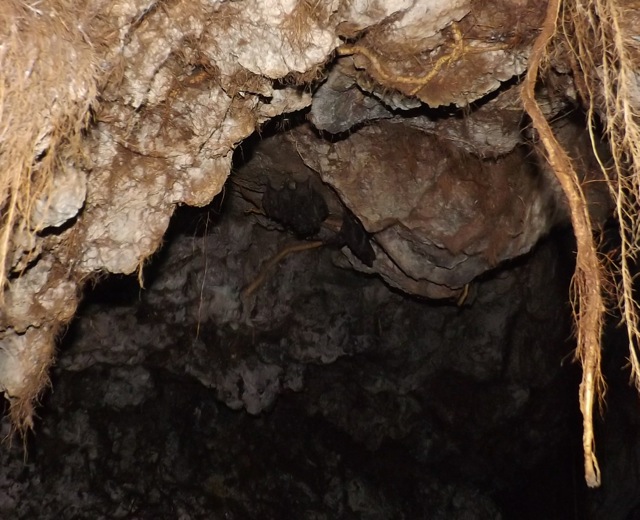
Often a trip to the crater at night gives the sight of glowing lava in the crater, but with the lack of wind at sundown, the fumes made it too dangerous to get close enough. Nearby there is, however, a large lava tunnel over 200 metres long which is now inhabited by several varieties of bats.

wpid-dscf3324-2014-02-4-18-13.jpg

With about twenty of us walking into the caves the bats get stirred and you can see them flying about and whipping past your ears. It’s exhilarating for those of us who love bats, but terrifying for those that who don’t.

This is but a small section of things that can be done in and about Granada.

Next I’m off to the city of Léon in northern Nicaragua to slide down the black sands of a volcano on a snowboard…

The World Wanderer
Volcán Concepción, Nicaragua

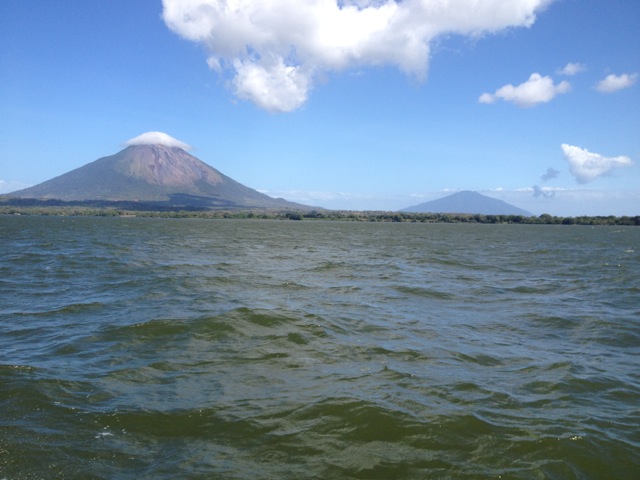
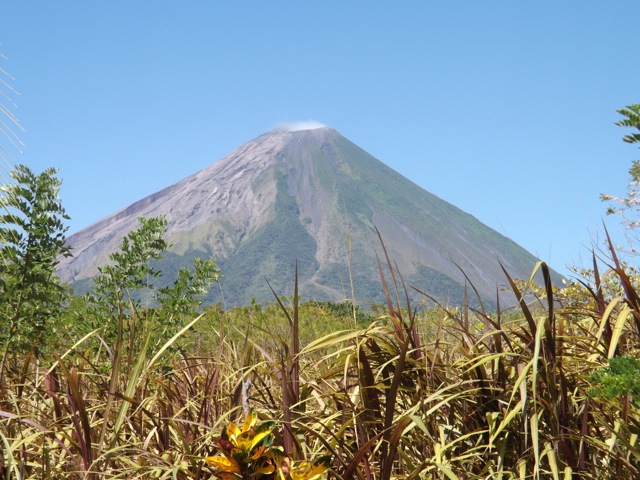
The towering cone of Volcán Concepción on Isla Ometepe looks imposing when crossing Lake Nicaragua towards it. The closer the perspective, the more intimidating the peak, which usually has a cap of cloud atop it…

wpid-img_1677-2014-02-3-13-57.jpg

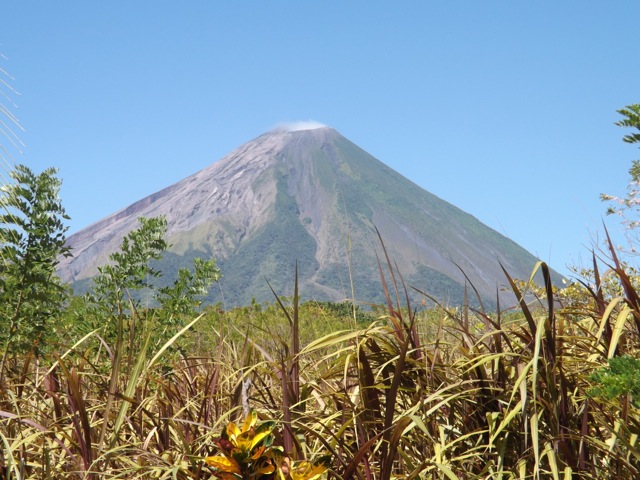
But on the rare occasion when the clouds do disappear the full cone is visible in all it’s splendour. This was how it was the day before we were due to climb it.

wpid-dscf3239-2014-02-3-13-57.jpg

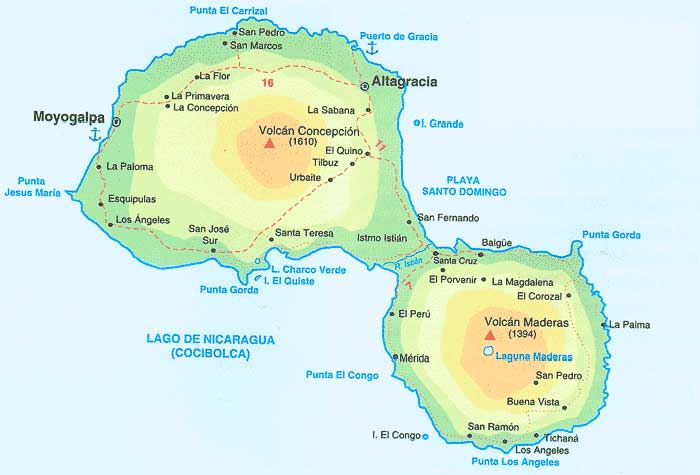
When looking to climb one of the two volcanos on Isla de Ometepe, I’d decided on Volcán Maderas, Volcán Concepción’s little sister. I was told that both volcanoes take the same amount of time to climb, but Volcán Maderas was muddier and less fun. So, eight of us from the hostel booked Volcán Concepción instead. We hoped for another beautifully clear day but we were to have no such luck.

wpid-ome-map700-2014-02-3-13-57.jpg

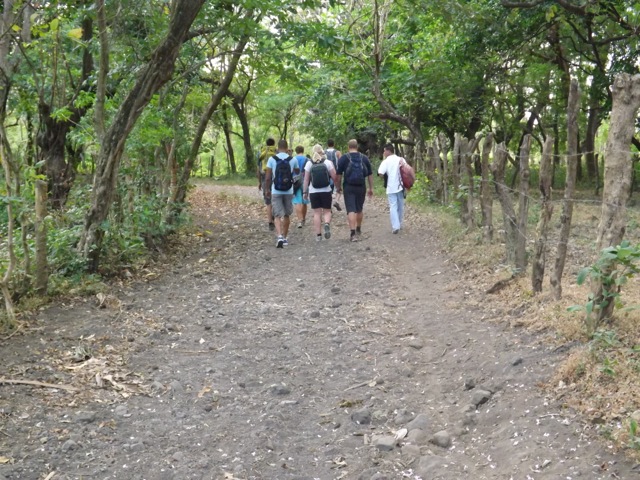
We met our guide during breakfast in the town of Moyogalpa and caught a chicken bus for 20 minutes to the trailhead where we began walking along the trail strewn with rocks and sand.

wpid-dscf3255-2014-02-3-13-57.jpg

We followed the track for 30 minutes, stopping to peer up at a group of Howler Monkey’s in the trees. It’s amazing how much noise these small monkeys actually make.

wpid-dscf3257-2014-02-3-13-57.jpg

The trail abruptly became steeper and our climb began. The trail began fairly steeply through the trees on roots and dirt steps. While the climb wasn’t overly hard, it seemed harder because of the humidity. We stopped regularly for 5-minute breaks, although there were no views available through the trees.

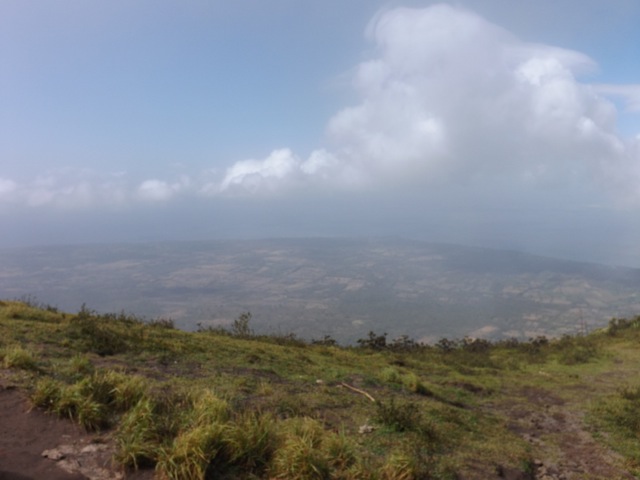
The only forewarning we had of coming to the tree line was the cool wind, a godsend in the humidity. When we did break the tree line we emerged into the clouds which again obscured our view. We stopped in a windy spot to decide our next course of action and managed to get a cloudy shot of the island below us.

wpid-dscf3258-2014-02-3-13-57.jpg

Then came the difficult decision: continue climbing to the top covered in cloud the entire time with no visibility or head down to a more scenic viewpoint. We decided to climb a little further but after ten minutes and being battered by cold winds in the dense clouds we turned back, deciding to take the scenic path instead. This upset two of the climbers, both of whom wanted to get to the top no matter what.

We followed a thin trail around the side of the volcano and dropped below the cloud line to a point where we could finally get some decent photographs of the island below and the lake around it.

wpid-dscf3268-2014-02-3-13-57.jpg

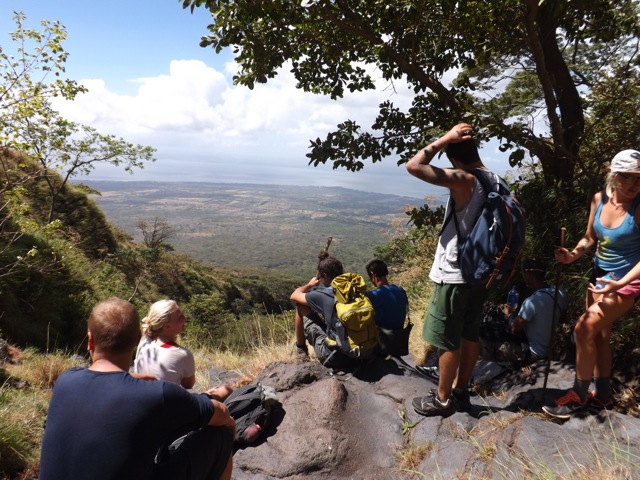
We continued climbing around to a large crack running down the volcano where lava had flowed years earlier. We took a break on the hardened lava.

wpid-dscf3270-2014-02-3-13-57.jpg

The lower we climbed, the more the mainland of Nicaragua could be seen on the other side of the lake and beyond that in the distance, the Pacific Ocean.

wpid-dscf3271-2014-02-3-13-57.jpg

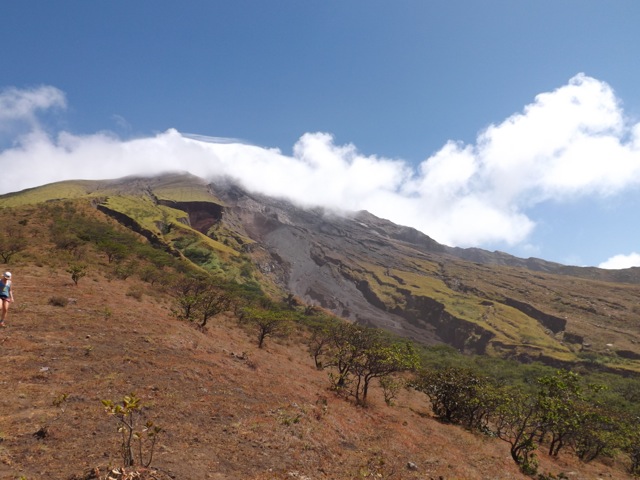
As we neared the bottom, we looked back up the great crack in the side of the mountain.

wpid-dscf3274-2014-02-3-13-57.jpg

And because we hadn’t come back down the same way we’d climbed, we had to walk ninety minutes back across the island to Moyogalpa.

Overall, the hike was not as difficult as expected, although it may have grown more so had we pushed on through the clouds to the top. I’m not unhappy to not have made it to the top, as without pictures it would have been an empty victory.

The Lone Trail Wanderer

Isla de Ometepe, Nicaragua – Adventures by Scooter

Lake Cocibolca (also known as Lake Nicaragua) is the 19th largest lake in the world taking up about 7% of the country’s land mass.

wpid-political-map-of-nicaragua-2014-02-2-17-24.jpg

Easily visible from the lake’s western shore, the largest island on the lake, Isla de Ometepe, is home to two volcanic cones, Concepción and Maderas. It’s these two volcanoes that bring much of the tourism to the island.

wpid-img_1677-2014-02-2-17-24.jpg

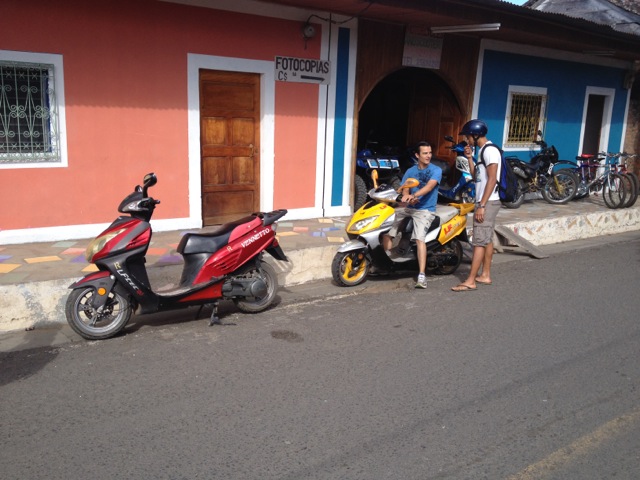
There are several ways to get around this 31km long island: by bus, bicycle, scooter, dirt bike or quad bike. While the bus doesn’t go very often, the bicycles can be rough on the hills, the dirt bike requires a prior riding history and the quad bikes were expensive, my friend from the hostel and I chose the scooters.

wpid-img_1688-2014-02-2-17-24.jpg

After picking up the scooters we decided to ride to the end of every paved road on the island before going to any of the attractions. It’s exhilarating riding down hills at a top speed of 90km/h with the wind flowing madly past, then screaming to halt at the many speed humps across the island, some taking us by surprise as they were unpainted. With the threat of having to pay for any damages, including scratches, we were overly careful.

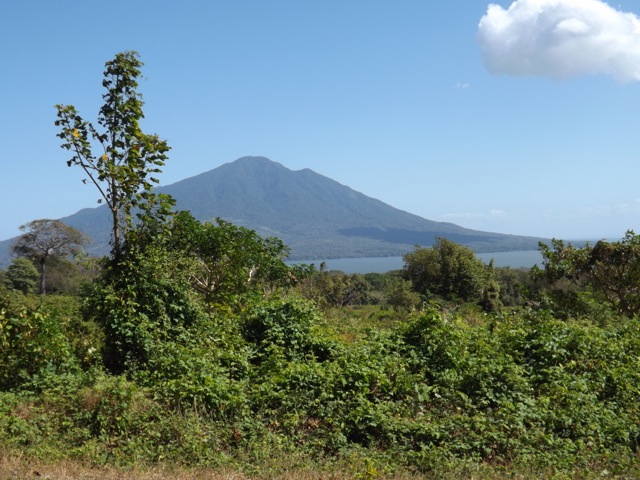
As we rounded the island we stopped to take in the view of Volcán Maderas still covered in clouds.

wpid-dscf3229-2014-02-2-17-24.jpg

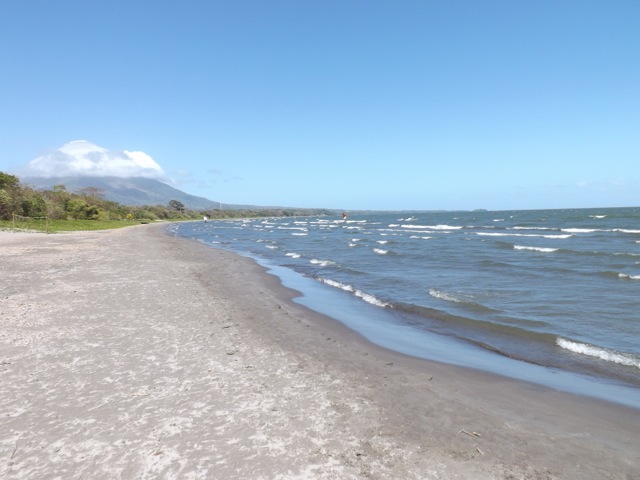
It took only 90 minutes to ride all of the paved roads. The first of the island’s attractions was windblown Santo Domingo Beach with a kite surfer and a cloud drowned Volcán Concepción in the background.

wpid-dscf3231-2014-02-2-17-24.jpg

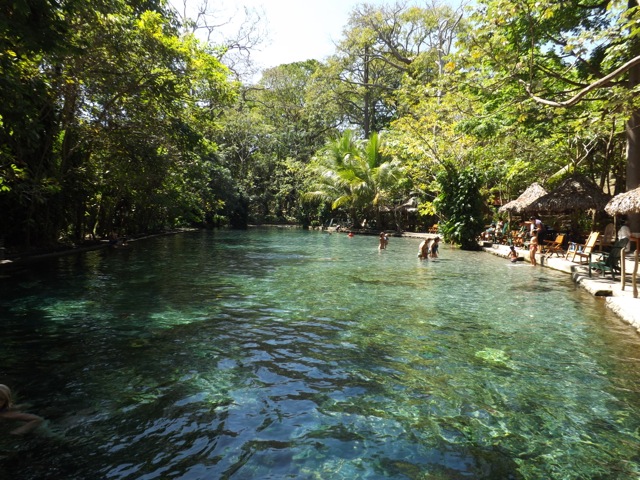
Next we stopped for a swim at Ojo de Agua – Eye of Water, a natural spring pool on the flat area between the two volcanoes. While the water wasn’t as warm as expected, it wasn’t too cold either. Great for a swim on a warm day!

wpid-dscf3236-2014-02-2-17-24.jpg

As we rode, the clouds cleared completely from the volcanos for the first time in 2 months. Volcán Maderas which last erupted more than 3000 years ago…

wpid-dscf3238-2014-02-2-17-24.jpg

And Volcán Concepción, erupting last in 1986…

wpid-dscf3239-2014-02-2-17-24.jpg

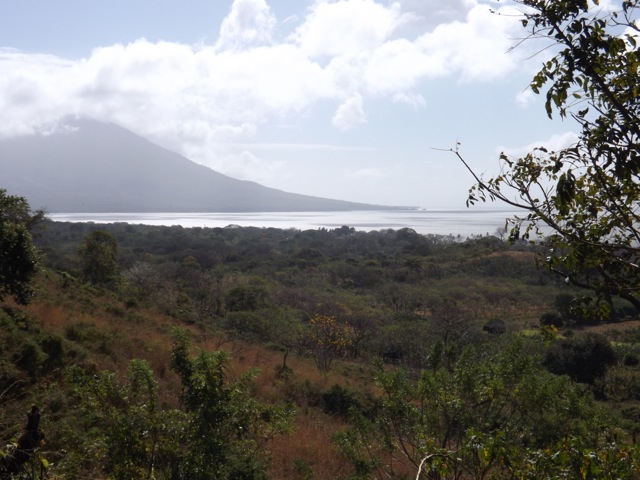
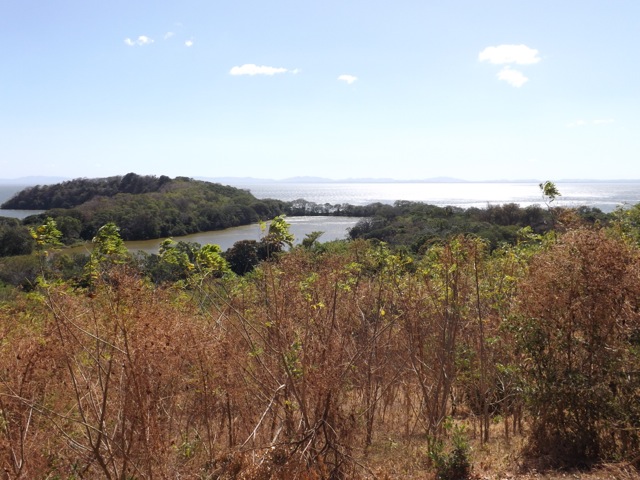
On the way back to town we stopped at the Conservation Park ‘Charco Verde’, and climbed a hill to get a view of Laguna Charco Verde, the largest lake on the island on the lake.

wpid-dscf3240-2014-02-2-17-24.jpg

Then as we walked around the laguna we came across a family of monkeys high in the trees…

wpid-dscf3245-2014-02-2-17-24.jpg

Lastly, we found our way to Punta Jesus Maria for a relaxing beer at the end of a great day.

wpid-ni6a6e1-2014-02-2-17-24.jpg

After an hour at the beachside, we drove back to town, dropped off the bikes and headed to the hostel for another beer.

There were more places on the island we could have visited, but most were inaccessible to our scooters. These included other beaches, a waterfall, and several other towns. But even though we missed them, we still had a full day and enjoyed the experience.

Next, we climb the cone of Volcán Concepción.

The World Wanderer
San Juan del Sur, Nicaragua – Impressions

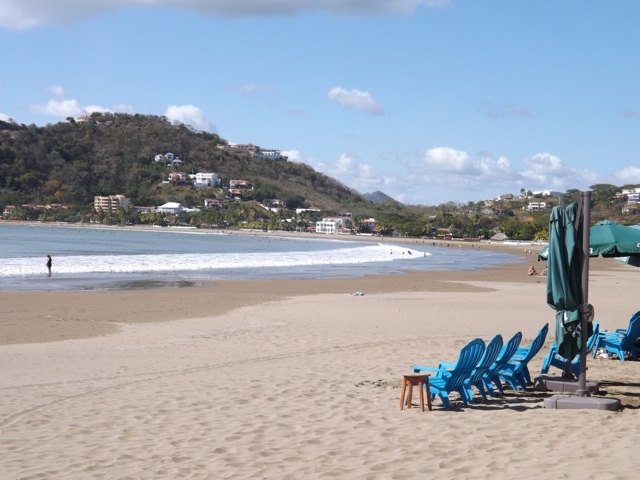
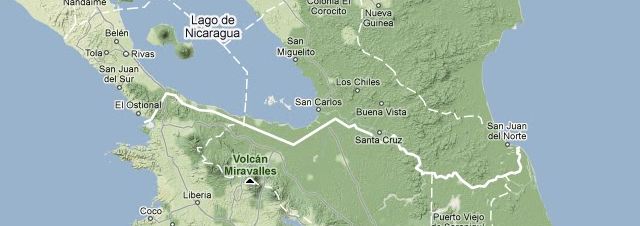
Thirty kilometres north of the Costa Rican border on the Pacific Coast is the beach town of San Juan del Sur (San Juan of the South). The town is known to tourists as San Juan del Surf because of its proximity to several good surf beaches.
wpid-dscf3226-2014-01-28-14-37.jpg

The oddity of the name is apparent when you realise that San Juan del Norte (San Juan of the North) – situated on the Caribbean Sea, is actually further south.

wpid-costanicaoverview-2014-01-28-14-37.jpg

For over 130 years San Juan del Sur was a little backwater town in southern Nicaragua, then in 1992 a tsunami destroyed a large portion of the town. Its recovery was helped greatly by the ‘gringo’ invasion, with many migrants arriving from the US, Britain and Canada. Scattered throughout the surrounding hills are many mansions and resorts…

wpid-dscf3218-2014-01-28-14-37.jpg

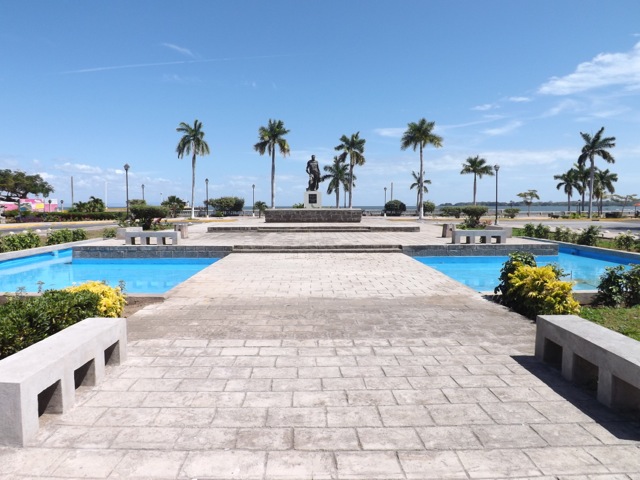
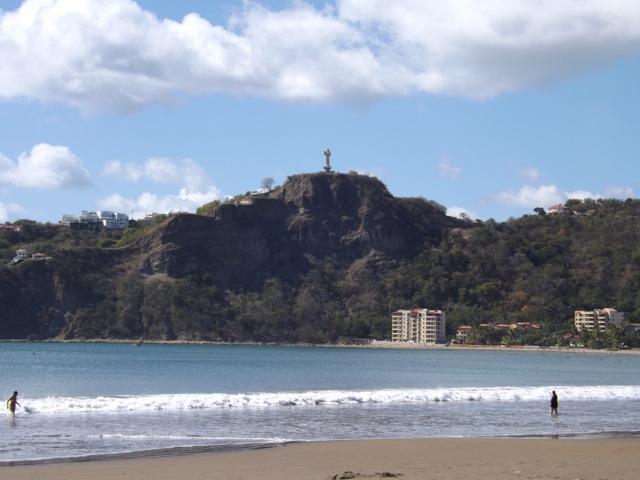
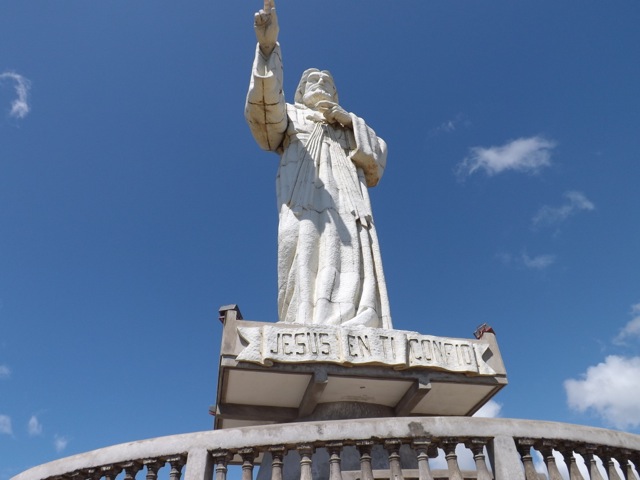
At the northern end of the cove is the statue of Jesus de la Misericordia – Christ of Mercy.

wpid-dscf3225-2014-01-28-14-37.jpg

It’s one of 17 giant statues of Christ throughout the world. The most famous being Christ the Redeemer in Rio de Janeiro, Brazil. La Paz, Bolivia has the tallest at 34m, while San Juan del Sur’s Jesus de la Misericordia is the 9th tallest at 26 metres tall.

wpid-dscf3209-2014-01-28-14-37.jpg

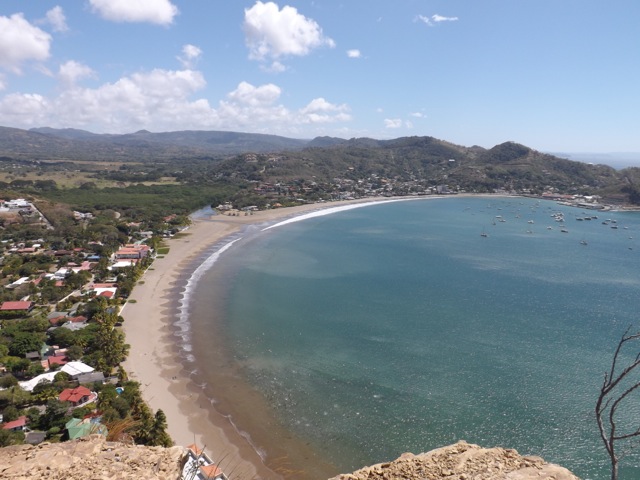
Climbing the hill to the statue is fairly easy, a cobbled road weaves it’s way to the top. While it’s steep at points, it’s not too strenuous and gives great views of the cove and township.

wpid-dscf3210-2014-01-28-14-37.jpg

Beyond surfing and swimming, the nightlife is the other main focus of the town as there are many beachfront restaurants and bars. As a large portion of the tourists visiting are in their 20’s, there are plenty of party hostels with raucous parties raging on until the wee hours most nights. But don’t let that put off the older traveller…

wpid-img_1674-2014-01-28-14-37.jpg

Overall, the beach town of San Juan del Sur is a great way to spend a couple of days, the surf town vibe is relaxing and fun.

Next, I head to Isla Ometepe, an island made up of twin volcanos in on Lake Nicaragua.

The World Wanderer