Tag Archives: Beach

Rio de Janeiro, Brazil – Adventures

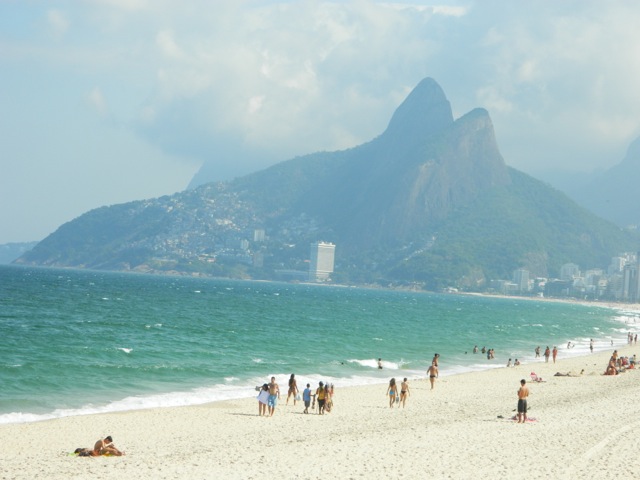
Rio de Janeiro is Brazil’s second largest city. There’s so much going on in Rio that it’s one of the more interesting and entertaining cities I’ve been to in South America. Rio is nestled among some monolithic hills on the edge of the bay similar to the Glasshouse Mountains on the Sunshine Coast in Queensland, Australia.
wpid-dscn2820-2013-07-8-15-35.jpg

The city is rather spread out with a pair of small national parks nestled within the city. And, unlike elsewhere in South America, there’s a decided lack of dogs in Rio. Which means there’s a lot less dog crap on the streets and that cats reign supreme in the city.

My 24 hour trip to Rio was my longest bus ride to date. Most buses I’ve travelled in have been semi-cama (half bed) – similar to many air line seats – while there have been a handful of full-cama – almost full bed. The bus to Rio was all full-cama and quite comfortable but it didn’t have a food service. This turned out well though as for al meals the bus stopped at buffet restaurants that charge by the kilogram .

When I arrived in Rio, I found it to be the dirtiest city that I’ve been in so far, with graffiti covering the majority of the buildings. It didn’t give me the safest feeling. I quickly caught a taxi to my hostel, which turned out to be a very small place with people jammed into 3 small rooms and very little else. One bathroom for 18 people is just not enough. The hostel was also in a central area of town and not in the more famous beach areas. It was very cheap, so I guess you get what you pay for.

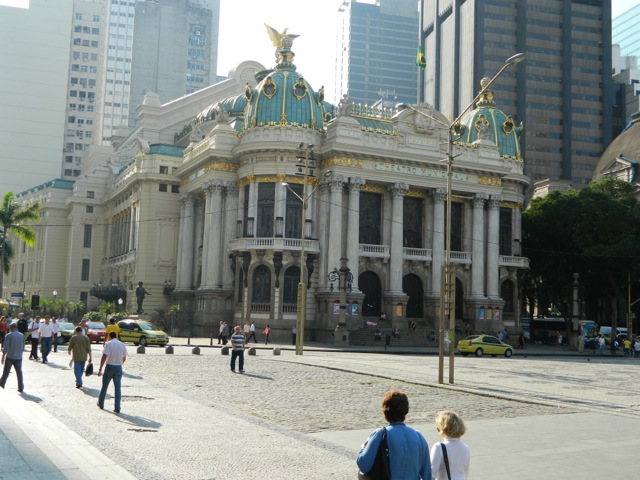
A couple of days later, I did a walking tour around the city to some of the more prominent sites in the central city and Lapa, the famous samba party suburb next to it. The city has many well designed buildings, churches, museums and municipal theatres.
wpid-dscn2709-2013-07-8-15-35.jpg

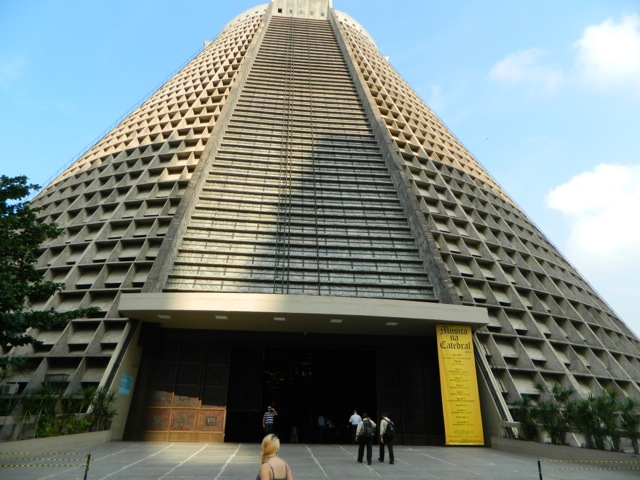
The cathedral is like no other cathedral I’ve seen.
wpid-dscn2705-2013-07-8-15-35.jpg

It holds 10 thousand and has amazing acoustics. Looking up from the inside…

wpid-dscn2708-2013-07-8-15-35.jpg

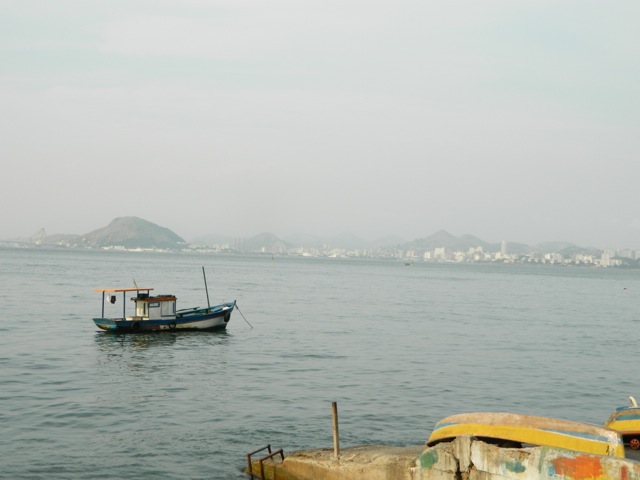
Then, from the central city you can look out across the bay to the suburbs on the eastern shore.
wpid-dscn2713-2013-07-8-15-35.jpg

Next, I booked a full city tour, to do some more of the touristy things. It took me to the Lapa Steps built by a Chilean artist…
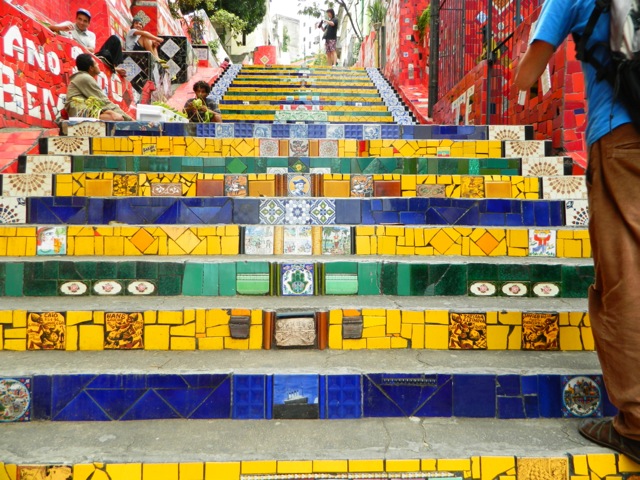
wpid-dscn2758-2013-07-8-15-35.jpg

… to the Lapa arches, Maracanã stadium before up the mountain to see the most famous of attractions in Rio, Cristo Redentor – Christ the Redeemer.
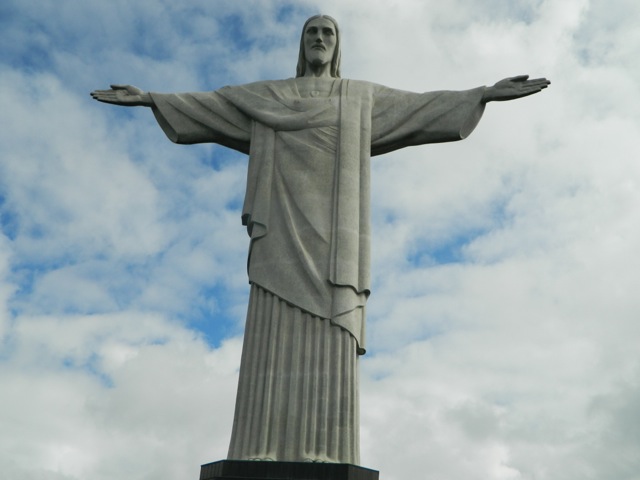
wpid-dscn2736-2013-07-8-15-35.jpg

The hill it stands on gives great views over one part of the city and the peninsula that ends with Sugarloaf Mountain.

wpid-dscn2746-2013-07-8-15-35.jpg

Lasty, we were delivered to the end of the peninsula and took cable cars up to Sugar Loaf mountain. The views from both mountains are amazing.
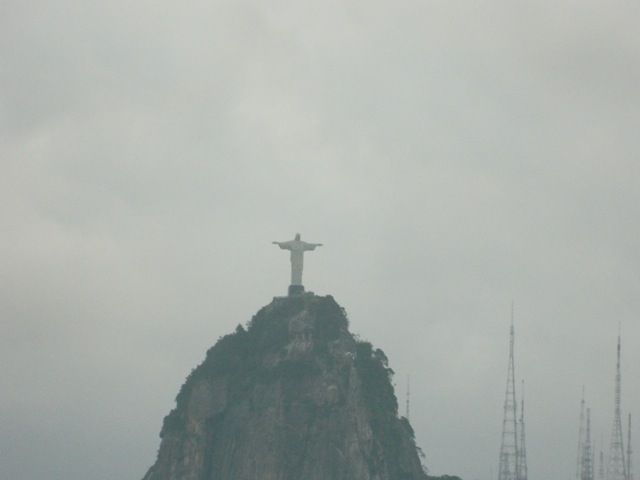
wpid-dscn2767-2013-07-8-15-35.jpg

Getting to the top of the monolithic Sugar Loaf is a two step journey, the first up to Morro da RCA then up via the cable car another 1500m to Pão de Açúcar (Sugar Loaf Mountain).

wpid-dscn2784-2013-07-8-15-35.jpg

We stayed up there until sunset and watched the lights of the city appear below us. Definitely a spectacle to be seen.

wpid-dscn2807-2013-07-8-15-35.jpg

After a week in a tiny hostel in the city, it was time to move to the beach, so I booked three nights at a Copacabana beach hostel. On the second day, I hired a bike and rode the length of the busy Copacabana and Ipanema beachs.

wpid-dscn2809-2013-07-8-15-35.jpg

While it’s the middle of winter, it’s a beautiful 27ºC here and the beach has plentiful sun bakers, kite surfers and beach sports. The classic brazilian bikini is everywhere…

Rio de Janeiro has been an awesome experience. It feels more like a group of very different cities all merged in together.

Next I head towards Bolivia, stopping off in the Pantanal, the worlds largest wetlands…

The Lone Trail Wanderer
Antarctic Voyage – The Journey Back to Civilisation.

Find Days 1 – 3 here: We’re Going South Baby, WAY South!
Days 4 – 5 here: Along The Great White Peninsula
Days 6 – 7 here: Next Stop, The Polar Circle

Day 8 – Returning Along The Peninsula

Last night the swell rocked the boat so madly many people were unable to sleep. While the seas weren’t often bad and many of us no longer show signs of sea sickness, some can barely get out of bed to attend meals.

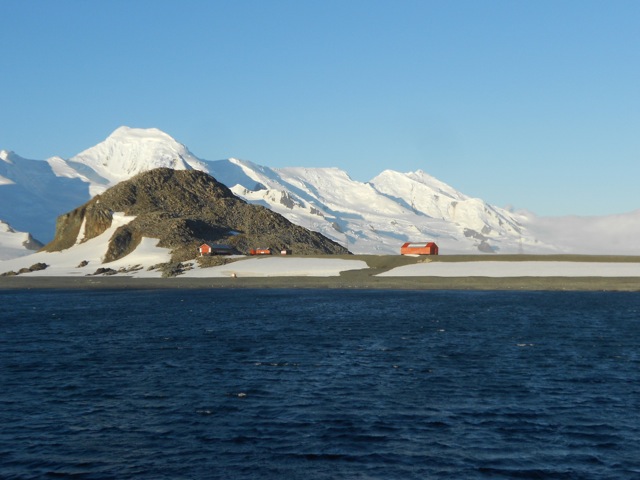
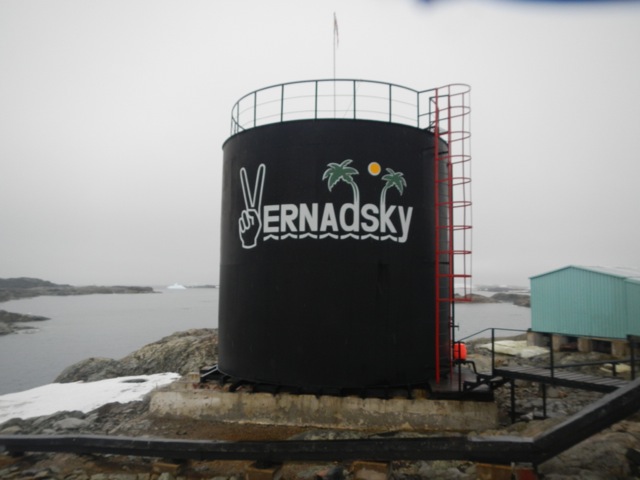
On the morning of Day 8 we anchored off Verdnasky Island and were invited by the Ukrainian science team there to visit Verdnasky station.

wpid-dscn1932-2013-03-21-16-10.jpg

We broke into three groups: a third visited the station first, another third visited the abandoned Wordie station on the other side of the same island, and the remaining third were the kayakers and divers.  Each group eventually got a turn to visit the main research station.

wpid-dscn1931-2013-03-21-16-10.jpg

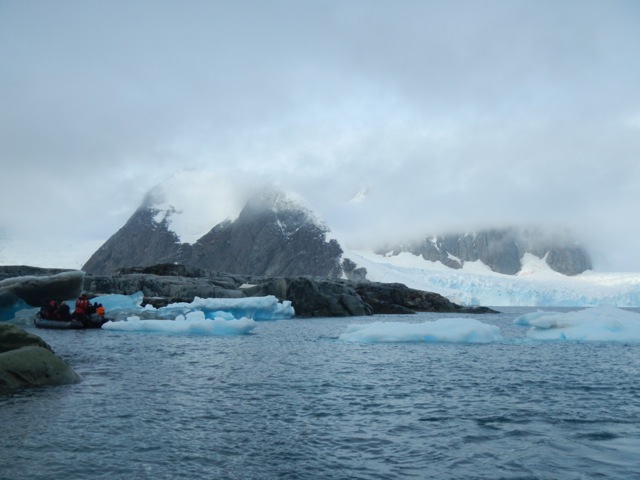
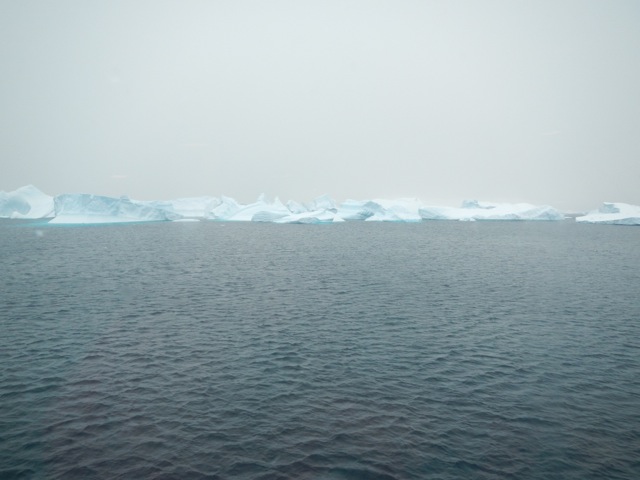
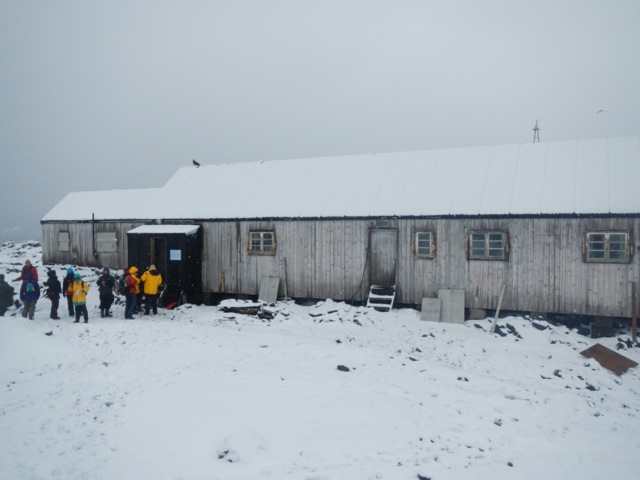
Wordie Station was the original research station and must have been built for short, thin people as it’s pretty cramped.  When researchers moved to the newly built Vernadsky station, Wordie station was converted into a museum.  To get between the two stations we had to cruise through sets of pure blue icebergs with amazing natural textures on them.

DSCN1922

Verdnasky Station is huge in comparison to Wordie with a pair of long sprawling corridors leading to many different science labs. Outside there are other rooms and silos for storage, additional labs and fuel. Upstairs there’s a relaxation room which holds the southernmost gift shop and the southernmost Post Office in the world, where we got our passports stamped and sent postcards (most took more than a year to arrive). Through an archway was the world’s southernmost bar where we could buy large shots of vodka for US$3.

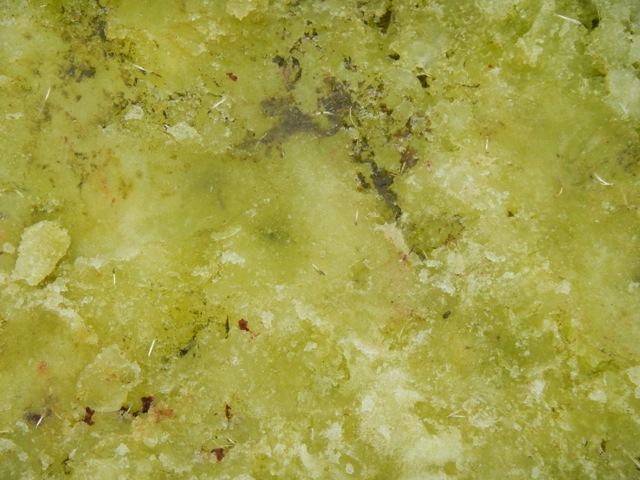
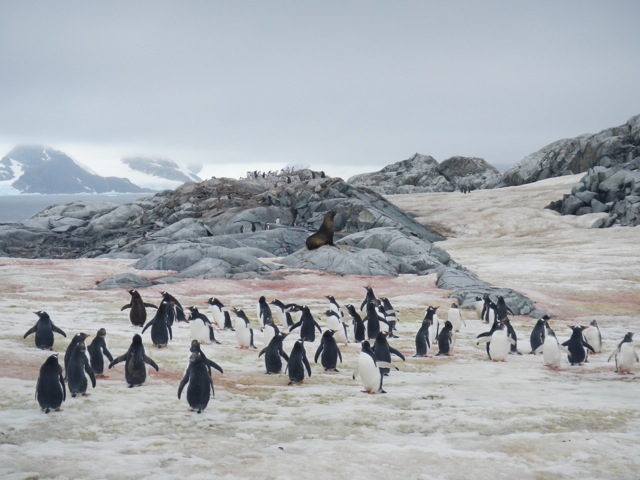
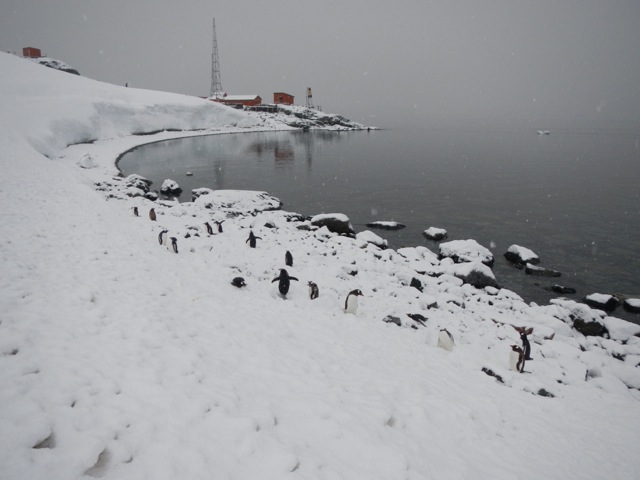
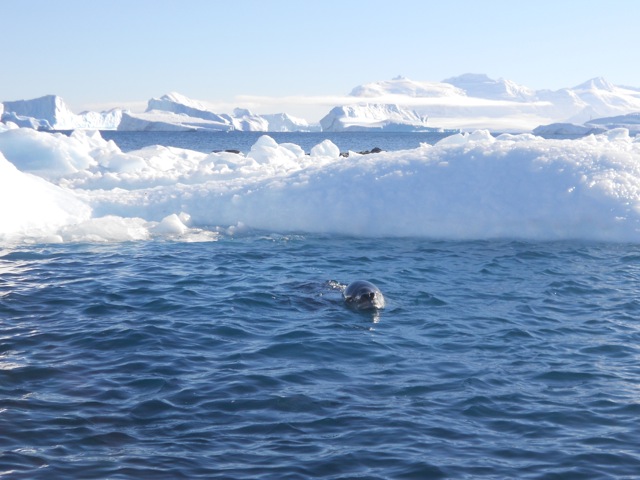
After exiting the station and waiting for the Zodiacs to collect us, we gathered on the pier to watch a leopard seal torment a penguin. When it noticed it had an audience, it made a display of tearing its lunch to pieces before consuming it.  While macabre, it’s part of nature and we couldn’t take our eyes from it. Back on the ship we headed further north to Petermann Island for another short hike. The island itself has different colours of snow – green from algae and pink from penguin poo.

wpid-dscn1939-2013-03-21-16-10.jpg

The hike was a walk up a slippery mound to a cairn and down the other side. This island had some beautiful views, but was the smelliest island I’ve ever been to. While the old saying: ‘Don’t eat the yellow snow’ still stands, a new one came from this trip: Definitely don’t eat the pink snow.

wpid-dscn1942-2013-03-21-16-10.jpg

As we made our way back to the ship we spied another leopard seal enjoying a penguin. Penguins are considered the rabbits of the south, they breed like crazy and provide good food sources for the seals and larger sea birds.

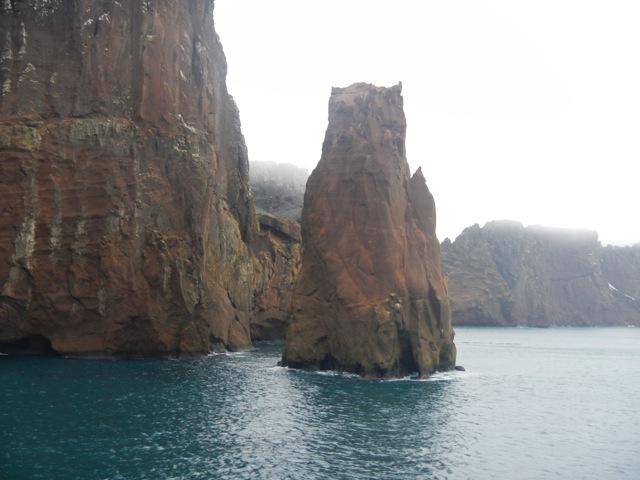
Across the bay, we could see the base of several majestic looking spires their tops hidden behind the cover of clouds.  Thankfully the clouds began moving as we were leaving, giving us a partially better view.

wpid-dscn1953-2013-03-21-16-10.jpg

Day 9 – Final Landfall – Deception Island

The plan for the day was to make landfall in the morning and begin the journey back across the Drake Passage in the afternoon. This was not to be, however, as the wind and seas were too harsh. Instead we sailed back to the South Shetland Islands to attempt Deception Island again. When we arrived the wind was still strong, but thankfully in the right direction allowing us to enter the volcano via a stretch of water known as Neptune’s Bellows.

wpid-dscn1972-2013-03-21-16-10.jpg

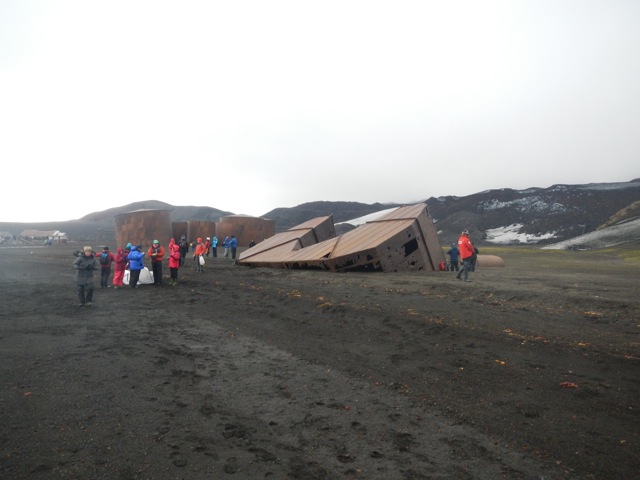
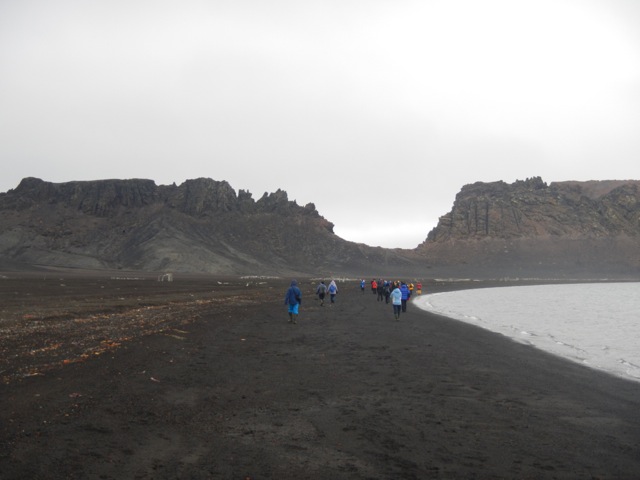
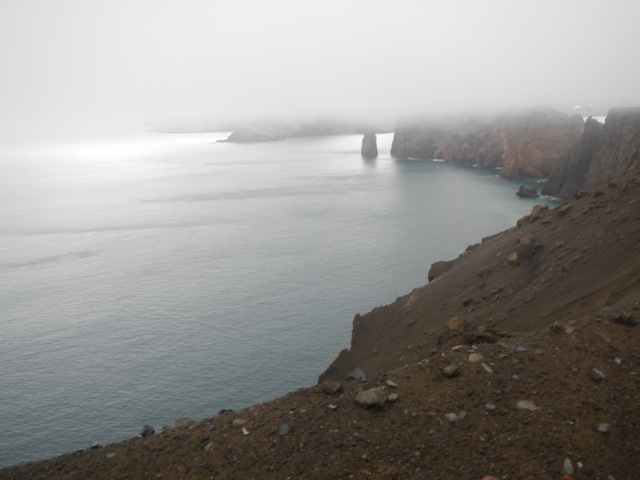
We sailed through and even with the low clouds it was picturesque. The bay inside was huge and we anchored in a smaller bay just inside called Whalers Bay. On reaching land, we set foot on black volcanic pebbles and sand. There were a number of old broken down buildings which we were warned not to enter because they were unstable.

wpid-dscn1976-2013-03-21-16-10.jpg

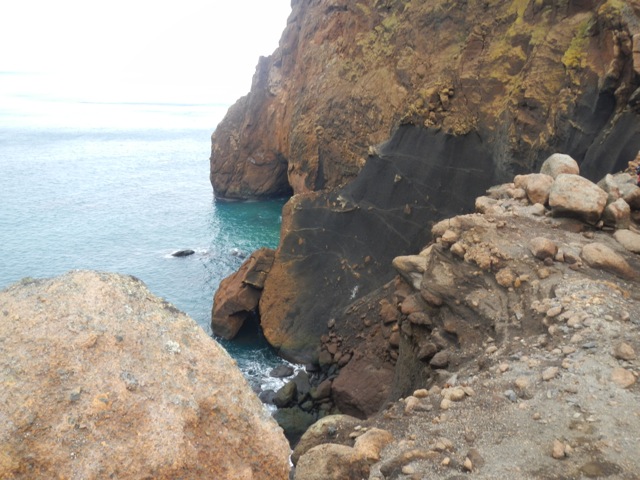
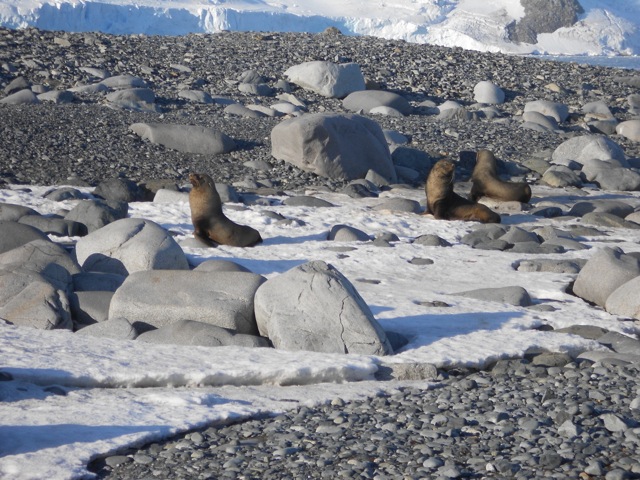
Deception Island erupts every 40 years, the last time being 40 years earlier. We were prepared should it go up but it didn’t, obviously. On land there were few penguins and many fur seals. We walked along the beach for a while and climbed the semi-collapsed wall to Neptune’s window…

wpid-dscn1979-2013-03-21-16-10.jpg

…which provided great views both inside and out.

wpid-dscn1987-2013-03-21-16-10.jpg

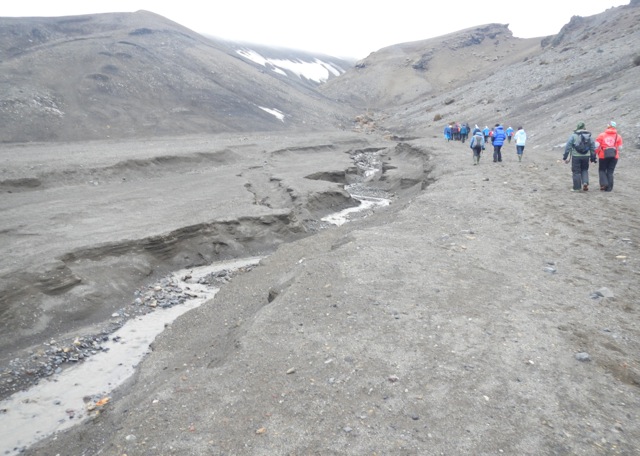
We then followed a stream up the side of the volcano…

DSCN1991

…to a higher perch. With the clouds and the blue-green of the sea, the sight looked like a mystical world that photos just don’t do justice to.

DSCN1992

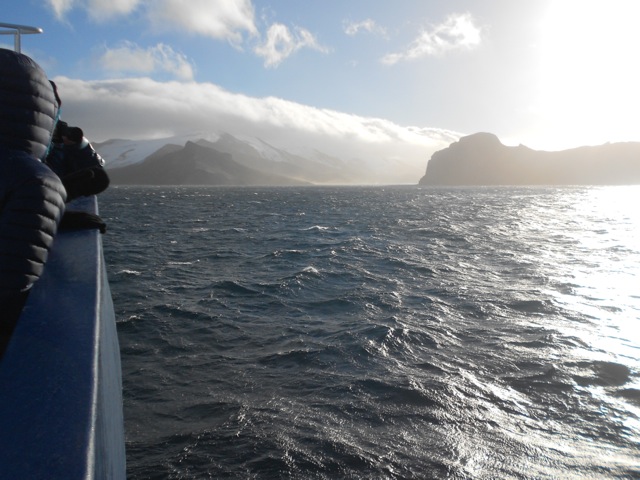
Back on board, we set sail for the Drake passage and as expected the seas were a little rough.

Day 10 and 11 – Back across the Drake Passage

For two days we sailed across the open and slightly choppy seas. It wasn’t as crazy as we’d expected, but after making landfall twice each day in the Antarctic, hanging about the ship sent many of us a little stir crazy. There were lectures to bide the time but I dove into a book and managed to finish the second of two novels I’d begun on the journey.

We arrived into the shelter of the Beagle Channel in the late afternoon of Day 11 and docked in the early morning at Ushuaia. We disembarked after breakfast.

Overall

My Antarctic trip will always be one of the most memorable experiences of my life and worth far more than I paid for it. The many places where we made landfall and the multitude of wildlife were unreal. People on board were friendly, although with 37 different nationalities it was sometimes difficult to communicate well. There were many new experiences and I’m glad I chose the Plansius from Oceanwide Expeditions, as I’ve heard some of the other cruises were not as well organised or the crews were not as interested in giving passengers the best experience.

Next, after a couple of days in Ushuaia, I began my long journey north along the Andes starting with Patagonia.

The Ocean Cruising Trail Wanderer

Antarctic Voyage – Next Stop, the Polar Circle

Find Days 1 – 3 here: We’re Going South Baby, WAY South!
Find Days 4 – 5 here: Along The Great White Peninsula

Day 6 – Antarctic Peninsula

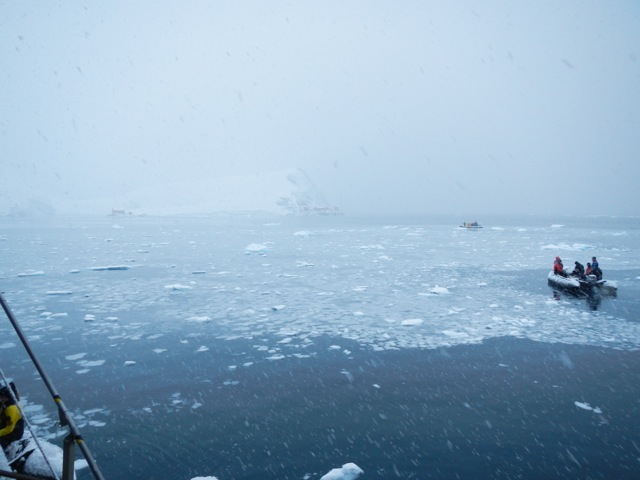
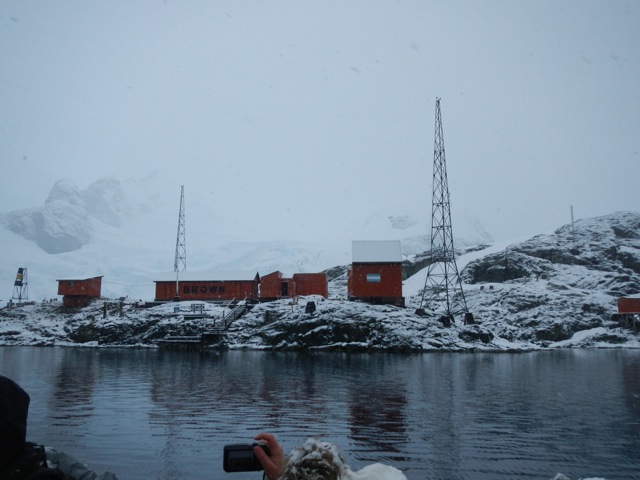
Overnight the weather had changed and on awakening we found it had begun to snow. While we’d loved the clear days, it just hadn’t felt like Antarctic until now.

wpid-dscn1815-2013-03-21-16-08.jpg

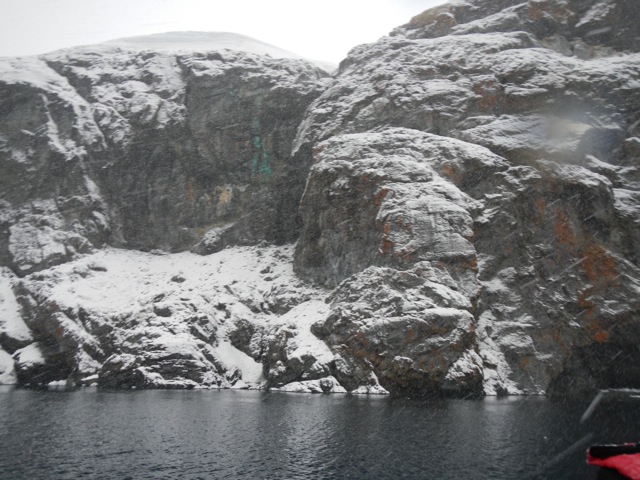
We set out across the bay to an Argentinian base called Almirante Brown where some of us docked and the others cruised around the harbour in Zodiacs looking at the scenery and the natural colours in the rocks…

wpid-DSCN1823-2013-03-21-16-08.jpg

As we moved through the water we could see the snow slowing beginning to freeze the water. We were told the process starts with a type of ice called ‘grease ice’, which gives the ocean a strange greasy look, then moves on through several more stages before the bay freezes over.

DSCN1849

It would have taken hours, so no chance of us being iced in. After 45 minutes of cruising through the icebergs we were dropped off at the jetty.

DSCN1833

We walked across the new snow to the base, stepping carefully so as not to slip into the sea…

DSCN1835

…and up the hill behind it where a pinnacle of rock provided a great, albeit foggy view.

wpid-dscn1842-2013-03-21-16-08.jpg

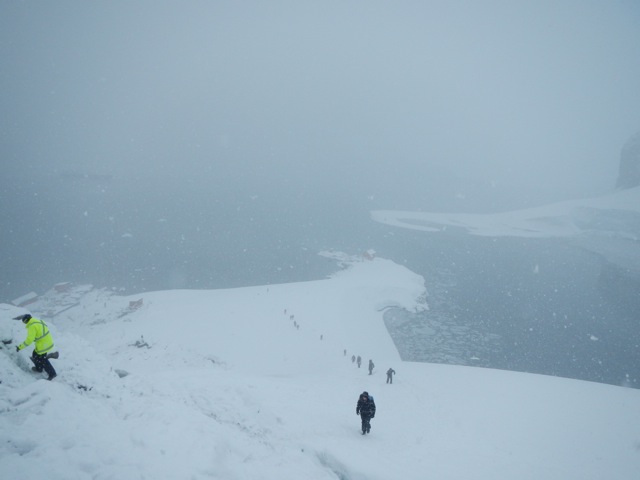
There’s only one real way down from the pinnacle: on your backside skidding down a previously rendered track. I shot down the first part but there was an older guy in front of me who was struggling to get going. I couldn’t stop in time and careened off the side of him to slide sideways down the rest of the hill. Awesome! If there had been more time, many of us would have climbed up and gone again.

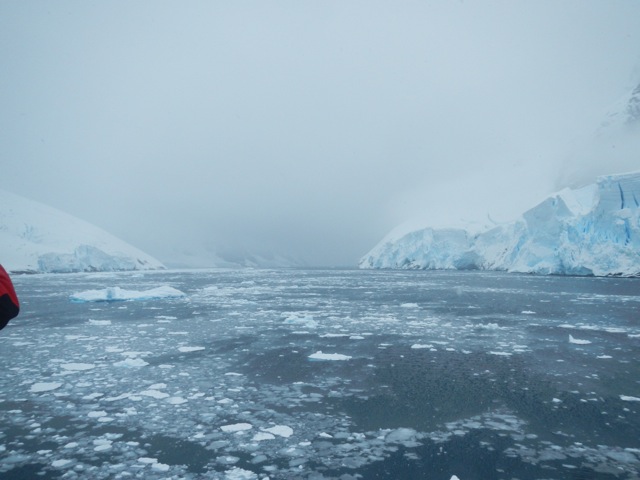
Then we were back on the ship and heading out along the beautiful Lemaire channel, with great icy mountains and glaciers along both sides. Whales have now become a common sight and penguins are just everywhere. Icebergs larger than previously seen dot the waters, the very occasional one having a leopard seal napping on it. We came out into a bay known as The Iceberg Graveyard, full of huge icebergs some twice the size of the ship or larger.

DSCN1856

Our next stop was Booth Island. We land and see our fourth variety of penguin, the Adelie along with their tracks in the fresh snow.

DSCN1859

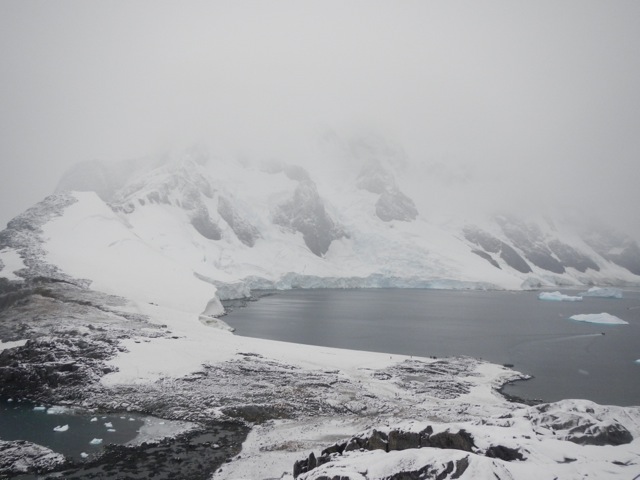
We then climbed a hill to get awesome views in all directions, but because of the low clouds only the base of several rocky spires could be seen.

DSCN1866

We couldn’t resist sliding down the hill before being whisked back to the ship. That evening the boat made its way down the peninsula in hope of crossing the polar circle. According to the captain, it depended on the weather and sea conditions if we were to cross.  We all went to bed hoping the conditions would be right.

Day 7 – Antarctic Polar Circle

The polar circles are defined by the sun. In winter, Antarctica is a sunless icy land, while in summer there is 24-hour sunshine.

Today the battery of my fairly new camera refused to charge, evidently affected by the atmospheric cold.  Thankfully one of my shipmates had a spare he could lend me. So, while I wasn’t using my own camera, all of the shots are my own.

DSCN1889

It was snowing when we were roused for breakfast and the seas were rather rough. At breakfast we watched the largest iceberg we’ve seen float past. It was massive, the part we could see above water was the size of a city block and perhaps 100m tall. Under the water, we’re told it’s 7 times larger.

Then just after breakfast, we gathered in the observation lounge and with a glass of champagne to celebrate the crossing of the polar circle. We had only a single landfall below the circle. Two hours later we entered a bay where the water was significantly calmer. After another 30 minutes we boarded the Zodiacs and make our way around icebergs to land at Detaille Island, site of a former English research base.

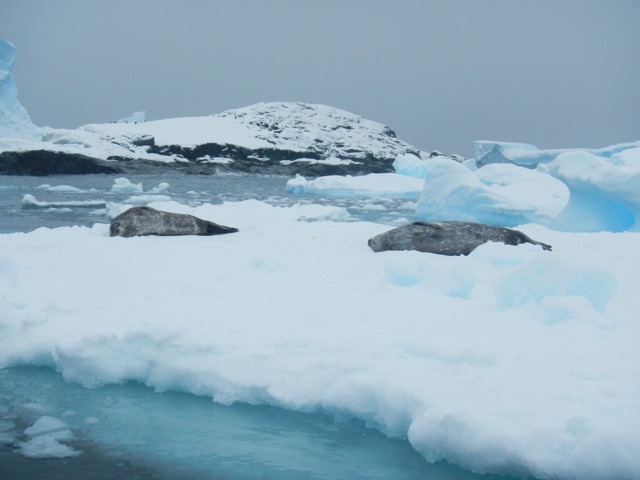
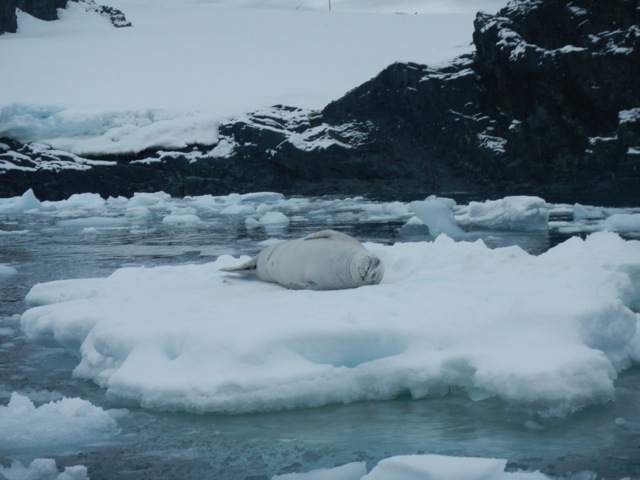
The snow was thick on the ground and there were two different kinds of seals just languishing on icebergs – the Crabeater Seal and the Weddell Seal. They peer up as we go by but we don’t interest them so they go back to their napping. On the island is the hut where the researchers lived and we were able to go inside. It’s fairly roomy and once housed 8 scientists comfortably.

DSCN1893

After our time on the island we were taken on a cruise through the icebergs to get a little closer to the napping seals.

DSCN1907

Then back onboard the Plansius we set off again, beginning the long journey back along the peninsula.

DSCN1909

Mid afternoon, after we cross the polar circle again, we came across a large pod of Orca hunting. We circled them for about an hour, trying to determine what they were doing. The pod was about 10 animals strong and had a huge male with them. We were told they were killing an Arnoux Beaked Whale by trying to drown it  They did this by lying on top of it to prevent it getting to the surface. Once they considered it dead, they began tearing into it. It’s nasty, but it’s nature. This kind of action takes documentary makers 10 years to find, and we were lucky to chance upon it. Pictures don’t give it justice, however.

Next, The Journey Back To Civilisation.

The Antarctic Wanderer

Antarctic Voyage – Along The Great White Peninsula

Find Days 1 – 3 here: We’re Going South Baby, WAY South!

Day 4 – More South Shetland Islands

The weather continued to be great, but it wasn’t the weather that was to darken the day… more on that later.  The beauty of the white islands was immense and even more so because of the blue skies.  Overnight the ship was moved further along the South Shetlands to Half Moon Island.

DSCN1674

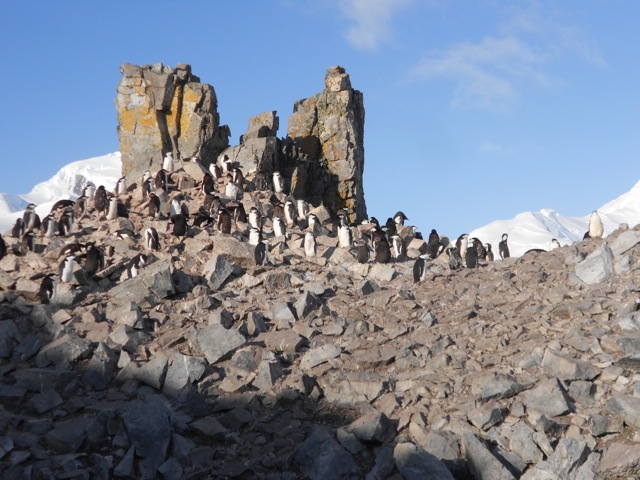
We made landfall early and hiked along the beach with plentiful Chinstrap Penguins hanging out on the rock formations.  Nestled among one group we found a solitary Macaroni Penguin.

wpid-dscn1687-2013-03-21-16-15.jpg

While not as plentiful as the penguins, there were many fur seals in groups along the rocky beach.  They too were interested in us, but were more dangerous, so we took care not to get too close as they have a tendency charge. They’re easily warded off if they do by presenting a strong hand and calling ‘stop’, or by simply clapping hands.

wpid-dscn1679-2013-03-21-16-15.jpg

While not available to those of us who took ‘Last Minute Deals’ those who pre-booked the cruise were able to also book kayaking and diving. While today was too windy for the kayakers the divers got to get in the water, well, some of them at least…

DSCN1681

Not long after going ashore, we started hearing reports over our expedition leader’s walkie-talkie about a diver that had gone missing. For the rest of the morning our leaders began to act a little strange, anxious. Our stay on Half Moon Island was extended an hour longer than planned. Then after being ferried back to the boat, we were called to an urgent debriefing. The diver that had gone missing was an experienced Japanese woman. They’d found her drifting in 5 metres of water and had attempted resuscitation, but after 90 minutes she had been pronounced dead. No other news was forthcoming.

This set a somber tone across the boat and we weren’t sure if the trip was to continue. We eventually did get word we were and got back underway, but some of the crew were called to deal with certain things such as contacting next of kin, authorities, embassies and the storage of the body.

wpid-dscn1705-2013-03-21-16-15.jpg

That afternoon we sailed for Deception Island, one of the two known active volcanos in Antarctica. Centuries ago, Deception Island blew one of its sides and seawater flowed in to fill the crater. The plan was for us to sail into crater via Poseidon’s Bellows, where the wall had collapsed…

DSCN1708

But the weather wasn’t playing nice and with 35 knot winds, the captain decided it would be too dangerous. Instead we set sail for our next destination,  the Antarctic Mainland and The Great White Peninsula. On the way we spotting what was to become a very common sight… Humpback Whales.

Crossing the channel was an experience. Because of the winds the swell went a little crazy and that evening only a little of half of us passengers made it to dinner. It wasn’t long before I too retired to my cabin a little worse for wear.

Day 5 – Antarctic Peninsula

We were lucky, today was the fifth beautiful day in a row, clear and sunny. That’s five more than some expeditions. I awoke at 4am after going to bed at 8.30pm the night before and felt great. I peered from the cabin window and saw clear seas and the long white peninsula. We anchored at Cuverville Island surrounded by white cliff lines in a bay dotted with icebergs. It’s hard to describe the beauty of this place.

DSCN1718

We landed and wandered around the Gentoo Penguin colonies for some time.

wpid-dscn1720-2013-03-21-16-15.jpg

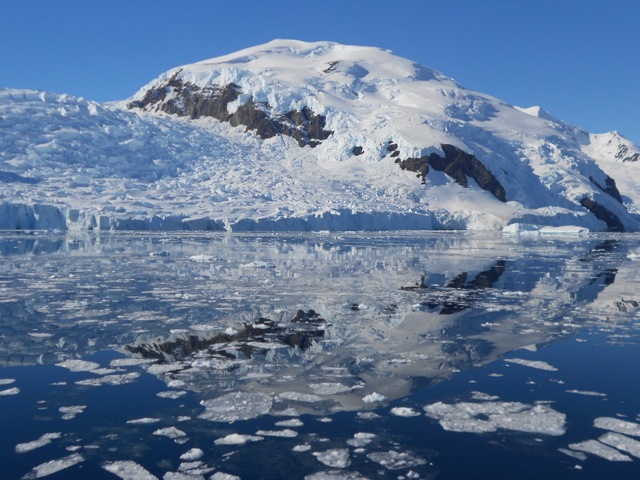
On the way back we were taken on a short zodiac cruise through the icebergs, many of which were a pure blue…

wpid-dscn1744-2013-03-21-16-15.jpg

I even had the wonderful experience of a leopard seal coming up to the craft to check us out before it went back to playing with the penguin that would eventually become its next meal.

DSCN1738

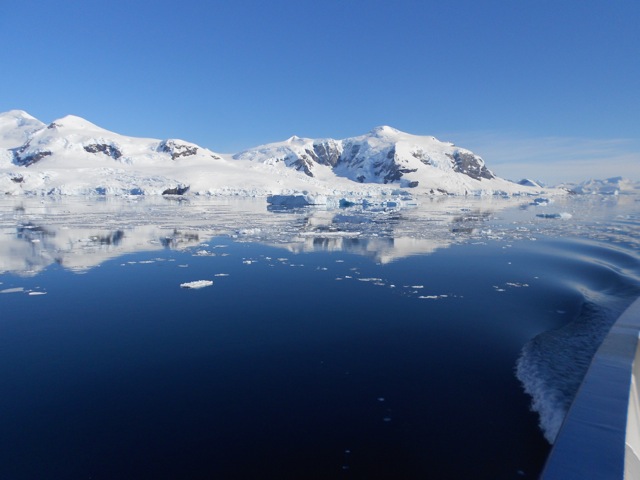
After lunch the ship moved into a large and beautiful bay strewn with icebergs with the plan to make landfall at the end. The boat slid gracefully through the crystal clear waters…

DSCN1771

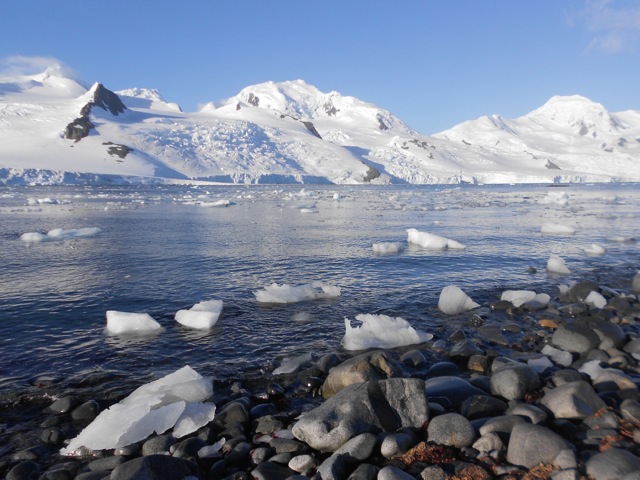
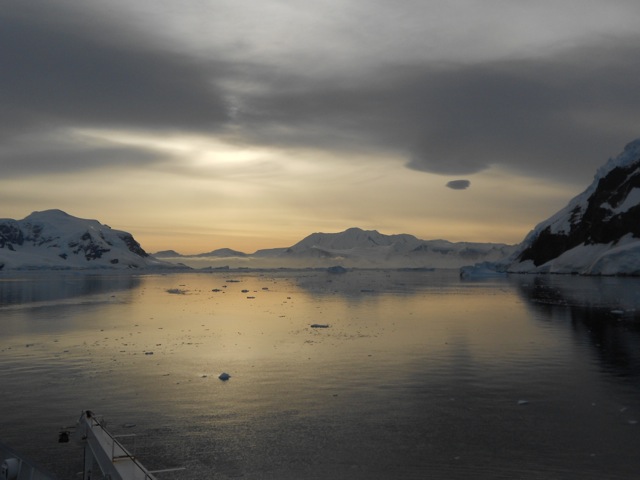
…and in some places it was so calm the icy water mirrored the snow-covered mountains and massive frozen glaciers.

DSCN1776

We made landfall, and set foot on the main landmass of Antarctica at Neko Harbour. Woo-ha! And guess what? There were Penguins! Surprise!

We hiked up the side of a mountain to a great viewing spot. I was first to sit on a rocky outcrop looking out across the magnificent bay.

581900_10100327431821222_1470759107_n

Then some of us took a ‘polar plunge’, going for a swim among the icebergs.  Since salt water freezes at just below zero degree celsius, it was cold but not as cold as expected.  If anything, it was colder getting out.

Then in the beautiful clear evening what else do you do in Antarctica? We had a BBQ on deck, of course! It was a little chilly but great! We put down anchor in Leith Cove and watched the sunset.

DSCN1801

Next we’re heading further along the peninsula our Next Stop, The Polar Circle.

The Antarctic Voyager

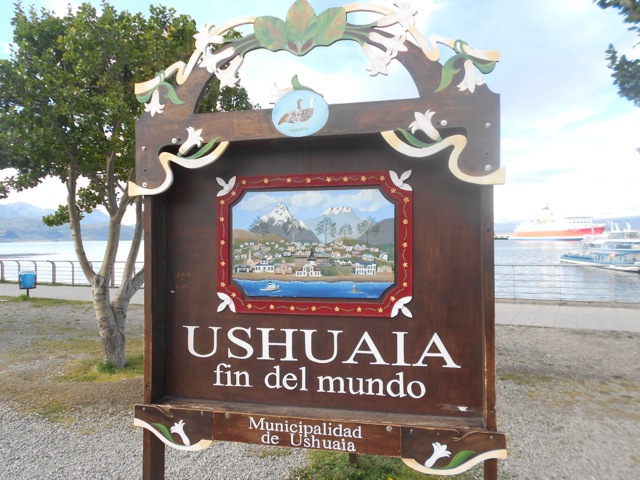
Ushuaia, Tierra Del Fuego, Argentina

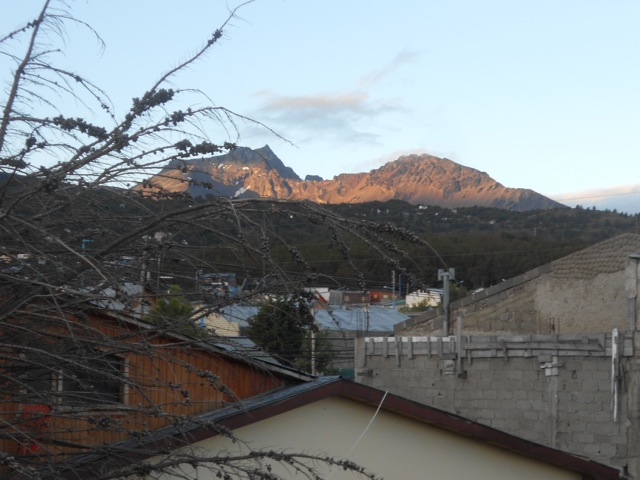
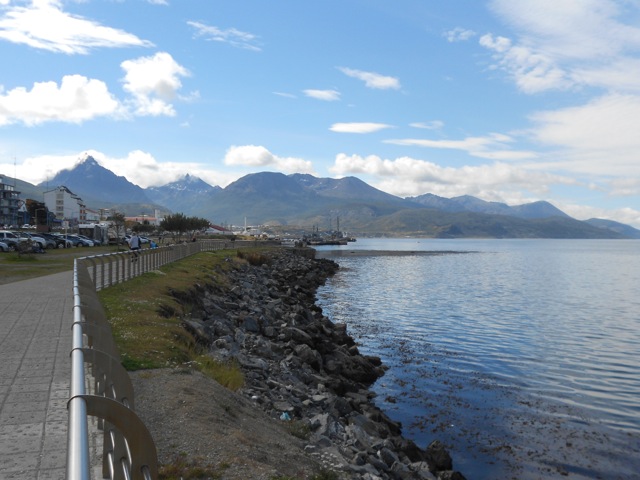
Ushuaia is the city at ‘fin del mundo’ – the end of the world. It’s the southernmost city in the world located on Tierra Del Fuego, an island at the southern end of Patagonia shared by Argentina and Chile. Apart from the other islands of southern Patagonia, the only place further south than here is the great White Continent.

DSCN1458

The taxi drive from the hostel in Buenos Aires was a rather exciting and scary experience. I shared with a Japanese lady and the pair of us huddled in the back seat as we hurtled headlong along the motorway to the airport. While the lanes were well-marked, the driver didn’t seem to notice them. He shot along at 130km, weaving madly even though the road wasn’t busy. We both felt safer once we arrived at the airport.

The 3 hour and 45 minute flight became an adventure of its own when fog in Ushuaia forced the plane to land at Rio Gallegos, some distance to the north, to sit it out. Thankfully it didn’t take long. The approach to Ushuaia was along the Beagle Channel which separates Isla del Tierra Del Fuego from Isla Navarino to the south. As we descended into the airport the sights were mind-blowing with snow-capped, rocky mountain peaks on either side.

wpid-dscn1460-2013-02-26-15-13.jpg

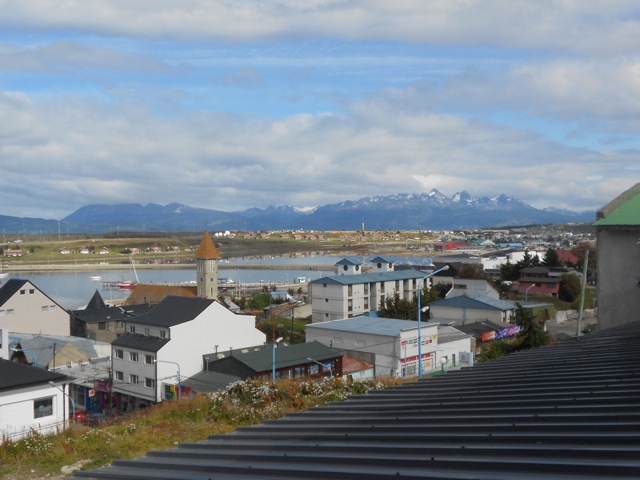
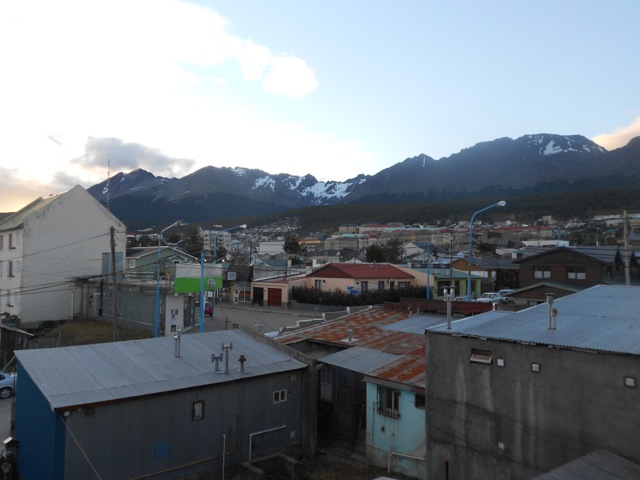
Ushuaia was larger than I expected. I’d pictured a quaint little port township nestled on the edge of the mountains, but it’s actually quite large. Stepping out of the airport the sights were amazing, the city nestled under the mountains on the edge of the channel with the mountains spreading from horizon to horizon.

wpid-dscn1464-2013-02-26-15-13.jpg

While I’d been warned not to expect much from the weather, it was fairly clear when I arrived and over the next couple of days, became cloudy and overcast. The mountains usually begun the day covered in cloud, only to clear as the day progressed.

DSCN1468

The Ushuaia Freestyle Hostel was a fairly nice place although like most cram as many people into a small amount of space. There were several common rooms including a large TV room and games room on the top level. Mostly the staff were friendly, although one or two had an ‘I don’t really care’ attitude unless you were spanish or an attractive woman. The wireless internet was pretty poor forcing everyone to wait for the two provided computers or go into town.  While one of the better hostels in town, it closed down shortly after I was there, becoming part of hotel next door.

wpid-dscn1466-2013-02-26-15-13.jpg

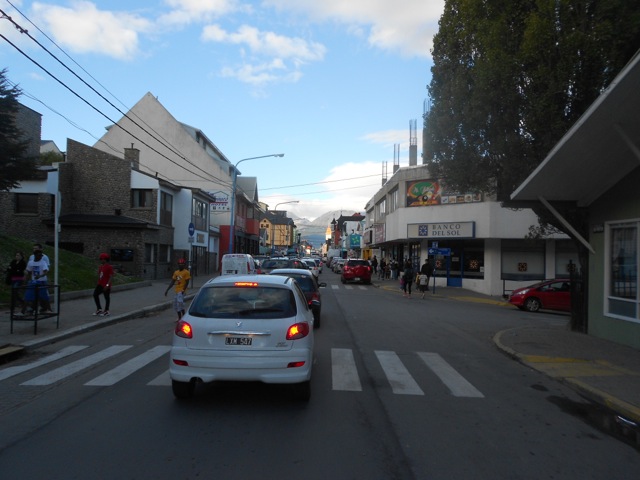
Downtown Ushuaia was a lot larger than I expected, the main road being quite long and for the most part has shops along both sides. The city is a little touristy, which isn’t a bad thing, and it actually has a full supermarket, something I wasn’t able to find in central Buenos Aires. There are all sorts of shops here and many more shopkeepers speak english than in Buenos Aires, but I was still unable to find a mini SIM card at one of the many mobile phone stores. Not that I needed to call anyone, it would have been useful to have a steady means to get access to the internet.

DSCN1470

Overall, Ushuaia was beautiful and even at the end of summer, it wasn’t that cold.  I did get some strange looks walking around in the middle of the day in flip-flops and a t-shirt. Evenings got cooler, but not freezing.  It was just chilly enough to be refreshing (for me anyway) but most people were decked out in their warm clothing. I still carried a jacket, just in case, but got hot quickly climbing up the hill to the hostel or when I entered an air-conditioned shop. Winter there would be seriously icy.

DSCN1459

I went to Ushuaia with no strict travel plans and just figured it out as I went. I did book one of the Antarctic cruises, for 12 days and it cost me more than I had planned, but when was I going to have the opportunity again? It did mean I had 10 days to kill in Ushuaia.

Here are some of the adventures I had in region:

Other things to do in the region I didn’t get time for:

  • Tierra del Fuego National Park for short walks and Lago Roca
  • Dublin Bar, the southernmost Irish pub in the world
  • Skiing at Cerro Castor (in winter)
  • The Maritime Museum of Ushuaia
  • The 4-5 day Dientes Circuit hike

Next, I headed off on my Antarctic Voyage.  On my return from the great white continent, I caught a bus north to Punta Arenas, Chile.

So many adventures to be had. But thus is life.

The Lone Trail Wanderer
Wilsons Promontory – Victoria

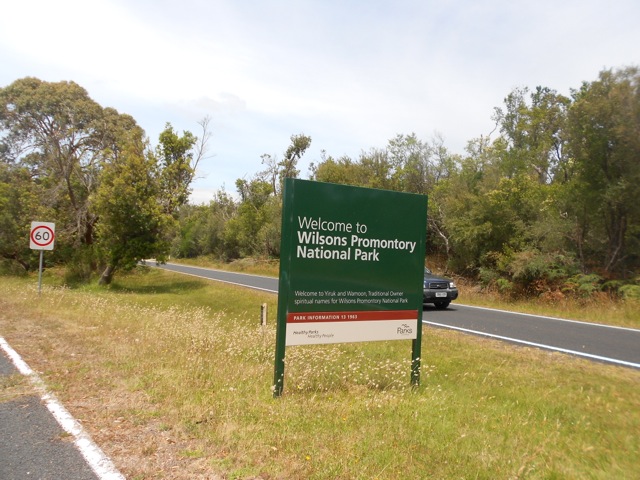
Wilsons Promontory is the southern most tip of mainland Australia and is also known as the South-East Cape. Located about 200km south east of Melbourne, it’s a common holiday destination. In fact, it’s so popular, each year there’s a ballot for the many camping spots at Tidal River, the township on The Prom.

wpid-dscn1209-2013-01-12-12-50.jpg

There are several walking tracks around The Prom on both the north and south sides. I’ll be walking the south side, merging two 2-day hikes into a 3-day one.

Day 1 – Telegraph Saddle to Little Waterloo Bay
I parked The Pointy Brick in the Overnight Hiker’s car park just outside Tidal River and prepared for the walk. A shuttle bus leaves Tidal River via the car park every 15 minutes, so when I was ready, I waited and was transported up the hill to Oberon car park at Telegraph Saddle.

Originally, I was going to walk across The Prom to Sealer’s Cove and around the bay working my way to Little Waterloo Bay, but since the floods of May 2011 – 19 months ago – the track has been closed. I discovered this during the week before and planned accordingly although this meant my first day was shorter and easier.

I headed down the centre of the southern end of The Prom via a gravel road. The road continues all the way to the Lighthouse, which is tomorrow’s lunch destination. I walked along the road gently downhill for about 6km through the mountains.

wpid-dscn1213-2013-01-12-12-50.jpg

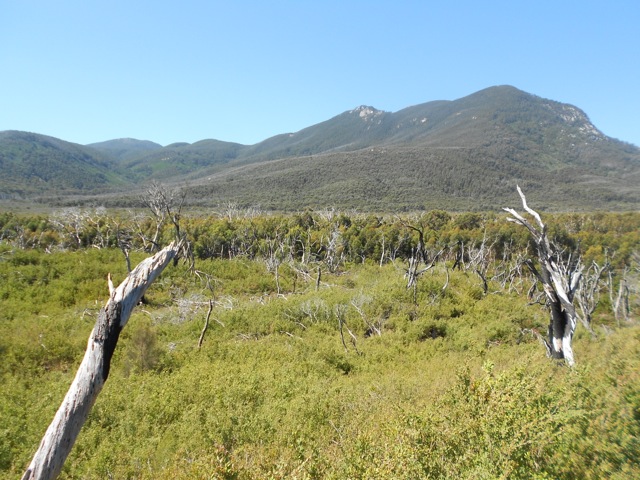
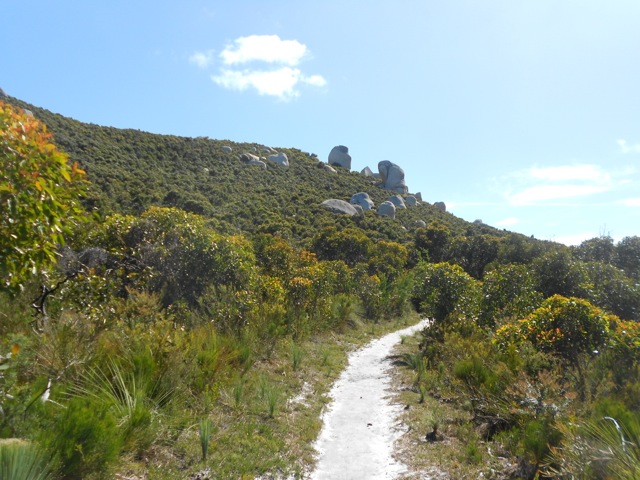
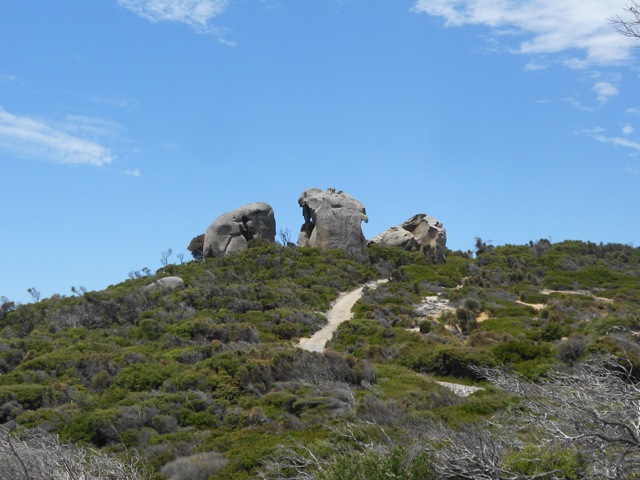
The mountains here are different to those of Tasmania, they’re mainly tree covered and those that aren’t are large smooth boulder covered mounds. In fact, one of the mountains is called Boulder Mountain.

The turn off to Waterloo Bay is a sandy track that meanders gently through a gap in the mountains and past a tree covered rocky outcrop called The Mussolini Rocks, but I don’t see the likeness.

wpid-dscn1216-2013-01-12-12-50.jpg

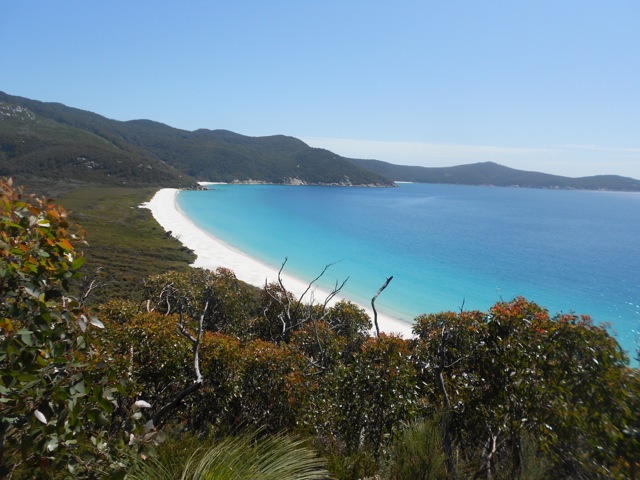
Eventually the track arrived at Waterloo Bay – a beach of pristine white sands and azure blue water.

wpid-dscn1219-2013-01-12-12-50.jpg

Little Waterloo Bay is a kilometre away on the other side of a jutting rocky outcrop. When I arrived, I discovered many people were already here. I found a spot, set up my tent and went to the beach where I sat reading on a set of boulders.

wpid-dscn1226-2013-01-12-12-50.jpg

Day 2 – Little Waterloo Bay to Roaring Meg
Many people had departed before me this morning, most heading around the coast towards Sealer’s Cove (the cove isn’t closed, only the trail to it from Telegraph Saddle).

I walked back to the junction and then along the beach for a kilometre. Sand is perhaps one of the hardest surfaces to walk on and it’s slow going. At the end of the beach the trail headed up the mountain on a sandy path. The constant climbing was a change from none at all yesterday. There were a couple of good vantage points as I walked.

wpid-dscn1227-2013-01-12-12-50.jpg

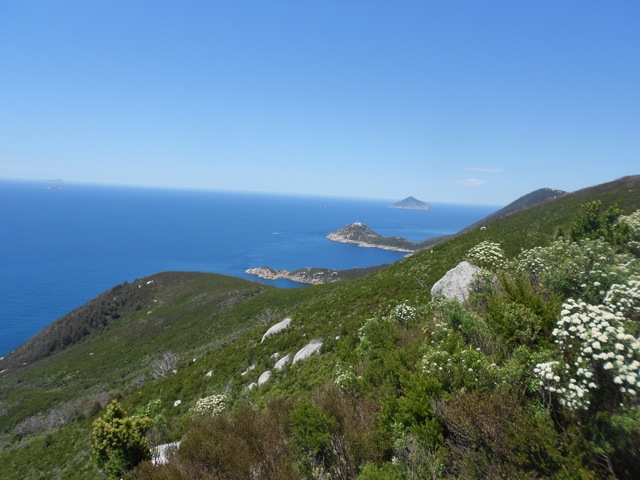
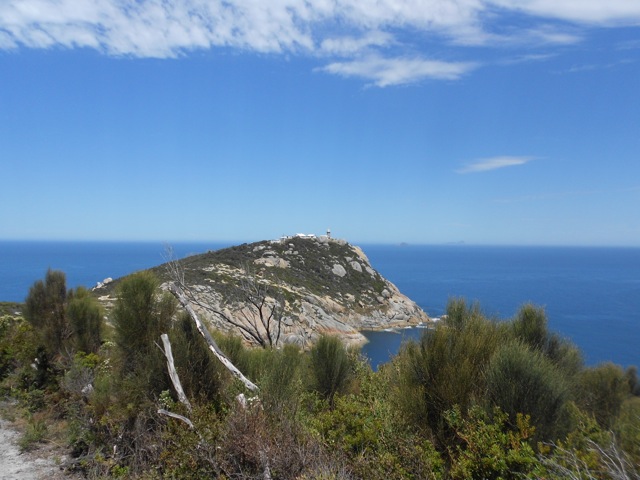
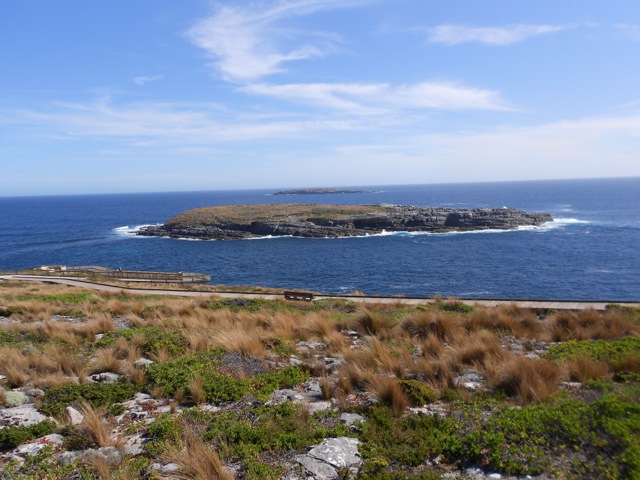
At the top of the mountain the trail flattened out giving some good views out to the south and the small rocky islands in the distance.

wpid-dscn1232-2013-01-12-12-50.jpg

I rested on a large smooth boulder before heading off again, with my aim to be at the lighthouse by lunchtime. The trail began slowly downhill before climbing again around the sides of two other mountains. It cut through the forest and along a steep cliff line before arriving at the junction to the lighthouse.

I hid my pack and with day pack I made my way downhill towards a set of Remarkable Rocks similar to those I’d seen on Kangaroo Island.

wpid-dscn1237-2013-01-12-12-50.jpg

To get to the lighthouse, there’s a very steep concrete road which was used to transport supplies from the beach below. You can book to stay at the lighthouse, but I hadn’t so was just visiting. While I was there, I ran into the ranger who offered me a jug of ice water! Real treated water and ice, it’s almost like having a pub on the trail, just without beer.

wpid-dscn1250-2013-01-12-12-50.jpg

After lunch, I returned to my pack and continued on. For the first hour, I climbed around the mountains at the southern edge of The Prom working my way up to the plateau. After a couple of flat kilometres, there was a series of steep ups and downs before finally crossing a stream via a wooden bridge and into Roaring Meg, a two level camping area.

I set up my tent at the bottom near the stream before being invited for a mug of tea with a couple of older gents who were already camping.

Day 3 – Roaring Meg to Tidal River
Today was forecast to be a hot one, so I was glad my route took me via Oberon Bay beach. The trail headed me briefly uphill before it met the road and then wound its way back to the junction I’d left to get to Waterloo Bay.

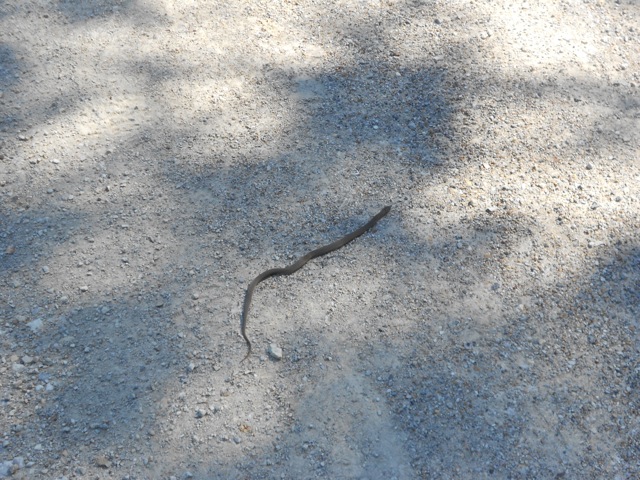
On the way down from the mountains, I came across a foot long grass snake in the middle of the road. I stopped for a brief chat as it slithered across.

wpid-dscn1256-2013-01-12-12-50.jpg

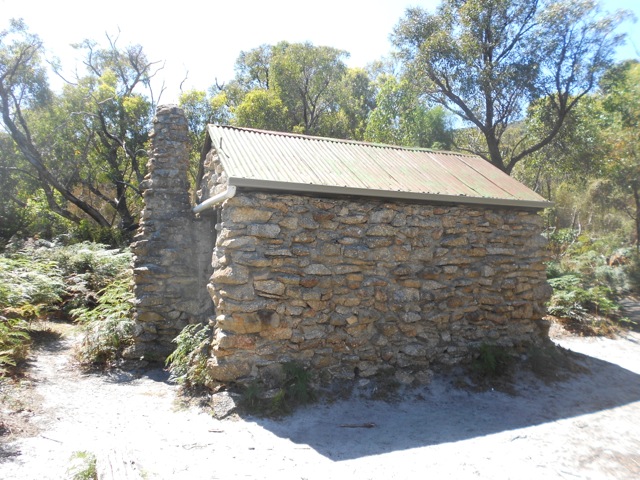
The heat was already in the air as I arrived at Halfway Hut and decided to stop for morning tea. I was sitting on a log at the side of an empty campsite when I looked up to see a metre long Tiger Snake slithering not a metre away. I, of course, followed it but it went into the brush before I could get a photo. Snakes aren’t scary and they generally only bite as a defensive measure, usually when you stand on them. There’s a trick to snakes, don’t stand on them.

wpid-dscn1259-2013-01-12-12-50.jpg

Twenty minutes later I came to the turn off and headed west towards Oberon Bay. The road turned to sand and became hard going. Thankfully there were plentiful tree covered areas for me to stop in the 5km to the beach as it was starting to become very hot.

wpid-dscn1264-2013-01-12-12-50.jpg

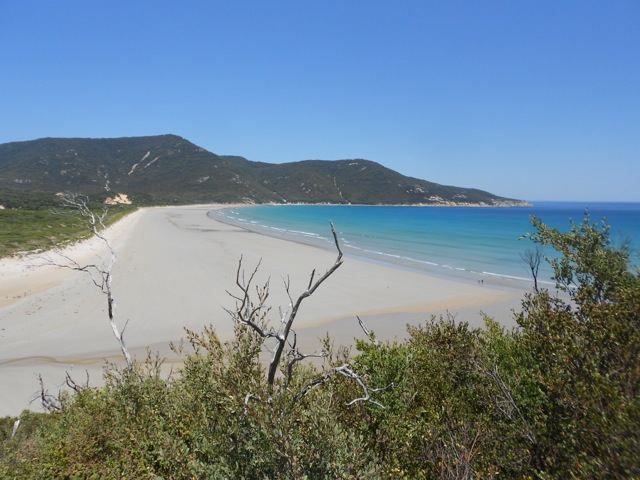
At the end of the trail was the beach, not as picturesque as Waterloo Bay, but it was water. I walked 500m to the end before stripping off and getting in. The water was beautiful but by the time I got back to my clothes and dressed I was sweating again. I ate a quick lunch before setting off on the final 7km around the bays to town.

By now, the heat was draining as I reached Little Oberon Bay and crossed it. On the far end, there’s a dune to climb to get back to the trail. The effort took it from me and I had to rest at the end, almost throwing up from the over exertion in the heat. It was only 4km to go and I discovered my water was hot. I sat in some shade at the top of the dune for about 30 minutes trying to dry off and recover. When I was ready, I headed on again. There was more climbing to be done before the end and I dragged myself 500m at a time before having to stop for a rest and cool off.

wpid-dscn1267-2013-01-12-12-50.jpg

I came around the point and could see Norman Beach in front of Tidal River which gave me hope, so I staggered on. I stopped once before the beach, once at the beach and once on the way to the car park. I was relieved when I finally got to the Pointy Brick. After changing, I headed to Tidal River for a cold drink, and ice block and then a swim in the sea.

It turned out to be 44 degrees that day. I decided to take a few days off before my next hike – Mt Bogong and Big River in the Central Victorian Highlands.

The Lone Trail Wanderer.

Mornington Peninsula – Victoria

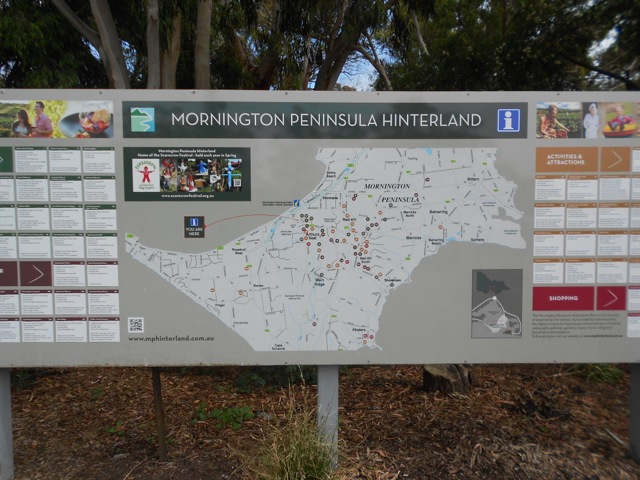
Today is a warm day in Melbourne and without any great plans, I pointed The Pointy Brick towards the Mornington Peninsula to see what I could find there. On a Great Ocean Road trip a few years back I stood on Queenscliff, on the other side of the harbour, and looked across. So, I wanted to look across from this side. It’s only 40km, so why not?

wpid-dscn0629-2012-12-8-14-551.jpg

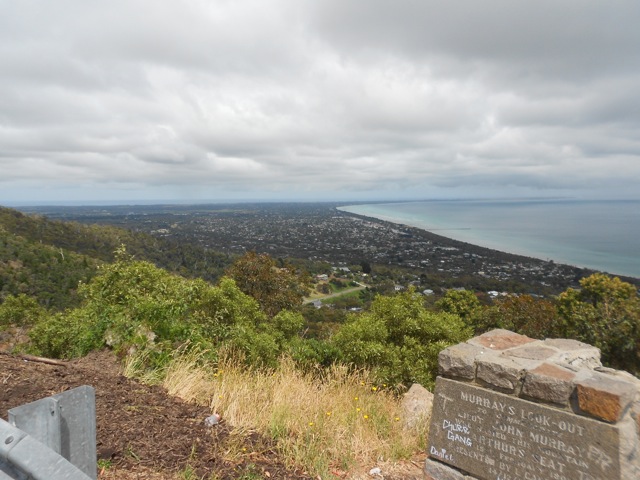
Half way along the peninsula is a hill known as Arthur’s Seat. I drove up for a look. It gave good views down the peninsula…

wpid-dscn0632-2012-12-8-14-551.jpg

…and back the way I’d come.

wpid-dscn0633-2012-12-8-14-551.jpg

It had been a bit wet and the low cloud prevented a distant look at Melbourne across the harbour.

I drove on along the peninsula towards a little township called Portsea and the Point Nepean National Park beyond. Portsea is your typical beach township, but a cafe there makes the best Waygu beef cheese burger. I drove on to an information centre and further on to parking spot. There’s a 3.8km walk to Fort Nepean at the end of the peninsula, so I put on my walking shoes and headed out along the sandy trail.

During WWI this peninsula was fortified for war and the first actual shot of that war was fired from Fort Nepean. It said so on the information board.

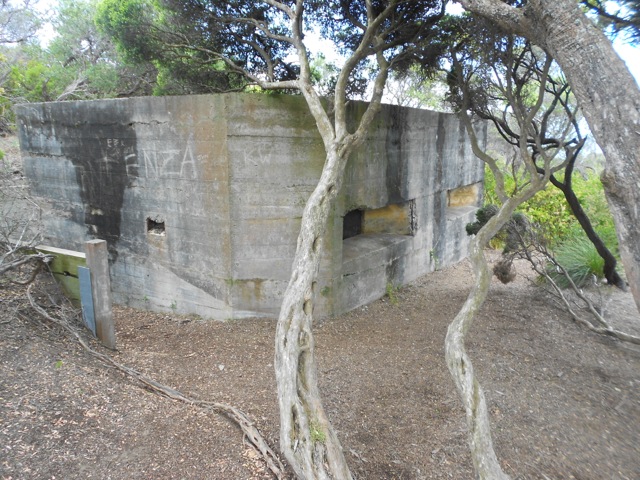
The initial couple of kms cut through vegetation until I came to an old bunker.

wpid-dscn0636-2012-12-8-14-551.jpg

This was to be the first of many dotted along both inner and outer coasts.

wpid-dscn0643-2012-12-8-14-551.jpg

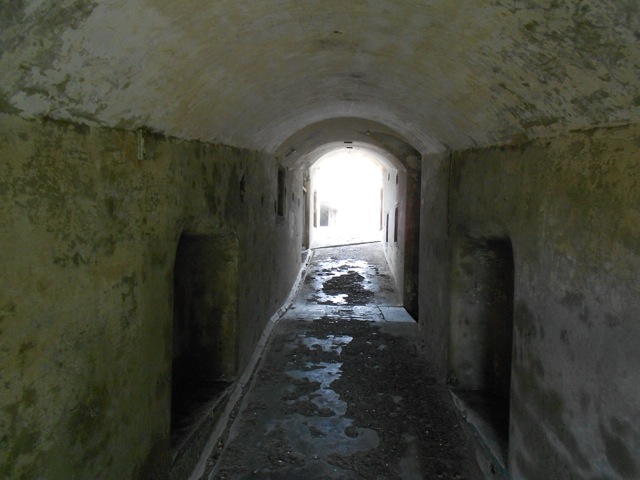
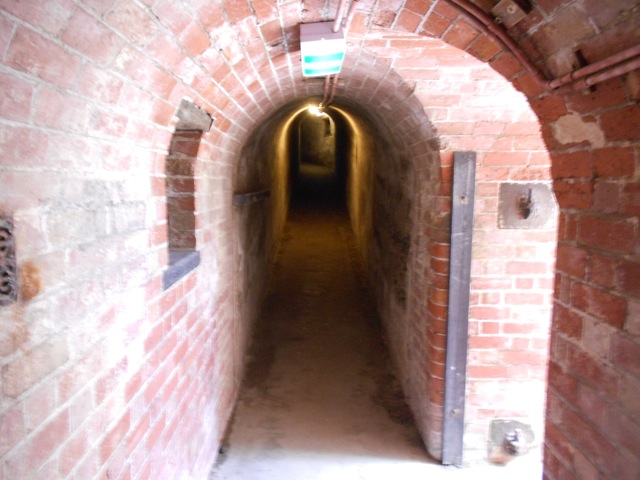
When I got to the first of the forts, I could walk into some of the rooms but others were closed off. Next was a set of barracks including a myriad of tunnels…

wpid-dscn0644-2012-12-8-14-551.jpg

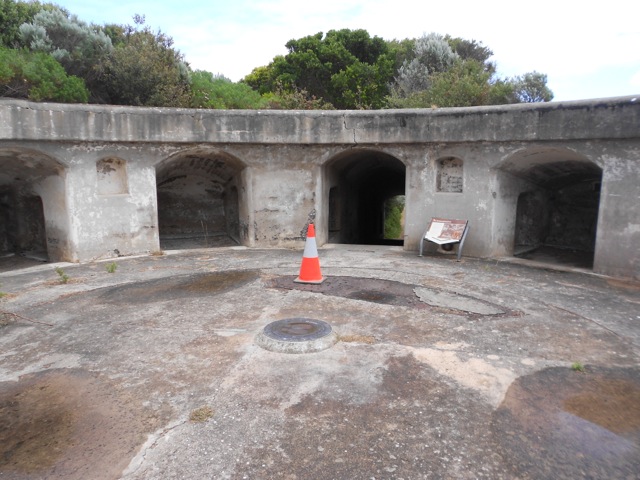
…bunkers and gun emplacements.

wpid-dscn0645-2012-12-8-14-551.jpg

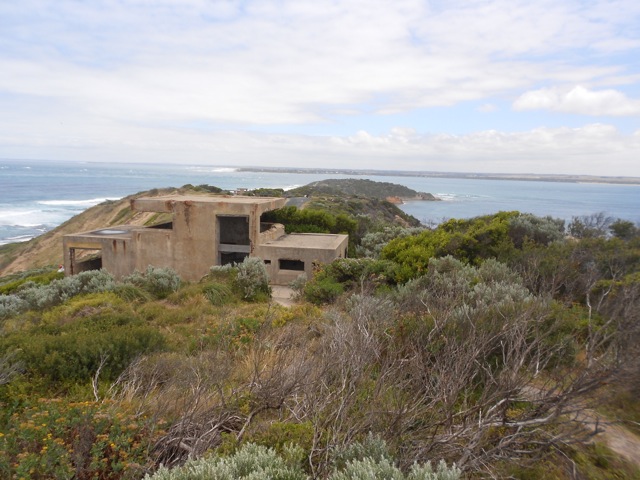
At the end of the peninsula…

wpid-dscn0666-2012-12-8-14-551.jpg

…the fort itself was complete with tunnels and gun emplacements at various different tiers.

wpid-dscn0662-2012-12-8-14-55.jpg

After checking out everything I could, I headed back to the van and back to the caravan park. Sometimes you have just got to get out there an explore, you just don’t know what you might find…

The Lone Ruins Wanderer

Kangaroo Island – South Australia

Adelaide to Kangaroo Island to West K.I. Caravan Park

The road trip to Kangaroo Island was a mad 90 minute dash from Adelaide to Cape Jervis. Getting out of Adelaide was the hard part, it seemed like the city might not wish me to leave. A water main had stopped traffic on the Main South Road, and when I took an alternative, a car broke down right in front of me. Adelaide has a southern Expressway, but it’s one way only and time dependant as to which way. In the afternoons, you can only use to to get into the city, so I had to take the alternate route was fairly quick .

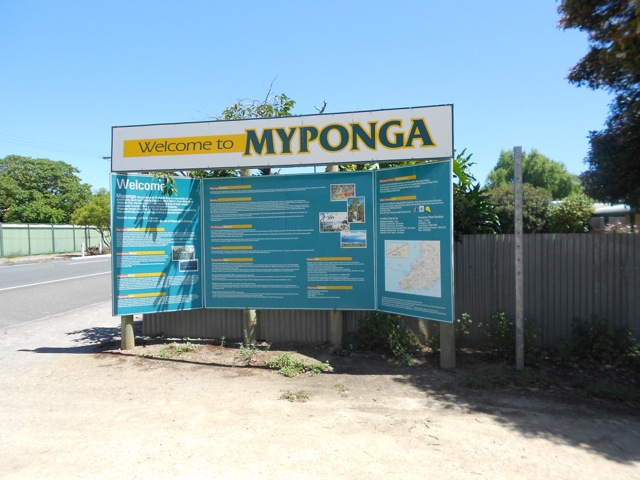
I raced towards the cape – the most southern point of mainland South Australia – passing through a town with a name I’m sure my brother would love: Myponga. I didn’t smell at all…

wpid-dscn0300-2012-11-19-19-17.jpg

As I raced towards the cape, I could see the ferry growing closer. I made it to the car park with 10 minutes to spare before we were loaded onto the ferry.

wpid-dscn0306-2012-11-19-19-17.jpg

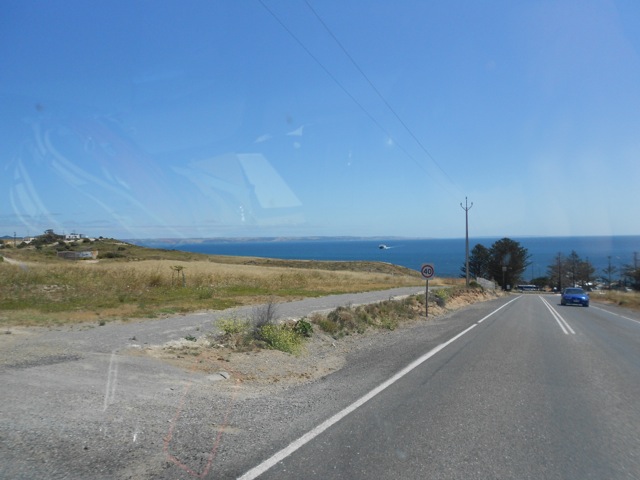
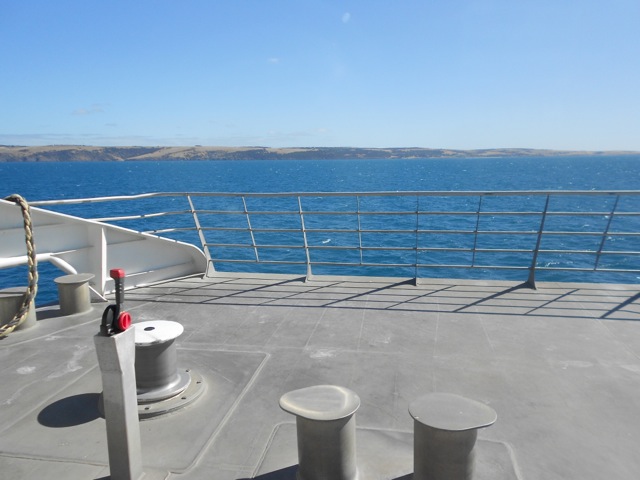
The ferry was a 45 minute ride to Kangaroo Island, and because of a pair of stock trucks on board, it smelled like cows. It arrives at the eastern end of the island and I had to get to the other end where I was staying, some 140km away. Yup, it’s a pretty big island.

wpid-dscn0313-2012-11-19-19-17.jpg

I was warned to be careful when driving at night or in the morning, as wildlife like to hang out on the road. I got to the caravan park without running anything over, but saw far more roadkill than I would have liked to.

Flinders Chase and Ravine des Casoars Wilderness Protection Area

wpid-dscn0324-2012-11-19-19-17.jpg

Ravine des Casoars

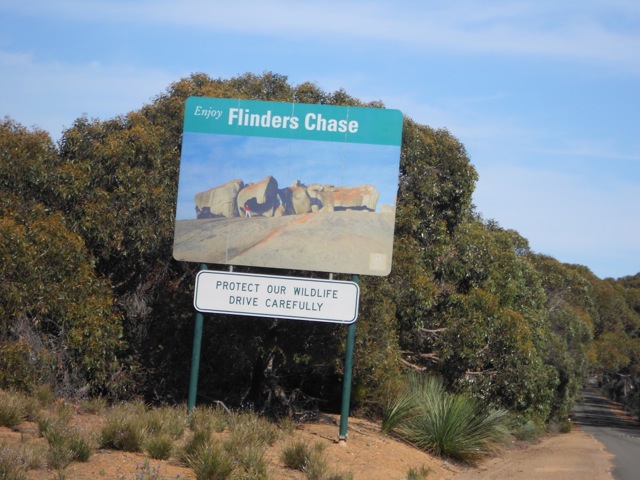
The western end of the island is a National Park and has many different walks and things to see. I chose the Ravine des Casoars hike, one of the hardest on the island. The start of the walk is about 45km from the camping ground and a two-thirds of that is over a very dusty dirt road with many areas of corrugation. This was slow going and took me over an hour to get to the site. I did stop briefly to watch a couple of Goanna’s fighting…

wpid-dscn0326-2012-11-19-19-17.jpg

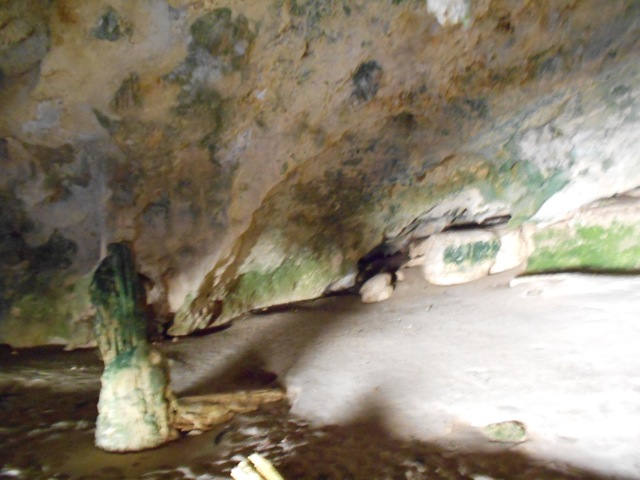
The walk itself is along the side of a ravine, then drops down into the ravine to walk out to the beach. At the beach, there is golden sand and interconnecting limestone caves.

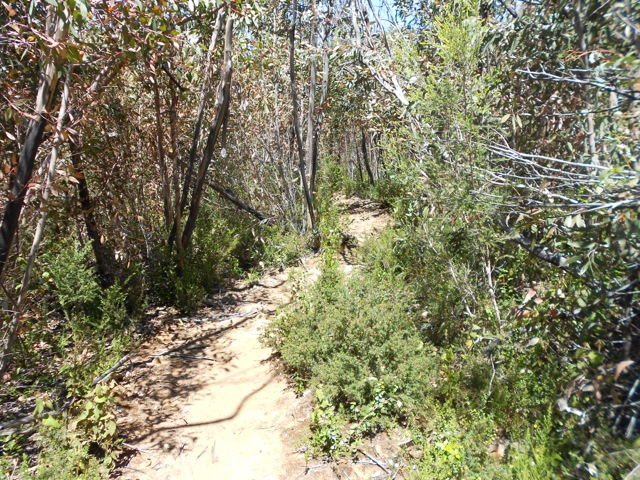
The walk itself was not difficult, but crossed several different types of terrain, rocks, stony ground, dirt and sand. The trail cut through trees for much of its way…

wpid-dscn0330-2012-11-19-19-17.jpg

…until it headed down into the ravine and then followed a stream out almost to the sea. One of the hardest parts was walking along the sand bank while trying to avoid falling in the water. There were plentiful Goannas along the trail, some more than a foot long, and far too many flies.

wpid-dscn0339-2012-11-19-19-17.jpg

The azure blue of the sea was lovely against the golden sand. The rock formations along the side were amazing. Unfortunately, I didn’t know about the caves until I was there and hadn’t brought a torch with me – something I will remember to bring on every short hike from now on.

wpid-dscn0348-2012-11-19-19-17.jpg

The caves were amazing, and disappeared into the darkness, some of them formed tunnels that connected with some of the other caves. If I had a torch and I would have explored further.

Admiral’s Arch

At the the southern most tip of the National Park…
wpid-dscn0368-2012-11-19-19-17.jpg

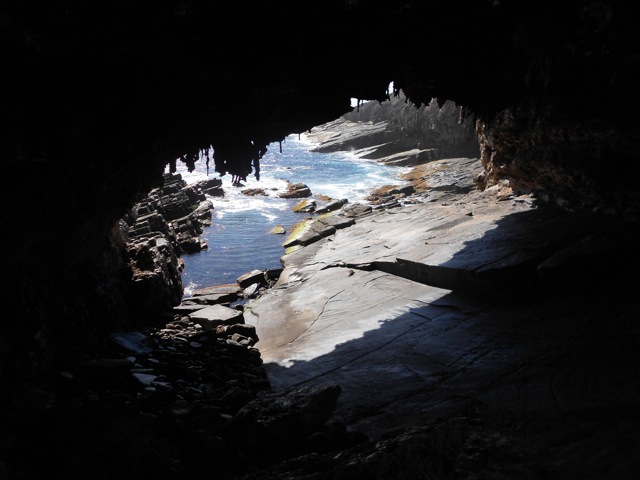
‘’’is the Admiral’s Arch. A natural arch of rock…

wpid-dscn0378-2012-11-19-19-17.jpg

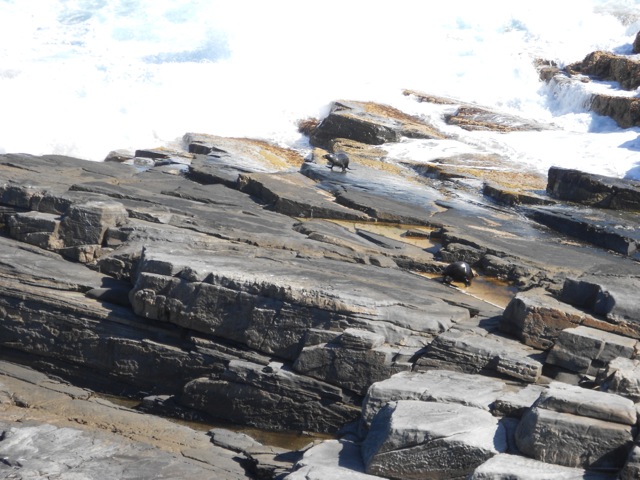
Near the arch were several New Zealand Fur Seals. If I was here a couple of weeks later, many more would have been here. They are all off out at sea mating, apparently.

wpid-dscn0375-2012-11-19-19-17.jpg

Remarkable Rocks

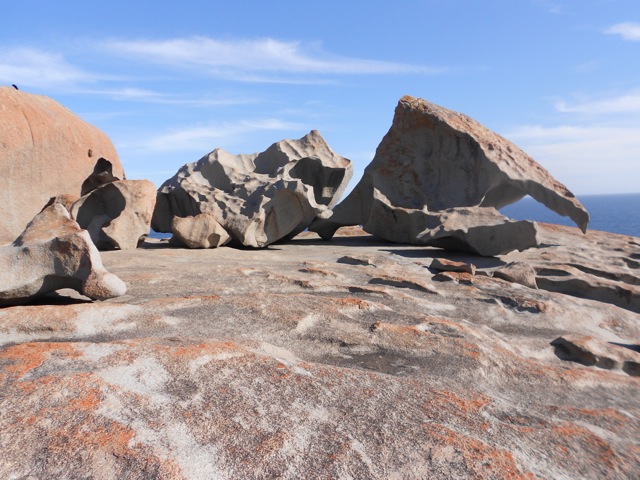
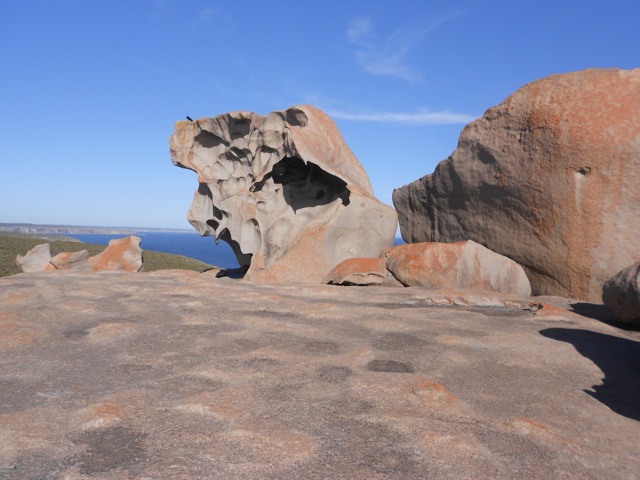
Not far from the Admiral’s Arch are the remarkable rocks.

wpid-dscn0389-2012-11-19-19-17.jpg

200 million years ago, a magma boil broke the surface and cooled. Over the millions of years, the rocks have been eroded leaving the unusual collection of massive rocks. The look like an artist created them. Remarkable, really.

wpid-dscn0390-2012-11-19-19-17.jpg

Seal Bay Conservation Park

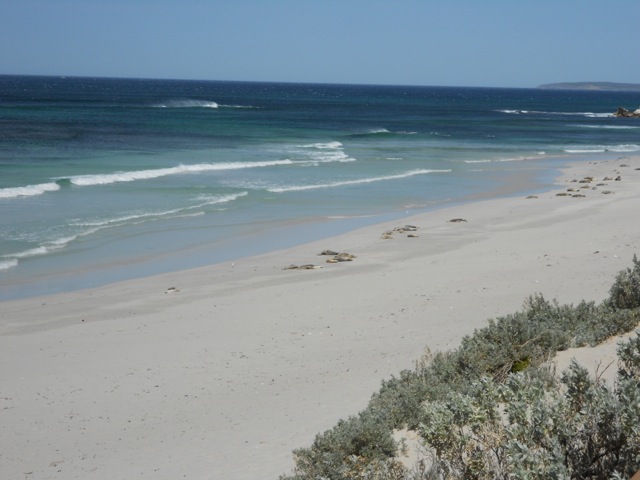
Along the south coast of Kangaroo Island is Seal Bay Conservation Park.

Walking along a long boardwalk, you can get right down near the Australian Sea Lions that have come to the shore to sleep .

wpid-dscn0409-2012-11-19-19-17.jpg

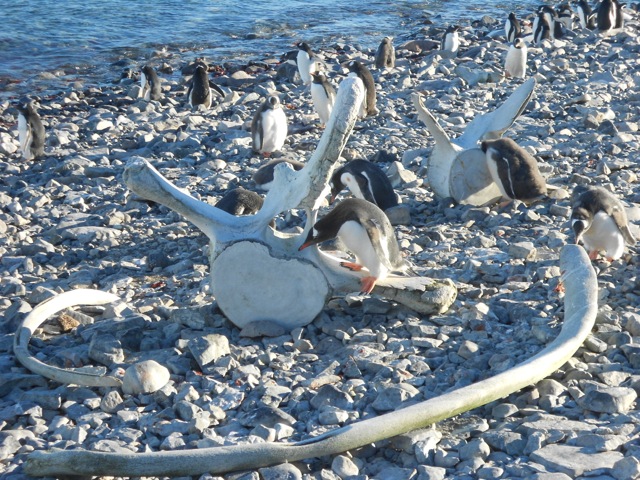
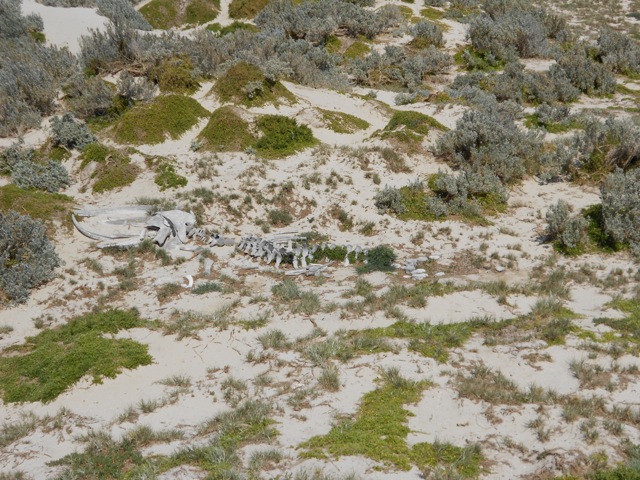
There is also the skeleton of a hump backed whale along the boardwalk also.

wpid-dscn0406-2012-11-19-19-17.jpg

Tomorrow, I head back to the mainland to Naracoorte for some Adventure Caving.

The relaxed on an island Lone Trail Wanderer

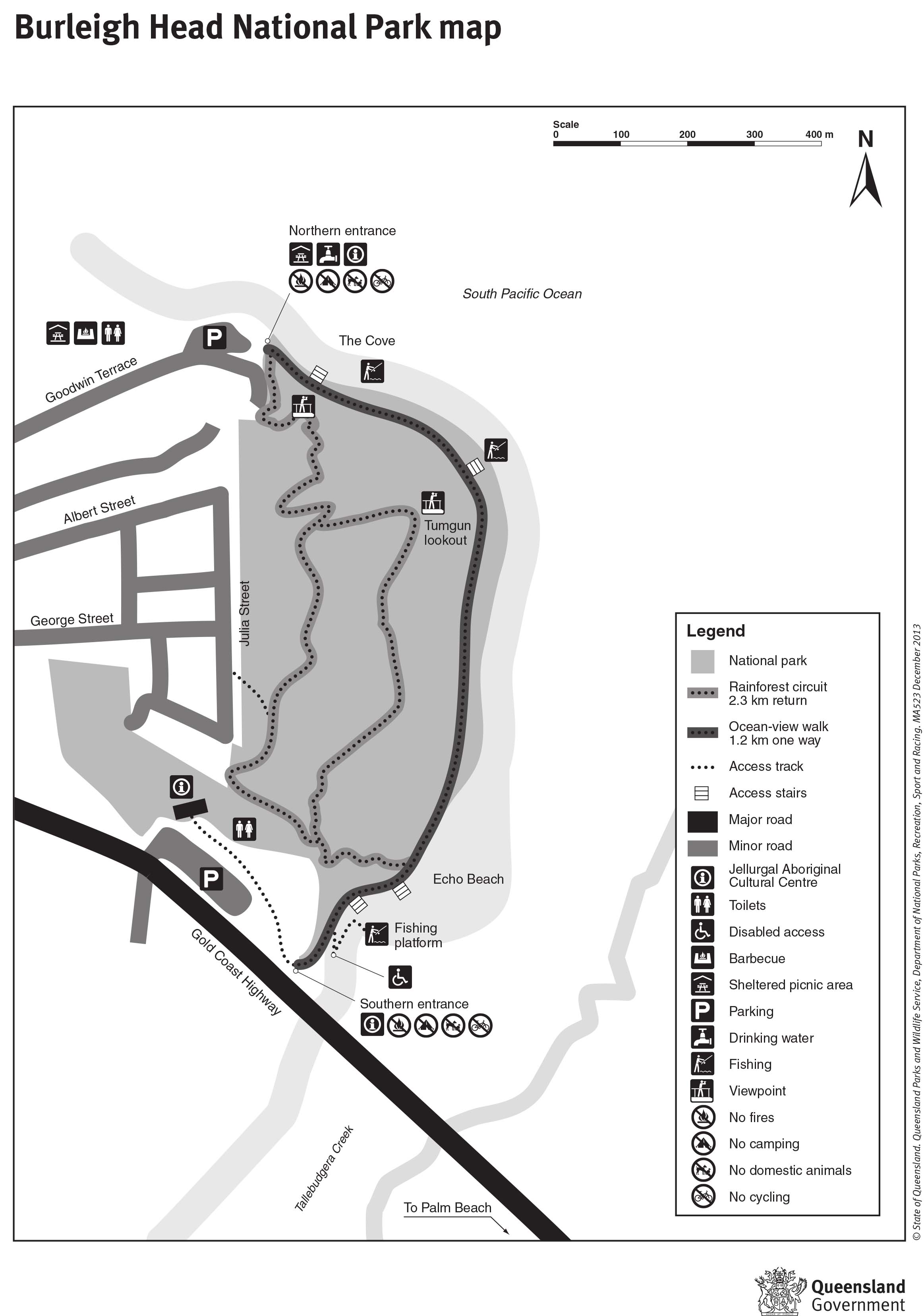
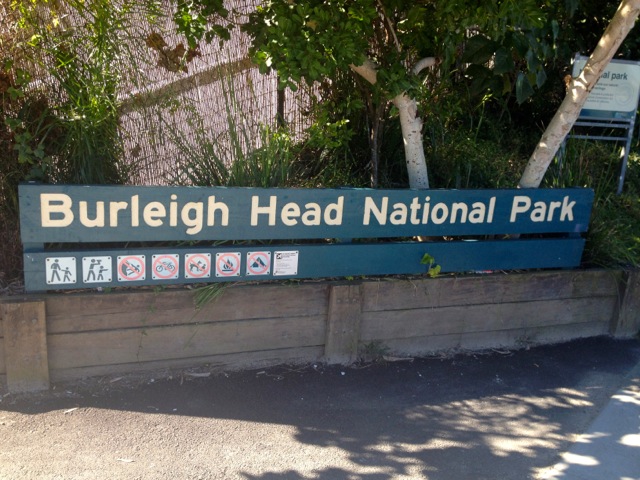
Burleigh Head National Park

It’s my first weekend back after my Kingdom of Tonga trip and the weather is beautiful, so I decided to get out and do a mild walk. Today I chose Burleigh Head National Park.
Burleigh Head National Park map

Map is owned by and used with courtesy of Queensland Government.  Please visit that site for more detailed information on hiking in this region.

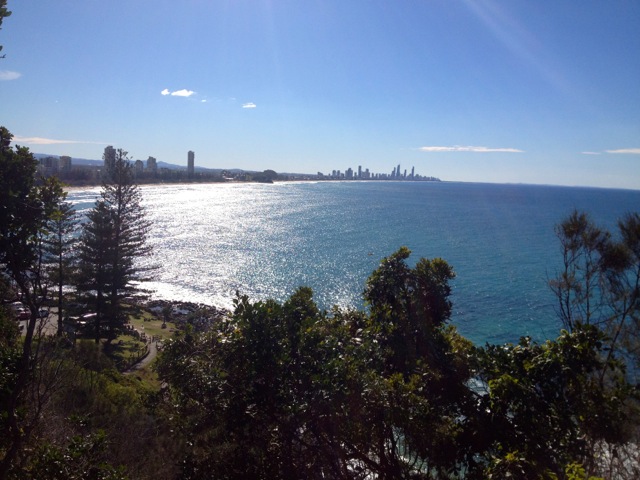
The Burleigh Heads are a section of beach at the southern end of Queensland’s Gold Coast.  The national park is nestled alongside the creek.

IMG_0646

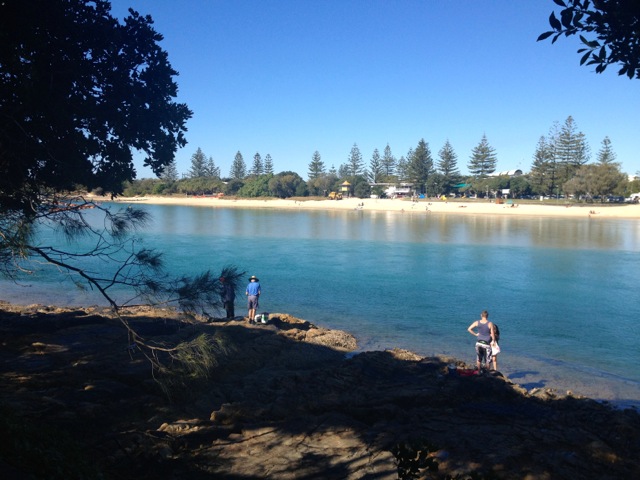
From the Gold Coast Highway, I walked along the trail at the side of the Tallebudgera Creek with people fishing on my side and sun baking on the other.

IMG_0648


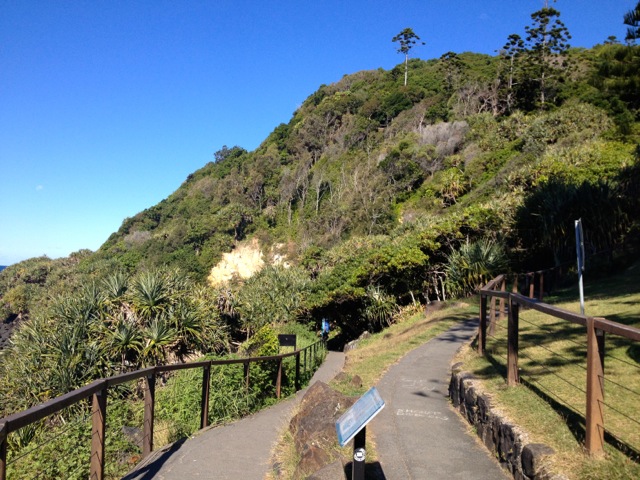
The ‘trail’ is more of a sealed path and is suitable for wheelchair access, which makes it a class 2 track.

wpid-img_0651-2012-07-29-14-28.jpg

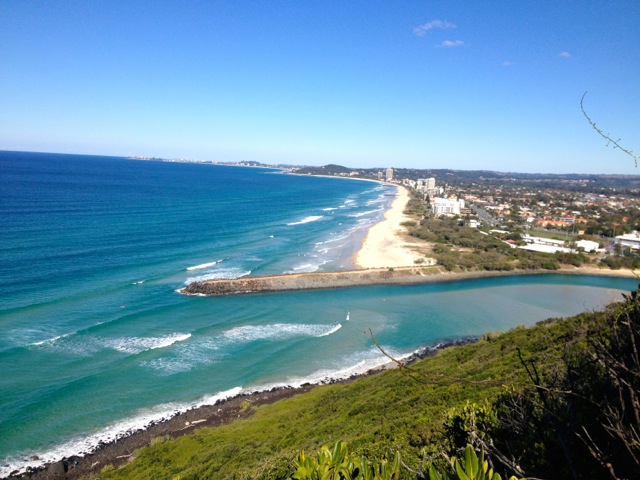
The path either continues around the base of the national park or cuts into it. I cut in and began climbing a fairly steep hill. While much of the national park is rainforest, I liked the great rocky outcrops and boulders alongside the path. After a fair climb up the steepish path, I arrived at Tumgun Lookout and peered out along the coast to the south.

IMG_0652

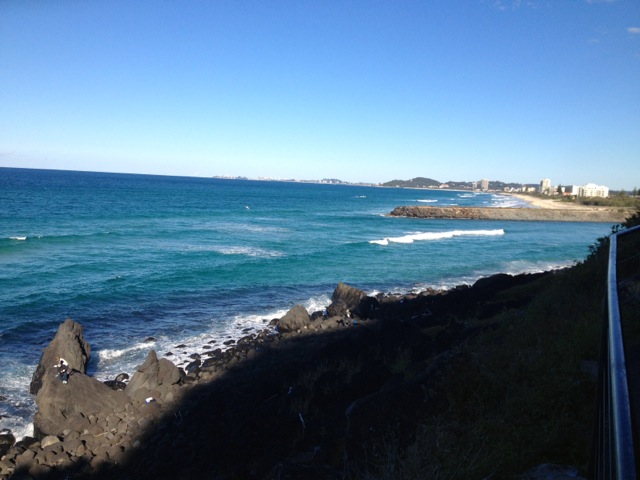
The climb down from the lookout heads down to the beach and contains several sets of short stairs until it emerges at the end of Burleigh Heads Beach and a view along the Gold Coast.

IMG_0657

I headed back up along the path to a junction and headed around the back of the national park, which is not as picturesque as the other way.

IMG_0658

Arriving back at the creek, I followed the lower walk around the base of the national park for another, lower, view of the beach before heading back to the car and home.

IMG_0661

I was only looking for a short walk today and even though the drive to and from this national park combined was longer than the time I spent there, it was still worth the effort and the sweat.

Next week, a real track.

The Trail Wanderer.