Tag Archives: Hike

Cerro Lopez, Parcue Nacional Nahuel Huapi, Argentina

In the mountains around Bariloche there are many different walks. I had originally planned a hike called The Nahuel Huapi Traverse. This is a-4 day hike through the mountains from Cerro Catedral to Cerro López, starting about 20km from Bariloche. But since it’s almost winter much of the trail is closed because of extreme ice and snow. There is, however, still access to some of the refugios that I’d have been staying in. So, I have split the hike into two shorter ones. The first is what would have be the final day of my longer hike, up Cerro López to Refugio López.

From the hostel in Bariloche three of us from the hostel, two ladies and I, have to catch a bus the 20km to the start of the walk. It’s sunday and we have to put money on our loaned bus card and when we get to the store to do that, it’s closed. So we have to run 5 blocks to get to the next store. It’s very cold this morning, but after a five block run in my warm clothes, I’m more than hot.

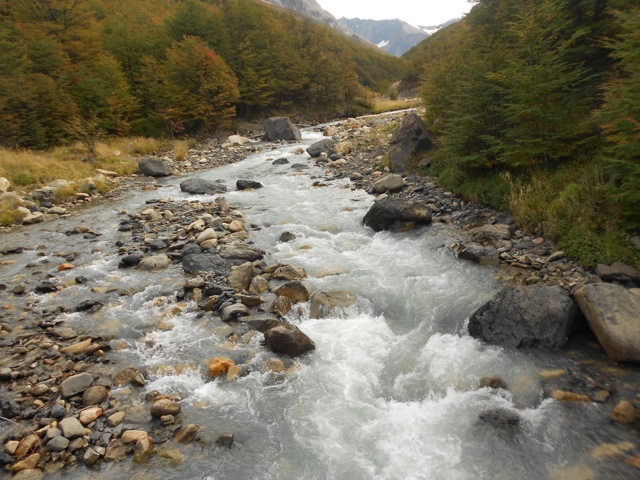
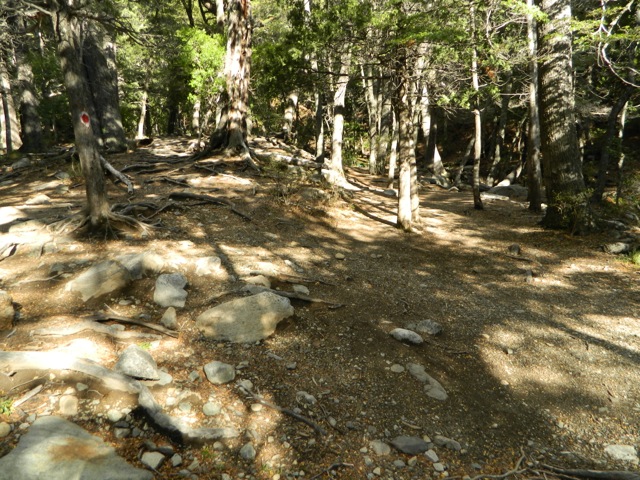
Forty minutes later we arrive at the beginning of the walk and it feels icy. We headed off through the forest on a rocky trail. The wind is very brisk and there’s a mix between being hot from sweat and being frozen.
wpid-dscn2299-2013-05-14-13-16.jpg

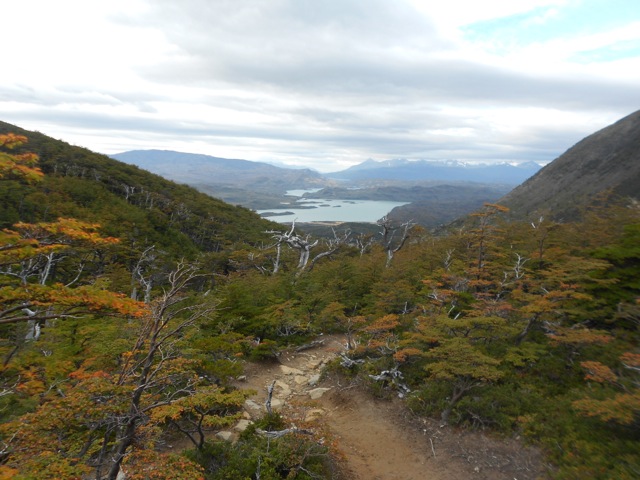
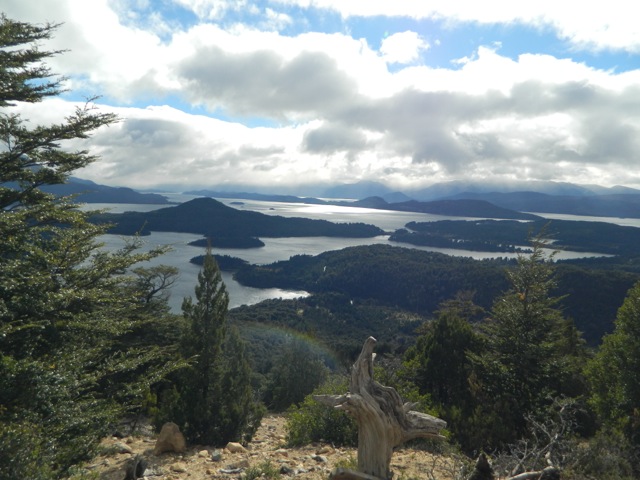
The climb began steeply up the mountain and was challenging, especially after a few weeks of little hiking. We pushed on in the light but chill wind and stopped for a break to look back at the lakes…
wpid-dscn2305-2013-05-14-13-16.jpg

After 5 minutes, the sweat down out backs had turned to ice, so we pushed on following the red dots…

wpid-dscn2308-2013-05-14-13-16.jpg

The first 1/3 of the climb was perhaps the hardest and steepest, the second 1/3 flattened out a little, although was still fairly intensive until we came over the ridge to a lodge over looking the lakes. The lodge was closed for the season.

wpid-dscn2312-2013-05-14-13-16.jpg

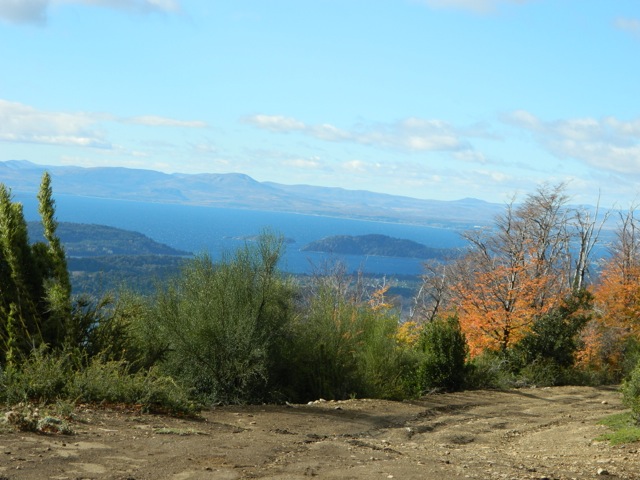
The scenes of the lakes was just too vast below us to fit into one photo. Looking back towards Bariloche, the lake actually looks bluer than the other portions.
wpid-dscn2314-2013-05-14-13-16.jpg

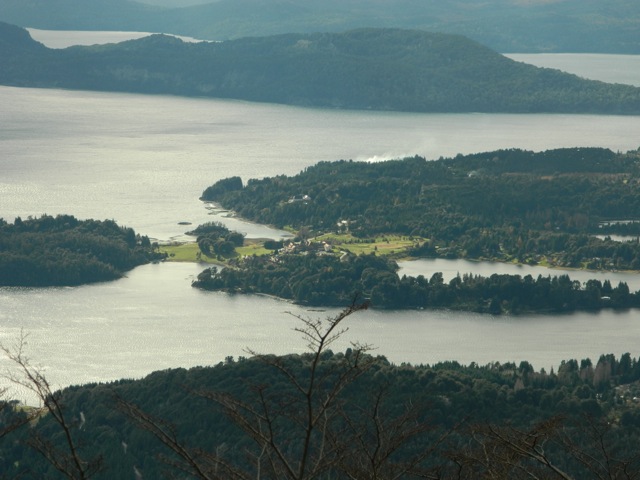
On the peninsula below us there’s a clear patch where Hotel Llao Llao is situated. For some reason the sun only wanted to shine on this particular area.
wpid-dscn2323-2013-05-14-13-16.jpg

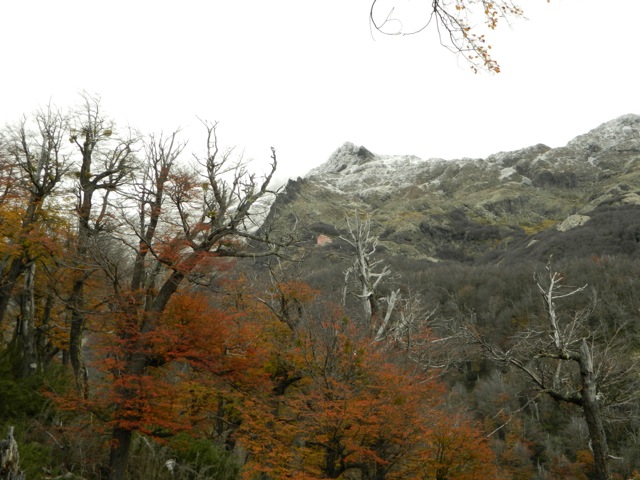
From the Lodge, we continued walking steeply up the hill and as we walked could see the pink Refugio Lopez perched on a ridge high above the autumn coloured trees.
wpid-dscn2338-2013-05-14-13-16.jpg

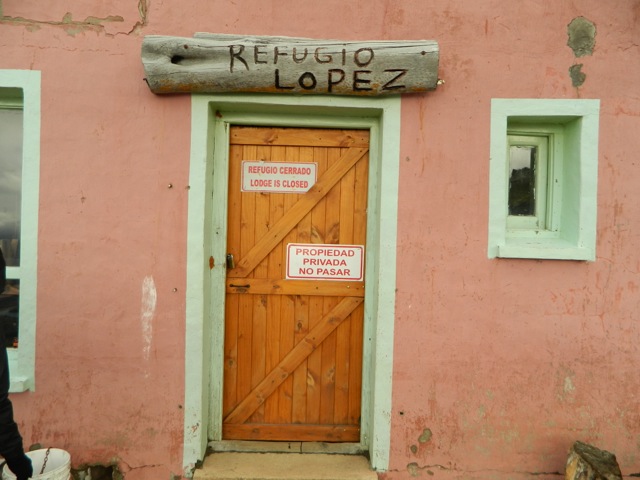
We followed the trail that became a slippery dirt trail. It lead to a 4WD track and we followed it for a while before it rounded the top of the gully and headed up steeply towards the refugio. Another 20 minutes later and after a short scramble we arrived. We knew it was going to be closed, so didn’t plan to stay longer than to eat some lunch.
wpid-dscn2330-2013-05-14-13-16.jpg

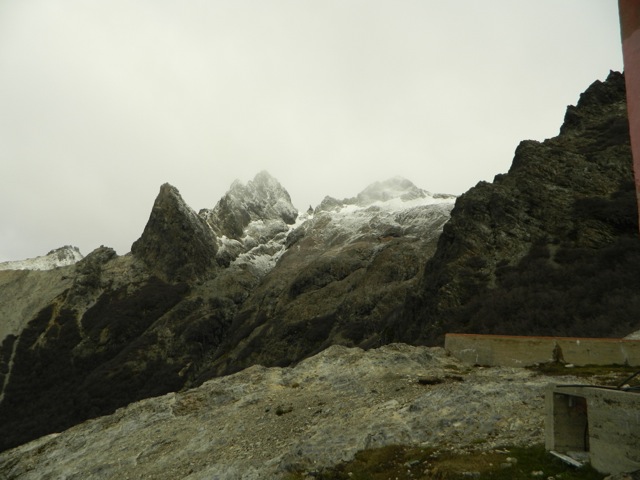
We could have continued walking up the mountain to the top, there are markings, but it’s not recommended because of the new snow…
wpid-dscn2327-2013-05-14-13-16.jpg

After a while we headed down again, faster than the climb. The slippery part was more difficult coming down and I slipped, skidding down on one knee, but kept my graces by not actually falling over.

Once we arrived at the bottom, we realised that we had 2 hours to wait for the bus. There’d been two other groups on the trail, one being two local guys waiting for a ride. One of the girls in my group asked it they had room in their car and next thing we knew we were being driven into town. The locals here are fairly friendly…

Today was a good if not strenuous walk with fantastic views of the lakes, and while it was supposed to rain it held out. Even more thankfully, it hadn’t snowed, although a few flakes had fallen. For the next week I’m taking a spanish course, then one of the girls and I are planning an overnight hike up to Cerro Cathedral, what would have been the first part of the traverse.

The Trail Wanderer
Villarrica Volcano, Parque Nacional Villarrica, Chile

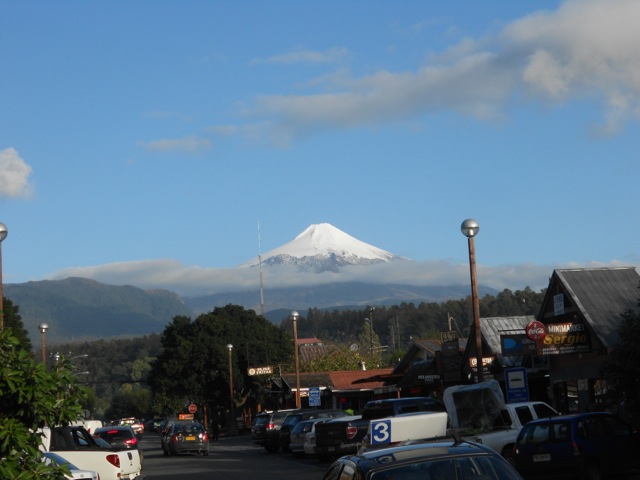
Situated just over 20km south of Pucón is the Villarrica National Park and its most prominent feature, the three volcanos that cross the Andes. The main cone of the three is the smoking Volcán Villarrica with the others being Quetrupillán and Lanín behind it when looking from Pucón.

wpid-dscn2271-2013-05-11-15-57.jpg

I’d originally planned to walk the Villarrica Traverse, a 6-day hike starting on one side of Volcán Villarrica and around the southern base of both Villarrica and Quetrupillán to a small town called Puesco on the other side of the National Park. But after waiting for days for the late autumn rain to clear for an extended time, I unhappily cancelled my plans. While I don’t mind walking in the rain for short periods, walking in the rain at a temperature of 2 degrees celsius is not something I really enjoy doing.

So, I decided to do the most popular and busiest attraction of the Parque Nacional, climbing to the crater of the 2,800m snowcapped top of Volcán Villarrica.

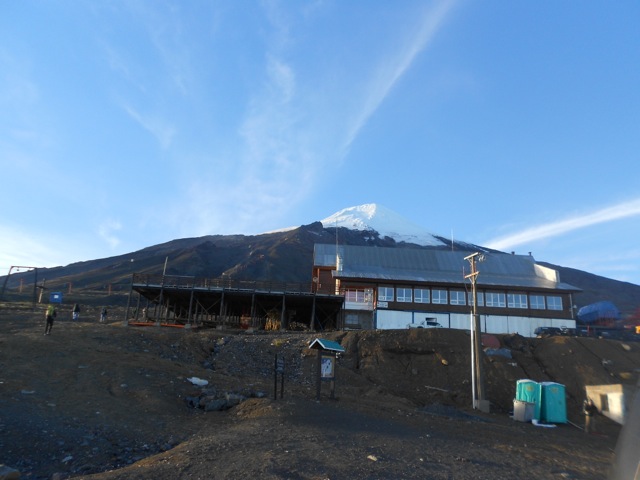
I was up at 5.30am for a 6.30am pick up. Breakfast was supplied by my hostel, who was also providing beer and a BBQ afterwards, all included in the price. We were taken to another hostel and provided with the gear for the climb. I opted for my own boots, but took everything else – including crampons and an ice ax. We were then driven along the pot holed dirt roads up the volcano to the ski resort at the base of the climb.
wpid-dscn2273-2013-05-11-15-57.jpg

We unloaded form the bus and gathered for the talk. We’d be walking to the base of the snow cap and stopping, waiting for the guides to check the wind speed and determine if we could continue.

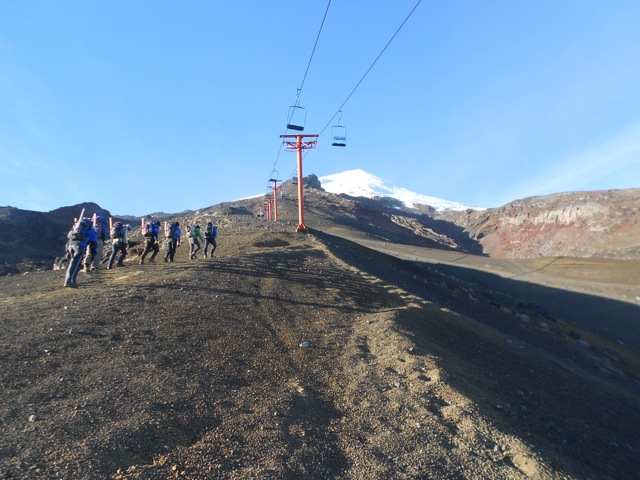
The climb would be in four parts, the last being the snow cap. We set off along the steep lower face of the volcano, the scree and dirt being soft and slightly difficult to climb. As we climbed, we split into groups, the younger group, the two larger American ladies, and me. There’s a reason I call myself the Lone Trail Wanderer, I like to walk alone in the serenity of nature and the quiet. The young group just yabbered away the entire climb and the less fit american girls quickly dropped back.

wpid-dscn2276-2013-05-11-15-57.jpg

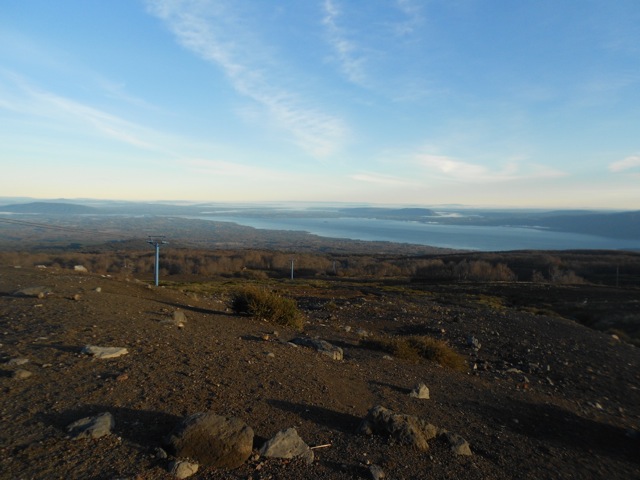
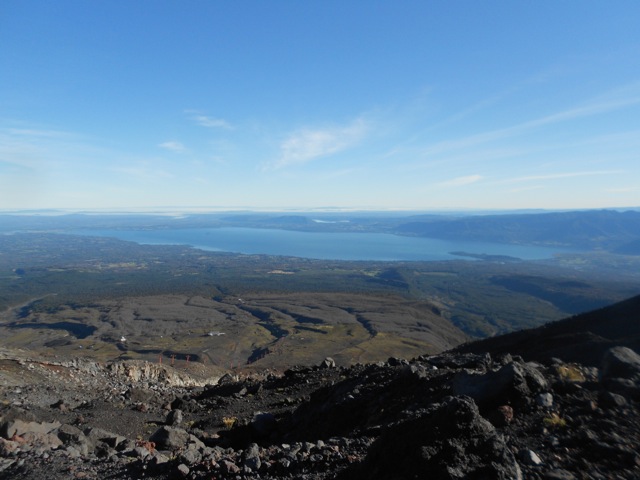
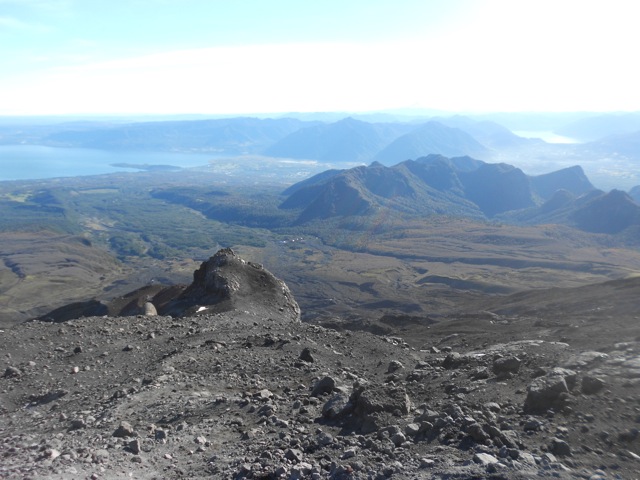
In the quiet, I climbed the steep trail, zig-zagging up the side of the mountain, and trying not to be blown over by the wind, which was gusting rather strongly, blowing dust and pebbles around me. Up ahead, I saw one of the young crowd stumble in the wind and nearly lose her footing. Looking back, the lake below could be seen, and the volcanoes to the south, while sitting below the sun, and while not making good photos, still looked amazing.

wpid-dscn2274-2013-05-11-15-57.jpg

We continued walking and climbed along a gully of rocks out of the wind and took some respite before topping the ridge and heading towards the first stop, the top of a ski lift and a large wooden building, again out of the wind. We stopped for a rest and some photos before heading on. The next stop, an old burnt out ski lift building a little further up. Just before we left, the two larger girls finally arrived wondering why they had decided to climb the mountain – in words I won’t repeat here.

wpid-dscn2281-2013-05-11-15-57.jpg

The next stage was easier and again I let myself drop back to walk in the quiet again, we walked behind a ridge for most of the way, so enjoyed the lack of wind ripping at us. We stopped at old burnt out brick lift house but didn’t go in.

wpid-dscn2283-2013-05-11-15-57.jpg

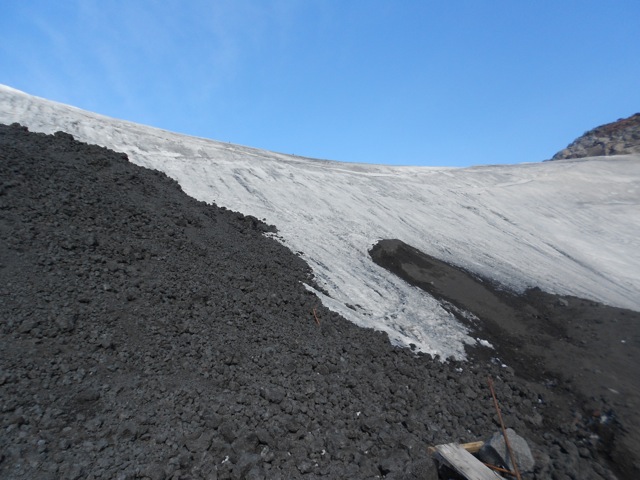
The third leg became steeper again and the volcanic sands made each step harder. I again drifted back from the ongoing and incessant chatter from the other group. There was no sight of the american girls behind us and I would later discover they hadn’t gone past the second stop. We came to the base of the snow cap and were briefed on the next stage. On went the warmer clothes, the gaiters, and out came the crampons and ice axe. The guides then climbed the ice shelf to test the wind. 10 minutes later they returned to tell us that the wind was blowing 80km/hr and it wasn’t safe to continue further. Okay, no problems, they knew what they were doing, so all good. This led to half of the group arguing with the guides for the next half an hour, trying to persuade them to take them anyway. Eventually, the guides were persuaded, but I decided it more prudent to not go. The views were amazing though, although I discovered that the lens of my camera had failed. It had been giving me grief much of my trip. Time to buy a new one…

wpid-dscn2284-2013-05-11-15-57.jpg

The four of us who hadn’t gone waited for 30 more minutes in the icy wind for them to return, but when they didn’t, we headed down. Down was very quick. Because of the volcanic sands, you could slide each step and when running you skidded down rather quickly. Back at the first chair lift building we collected the two American girls and continued down, arriving at the base soon after to wait for the other climbers. They arrived an hour later and we all were back in the bus and heading back to Pucón for beer and BBQ.

It was a shame we couldn’t get right to the top – even the four that tried didn’t make it because of the clouds rolling in quickly. But the weather rules supreme in Patagonia and you must bow to its might.

The Trail Wanderer
Osorno, Chile – Impressions

Just an hour by bus north of Puerto Montt is Osorno, a small city in the Lakes District of Northern Patagonia. Osorno sits under the volcanic cone of Volcán Osorno, is home of the National Cattle Ranch of Chile and has a heavy german influence.

wpid-montaje_de_osorno-2013-05-2-14-59.jpg
Collage courtesy of Wikipedia

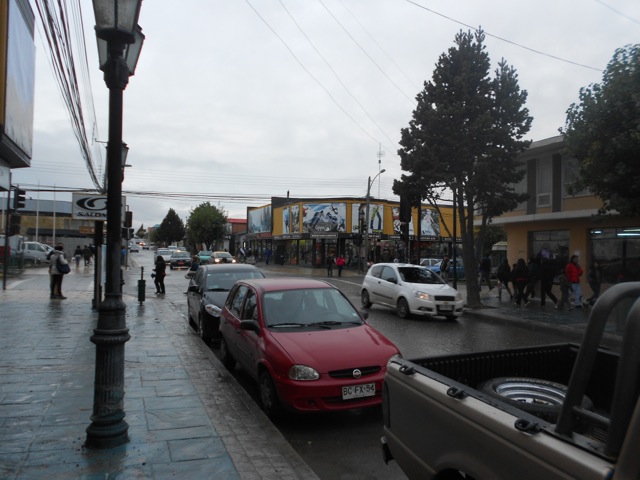
Osorno is typical Chilean city with some very spanish markets, far too many stray dogs and cheap beer. I stayed at Hostal Vermont, 10 minutes walk from the bus terminal in the city centre. The main streets and shopping malls are characteristic of larger cities with many bustling shops and people.

I came to Osorno for one reason, a hike in the neighbouring Parque Nacional Puyehue called ‘Baños del Caulle’. The hike climbs the side of Volcán Puyehue to the rim, walks around the side and down to a set of hot springs, the ‘baños’. This had originally a 4-day hike but I discovered that two years earlier, an eruption on the baños side of the volcano had destroyed the hot springs. I decided to do the hike anyway, climbing to the volcanic crater and camping further down.

As I prepared for the hike, the hostel owner informed me that one of her previous guests hadn’t returned from the hike. Three other’s had seen him there and had returned, but he had not. This didn’t worry me, and it turned out two other guests at the hostel would be doing the hike also.

To get to the national park in low season I had to catch a bus to a point about 20km from the trailhead and hitchhike the rest of the way. I was finally picked up after walking 12km and dropped off at the hike’s registration point where I could see the cone rising into the clear blue sky. On arrival I was told the police had closed the hiking trails as they were conducting a manhunt for the missing man.

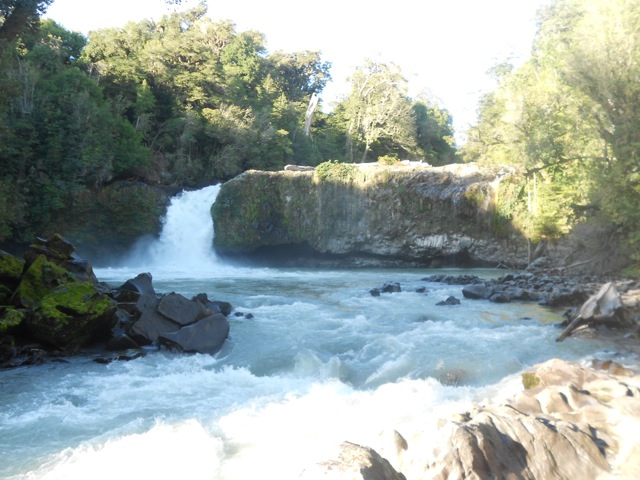
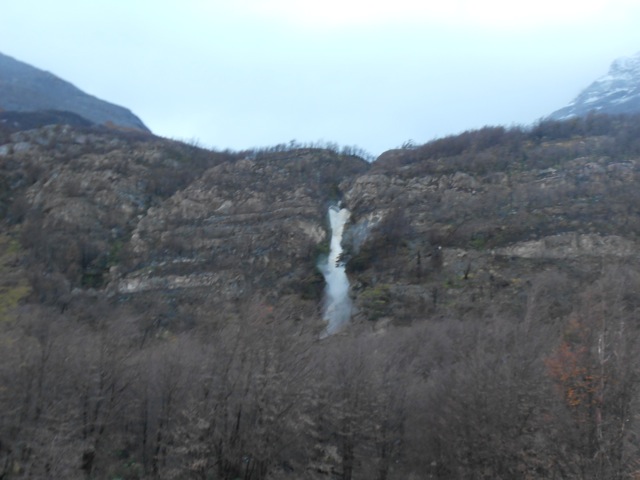
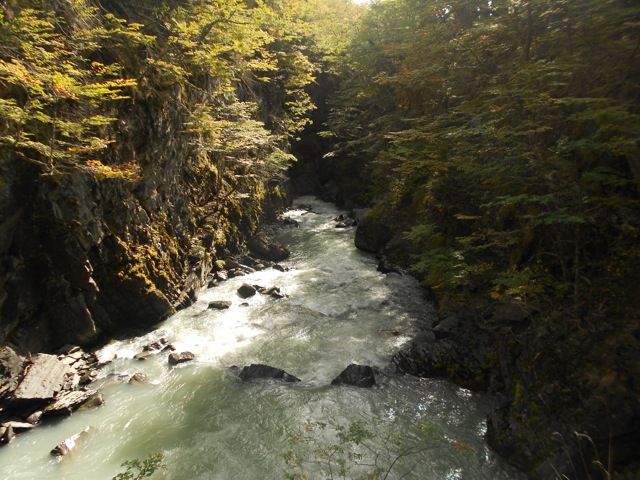
That night I stayed at a small hotel next to the National Park called Anticura.  Close by was the river and several waterfalls.

DSCN2253

By morning, they still hadn’t located the missing hiker and park was still closed  as they were continuing the search. The weather had also turned, so I decided to head back. I flagged down a bus heading from Bariloche, Argentina to Osorno and an hour later was back in town.

The next day, I boarded a bus to Pucón, the party capital of Chilean Patagonia, where I was planning a 6-day hike around a pair of volcanoes.

The missing walker did eventually turn up on day three of the man hunt.  He’d gotten lost on the route.

Things to do in and around Osorno:

  • Visit Lago Puyehue
  • Climb Cerro Pantoja
  • Relax in the Termas Aguas Callientes – Hot Springs

The Lone Trail Wanderer

Puerto Natales, Chile – Impressions

Three hours by bus north of Punta Arenas is the port city of Puerto Natales. Puerto Natales was originally a beef producing fishing port, but over the years has embraced tourism based on its proximity to Parque Nacional Torres del Paine, the most popular and most expensive national park in Chile.

Because of the number of people coming to walk the ‘W’ trek – the most popular hike in the national park – the city has expanded rapidly. While it still has a small town feel, the plentiful hostels, tour operators, adventure stores and restaurants makes it feel bigger.

wpid-dscn2200-2013-05-2-14-56.jpg

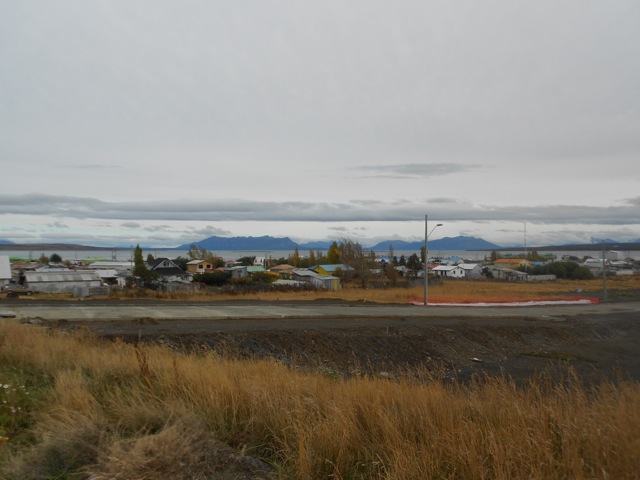
There are multiple main streets crisscrossing the city, a restaurant square, a tourist triangle and a brand new supermarket. Along most of the north and eastern horizons are the fantastic mountains of the Andes, including Torres del Paine Massif, while along the north and west of the city is the harbour.

wpid-dscn2195-2013-05-2-14-56.jpg

Puerto Natales is all about Parque Nacional Torres del Paine. Every hostel and many convenience stores – not to mention the adventure stores – hire out equipment, arrange tours and organise bus trips to the national park. And every day at 3PM at a bar called Base Camp there is an hour-long free lecture about the hike.

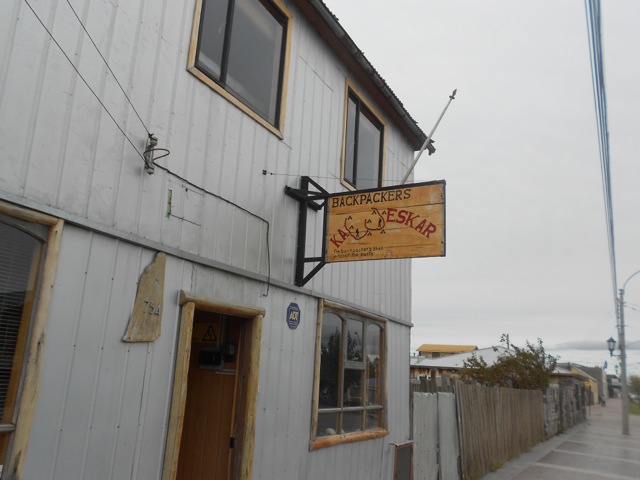
The hostel where I stayed, Backpackers Kaweskar, was set up specially for the hike and can provide everything you could need, even discounted transport fees. While its owner, Omar, is crazy (in a good way), is very knowledgable about the hike and definitely loves his football. While I was there he spent two solid days playing FIFA 2012 on the X-box with one of his friends. It was the low season and he did pause when needed by someone, but it made the place feel down to earth. Definitely a recommended place to stay.

DSCN2194

Puerto Natales is also the southern port of the Navimag ferry. The ferry wends its way through the Patagonian fiords for five days to Puerto Montt in the lakes district at the northern end of Patagonia.

wpid-dscn2199-2013-05-2-14-56.jpg

Puerto Natales is in a class of its own and should be on everyone’s visit list if they wish to hike anywhere in Patagonia.

From Puerto Natales:

The Lone Trail Wanderer

Parque Nacional Los Glaciers – Mt Fitz Roy Triangle

Across the border and about 8 hours by bus north of Parque Nacional Torres del Paine is a small town called El Chalten. El Chalten is inside the north end of Parque Nacional los Glaciares and is the only way to walk around Mt Fitz Roy. If there was no Mt Fitz Roy, there’d be no El Chalten.

There’s also no actual hike called ‘The Triangle’, it’s purely name I gave it, because the 3-day hike is, well, a triangle. The walk itself isn’t especially difficult and most days are rather short. But, much like the Overland Track in Tasmania, it’s the side tracks that allow you to adjust its difficulty.

Day 1 – El Chalten to Campamento Poincenot

The wind was fairly brisk as I headed out of my hostel. And because the hostel doesn’t provide breakfast – a first for me so far this trip – I stopped at a nice little cafe/bakery down the road. Then, late in the morning, I set out towards the northern start point of the hike. You can start the triangle from both ends, but I chose the northern end because, well, I wanted to.

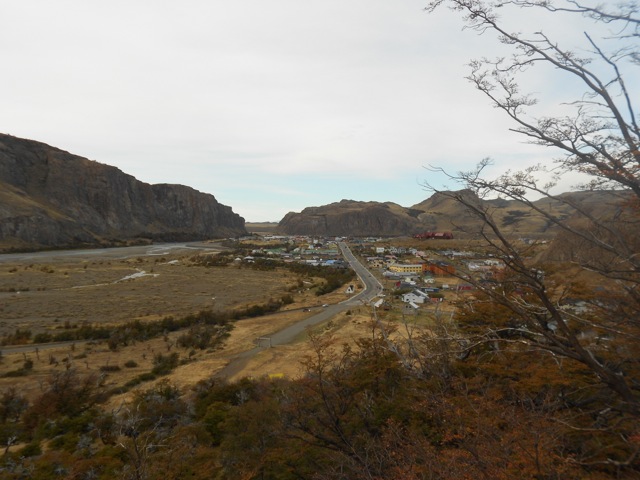
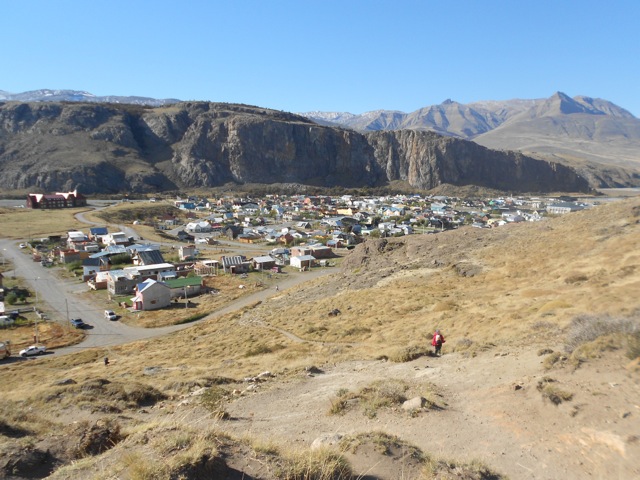
I found the entrance to the parque fairly easily and followed the trail up the hill beyond the sign. The trail heads up and around Cerro Rosado, a small rocky mound just over 800m above sea level – El Chalten is 400m. I soon come to a rocky outcrop with a good view back to town.

wpid-dscn2078-2013-04-13-09-34.jpg

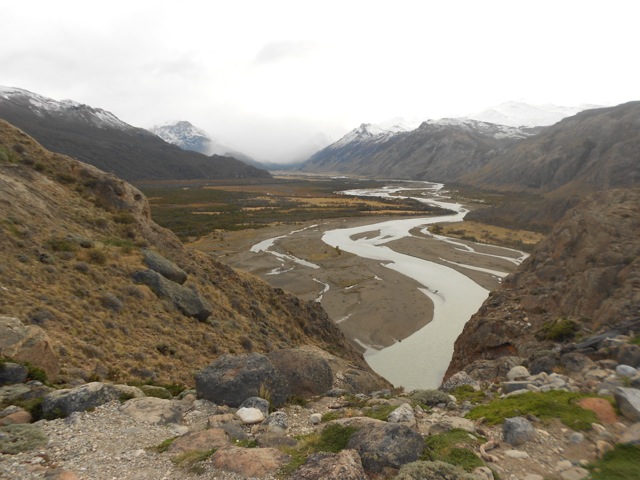
Further on, I came to a mirador looking north along Rio de Las Vueltas and the mountains beyond with their light topping of overnight snow.

wpid-dscn2080-2013-04-13-09-34.jpg

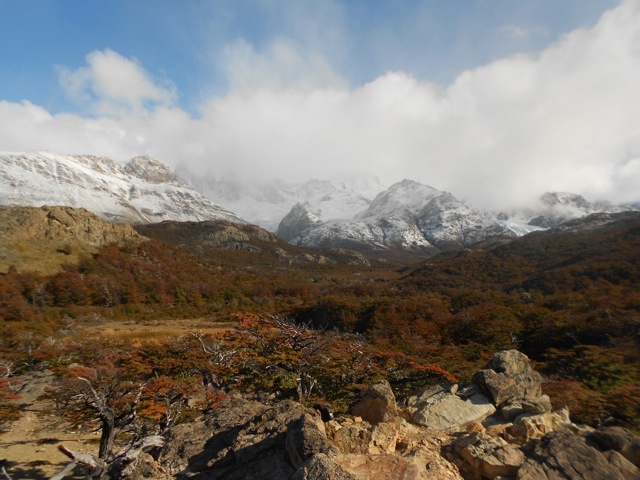
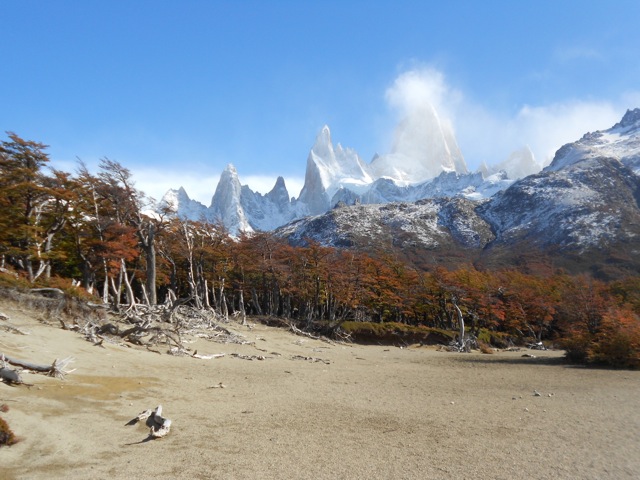
The trail continued on slowly climbing towards the plateau. After a time I arrived at a sign announcing a fork in the trail. One way leads to Mirador Mt Fitz Roy while the other to Laguna Capri, then both meet again on the other side. I walked to the lookout but much of the mountains were covered in cloud.

wpid-dscn2088-2013-04-13-09-34.jpg

It did looked like the sky was clearing so I went for a short walk to kill some time. After hearing a tapping sound I discovered a pair of black and red woodpeckers hammering away at some old trees. I stopped to watch for a bit and when I returned to the mirador the mountains were a little clearer, but not much. I headed on down the trail and found a spot out of the wind to have lunch. By the time I was ready to leave, only the main spire was covered in cloud.

wpid-dscn2112-2013-04-13-09-34.jpg

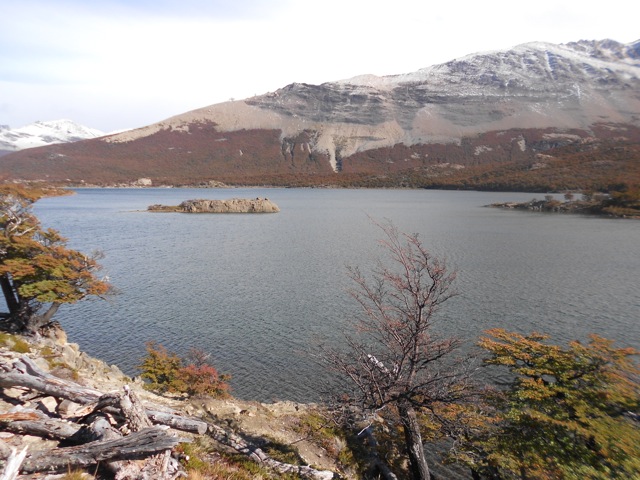
Not far along the trail I found the fork back to Laguna Capri and went to check it out.

wpid-dscn2102-2013-04-13-09-34.jpg

I then headed on towards the campsite, following Arroyo del Salto.

wpid-dscn2106-2013-04-13-09-34.jpg

I crossed the plateau and rounded the base of the hill under the spires. Shortly after, I arrived at camp and set up my tent. Still early afternoon, I went to check out one of the two main side trails from camp, I took the easier one and headed off down Rio Blanco towards Laguna Piedras Blancas. After about 30 minutes I found an obvious trail that led me over huge boulders to the laguna.

wpid-dscn2122-2013-04-13-09-34.jpg

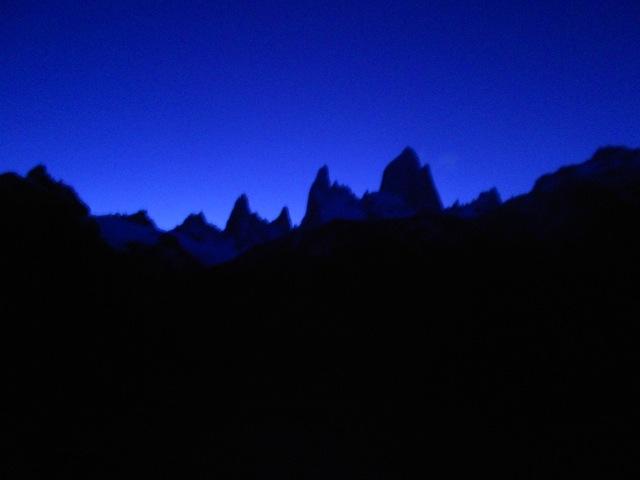
On the way back it started getting icy even before the sun had gone down. This means cold overnight, but usually clear skies in the morning. During the night I popped out of the tent to see the vastness of the stars and to check out the peaks at night.

wpid-dscn2131-2013-04-13-09-34.jpg

Day 2 – Campamento Poincenot to Campamento De Agostini

It was cold overnight, but especially the last couple of hours before dawn, with the sun rising at 8.30am. By then I’d slept about 10 hours anyway. There’s not much to do on a hike after dark and going to sleep by 10 is considered late. In the cold, I emerged from my tent to take early morning pictures of the mountains before heading back to the warmth of my sleeping bag to brew coffee.

wpid-dscn2133-2013-04-13-09-34.jpg

After breakfast, I packed but left my tent up and with my day pack, headed up the other side track, to Laguna de los Tres, under the towers of Mt Fitz Roy. The climb started in the forest near the camp but after the ‘climbers only’ camp at Campamento Rio Blanco it turned rocky and stayed that way, climbing steeply for the rest of the half kilometre climb. About half way up, the trail started to turn to ice and I became more cautious with my steps, then three quarters of the way up, there was snow, but not huge amounts. I eventually arrived at the top and sat looking over the lake with the peaks towering over me. The lake is 1170m above sea level, while Mt Fitz Roy towers to 3405m.

wpid-dscn2140-2013-04-13-09-34.jpg

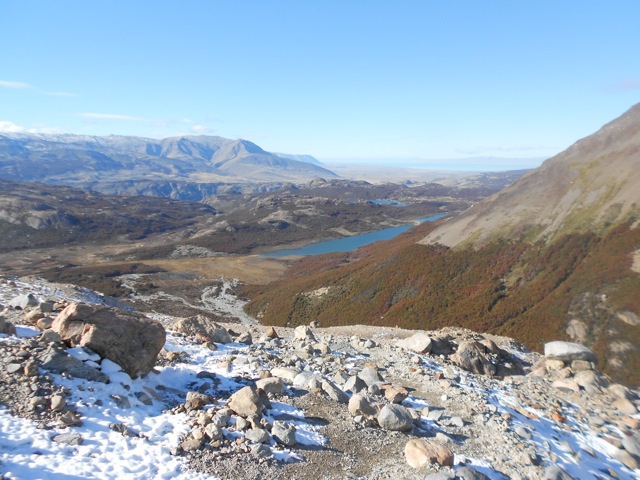
After a while, I headed down and caught the view across the valley to Lago Viedma.

wpid-dscn2145-2013-04-13-09-34.jpg

I stopped for lunch back at camp before packing up my tent. Thirty minutes later and I was following my steps across the plateau and taking the trail to the south. It was fairly flat and I walked past Lagunas Madre and Hija.

wpid-dscn2151-2013-04-13-09-34.jpg

Then the trail dove into trees with the occasional grassy clearing. After 2 hours the trail headed steeply down into a valley to Rio Fitz Roy where I stopped for a break. Following the river, I came upon a fantastic view of Cordon Adela – The Adela mountain chain – in all it’s icy glory backing onto the South Patagonian Ice Field.

wpid-dscn2157-2013-04-13-09-34.jpg

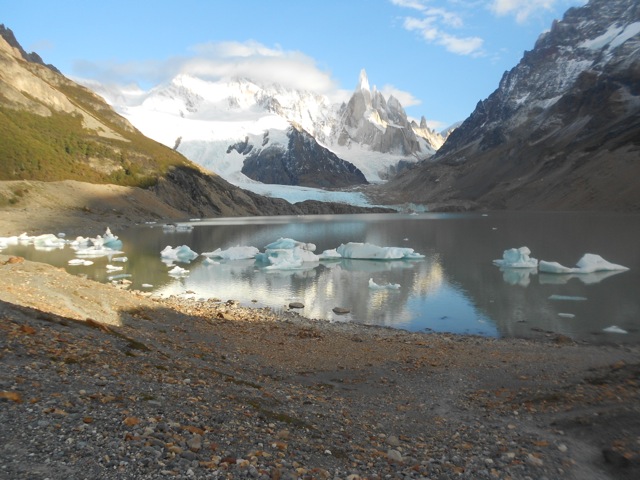
For the rest of the trail I walked steadily towards the cordon and finally arrived at Campamento de Agostini just short of Laguna Torre. The lake is fed by Glacier Grande that hangs from the bottom of the range. I pitched my tent and climbed up to look at the laguna, but with the sun hidden behind the mountains it was fairly dark.

Day 3 – Campamento De Agostini to El Chalten

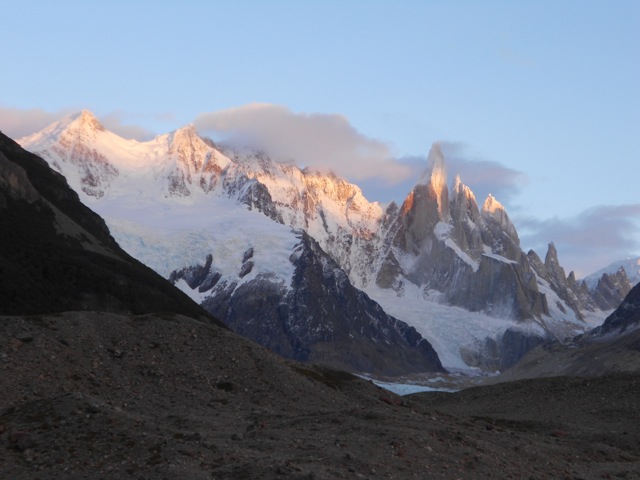
Again it was icy in the last hours before dawn, so I brewed a coffee to keep warm. Then, I stood at a viewpoint waiting for the first rays of light to hit the Adela Cordon.

wpid-dscn2166-2013-04-13-09-34.jpg

Once I’d seen it, I packed up and again left my tent. With my day pack I headed around the top of the laguna and climbed towards Mirador Maestri. On the way there were a couple of views of small waterfalls, but once I got to the mirador I was a little disappointed to find that it was just closer to the cordon than from the other side of the laguna. I did get better views of the laguna with light though.

wpid-dscn2168-2013-04-13-09-34.jpg

I headed back to camp where I packed up my tent and headed out back along the trail. For the most part, following the rio, the trail was fairly flat. I passed the junction with the trail I’d come off yesterday and continued on flat beside the river. As I got closer to El Chalten, the trail began to climb a small set of hills to eventually arrive at a mirador looking back over the cordon. This was designed for day walkers to be able to see the mountains without doing the entire hike and is similar to the mirador near Laguna Capri. The trail headed over a couple of ridges before descending towards town.

wpid-dscn2184-2013-04-13-09-34.jpg

Overall, the Mt Fitz Roy Triangle is an excellent short hike experience around some amazing mountains. It’s cheaper than Torres del Paine but still has plenty to see. There are slightly less day walkers, although that might be because it is the low season.

Next I’m heading back to Puerto Natales, where I board the Navimag ferry and cruise through the fjords heading my way up Patagonia to Puerto Montt.

The Lone Trail Wanderer

El Chaltén, Argentina – Impressions

El Chaltén is a small town at the northern end of Parque Nacional Los Glaciares in Argentina. It’s a town bred purely from the tourism generated by the National Park and Mt Fitz Roy.

DSCN2184

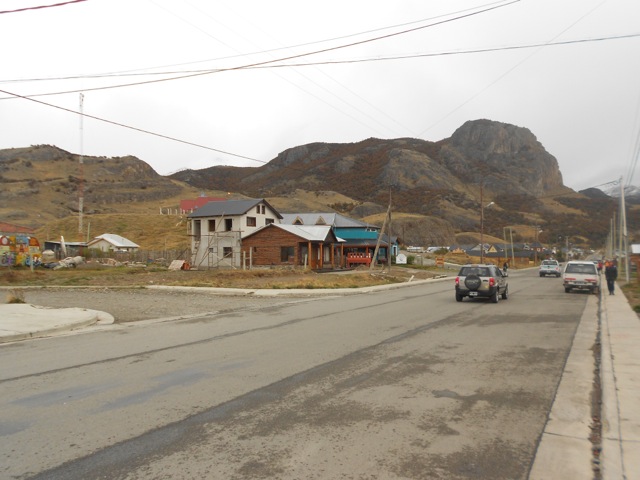
El Chaltén was quaint and had plenty of hostels, although many were aimed more towards the hotel end of the market than to backpackers. There were plentiful tour operators and adventure stores selling the big named adventure gear for both hiking, ice climbing and glacier expeditions. There was also a small cafe/bakery scene in the town which was great, as the hostels don’t provide breakfast.

I stayed at the Hostal Pioneros del Valle. This large and fairly cheap hostel had plenty of rooms, most set up with 6 beds. But as it was low season when I stayed I had the room to myself. Splendid!

DSCN2072

High season is December to the end of March and outside of these times more than half of El Chaltén’s businesses close down. The several restaurants in town are reasonably priced restaurants, including the local micro-brewery, which is good considering the town doesn’t have good facilities for buying your own food. While there are supermarcados, they aren’t very ‘super’.

The National Park had great day walks and several longer hikes – some very intense indeed. Being short on time, I only did a 3-day hikes. It doesn’t have an official name but I called it the Mt Fitz Roy Triangle. The other great advantage of the Parque Nacional is it’s cost. It’s free. Something different in a land of expensive national park entrance fees.

Here are some of the other walks:

  • Cascada Margarita
  • De las Vuetas River Canyon
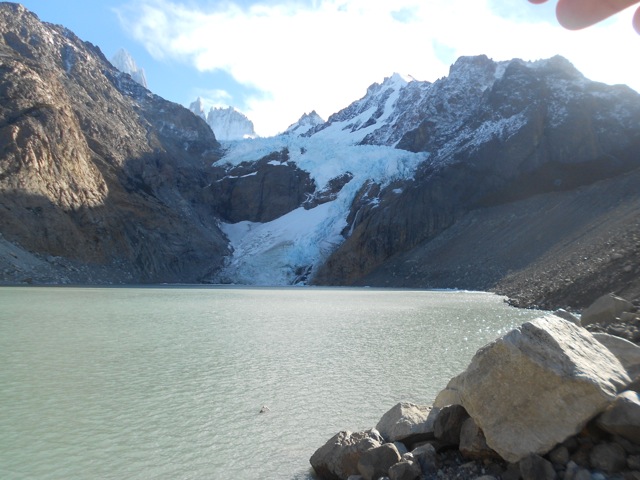
  • Piedras Blancas Glacier
  • Punta Norte – Hito Limítrofe

Next, I head back through El Calafate to Puerto Natales in Chile to catch the Navimag Ferry

The Lone Trail Wanderer

Parque Nacional Torres del Paine – Day 9

Day 9 – Final Day – Refugio Lago Grey to Refugio Paine Grande

Today is a short day and is the official last day of the circuit for my companion and I. The walk between the Refugios is not long, about 3.5 hours. We were up early and aiming to arrive at Refugio Paine Grande in time for the catamaran that would drop us at our bus.

It had rained most of the night, nothing heavy just constant. I awoke in the dark and quickly dressed and began packing my gear. Usually the first thing I do is start brewing coffee, but as I’d lost my water bottle yesterday when the wind whipped it out of its pocket and cast it down onto the glacier, I figured it would be quicker to pack and have breakfast afterwards. Before long I had everything, including my wet tent, packed away and I was in the warmth of the cooking room heating water for coffee and soup.

We headed out by 8.30 and straight away began climbing a hill in the chill wind. It began to rain as we walked along the side of the mountain with Lago Grey below us. The trail dipped up and down through the valleys.

wpid-dscn2058-2013-04-6-20-16.jpg

There looked to have been a sprinkle of snow on the peaks above us as we passed a raging waterfall well stocked with water from the rain.

wpid-dscn2059-2013-04-6-20-16.jpg

The trail continued and as we crossed a couple of ridges, the wind was so icy coming off the glacier and the rain so constant I was forced to put on my waterproof jacket. If it rains when I’m hiking, I tend not to worry about my jacket. While it protects me from the rain, I still sweat, so get wet inside anyway. It does make a good wind breaker though, so in this case it helped a lot. We passed a couple of miradors but the wind was too fierce to consider standing out in the open looking back at the glacier.

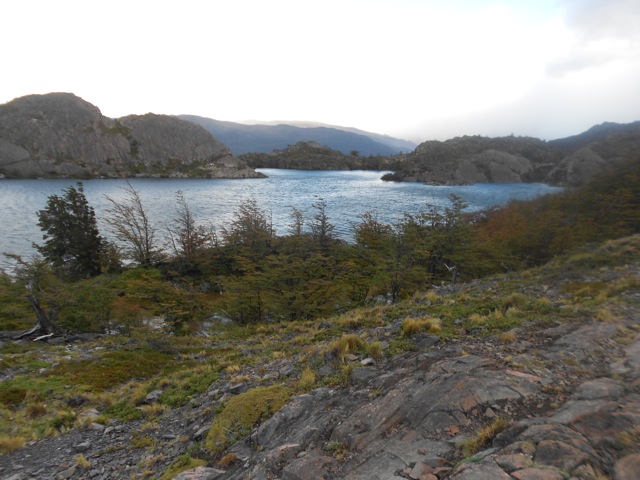
We then climbed a hill around the side of a laguna…
wpid-dscn2069-2013-04-6-20-16.jpg

…before crossing a final ridgeline to follow a kilometre long gully down towards the blue of Lago Pehoe, where Refugio Paine Grande is situated.

wpid-dscn2070-2013-04-6-20-16.jpg

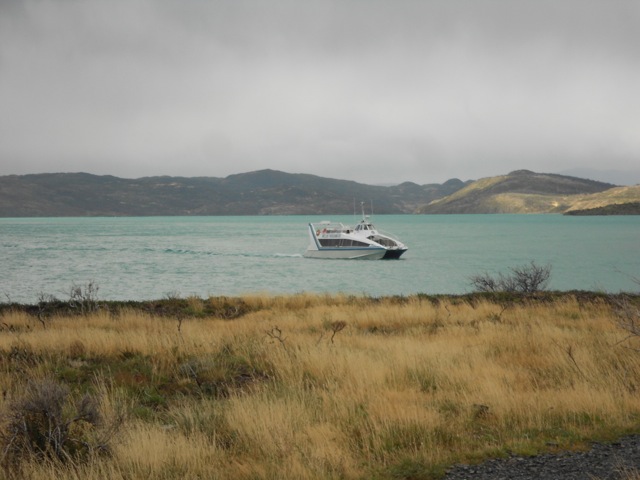
Eventually we arrived at the bottom and walked the short distance to the refugio. 30 minutes later and we were on the catamaran and heading away from the park.

wpid-dscn2071-2013-04-6-20-16.jpg

Final Note

With the weather in Patagonia known for being very changeable, we were blessed with having 7 wonderful days out of the nine we were on the hike. The Parque Nacional Torres del Paine is a wondrous place with many great attractions. While the popularity is one of its downsides, I’m glad I went in low season as peak season would be just insane, with far too many people. Still, the mystical mountain peaks, both with and without snow and, the Lagos and Rios surrounding it, the Lagunas within it and the wonderful sights on all sides of the park were amazing. I’m glad I decided to do the circuit as the far side of the park is quieter and entirely different to the front side, with the glaciers, the pass and the south patagonian ice field in the distance.

I also enjoyed my companions for the hike, Chris, the young American guy I walked with most of the hike; Pip and Dan from Sydney and Sam from London, who walked as a threesome, but were with us at camps except the last (as they got stuck behind the landslide). Thanks to these people for making the experience what it was. Also, thanks to the many people we met at various parts of the hike, especially the two american couples on the back side – but who didn’t start with us – the Aussie couple who were from my hostel, and the group of young american girls studying in Santiago (kept Chris busy!).

Next I’m off to El Calafate in Argentina for a couple of rest days near the lake, before off to El Chalten for a three day hike around Mt Fitz Roy.

The Trail Wanderer
Parque Nacional Torres del Paine – Day 8

Day 8 – Campamento Los Perros to Refugio Lago Grey

Today is slated as the hardest on the entire circuit as we’re climbing over the windblown Paso John Gardner, more than 1350m. This is one of the main attractions of walking the back side of park.

As Campamento Los Perros is hidden away in the forest, I couldn’t tell what the weather was doing when I woke. But, it was just before I’d finished breakfast that I discovered I was the only person left in camp. It would seem that everyone else had decided to get an early start. So, I packed up quickly and headed out.

The trail heads straight up a hill for some time, through the forest and a rather large patch of mud. I continued following the trail, stepping over mud and the occasional fallen tree as I worked my way slowly up the pass. In the forest I could hear gusts of wind above me in the trees. After an hour I came to the end of the trees and out into rocks. The wind was now gusting over me heavily as I moved and I was forced to lean down into the stones to stop from being blown off my feet. You can hear the large gusts coming, so when a large one has passed, I rushed along the rocky path to the next set of trees. Yet while I was sheltered from the wind I was again subject to the mud.

wpid-dscn2026-2013-04-6-17-47.jpg

Then I’m out into the rocks again and again am being blasted by the wind gusts. It’s a quick march across the rocks, stooping low for the heavier gusts which are picking up small stones and blasting them against my arms and back of my head. I raced down towards the river along the trail and around the final patch of trees and my last protection from the wind. I then marched up the trail as quickly as the stones and wind would allow, ducking and setting my feet and poles to stop from being blown around too severely.

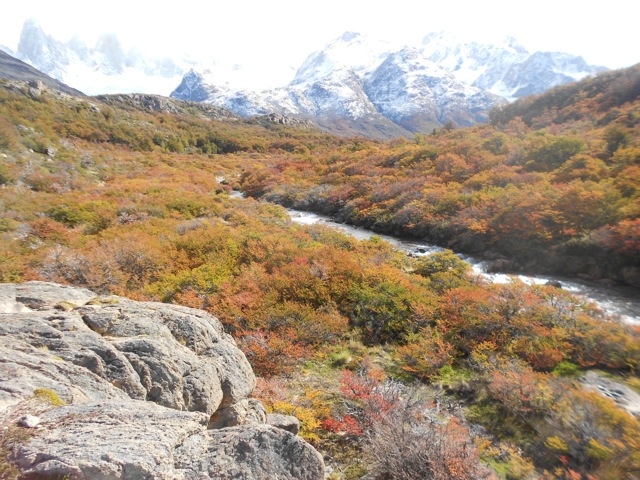
The views back down the valley where I had come are pretty with the red of the trees and the flowing river.

wpid-dscn2025-2013-04-6-17-47.jpg

I pushed on up the pass as it began to get steeper but no less ragged with the wind. At one stage I was lifted from my feet and landed 2 metres back, skidding in the rocks. While this could be scary there was a real sense of exhilaration of constantly fighting the wind. Further up the pass I could see the wind whipping water from various streams into mist and I could hear the wind whistling madly through the snowy mountain tops. I pushed on, climbing a steeper area, resting briefly close to a glacier until the wind chilled me enough to push me further on.

wpid-dscn2027-2013-04-6-17-47.jpg

Finally, about 200 metres from the top of the Paso, I came over a ridge and the trail flattened out. It was then a short walk through a windy gully to reach the cairns at the top of the paso. The wind was howling past me when I came over the top and light rain was being propelled full force at me. After 7 beautiful days, it would be typical that on this the hardest day of the hike, the weather would change to make it even harder.

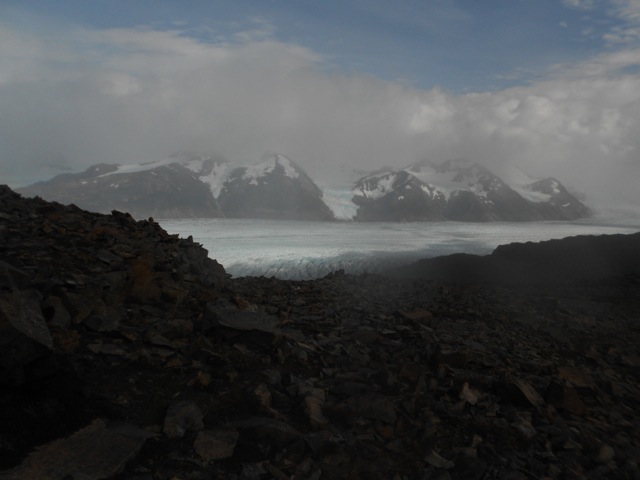
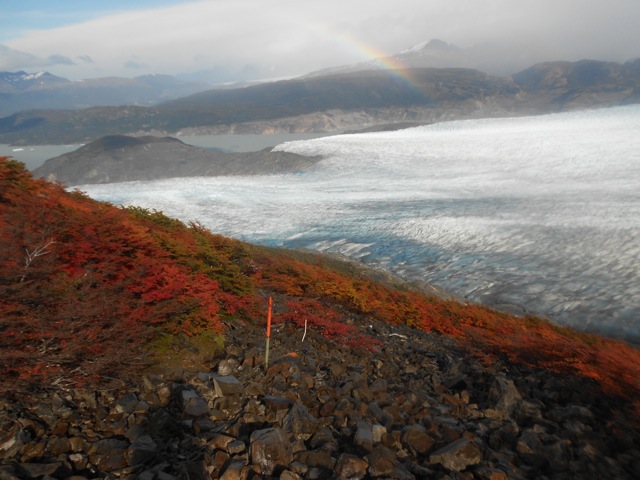
At the top of the pass, you look down on top of Glacier Grey, but to get a better view, you walk down about fifty metres through the icy winds to closer to the edge of the ridge. It’s not the greatest atmosphere to take photos, but I did what I could in the wind and rain.

wpid-dscn2031-2013-04-6-17-47.jpg

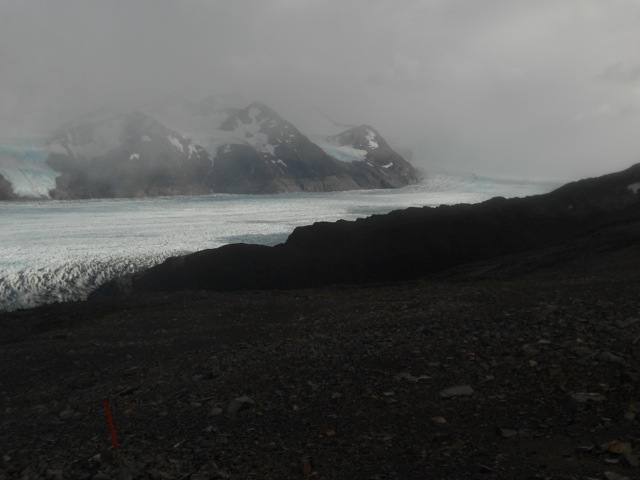
I had to stop and put on my jacket, more to break the icy wind coming at me than to avoid the rain. Putting on a jacket in these high winds is challenging, to say the least. I made it to the edge of the ridge and looked down on Glacier Grey. I’ve seen plenty of glaciers, but not from directly above and Glacier Grey is a mighty specimen, stretching 6km across the valley to the icy snow covered mountains on the far side, very much like Antarctica. The glacier is said to be more than 100km long, but this finger of ice disappeared around the mountain in the distance.

wpid-dscn2033-2013-04-6-17-47.jpg

This small piece of ice – yes small – is a part of the southern Patagonian Ice Field, one of the three largest fields of ice in the world.

The trail heads down steeply on a slate and scree slope, weaving on a defined path, then follows the glacier, a kilometre below, to where it forks at Lago Grey.

wpid-dscn2038-2013-04-6-17-47.jpg

At a certain point the trail leads into the trees that have turned fiery autumn red, and finally there is some respite from the wind. The trail begins its slow downward heading, with plentiful steps.
wpid-dscn2040-2013-04-6-17-47.jpg

After several hundred metres, it finally ends at Campamento Paso. Going down in no wind is still harder than going up in lots of wind. I was planning to stay here tonight, but when I discovered the Pass had only taken just over 4 and a half hours, I decided to head on the extra 4 hours to Refugio Lago Grey with the hope of finishing the hike tomorrow.

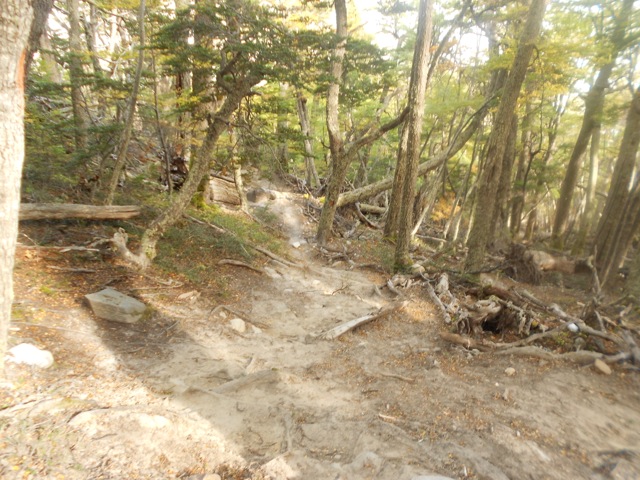
After a 5 minute break, I pushed on. Half an hour into the walk, the rain became heavy and the wind continued. There was a hand drawn map in the shelter at Campamento Paso that showed the trail heading steadily downhill to the Refugio, but it wasn’t like that at all, in fact, much of the first half was going up. At many times there were good vies of the glacier as you walked.

wpid-dscn2043-2013-04-6-17-47.jpg

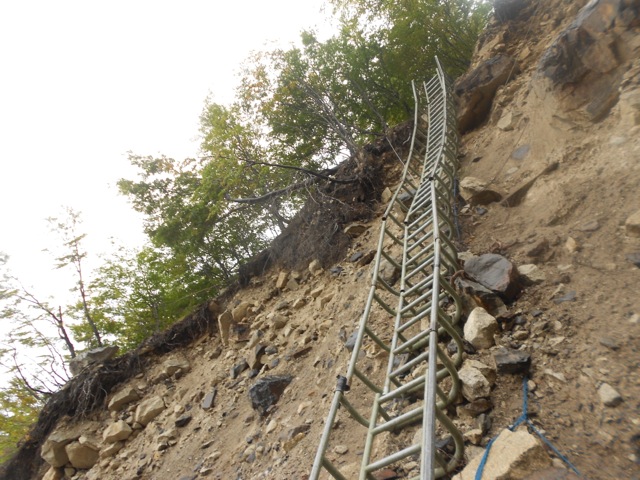
There are a couple of gullies on the walk that are too steep to climb. The park rangers have set up steel ladders to help walkers.

wpid-dscn2050-2013-04-6-17-47.jpg

Just after the first of the ladders, the trail leads around the top of a cliff line. There is only a foot wide path with nothing to hang on to, wind dragging at you and a fall of half a kilometre to a glacier. It was perhaps one of the more frightening experiences of my life, as I literally crawl along this path hanging onto large rocks. Twice I actually lay in a gap waiting for the wind to die down so I could continue. Apparently, the next morning, some of this very cliff line slipped away and the walkers behind me were stuck, so it was lucky I decided to walk on when I did.

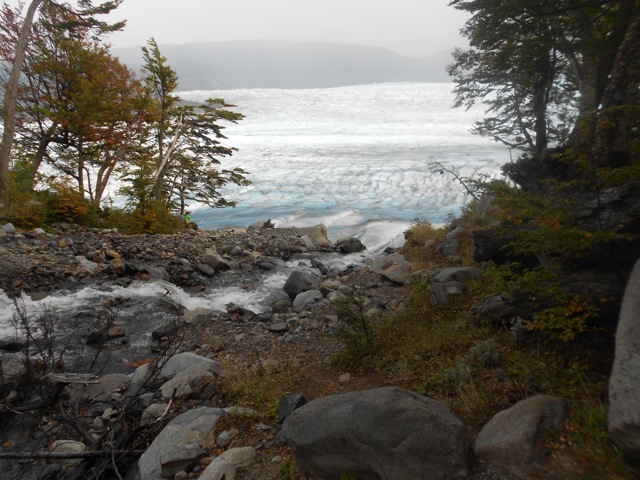
The trail continued but most of it was inside the forested area and I was pleased not to be exposed more on this particular day. I climbed another of the steel ladders, crossed a long wire bridge and climbed down several quiet forest gullies. There was a mirador along the way, right above the end of the glacier. I stayed briefly to watch, but after 8 hours walking and the cold, I didn’t stay long. Murphy’s Law, however… nothing happened while I was watching, but as I walked away… a large section of ice calved from the glacier into the lake.

wpid-dscn2054-2013-04-6-17-47.jpg

The last hour of the day was spent staggering through the trees until I finally arrived at the Refugio. That night as I cooked in the refugio’s common cooking area, I gave advice to new hikers on the trail who had started the hike that day.

The Lone Trail Wanderer
Parque Nacional Torres del Paine – Days 5, 6 and 7

Day 5 – Campamento Los Torres to Campamento Seron

While most people climbed to see the towers, I slept in. Then as they began to return, I headed out of camp. The trip back down the mountain is far easier than the walk up, plus I was fresher than yesterday. I stopped for a brief break at Chileno, then climbed the hill to where my trail yesterday met the main trail. I took a break before heading down, aiming for Hotel Los Torres at the bottom. With good poles, the trip down was easy and I passed many day walkers going the there way.

wpid-dscn1971-2013-04-6-17-09.jpg

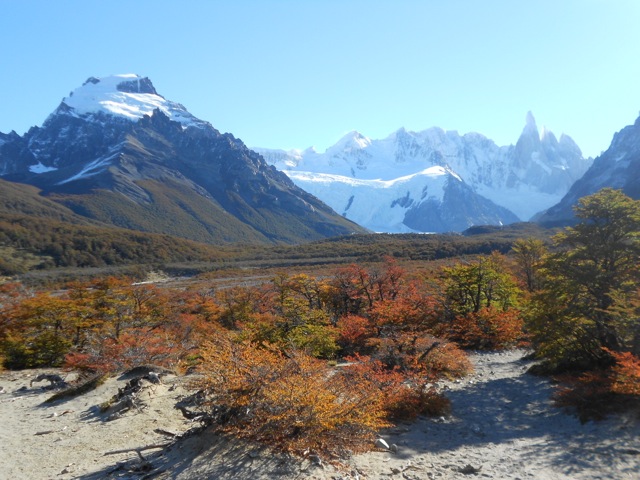
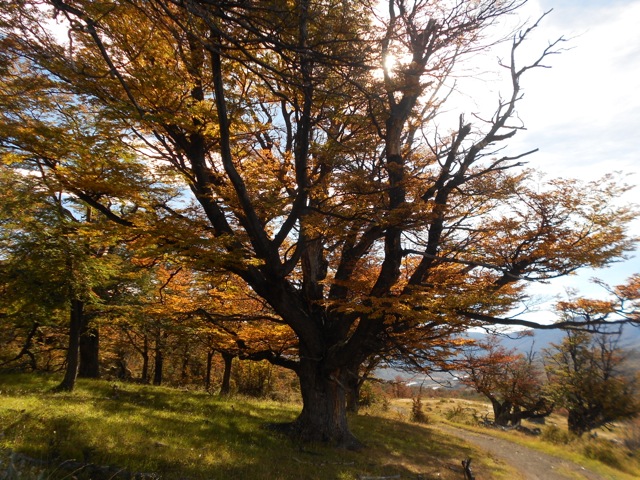
The Hotel is extravagant, some calling it an eyesore, and there are a set of refugios not far from it for hikers to stay. I stopped for a coke, then headed on. From here on, I’m officially on the back of the park and there are less people. In fact, the only person I see until I reach camp is a man running – yes running – the other way early on. The trail led up a hill along a fence and through a forest of autumn colours on a 4WD track.

wpid-dscn1976-2013-04-6-17-09.jpg

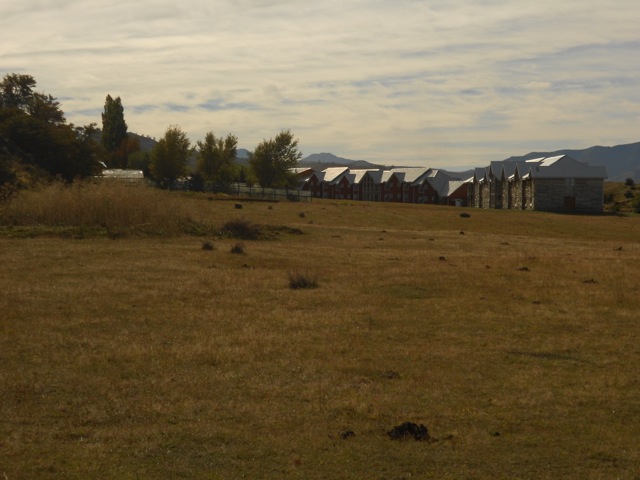
It reminded me very much of walking in Australia. As I came down the hill an hour later in the hot beaming sunlight, I could see the beautiful yellow plains with Rio Paine weaving its blue green way through it. I could also see the shining roof of the camp building.

wpid-dscn1980-2013-04-6-17-09.jpg

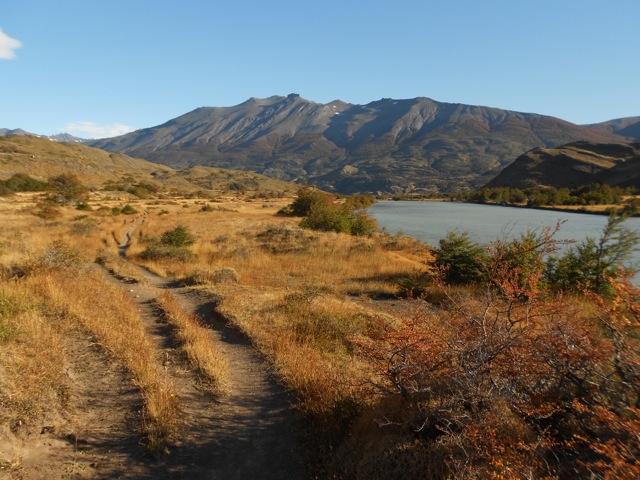
I arrived on the plains and while it doesn’t look long, the walk just seemed to go on and on, mainly because there was little change in scenery and I was expectant of finding the camp after my long day of walking in the sun.

wpid-dscn1985-2013-04-6-17-09.jpg

Eventually I arrived at camp to find 5 other walkers already camping, today being their first day. It would seem that my little group of five is growing.

I set up camp and met my new travelling companions.

Day 6 – Campamento Seron to Refugio Dickson

The night was warm and I was woken at one point by a rabbit who must have mistaken my green tent for the grass in the moonlight; I heard it bounce off and go bounding away. Then later in the morning a puma was sighted in the field, but not by me. Gusts of warm wind began buffeting my tent as I began to get ready for the day, a vast difference to the cold winds of days past.

wpid-dscn1986-2013-04-6-17-09.jpg

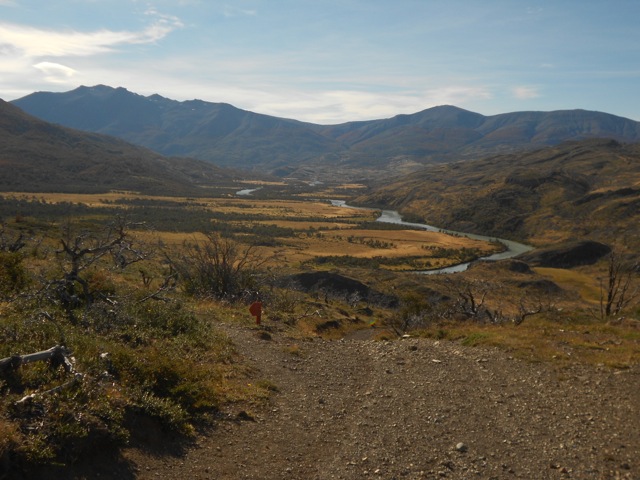
The trail followed the river around initially on the plains, but quickly began rising into the hills and up the side of one particularly tall hill. At the top, the wind was gusting so heavily it was hard to walk, but we got a great view of Lago Paine with Rio Paine winding into the distance.
wpid-dscn1989-2013-04-6-17-09.jpg

Angry clouds rolled past the tall mountains at the other end of the valley, making odd shapes as they crossed the peaks, thankfully not heading towards us.
wpid-dscn1992-2013-04-6-17-09.jpg

We continued across the wind blasted hilltops before weaving our way along the side of the mountains at the edge of the plains. These mountains are the back of those we got close and personal with on the other side of the park. They look vastly different from here.

As we walked, the Patagonian Ice Field came into view at one end of the mountains, reminding me of my Antarctic trip not two weeks ago now. This was truly an unexpected and fantastic sight.

wpid-dscn2006-2013-04-6-17-09.jpg

We walked on and at the end of the plains we crossed a muddy valley and came to a sign that said ’45 minutes to camp’. After a rest, we continued, crossing beams of wood that had been placed to help us not get so mud soaked. We climbed a final hill and saw Refugio Dickson sitting at the end of a flat peninsula jutting into Lago Dickson, and a river wending past it.

wpid-dscn1999-2013-04-6-17-09.jpg

It was about here that the slight rain started. We crossed the hill and after a steep climb down, we made our way to the Refugio, where over a beer we stopped to wait out the rain. We then hurriedly erected our tents and went back to the refugio where the cook was hand making a meat and egg pie. It looked so delicious that I decided to sit in on the meal. It turned out to be an excellent decision.

Day 7 – Refugio Dickson to Campamento Los Perros

During the night it had been warm and I’d stripped off most my night clothes off. But at some point in the night there was a change and I got very cold, having to put everything on again and I still wasn’t warm. There was frost on the ground outside when I emerged. But along with the frost came blue skies and wispy white clouds.

Today’s an easy walk of only 9km and slightly up hill through a forest. Being short serves nicely as a warmup for tomorrow’s hard climb up and over Paso John Gardner.

We began walking around the hill that we’d climbed down last night in the rain and began the slow climb into the forest towards the most obvious pass through the mountains. At one point we came to a small rocky area which allowed us awesome views back to the ice field, then it was back into the trees. We climbed for most of the morning, vaguely following Rio Los Perros. The trail meandered through the forest before going around a large patch of the red moss I’d seen in Tierra del Fuego on the Paso de la Oveja hike.

wpid-dscn2008-2013-04-6-17-09.jpg

The trail then went down the hill to a bridge crossing a stream that fed into the river. After walking for a while we soon came to a waterfall…
wpid-dscn2011-2013-04-6-17-09.jpg

…where the Rio fed down into a narrow channel.

wpid-dscn2012-2013-04-6-17-09.jpg

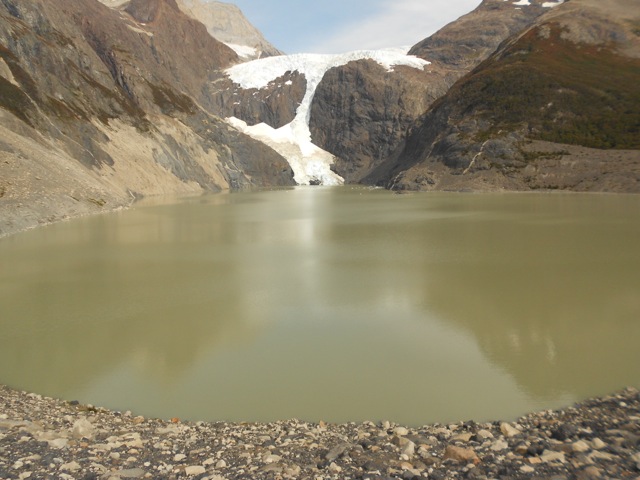
We stopped for a look and a break before charging on. The forest flattened out and I somehow managed to leave my companion behind. An hour passed and before I knew it I’d crossed a pair of bridges and was out of the forest and climbing up a field of rock towards the Galcier Los Perros. After a stiff climb, zig zagging up the slope, I eventually arrived at the top and looked down across the glacier lake to the glacier itself.

wpid-dscn2021-2013-04-6-17-09.jpg

The view back down the valley where I’d come was just as impressive.

wpid-dscn2018-2013-04-6-17-09.jpg

From here it was another 20 min walk picking my way around the lake and across another rocky field before entering the forest to arrive at Campamento Los Perros.

The Lone Trail Wanderer
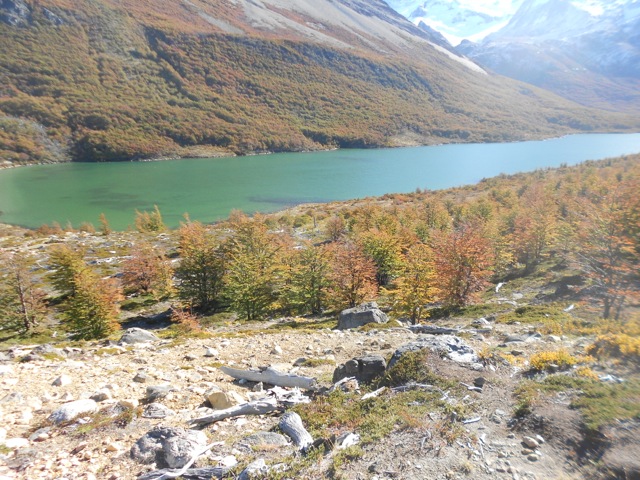
Parque Nacional Torres del Paine – Days 3 and 4

Day 3 – Campamento Italiano to Refugio Los Cuernos

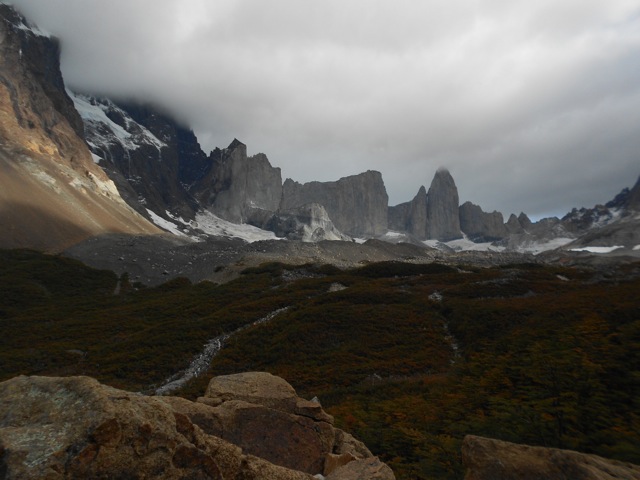
Most of today will be spent climbing along the length of Valle del Frances. French Valley is the central park of the W and is a fairly rocky climb all the way to the top. The good thing about the valley is you must come back the same way meaning there’s no need to carry your pack. So with a day pack and some water we headed off up the valley. The climb is fairly strenuous, starting out by climb up through the forest alongside the glacier where every now and again a loud thunderous crack would announce another piece of ice falling from it.
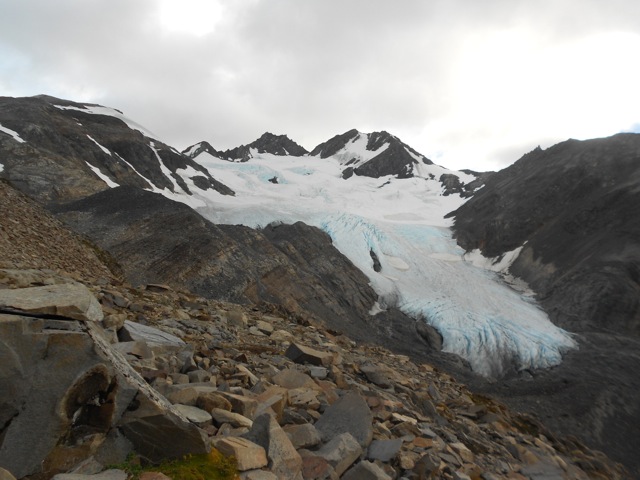
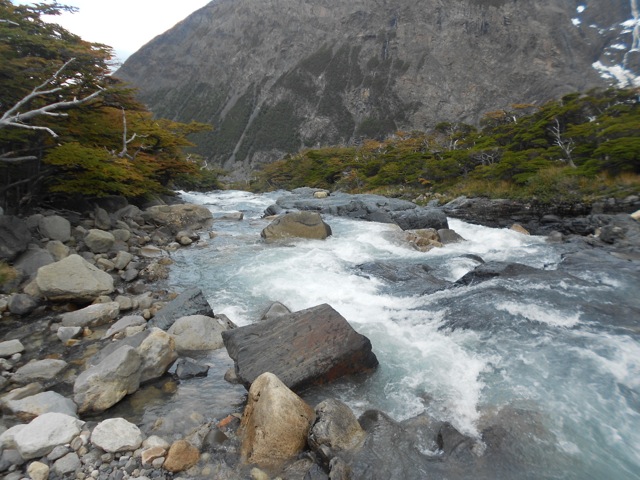
The trail followed Rio del Frances up to a large tarn at the base of the glacier previously unseen. After crossing a gully with a small waterfall, the terrain grew rockier and headed further up the side of the river which was crashing down across the rocks.

wpid-dscn1872-2013-04-6-11-57.jpg

Looking back, the plains below started to open up and we could see the lagos at the base of the mountains.

wpid-dscn1870-2013-04-6-11-57.jpg

The trail headed into the forest again, this time steeper.
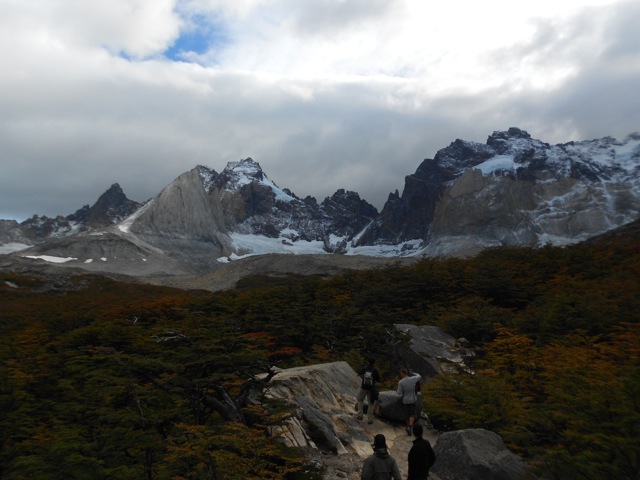
After a while, we popped out at an open rocky area and looked to to see we were surrounded by mountains. The view here was amazing in all directions. Ten minutes further on we arrived at the closed Campamento Britanico. We pushed on further for ten minutes to arrive at the mirador, a small peak set in the middle of the mountains.

wpid-dscn1885-2013-04-6-11-57.jpg

Standing on the peak, it felt like we were standing on the tongue of the mountains surrounded by teeth with the molars behind us to the jagged incisors ahead of us. Unfortunately no picture could truly capture the sense of being surround by these peaks.

wpid-dscn1884-2013-04-6-11-57.jpg

There was a sign telling us that we had reached the end of the mountain trail with a rather obvious trail going beyond it. My companion and I followed it for a while to another rubbly peak a little higher.

It took us about an hour to make our way back down again. Back at camp, we packed up and headed on to Refugio Cuernos. This next Refugio is the most expensive of the Parque Nacional and my companion decided to walk on to the next camp beyond it instead of paying the price – another 5 hours walk – so I walked on alone. The rest of the trail wasn’t too difficult, along the edge of Lago Nordernskjold.

wpid-dscn1920-2013-04-6-11-57.jpg

I crossed a pair of hills before arriving at the Refugio Los Cuernos where they had platforms available to pitch tents upon. The wind was too strong to use my camp stove, so I opted for dinner at the refugio, but for the amount I paid it wasn’t that great. As darkness fell, I headed to bed with the hardest part of the W ahead of me.

Day 4 – Refugio Y Campamento Los Cuernos to Campamento Los Torres

Overnight the sky cleared and the full moon was bright in the sky. Camping on platforms among trees sheltered my tent from the slight wind. I’d expected rain overnight too but none came and today I’m greeted by a slightly cloudy day. The weather has been great so far, thankfully.

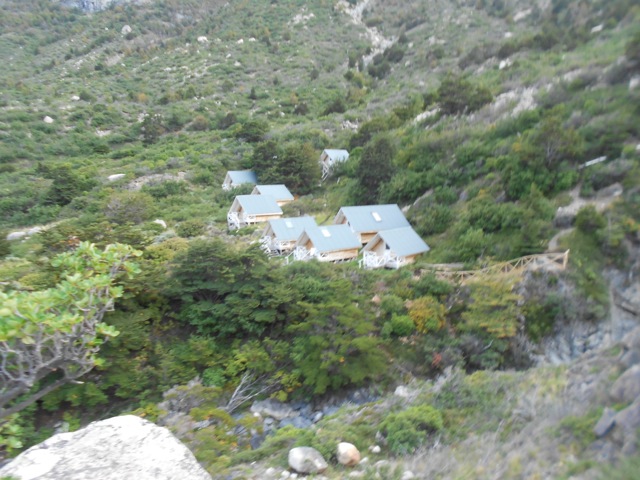
I headed out of camp and up a hill, looking back across the refugio and the small chalets that are part of it.

wpid-dscn1909-2013-04-6-11-57.jpg

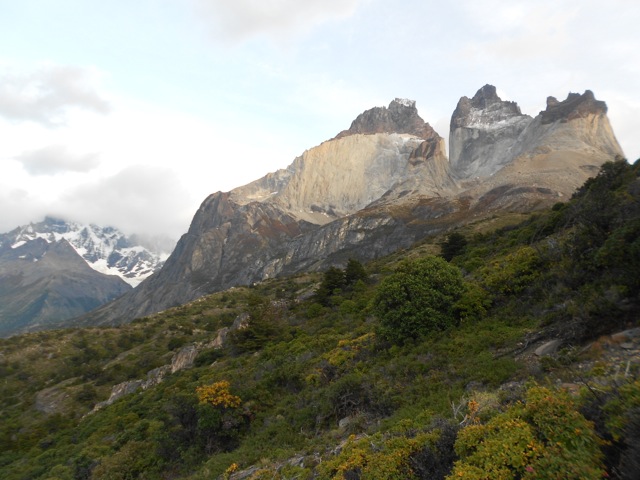
My morning was spent walking up and down slight hills as I worked my way alongside Lago Nordenskjold and under the peaks of Cuernos del Paine.
wpid-dscn1917-2013-04-6-11-57.jpg

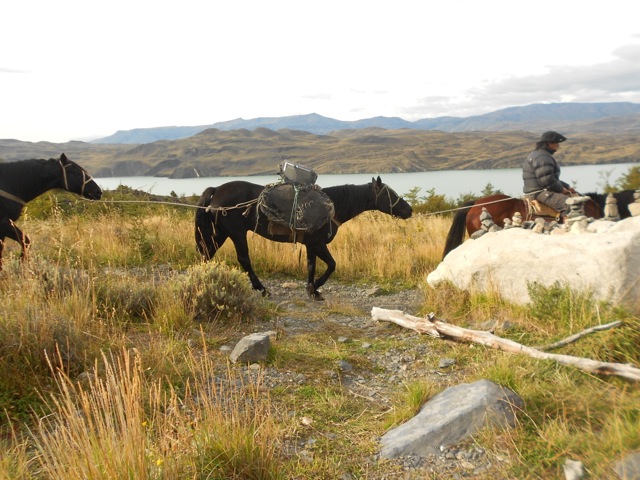
At the top of some of the hills there are good views of the lake in both directions. The trail plodded on and I had to step aside on occasion for a train of horses heading one way or the other along the trail.

wpid-dscn1929-2013-04-6-11-57.jpg

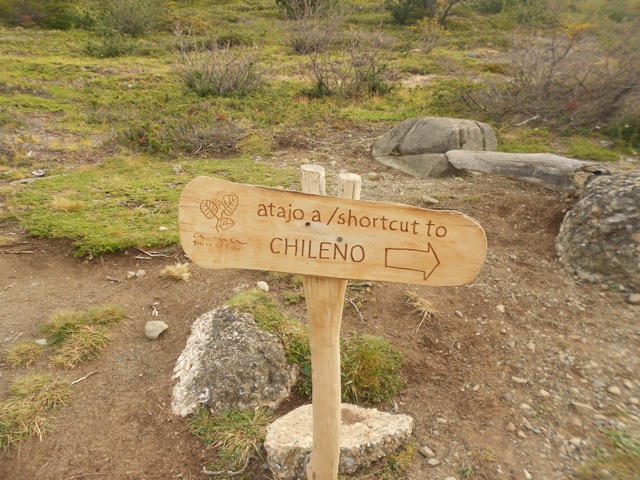
We have been told of a shortcut and I came to the sign about three quarters of the way to Hotel Los Torres and followed it.

wpid-dscn1931-2013-04-6-11-57.jpg

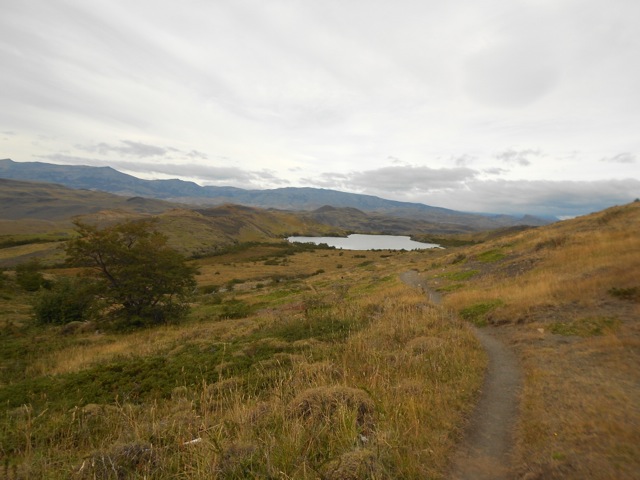
It seemed to run parallel to the other trail for a while then began climbing the hill towards Refugio Chileno. The terrain changed as I walked, from the yellow grass into flowing green grasslands. I looked back to see a small lake.

wpid-dscn1936-2013-04-6-11-57.jpg

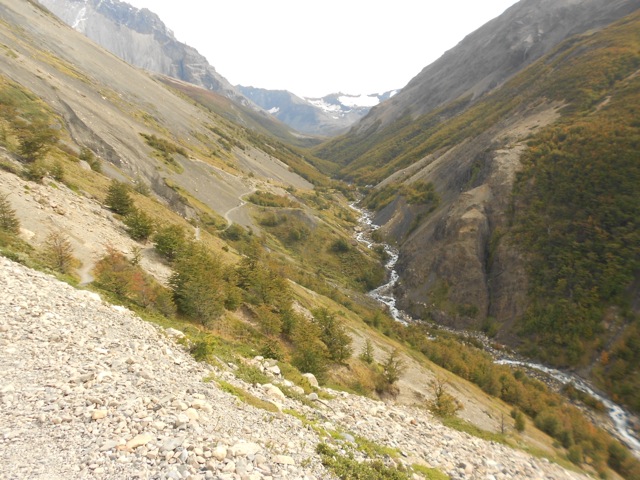
The climb isn’t steep, but it climbs steadily, which can be worse. Thankfully there is the occasional flat area giving some respite. Soon the path connects with the one coming from the Hotel Los Torres, the path changes and there are more day walkers. There’s a short steep climb before it heads down equally steeply towards Chileno, just visible where the river meets the forest.

wpid-dscn1941-2013-04-6-11-57.jpg

The refugio is now closed for the season but it’s still a good place to stop for lunch. I crossed the river and dropped my pack at a picnic table, sitting in the sun. After 30 minutes I headed on for the last part of the day’s walk.

wpid-dscn1945-2013-04-6-11-57.jpg

Within 5 minutes, the trail crossed back across the river and was a difficult climb for 90 minutes through the forest. I veritably crawled into Campamento Los Torres and after a rest, I set up my tent. I then decided to climb further up the mountain to see the towers in the afternoon light.

While they say it’s best at sunrise and most people will be climbing up in the morning, my walk tomorrow is long and I don’t wish to add to it. The track begins climbing steeply through the forest and is hard work, I sit and rest after 15 minutes before continuing up a rocky section of the track which meanders through the boulders for another 30 minutes before eventually coming out at the towers and the glacier lake below it. The view in the afternoon sun is still stunning. I walk down to the edge of the pristine blue green lake and drink from the water.

wpid-dscn1955-2013-04-6-11-57.jpg

After enjoying the view for a while, I headed down again.

The Lone Trail Wanderer