Tag Archives: Mountains

Medellin, Colombia – Impressions

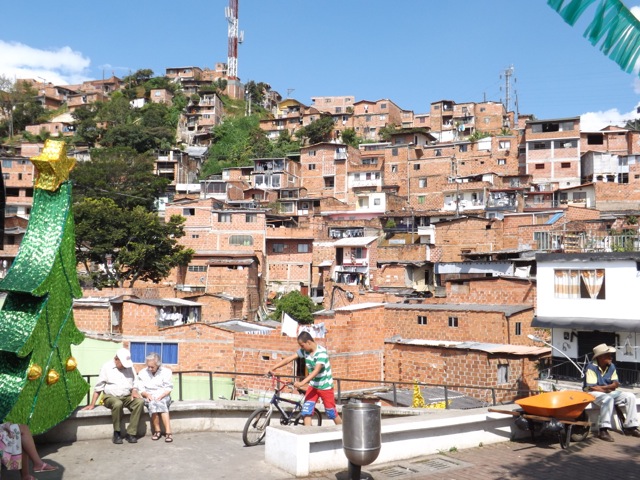
Medellin was once known as the most violent city in the world. In the 1980s there was a major urban war here revolving around the infamous Pablo Escobar and his Medellin Cartel. Since his death 20 years ago things have changed dramatically. Crime has declined significantly and the city has opened up more for tourism. Medellin is now known as the tourist capital of Colombia, south of the Caribbean Coast, with most travellers skipping the capital, Bogotá, for the warmer and better set up Medellin.

wpid-dscf2814-2013-11-27-17-00.jpg

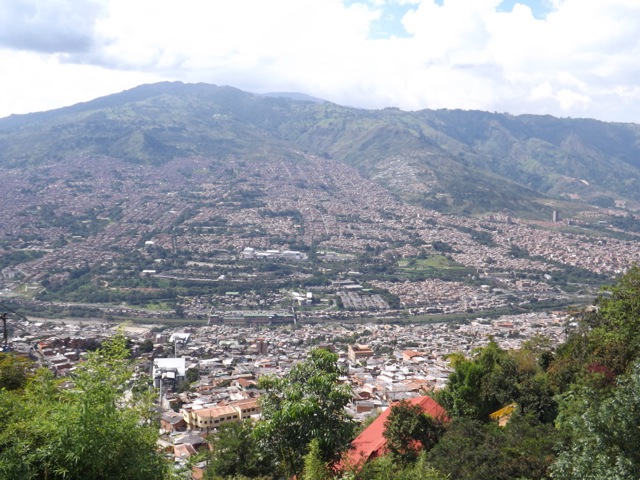
The second largest city in Colombia with 2.4 million people, Medellin is a 10-hour bus ride north-east of Bogotá on a winding mountain highway.

The best way to see the historical centre of Medellin and to learn about its history is via a free city walking tour. On the tour you learn that the people of this area were cut off from the rest of Colombia for almost 300 years because the valley is surrounded by the peaks of the Andes. This isolation led the community to thrive and grow, using the region’s main natural resource, gold, to fund different advances. It was this gold that built Medellin and not the drug money of Escobar, as many believe. The drug money actually caused more harm than good, killing hundreds of thousands in the urban war and giving Colombia a sour reputation that it would fight for years to overcome.

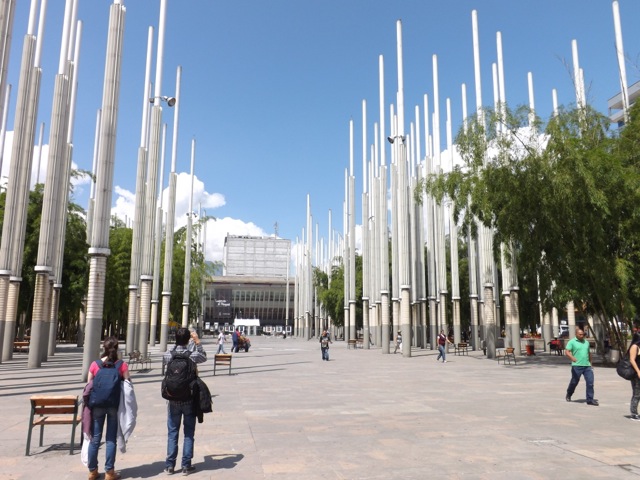
After Escobar’s death some of the more dangerous areas of the city were cleaned up and monuments erected to the ‘new’ Medellin. Monuments such as Plaza Cisneros and its many light columns. Each of the columns have strips of led lights on four sides that are lit up at night as a symbol of hope.

wpid-dscf2799-2013-11-27-17-00.jpg

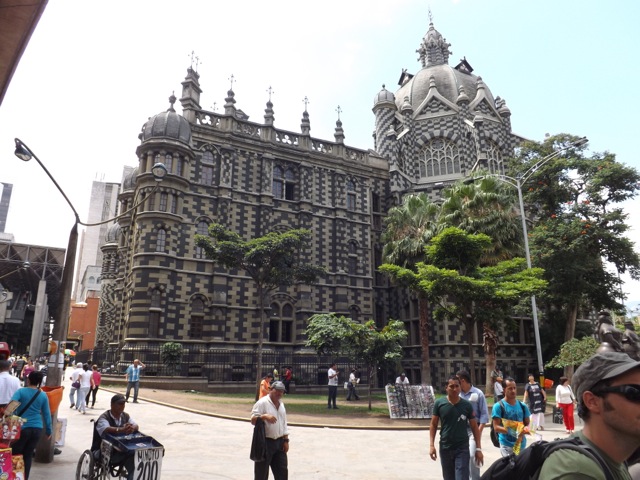
There are pretty places scattered throughout the city, such as El Palacio de la Cultura, but many of them have darker secrets, some more obvious than others.

wpid-dscf2810-2013-11-27-17-00.jpg

The Medellin government in the 1920s didn’t like the gothic inspired palace causing the Belgian designer to flee the country after only having completing a third of it. Colombian builders didn’t bother to finish it, instead simply sealing the unfinished side with a plain white wall.

Then there is this pretty inner city church…

wpid-dscf2802-2013-11-27-17-00.jpg

…surrounded by brothels, gambling houses and drug dealers, its visitors seeking to gain forgiveness for the sins they commit on a daily basis.

There are plentiful interesting sculptures dotted around the city, donated by a rich and locally famous artist.

wpid-dscf2803-2013-11-27-17-00.jpg

After the darkness of the 80s and to foster education in the poorer parts of the city, grand libraries were built.

wpid-dscf2813-2013-11-27-17-00.jpg

These structures stand out from the terracotta brick buildings of the surrounding city and is a symbol of freedom for the local population.

wpid-dscf2816-2013-11-27-17-00.jpg

Overall, Medellin is an interesting city to spend a few days and is very much a party city for tourists making their way from the northern coast to the countries of the south.

Next I’m off to the Caribbean Coast and the city of Cartagena, famous for being plundered by the notorious Pirates of the Caribbean during the 1500s and 1600s.

The World Wanderer

Cali, Colombia – Impressions

With 47 million people, Colombia has the second largest population in South America after Brazil and it’s whopping 201 million. My first port of call, Cali, is the 3rd biggest city in Colombia, with 2.5 million. Cali is known as the capital of sport and salsa dancing in Colombia.

Most people I’ve met on my travels have said Colombia was an amazing place with very friendly people. This is in vast contrast to what’s generally said about the country. While it’s less dangerous than it’s been, there’s still a guerrilla presence. They are kept at bay by the plentiful armed military, police and security guards everywhere.

After an eventful 20 hour bus ride from Quito in Ecuador, I welcomed my arrival. The bus was full of Colombians in their early 20’s who had boarded the bus in Lima, Peru, 2 days earlier! They were more raucous the normal, meaning I didn’t get much sleep overnight.

In Cali, I caught a taxi to my hostel and went out to check my surroundings. The hostel is in an outer suburb but I found a large area of restaurants just around the corner, including 2 supermarkets.

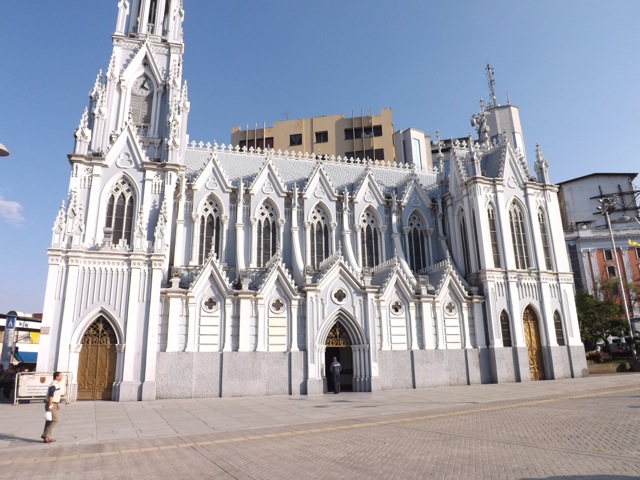
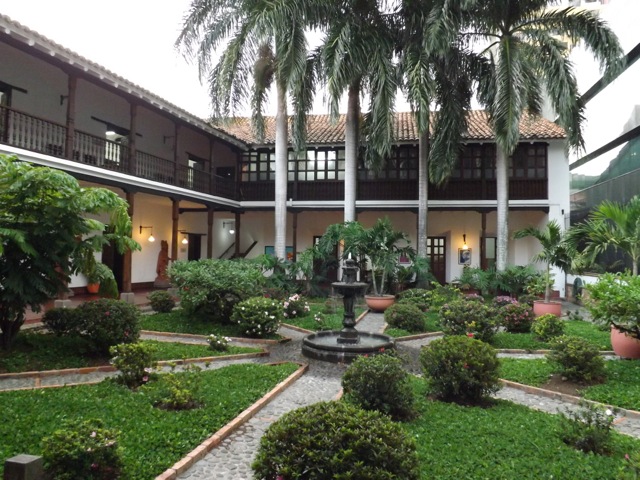
Then after a better sleep, I decided to see the city centre by taking a free walking tour. Cali has its share of awesome architecture, although in 1971 they decided to tear much of it down to make room for the Pan American Games. Some still remain though, such as this church…

wpid-dscf2705-2013-10-31-16-46.jpg

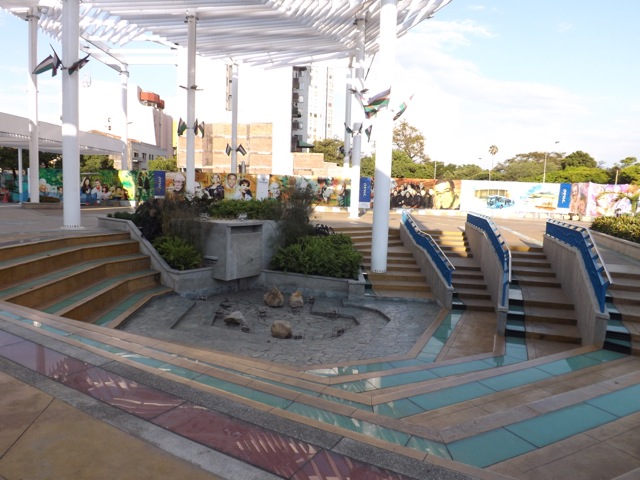
And this plaza with a history of the city on the wall beyond it.

wpid-dscf2715-2013-10-31-16-46.jpg

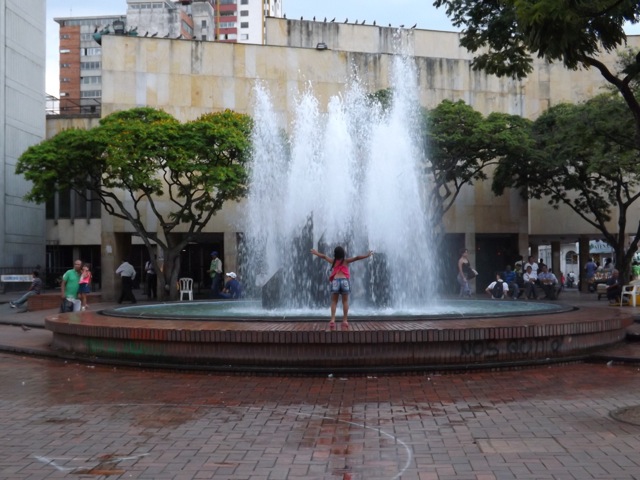
Of course it wouldn’t be South America without a fountain or sixty.

wpid-dscf2728-2013-10-31-16-46.jpg

Or the occasional colonial building…

wpid-dscf2733-2013-10-31-16-46.jpg

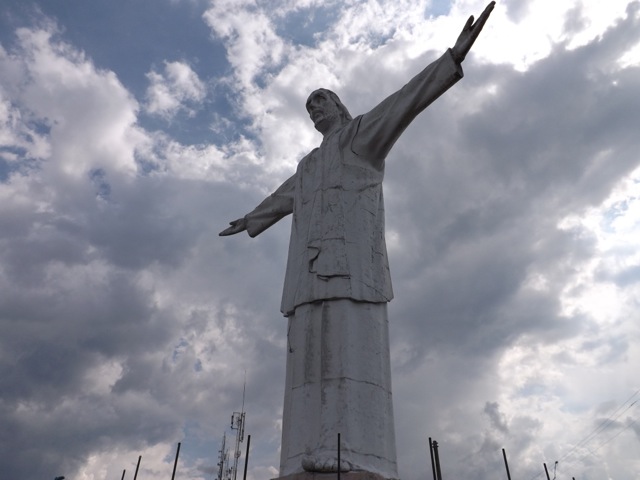
I only stayed three nights in Cali, so I tried to make the most of my time. I caught a taxi up to see Cristo Rey… yes, a giant statue of Christ. Many cities in South America have one of these in the hills ‘protecting’ the people. Unlike the one in Rio de Janeiro, this one is free.

wpid-dscf2748-2013-10-31-16-46.jpg

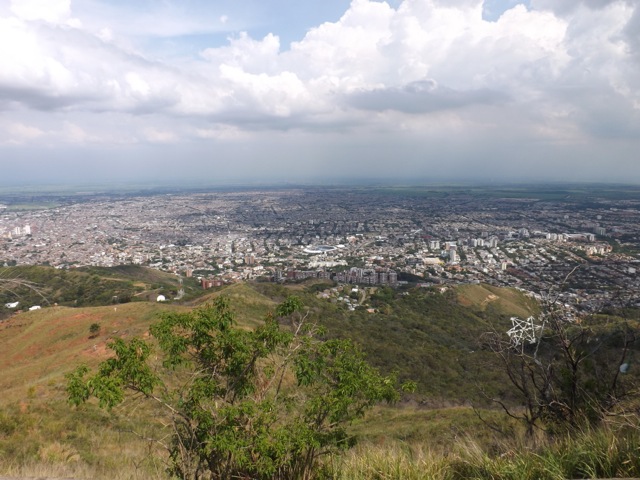
It also allowed me to see some awesome views of the city from above.

wpid-dscf2736-2013-10-31-16-46.jpg

Then after 3 rather warm days – it’s quite humid in Cali – I caught the bus north to the country’s capital – Bogotá.

The World Wanderer

Cuenca, Ecuador – Adventures

Cuenca is a city of half a million people nestled in the southern Ecuadorian Andes. The city is only four hours south of Riobamba by local bus (US$2.50) and the main attraction of the area being Ingapirca, the largest Incan ruins in Ecuador. This was the major reason I decided to travel here, but hoped there’d be more on offer.

Cuenca City
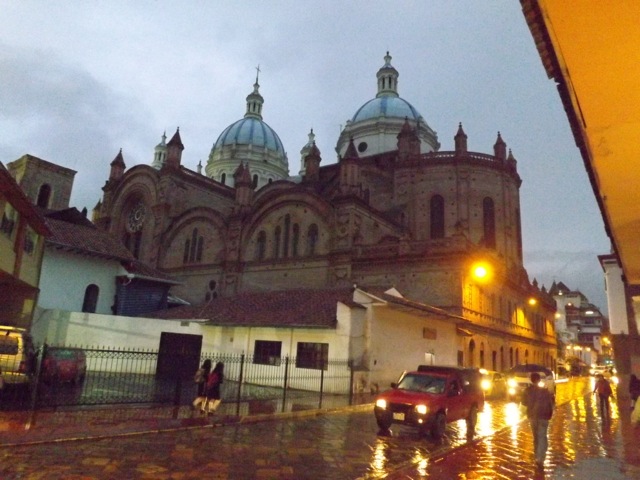
It seemed to be raining everywhere in Ecuador when we arrived in Cuenca. But then Ecuador isn’t large, only marginally larger than New Zealand. On the bus, my friend and I ran into a woman we’d met in the hostel in Quito a week earlier. So, as the light began to fade and the rain continued lightly, the three of us wandered the streets and discovered plentiful examples of excellent architecture. Like many places in South America, the architecture is great, but they aren’t well looked after. The Basilica…

wpid-dscf2601-2013-10-17-17-08.jpg

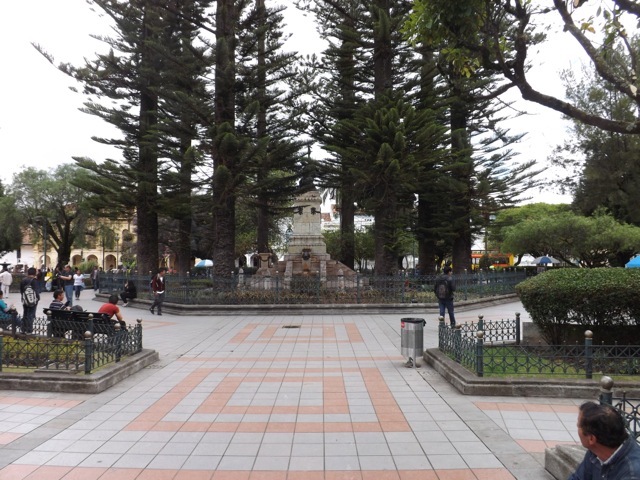
The next morning the rain had eased and we wandered around some more. The central plaza has a statue, and yes, a fountain too, hidden away in one corner.

wpid-dscf2603-2013-10-17-17-08.jpg

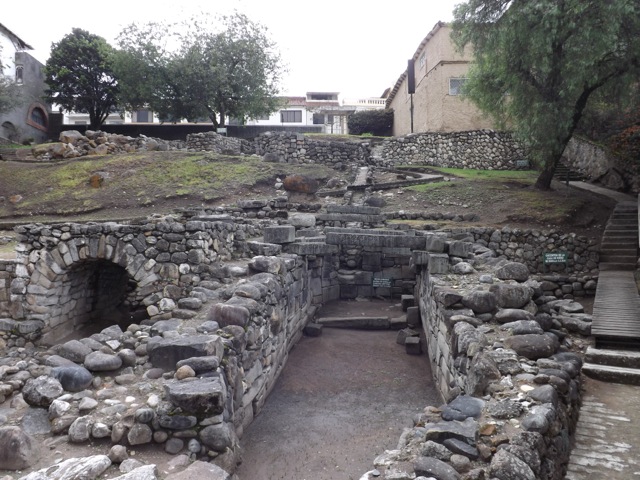
We also found two small Incan ruins that had been surrounded by the city. This one is just a small lot, while the other is more spread out and is part of the local botanical gardens, although only the foundations of the ruins are still visible.

wpid-dscf2614-2013-10-17-17-08.jpg

The next day we booked a tour of Ingapirca, but as part of the tour we had to book a train ride down the Devil’s Nose.

The Devil’s Nose – Nariz del Diablo
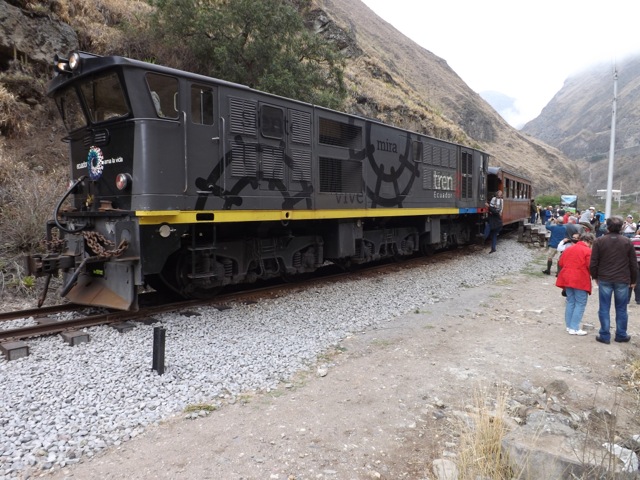
After a three hour van ride north, we arrived at the town of Alausi where we boarded the train that would take us down the Devil’s Nose – a hill that looks sort of like a nose.

When building a railway through the country, the Ecuadorian government had to find a way to connect a station at the top of Devil’s Nose with one 800m below. Unable to go around, they decided to build a switchback system where the train goes back and forth down hill.

wpid-dscf2666-2013-10-17-17-08.jpg

Thirteen thousand locals took part in the creation of the switchback, of which 2,500 were killed during the process through dynamite explosions, apparently.

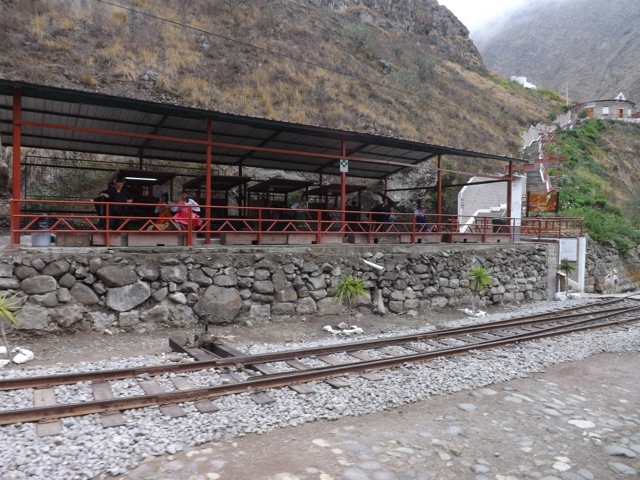
At the bottom station there’s a small museum, some traditional dancing and a cafe.

wpid-dscf2661-2013-10-17-17-08.jpg

Ingapirca

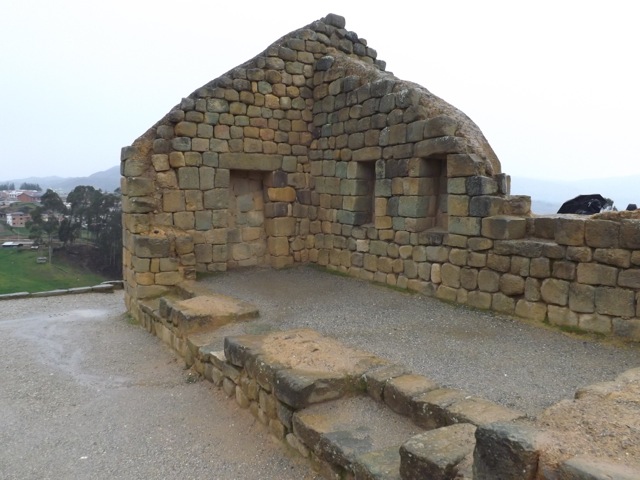
After the train ride back and another 2-hour van ride, we arrived at the largest ruins in Ecuador, Ingapirca – a thousand year old pre-Incan fortress. Like most of the Incan cities, the spanish destroyed it, using the bricks as foundations for some of the buildings in the surrounding cities, including Cuenca. The only building left standing was the sun temple, set to catch the sun four times a year on the solstices and equinoxes.

wpid-dscf2689-2013-10-17-17-08.jpg

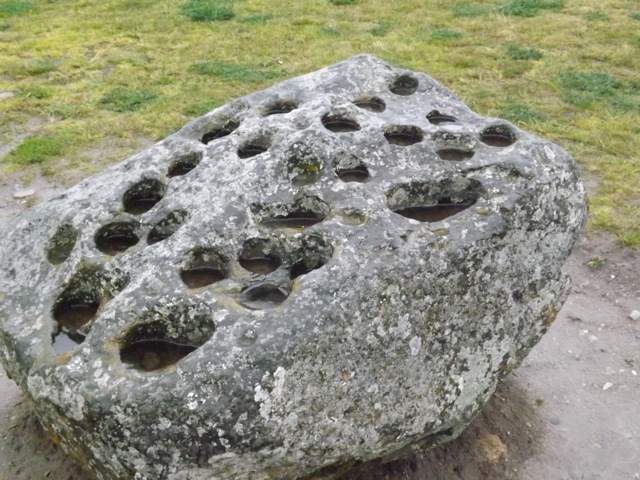
It was raining, so we didn’t spend a lot of time in the ruins, but the guide was very knowledgable. This stone below was used as a calendar. There are 28 holes cut into the rock, one for each day of the thirteen lunar months of the Incan year. It’s said that they could tell the date by which of the holes the moon was shining in.

wpid-dscf2692-2013-10-17-17-08.jpg

The sun temple has two sides, so it can catch the morning light and the evening light.

wpid-dscf2695-2013-10-17-17-08.jpg

Then it was back in the van for a 90 minute ride back to Cuenca.

Overall
Cuenca and the surrounds is a nice area of the Ecuadorian Andes and worth a visit if you are travelling through from Peru or as a nine hour bus ride from Quito.

Next, I head back to Quito for a couple of days to plan my way north into Columbia.

The World Wanderer

El Altar, Sanjay National Park, Ecuador

Nearly two years ago, the government of Ecuador changed the laws regarding multi-day hikes. Because so many people were getting lost or dying, all hikes in the national parks now require a certified guide. Peru has a similar law, although it doesn’t police it as stringently as Ecuador does. And at US$50-80 a day for a guide, my dreams of doing a multi-day hike in Ecuador came to a screaming holt.

My companion and I caught a bus to Riobamba, a city six hours south of Quito and set about finding a hike we could do without a guide. After some investigation we found one – El Altar – an overnight hike into an area of mountains only policed one day a week.

Day 1
We were up early and waiting for the taxi. A crazy drive through the mountains followed to Hacienda Releche, the ‘trail head’ of the hike. We met the owners of the hacienda who quoted us 5-6 hours to their lodge in the mountains and at $12 per person per night it’s far cheaper than a guide.

We began climbing along a dirt track following a gully. On either side was a thin line of trees and beyond were fields; one containing rows of flowers, the other grazing cows.

wpid-dscf2507-2013-10-13-21-07.jpg

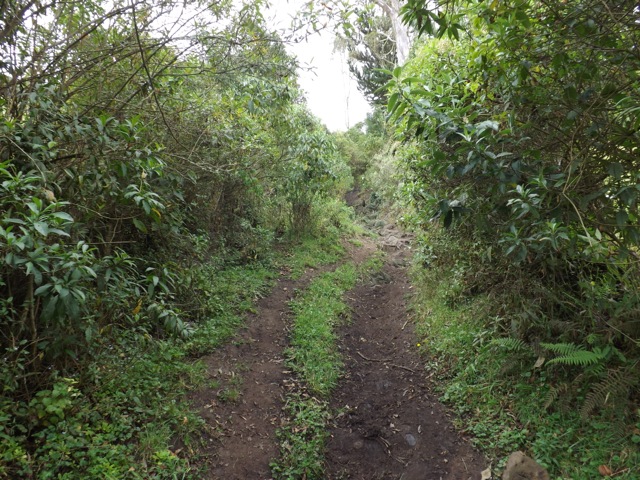
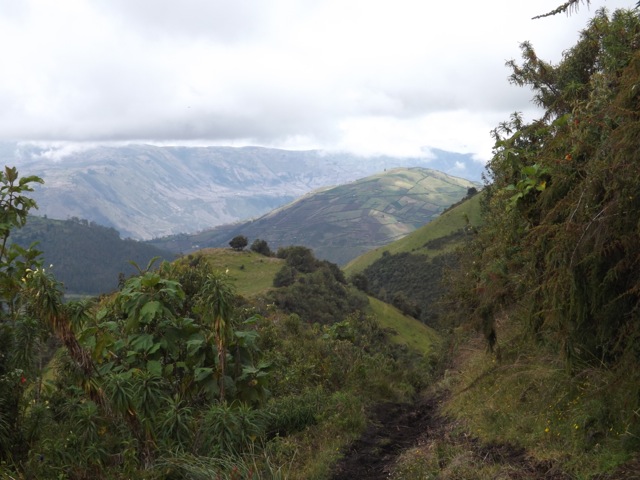
For the first two hours of the walk the trail climbed steeply up the side of the hill with the occasional short area of boggy mud. While the skies were cloudy there was no rain. A look back along the valley gave great views of the surrounding hills. By the deep green of the hills, I’d suggest it rains here fairly regularly.

wpid-dscf2510-2013-10-13-21-07.jpg

As we continued climbing, the trail grew less steep, but the mud increased dramatically. As the easiest way to get to the lodge is by horseback, this churns up the mud. In many places, it was difficult to pass without squelching our way through. Luckily, waterproof leather hiking boots have no issues with mud and we waded our way through, trying to fall over as little as possible. This is only a problem if the mud is soggy and wet, which for the most part it wasn’t.

wpid-dscf2525-2013-10-13-21-07.jpg

We stopped for a late lunch with a view of a road across the valley, before marching on. As the afternoon wore on, the rain began, and we decided to rest out of the rain for a bit, so following a short path we found a pair of large pine trees as shelter.

While we were waiting, we heard hooves on the track. I went to have a look in the rain and discovered around ten large horned, cows trampling along the trail. When they saw me they stared for a few moments before bolting back up the trail. A few minutes later, we heard hooves again, this time it was a group of riders leading the cows. Two of the cows had climbed the bank and charged through the area where we were sheltering, scaring the wits out of my companion.

wpid-dscf2537-2013-10-13-21-07.jpg

By this stage, we’d already walked 5-6 hours with no sign of the lodge. We continued on, crossing through gullies and the occasional stream. As darkness began to fall, we still hadn’t found the lodge and my companion began making suggestions of roughing it, as we didn’t have a tent with us. So under the light of our head torches we kept an eye out for sheltered spots but continued walking.

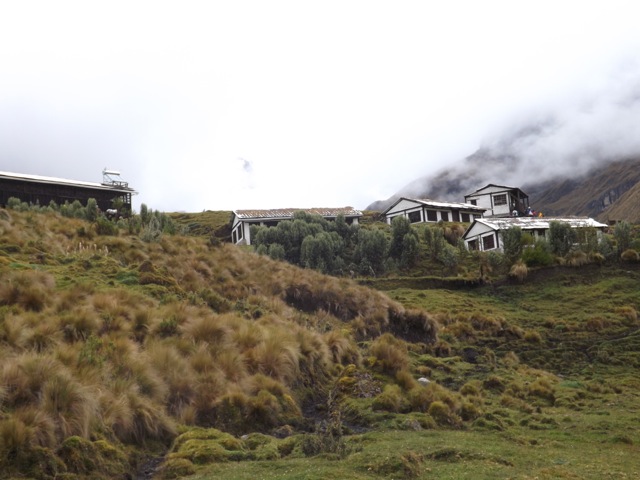
An hour and a half after dark we rounded a hill and could just make out buildings ahead in the vague moonlight. We reached the buildings and found the first one open. It was a dorm room with bunk beds and a bathroom. We dropped our packs and investigated the other four buildings. Two were locked dorms while the others were dining areas with kitchens and fireplaces. We found a bunch of candles and set up our room, cooked some dinner and collapsed into our sleeping bags.

Day 2

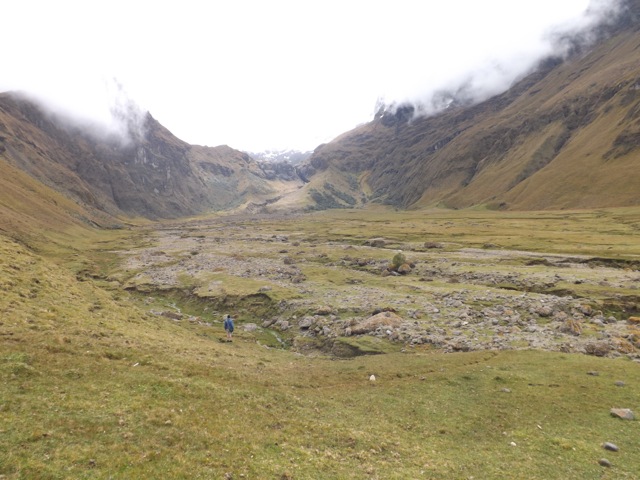
The next day we were up and after breakfast, we cleaned up the room, packed our bags and stowed them away in a hidden room off one of the kitchens. We then headed out across a stretch of soggy, rocky ground towards The Altar, a collapsed volcano surrounded by peaks. The valley is at about 4000m above seas level, and even with a slight grade crossing it was a struggle because of the altitude.

wpid-dscf2544-2013-10-13-21-07.jpg

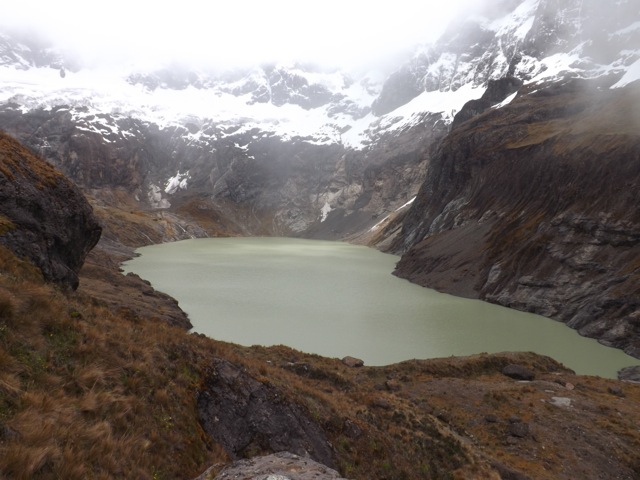
At the far side was a tough climb up the valley wall. While the sky was cloudy and mist covered many of the mountains, we could just make out a snowy peak above us as we climbed. My younger companion raced ahead while I struggled with the altitude, even without a pack. During one of our regular breaks, we discovered another pair of guys close behind us. This pushed us on and eventually we came over the ridge to see the large crater lake and the bottom of the mountains surrounding it. El Altar.

wpid-dscf2555-2013-10-13-21-07.jpg

We waited up there for almost two hours, watching as the clouds came and went. I noticed more than a dozen kinds of wild flowers growing in the area so set about taking photos of as many as I could.

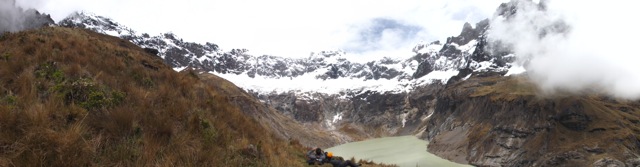
At about 1pm, the sky began to clear and I was able to take a panoramic shot – something I’d not done before on my new camera.

wpid-dscf2572-2013-10-13-21-07.jpg

On the way back we passed two other groups of people totalling 10 between them, before arriving back at the lodge to meet the lodge owner’s father, who was also the caretaker. Unfortunately, he didn’t speak english and our spanish wasn’t enough to get across that we had already paid for the previous night. The message finally got across with the help of one of the other guys and we booked another night. This time, we had a more luxury room – one of the locked ones.

Day 3

After breakfast, we packed and headed down from the lodge.

wpid-dscf2591-2013-10-13-21-07.jpg

The climb down was fairly uneventful. There was the occasional rain, but nothing worrying. Most of the trail was dry mud but we also passed through several different levels soggy levels of it as we went: dirt, wet dirt, hard mud, soft mud, sludge and water pooled mud. For the most part, we found little of the last two and mainly plentiful soft mud. When climbing down a dirt or rocky trail, it can be hard on your knees, even with walking poles. But soft mud cushions your footsteps without swallowing your boots totally. As we walked, we saw more of the wild flowers…

wpid-dscf2595-2013-10-13-21-07.jpg

We finally reached the owner’s hacienda just as the rain began. After a lunch prepared by the owner’s mother, we waited for the bus that didn’t come before talking the park rangers into giving us a lift back to Riobamba. This was ironic because they would have stopped us from doing the trek if they had caught us at the beginning. We arrived back to the hotel we’d been staying at and the luxury of hot showers.

Summary
Overall, the trek was a lot longer than we expected, but we still had an awesome time and saw one of the few sights available without a guide in Ecuador. While the trail was muddy, it made the trek more of a technical challenge than an annoyance. For the views and the lodge, I would recommend this to anyone looking for an overnight and cheap hike in Ecuador.

Next we are off to Cuenca in Southern Ecuador to see Ingapirka, the most famous Inkan ruins in Ecuador.

The Trail Wanderer

Quito, Ecuador – Adventures

Quito is the capital of Ecuador with about 2.5 million people. It’s perhaps also best known for being the city on the equator.

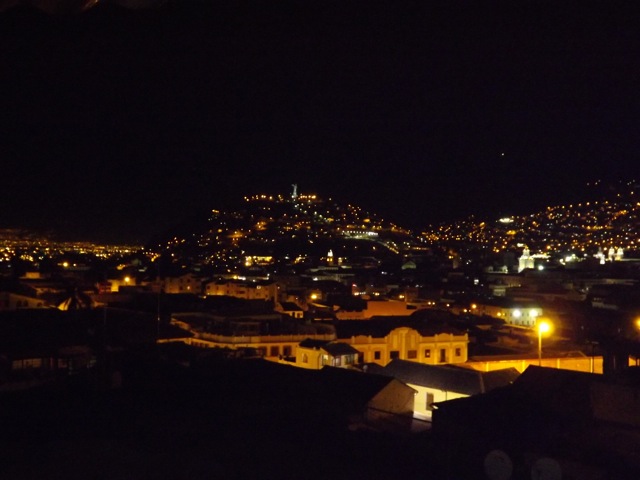
Of the countries I’ve been to so far, little is spoken about what you can do in Ecuador except, of course, the Galapagos Islands. But Quito has just as much to offer as many other cities on the continent. Including the view from the hostel at night.

wpid-dscf2152-2013-10-6-19-38.jpg

Old Town – The Historical Centre
On my first day back from the Galapagos Islands, three of us from the hostel decided to go for a walk around Old Town. The Historical Centre of Quito has many of the city’s plentiful impressive pieces of architecture. We wandered around the streets of Old Town heading from building to building for 2 hours enjoying the views.

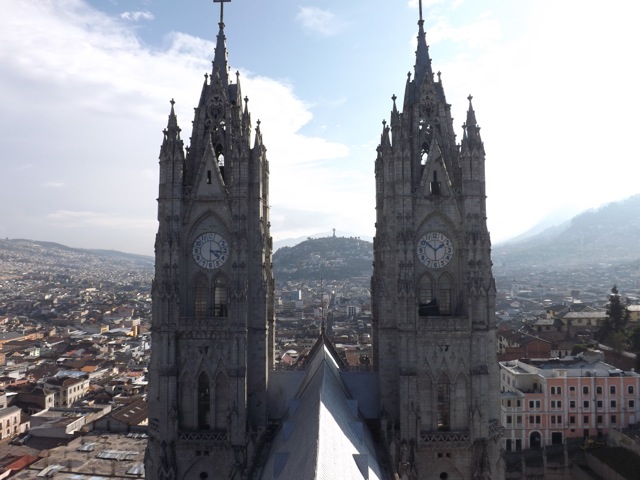
Lastly we headed to the centrepiece building, the Cathedral.

wpid-dscf2378-2013-10-6-19-38.jpg

It’s very impressive, but is also getting a little old and hasn’t been as well maintained as some of the other cathedrals in South America. After scaling some rickety ladders, we climbed up into one of the towers, getting a good look at the surrounding city and the pair of clock towers.

wpid-dscf2385-2013-10-6-19-38.jpg

We then climbed into the belfries of one of the clock towers for some more views of the city.

wpid-dscf2387-2013-10-6-19-38.jpg

New Town – La Mariscal
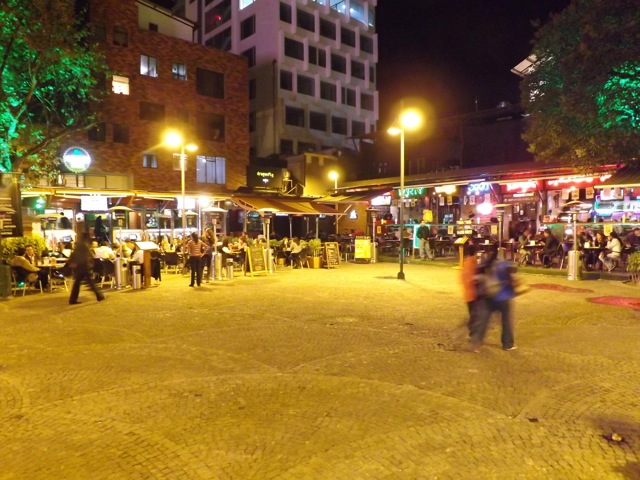
New town is considered to be the entertainment centre of the city with its trendy bars, restaurants and clubs. The hub is Plaza Foch, a crossroad surrounded by plazas. It’s also affectionally known as Gringolandia. One of the inner quarters of Plaza Foch…

wpid-dscf2391-2013-10-6-19-38.jpg

Mitad del Mundo – Centre of the World
Quito is in a unique position in the world, sitting as it does right on the equator. To celebrate this fact the city has erected a museum on each of the equators, the old one and the new one. Wait, two equators?

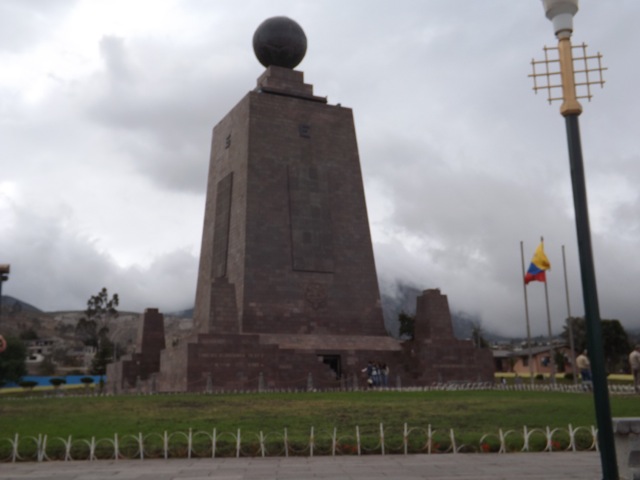
A great monument stands at a position that claims to be the equator 0º0’0”. This is where many surveys placed it, but with precise GPS readings this was determined to be incorrect. The old monument with it’s 5 ton ball on top…

wpid-dscf2401-2013-10-6-19-38.jpg

14 years ago, the equator was determined to be 240m north of the structure. To commemorate this they painted a red line on the ground signifying the actual line (which most people straddle)…

wpid-dscf2400-2013-10-6-19-38.jpg

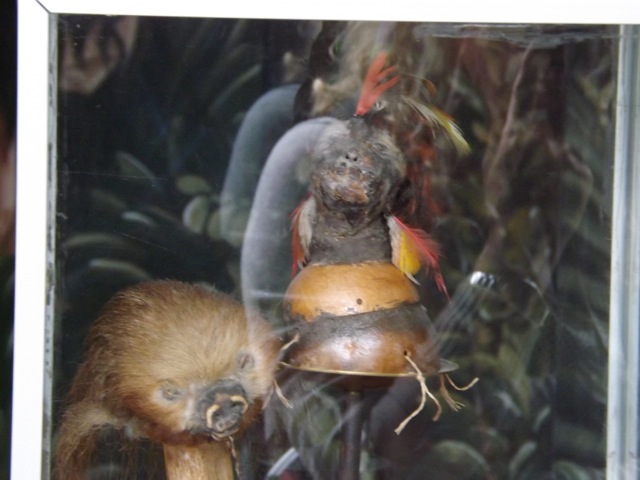
They also built an outdoor museum around it, dealing with both the equator and the people who once lived here. It’s interesting to see the water test, where they pour water down a sink on either side of the line to show it goes down in different directions. It’s also interesting to see an actual shrunken head from 150 years ago. Head shrinking was seen to be an honour soon after death….

wpid-dscf2396-2013-10-6-19-38.jpg

Reserva Geobontanica Pululahua
Just near the equator on the north side of Quito is a large volcanic crater. It’s extinct and collapsed in on itself 2500 years ago. It’s since been transformed into farm land. We stopped by as part of the tour to Mitad del Mundo, but low cloud blocked the mountains on the far side, losing the sense of it being a crater.

wpid-dscf2393-2013-10-6-19-38.jpg

El Panecillo

On a large hill in the middle of the city and viewable from most of the city is a monument to the Virgin Mary. Climbing the hill is dangerous so we attempted to get a taxi to take us. Of the couple we asked none were keen to take us anywhere near it.

wpid-dscf2374-2013-10-6-19-38.jpg

El Teleférico – The Aerial Tramway

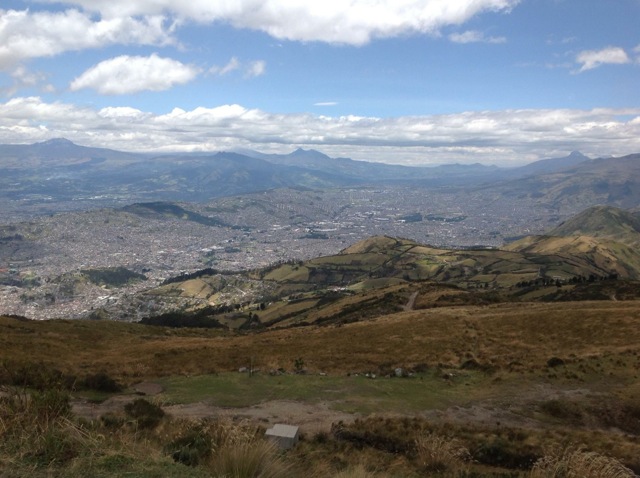
Starting in the central city, a cable car goes up to the active Pichincha volcano some 4100m above sea level for some fantastic view down over the city.

wpid-1266865_10202228210052876_865162658_o-2013-10-6-19-38.jpg

These are just a few of the activities on offer. And being in the centre of the country, Quito is used as a hub. It allows ease of travel to places such as Mindo to the north – a town buried in a rainforest; Cotopaxi National Park – to climb one of the tallest active volcanos in the world; and the Galapagos – needs little explanation, among others.

I was originally planning to travel to Cotopaxi National Park for a hike next. But as it’s legally required to carry a permit and hire a guide, we decided it would be too expensive, so are now heading further south to walk around the base of Chimborazo – Ecuador’s tallest mountain.

The Trail Wanderer

Mindo, Ecuador – Impressions

80km north of Quito is the town of Mindo, buried deep in the rainforest of North Ecuador.

As one of my friends leaves South America in the next week three of us, who’ve been hanging out in Quito, decided to go away for the weekend to have one last adventure together. Spending $8 in the taxi to the bus terminal, we paid $2.50 each for the 2 hour bus ride!

Mindo is a charming little town with a lot to offer, which is why it’s a common weekend destination for travellers stopping off in Quito. While it’d take a week to do everything on offer here, with only two days we decided to take it easy and enjoy ourselves.

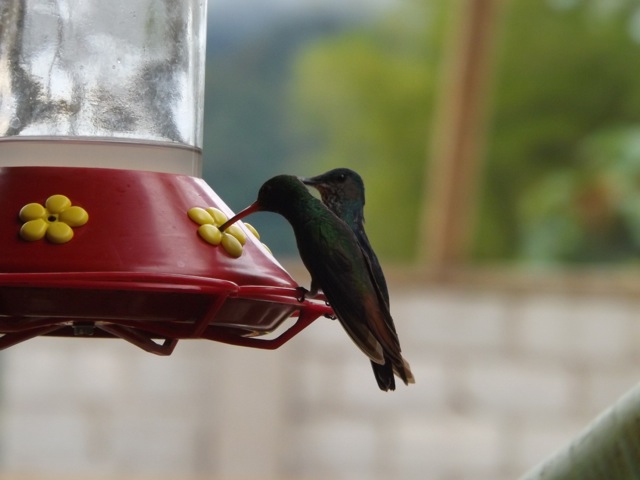
To start with, we found a place that served breakfast and ordered. While we were waiting on the balcony for the food to arrive, Hummingbirds flitted around, stopping to drink from a feeder.

wpid-dscf2404-2013-10-6-18-53.jpg

They skit and bob around like insects with their wings blurred and are the only birds that can fly backwards. It was impossible to get a clean photo of them while they were flying as the camera just couldn’t focus on them fast enough. There are 14 different types of them here.

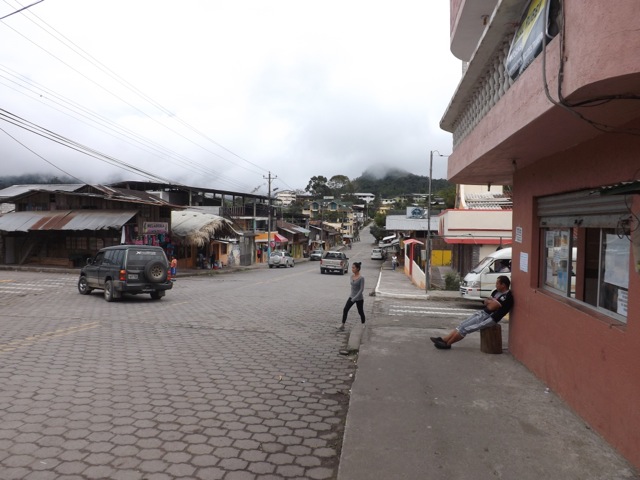
After breakfast, we went for a walk to check out what the town had to offer. 10 minutes later, we were done having seen the bar district and the restaurant district. The town consists of a main street, several short side streets and a plaza.

wpid-dscf2402-2013-10-6-18-53.jpg

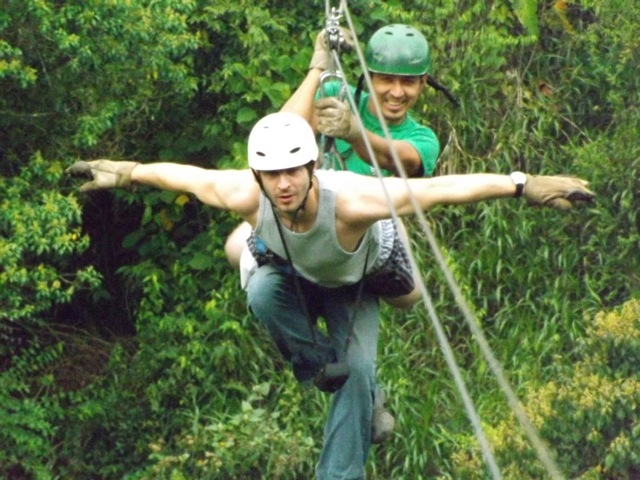
Next, we decided to go zip lining and walked the 3km up the hill to one of the companies that offered it. There were 10 different lines and on most of them we were able to ‘fly’ while accompanied by one of the two guides. Hanging from our backs we sped along with arms wide, aeroplane style. Overall, it was a most fun two hours.

wpid-dscf2438-2013-10-6-18-53.jpg

That evening, we headed out to the bar district for tapas and sangria. We discovered we were some of the only foreigners in town that night, so after eating, we headed back to hostel for our own little party, just the three of us.

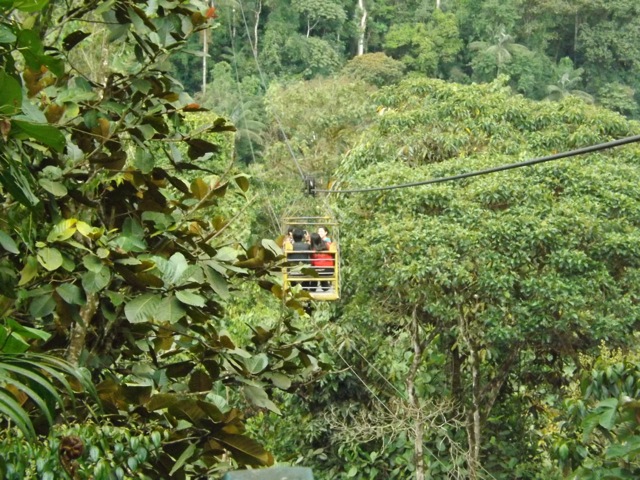
We woke late the next day and after breakfast, decided to visit the waterfalls. By the time we headed up there it was early afternoon. To get to the falls, we caught a taxi the 10km to a home-made cable car which took us across the valley. The engine was made from an old van with gears and all…

wpid-dscf2467-2013-10-6-18-53.jpg

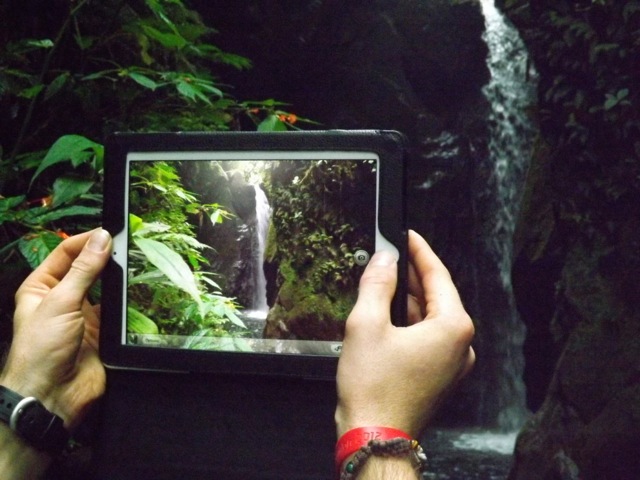
On the other side of the valley, we walked down a dirt trail in the rainforest for some time arriving at some of the waterfalls. Hot from the walk, two of us donned our swimmers and leapt in, and out again, as the water was as cold as expected. There are 7 sets of waterfalls in the area, but in the two hours before the cable car stopped for the day we got to four of them.

wpid-dscf2477-2013-10-6-18-53.jpg

That evening we hung out with a group of new arrivals at the hostel before heading to bed early. While we had only two days in the town, there are many other things we could have done, including canyoning (where you rappel down a waterfall), tubing down a river (like rafting but large tire tubes tied together) and an animal sanctuary, to name a few.

It’s a peaceful change from the city and at the price to visit and stay, it is well worth the effort if you are in Quito with a few days to spare. Just remember to take your Malaria tablets and try to avoid mosquitos, although it was the midges that feasted on us.

Next, it’s back to Quito to prepare for a four day walk around Cotopaxi, one of the world’s tallest active volcanos.

The Trail Wanderer

Santa Cruz trek, Cordillera Blanca, Peru

While there are many hikes in the Cordillera Blanca, the Santa Cruz hike is the most popular, and is usually done with a guide. Hiking with a guide doesn’t feel like true hiking, especially when they carry half of the equipment, set up tents and prepare your food. So, I decided to do it without one. As it happens, four Americans at my hostel were also planning to go guideless. And while I prefer to hike alone, I wouldn’t be totally alone in the mountains… We booked a bus to the start and prepared to leave early the following morning.

Day 1

Not having a good night’s sleep the night before a hike is a bad thing. I discovered this on the Colca Canyon hike and well, it seemed to happen again!

The bus trip to the beginning of the hike is five hours on a local bus. Unlike the five of us lads, peruvians have short legs, so there was not a lot of room in the bus. The cramped first two hours of the trip was on a sealed road and then the last three hours was to be on a very rocky dirt road. Five minutes onto that dirt road, however, the bus gave up and with black smoke pouring out the side, the transmission fell out. The pool of red transmission fluid under the bus is not obvious in this photo, but it’s there…

wpid-dscf2031-2013-09-13-13-322.jpg

After an hour the bus was fixed, but only enough for it to return to base leaving us to wait for another one. Three hours later it arrived and we were on our way again. Three hours of jaw rocking dirt road meant no napping for me!

We were delivered to the small village of Yanama and discovered a group of three girls and a french couple who were also doing the hike without a guide. While the french couple were quite typical of many french people I’ve met in South America so far – they treated us like we didn’t exist and totally avoided us – the three girls decided to join the group. With eight of us, and two particularly chatty girls, my hike was going to be noisier than I wanted. So, I let the other seven head off and dropped to the back to walk alone.

The first part of the hike leads out of Yanama and down the hill via a steep dry track, crossing one dirt road on the way and eventually the river via a concrete bridge. I headed left as the trail widened leading through a couple of villages where every small child ran up and demanded bon-bons. Never give the kids bon-bons!

wpid-dscf2033-2013-09-13-13-322.jpg

Finally, I came to my first climb of the day. It wasn’t a large one but my lack of sleep caused me to struggle up it. I met the others at the top and stopped for a rest as they headed off again. I was hoping there wasn’t going to be many more climbs as the direct sunshine on top of my tiredness was draining. But there were a few. Eventually, I rounded a bend in the valley and saw a group of tents a couple of kilometres away and figured this was my companions. I set out towards them, making slow progress across some small hills.

wpid-dscf2034-2013-09-13-13-321.jpg

I was getting close to the tents when I came across a pair of cows on the trail, staring me down. Did you know that more hikers are killed every year by cows than anything else? It’s true! Google it. Not wishing to be trampled to death for getting too close, I went around, through a boggy area of ground. Exhausting!

wpid-dscf2037-2013-09-13-13-321.jpg

I finally made it to the tents to discover it wasn’t my group but a guide and his party. He pointed me further along the trail, so I struggled on. After another kilometre I still hadn’t located my amigos and with the trail leading up some hills, I picked a spot for a camp near the river and set up my tent. After cooking dinner and getting ready for the next day, I slumped into my sleeping bag and slept.

Day 2

From my planning, I was aware that Day 2 was the most difficult day of the hike. From my camp at 3,800 metres (above sea level) I would walk 13 kilometres and climb nearly a kilometre to a pass called Punta Union at a height of 4,750 metres. Followed by a further 3 kilometres down the other side.

While The Choro trek in Bolivia began 50 metres higher, I only had to climb 100m total before descending on that hike. If that 100m was hard because of the altitude, this one was going to be a very difficult day indeed fighting the altitude the entire way.

wpid-dscf2041-2013-09-13-13-321.jpg

I packed up and left my camping spot. After a fairly good sleep, I had more energy, so I set off along the trail with more vigour. But while climbing hills was still hard, it was easier than day 1.

wpid-dscf2047-2013-09-13-13-321.jpg

After a kilometre, I found the empty campsite where the other seven had camped. I headed along the valley slowly climbing as I went. As the day progressed I climbed higher along the valley. I consider any height above 3,700m to have a thin atmosphere – with less air pressure. Being a large framed, large lunged person, the higher I went the more trouble I had getting enough air and spent a lot of the time out of breath. There was a point where I had to take a break to catch my breath after every 10 steps; but only when climbing.

I climbed slowly over small knolls and past several tarns – small mountain lagoons, with towering snow covered mountains and glaciers across from me. I came over a knoll to see the ridge line I still had to climb, with the small gap at the top that was the pass.

wpid-dscf2054-2013-09-13-13-321.jpg

I continued on and the higher I went, the harder it became. Every five steps I had to take a rest to get my breath back. I even took my pack off every 100m or so for a longer break. As I climbed, my rate got slower and with only about 50 metres to the gap I slowed to only 3 steps before resting. Then for the final few metres it was only one step before resting. So…slow… But I did have a good view back along the valley.

wpid-dscf2058-2013-09-13-13-32.jpg

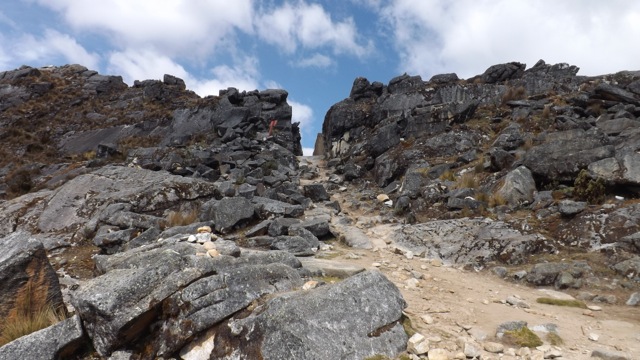
When I finally went through the gap, I passed an altitude marker and slumped down on the other side in the sun, taking my pack off and uttering, ‘Thank f**k for that!”
wpid-dscf2062-2013-09-13-13-32.jpg

Down was a lot easier and I powered through the switchbacks below a massive white glacier…

wpid-dscf2063-2013-09-13-13-32.jpg

…and above an azure mountain lake.

wpid-dscf2067-2013-09-13-13-32.jpg

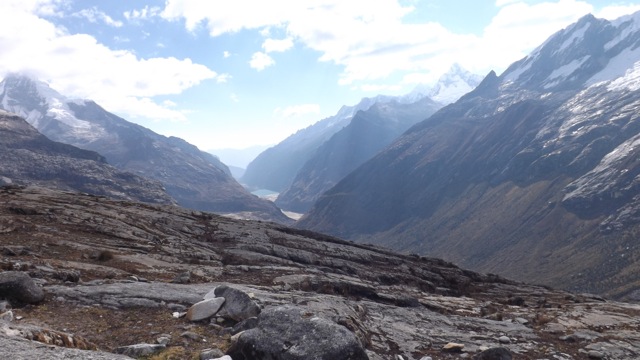
I could see tents in the distance and marched on feeling more energised that I was no longer climbing. I stopped only once before I arrived at the tents 2-3 kilometres from the gap only to find it was another tour group. So, I walked on across the flat river plains following the river.
wpid-dscf2065-2013-09-13-13-32.jpg

Eventually, passing another guided group, I found the tents of my group and set up camp.

Day 3

The main part of Day 3 takes only 3 hours, so to extend it most people climb to Laguna Arhueycocha.

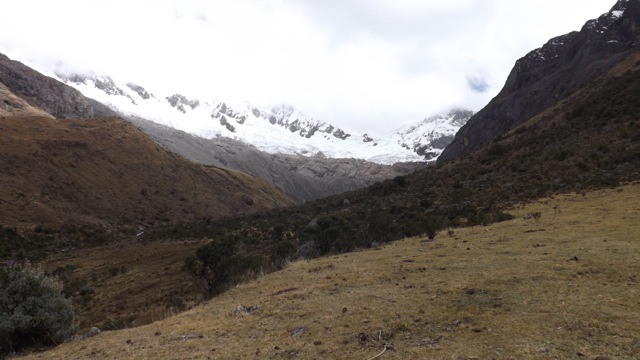
We started the day climbing slightly to a higher valley. Slightly is still difficult at 4,000m.
wpid-dscf2070-2013-09-13-13-32.jpg

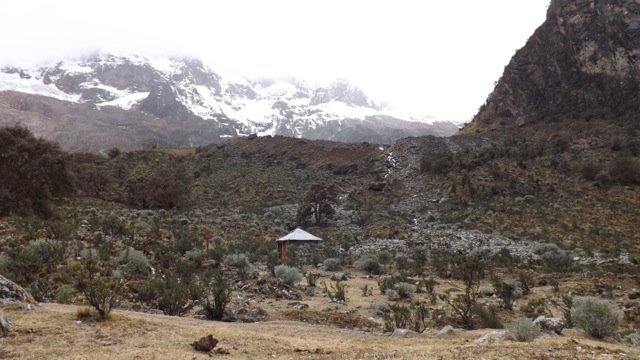
On reaching the valley we left our packs with covers on as it had rained overnight. Even walking along the high valley without packs wasn’t easy and after a couple of kilometres I arrived exhausted at the base of the wall that climbs up to the laguna. The rest of the group decided to climb it, but I opted to stay at the bottom. I’ve seen plenty of glacier lakes in this trip, so decided to save my energy.
wpid-dscf2074-2013-09-13-13-32.jpg

There were some buildings nearby, so I decided to investigate those instead. They were only 50m away, up a climb of about 5 metres, but even that was exhausting. The buildings were empty, but looked to have been a camping area with a place for donkeys. While I was there it began to snow a little.

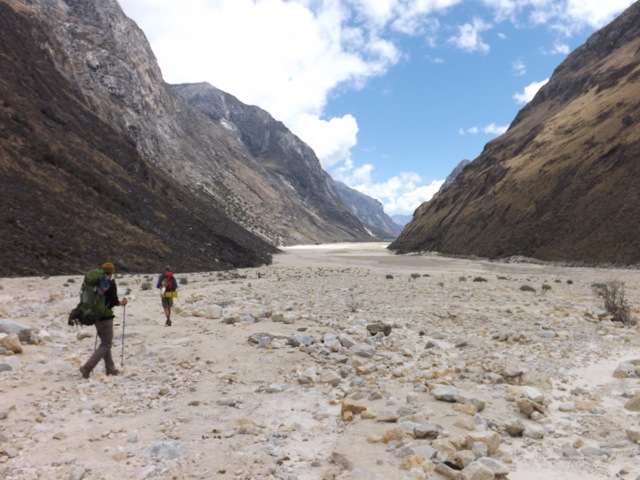
When the group returned, we headed back down the valley – an easier walk – donned out packs and climbed back down to the main valley. For the rest of the walk, we followed the valley and river along, firstly through a dry river bed thick with sand.
wpid-dscf2099-2013-09-13-13-32.jpg

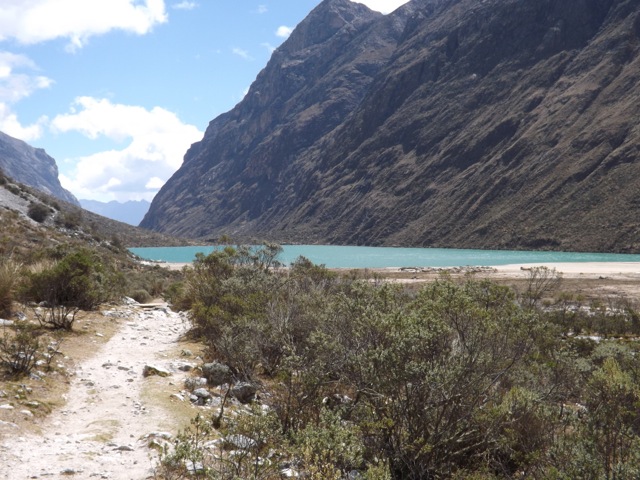
Sand is difficult to walk on carrying a pack. We climbed about 10 metres up the other bank and followed the trail that undulated as it went. We passed along the side of a large laguna and took a break for lunch at the other end as we looked along the valley.
wpid-dscf2103-2013-09-13-13-32.jpg

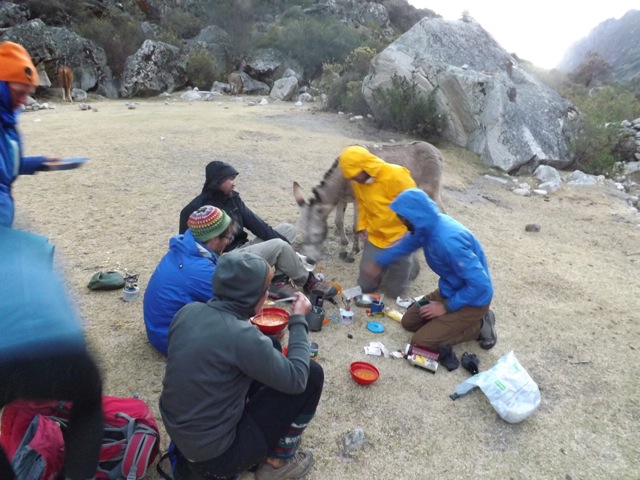
We were to pass another laguna, but it turned out to be little more than a marsh. Perhaps it’s larger in the rainy season. Cows, ponies, horses and donkeys were everywhere as we walked along the sometimes sandy, sometimes rocky trail. Eventually I saw the campsite ahead and marched off, arriving to a set of rocky walls at a place called Llamacorral. I pitched my tent as the others arrived and we began preparing dinner when we got a visit from a pony who decided he didn’t want grass for dinner.
wpid-dscf2105-2013-09-13-13-32.jpg

Later, we made a fire in a deep rocky fire pit and sat around talking for the evening.

Day 4

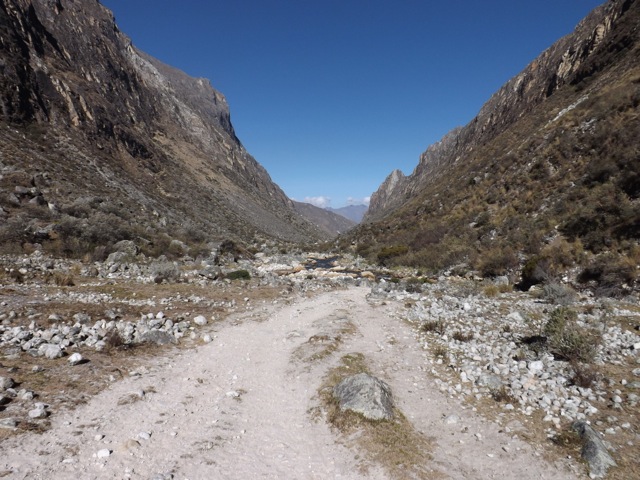
The sky was clear the next day, so after breakfast I packed up my things and headed off, walking ahead of the group for a change. Most of the day saw me walking the rocky track along the side of the valley as the river snaked its way through the landscape. There wasn’t much to see as I walked and after 90 minutes I took a short break off the trail. When I was putting my pack back on, I saw the group go past.
wpid-dscf2108-2013-09-13-13-32.jpg

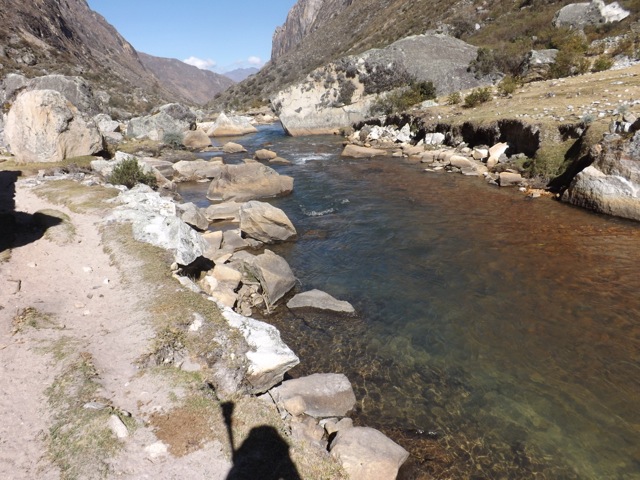
I marched after them, I saw a waterfall opposite which marked the halfway point of the day. For the rest of the walk, the trail descended following the river down through the gorge. With the sun high in the sky and the sandy trail, it was very hot. A distinct contrast from the day before with its slight snow.
wpid-dscf2112-2013-09-13-13-32.jpg

An hour later, I rounded a bend to find my group stripping down to their underwear at a nice spot in the river. The gingerly got into the freezing water. I was steaming hot, so I stripped down and threw myself into the river. No wading here, boys and girls, the only way into a freezing river is as quickly as possible. I was out just as quickly though and drying on the side.

Then, we were off again and 20 minutes later arrived at the end of the trail after passing a group of larger people heading back the other way. I wondered how they were going to manage the climbing. They were part of a guided group, so weren’t carrying much gear, but they didn’t look as fit as my group, and we struggled at times.

Five minutes after we’d signed out of the trail, we were walking past a house and the owner rushed out offering us cold soft drinks and beer. He told us he’d call a Collectivo – mini van – for us. It would take us to a larger town where another Collectivo would take us back to Huaraz.

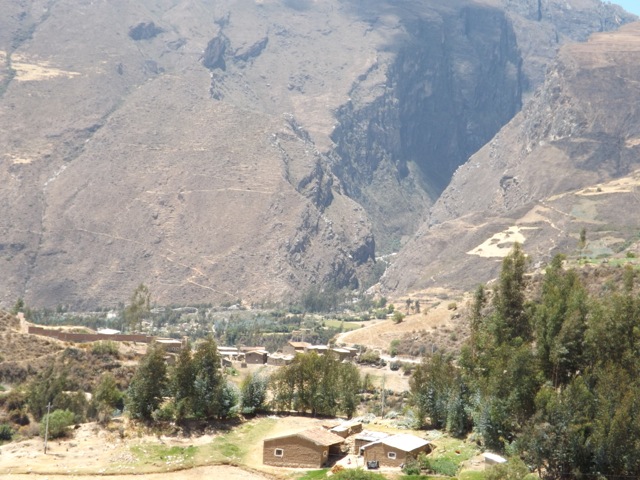
As we were driven away in the van, we could see the gap from which we’d exited the hike and the surrounding landscapes.
wpid-dscf2126-2013-09-13-13-32.jpg

Conclusion

Because the trek was at such altitude, it goes down in my books as being the most difficult hike I’ve ever done. With day 2 being the most difficult day’s hike, even more difficult than day three of the Colca Canyon hike. Did my week in Lima at a low altitude cause me to lose the acclimatisation I’d previously gained in Bolivia and Northern Peru? Probably. I should have given it a couple of extra days in Huaraz before I did the hike. But these are the things you learn.

Next, I’m off north to the beach city of Mancora in far northern Peru before crossing the border into Ecuador. I’ll see what adventures await me there.

The Trail Wanderer.

Ica and the Huacachina Oasis, Central Peru

Ica is a small city in central Peru about 300 km south of the capital, Lima. Ica lies at the top of the Atacama desert that stretches south for over 1000 km into northern Chile. It’s the driest hot desert in the world (Antarctica is the driest cold desert), with parts receiving only 1 mm rainfall a year. The fact that Ica is in the desert is very obvious because it’s surrounded by massive sand dunes.

wpid-dscn3521-2013-09-3-14-54.jpg

As a size reference, that small black shape near the top is a dune buggy designed to carry 12 people…

wpid-dscn3522-2013-09-3-14-54.jpg

While Ica doesn’t have that much to offer the tourist, just west of the city is a place called the Huacachina Oasis (pronounced waka-chee-na). The oasis is literally a large pond surrounded by the massive sand dunes.

wpid-dscn3524-2013-09-3-14-54.jpg

A very small township has been built in a horseshoe in the gaps between the dunes and the pond; with hotels, hostels, bars, clubs and restaurants – the most popular being The Huacafuckingchina.

After arriving, checking into my hostel and having breakfast, I went for a walk around the pond. Five minutes later, I was back after having seen most of the town. So, I decided to take a ride across the pond on a pedal boat with a friend from the hostel.

wpid-dscn3531-2013-09-3-14-54.jpg

That killed another half an hour and while getting out of the boat at the end, I managed to drop my camera into the water. BUGGER! Guess I’ll be buying a new camera when I get to Lima… So, that ended my ability to take photos. Pictures from here on aren’t mine.
In the afternoon, I booked in for what most people come here to do… Sand boarding. Late in the afternoon, ten of us piled into dune buggy with the driver and drove madly across the dunes (madly is the only way possible on these sand dunes!) skidding and bouncing around before stopping at the top of a large dune.

For those that had previously snow boarded are able to sand board standing up, while the rest of us went down on our bellies.

wpid-huacachina21543-2013-09-3-14-54.jpg

The buggy then picked us up at the bottom and shot us off to another, taller and steeper dune; each one growing more and more intense. It was exhilarating to say the least, but two hours goes past far too quickly…

While the sand boarding is fairly inexpensive, hiring quad-bikes and touring the dunes is far more expensive. Beyond that, there’s not much to do and staying longer than a day leaves you to just sunbathe, if that’s your thing. Early the next morning, I caught the bus to Lima.

After a few days in Lima, I plan to travel to Huarez to do some hiking in the Cordillera Blanca – the White Mountains.

The Lone Trail Wanderer

Colca Canyon, Peru

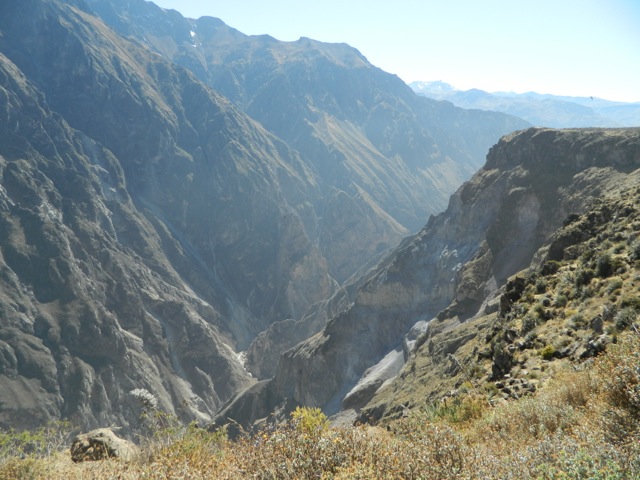
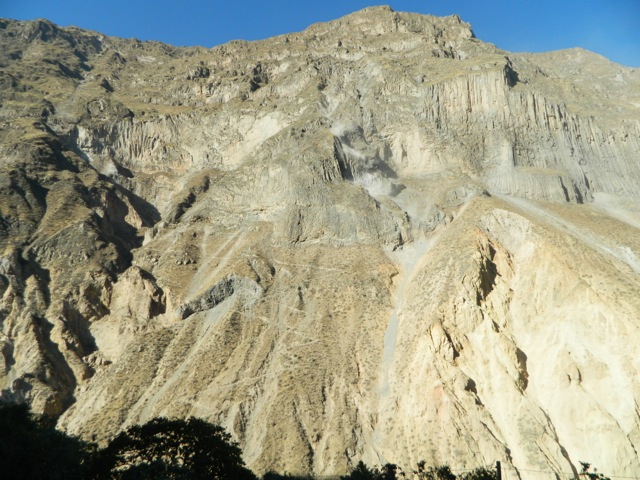
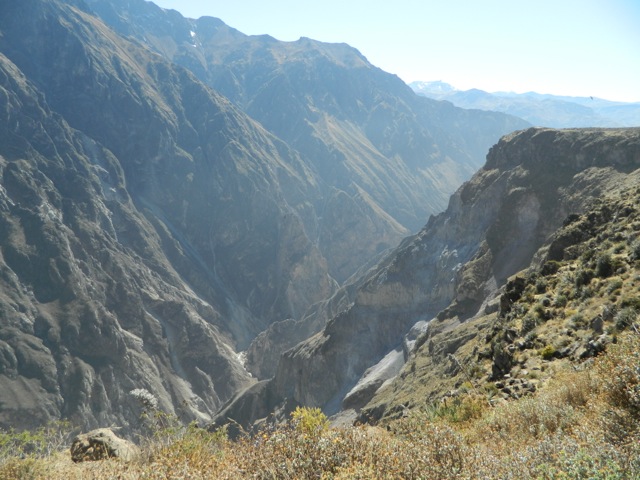
Colca Canyon is the third most visited destination in Peru and is twice as deep as the Grand Canyon in the United States. The canyon itself is just a massive yawning gorge in the middle of the vast tall mountain landscape of Peru. It’s an amazingly picturesque wonderland and a great place to spend a few days hiking.

wpid-dscn3421-2013-08-25-23-41.jpg

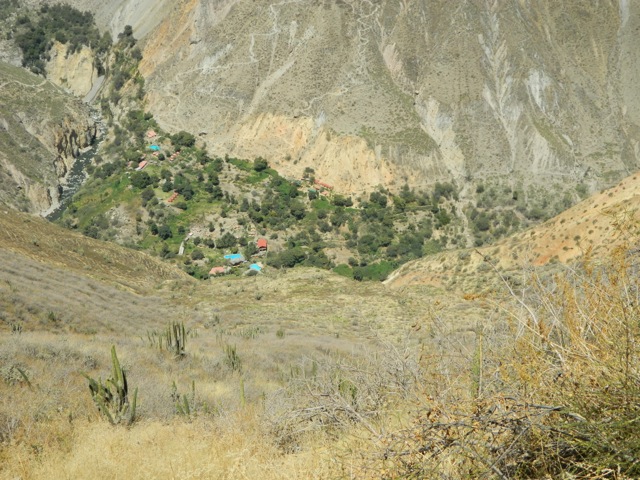
There are many tours into the canyon, most of them visit the same place, the tourist destination of Sangalle, also known as the Oasis. It has plentiful hotels and entertainment for those who wish to pay for a guide to lead them down the massive face of the canyon wall. And for those who can’t or don’t want to climb back out again, there are mules for hire. The Oasis…

wpid-dscn3484-2013-08-25-23-41.jpg

But a guided tour isn’t necessary. You can catch a bus from Arequipa to Cabanaconde, the township at the top of the canyon, and from there just walk into the canyon at your own timing and direction.

There’s actually quite a lot you can do in the canyon; numerous little settlements dotted across the other side, several archaeological dig sites, a waterfall high up in the mountains and a set of hot pools right on the river. You could spend a week here exploring. Plus, you don’t need camping equipment, cooking equipment or food, as it’s all available in the settlements (including beer). So, grab a couple of hundred Soles and get down there!
Day 1 – Arequipa to San Juan de Chuccho
Being picked up at 3 a.m. followed by a 7 hour bus ride is a god awful way to start a trek. Trust me on this! Especially when you’ve only managed 3 hours sleep the night before.

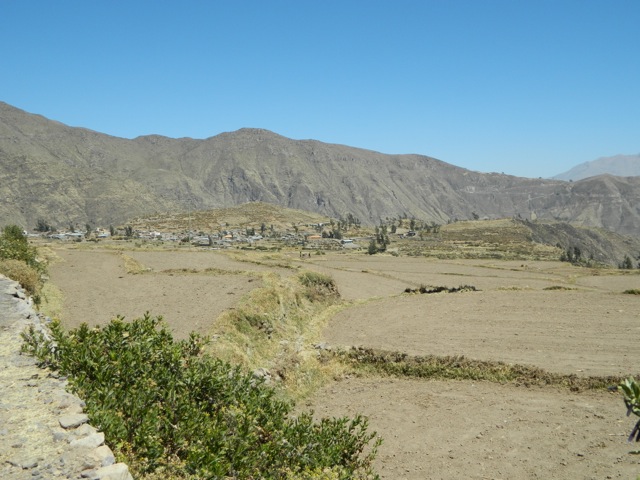
The bus arrived at Cabanaconde at 10 a.m. and in the heat, everyone else headed off with their guides to do their tours while I tried to find the start point of my solo hike. With the quality of the maps in general being poor and with no topographic ones at all, this was one of only tow navigation challenges I had. I asked one of the locals and was pointed out along the road the bus had come in along. A few hundred metres outside of town, I waved down a policia on a bike and he pointed me further on. At least I was on the right track. I eventually reached the San Miguel Mirador and looked back at Cabanaconde…

wpid-dscn3431-2013-08-25-23-41.jpg

…and across at a couple of the settlements on the far side of the canyon. These two are, Malata and Cosñirwa. These are just two of about ten scattered along the canyon.

wpid-dscn3434-2013-08-25-23-41.jpg

From the mirador I continued along the edge of the cliff following the wide trail to a large shelter with no walls. I stopped for lunch out of the heat. While it’s the middle of winter it’s still hot, reminding me of summer in Victoria, Australia, or late winter in Central Australia. Like those areas it’s dry, dusty and the sun shines brightly off the light coloured dust, making it annoying to discover that my sunglasses are broken. Yay! And I haven’t even started yet! Cheap Brazilian rubbish!

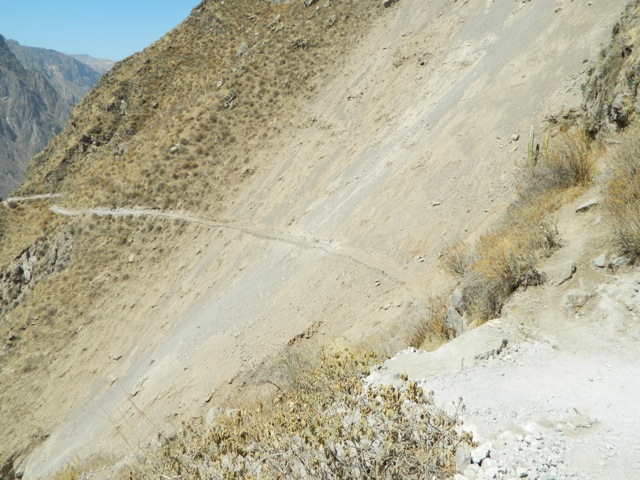
The trail is about 2 metres wide here and stays near the top of the cliff for a while. This path was recently closed because of rock slides blocking the path and while it’s officially open again, I’m still cautious.

wpid-dscn3444-2013-08-25-23-41.jpg

The trail continues on, always heading slightly downwards and I can see where the trail has been repaired in several places. The direct sunlight is very draining, not that I had much energy to start with. I come across some workman having lunch in a shelter and they point me the right way when the trail forks. The other way no longer functions, I guess.

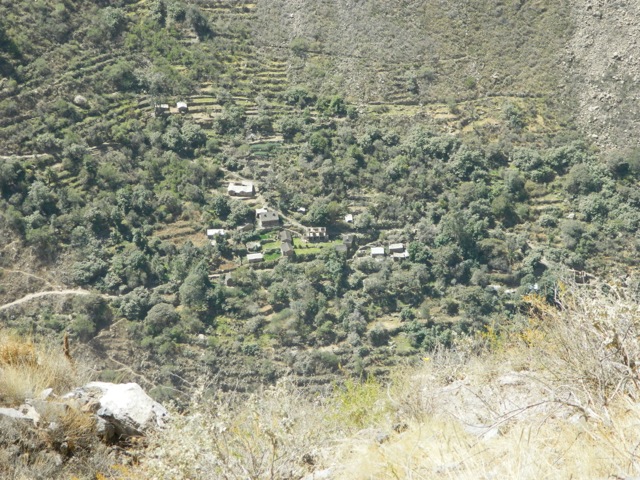
Soon I reach an area where the trail begins to zigzag down the mountain. I stop for a break and take off my boots to dry my feet – good practice on a hot hike. Looking down, I see the settlement of San Juan de Chuccho, my target for the day.

wpid-dscn3445-2013-08-25-23-41.jpg

The trail zigzags steeply the entire way down the canyon wall and is long, hot and arduous. As I descend I see the bridge across the Rio Colca still several hundreds metres below that I’m aiming for with San Juan de Chuccho 50 metres up the hill beyond it.

wpid-dscn3449-2013-08-25-23-41.jpg

Finally, after hours in the sun I reach the bridge and take another rest. I see an arrow and the word Roy’s pointing off along the trail, so I when I muster the energy I follow. It heads further along the canyon then begins climbing to eventually come to the small set of clay huts that is San Juan de Chuccho. Roy’s, it would appear, is the name of a hotel here, the first one. I find the owner’s son – perhaps 8 – who takes me to a room. His mother appears moments later and takes me to a better one with a double bed, bathroom, hot shower, and a bay window looking directly across the canyon to the trail I’d just climbed down…

wpid-dscn3461-2013-08-25-23-41.jpg

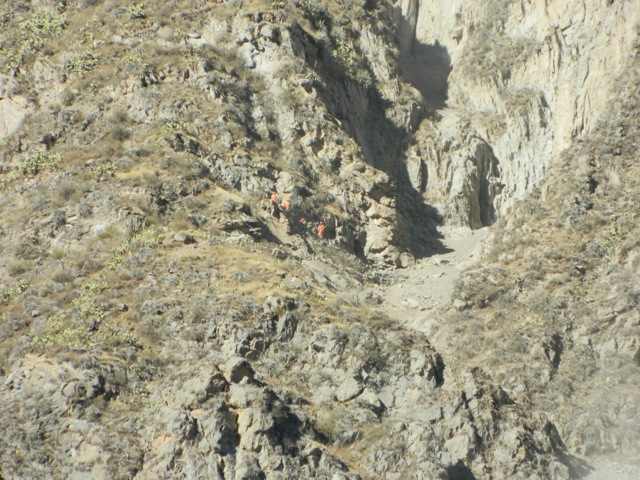
And high up on the trail, the tiny figures of the workers fixing the trail.

wpid-dscn3462-2013-08-25-23-41.jpg

The price of the room? 20 Soles or about US$7.50. Less than camping fees in many places in Australia. I bought a large bottle of beer, a large bottle of water for tomorrow and booked dinner, each for 10 Soles. That’s expensive for the beer and water, but they have to carry it in by pack mule, so I wasn’t complaining. It was a couple of hours to dinner, so I took a nap, then after dinner I collapsed into bed.

Day 2 – San Juan de Chuccho to Llahuar
After 12 hours of sleep I was made pancakes for breakfast! Hell yeah!

After breakfast I packed and was off. It was already hot when I left, heading up past another three hotels and onto the trail that would take me the length of the populated canyon face to the hot pools at the far end. The trail meandered its way along the side of the canyon for 30 minutes before rounding a corner and heading up a gully. Along the gully a water channel had been created sending water from the small stream directly back to San Juan de Chuccho. Further up the gully, the trail crossed a bridge and began zigzagging steeply up the bank. I climbed, stopping regularly in the heat. 30 minutes later I arrived at the top and into the village Cosñirwa (the first of the twin towns I showed 6 photos up).

From here a dirt road led through the village, but I don’t see a soul as I walked. On the other side of town, I follow the road up a little to the second town – Malata – a couple of hundred metres further on. I also don’t see anyone until a truck came rumbling up the road carrying passengers in the back. I guess this is the only form of bus in the canyon. I walked on and the trail forks, the road continues on, while an old trail leads up to it. I decide to follow the trail and about half way along, the footing becomes so precarious I couldn’t continue, but instead of heading back and taking the road like a normal person, I decide to climb up a rocky gully instead, about 30m with my 15kg+ pack. This was difficult and took time, but I got there with only a few scratches. I’m thankful for all that time I spent indoor rock climbing. Useful!

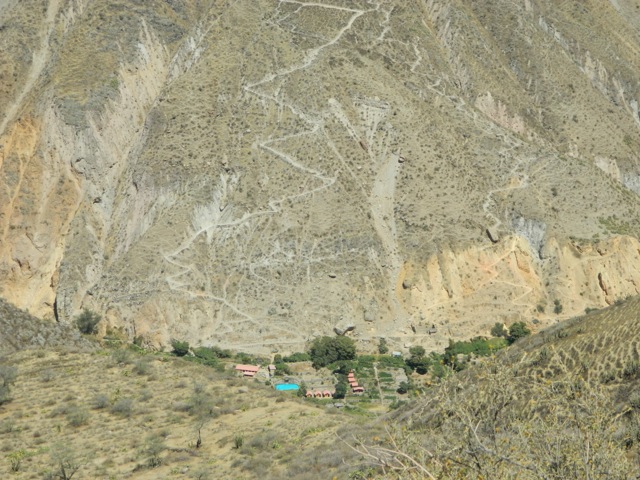
The road continued until I came to a small dugout in the rock wall where I was able to take shelter from the sun and again take my boots off. From my vantage point, I could see some of the ‘Oasis’ below and the steep zigzag trail leading down to it…

wpid-dscn3475-2013-08-25-23-41.jpg

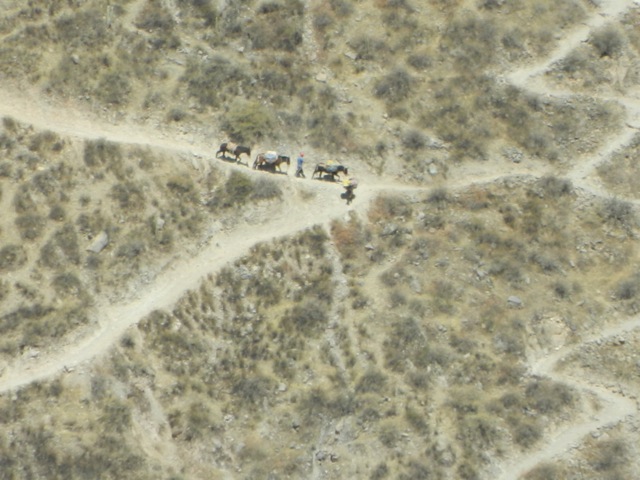
And while I watched I could see several groups climbing down it, including this laden mule caravan…

wpid-dscn3481-2013-08-25-23-41.jpg

Heading off again, I continued along the road as it slowly climbed towards mirador Apacheta, the highest point I’d climb on this side of the canyon. This gave me a view further along the canyon, with my destination down near the river.

wpid-dscn3488-2013-08-25-23-41.jpg

After a break, I headed off again down a dusty path that I consider to be rather dangerous, not because of the long fall of the side of a cliff, there is that but because of the potentially painful fall into one of the three varieties of spiked cacti here. Ouch!

wpid-dscn3491-2013-08-25-23-41.jpg

As I headed carefully along the trail to a road and then along it, I passed two small communities, stopping at the second one for a refreshing bottle of Coca Cola. After a zigzagging climb down the next short bank, I crossed the river and headed briefly up the trail to my destination, Llahuar – pronounced ‘ya-oo-ar’ with a rolled r at the end. Two Ls together is a y sound, so Llama is pronounced Yama.

I stopped to rest and cool off with a cerveza – beer – before being shown to the aguas calientes – hot pools – belonging to the hostel, where I soaked right next to the river chatting to a solo french trekker who was doing the same. A perfect way to end a hot dusty day of trekking. Tomorrow I climb the zigzagging trail up the 1000m tall bank to the top of the canyon and back to Cabanaconde to end this little adventure. While it’s going to be difficult, being under the constant sun the entire way will make it worse.

Day 3 – Llahuar to Cabanaconde
After another 12 hour sleep, today began overcast and with pancakes for breakfast. I guess it’s difficult to bake or keep bread here… After packing, and donating some money to the French guy who hadn’t brought enough, I set off. The code of the hiker, always help other hikers in need. I climbed back up to the settlement I’d bought the coke from the day before and looked down the valley to the bridge that would mark the beginning of the hardest part of my hike.

wpid-dscn3495-2013-08-25-23-41.jpg

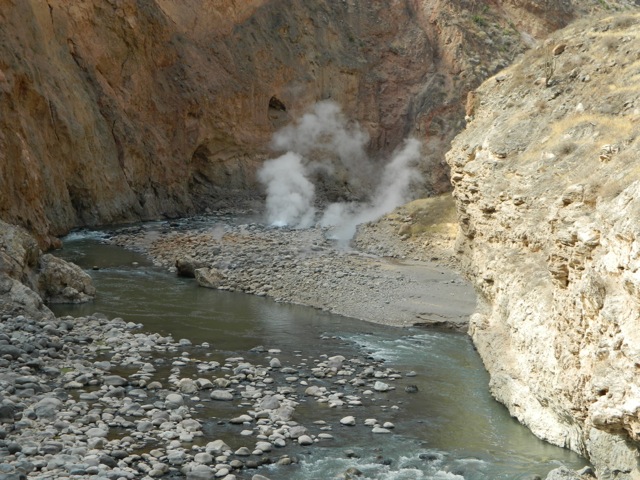
I followed the road down to the bridge and found a small natural geyser bubbling away next to the river.

wpid-dscn3497-2013-08-25-23-41.jpg

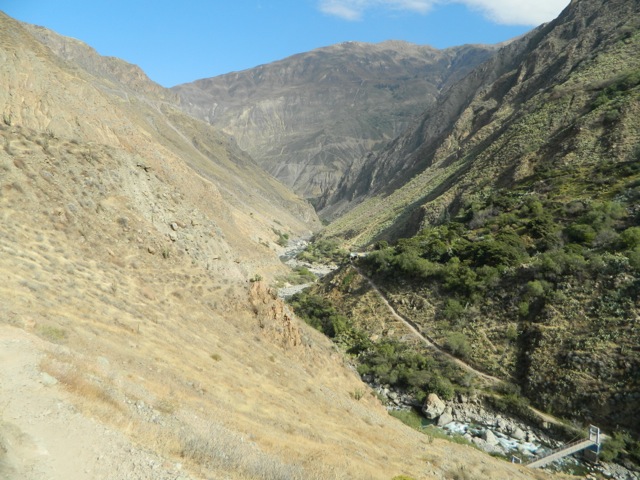
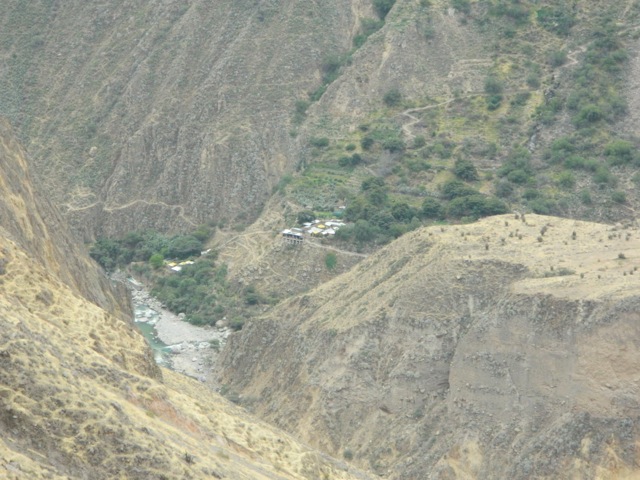
Then it was off up the trail and after climbing for 20 minutes I discovered I was going the wrong way, so had to head partially down again before finding another trail that lead me back up to the right trail. I didn’t need the extra work, but you get that. I began climbing and while it was generally overcast, and I was thankful to not be under the full sun, it was still warm. A way up the trail, I looked back down the valley to the tiny settlement of Llahuar and the pools at the edge of the river.

wpid-dscn3505-2013-08-25-23-41.jpg

A short time later, an aging local man casually comes climbing past me like he was walking up a slight hill. The trail was long and hard, and I stopped on many occasions for breaks. At point high on the canyon wall, the trail wound in along a deep gully, the first part that actually went slightly down before crossing a bridge at the top of the gully and again heading up the side of the mountain.

I finally reached the top of the canyon to discover the trail continued on along the top of the cliffs for another couple of kilometres, up and down several small hills before arriving in Cabanaconde. With the town finally in sight I quick marched to the centre plaza and found a hostel. It was a little crumby, but all I needed was a shower and a bed behind a locking door.

After my third 12 hour sleep in a row, I was on the bus and back to Arequipa, stopping briefly for a photo of the plains at the end of the canyon, before heading off again. On the way back, over the highest points – near 5000m above sea level – it snowed and I’m glad I wasn’t still in the canyon.

wpid-dscn3510-2013-08-25-23-41.jpg

Colca Canyon is a hikers’ wonderland, with so much to see. It’s not an easy walk, but for the fit there is plentiful places to visit and see, if you don’t mind climbing some pretty heavy trails with just a touch of altitude.

Next, I head north to the city of Ica, where I can gain access to the Paracas National Reserve, the Red Beaches and sand boarding.

The Lone Trail Wanderer

Arequipa, Southern Peru – Impressions

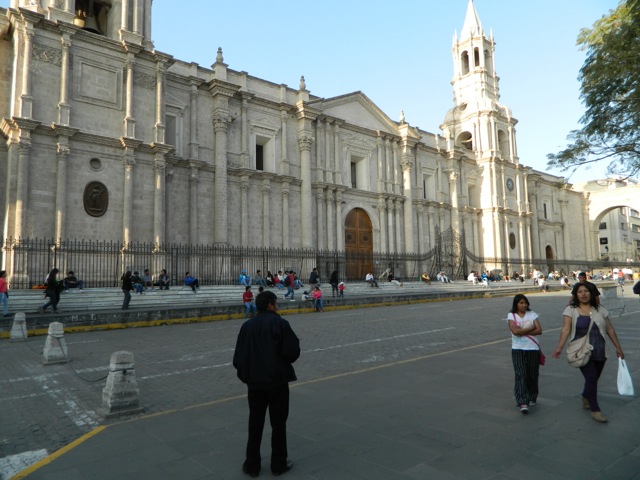
Arequipa is the second largest city in Peru with 900,000 people next to Lima (with 9 million) and is the capital of the south. The centre of Arequipa gives a similar impression to that of the ancient Incan capital Cusco, a ten hour bus ride away. A beautifully set up cobbled main plaza with cathedral on one side…
wpid-dscn3418-2013-08-25-14-36.jpg

…and many tour agencies and restaurants trying to hawk for your business on the others.

wpid-dscn3513-2013-08-25-14-36.jpg

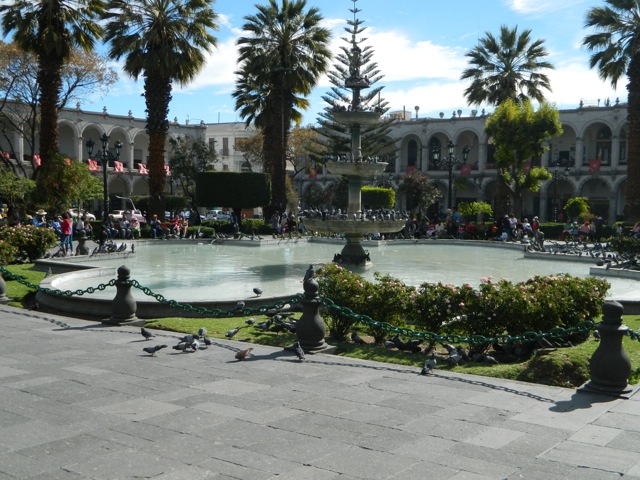
Peruvians seem fascinated by fountains and while there aren’t as many here as their was in Cusco, there are plenty. Along one side of the plaza is an open air mall with plentiful shops restaurants and the like.

wpid-dscn3514-2013-08-25-14-36.jpg

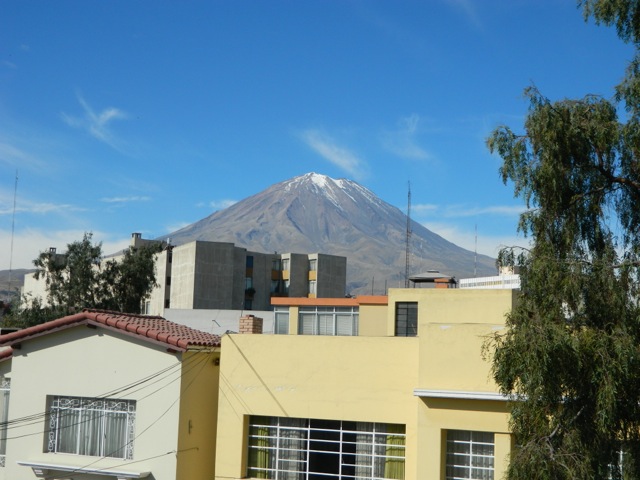
On the horizon outside the city is a tall range of mountains, and a solitary volcanic cone called Misti Mountain that’s said to spend most of the year surrounded in mist. Although I’ve been here a week and have yet to see it shrouded. It’s a two day climb up and down the 6000m cone.

wpid-dscn3518-2013-08-25-14-36.jpg

Between the city and the mountains is river where several groups host rafting, and while it’s only a short experience – 90 minutes max – the level 3 and 4 rapids are fun, although not as intense as my previous rafting experience in the Waikato, New Zealand.

wpid-img_0052-2013-08-25-14-36.jpg

There are plentiful museums and monasteries in the city, one hosted an exhibition known as the Ice Girl. In the time of the Incans she was sacrificed to the angry mountain gods. At 11 years old she had to walk 170 miles from Cusco before climbing Misti Mountain to die and ascend to live among the gods. She went willingly and it was seen as an honour to be sacrificed. Many similar sacrifices were made along the mountains from northern Argentina to Peru. Her preserved body is on display in a special glass freezer case.

The most popular reason people come to Arequipa is for Peru’s third most popular tourist attraction, Colca Canyon. Colca Canyon is said to be the second deepest canyon in the world, twice as deep as the Grand Canyon in the US. I managed a 3 day solo hike through the canyon and it was amazing. A post of its own is coming shortly.

wpid-dscn3421-2013-08-25-14-36.jpg

Next I’m off to the city of Ica, south of Lima to see the Red Beaches of Paracas and do some sand boarding.

The Lone Trail Wanderer