Category Archives: Destination

Mindo, Ecuador – Impressions

80km north of Quito is the town of Mindo, buried deep in the rainforest of North Ecuador.

As one of my friends leaves South America in the next week three of us, who’ve been hanging out in Quito, decided to go away for the weekend to have one last adventure together. Spending $8 in the taxi to the bus terminal, we paid $2.50 each for the 2 hour bus ride!

Mindo is a charming little town with a lot to offer, which is why it’s a common weekend destination for travellers stopping off in Quito. While it’d take a week to do everything on offer here, with only two days we decided to take it easy and enjoy ourselves.

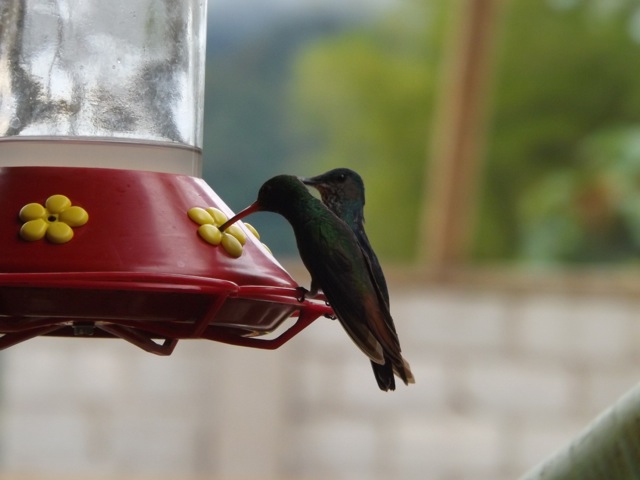
To start with, we found a place that served breakfast and ordered. While we were waiting on the balcony for the food to arrive, Hummingbirds flitted around, stopping to drink from a feeder.

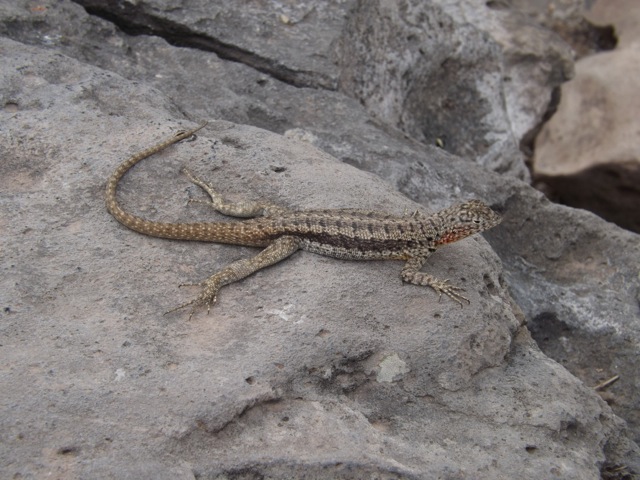
wpid-dscf2404-2013-10-6-18-53.jpg

They skit and bob around like insects with their wings blurred and are the only birds that can fly backwards. It was impossible to get a clean photo of them while they were flying as the camera just couldn’t focus on them fast enough. There are 14 different types of them here.

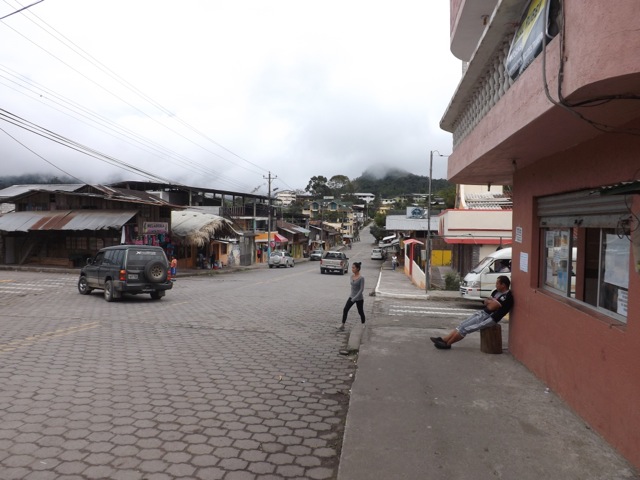
After breakfast, we went for a walk to check out what the town had to offer. 10 minutes later, we were done having seen the bar district and the restaurant district. The town consists of a main street, several short side streets and a plaza.

wpid-dscf2402-2013-10-6-18-53.jpg

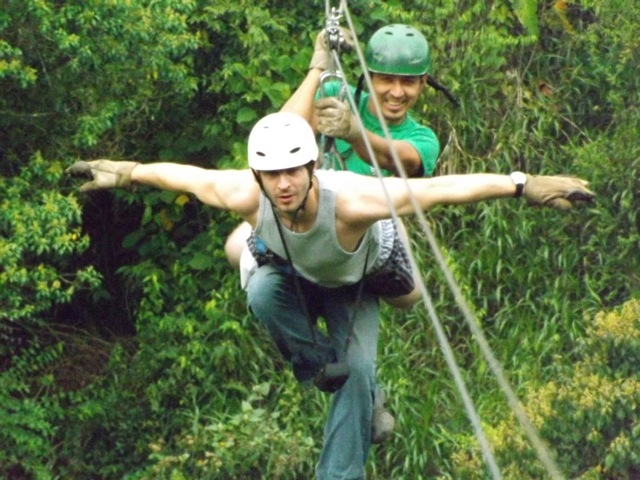
Next, we decided to go zip lining and walked the 3km up the hill to one of the companies that offered it. There were 10 different lines and on most of them we were able to ‘fly’ while accompanied by one of the two guides. Hanging from our backs we sped along with arms wide, aeroplane style. Overall, it was a most fun two hours.

wpid-dscf2438-2013-10-6-18-53.jpg

That evening, we headed out to the bar district for tapas and sangria. We discovered we were some of the only foreigners in town that night, so after eating, we headed back to hostel for our own little party, just the three of us.

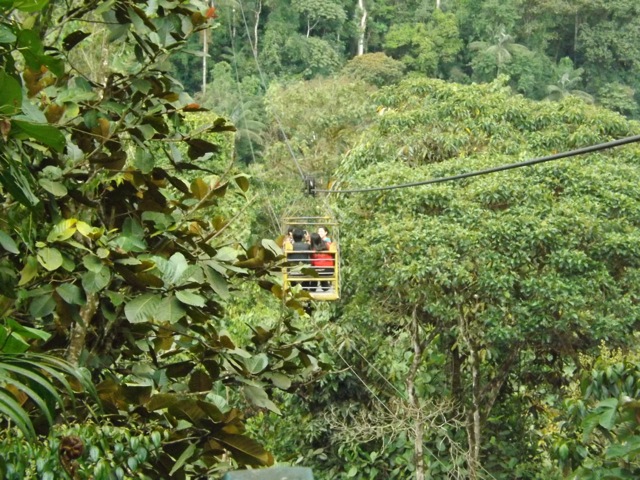
We woke late the next day and after breakfast, decided to visit the waterfalls. By the time we headed up there it was early afternoon. To get to the falls, we caught a taxi the 10km to a home-made cable car which took us across the valley. The engine was made from an old van with gears and all…

wpid-dscf2467-2013-10-6-18-53.jpg

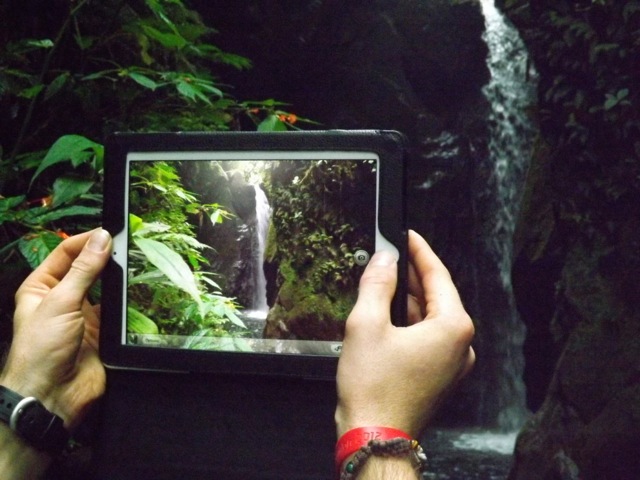
On the other side of the valley, we walked down a dirt trail in the rainforest for some time arriving at some of the waterfalls. Hot from the walk, two of us donned our swimmers and leapt in, and out again, as the water was as cold as expected. There are 7 sets of waterfalls in the area, but in the two hours before the cable car stopped for the day we got to four of them.

wpid-dscf2477-2013-10-6-18-53.jpg

That evening we hung out with a group of new arrivals at the hostel before heading to bed early. While we had only two days in the town, there are many other things we could have done, including canyoning (where you rappel down a waterfall), tubing down a river (like rafting but large tire tubes tied together) and an animal sanctuary, to name a few.

It’s a peaceful change from the city and at the price to visit and stay, it is well worth the effort if you are in Quito with a few days to spare. Just remember to take your Malaria tablets and try to avoid mosquitos, although it was the midges that feasted on us.

Next, it’s back to Quito to prepare for a four day walk around Cotopaxi, one of the world’s tallest active volcanos.

The Trail Wanderer

Galapagos Islands Cruise

The Galapagos Islands are an amazing set of volcanic islands just under 1000km from mainland Ecuador. There are several ways to see the islands each with benefits and drawbacks:

  • Pre-booked cruises are the most popular means to see the Islands and are commonly booked from the mainland. They are perfect for those with only a short vacation time but can also be the most expensive.
  • Booking a Last Minute cruise when you arrive on the islands is more suitable for long term travellers or those with plenty of available time. The cruises are up to half the price of a pre-booked cruise but there may be some wait before departure day.
  • Island hopping is possibly the cheapest means of seeing the islands and can be tailored to however long you have available. They take more work to organise and you can’t get to some of the more distant islands the cruises can take you to.

For my trip to the Galapagos, I simply flew to the Islands and booked a Last Minute 4-day cruise. The cruise started several days after I booked it, giving me time to explore parts of Isla Santa Cruz and Puerto Ayora.

Day 1
The day began early with myself and my Uraguayan friend leaving the hostel at 7a.m., having a quick breakfast in town before catching a taxi to the bus terminal. After a 90-minute mixed bus and ferry ride we arrived at the airport where we met our tour guide and some of the other passengers. We were taken to the boat, the Estrella del Mar – Star of the Sea. The boat’s passenger capacity was 16 and my friend and I were the oldest of the group.
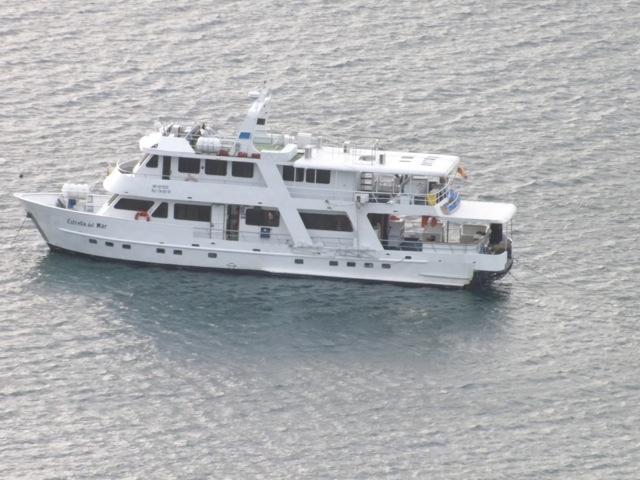
wpid-dscf2273-2013-09-27-20-42.jpg

Onboard the Estrella del Mar we were given a delicious lunch and as we sailed to our first destination, Isla Bartolomé, had a chance to get to know the other passengers. As we travelled the choppy seas and the rocking of the small boat caused me to feel a little sick, so I took some sea sickness pills I had left over from my Antarctic cruise.

We arrived into the calm waters of Bartolome Island in the early afternoon and donned our wetsuits. We were dropped off on the shore and snorkelled for an hour around the pinnacle – a large piece of weathered rock sticking up at the edge of the beach.
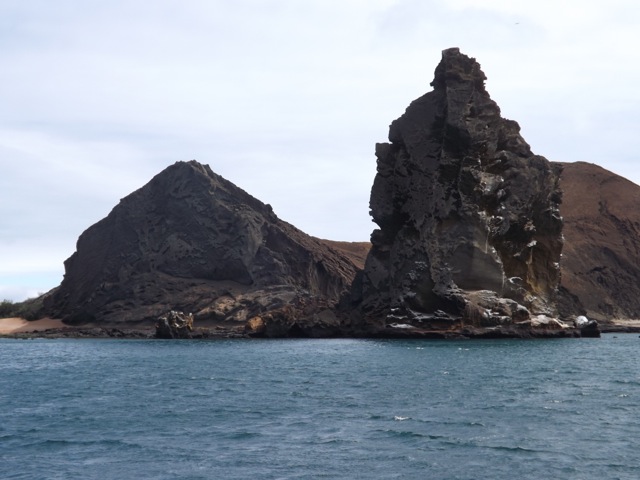
wpid-dscf2240-2013-09-27-20-42.jpg

While there wasn’t any coral, there were plenty of fish. As we swam we located several Galapagos Penguins hanging out on the rocks and the occasional Galapagos sea lion doing the same.
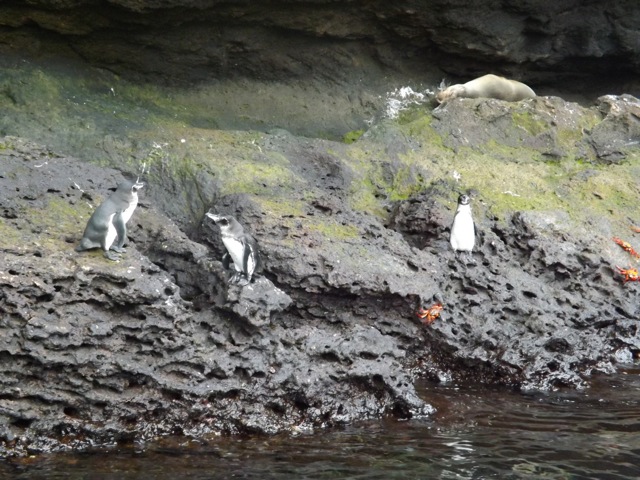
wpid-dscf2252-2013-09-27-20-42.jpg

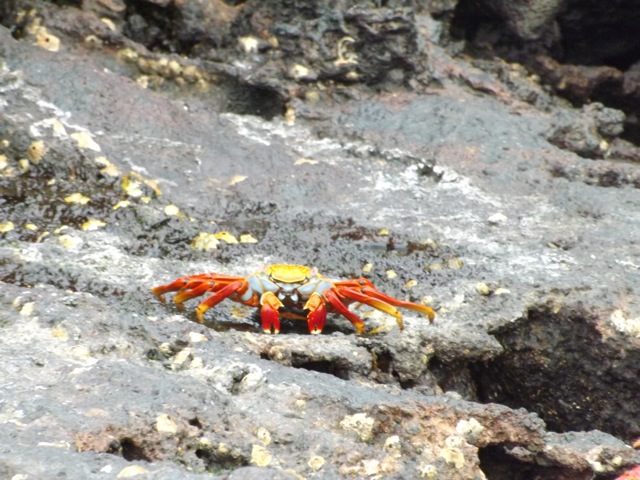
There were also plenty of small colourful crabs climbing the rocks so I swum in for a closer look. As I got nearer to the shore, I went underwater and came face to face with a White Tip Reef shark sleeping in a small cave under the rocks. While they aren’t usually aggressive, I was still cautious for the few minutes I watched it. I did eventually get a shot of the colourful rock crab.
wpid-dscf2249-2013-09-27-20-42.jpg

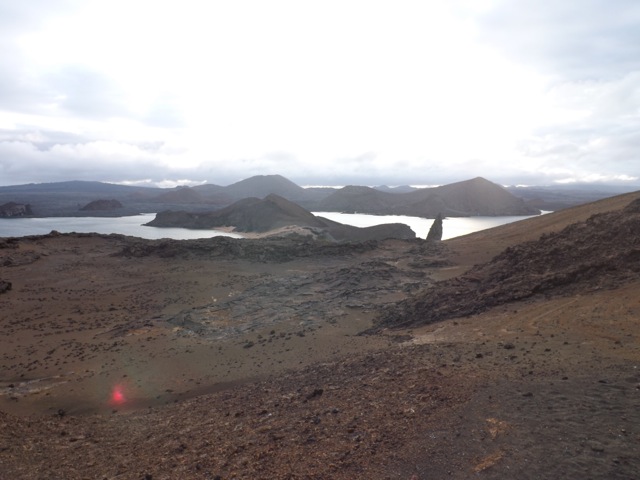
After returning to the beach, we were taxied to the boat where we changed before being delivered to another part of the island, to hike to the top of a volcanic hill. There were great views and our guide was very knowledgable about the formation of the islands.
wpid-dscf2266-2013-09-27-20-42.jpg

After the hike, we returned to the boat for dinner while it headed north. At about 11p.m. we cross the equator.

Day 2
Our cabin was on the lower level at the front of the boat. So, while we were in motioned overnight, the cabin was very hot even with the air conditioning on.

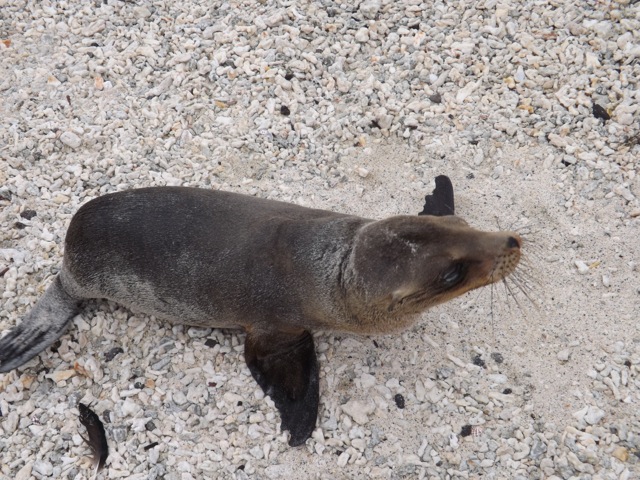
In the early hours of the morning we arrived at Isla Genovesa, an extinct volcano where a massive sinkhole had filled with water to form a natural harbour. After a large breakfast, we were taken in the zodiacs to the beach, where we went for a short walk around the beach and a small patch of mangroves. This allowed us to see several nesting species of birds, black Marine Iguanas and fur seals, including this cub.
wpid-dscf2281-2013-09-27-20-42.jpg

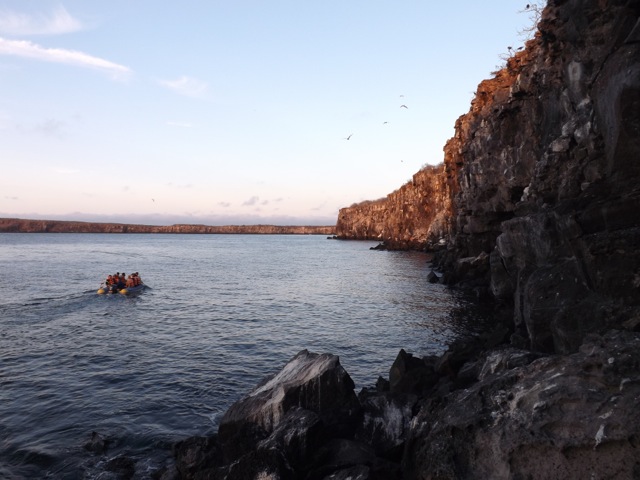
We then changed into our wetsuits on the beach before heading into the water. We snorkelled for about an hour in the fairly murky water. We saw plenty of fish similar to yesterday, but little else. We were taken back to the boat briefly before being taken across the bay for more snorkelling. This is the only spot on our cruise where Hammerhead sharks are commonly seen but after an hour in the water we had no luck. I had fun swimming a little way down the shelf that drops off to a depth deeper than the ships sonar can see, making it more than 350m deep.
wpid-dscf2303-2013-09-27-20-42.jpg

Back on the boat, we had lunch and relaxed for a couple of hours. Many of us napped after a long morning of swimming. When we were ready, a small group of us were taken to third spot in the bay for yet more snorkelling. It was calmer and warmer in the water as the sun had broken through the clouds during lunch. We swam along the wall of the bay, the rocks climbing up about 20 metres. We were joined by a couple of sea lions, but they only played for a few minutes before heading back to their rocks. We snorkelled on, but saw little more.

Lastly, after heading back to the boat for a shower, we climbed to the top of the rocky wall and walked through the hardy trees to see more wildlife. We spied the Blue Footed Boobie, a Petrel, a rare sighting of a Galapagos Owl – which actually hunts during the day – and a lovely pair of boobies, Nazca Boobies that is…
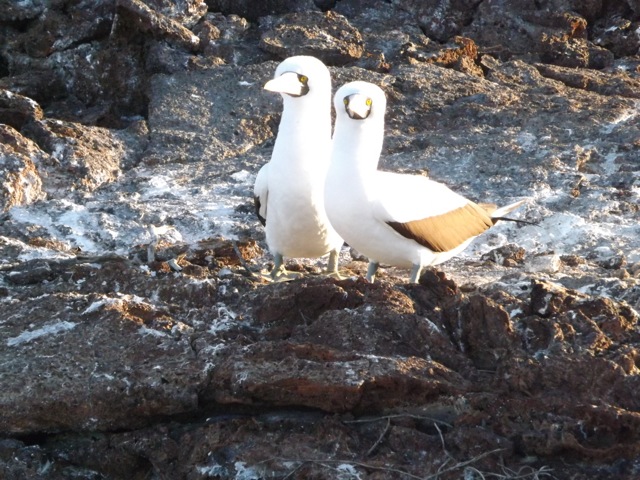
wpid-dscf2298-2013-09-27-20-42.jpg

After the hike, we were taken back to the boat for dinner and an early night following a very busy day. During the night we headed back across the equator and it was again very rocky aboard.
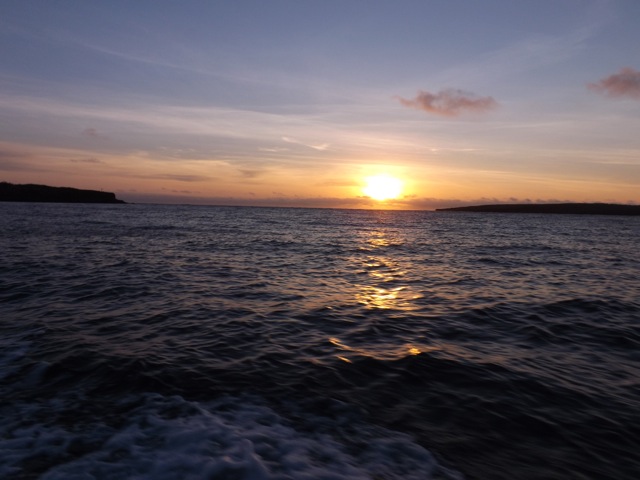
wpid-dscf2304-2013-09-27-20-42.jpg

Day 3
Overnight the rocking of the boat caused me to feel very sick, but only in my cabin, so I forwent my usual evening movie and just went to sleep. And this was after having taken seasickness pills. I awoke in the morning to calm seas and felt much better.

After a hearty breakfast, we set about getting ready for our first activity, a short hike across South Plaza Island to see some wildlife.

We started on the beach where many fur seals were sleeping.
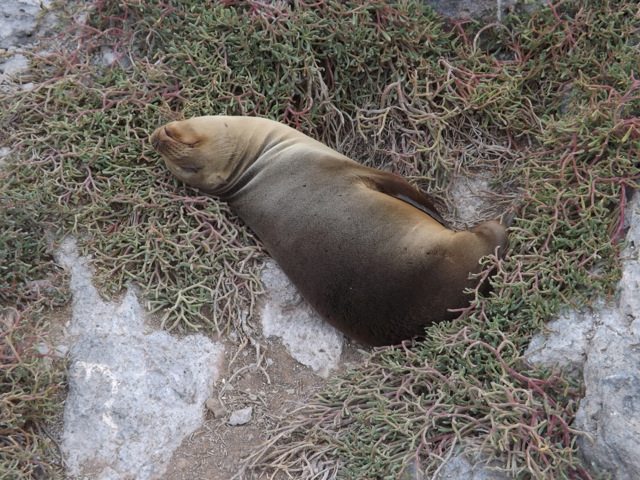
wpid-dscf2308-2013-09-27-20-42.jpg

We then walked along the rocky trail stopping for photo opportunities and discussions about the flora and fauna. Among the various species of birds we spied a land Iguana. This one is a metre long.
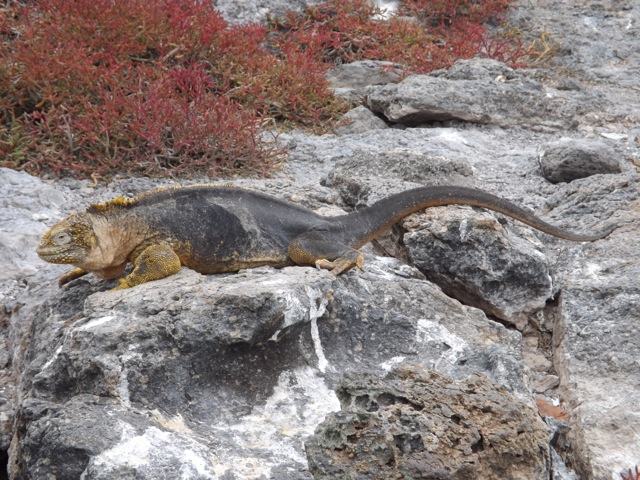
wpid-dscf2309-2013-09-27-20-42.jpg

Then it was back to the boat and off across the strait to Isla Santa Fé where we had lunch and prepared for another walk. We landed on the beach amidst plentiful napping sea lions…
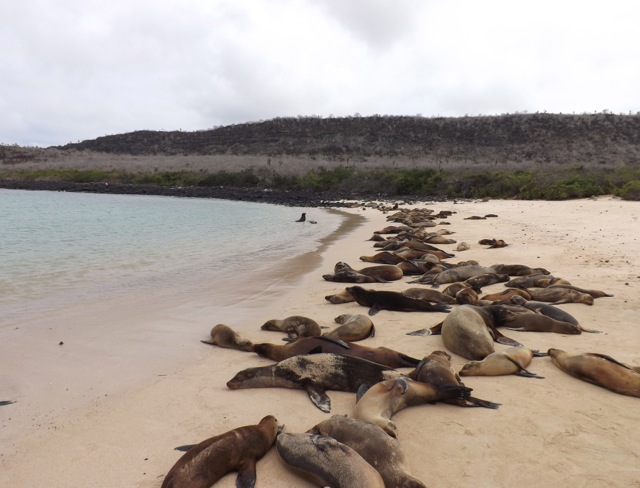
wpid-dscf2324-2013-09-27-20-42.jpg

We walked along a rocky path seeing two species of lizard, the metre long yellow land Iguana…
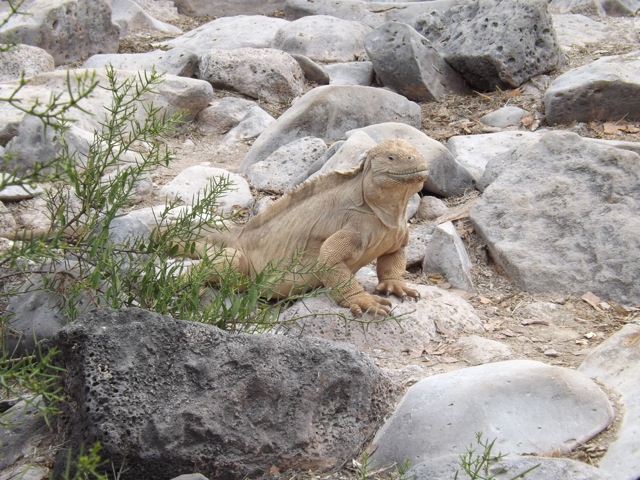
wpid-dscf2334-2013-09-27-20-42.jpg

…and the 10cm long gecko.

wpid-dscf2332-2013-09-27-20-42.jpg

Then, it was back to the boat to change into our wetsuits in preparation for our final snorkelling session of the cruise. Swimming in the bay at Isla Santa Fé makes me want to buy an underwater camera. Firstly, there were playful sea lions and I finally found my first coral in the waters. It wasn’t very colourful, but some coral is better than no coral. Then, as we snorkelled across the small bay, we were joined by sea turtles and stingrays sucking at the sand on the bottom. All in all, an excellent snorkelling session for our final day.
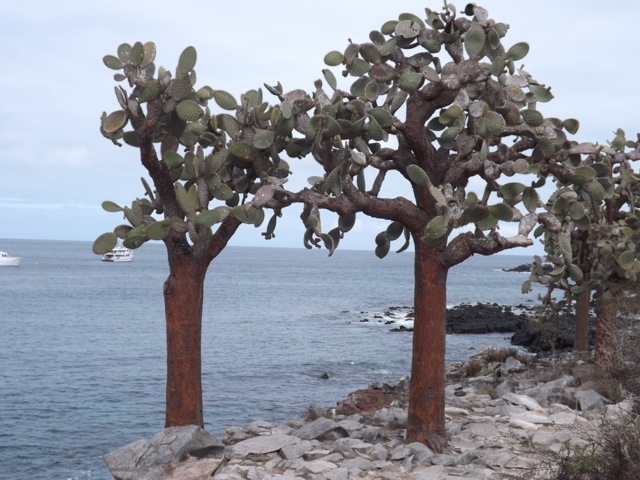
wpid-dscf2336-2013-09-27-20-42.jpg

Back on the boat, we set sail for Puerto Ayora harbour where we dropped anchor for the evening.

Day 4
The final day on the cruise was a little disappointing. When booking the cruise, we enquired if they would be going to either the Giant Tortoise colony or to Charles Darwin Research Station, where they look after the young animals. We were told the cruise would finish at the Research station, so prior to the cruise, my Uraguayan friend and I headed up to see the Giant Tortoises. As it turned out, the group was taken to see the Giant Tortoises. But instead of seeing them again, we called an end to our trip and headed back to the hostel.

Summary
Overall, the cruise around the Galapagos Islands was great. While the islands don’t feel as tropical as other Pacific Islands, the diverse species of animals, especially the ones that are native to these islands were amazing. A most enjoyable cruise.

After a couple more days in the Galapagos Islands, I fly back to Quito.

The Trail Wanderer
Galapagos Islands, Equador – Adventures

The Galapagos Islands is an archipelago of volcanic islands about 1,000 kilometres off the coast of Ecuador. While they’re technically Pacific Islands, they don’t have the same tropical islands feel like that of Tonga or Fiji. There are no palm trees here, for example.

Most people travelling to the Galapagos come for a cruise to see the diverse animal species. Most cruises are organised from the mainland before arriving and can be expensive. So, I decided to book a flight to the islands and to look for a ‘last minute’ deal when I got there, like I had for Antarctica 7 months ago. If you have time to spare, this is the cheaper way to go.

After an hour in a taxi from the hostel to the airport, a 30 minute stop off in the port city of Guayaquil and a 90 minute flight, I finally arrived on the islands. The airport is situated on a desert island, not the sandy romantic type, but a more rough dry vegetation type. What they don’t advertise is the US$100 entry fee into the National Marine Park – which covers all of the islands. Luckily, I had just enough on me, otherwise they would have taken my passport and I would have had to pay and collect it somewhere in town.

wpid-dscf2162-2013-09-22-22-081.jpg

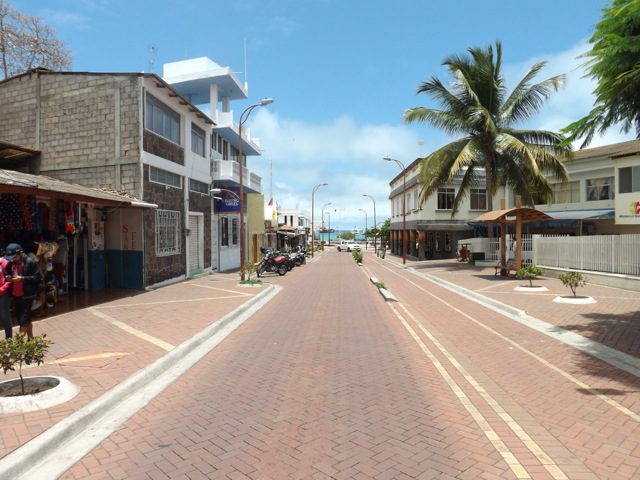
I caught a bus to the ferry pier, caught a ferry to Santa Cruz Island, and another bus to Puerto Ayora. After my early flight I napped for the hour and a half it took to cross the island. I woke as I arrived in the port town…

wpid-dscf2170-2013-09-22-22-08.jpg

At the hostel I met a Uraguayan guy, Ernesto, who I ended up hanging out with for the rest of my time on the islands. We were greeted by the owner Kevin, from the US. Kevin took us on a free tour of the town introducing many of the aspects that were useful to know. At the end of the tour, Ernesto and I booked a 4-day cruise at a fairly good price. It was a couple of days away, so we explored some parts of the island.

Giant Tortoises
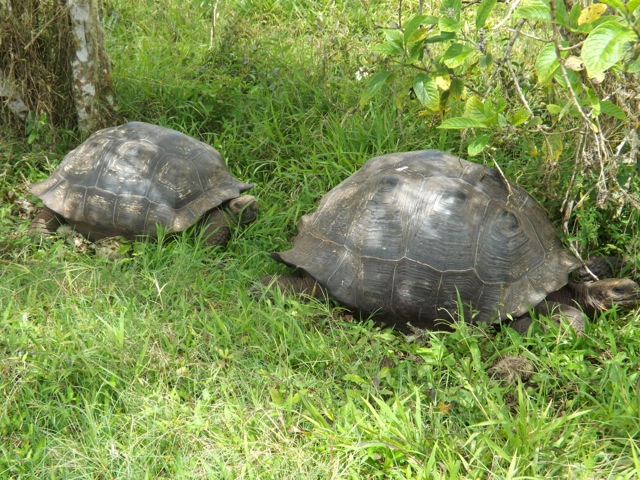
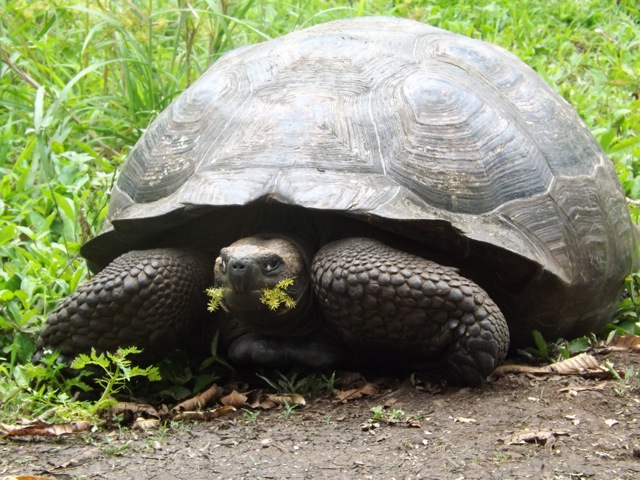
At the top of the island is a sanctuary for the massive giant tortoises that can only be found on these islands. They wallow in mud, chew grass and take very leisurely strolls down the side of the main cross island road. While fencing is used to separate properties on the islands, the tortoises are allowed to go anywhere they want, albeit slowly.

A taxi to anywhere in town is US$1 by law, but to get to the Giant Tortoise sanctuary it costs US$30 and the driver who takes you up there becomes your impromptu tour guide – thankfully Ernesto could translate. At the end of the tour, the driver takes you to several other places before dropping you back at your hostel.

wpid-dscf2201-2013-09-22-22-08.jpg

The reserve on Santa Cruz Island isn’t large but we met many of the tortoises who were just sitting around munching grass or drinking muddy water. The very large ones are the males (some 1.5m long) while females are smaller. There were several young aged 3-5 years, which were about the size of normal turtles. You’re not allow to approach to within 2 metres of the animals, but even at 5 metres some of them pull in their heads and hiss. They could no doubt give a nasty bite, so we kept our distance.

wpid-dscf2185-2013-09-22-22-08.jpg

Lava Tube
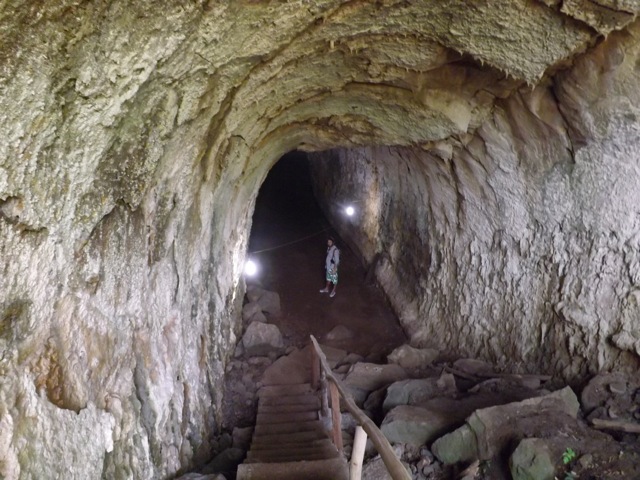
After visiting the tortoises, the driver took us to a large lava tunnel and dropped us at the start before going to wait for us at the exit. Stairs descend into the tube, which was slightly taller and wider than a train tunnel. The tube is nearly 500m long and is lit by sporadic lights.

wpid-dscf2207-2013-09-22-22-08.jpg

Near the end the tunnel roof descends, giving only a crawl space for about 2 metres. After crawling through on our bellies we met the taxi and were taken back to town.

Swimming Hole
While it’s not steaming hot in the islands, it can be a little muggy first thing in the morning. The day before the cruise was cloudy but warm, so we decided to find the swimming hole we’d been told about. Just prior to leaving, an English couple arrived at the hostel and we invited them to join us.

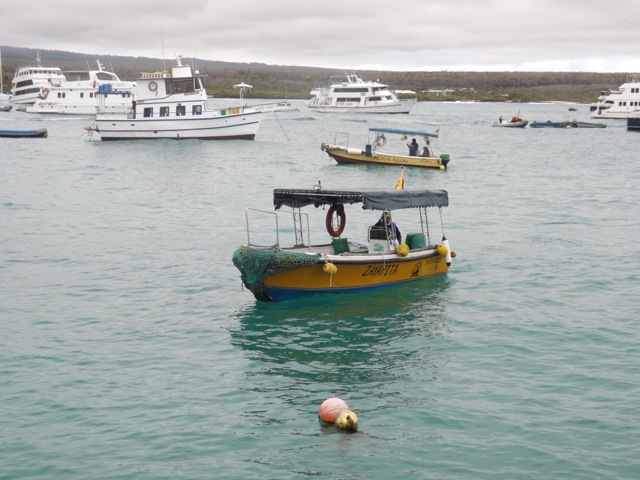
From the pier at the centre of town a water taxi takes us across the small harbour for 60 cents, zig-zagging through the yachts.
wpid-dscf2229-2013-09-22-22-08.jpg

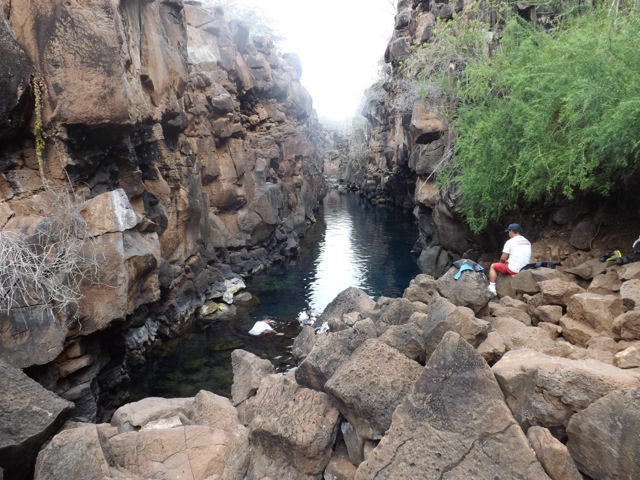
We then walked across volcanic rock for 20 minutes to a natural fissure in the rock about 40 metres deep. The bottom 10 metres is filled with water.

wpid-dscf2217-2013-09-22-22-08.jpg

A pair of bikini clad girls from Florida at the edge of the swimming hole told us the water was cold. Of course the best way to get into cold water is to dive. But, the water wasn’t as cold as expected and the four of us ended up swimming for an hour, occasionally climbing up the sides and jumping from the rocks.

Eating
Puerto Ayroa has plentiful restaurants and being in the Pacific, seafood is common. For the three nights we stayed we ate in three different places. Firstly, at the pier where the boats bring daily fresh catches. In the morning they sell their catches of fish and crayfish, then in the evening they have a cheap seafood fry up. Very tasty.

wpid-dscf2358-2013-09-22-22-08.jpg

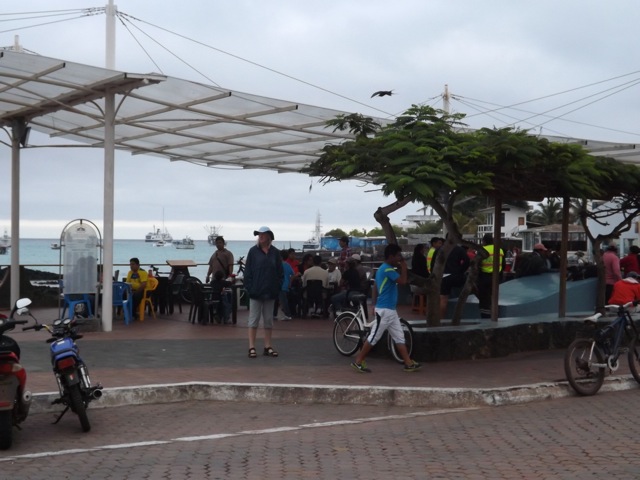
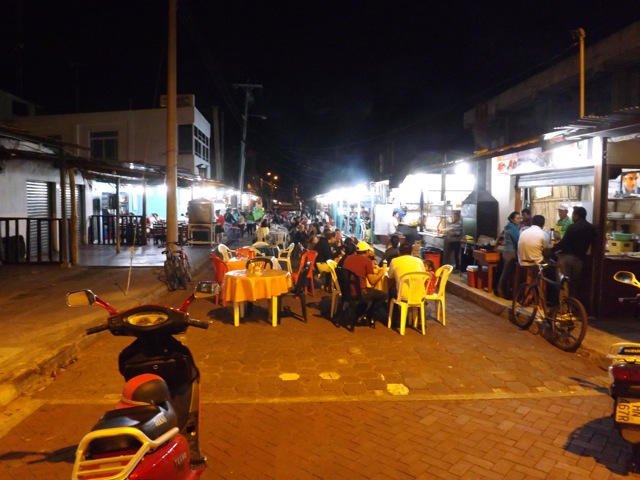
On night two, we discovered a street where all the small restaurants block the road by setting up plastic tables down the middle. At one particular restaurant, I ate a local fish dish – Caviche – where they slowly cook raw fish in a lime throughout the day. Yum!

wpid-dscf2361-2013-09-22-22-08.jpg

Day three, with our new English friends, we ate at a normal restaurant. Boring, but still tasty.

Tortuga Bay Beach
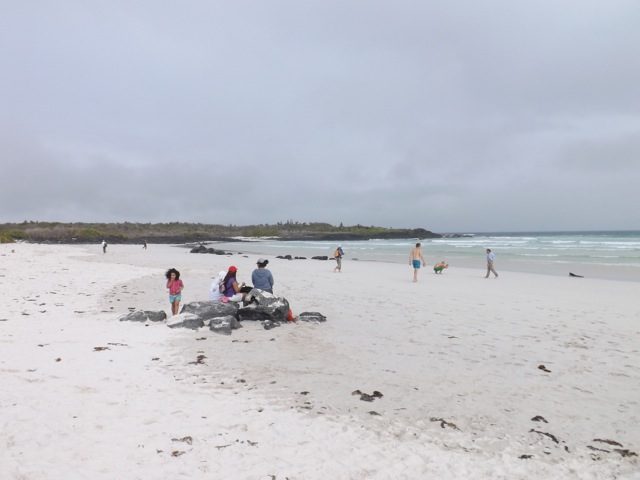
Lastly, on returning from the cruise, we decided to head to Tortuga Bay beach, a 30 minute walk along a 2.5km path. The day we went was warm but very cloudy and when we arrived at the beach it was beautiful but rather cold.

wpid-dscf2349-2013-09-22-22-08.jpg

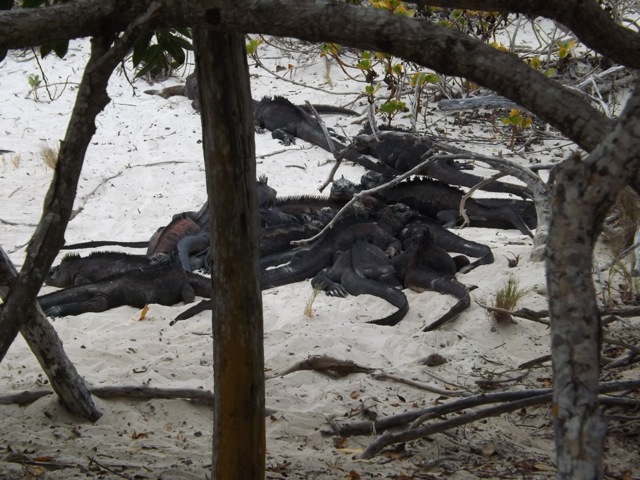
As we walked we spotted several black Marine Iguanas wandering down the beach. Middle right in the above picture. When necessary, he uses his long tail to swim through the surf. Then, at one end of the beach, we also found an Iguana pile…

wpid-dscf2356-2013-09-22-22-08.jpg

As evening approaches, the Iguanas head a special location and pile on top of each other to conserve heat during the night. The Marine Iguanas are the only species of in the world that do this, and at a half a metre long each, that’s a big pile.

Next, the 4-day cruise around the islands.

The Trail Wanderer

Mancora, Northern Peru – Impressions

Máncora is the second most popular tourist destination in Peru, with Cusco / Machu Picchu the first and Arequipa / Colca Canyon the third. While most of Peru’s tourist destinations have plentiful tours – hiking, boating, climbing, rafting and the like; Máncora is different. There are tours, but the main attraction is the sand and the amazing beaches.

My original plan was to skip Máncora on the way to Ecuador. But the bus from Lima to Quito is nearly 2 days long, so to break it up, I decided to wait for the bus to pass through by hanging out at the beach for a few days. Sounds horrible, I know, all that waiting.

Máncora has a local population of just over 9,000 people and has an average altitude of 11m above sea level. This is of interest because I’ve spent most of my time in Peru at 3,000m and above.

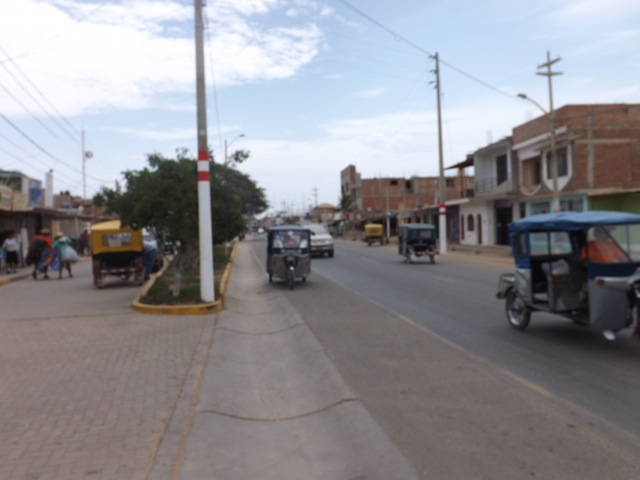
On arriving in the town, the first thing I noticed was the number of Tuk Tuks on the main street.

wpid-dscf2149-2013-09-22-22-08.jpg

As I stepped off the bus I was accosted by the usual taxi drivers but made sure I booked my ticket to Quito first. Then it was a mad dash on a slow Tuk Tuk to my hostel, which was right on the beach front.

wpid-dscf2147-2013-09-22-22-08.jpg

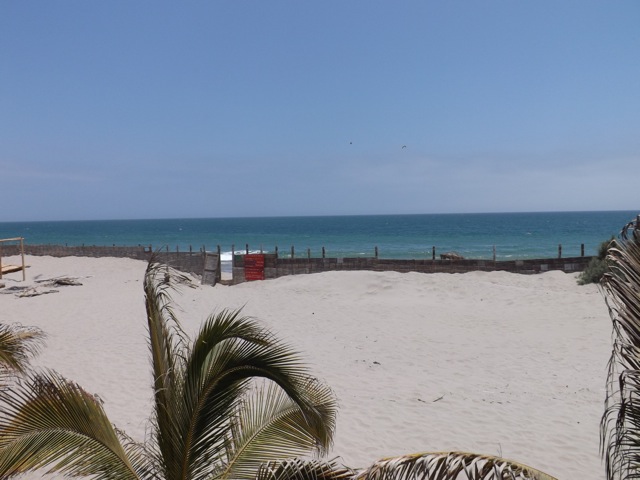
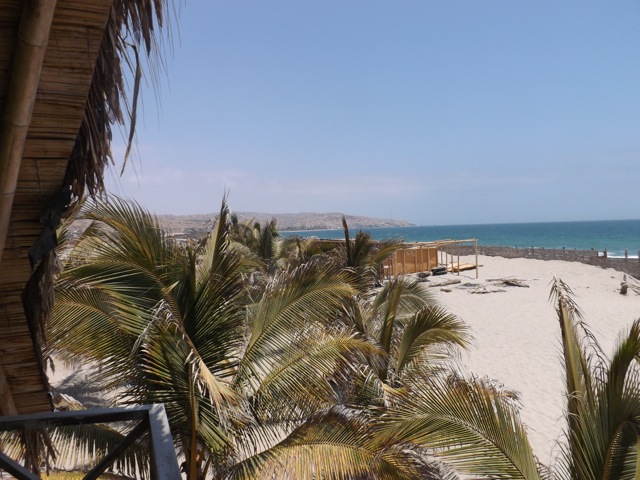
My cabaña was a two level dorm with 5 beds and a balcony which looked out of the Pacific Ocean, only 20 metres away. The golden sand is hot and the sun blaring, but what do you expect from the beach?

While I went into town a couple of times; once for dinner at one of Máncora’s many amazing restaurants, and once for a look around. But I didn’t find much there as it’s a beachside town and people don’t visit for its shopping. So, for most of the four days I was in town, I just lay around on the beach, wrote, or swapped movies. It seemed that everyone staying at the hostel had a hard drive. So, while we were sitting on the beach, our computers were copying our selections. Honestly, what else is there to do on the beach? Such a hard life!

wpid-dscf2148-2013-09-22-22-08.jpg

Then at the end of the 4 days, my bus arrived and I was off again to Quito.

The Trail Wanderer
Lima, Peru – Take 2

After four days walking the Santa Cruz trek in Cordillera Blanca, I returned to Huaraz and tried to book a bus ticket to Equador. I discovered that there’s only one bus to Quito and it leaves every Wednesday, which is great, as it was Wednesday. The problem is it leaves from Lima 8 hours away. With no possibility of catching it, I decided to head back to Peru’s capital for a couple of days.

Last time I was in Lima, I stayed in the suburb of Miraflores and found it very touristy. This time I decided to see the real Lima, so I booked a hostel in Centro – downtown. When I arrived, I marvelled at the streets, roundabouts, parks and tall buildings. It’s not a mass of skyscrapers concentrated in one central place like Buenos Aires or Rio de Janeiro, the buildings are more spread out.

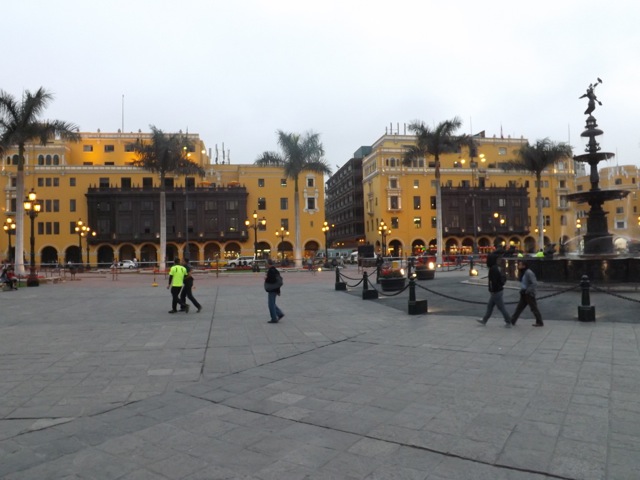
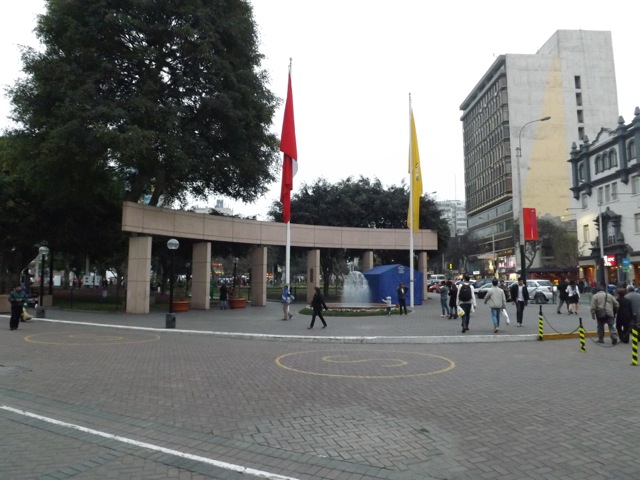
I dropped my bags off at the hostel and went out to have a look. It was after dark in the city, but at 8pm on a thursday there are still large numbers of people walking around. I headed along the road and across a park with – surprise surprise – a fountain! They are very common in Peru. (Pictures were taken the next day).

wpid-dscf2129-2013-09-14-00-16.jpg

Something else that’s very common in Peru are the Public Displays of Affection. There are always couples everywhere cuddling and canoodling. They can’t seem to keep their hands off each other. You do get used to it.

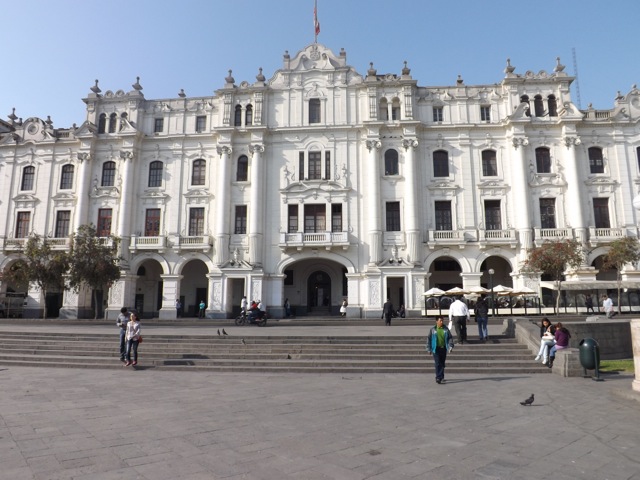
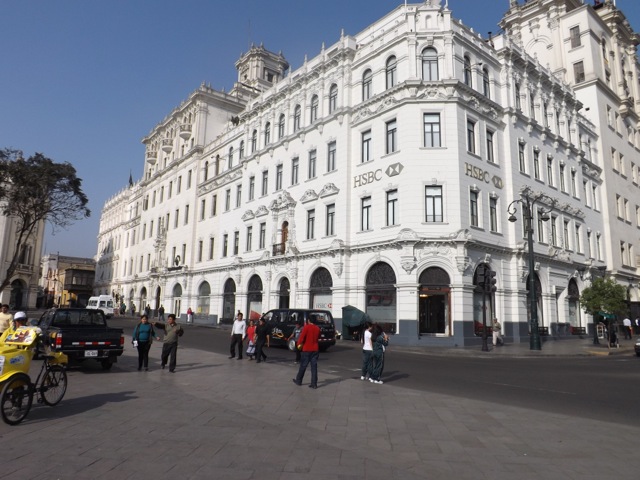
I kept walking and found a shopping mall with a food court. The peruvians love their ‘Chifa’ – Chinese food so I decided to get some. After dinner, I went for a long walk though the streets. Lima Centro is full of amazing architecture and building design. I walked several blocks to San Martin Plaza. The plaza is a beautiful square with fountain in the centre and is entirely surrounded by well maintained, architecturally beautiful buildings.

wpid-dscf2137-2013-09-14-00-16.jpg

Along one side of the plaza is an open air shopping mall. None of dirty markets of the other cities, this is a street with plentiful clothing and food stores. At the end of the street is another plaza, with another fountain more beautiful than the others, and is also entirely surrounding by well maintained, architecturally beautiful buildings.

wpid-dscf2141-2013-09-14-00-16.jpg

Lima Centro is definitely a place for lovers of awesome buildings, and is something about cities I do enjoy.

wpid-dscf2134-2013-09-14-00-16.jpg

But a couple of days in Lima was enough me and I began planning my way north, first to the beachside town of Mancora, and then on to Equidor.

The World Wanderer

Huaraz, Peru – Impressions

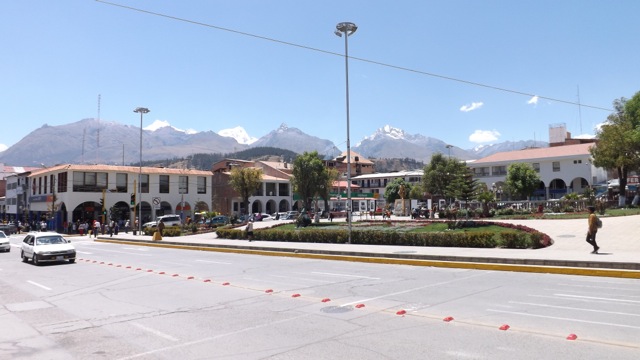
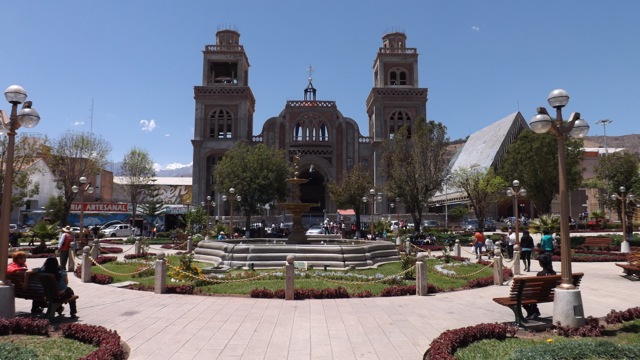
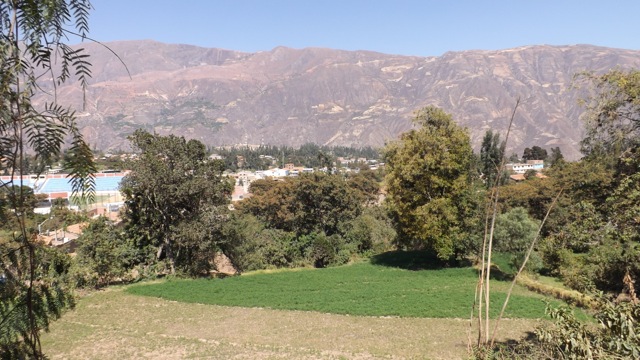
In the mountains of Central Peru is the small city of Huaraz, pronounced Wa-ras (with a rolled r). An 8 hour bus ride north of Lima, and at just over 3000m above sea level, Huaraz is the 22nd largest city in Peru with 120,000 people. The main attraction of Huaraz is not the city itself – which is very much like many of the other peruvian cities, markets, plazas, fountains and even a cathedral. The main attraction is, of course, the mountains of the Andes.

wpid-dscf2025-2013-09-13-23-55.jpg

Running along one side of the city is a mountain range called The Cordillera Negra, literally The Black Range. It’s described as having several ‘hills’, the tallest of which is over 5,100 metres!

wpid-dscf2030-2013-09-13-23-55.jpg

While they’re technically mountains, and very large ones at that, they look like hills compared to what lies on the other side of Huarez…

Cordillera Blanca – literally The White Mountains or The White Range. With more than 33 peaks higher than 5,500 metres, and the tallest being over 6750m, the range with its plentiful snow clad specimens produces 80% of Peru’s electricity. Here is just a small selection of the 180km long range…

wpid-dscf2026-2013-09-13-23-55.jpg

Cordillera Blanca is a hikers paradise and while Huarez is not as set up for hiking as many other cities in the Andes, the fewer number of tour operators gives the mountains more of a wild feeling. The most popular hike in the ranges is a 4 day, 3 night hike called the Santa Cruz trek. While Peruvian law apparently says you must hire a guide to do the trek, many hikers forego this for a sense of freedom.

Next, I’m off to do just that, the Santa Cruz trek without a guide…

The Trail Wanderer

Lima, Peru – Impressions

Lima is the capital of Peru and with 9 million people, is by far the largest city in the country. It’s a popular starting point for people with only a limited time to travel and who only really seeing Peru, Bolivia and the top of Argentina. Beyond this, I’ve been told not to stay too long as there isn’t much to do in the city. So, with low expectations I decided not to spend too much time wandering the city and more time writing.

The outskirts of Lima reminded me of Arequipa or La Paz, with half built brick buildings and dirt roads. This is the way they build houses here, instead of taking out mortgages and building a house. They build part of a house with the money they have and live in it until they have enough money to build more.

When I arrived at the bus terminal, I caught a taxi to Miraflores, a trendy suburb not far from the beach. Miraflores reminded me of the centre of a many cities in the West, with all the fast food restaurants, the clothes stores, restaurants and malls. I guess in this way it feels very touristy and not like a South American city at all.

wpid-dscf2019-2013-09-5-22-12.jpg

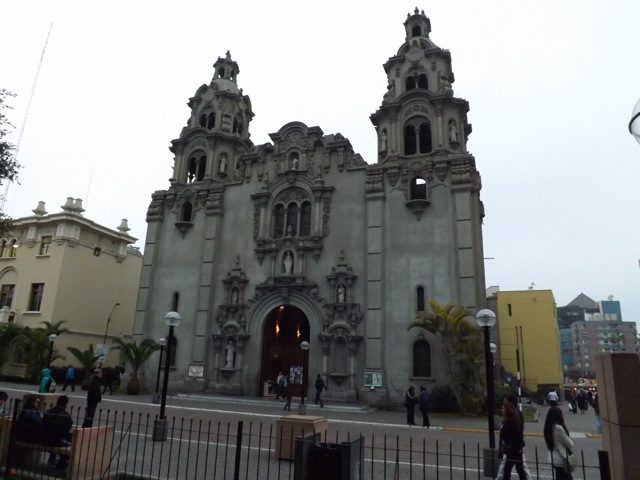
And for the time I was here, the weather was fairly overcast and not very exciting. It is winter, I guess. So, it didn’t tempt me to leave the hostel except to get food, a replacement camera and to sit in Starbucks and write. With the beach not even ten blocks away, I didn’t bother taking the time to go and have a look. But there was a cathedral in the central square…

wpid-dscf2021-2013-09-5-22-12.jpg

Overall, I would say that Lima seems like a nice city, but if you’re looking for something not so touristy, then Miraflores is not for you. I’ve heard there places in Centro worth seeing, with museums and likely more fountains, since Peru does them so well.

wpid-dscf2022-2013-09-5-22-12.jpg

Next, I’m off to Huaraz, back into the mountains, to prepare for a hike in Cordillera Blanca.

The Lone Trail Wanderer
Ica and the Huacachina Oasis, Central Peru

Ica is a small city in central Peru about 300 km south of the capital, Lima. Ica lies at the top of the Atacama desert that stretches south for over 1000 km into northern Chile. It’s the driest hot desert in the world (Antarctica is the driest cold desert), with parts receiving only 1 mm rainfall a year. The fact that Ica is in the desert is very obvious because it’s surrounded by massive sand dunes.

wpid-dscn3521-2013-09-3-14-54.jpg

As a size reference, that small black shape near the top is a dune buggy designed to carry 12 people…

wpid-dscn3522-2013-09-3-14-54.jpg

While Ica doesn’t have that much to offer the tourist, just west of the city is a place called the Huacachina Oasis (pronounced waka-chee-na). The oasis is literally a large pond surrounded by the massive sand dunes.

wpid-dscn3524-2013-09-3-14-54.jpg

A very small township has been built in a horseshoe in the gaps between the dunes and the pond; with hotels, hostels, bars, clubs and restaurants – the most popular being The Huacafuckingchina.

After arriving, checking into my hostel and having breakfast, I went for a walk around the pond. Five minutes later, I was back after having seen most of the town. So, I decided to take a ride across the pond on a pedal boat with a friend from the hostel.

wpid-dscn3531-2013-09-3-14-54.jpg

That killed another half an hour and while getting out of the boat at the end, I managed to drop my camera into the water. BUGGER! Guess I’ll be buying a new camera when I get to Lima… So, that ended my ability to take photos. Pictures from here on aren’t mine.

In the afternoon, I booked in for what most people come here to do… Sand boarding. Late in the afternoon, ten of us piled into dune buggy with the driver and drove madly across the dunes (madly is the only way possible on these sand dunes!) skidding and bouncing around before stopping at the top of a large dune.

For those that had previously snow boarded are able to sand board standing up, while the rest of us went down on our bellies.

wpid-huacachina21543-2013-09-3-14-54.jpg

The buggy then picked us up at the bottom and shot us off to another, taller and steeper dune; each one growing more and more intense. It was exhilarating to say the least, but two hours goes past far too quickly…

While the sand boarding is fairly inexpensive, hiring quad-bikes and touring the dunes is far more expensive. Beyond that, there’s not much to do and staying longer than a day leaves you to just sunbathe, if that’s your thing. Early the next morning, I caught the bus to Lima.

After a few days in Lima, I plan to travel to Huarez to do some hiking in the Cordillera Blanca – the White Mountains.

The Lone Trail Wanderer
Arequipa, Southern Peru – Impressions

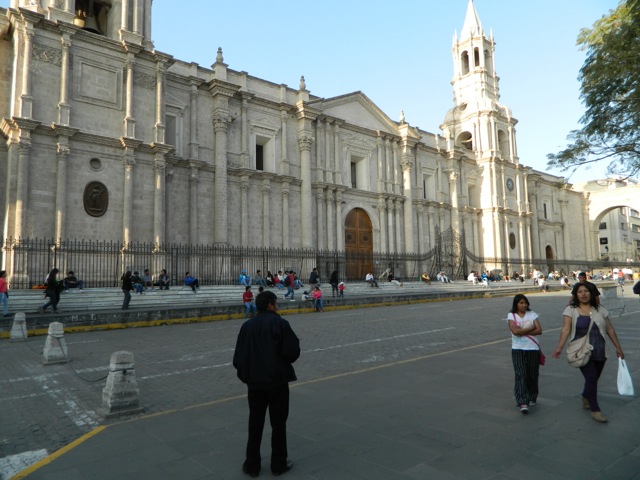
Arequipa is the second largest city in Peru with 900,000 people next to Lima (with 9 million) and is the capital of the south. The centre of Arequipa gives a similar impression to that of the ancient Incan capital Cusco, a ten hour bus ride away. A beautifully set up cobbled main plaza with cathedral on one side…
wpid-dscn3418-2013-08-25-14-36.jpg

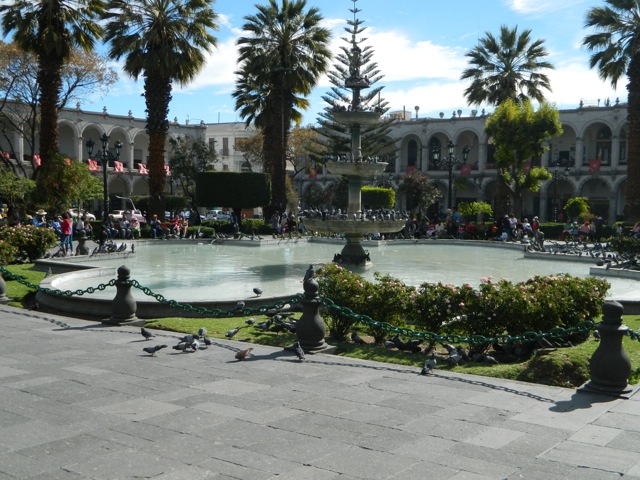
…and many tour agencies and restaurants trying to hawk for your business on the others.

wpid-dscn3513-2013-08-25-14-36.jpg

Peruvians seem fascinated by fountains and while there aren’t as many here as their was in Cusco, there are plenty. Along one side of the plaza is an open air mall with plentiful shops restaurants and the like.

wpid-dscn3514-2013-08-25-14-36.jpg

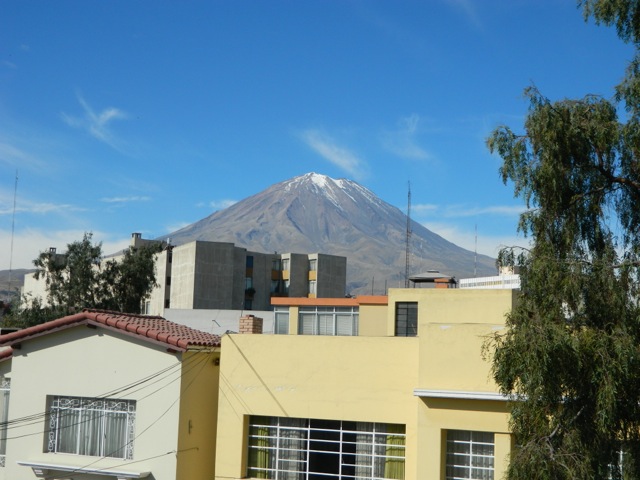
On the horizon outside the city is a tall range of mountains, and a solitary volcanic cone called Misti Mountain that’s said to spend most of the year surrounded in mist. Although I’ve been here a week and have yet to see it shrouded. It’s a two day climb up and down the 6000m cone.

wpid-dscn3518-2013-08-25-14-36.jpg

Between the city and the mountains is river where several groups host rafting, and while it’s only a short experience – 90 minutes max – the level 3 and 4 rapids are fun, although not as intense as my previous rafting experience in the Waikato, New Zealand.

wpid-img_0052-2013-08-25-14-36.jpg

There are plentiful museums and monasteries in the city, one hosted an exhibition known as the Ice Girl. In the time of the Incans she was sacrificed to the angry mountain gods. At 11 years old she had to walk 170 miles from Cusco before climbing Misti Mountain to die and ascend to live among the gods. She went willingly and it was seen as an honour to be sacrificed. Many similar sacrifices were made along the mountains from northern Argentina to Peru. Her preserved body is on display in a special glass freezer case.

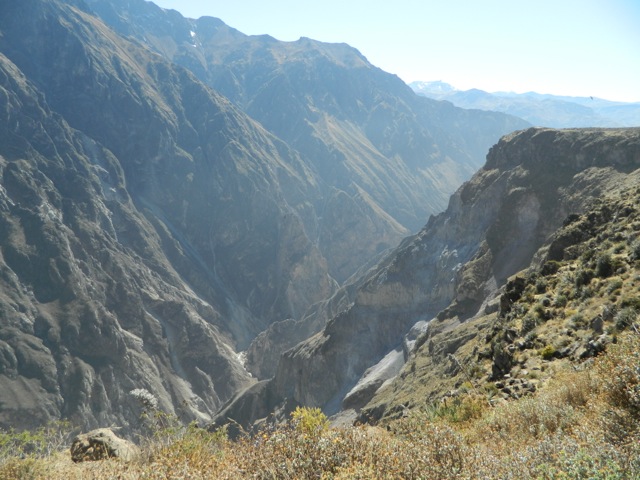
The most popular reason people come to Arequipa is for Peru’s third most popular tourist attraction, Colca Canyon. Colca Canyon is said to be the second deepest canyon in the world, twice as deep as the Grand Canyon in the US. I managed a 3 day solo hike through the canyon and it was amazing. A post of its own is coming shortly.

wpid-dscn3421-2013-08-25-14-36.jpg

Next I’m off to the city of Ica, south of Lima to see the Red Beaches of Paracas and do some sand boarding.

The Lone Trail Wanderer
Aguas Caliente and Machupicchu

After nearly six months travelling around South America, I’ve finally arrived at the most popular tourist destination on the continent, Machu Picchu. But there’s more here than just the ancient ruined city at the top of a mountain.
Located deep in the mountains, a 3.5 hour train ride from Cusco or 4 days via the Inca Trail, is a town called Aguas Calientes, meaning hot waters, or hot pools in Spanish. With no road leading into the town, there’s no other way to get than walk or catch the train.

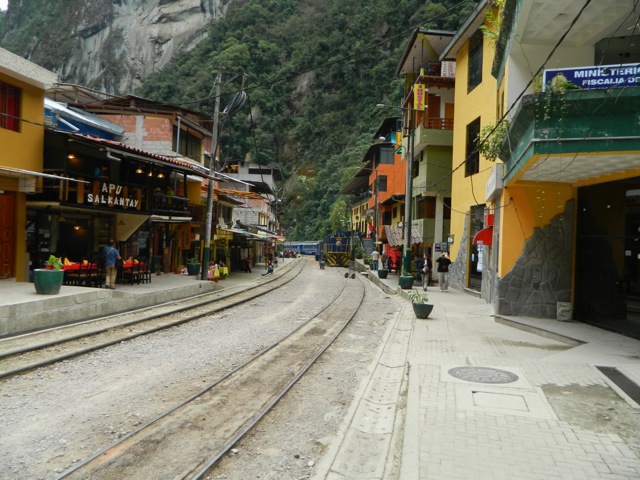
wpid-dscn3288-2013-08-14-15-41.jpg

Aguas Calientes is a beautiful little town set on the side of the Rio Urubamba and nestled among the mountains. It’s purely set up for tourists visiting Machu Picchu, meaning if the ruins didn’t exist, neither would the town. There are a vast number of restaurants, hotels, hostels and massage places all for the pleasure of the tourist and the tourist dollar. With so many restaurants, the owners fight to get just a few customers in each night.

wpid-dscn3299-2013-08-14-15-41.jpg

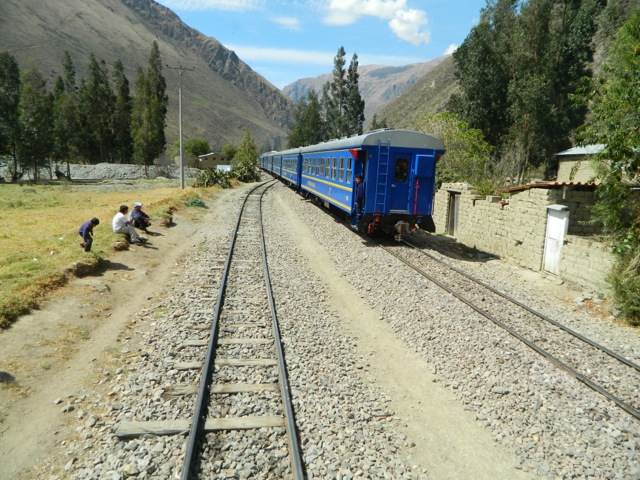
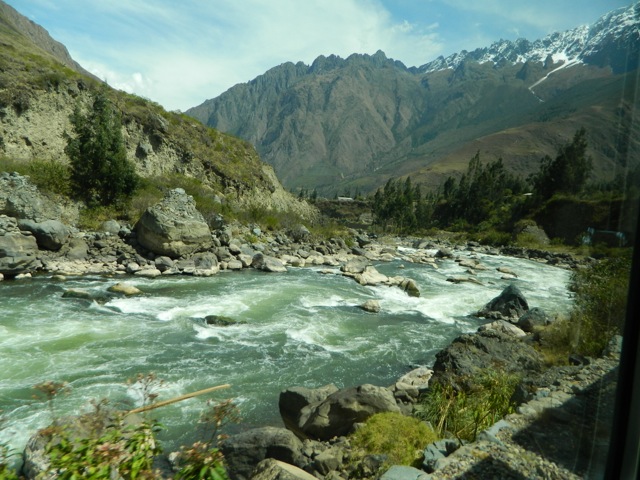
I arrived by train at midday and set about investigating the town. With a plan to hike up the 2000 steps to Machu Picchu early the following morning, I headed out towards a nearby set of waterfalls only 45 minutes walk from the town. The trail leads you along the side of the train tracks that wind through the valley.
wpid-dscn3307-2013-08-14-15-41.jpg

When I got to the house with an arrow pointing at it and the word cataratas (waterfalls in spanish) on a sign I was sceptical as I couldn’t hear the waterfalls. So, I decided to just keep walking along the trail instead.
wpid-dscn3292-2013-08-14-15-41.jpg

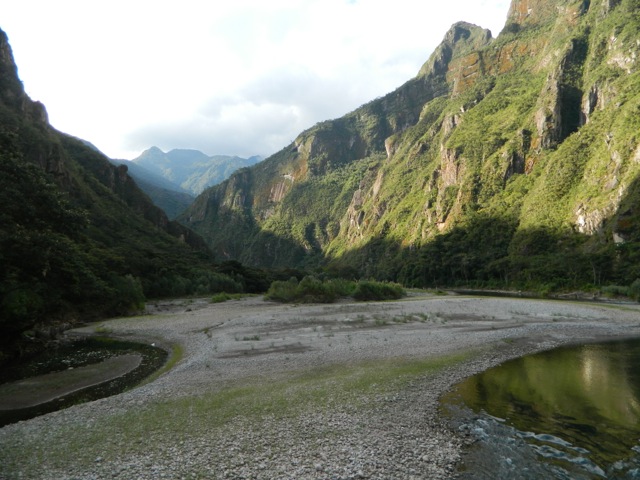
It was a pleasant walk with no hills, so I just kept going and going until I came to a place called Santa Teresa and decided to start back. The scenery was absolutely beautiful…

wpid-dscn3314-2013-08-14-15-41.jpg

What had begun as a 45 minute walk turned into a 5-hour hike. On the way back, I was able to see a single building from the ruins at the top of the mountain.

wpid-dscn3324-2013-08-14-15-41.jpg

While a casual 90-minute walk wouldn’t have been a problem, I wasn’t really prepared for the length I ended up walking. I wasn’t wearing the correct socks and managed to gain a couple of blisters, something that rarely happens to my feet.

The next morning I was up at 4.30 and getting ready for the climb to the ruins. The hostel is prepared for this as breakfast begins at 4am.

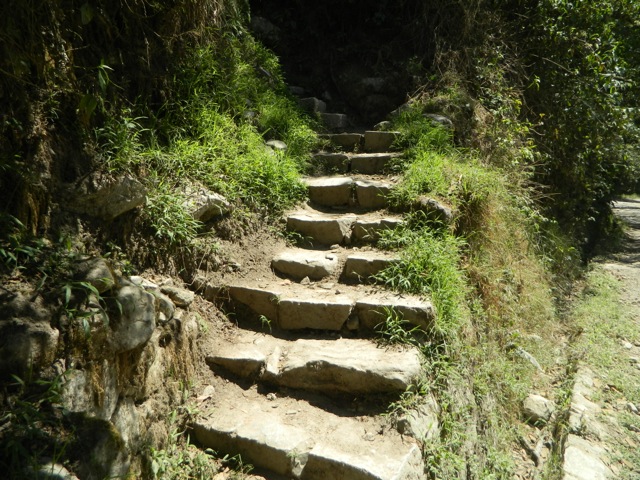
The 2000 steps climbing up to the ruins were built in typical Inca style, although with the road winding up the side of the mountain for the buses, I’m sure the stairs weren’t built by the Incans.

wpid-dscn3409-2013-08-14-15-41.jpg

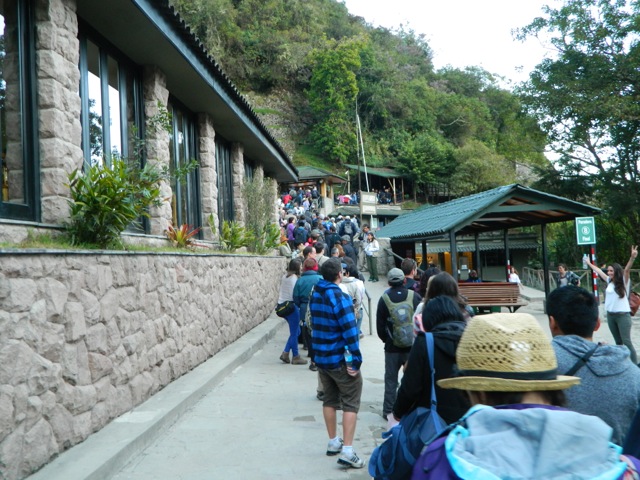
The stairs were strenuous on their own although I’ve climbed more difficult mountains, but add the altitude and it becomes challenging. (Add blisters and it’s even worse!) I made it just after 7 when the mass of tourists from the buses were trying to get into the city. This is what I’d expected and why I call Machu Picchu the Disneyland of South America.

wpid-dscn3326-2013-08-14-15-41.jpg

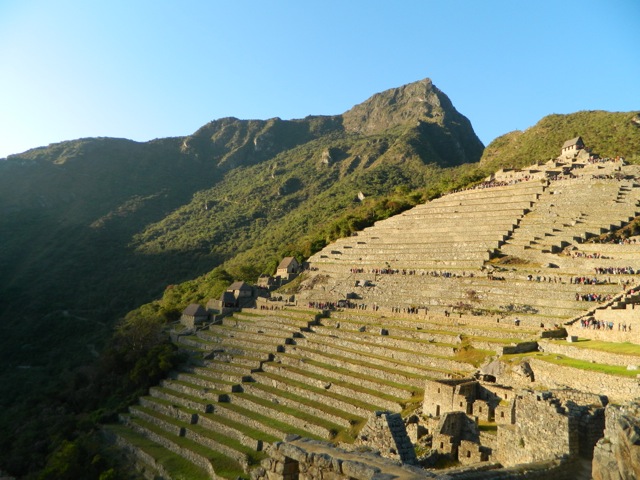
I finally got in just before the sun rose over the mountains to shine on the city, lighting it up the stone work in the pinkie yellow of first light.

wpid-dscn3340-2013-08-14-15-41.jpg

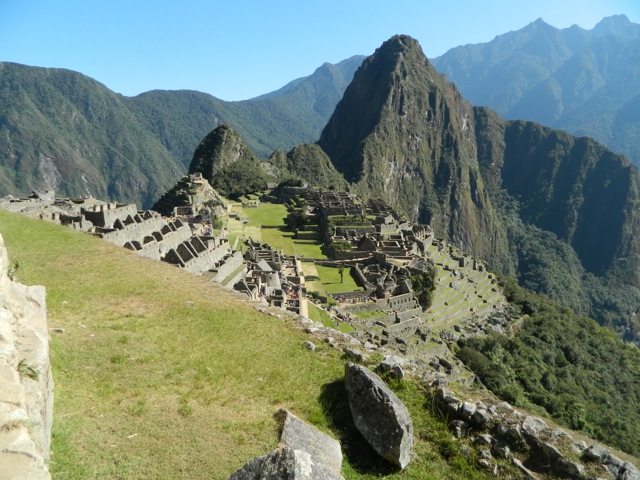
There’s a lot that can be said about the city, but much of it is speculation and not on my part. There are few signs but beyond telling you where the exit is, they don’t tell you anything about the ruins. No-one’s really sure what the full story behind the city is and I was only able to garner a small amount of information by listening in to the many guides around the different parts of the city.

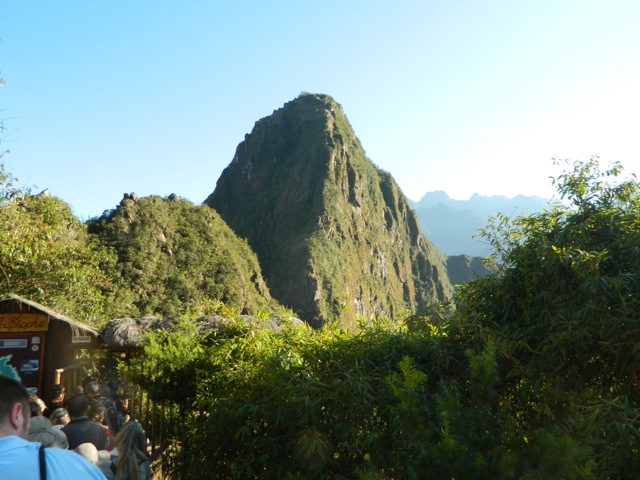
These two mountains are Huayna Picchu (the shorter) and Wayna Picchu. Wayna Picchu has a temple built atop it with a precarious path leading to it. You need to pre-pay to get to these mountains and I hadn’t.

wpid-dscn3353-2013-08-14-15-41.jpg

The ruins were discovered in 1911 when a local advised a US American that there was Incan architecture atop the mountain. He scaled the mountain and discovered the overgrown city.

wpid-dscn3358-2013-08-14-15-41.jpg

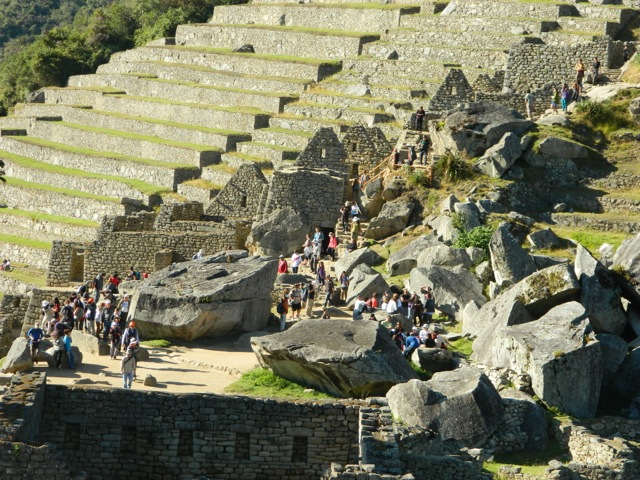
Machu Picchu was thought to have been built as the winter home of an Incan emperor and is said to have been abandoned before the spanish conquests in 1534. This is one of the many speculations of its existence. The house at the top of the tiers is the highest point in the city and the peak of Machu Picchu Mountain is behind it.

wpid-dscn3363-2013-08-14-15-41.jpg

The city was thought to be the lost city of the Incas but many think the lost city is another, larger city, several days away in the jungle. Other stories say that this was an Incan Concubine city for the emperor, with 100-200 concubines living here.

wpid-dscn3370-2013-08-14-15-41.jpg

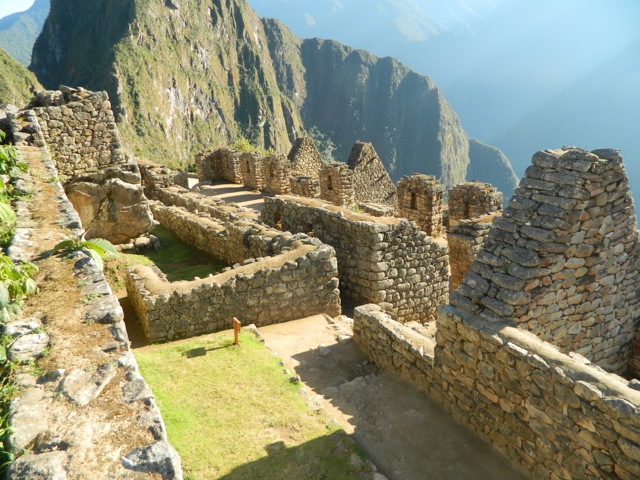
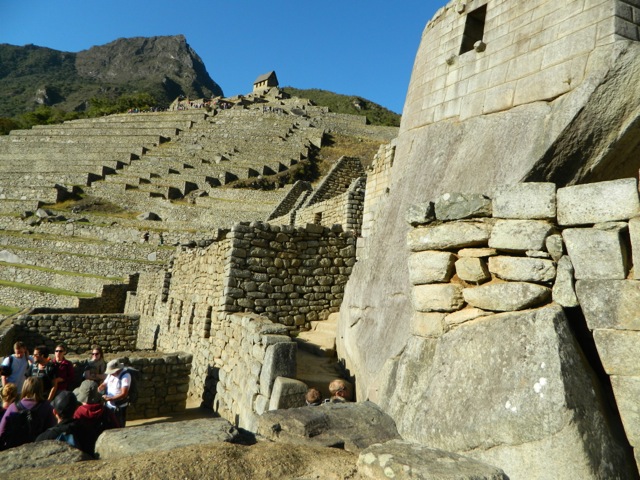
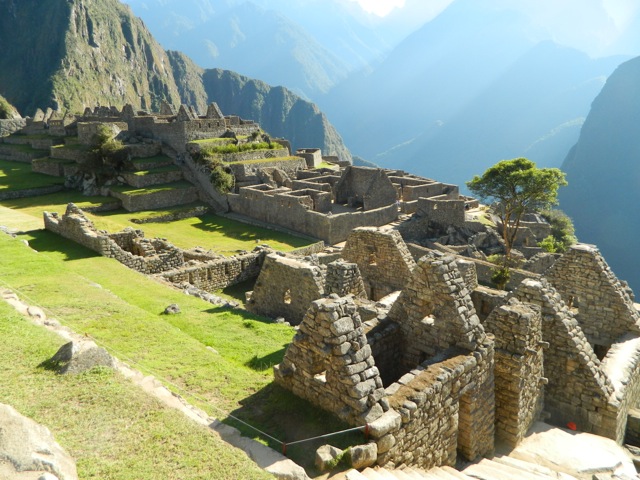
Nestled as it is on the top of a mountain, the city isn’t flat, with many terraces and stairs. Corridors were thin or closed off to protect areas of the ruins, meaning it could be slow going with all the tourists trying to get around.

wpid-dscn3390-2013-08-14-15-41.jpg

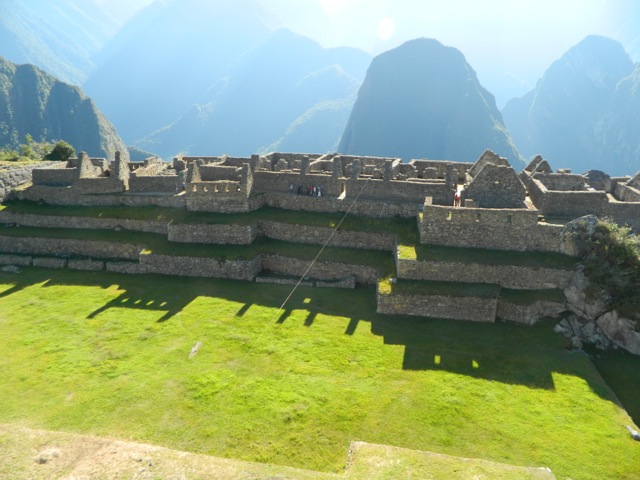
It takes about two hours to walk around the ruins, but even in the middle of winter it’s very warm during the day. There are large open grassy areas, possibly where crops were sown.

wpid-dscn3394-2013-08-14-15-41.jpg

At the end of my walk around the ruins, I decided to climb Machu Picchu Mountain. The stairs up the side were even steeper than those leading up to the city.

wpid-dscn3405-2013-08-14-15-41.jpg

I got to a spectacular viewing area about half way up (about the same height as Wayna Picchu). With the altitude, the heat and my general state of exhaustion I decided to forego the rest of the climb and headed back down again.

wpid-dscn3408-2013-08-14-15-41.jpg

I found my way to the exit and began descending back down the stairs to Aguas Caliente. At 30°C+ it was very hot going and exhausted, I finally reached the hostel and a welcoming shower.

While Machu Picchu is packed with people – 2500 are allowed there a day – that was the only downside of the ruins. The reconstruction of parts were great and the city overall is amazing. I certainly enjoyed my visit and while expensive, it’s something I had to do, unlike the Inca Trail, where the amount of people would have spoiled my enjoyment.

Next, I am off to Arequipa, a southern city in Peru in hope of hiking through Colca Canyon, a canyon twice as deep as the Grand Canyon in the US.

The Lone Trail Wanderer