Tag Archives: casual walkers

Cuenca, Ecuador – Adventures

Cuenca is a city of half a million people nestled in the southern Ecuadorian Andes. The city is only four hours south of Riobamba by local bus (US$2.50) and the main attraction of the area being Ingapirca, the largest Incan ruins in Ecuador. This was the major reason I decided to travel here, but hoped there’d be more on offer.

Cuenca City
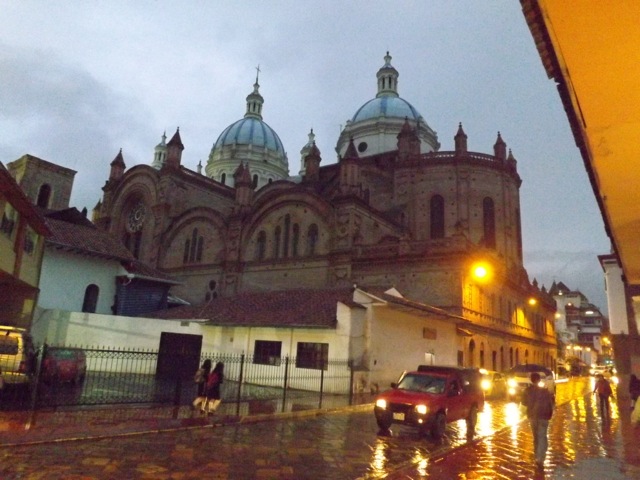
It seemed to be raining everywhere in Ecuador when we arrived in Cuenca. But then Ecuador isn’t large, only marginally larger than New Zealand. On the bus, my friend and I ran into a woman we’d met in the hostel in Quito a week earlier. So, as the light began to fade and the rain continued lightly, the three of us wandered the streets and discovered plentiful examples of excellent architecture. Like many places in South America, the architecture is great, but they aren’t well looked after. The Basilica…

wpid-dscf2601-2013-10-17-17-08.jpg

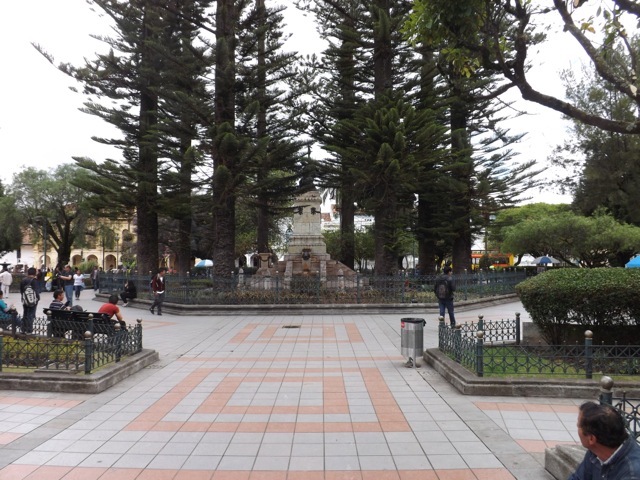
The next morning the rain had eased and we wandered around some more. The central plaza has a statue, and yes, a fountain too, hidden away in one corner.

wpid-dscf2603-2013-10-17-17-08.jpg

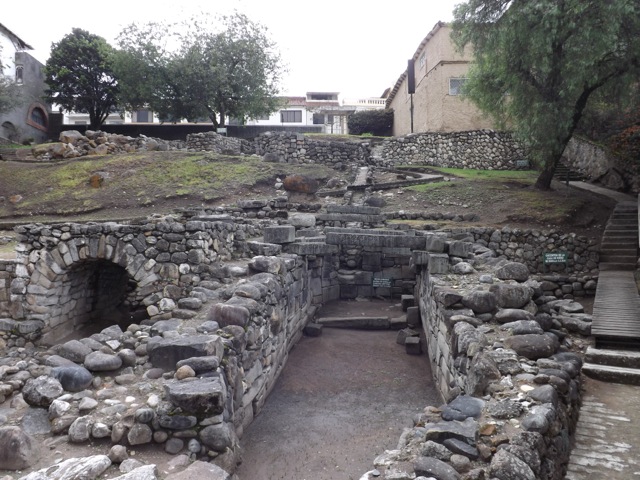
We also found two small Incan ruins that had been surrounded by the city. This one is just a small lot, while the other is more spread out and is part of the local botanical gardens, although only the foundations of the ruins are still visible.

wpid-dscf2614-2013-10-17-17-08.jpg

The next day we booked a tour of Ingapirca, but as part of the tour we had to book a train ride down the Devil’s Nose.

The Devil’s Nose – Nariz del Diablo
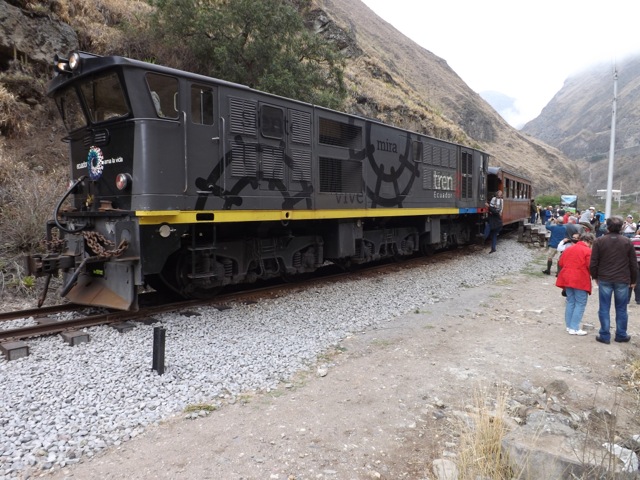
After a three hour van ride north, we arrived at the town of Alausi where we boarded the train that would take us down the Devil’s Nose – a hill that looks sort of like a nose.

When building a railway through the country, the Ecuadorian government had to find a way to connect a station at the top of Devil’s Nose with one 800m below. Unable to go around, they decided to build a switchback system where the train goes back and forth down hill.

wpid-dscf2666-2013-10-17-17-08.jpg

Thirteen thousand locals took part in the creation of the switchback, of which 2,500 were killed during the process through dynamite explosions, apparently.

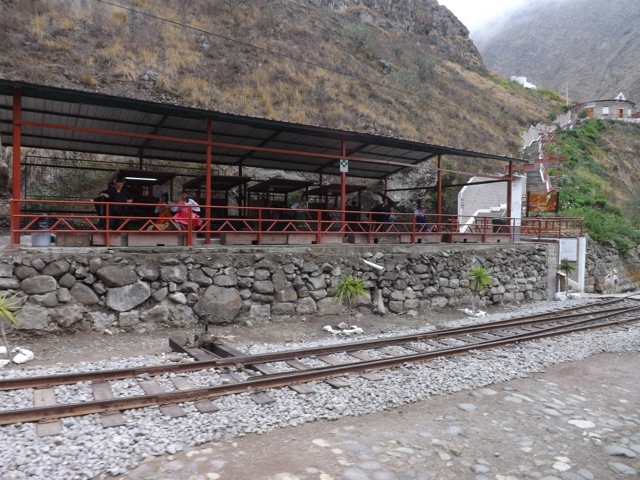
At the bottom station there’s a small museum, some traditional dancing and a cafe.

wpid-dscf2661-2013-10-17-17-08.jpg

Ingapirca

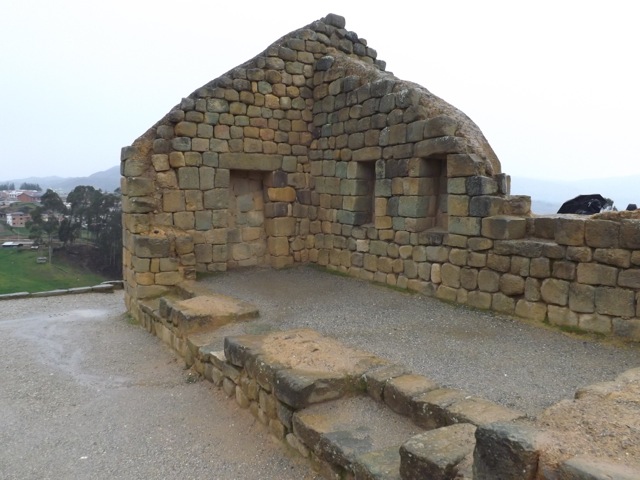
After the train ride back and another 2-hour van ride, we arrived at the largest ruins in Ecuador, Ingapirca – a thousand year old pre-Incan fortress. Like most of the Incan cities, the spanish destroyed it, using the bricks as foundations for some of the buildings in the surrounding cities, including Cuenca. The only building left standing was the sun temple, set to catch the sun four times a year on the solstices and equinoxes.

wpid-dscf2689-2013-10-17-17-08.jpg

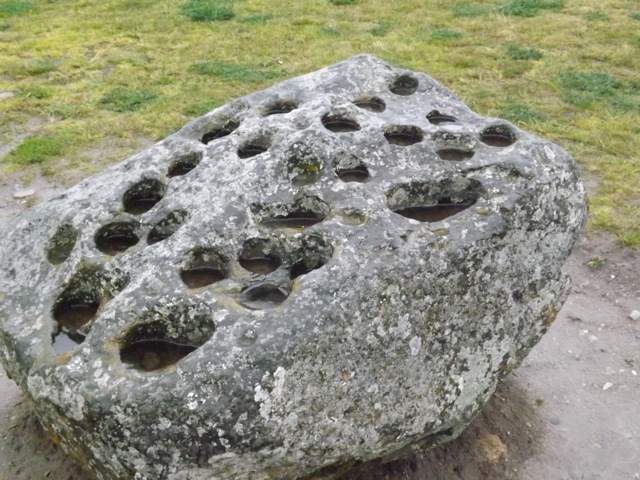
It was raining, so we didn’t spend a lot of time in the ruins, but the guide was very knowledgable. This stone below was used as a calendar. There are 28 holes cut into the rock, one for each day of the thirteen lunar months of the Incan year. It’s said that they could tell the date by which of the holes the moon was shining in.

wpid-dscf2692-2013-10-17-17-08.jpg

The sun temple has two sides, so it can catch the morning light and the evening light.

wpid-dscf2695-2013-10-17-17-08.jpg

Then it was back in the van for a 90 minute ride back to Cuenca.

Overall
Cuenca and the surrounds is a nice area of the Ecuadorian Andes and worth a visit if you are travelling through from Peru or as a nine hour bus ride from Quito.

Next, I head back to Quito for a couple of days to plan my way north into Columbia.

The World Wanderer

Galapagos Islands Cruise

The Galapagos Islands are an amazing set of volcanic islands just under 1000km from mainland Ecuador. There are several ways to see the islands each with benefits and drawbacks:

  • Pre-booked cruises are the most popular means to see the Islands and are commonly booked from the mainland. They are perfect for those with only a short vacation time but can also be the most expensive.
  • Booking a Last Minute cruise when you arrive on the islands is more suitable for long term travellers or those with plenty of available time. The cruises are up to half the price of a pre-booked cruise but there may be some wait before departure day.
  • Island hopping is possibly the cheapest means of seeing the islands and can be tailored to however long you have available. They take more work to organise and you can’t get to some of the more distant islands the cruises can take you to.

For my trip to the Galapagos, I simply flew to the Islands and booked a Last Minute 4-day cruise. The cruise started several days after I booked it, giving me time to explore parts of Isla Santa Cruz and Puerto Ayora.

Day 1
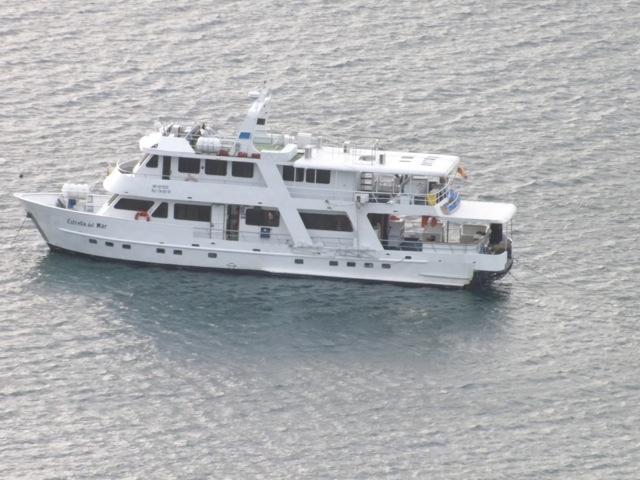
The day began early with myself and my Uraguayan friend leaving the hostel at 7a.m., having a quick breakfast in town before catching a taxi to the bus terminal. After a 90-minute mixed bus and ferry ride we arrived at the airport where we met our tour guide and some of the other passengers. We were taken to the boat, the Estrella del Mar – Star of the Sea. The boat’s passenger capacity was 16 and my friend and I were the oldest of the group.
wpid-dscf2273-2013-09-27-20-42.jpg

Onboard the Estrella del Mar we were given a delicious lunch and as we sailed to our first destination, Isla Bartolomé, had a chance to get to know the other passengers. As we travelled the choppy seas and the rocking of the small boat caused me to feel a little sick, so I took some sea sickness pills I had left over from my Antarctic cruise.

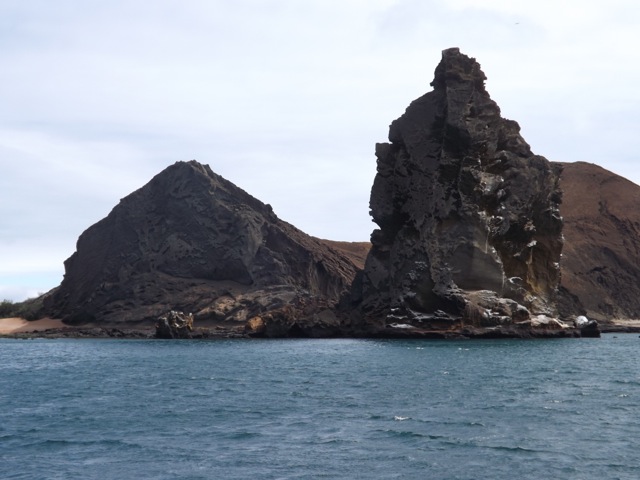
We arrived into the calm waters of Bartolome Island in the early afternoon and donned our wetsuits. We were dropped off on the shore and snorkelled for an hour around the pinnacle – a large piece of weathered rock sticking up at the edge of the beach.
wpid-dscf2240-2013-09-27-20-42.jpg

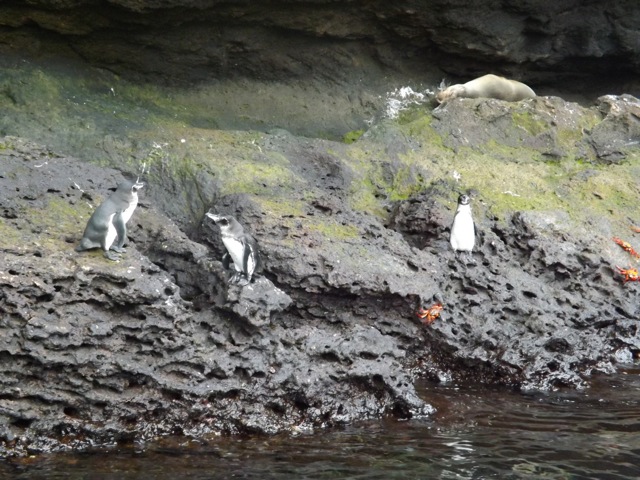
While there wasn’t any coral, there were plenty of fish. As we swam we located several Galapagos Penguins hanging out on the rocks and the occasional Galapagos sea lion doing the same.
wpid-dscf2252-2013-09-27-20-42.jpg

There were also plenty of small colourful crabs climbing the rocks so I swum in for a closer look. As I got nearer to the shore, I went underwater and came face to face with a White Tip Reef shark sleeping in a small cave under the rocks. While they aren’t usually aggressive, I was still cautious for the few minutes I watched it. I did eventually get a shot of the colourful rock crab.
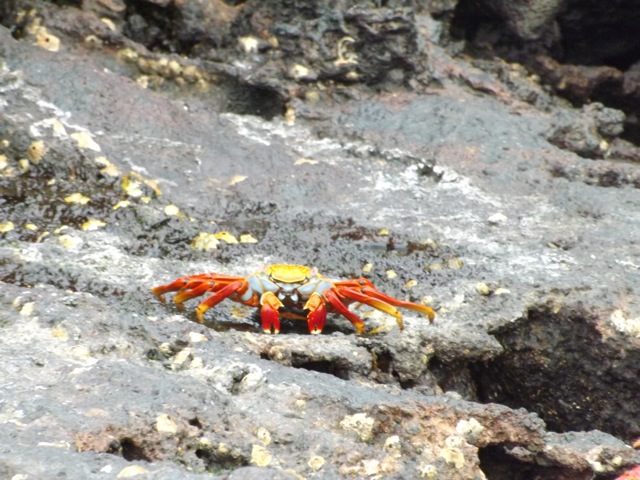
wpid-dscf2249-2013-09-27-20-42.jpg

After returning to the beach, we were taxied to the boat where we changed before being delivered to another part of the island, to hike to the top of a volcanic hill. There were great views and our guide was very knowledgable about the formation of the islands.
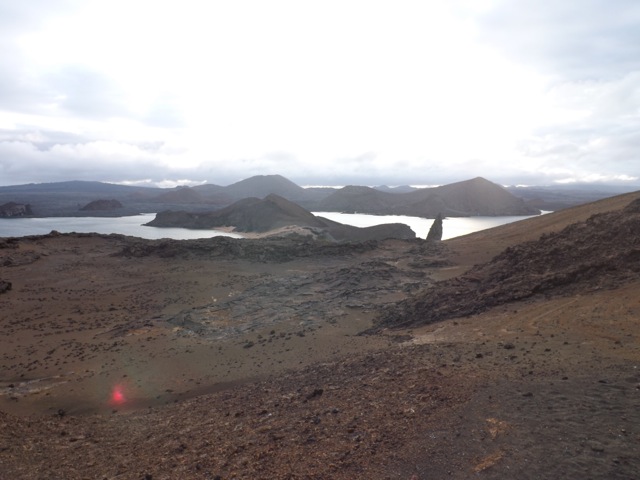
wpid-dscf2266-2013-09-27-20-42.jpg

After the hike, we returned to the boat for dinner while it headed north. At about 11p.m. we cross the equator.

Day 2
Our cabin was on the lower level at the front of the boat. So, while we were in motioned overnight, the cabin was very hot even with the air conditioning on.

In the early hours of the morning we arrived at Isla Genovesa, an extinct volcano where a massive sinkhole had filled with water to form a natural harbour. After a large breakfast, we were taken in the zodiacs to the beach, where we went for a short walk around the beach and a small patch of mangroves. This allowed us to see several nesting species of birds, black Marine Iguanas and fur seals, including this cub.
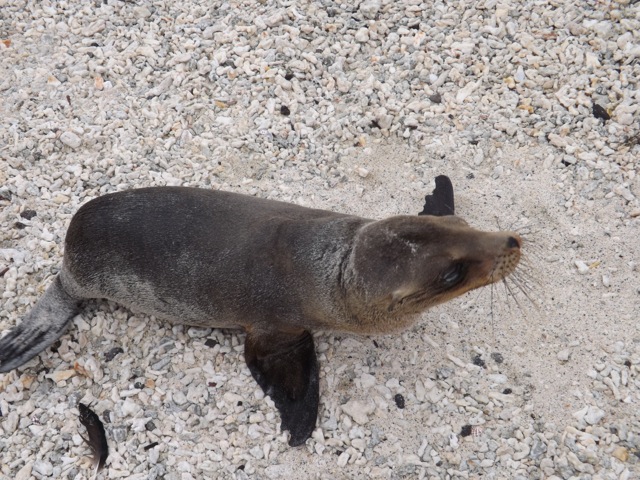
wpid-dscf2281-2013-09-27-20-42.jpg

We then changed into our wetsuits on the beach before heading into the water. We snorkelled for about an hour in the fairly murky water. We saw plenty of fish similar to yesterday, but little else. We were taken back to the boat briefly before being taken across the bay for more snorkelling. This is the only spot on our cruise where Hammerhead sharks are commonly seen but after an hour in the water we had no luck. I had fun swimming a little way down the shelf that drops off to a depth deeper than the ships sonar can see, making it more than 350m deep.
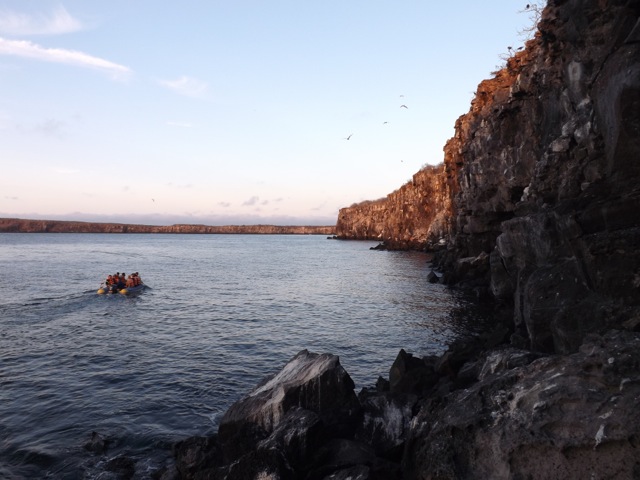
wpid-dscf2303-2013-09-27-20-42.jpg

Back on the boat, we had lunch and relaxed for a couple of hours. Many of us napped after a long morning of swimming. When we were ready, a small group of us were taken to third spot in the bay for yet more snorkelling. It was calmer and warmer in the water as the sun had broken through the clouds during lunch. We swam along the wall of the bay, the rocks climbing up about 20 metres. We were joined by a couple of sea lions, but they only played for a few minutes before heading back to their rocks. We snorkelled on, but saw little more.

Lastly, after heading back to the boat for a shower, we climbed to the top of the rocky wall and walked through the hardy trees to see more wildlife. We spied the Blue Footed Boobie, a Petrel, a rare sighting of a Galapagos Owl – which actually hunts during the day – and a lovely pair of boobies, Nazca Boobies that is…
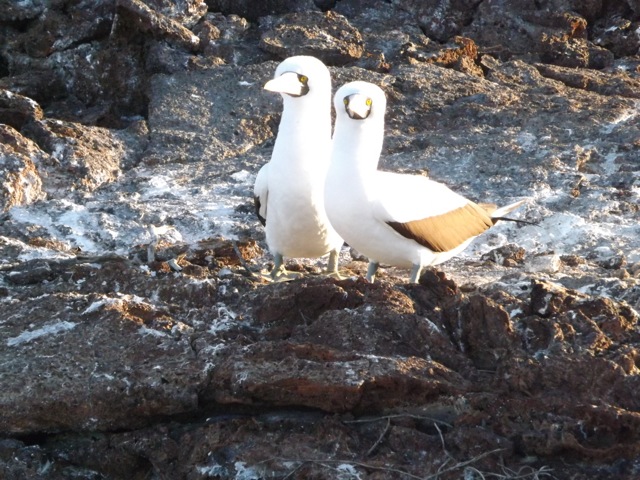
wpid-dscf2298-2013-09-27-20-42.jpg

After the hike, we were taken back to the boat for dinner and an early night following a very busy day. During the night we headed back across the equator and it was again very rocky aboard.
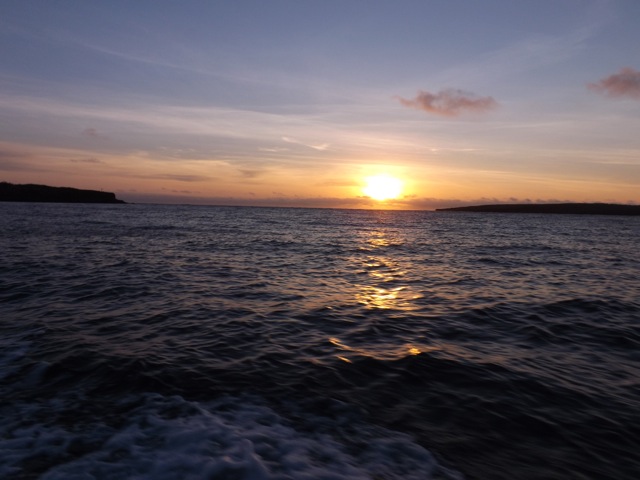
wpid-dscf2304-2013-09-27-20-42.jpg

Day 3
Overnight the rocking of the boat caused me to feel very sick, but only in my cabin, so I forwent my usual evening movie and just went to sleep. And this was after having taken seasickness pills. I awoke in the morning to calm seas and felt much better.

After a hearty breakfast, we set about getting ready for our first activity, a short hike across South Plaza Island to see some wildlife.

We started on the beach where many fur seals were sleeping.
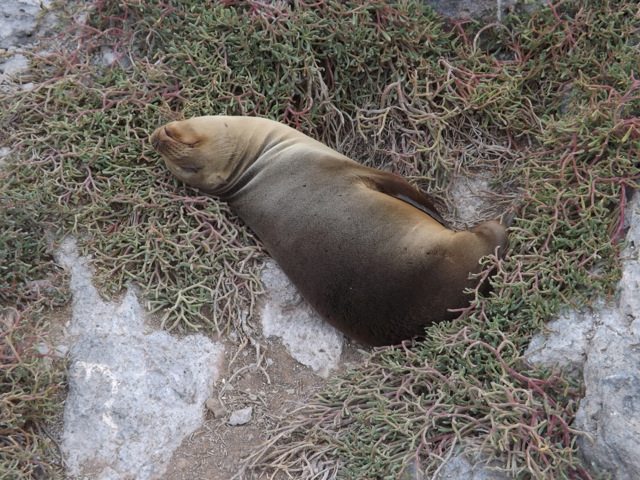
wpid-dscf2308-2013-09-27-20-42.jpg

We then walked along the rocky trail stopping for photo opportunities and discussions about the flora and fauna. Among the various species of birds we spied a land Iguana. This one is a metre long.
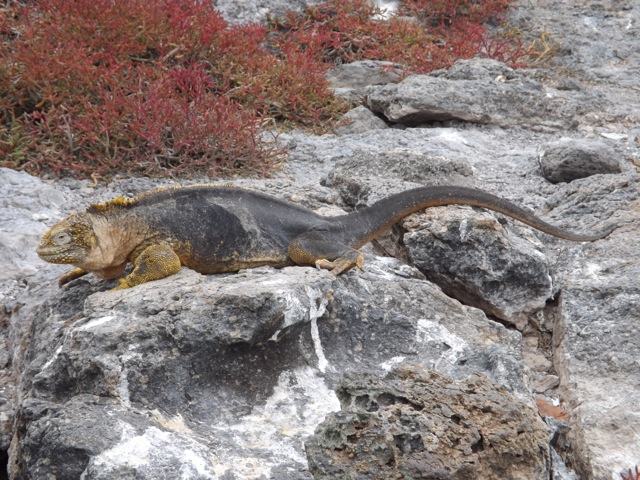
wpid-dscf2309-2013-09-27-20-42.jpg

Then it was back to the boat and off across the strait to Isla Santa Fé where we had lunch and prepared for another walk. We landed on the beach amidst plentiful napping sea lions…
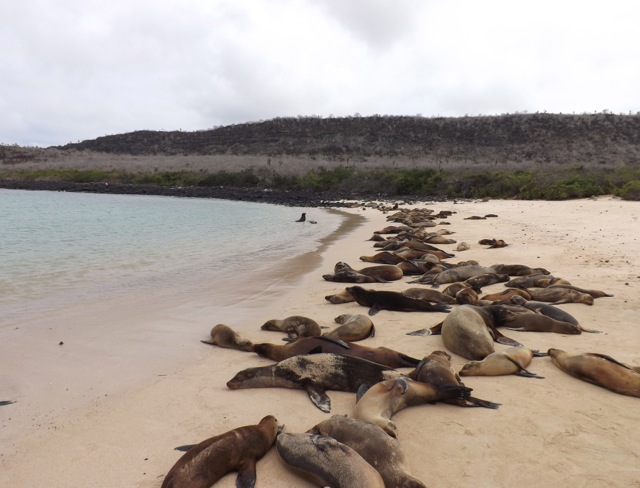
wpid-dscf2324-2013-09-27-20-42.jpg

We walked along a rocky path seeing two species of lizard, the metre long yellow land Iguana…
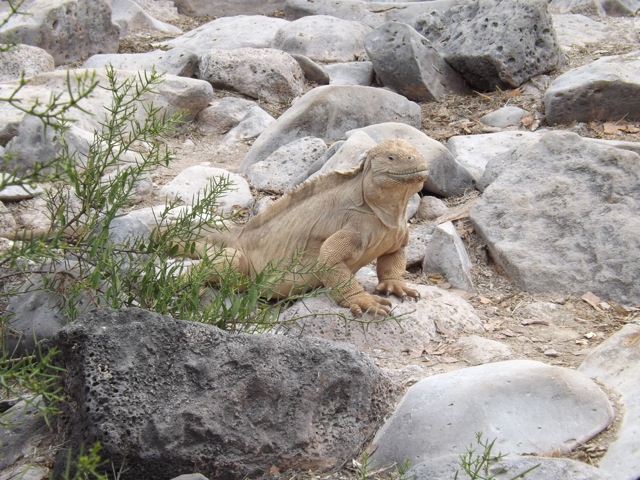
wpid-dscf2334-2013-09-27-20-42.jpg

…and the 10cm long gecko.

wpid-dscf2332-2013-09-27-20-42.jpg

Then, it was back to the boat to change into our wetsuits in preparation for our final snorkelling session of the cruise. Swimming in the bay at Isla Santa Fé makes me want to buy an underwater camera. Firstly, there were playful sea lions and I finally found my first coral in the waters. It wasn’t very colourful, but some coral is better than no coral. Then, as we snorkelled across the small bay, we were joined by sea turtles and stingrays sucking at the sand on the bottom. All in all, an excellent snorkelling session for our final day.
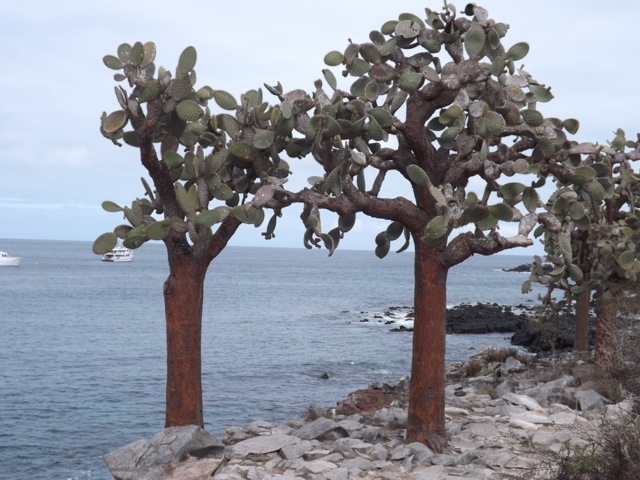
wpid-dscf2336-2013-09-27-20-42.jpg

Back on the boat, we set sail for Puerto Ayora harbour where we dropped anchor for the evening.

Day 4
The final day on the cruise was a little disappointing. When booking the cruise, we enquired if they would be going to either the Giant Tortoise colony or to Charles Darwin Research Station, where they look after the young animals. We were told the cruise would finish at the Research station, so prior to the cruise, my Uraguayan friend and I headed up to see the Giant Tortoises. As it turned out, the group was taken to see the Giant Tortoises. But instead of seeing them again, we called an end to our trip and headed back to the hostel.

Summary
Overall, the cruise around the Galapagos Islands was great. While the islands don’t feel as tropical as other Pacific Islands, the diverse species of animals, especially the ones that are native to these islands were amazing. A most enjoyable cruise.

After a couple more days in the Galapagos Islands, I fly back to Quito.

The Trail Wanderer

Aguas Caliente and Machupicchu

After nearly six months travelling around South America, I’ve finally arrived at the most popular tourist destination on the continent, Machu Picchu. But there’s more here than just the ancient ruined city at the top of a mountain.

Located deep in the mountains, a 3.5 hour train ride from Cusco or 4 days via the Inca Trail, is a town called Aguas Calientes, meaning hot waters, or hot pools in Spanish. With no road leading into the town, there’s no other way to get than walk or catch the train.

wpid-dscn3288-2013-08-14-15-41.jpg

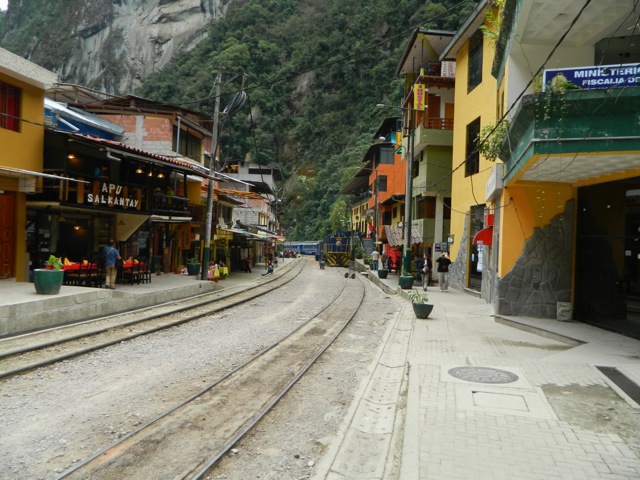
Aguas Calientes is a beautiful little town set on the side of the Rio Urubamba and nestled among the mountains. It’s purely set up for tourists visiting Machu Picchu, meaning if the ruins didn’t exist, neither would the town. There are a vast number of restaurants, hotels, hostels and massage places all for the pleasure of the tourist and the tourist dollar. With so many restaurants, the owners fight to get just a few customers in each night.

wpid-dscn3299-2013-08-14-15-41.jpg

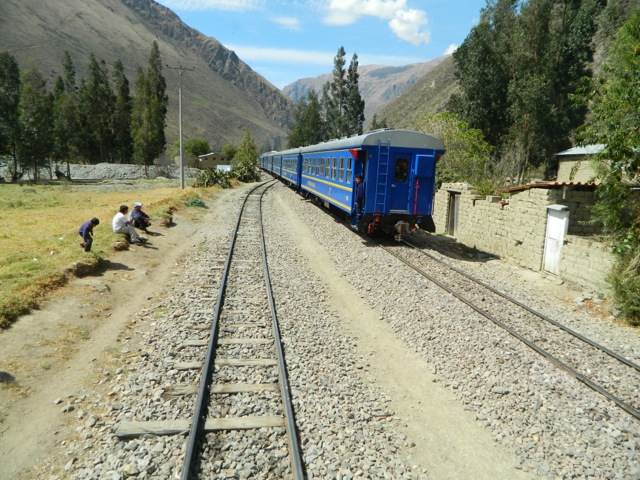
I arrived by train at midday and set about investigating the town. With a plan to hike up the 2000 steps to Machu Picchu early the following morning, I headed out towards a nearby set of waterfalls only 45 minutes walk from the town. The trail leads you along the side of the train tracks that wind through the valley.
wpid-dscn3307-2013-08-14-15-41.jpg

When I got to the house with an arrow pointing at it and the word cataratas (waterfalls in spanish) on a sign I was sceptical as I couldn’t hear the waterfalls. So, I decided to just keep walking along the trail instead.
wpid-dscn3292-2013-08-14-15-41.jpg

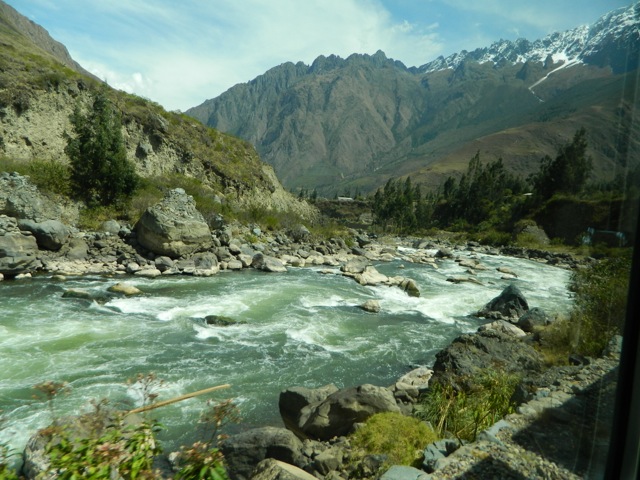
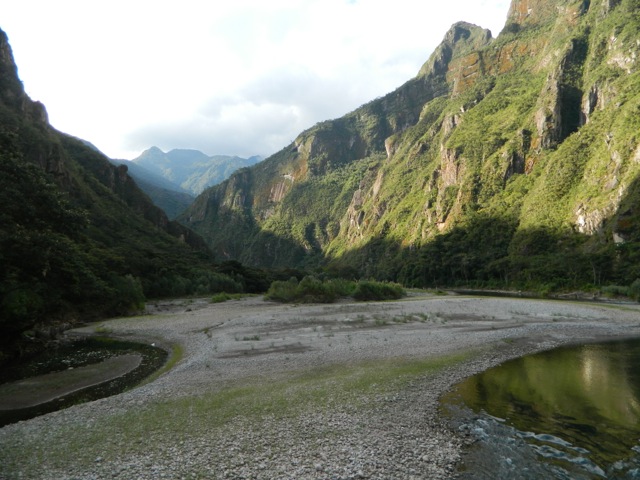
It was a pleasant walk with no hills, so I just kept going and going until I came to a place called Santa Teresa and decided to start back. The scenery was absolutely beautiful…

wpid-dscn3314-2013-08-14-15-41.jpg

What had begun as a 45 minute walk turned into a 5-hour hike. On the way back, I was able to see a single building from the ruins at the top of the mountain.

wpid-dscn3324-2013-08-14-15-41.jpg

While a casual 90-minute walk wouldn’t have been a problem, I wasn’t really prepared for the length I ended up walking. I wasn’t wearing the correct socks and managed to gain a couple of blisters, something that rarely happens to my feet.

The next morning I was up at 4.30 and getting ready for the climb to the ruins. The hostel is prepared for this as breakfast begins at 4am.

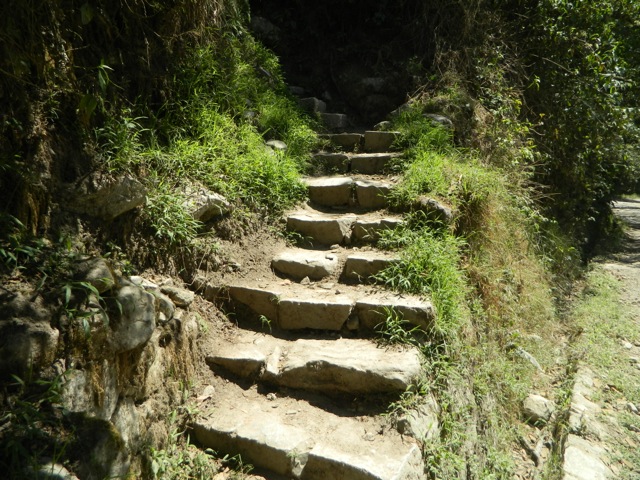
The 2000 steps climbing up to the ruins were built in typical Inca style, although with the road winding up the side of the mountain for the buses, I’m sure the stairs weren’t built by the Incans.

wpid-dscn3409-2013-08-14-15-41.jpg

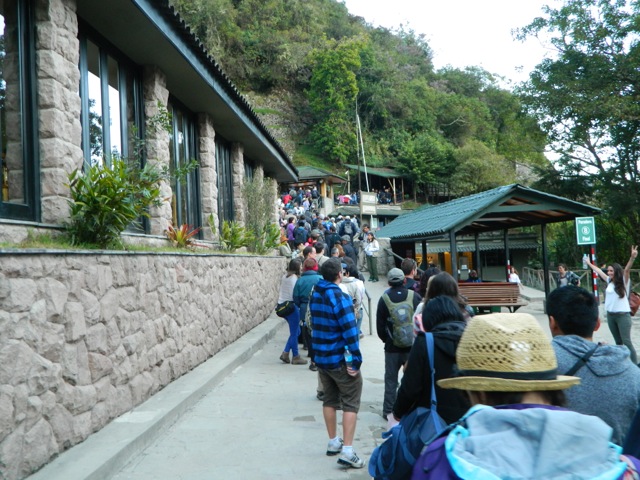
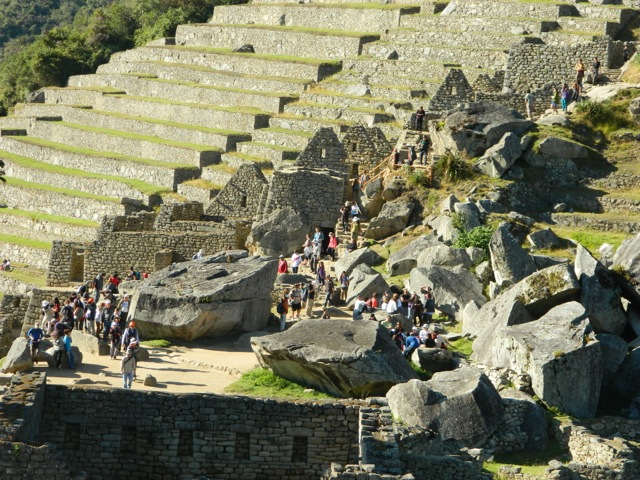
The stairs were strenuous on their own although I’ve climbed more difficult mountains, but add the altitude and it becomes challenging. (Add blisters and it’s even worse!) I made it just after 7 when the mass of tourists from the buses were trying to get into the city. This is what I’d expected and why I call Machu Picchu the Disneyland of South America.

wpid-dscn3326-2013-08-14-15-41.jpg

I finally got in just before the sun rose over the mountains to shine on the city, lighting it up the stone work in the pinkie yellow of first light.

wpid-dscn3340-2013-08-14-15-41.jpg

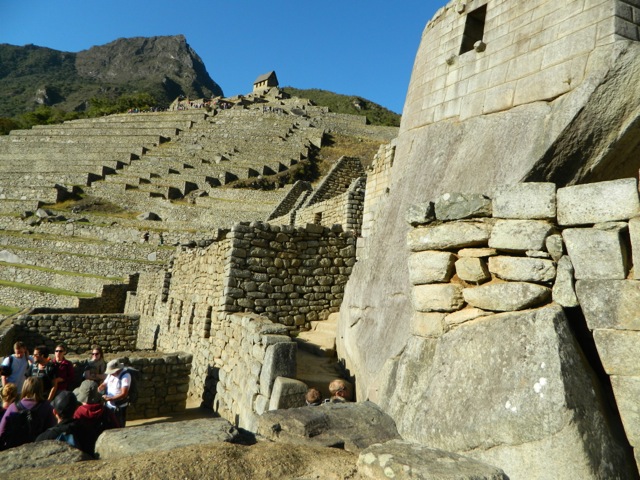
There’s a lot that can be said about the city, but much of it is speculation and not on my part. There are few signs but beyond telling you where the exit is, they don’t tell you anything about the ruins. No-one’s really sure what the full story behind the city is and I was only able to garner a small amount of information by listening in to the many guides around the different parts of the city.

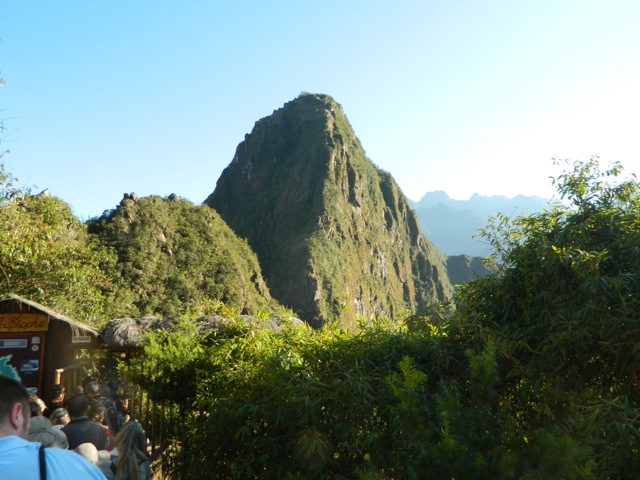
These two mountains are Huayna Picchu (the shorter) and Wayna Picchu. Wayna Picchu has a temple built atop it with a precarious path leading to it. You need to pre-pay to get to these mountains and I hadn’t.

wpid-dscn3353-2013-08-14-15-41.jpg

The ruins were discovered in 1911 when a local advised a US American that there was Incan architecture atop the mountain. He scaled the mountain and discovered the overgrown city.

wpid-dscn3358-2013-08-14-15-41.jpg

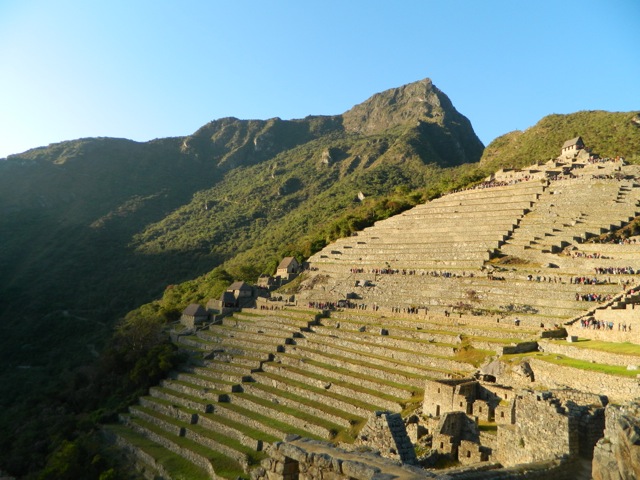
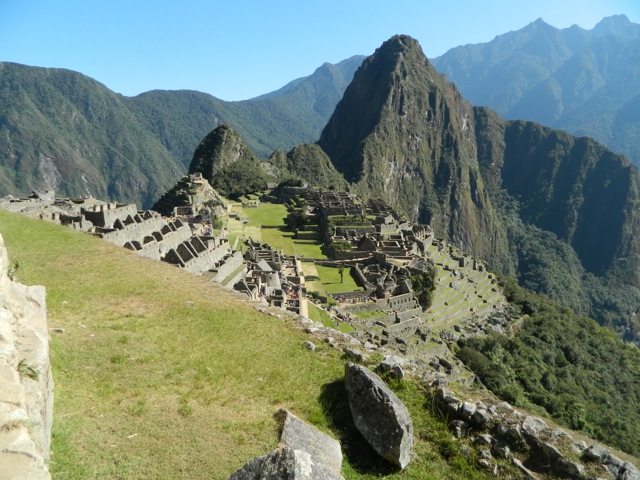
Machu Picchu was thought to have been built as the winter home of an Incan emperor and is said to have been abandoned before the spanish conquests in 1534. This is one of the many speculations of its existence. The house at the top of the tiers is the highest point in the city and the peak of Machu Picchu Mountain is behind it.

wpid-dscn3363-2013-08-14-15-41.jpg

The city was thought to be the lost city of the Incas but many think the lost city is another, larger city, several days away in the jungle. Other stories say that this was an Incan Concubine city for the emperor, with 100-200 concubines living here.

wpid-dscn3370-2013-08-14-15-41.jpg

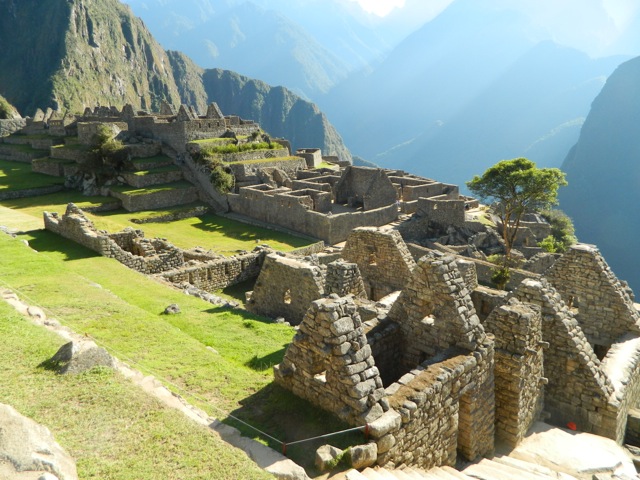
Nestled as it is on the top of a mountain, the city isn’t flat, with many terraces and stairs. Corridors were thin or closed off to protect areas of the ruins, meaning it could be slow going with all the tourists trying to get around.

wpid-dscn3390-2013-08-14-15-41.jpg

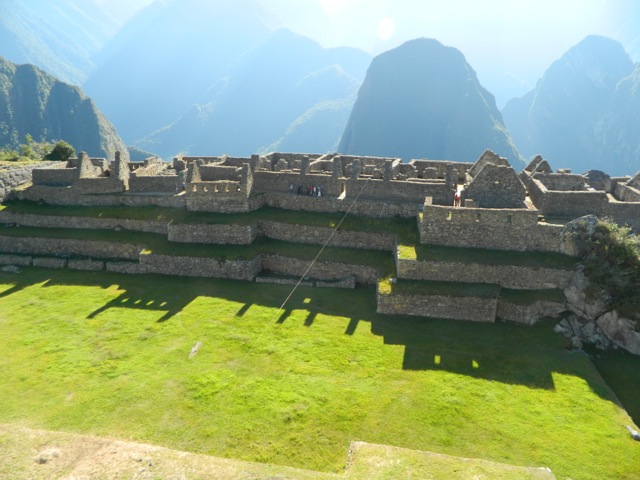
It takes about two hours to walk around the ruins, but even in the middle of winter it’s very warm during the day. There are large open grassy areas, possibly where crops were sown.

wpid-dscn3394-2013-08-14-15-41.jpg

At the end of my walk around the ruins, I decided to climb Machu Picchu Mountain. The stairs up the side were even steeper than those leading up to the city.

wpid-dscn3405-2013-08-14-15-41.jpg

I got to a spectacular viewing area about half way up (about the same height as Wayna Picchu). With the altitude, the heat and my general state of exhaustion I decided to forego the rest of the climb and headed back down again.

wpid-dscn3408-2013-08-14-15-41.jpg

I found my way to the exit and began descending back down the stairs to Aguas Caliente. At 30°C+ it was very hot going and exhausted, I finally reached the hostel and a welcoming shower.

While Machu Picchu is packed with people – 2500 are allowed there a day – that was the only downside of the ruins. The reconstruction of parts were great and the city overall is amazing. I certainly enjoyed my visit and while expensive, it’s something I had to do, unlike the Inca Trail, where the amount of people would have spoiled my enjoyment.

Next, I am off to Arequipa, a southern city in Peru in hope of hiking through Colca Canyon, a canyon twice as deep as the Grand Canyon in the US.

The Lone Trail Wanderer

Lake Titicaca, Copacabana and Isla del Sol, Bolivia

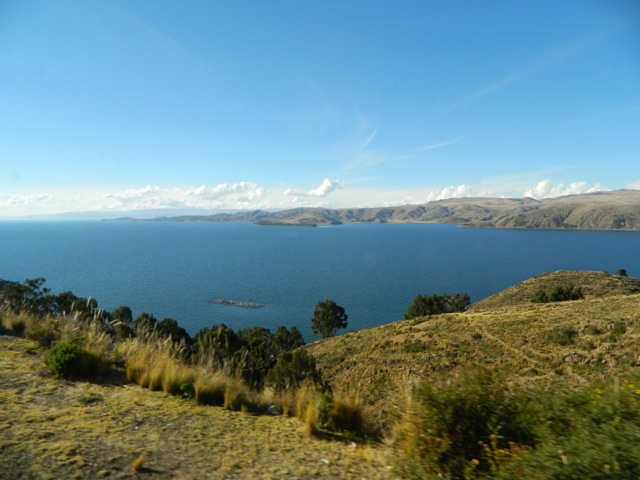
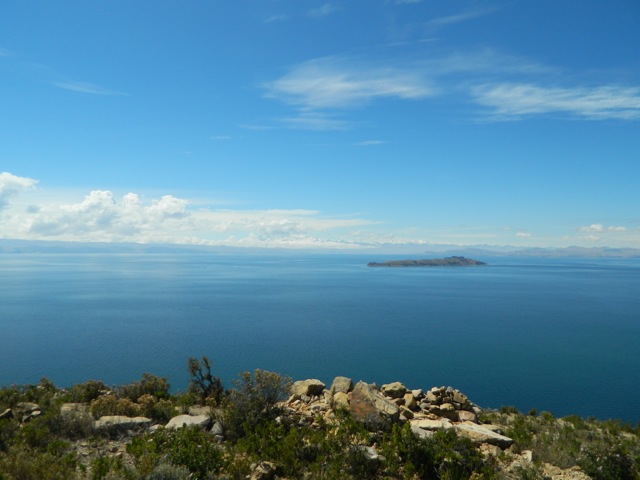
At 3800m above sea level, the massive Lake Titicaca is the highest navigable lake in the world. Stretching 190km in length, the blue watered lake just disappeared off into the horizon.

wpid-dscn3216-2013-08-7-12-23.jpg

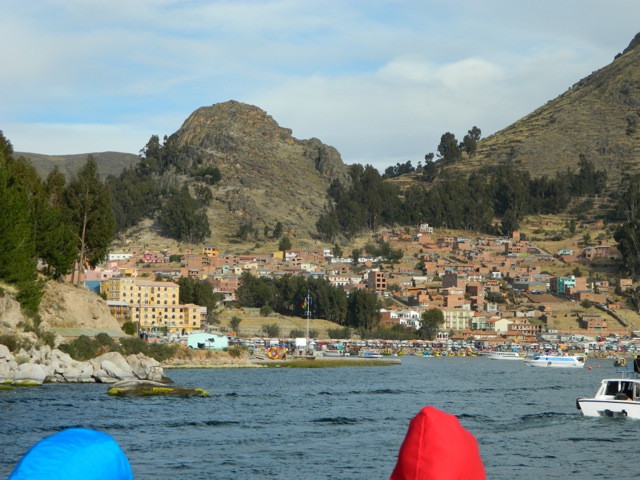
From the Bolivian side, Copacabana is the city on the lake and the only way to get there from La Paz is by bus, also meaning a 15 minutes ferry ride, as the direct road actually crosses into Peru and back again. Copacabana as taken from a ferry…

wpid-dscn3266-2013-08-7-12-23.jpg

There are several small islands near the southern end of the lake…

wpid-dscn3226-2013-08-7-12-23.jpg

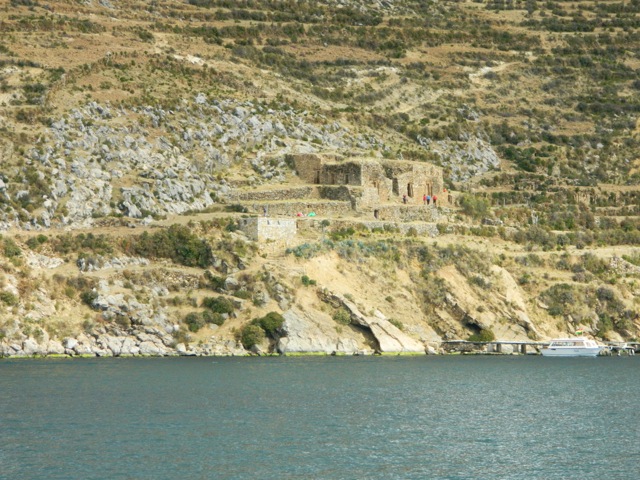
With the major island on the Bolivian side is Isla del Sol, the Island of the Sun, a place where the Incas believed the sun lived. There are more than 80 ruins on the island, this one being the Temple of the Sun…

wpid-dscn3229-2013-08-7-12-23.jpg

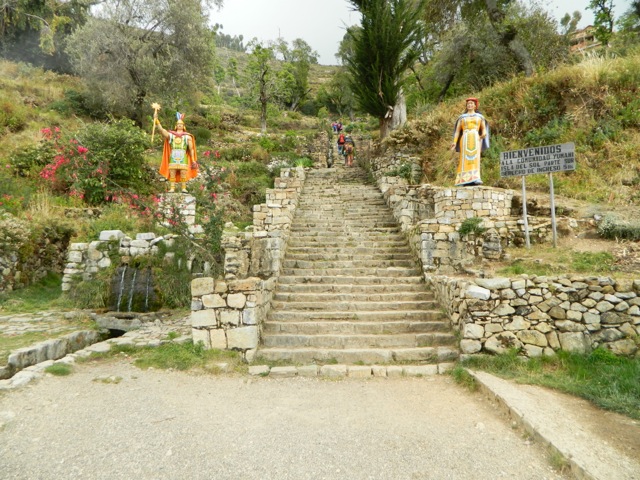
The most common thing to do from Copacabana is to catch a ferry to Isla del Sol. Landing on the Southern pier there is a daunting set of steps leading up. It’s more daunting knowing that at altitude it’s going to be a difficult climb.

wpid-dscn3234-2013-08-7-12-23.jpg

At the highest point of the island is a small castle which is being built for tourist purposes. On the island there are numerous hostels and restaurants for the Gringo visitors, of which there are about 250 a day, some choosing to stay overnight, while others return to Copacabana.

wpid-dscn3245-2013-08-7-12-23.jpg

Small communities are dotted all over the island, with 800 families living here…

wpid-dscn3253-2013-08-7-12-23.jpg

Off to the east is Isla del Luna, Island of the Moon.

wpid-dscn3258-2013-08-7-12-23.jpg

When you’re this high in the mountains, you don’t expect to see such a massive lake, but it’s a thing of beauty. While Copacabana is a typical Bolivian small city with plentiful brick buildings, there’s also a large tourist base and plentiful hostels and hotels. With many of the hotels offering similar prices to the hostels, it’s often a better choice to treat yourself.

Unfortunately while I was here, it was Bolivian Independence week and there were markets everywhere. The unfortunate part is that all accommodations are more expensive at this time of year.

Next, I head off to Cusco, capital of Peru.

The Lone Trail Wanderer

Buenos Aires, Argentina – Take 2

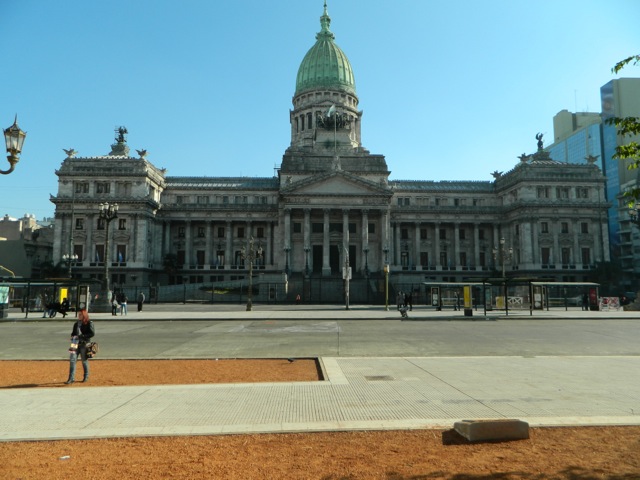
After several months travelling around the southern portion of South America I returned to my starting point of Buenos Aires. On my initial visit, I’d only spent 3 days there and hadn’t seen a lot of the city. On my return visit, I stayed 10 days to hang out with a group of locals I’d arranged to meet and to see some of the sights of the city, like the main courthouse.

DSCN2558

On my second visit I staying in the central suburb of Palermo at a hostel chain called Hostel Suites Palermo, which had an above average but nothing to rave about. Palermo is described as an up and coming suburb, but with homeless people living at the end of the block perhaps ‘slowly up and eventually coming’ is closer to the mark.

Buenos Aires has 3 million people and is quite spread out. Because of its size and with the lack of national parks in the province, walking around the city was where most of my exercise came from. One afternoon, I made plans to catch up with a new friend and walked an hour along one of the main streets lined with shops. When I finally got to the meeting point, the shops continued off into the distance.

DSCN2559

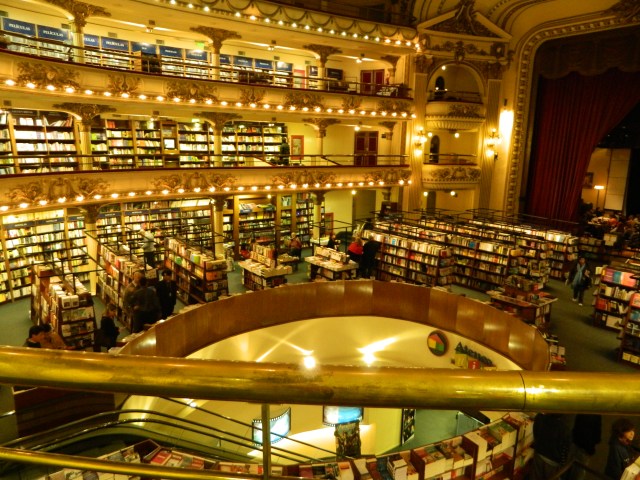
The next day, I walked in the opposite direction along the same street.  An hour later I arrived in the city centre and again shops had covered the entire distance and stretched on into the distance.  On my walk I stopped in at El Ateneo Grand Splendid, the bookstore to end all bookstores, an old theatre that had been converted into a book store. It’s the most famous bookstore in Argentina but has very few books in english.

wpid-dscn2555-2013-06-29-09-34.jpg

Near the centre of town is a large group of parks and on the next sunny day I wandered around a pond full of geese and sat reading on a bench as skaters and cyclists went by.

DSCN2523

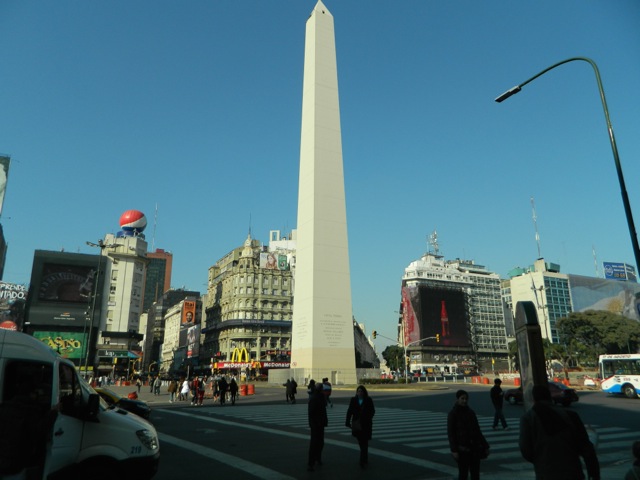
On the next day it was forecast to rain, so together with a girl I’d met at the hostel, we checked out some of the more cultural features of the city centre, several monuments which we called ‘boob monuments’, as they all contained carvings of topless women.  Then when it began to rain, we looked around several museums and galleries in the area.

DSCN2520

With Uruguay on the far side of aptly named Rio Uruguay, I caught a ferry across to Colonia on the next sunny day to tick that country off my travel list.

Overall, Buenos Aires felt different to my previous visit. But during that earlier I’d been suffering culture shock. The ever-present doggie doo was still a major problem in Buenos Aires. I did see a handful of people pick up after their mutt only to find the bags of doggie doo left in the middle of the footpath. Progress is slow…

Next I headed to my final Argentinian destination, Puerto Iguazú and the country’s other major attraction, Iguazú Falls.

The Lone Trail Wanderer

Parque Nacional Quebrada del Condorito

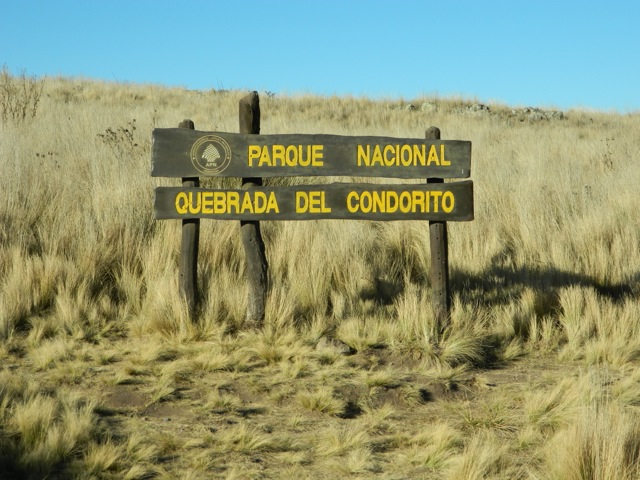
About 2 hours by bus south-west of Córdoba is the small Condor Gorge National Park. There is no formal transport to the National Park, you simply book a ticket to the nearby town and ensure the driver drops you off on the way.

wpid-dscn2495-2013-06-20-17-24.jpg

Córdoba province is at the northern ‘dry’ end of Argentina. Most of the upper regions are desertlike pampas, not sandy like the Sahara desert, but arid dry plains much like the Australian Outback just not as red.

After my two hour bus ride, I walked beyond the national park sign and along a dirt road between two private properties until it finally opened out into rocky rolling hills. After 10 minutes I arrived at the registration building and signed the book to say I was in the park.

There’s only one main natural attraction in the small national park, the gorge. It’s about 2 hours walk (according to the admin staff) to the southern lookout. You can continue down to the river and up the other side to the northern lookout, but that’s about it.

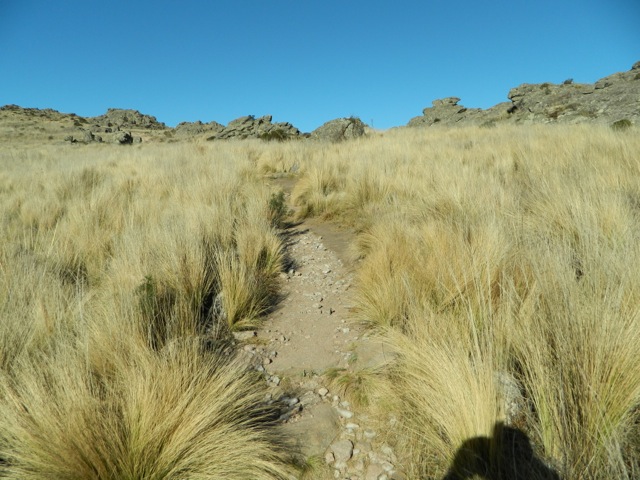
So, I set out from the the administration building and headed up the road a little further until the sign sent me onto a rocky trail heading up a gradual hill.

wpid-dscn2498-2013-06-20-17-24.jpg

I was told there are markers every 15 minutes on the way towards the southern lookout, but it only took me 10 minutes to reach each one, so I guess the markers are for the family groups and slower walkers.

wpid-dscn2503-2013-06-20-17-24.jpg

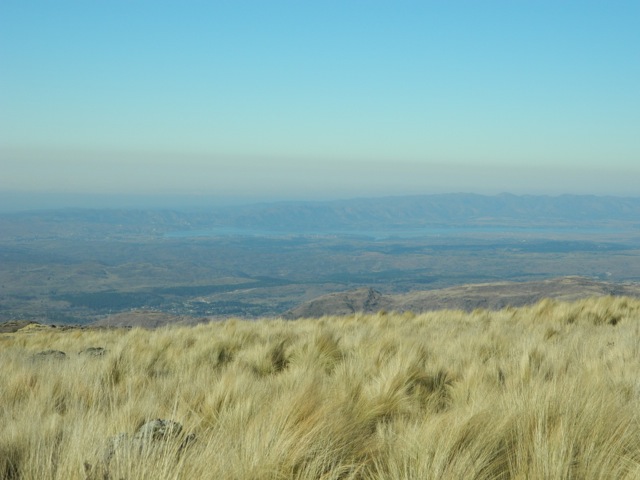
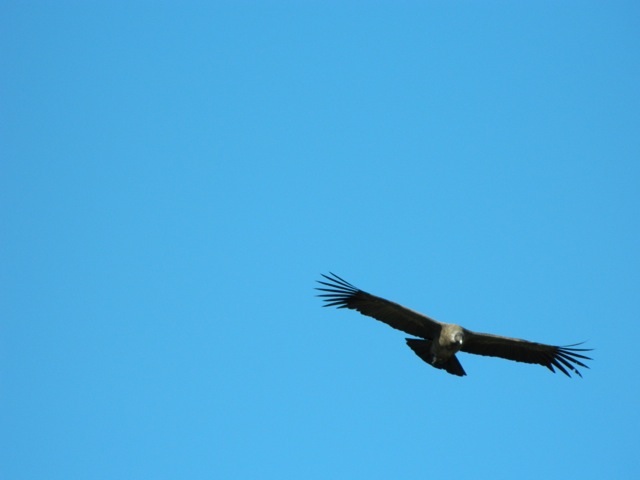
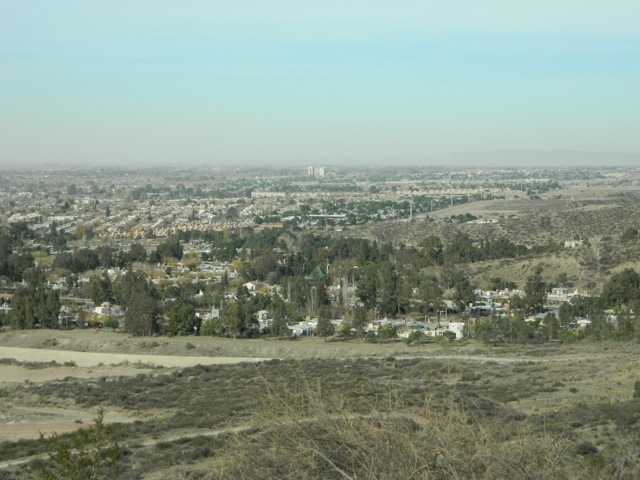
About 30 minutes in I reached the top of a cliff and looked down across the hazy pampas to the lake and the small villages scattered below. Then, as I began walking again, a condor swept up and floated on the air currents not 2 metres above.

wpid-dscn2501-2013-06-20-17-24.jpg

10 minutes later and I came to a sign warning me about Pumas and snakes. This actually gave me the sense that I was walking in Australia again with its dangerous wildlife. It’s like living on the edge!

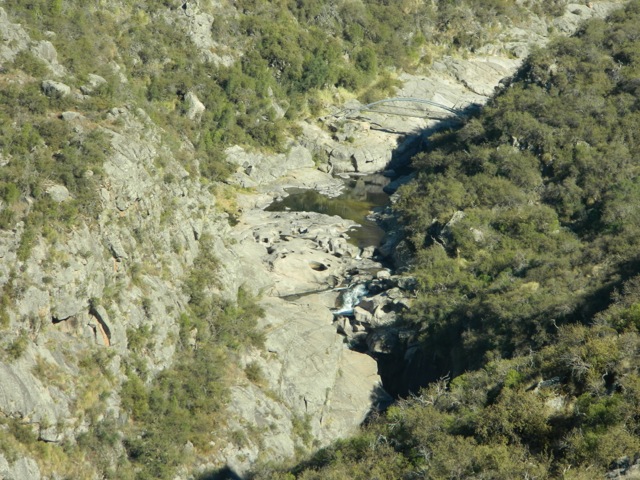
Half an hour later I arrived at a split in the trail, to the left it headed to the southern lookout, to the right down to the river and up the other side. I took the left track and climbed down the side of the cliff a little to where the lookout was. I stopped there for lunch looking down on the gorge below and the small river running through it.

wpid-dscn2507-2013-06-20-17-24.jpg

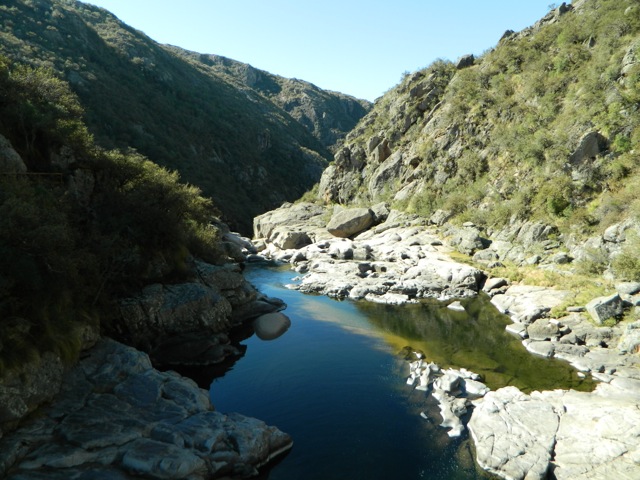
The walk so far hadn’t been terribly hard, although it was rather hot in the sun with no trees for shelter. After lunch, I headed back to where the trail split and took the other route, following it until it began heading fairly steeply down into the gorge. It’s about a 500 metre climb down to the river, but it didn’t take me long and eventually I came out to the bridge and crossed to the other side.

wpid-dscn2517-2013-06-20-17-24.jpg

With the hard part to go, I paused under the bridge for a few minutes before starting back up the hill. It took me a fair amount longer to get back up the side of the gorge because of the constant climbing, but after a couple of rests along the way I did eventually make it and headed back across the rolling hills to the administration. Just as I left the admin building, I saw a bus go by on the road in the distance and knowing that they only go past every hour, I slowed my pace. After waiting almost another hour and unsuccessfully flagging down 3 other buses, one did stop for me and I was whisked back off to Córdoba.

Overall, it was nice to get back out on the trail after a couple of weeks wining and dining in Mendoza. It was great walking on a hot trail again like I used to in Australia and definitely different to the last few months hiking around the cold south.

With my next stop being Buenos Aires, and with the lack of National Parks in the capital province, I will try to walk as much as I can around the city.

The Lone Trail Wanderer

Mendoza, Argentina – Adventures

My bus trip from Bariloche took 19 hours. For such a long trip there are two different seat types on the bus: semi-cama, similar to airplane seats, and cama, which means ‘bed’ in spanish. For the overnight trip I went for the more comfortable cama seats, although while better than the semi-cama was nothing like a bed.  Comfortable as it was, I only got half a night’s sleep I arrived in the desert city famous for its wine.

Mendoza is a city of 850,000 people and my hostel, Hostel Lao, was a few blocks from the bustling city centre. After spending so much time in Patagonia, with its small towns and cities, to come to a big city bustling with people was a shock to the system. But once I got used to it, the jewel that was Mendoza began to sparkle.

DSCN2460

Still exhausted from my bus trip, I went out clubbing with a group from the hostel until 6am. The night life of Mendoza on a Friday night was certainly good, although beyond the smelly fact that smoking is allowed in their clubs, there were few issues for our little group of ‘gringos’ and an awesome night was had.

After spending Saturday quietly recovering, on the Sunday a small group of us headed out to Auga Termas. 45 minutes from the centre of town, the thermal hot pools were set in a beautiful location, hidden in a gorge between rocky ridges…

wpid-dscn2443-2013-06-9-18-32.jpg

There were many different pools of varying temperatures. Inside, there was a mud pool where you cover yourself, let yourself dry before washing it off in the blast showers. Included in our visit was a huge buffet lunch, Argentinian style. We ate and ate then enjoyed a couple of bottles of fine Mendoza wine outside in the sun, before heading back to the pools. Before we left, three of us had full body massages. A fantastic day.

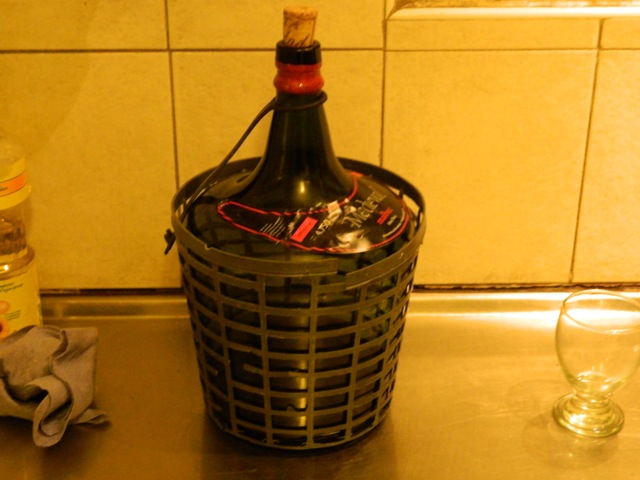
A couple of days later I moved to Hostel Mora, a cheaper hostel just around the corner. While Hostel Lao was supposed to be the best hostel in Mendoza if not the continent, in my opinion, Hostel Mora did it better. Pretty much all hostels in Mendoza offer a free glass of wine each night, while Hostel Lao offered it five nights a week, on arrival Hostel Mora opened this 4.75 litre bottle of Malbec…

wpid-dscn2450-2013-06-9-18-32.jpg

The weather in Mendoza was brilliantly sunny. It is the desert after all and after 3 months in the colder south, it was nice to feel warm again.

DSCN2448

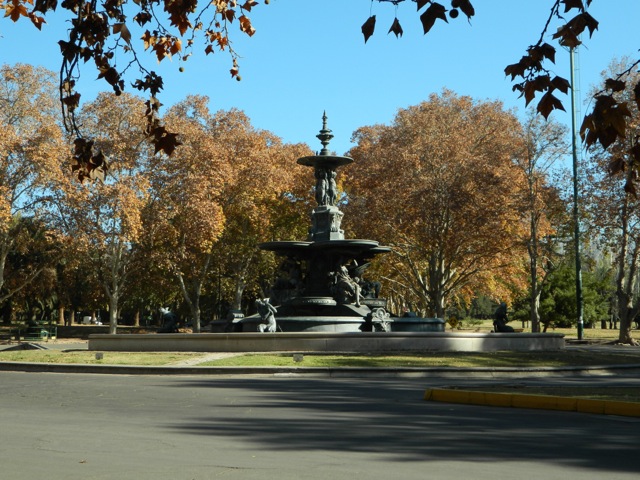
On the western side of the city is the massive Parque General San Martin and on the far side, another 45 minutes walk, is Cerro de la Gloria.  After a rough ten minute climb I made it to the top for good if not a little hazy views across the city. All trees in Mendoza are hand planted and watered using an irrigation system based on the snow melts of the Andes.

DSCN2456

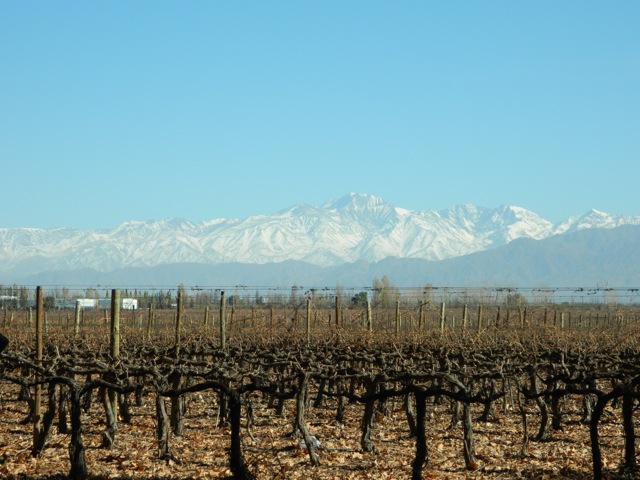
You can’t come to Mendoza without going on a wine tour. Some choose to be driven around but for the keen, bikes can be hired for next to nothing and a self-guided tour done.

DSCN2462

I’ve been particularly enjoying the Malbec, a type of red wine that is very popular in Argentina. Riding bikes around the roads of the wineries after many glasses sounds dangerous, but it was actually rather refreshing. So too was sitting at the bodegas drinking wine and enjoying the view…

DSCN2467

After eight days in Mendoza it was hard to say goodbye. I had such a fun time, drank an awful lot of wine and met some great people from all over the world.

Things to do in Mendoza:

  • Walk through Parque General San Martin
  • Climb the towering Aconcagua, highest mountain in The Americas
  • Cycle a wine tour around Maipu wine region
  • Cycle a wine tour around Luján de Cujo region
  • Visit one of the other 12 wine regions
  • Explore Witches Cave
  • Have a steak dinner in the city

Next I bused to Córdoba, the city at the centre of Argentina.

The Wine Cycling Trail Wanderer.

El Chaltén, Argentina – Impressions

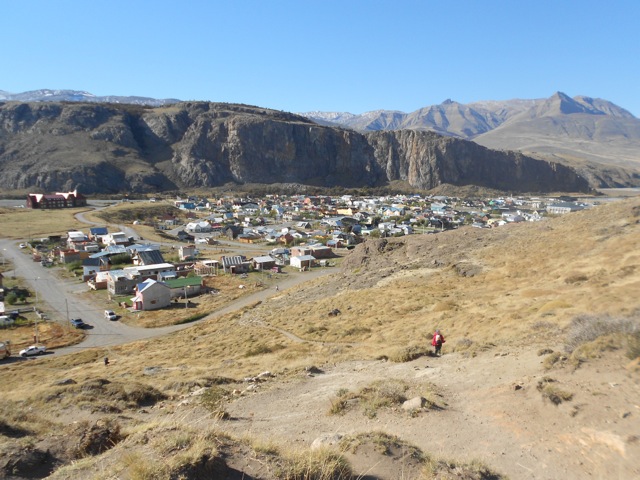
El Chaltén is a small town at the northern end of Parque Nacional Los Glaciares in Argentina. It’s a town bred purely from the tourism generated by the National Park and Mt Fitz Roy.

DSCN2184

El Chaltén was quaint and had plenty of hostels, although many were aimed more towards the hotel end of the market than to backpackers. There were plentiful tour operators and adventure stores selling the big named adventure gear for both hiking, ice climbing and glacier expeditions. There was also a small cafe/bakery scene in the town which was great, as the hostels don’t provide breakfast.

I stayed at the Hostal Pioneros del Valle. This large and fairly cheap hostel had plenty of rooms, most set up with 6 beds. But as it was low season when I stayed I had the room to myself. Splendid!

DSCN2072

High season is December to the end of March and outside of these times more than half of El Chaltén’s businesses close down. The several restaurants in town are reasonably priced restaurants, including the local micro-brewery, which is good considering the town doesn’t have good facilities for buying your own food. While there are supermarcados, they aren’t very ‘super’.

The National Park had great day walks and several longer hikes – some very intense indeed. Being short on time, I only did a 3-day hikes. It doesn’t have an official name but I called it the Mt Fitz Roy Triangle. The other great advantage of the Parque Nacional is it’s cost. It’s free. Something different in a land of expensive national park entrance fees.

Here are some of the other walks:

  • Cascada Margarita
  • De las Vuetas River Canyon
  • Piedras Blancas Glacier
  • Punta Norte – Hito Limítrofe

Next, I head back through El Calafate to Puerto Natales in Chile to catch the Navimag Ferry

The Lone Trail Wanderer

Laguna Esmaralda

The weather of the last couple of days hasn’t been welcoming enough to hike and last night it was icy enough to sprinkle the mountains with a new set of snow. Today, it’s all blue skies, so together with an Australian couple and a trio of Israeli girls fresh out of their military service, I set off to see Esmaralda Lagoon.

Once our minibus arrived, the six of us were on our way. But nothing here can be done without at least a little drama… As we exited the city, the minibus was pulled over at a police roadworthy station and because one of our headlamps was not functioning, we were turned back. The driver headed back into town, to a mechanic, where he bought a new bulb and we sat waiting as he replaced it. Then, 30 minutes later, we were off again.

Laguna Esmaralda is on private land and the minibus dropped us at the owner’s place, Refugio Valle Los Lobos – a Siberian Husky breeder – where we paid 10 peso each – $1 Australian – to enter the area.

We headed off past the dog kennels and along a dirt road towards the mountains that held the laguna and the glacier – Glaciar del Albino – that feeds it…

wpid-dscn1585-2013-03-8-17-07.jpg

The road was a little muddy, but the worst was yet to come… We passed a pair of beaver dams, although we didn’t see any beavers as they only come out late in the afternoon.

wpid-dscn1590-2013-03-8-17-07.jpg

We crossed an arroyo and though a forest before heading out across a peat field where most of our steps were soggy. Thankfully my leather hiking boots do a awesome job keeping out the water. On all sides as we crossed the field were snow capped mountains and a subarctic wind.

wpid-dscn1597-2013-03-8-17-07.jpg

The arroyo wound its way across the field and we found the least muddy and wet ground was alongside it where there were plentiful stones to stand on.

wpid-dscn1598-2013-03-8-17-07.jpg

The hike itself is only 3 hours return but it’s slow going, as every step has to be made with caution to ensure you don’t sink too deeply in the mud or peat, and you don’t slip off branches that had been laid across said wet patches. Eventually, the arroyo leads to a small waterfall and we climb up the short rocky cliff…

wpid-dscn1600-2013-03-8-17-07.jpg

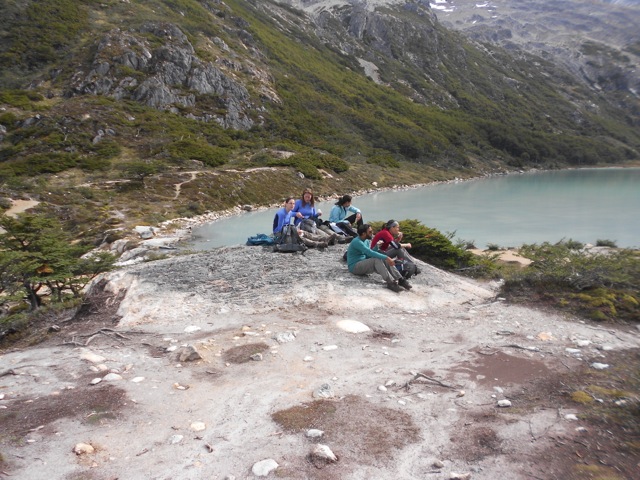
As we breach the top of the cliff we see Laguna Esmaralda below us, tinged blue-green by the million year old minerals flowing down from the glacier. Across the lagoon, the Albino Glacier flowed down the side of the mountain and into the laguna.

wpid-dscn1601-2013-03-8-17-07.jpg

The six of us stopped for lunch, but it was a little chilly and after a while the cold began to get to the girls, so we headed back. There was only one guy there when we arrived and he seemed to be acting a little odd – he went for a run around the lagoon and when he got back stood dancing to himself with his headphones on. We joked that he must have eaten one of the mushrooms we’d seen growing in many places across the field.

wpid-dscn1603-2013-03-8-17-07.jpg

The return trail was easier to cross as we had a better idea where we were going but it still ended up being a slow process of watching every step. We made it back to the breeder’s place, passing perhaps three dozen other people heading to see the lake. We were glad we went when we did and as we pretty much had it all to ourselves – except for the one strange guy.

Tomorrow I make my final preparations for my trip to Antarctica.

The Trail Wanderer
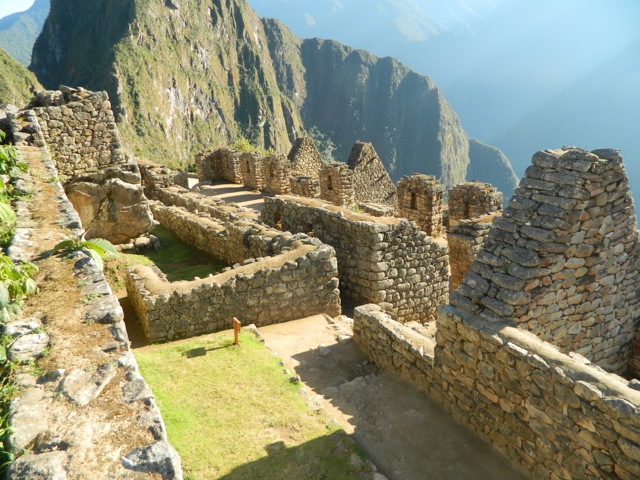
Martial Glacier – Martial Mountains – Tierra del Fuego
wpid-dscn1478-2013-03-1-17-5211.jpg

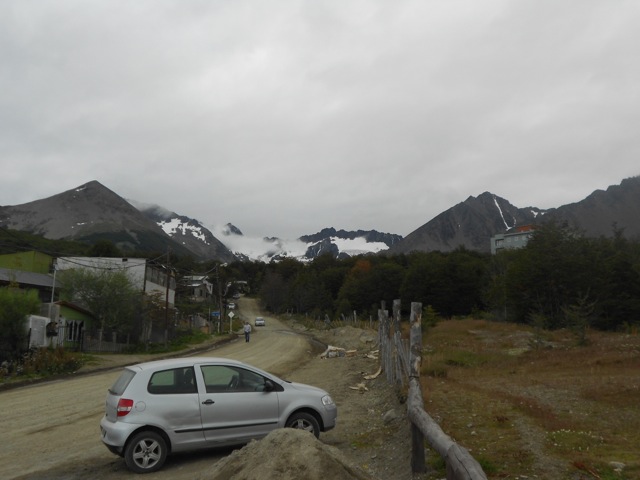
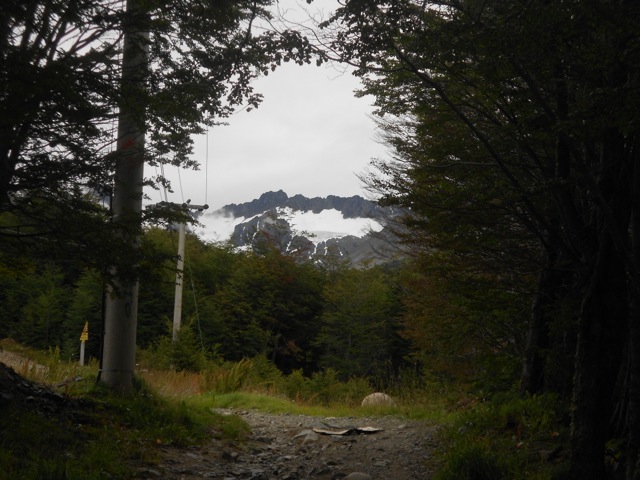
The Martial Mountain range – Montes Martial – is a small range of mountains behind the city of Ushuaia. The city itself is nestled in the foothills where the mountains meet the Beagle Canal. While not as jagged and tooth-like as others in the area, the mountain ramparts are still spectacular when seen from below. During winter much of the range is likely covered in snow, but as it is late summer there are only small dots of dirty white along the range, in all places except where I’m headed today.

wpid-dscn1471-2013-03-1-17-526.jpg

This mass of snow is above the glacier and is where I’ll be walking with a companion from the hostel. Because Ushuaia isn’t a large city we decided to walk from the hostel to the base of the mountains. We work our way through the confusing mass of streets until we cross a bridge that crosses the Arroyo Buena Esperanza – ‘Arroyo’ being spanish for stream – which cuts through the centre of the city to the sea. On the far side begins the road leading up through the short wood covered foothills.

wpid-dscn1472-2013-03-1-17-523.jpg

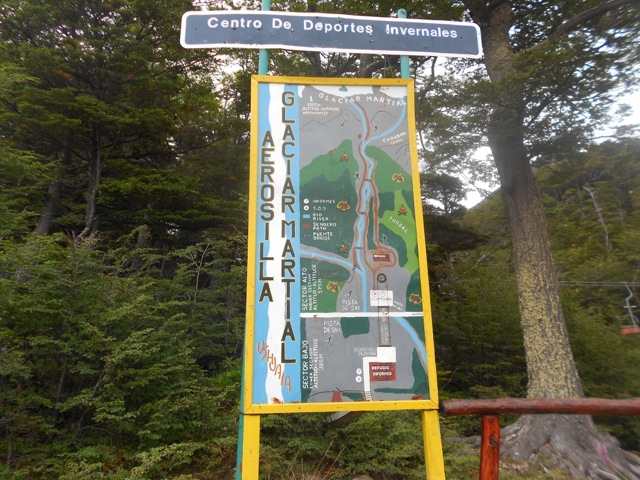
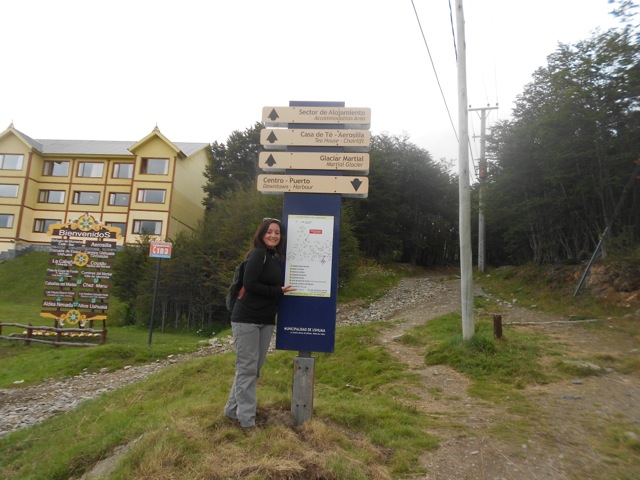
The road winds its way up the side of the foot hills with the occasional large hotel at the side. The initial trail doesn’t follow the winding road, but takes a more direct route with only the last hundred metres or so following the road to its end at a cafe and chair lift. Above us as we walk is the snow field although it’s sometimes covered in a lazy sweeping low cloud.

wpid-dscn1473-2013-03-1-17-521.jpg

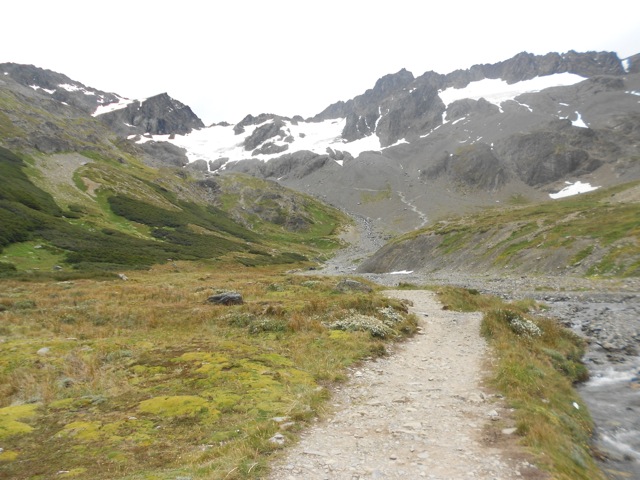
The Arroyo runs down the side of the mountain beside the wide rocky trail with the chair lift of the other side. The trail is not overly steep, but is rises constantly with the occasional wood covered ditch used as a water overflow during the summer melt.

wpid-dscn1496-2013-03-1-17-521.jpg

The chairlift is almost 1,200 metres in length and ends in a tea house. We cross a small bridge below the tea house and stop for lunch on the side of the stream. A couple of hundred more metres above and the trail splits three ways – to the right it leads to the beginning of a ski slope, to the left the top of a jagged peak (we are forbidden to climb without specialised equipment) and straight on to the glacier. This is where I leave my companion and head on alone – she is due elsewhere and heads back down the trail.

wpid-dscn1482-2013-03-1-17-521.jpg

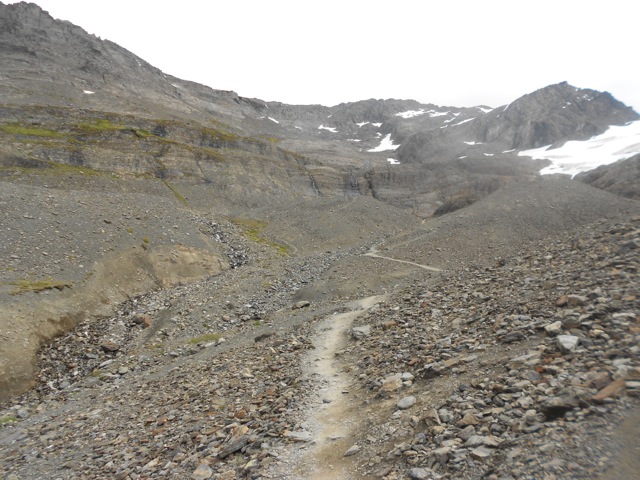
The trail continues beside the stream as I climb between the mountains on either side. After another couple of hundred metres, the wide road-sized trail ends and a very thin trail climbs steeply up the mountain. It doesn’t go far before turning to the left and heading out of view.

wpid-dscn1485-2013-03-1-17-521.jpg

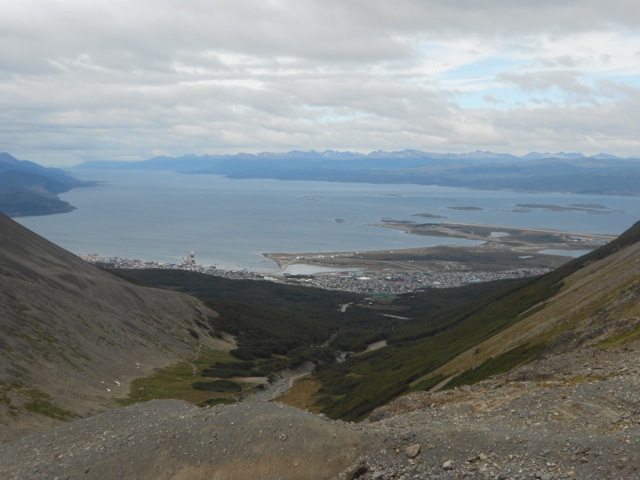
I climb the trail and it is indeed steep. It’s not a stepped climb, but an intense scree slope worn by many feet. I have to rest a couple of times on my ascent until I reach a line of orange markers denoting where the trail heads to the left and over a ridge. With this hardest part of the climb down, I head over the ridge and a further hundred metres or so to the base of the glacier. The views from here of the canal, the city and the surrounding mountains are spectacular, and the cloudy day has even given way to blue skies for this moment.

wpid-dscn1489-2013-03-1-17-52.jpg

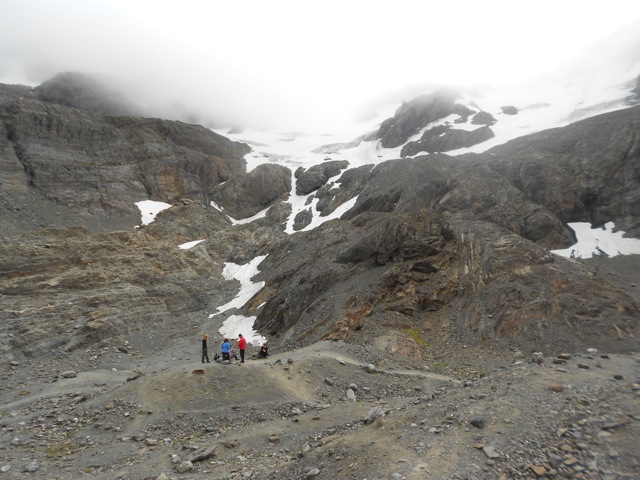
The glacier itself is a patch of snow with water running under it, and there are signs forbidding passage beyond a certain point. There were a couple of groups up there and we all ignore the signs and climb a little further to the base of the snow. 50 metres up I sat on a set of rocky shelves, similar to those I climbed in Tasmania and rest after my two and a half hour climb.

wpid-dscn1491-2013-03-1-17-52.jpg

Heading down was easier, as you would expect, with the only difficult part the thin, steep scree trail. After 90 minutes I arrived back at the hostel for a welcoming shower.

Next I head for my first overnight hike in Patagonia, Paso de la Oveja – Pass of the Sheep – which follows a long valley behind the back of Montes Martial.

The Lone Trail Wanderer