Tag Archives: Nature

El Altar, Sanjay National Park, Ecuador

Nearly two years ago, the government of Ecuador changed the laws regarding multi-day hikes. Because so many people were getting lost or dying, all hikes in the national parks now require a certified guide. Peru has a similar law, although it doesn’t police it as stringently as Ecuador does. And at US$50-80 a day for a guide, my dreams of doing a multi-day hike in Ecuador came to a screaming holt.

My companion and I caught a bus to Riobamba, a city six hours south of Quito and set about finding a hike we could do without a guide. After some investigation we found one – El Altar – an overnight hike into an area of mountains only policed one day a week.

Day 1
We were up early and waiting for the taxi. A crazy drive through the mountains followed to Hacienda Releche, the ‘trail head’ of the hike. We met the owners of the hacienda who quoted us 5-6 hours to their lodge in the mountains and at $12 per person per night it’s far cheaper than a guide.

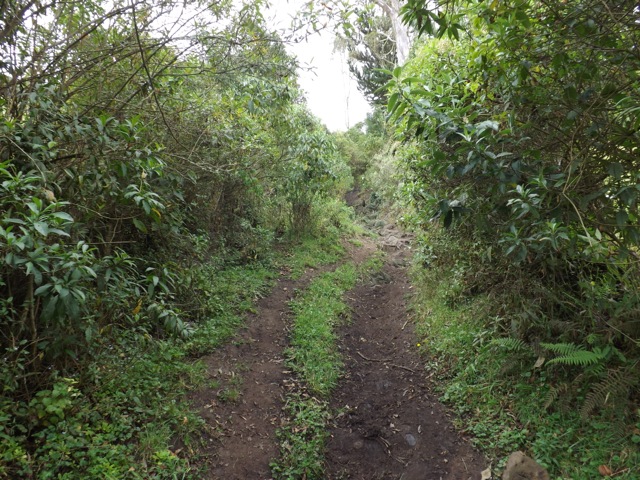
We began climbing along a dirt track following a gully. On either side was a thin line of trees and beyond were fields; one containing rows of flowers, the other grazing cows.
wpid-dscf2507-2013-10-13-21-07.jpg

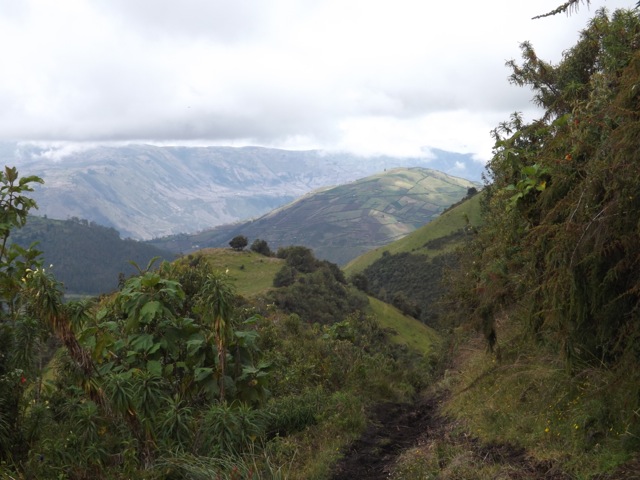
For the first two hours of the walk the trail climbed steeply up the side of the hill with the occasional short area of boggy mud. While the skies were cloudy there was no rain. A look back along the valley gave great views of the surrounding hills. By the deep green of the hills, I’d suggest it rains here fairly regularly.
wpid-dscf2510-2013-10-13-21-07.jpg

As we continued climbing, the trail grew less steep, but the mud increased dramatically. As the easiest way to get to the lodge is by horseback, this churns up the mud. In many places, it was difficult to pass without squelching our way through. Luckily, waterproof leather hiking boots have no issues with mud and we waded our way through, trying to fall over as little as possible. This is only a problem if the mud is soggy and wet, which for the most part it wasn’t.

wpid-dscf2525-2013-10-13-21-07.jpg

We stopped for a late lunch with a view of a road across the valley, before marching on. As the afternoon wore on, the rain began, and we decided to rest out of the rain for a bit, so following a short path we found a pair of large pine trees as shelter.

While we were waiting, we heard hooves on the track. I went to have a look in the rain and discovered around ten large horned, cows trampling along the trail. When they saw me they stared for a few moments before bolting back up the trail. A few minutes later, we heard hooves again, this time it was a group of riders leading the cows. Two of the cows had climbed the bank and charged through the area where we were sheltering, scaring the wits out of my companion.

wpid-dscf2537-2013-10-13-21-07.jpg

By this stage, we’d already walked 5-6 hours with no sign of the lodge. We continued on, crossing through gullies and the occasional stream. As darkness began to fall, we still hadn’t found the lodge and my companion began making suggestions of roughing it, as we didn’t have a tent with us. So under the light of our head torches we kept an eye out for sheltered spots but continued walking.

An hour and a half after dark we rounded a hill and could just make out buildings ahead in the vague moonlight. We reached the buildings and found the first one open. It was a dorm room with bunk beds and a bathroom. We dropped our packs and investigated the other four buildings. Two were locked dorms while the others were dining areas with kitchens and fireplaces. We found a bunch of candles and set up our room, cooked some dinner and collapsed into our sleeping bags.

Day 2

The next day we were up and after breakfast, we cleaned up the room, packed our bags and stowed them away in a hidden room off one of the kitchens. We then headed out across a stretch of soggy, rocky ground towards The Altar, a collapsed volcano surrounded by peaks. The valley is at about 4000m above seas level, and even with a slight grade crossing it was a struggle because of the altitude.
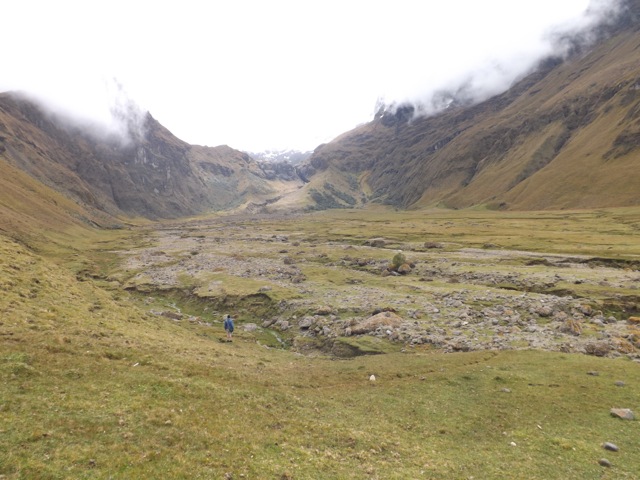
wpid-dscf2544-2013-10-13-21-07.jpg

At the far side was a tough climb up the valley wall. While the sky was cloudy and mist covered many of the mountains, we could just make out a snowy peak above us as we climbed. My younger companion raced ahead while I struggled with the altitude, even without a pack. During one of our regular breaks, we discovered another pair of guys close behind us. This pushed us on and eventually we came over the ridge to see the large crater lake and the bottom of the mountains surrounding it. El Altar.
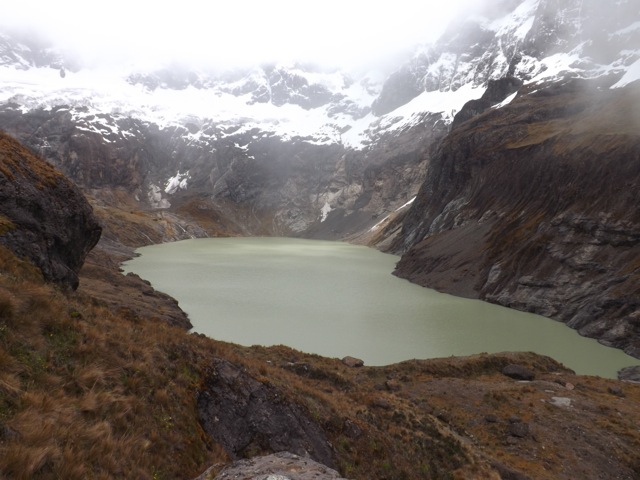
wpid-dscf2555-2013-10-13-21-07.jpg

We waited up there for almost two hours, watching as the clouds came and went. I noticed more than a dozen kinds of wild flowers growing in the area so set about taking photos of as many as I could.

At about 1pm, the sky began to clear and I was able to take a panoramic shot – something I’d not done before on my new camera.
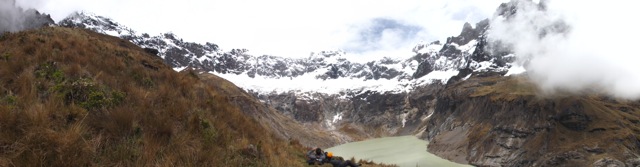
wpid-dscf2572-2013-10-13-21-07.jpg

On the way back we passed two other groups of people totalling 10 between them, before arriving back at the lodge to meet the lodge owner’s father, who was also the caretaker. Unfortunately, he didn’t speak english and our spanish wasn’t enough to get across that we had already paid for the previous night. The message finally got across with the help of one of the other guys and we booked another night. This time, we had a more luxury room – one of the locked ones.

Day 3

After breakfast, we packed and headed down from the lodge.
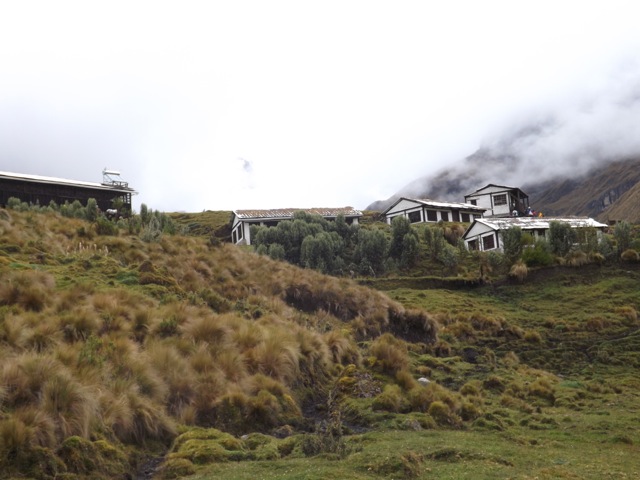
wpid-dscf2591-2013-10-13-21-07.jpg

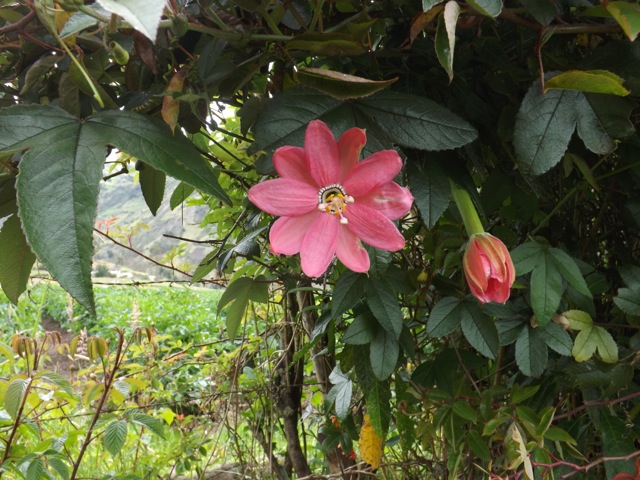
The climb down was fairly uneventful. There was the occasional rain, but nothing worrying. Most of the trail was dry mud but we also passed through several different levels soggy levels of it as we went: dirt, wet dirt, hard mud, soft mud, sludge and water pooled mud. For the most part, we found little of the last two and mainly plentiful soft mud. When climbing down a dirt or rocky trail, it can be hard on your knees, even with walking poles. But soft mud cushions your footsteps without swallowing your boots totally. As we walked, we saw more of the wild flowers…
wpid-dscf2595-2013-10-13-21-07.jpg

We finally reached the owner’s hacienda just as the rain began. After a lunch prepared by the owner’s mother, we waited for the bus that didn’t come before talking the park rangers into giving us a lift back to Riobamba. This was ironic because they would have stopped us from doing the trek if they had caught us at the beginning. We arrived back to the hotel we’d been staying at and the luxury of hot showers.

Summary
Overall, the trek was a lot longer than we expected, but we still had an awesome time and saw one of the few sights available without a guide in Ecuador. While the trail was muddy, it made the trek more of a technical challenge than an annoyance. For the views and the lodge, I would recommend this to anyone looking for an overnight and cheap hike in Ecuador.

Next we are off to Cuenca in Southern Ecuador to see Ingapirka, the most famous Inkan ruins in Ecuador.

The Trail Wanderer
Mindo, Ecuador – Impressions

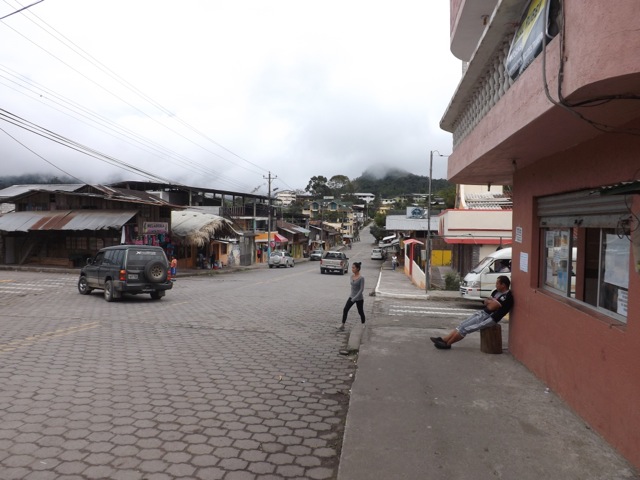
80km north of Quito is the town of Mindo, buried deep in the rainforest of North Ecuador.

As one of my friends leaves South America in the next week three of us, who’ve been hanging out in Quito, decided to go away for the weekend to have one last adventure together. Spending $8 in the taxi to the bus terminal, we paid $2.50 each for the 2 hour bus ride!

Mindo is a charming little town with a lot to offer, which is why it’s a common weekend destination for travellers stopping off in Quito. While it’d take a week to do everything on offer here, with only two days we decided to take it easy and enjoy ourselves.

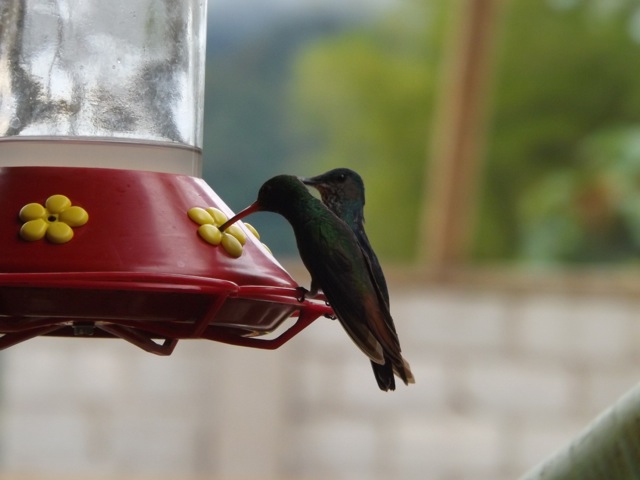
To start with, we found a place that served breakfast and ordered. While we were waiting on the balcony for the food to arrive, Hummingbirds flitted around, stopping to drink from a feeder.

wpid-dscf2404-2013-10-6-18-53.jpg

They skit and bob around like insects with their wings blurred and are the only birds that can fly backwards. It was impossible to get a clean photo of them while they were flying as the camera just couldn’t focus on them fast enough. There are 14 different types of them here.

After breakfast, we went for a walk to check out what the town had to offer. 10 minutes later, we were done having seen the bar district and the restaurant district. The town consists of a main street, several short side streets and a plaza.

wpid-dscf2402-2013-10-6-18-53.jpg

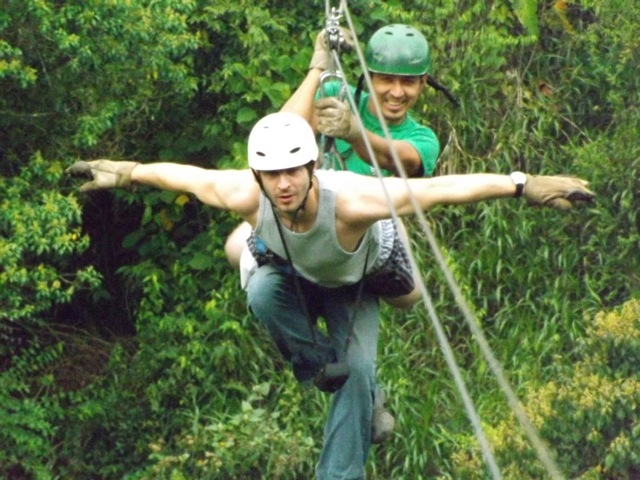
Next, we decided to go zip lining and walked the 3km up the hill to one of the companies that offered it. There were 10 different lines and on most of them we were able to ‘fly’ while accompanied by one of the two guides. Hanging from our backs we sped along with arms wide, aeroplane style. Overall, it was a most fun two hours.

wpid-dscf2438-2013-10-6-18-53.jpg

That evening, we headed out to the bar district for tapas and sangria. We discovered we were some of the only foreigners in town that night, so after eating, we headed back to hostel for our own little party, just the three of us.

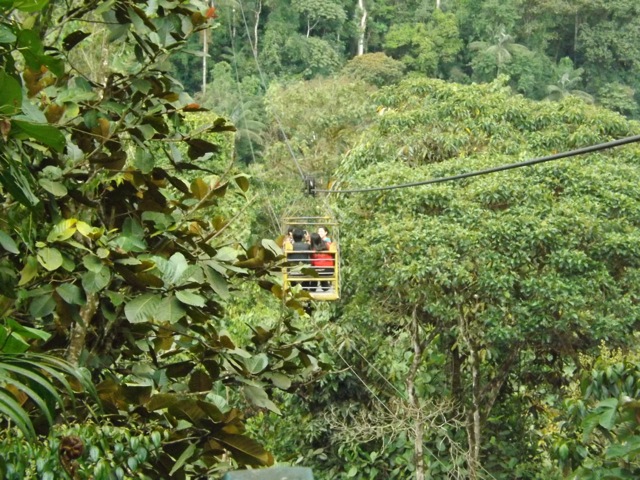
We woke late the next day and after breakfast, decided to visit the waterfalls. By the time we headed up there it was early afternoon. To get to the falls, we caught a taxi the 10km to a home-made cable car which took us across the valley. The engine was made from an old van with gears and all…

wpid-dscf2467-2013-10-6-18-53.jpg

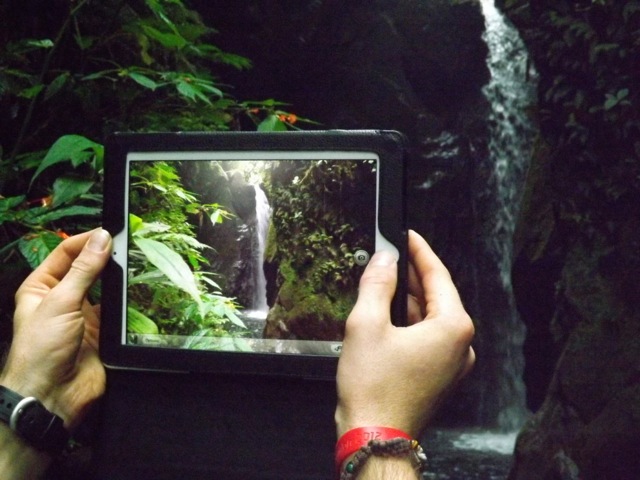
On the other side of the valley, we walked down a dirt trail in the rainforest for some time arriving at some of the waterfalls. Hot from the walk, two of us donned our swimmers and leapt in, and out again, as the water was as cold as expected. There are 7 sets of waterfalls in the area, but in the two hours before the cable car stopped for the day we got to four of them.

wpid-dscf2477-2013-10-6-18-53.jpg

That evening we hung out with a group of new arrivals at the hostel before heading to bed early. While we had only two days in the town, there are many other things we could have done, including canyoning (where you rappel down a waterfall), tubing down a river (like rafting but large tire tubes tied together) and an animal sanctuary, to name a few.

It’s a peaceful change from the city and at the price to visit and stay, it is well worth the effort if you are in Quito with a few days to spare. Just remember to take your Malaria tablets and try to avoid mosquitos, although it was the midges that feasted on us.

Next, it’s back to Quito to prepare for a four day walk around Cotopaxi, one of the world’s tallest active volcanos.

The Trail Wanderer
Galapagos Islands Cruise

The Galapagos Islands are an amazing set of volcanic islands just under 1000km from mainland Ecuador. There are several ways to see the islands each with benefits and drawbacks:

  • Pre-booked cruises are the most popular means to see the Islands and are commonly booked from the mainland. They are perfect for those with only a short vacation time but can also be the most expensive.
  • Booking a Last Minute cruise when you arrive on the islands is more suitable for long term travellers or those with plenty of available time. The cruises are up to half the price of a pre-booked cruise but there may be some wait before departure day.
  • Island hopping is possibly the cheapest means of seeing the islands and can be tailored to however long you have available. They take more work to organise and you can’t get to some of the more distant islands the cruises can take you to.

For my trip to the Galapagos, I simply flew to the Islands and booked a Last Minute 4-day cruise. The cruise started several days after I booked it, giving me time to explore parts of Isla Santa Cruz and Puerto Ayora.

Day 1
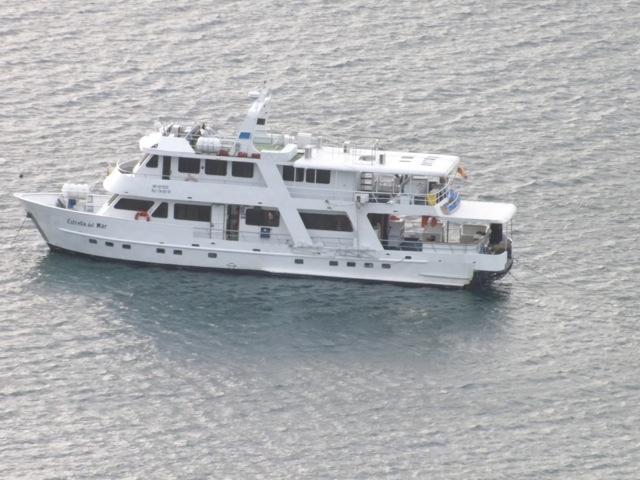
The day began early with myself and my Uraguayan friend leaving the hostel at 7a.m., having a quick breakfast in town before catching a taxi to the bus terminal. After a 90-minute mixed bus and ferry ride we arrived at the airport where we met our tour guide and some of the other passengers. We were taken to the boat, the Estrella del Mar – Star of the Sea. The boat’s passenger capacity was 16 and my friend and I were the oldest of the group.

wpid-dscf2273-2013-09-27-20-42.jpg

Onboard the Estrella del Mar we were given a delicious lunch and as we sailed to our first destination, Isla Bartolomé, had a chance to get to know the other passengers. As we travelled the choppy seas and the rocking of the small boat caused me to feel a little sick, so I took some sea sickness pills I had left over from my Antarctic cruise.

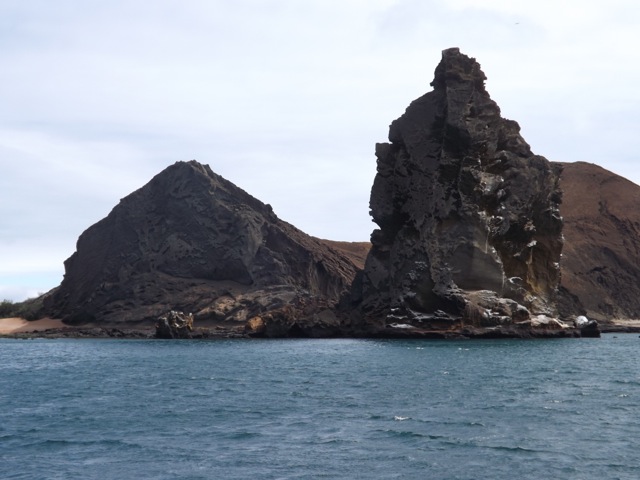
We arrived into the calm waters of Bartolome Island in the early afternoon and donned our wetsuits. We were dropped off on the shore and snorkelled for an hour around the pinnacle – a large piece of weathered rock sticking up at the edge of the beach.

wpid-dscf2240-2013-09-27-20-42.jpg

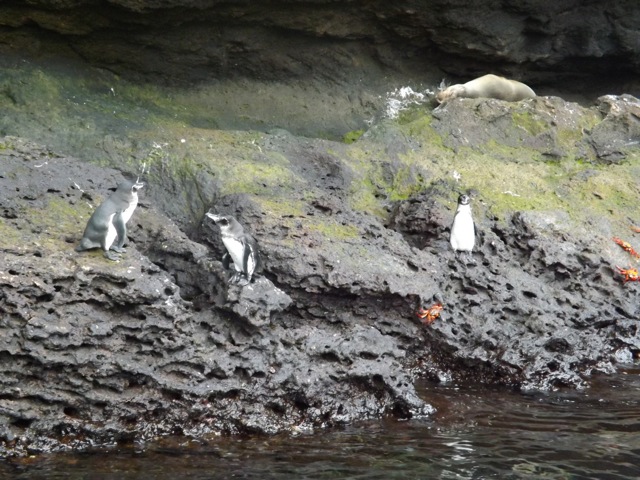
While there wasn’t any coral, there were plenty of fish. As we swam we located several Galapagos Penguins hanging out on the rocks and the occasional Galapagos sea lion doing the same.

wpid-dscf2252-2013-09-27-20-42.jpg

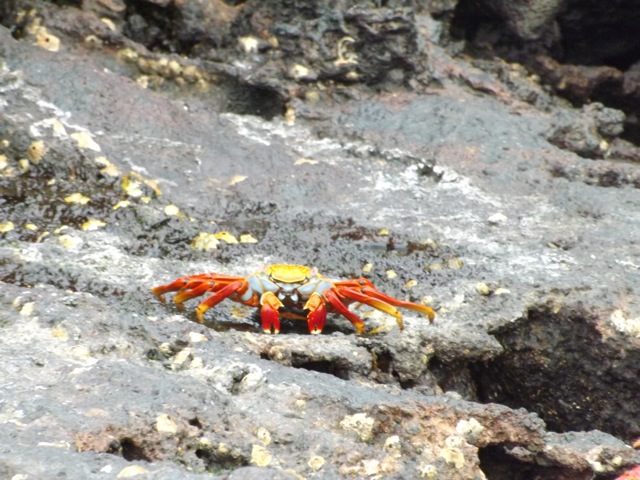
There were also plenty of small colourful crabs climbing the rocks so I swum in for a closer look. As I got nearer to the shore, I went underwater and came face to face with a White Tip Reef shark sleeping in a small cave under the rocks. While they aren’t usually aggressive, I was still cautious for the few minutes I watched it. I did eventually get a shot of the colourful rock crab.

wpid-dscf2249-2013-09-27-20-42.jpg

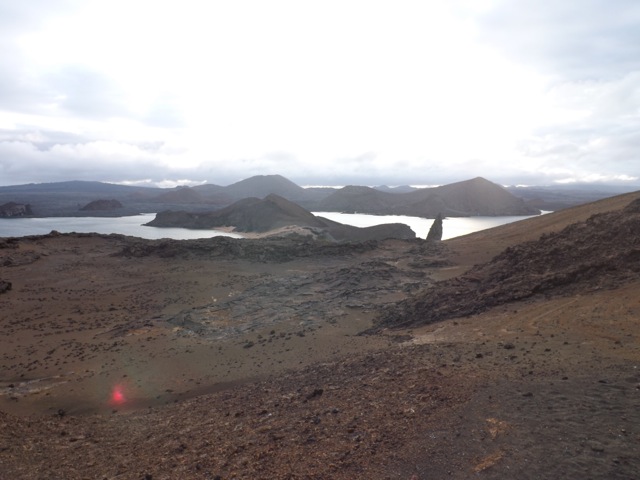
After returning to the beach, we were taxied to the boat where we changed before being delivered to another part of the island, to hike to the top of a volcanic hill. There were great views and our guide was very knowledgable about the formation of the islands.

wpid-dscf2266-2013-09-27-20-42.jpg

After the hike, we returned to the boat for dinner while it headed north. At about 11p.m. we cross the equator.

Day 2
Our cabin was on the lower level at the front of the boat. So, while we were in motioned overnight, the cabin was very hot even with the air conditioning on.

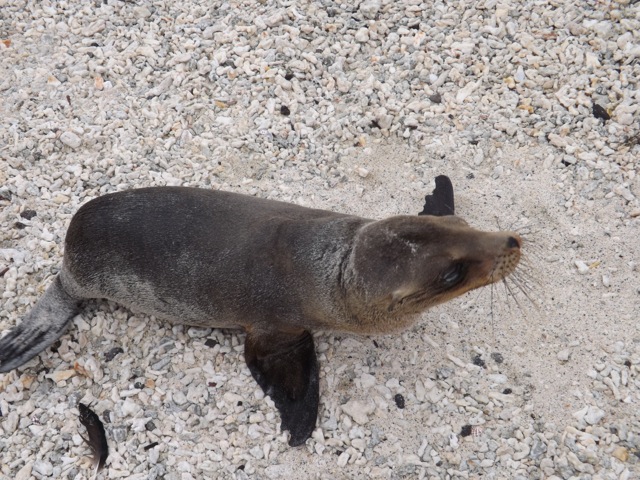
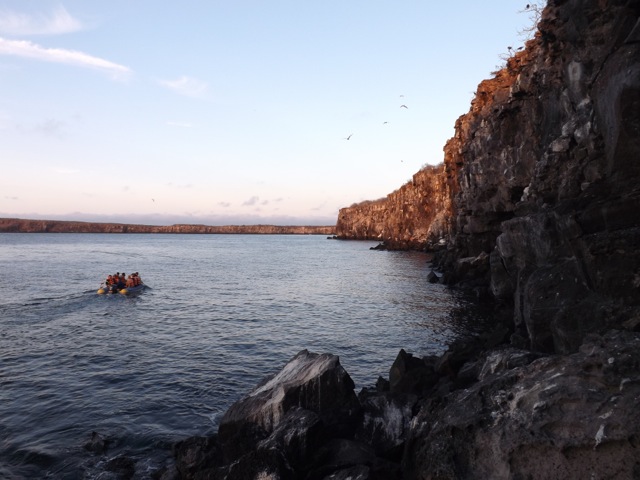
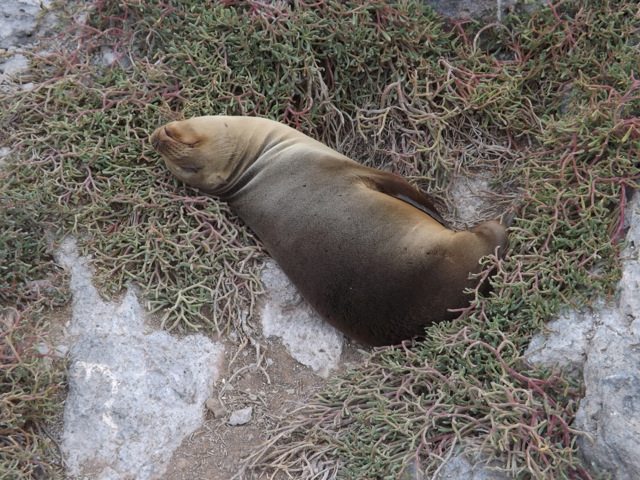
In the early hours of the morning we arrived at Isla Genovesa, an extinct volcano where a massive sinkhole had filled with water to form a natural harbour. After a large breakfast, we were taken in the zodiacs to the beach, where we went for a short walk around the beach and a small patch of mangroves. This allowed us to see several nesting species of birds, black Marine Iguanas and fur seals, including this cub.

wpid-dscf2281-2013-09-27-20-42.jpg

We then changed into our wetsuits on the beach before heading into the water. We snorkelled for about an hour in the fairly murky water. We saw plenty of fish similar to yesterday, but little else. We were taken back to the boat briefly before being taken across the bay for more snorkelling. This is the only spot on our cruise where Hammerhead sharks are commonly seen but after an hour in the water we had no luck. I had fun swimming a little way down the shelf that drops off to a depth deeper than the ships sonar can see, making it more than 350m deep.

wpid-dscf2303-2013-09-27-20-42.jpg

Back on the boat, we had lunch and relaxed for a couple of hours. Many of us napped after a long morning of swimming. When we were ready, a small group of us were taken to third spot in the bay for yet more snorkelling. It was calmer and warmer in the water as the sun had broken through the clouds during lunch. We swam along the wall of the bay, the rocks climbing up about 20 metres. We were joined by a couple of sea lions, but they only played for a few minutes before heading back to their rocks. We snorkelled on, but saw little more.

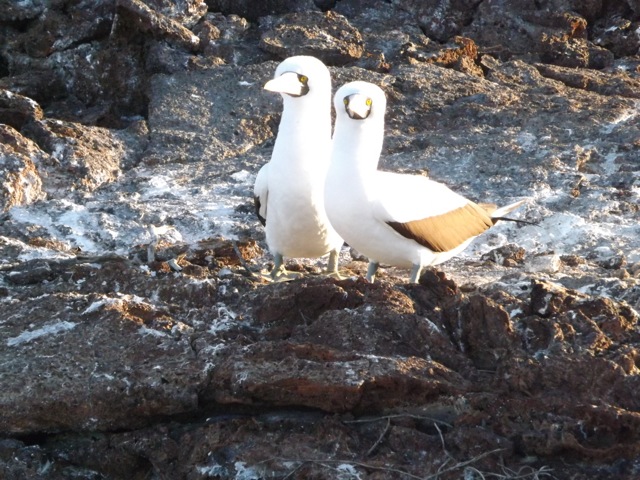
Lastly, after heading back to the boat for a shower, we climbed to the top of the rocky wall and walked through the hardy trees to see more wildlife. We spied the Blue Footed Boobie, a Petrel, a rare sighting of a Galapagos Owl – which actually hunts during the day – and a lovely pair of boobies, Nazca Boobies that is…

wpid-dscf2298-2013-09-27-20-42.jpg

After the hike, we were taken back to the boat for dinner and an early night following a very busy day. During the night we headed back across the equator and it was again very rocky aboard.

wpid-dscf2304-2013-09-27-20-42.jpg

Day 3
Overnight the rocking of the boat caused me to feel very sick, but only in my cabin, so I forwent my usual evening movie and just went to sleep. And this was after having taken seasickness pills. I awoke in the morning to calm seas and felt much better.

After a hearty breakfast, we set about getting ready for our first activity, a short hike across South Plaza Island to see some wildlife.

We started on the beach where many fur seals were sleeping.

wpid-dscf2308-2013-09-27-20-42.jpg

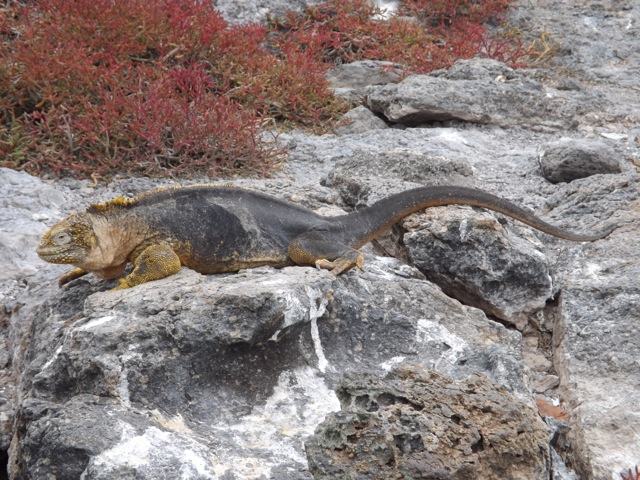
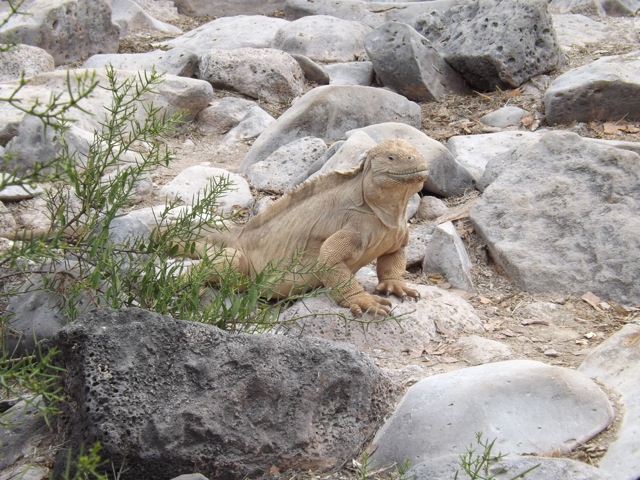
We then walked along the rocky trail stopping for photo opportunities and discussions about the flora and fauna. Among the various species of birds we spied a land Iguana. This one is a metre long.

wpid-dscf2309-2013-09-27-20-42.jpg

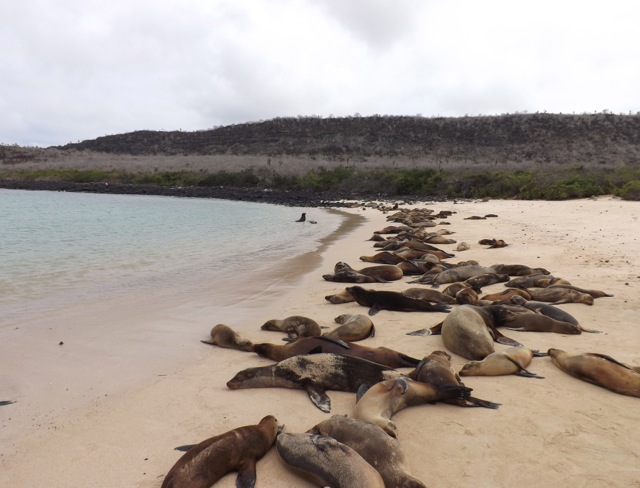
Then it was back to the boat and off across the strait to Isla Santa Fé where we had lunch and prepared for another walk. We landed on the beach amidst plentiful napping sea lions…

wpid-dscf2324-2013-09-27-20-42.jpg

We walked along a rocky path seeing two species of lizard, the metre long yellow land Iguana…

wpid-dscf2334-2013-09-27-20-42.jpg

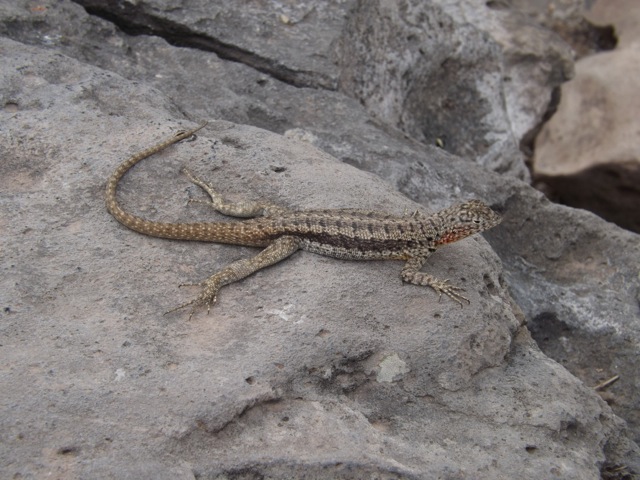
…and the 10cm long gecko.

wpid-dscf2332-2013-09-27-20-42.jpg

Then, it was back to the boat to change into our wetsuits in preparation for our final snorkelling session of the cruise. Swimming in the bay at Isla Santa Fé makes me want to buy an underwater camera. Firstly, there were playful sea lions and I finally found my first coral in the waters. It wasn’t very colourful, but some coral is better than no coral. Then, as we snorkelled across the small bay, we were joined by sea turtles and stingrays sucking at the sand on the bottom. All in all, an excellent snorkelling session for our final day.

wpid-dscf2336-2013-09-27-20-42.jpg

Back on the boat, we set sail for Puerto Ayora harbour where we dropped anchor for the evening.

Day 4
The final day on the cruise was a little disappointing. When booking the cruise, we enquired if they would be going to either the Giant Tortoise colony or to Charles Darwin Research Station, where they look after the young animals. We were told the cruise would finish at the Research station, so prior to the cruise, my Uraguayan friend and I headed up to see the Giant Tortoises. As it turned out, the group was taken to see the Giant Tortoises. But instead of seeing them again, we called an end to our trip and headed back to the hostel.

Summary
Overall, the cruise around the Galapagos Islands was great. While the islands don’t feel as tropical as other Pacific Islands, the diverse species of animals, especially the ones that are native to these islands were amazing. A most enjoyable cruise.

After a couple more days in the Galapagos Islands, I fly back to Quito.

The Trail Wanderer

Galapagos Islands, Equador – Adventures

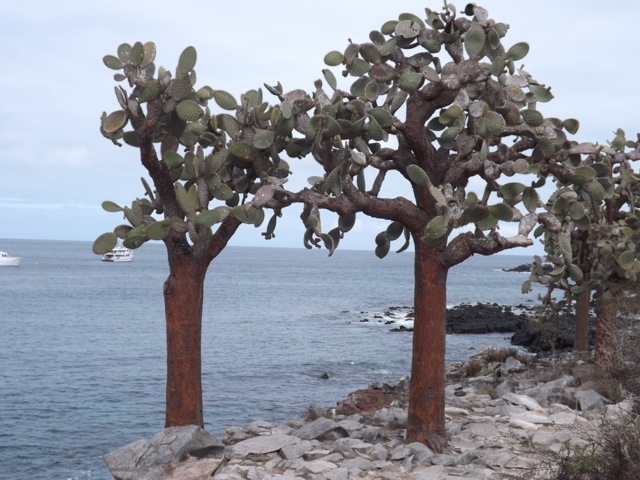
The Galapagos Islands is an archipelago of volcanic islands about 1,000 kilometres off the coast of Ecuador. While they’re technically Pacific Islands, they don’t have the same tropical islands feel like that of Tonga or Fiji. There are no palm trees here, for example.

Most people travelling to the Galapagos come for a cruise to see the diverse animal species. Most cruises are organised from the mainland before arriving and can be expensive. So, I decided to book a flight to the islands and to look for a ‘last minute’ deal when I got there, like I had for Antarctica 7 months ago. If you have time to spare, this is the cheaper way to go.

After an hour in a taxi from the hostel to the airport, a 30 minute stop off in the port city of Guayaquil and a 90 minute flight, I finally arrived on the islands. The airport is situated on a desert island, not the sandy romantic type, but a more rough dry vegetation type. What they don’t advertise is the US$100 entry fee into the National Marine Park – which covers all of the islands. Luckily, I had just enough on me, otherwise they would have taken my passport and I would have had to pay and collect it somewhere in town.

wpid-dscf2162-2013-09-22-22-081.jpg

I caught a bus to the ferry pier, caught a ferry to Santa Cruz Island, and another bus to Puerto Ayora. After my early flight I napped for the hour and a half it took to cross the island. I woke as I arrived in the port town…

wpid-dscf2170-2013-09-22-22-08.jpg

At the hostel I met a Uraguayan guy, Ernesto, who I ended up hanging out with for the rest of my time on the islands. We were greeted by the owner Kevin, from the US. Kevin took us on a free tour of the town introducing many of the aspects that were useful to know. At the end of the tour, Ernesto and I booked a 4-day cruise at a fairly good price. It was a couple of days away, so we explored some parts of the island.

Giant Tortoises
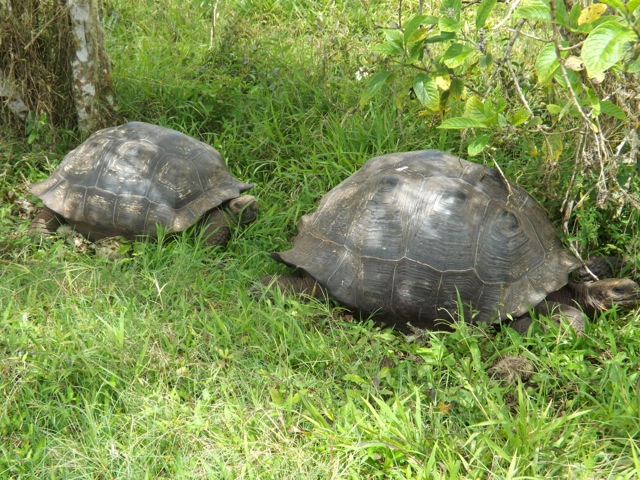
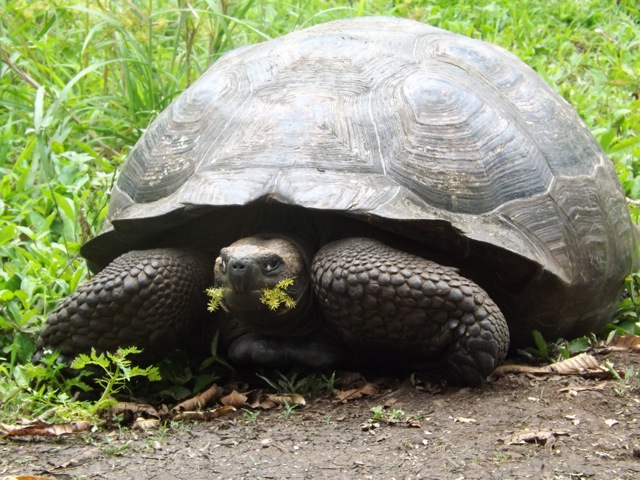
At the top of the island is a sanctuary for the massive giant tortoises that can only be found on these islands. They wallow in mud, chew grass and take very leisurely strolls down the side of the main cross island road. While fencing is used to separate properties on the islands, the tortoises are allowed to go anywhere they want, albeit slowly.

A taxi to anywhere in town is US$1 by law, but to get to the Giant Tortoise sanctuary it costs US$30 and the driver who takes you up there becomes your impromptu tour guide – thankfully Ernesto could translate. At the end of the tour, the driver takes you to several other places before dropping you back at your hostel.

wpid-dscf2201-2013-09-22-22-08.jpg

The reserve on Santa Cruz Island isn’t large but we met many of the tortoises who were just sitting around munching grass or drinking muddy water. The very large ones are the males (some 1.5m long) while females are smaller. There were several young aged 3-5 years, which were about the size of normal turtles. You’re not allow to approach to within 2 metres of the animals, but even at 5 metres some of them pull in their heads and hiss. They could no doubt give a nasty bite, so we kept our distance.

wpid-dscf2185-2013-09-22-22-08.jpg

Lava Tube
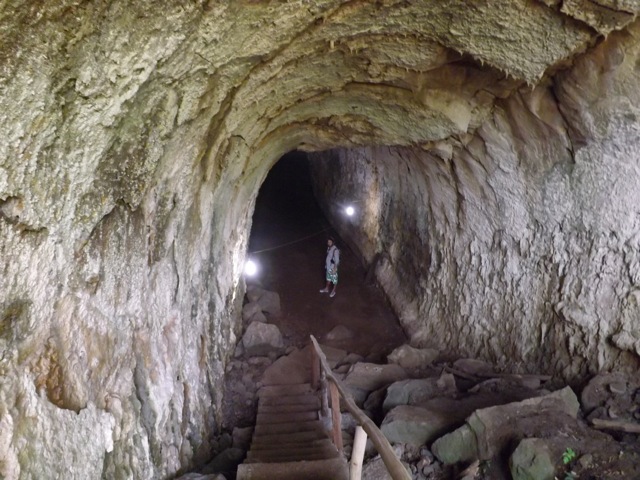
After visiting the tortoises, the driver took us to a large lava tunnel and dropped us at the start before going to wait for us at the exit. Stairs descend into the tube, which was slightly taller and wider than a train tunnel. The tube is nearly 500m long and is lit by sporadic lights.

wpid-dscf2207-2013-09-22-22-08.jpg

Near the end the tunnel roof descends, giving only a crawl space for about 2 metres. After crawling through on our bellies we met the taxi and were taken back to town.

Swimming Hole
While it’s not steaming hot in the islands, it can be a little muggy first thing in the morning. The day before the cruise was cloudy but warm, so we decided to find the swimming hole we’d been told about. Just prior to leaving, an English couple arrived at the hostel and we invited them to join us.

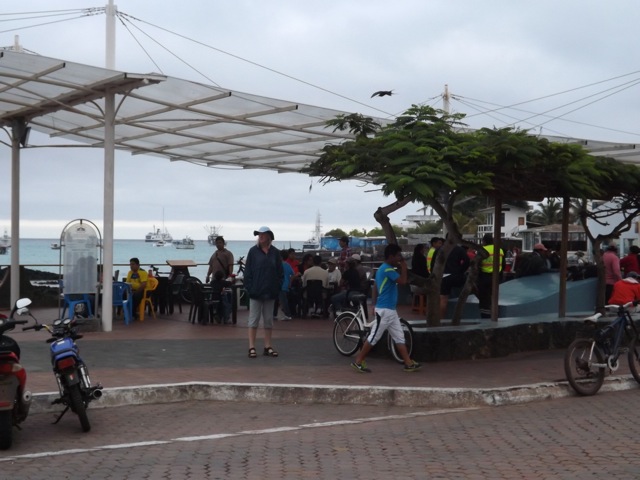
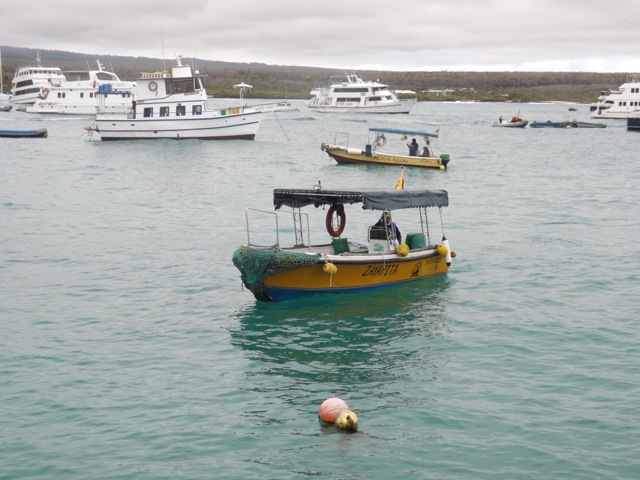
From the pier at the centre of town a water taxi takes us across the small harbour for 60 cents, zig-zagging through the yachts.
wpid-dscf2229-2013-09-22-22-08.jpg

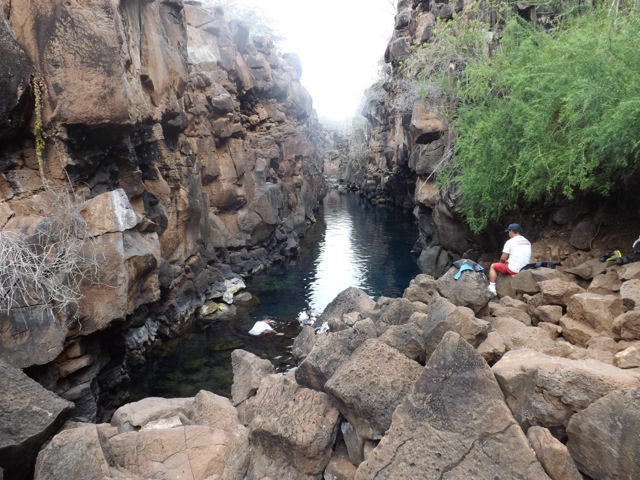
We then walked across volcanic rock for 20 minutes to a natural fissure in the rock about 40 metres deep. The bottom 10 metres is filled with water.

wpid-dscf2217-2013-09-22-22-08.jpg

A pair of bikini clad girls from Florida at the edge of the swimming hole told us the water was cold. Of course the best way to get into cold water is to dive. But, the water wasn’t as cold as expected and the four of us ended up swimming for an hour, occasionally climbing up the sides and jumping from the rocks.

Eating
Puerto Ayroa has plentiful restaurants and being in the Pacific, seafood is common. For the three nights we stayed we ate in three different places. Firstly, at the pier where the boats bring daily fresh catches. In the morning they sell their catches of fish and crayfish, then in the evening they have a cheap seafood fry up. Very tasty.

wpid-dscf2358-2013-09-22-22-08.jpg

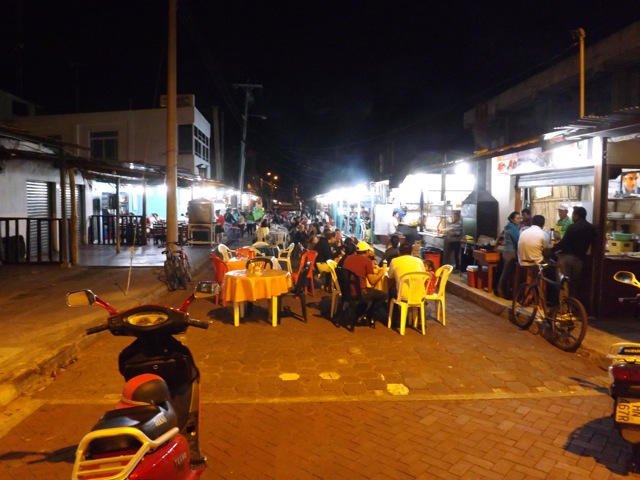
On night two, we discovered a street where all the small restaurants block the road by setting up plastic tables down the middle. At one particular restaurant, I ate a local fish dish – Caviche – where they slowly cook raw fish in a lime throughout the day. Yum!

wpid-dscf2361-2013-09-22-22-08.jpg

Day three, with our new English friends, we ate at a normal restaurant. Boring, but still tasty.

Tortuga Bay Beach
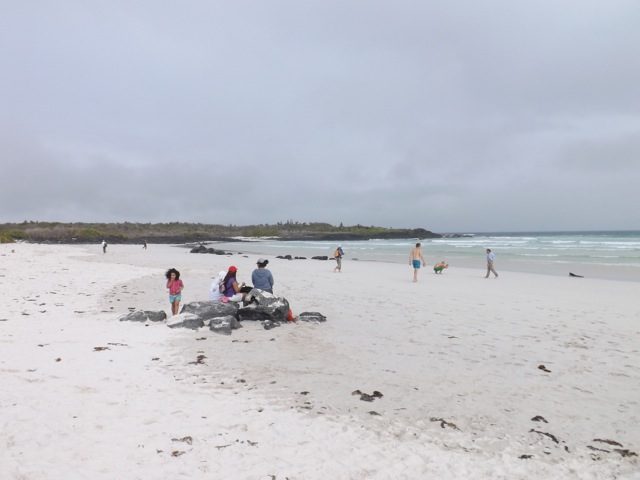
Lastly, on returning from the cruise, we decided to head to Tortuga Bay beach, a 30 minute walk along a 2.5km path. The day we went was warm but very cloudy and when we arrived at the beach it was beautiful but rather cold.

wpid-dscf2349-2013-09-22-22-08.jpg

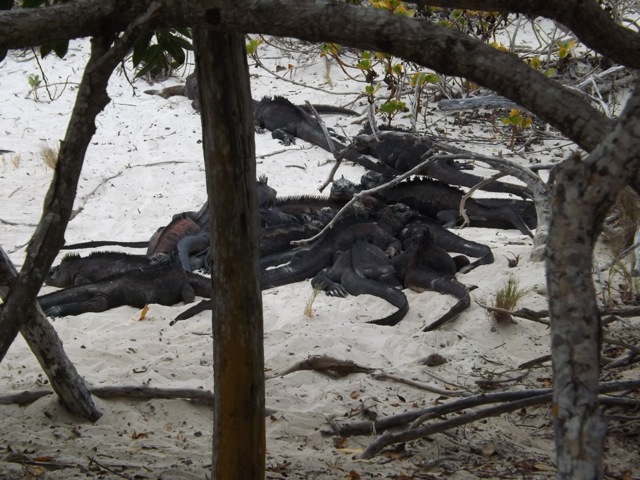
As we walked we spotted several black Marine Iguanas wandering down the beach. Middle right in the above picture. When necessary, he uses his long tail to swim through the surf. Then, at one end of the beach, we also found an Iguana pile…

wpid-dscf2356-2013-09-22-22-08.jpg

As evening approaches, the Iguanas head a special location and pile on top of each other to conserve heat during the night. The Marine Iguanas are the only species of in the world that do this, and at a half a metre long each, that’s a big pile.

Next, the 4-day cruise around the islands.

The Trail Wanderer
Mancora, Northern Peru – Impressions

Máncora is the second most popular tourist destination in Peru, with Cusco / Machu Picchu the first and Arequipa / Colca Canyon the third. While most of Peru’s tourist destinations have plentiful tours – hiking, boating, climbing, rafting and the like; Máncora is different. There are tours, but the main attraction is the sand and the amazing beaches.

My original plan was to skip Máncora on the way to Ecuador. But the bus from Lima to Quito is nearly 2 days long, so to break it up, I decided to wait for the bus to pass through by hanging out at the beach for a few days. Sounds horrible, I know, all that waiting.

Máncora has a local population of just over 9,000 people and has an average altitude of 11m above sea level. This is of interest because I’ve spent most of my time in Peru at 3,000m and above.

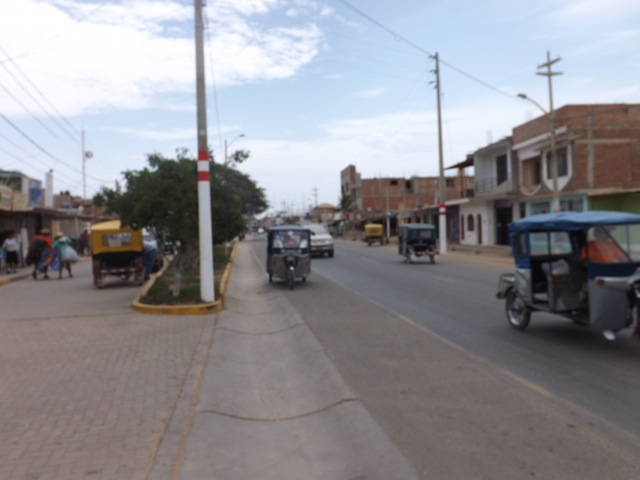
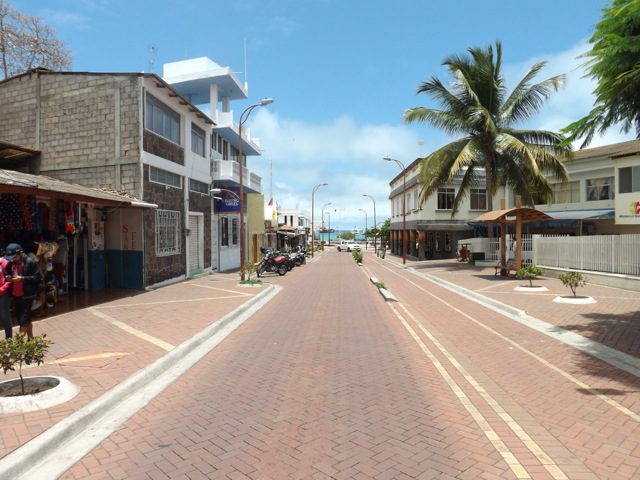
On arriving in the town, the first thing I noticed was the number of Tuk Tuks on the main street.

wpid-dscf2149-2013-09-22-22-08.jpg

As I stepped off the bus I was accosted by the usual taxi drivers but made sure I booked my ticket to Quito first. Then it was a mad dash on a slow Tuk Tuk to my hostel, which was right on the beach front.

wpid-dscf2147-2013-09-22-22-08.jpg

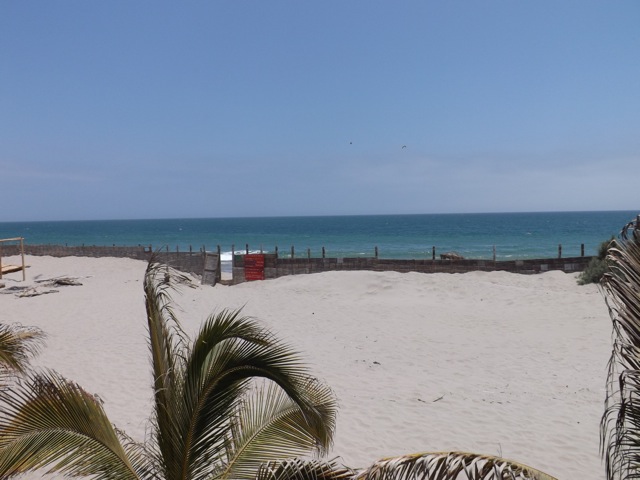
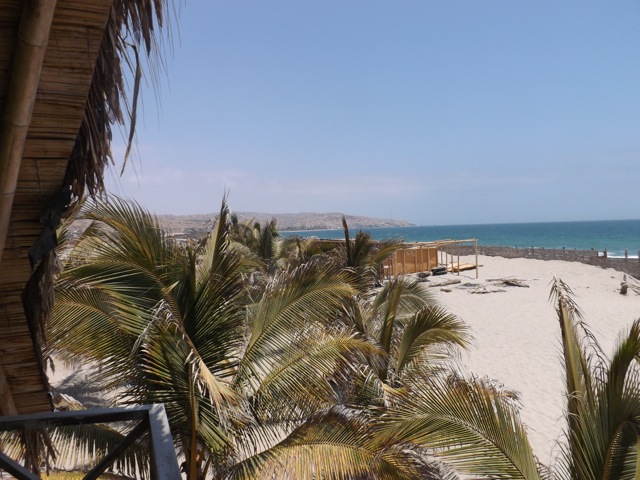
My cabaña was a two level dorm with 5 beds and a balcony which looked out of the Pacific Ocean, only 20 metres away. The golden sand is hot and the sun blaring, but what do you expect from the beach?

While I went into town a couple of times; once for dinner at one of Máncora’s many amazing restaurants, and once for a look around. But I didn’t find much there as it’s a beachside town and people don’t visit for its shopping. So, for most of the four days I was in town, I just lay around on the beach, wrote, or swapped movies. It seemed that everyone staying at the hostel had a hard drive. So, while we were sitting on the beach, our computers were copying our selections. Honestly, what else is there to do on the beach? Such a hard life!

wpid-dscf2148-2013-09-22-22-08.jpg

Then at the end of the 4 days, my bus arrived and I was off again to Quito.

The Trail Wanderer
Santa Cruz trek, Cordillera Blanca, Peru

While there are many hikes in the Cordillera Blanca, the Santa Cruz hike is the most popular, and is usually done with a guide. Hiking with a guide doesn’t feel like true hiking, especially when they carry half of the equipment, set up tents and prepare your food. So, I decided to do it without one. As it happens, four Americans at my hostel were also planning to go guideless. And while I prefer to hike alone, I wouldn’t be totally alone in the mountains… We booked a bus to the start and prepared to leave early the following morning.

Day 1

Not having a good night’s sleep the night before a hike is a bad thing. I discovered this on the Colca Canyon hike and well, it seemed to happen again!

The bus trip to the beginning of the hike is five hours on a local bus. Unlike the five of us lads, peruvians have short legs, so there was not a lot of room in the bus. The cramped first two hours of the trip was on a sealed road and then the last three hours was to be on a very rocky dirt road. Five minutes onto that dirt road, however, the bus gave up and with black smoke pouring out the side, the transmission fell out. The pool of red transmission fluid under the bus is not obvious in this photo, but it’s there…

wpid-dscf2031-2013-09-13-13-322.jpg

After an hour the bus was fixed, but only enough for it to return to base leaving us to wait for another one. Three hours later it arrived and we were on our way again. Three hours of jaw rocking dirt road meant no napping for me!

We were delivered to the small village of Yanama and discovered a group of three girls and a french couple who were also doing the hike without a guide. While the french couple were quite typical of many french people I’ve met in South America so far – they treated us like we didn’t exist and totally avoided us – the three girls decided to join the group. With eight of us, and two particularly chatty girls, my hike was going to be noisier than I wanted. So, I let the other seven head off and dropped to the back to walk alone.

The first part of the hike leads out of Yanama and down the hill via a steep dry track, crossing one dirt road on the way and eventually the river via a concrete bridge. I headed left as the trail widened leading through a couple of villages where every small child ran up and demanded bon-bons. Never give the kids bon-bons!

wpid-dscf2033-2013-09-13-13-322.jpg

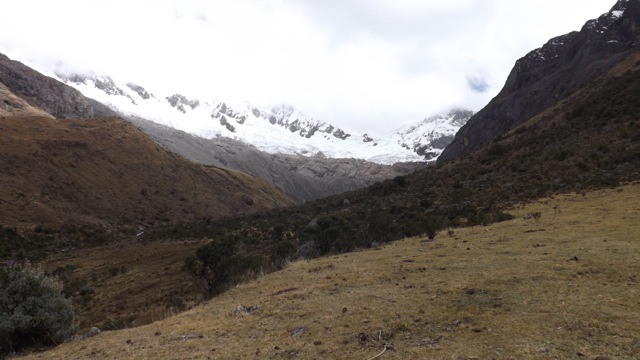
Finally, I came to my first climb of the day. It wasn’t a large one but my lack of sleep caused me to struggle up it. I met the others at the top and stopped for a rest as they headed off again. I was hoping there wasn’t going to be many more climbs as the direct sunshine on top of my tiredness was draining. But there were a few. Eventually, I rounded a bend in the valley and saw a group of tents a couple of kilometres away and figured this was my companions. I set out towards them, making slow progress across some small hills.

wpid-dscf2034-2013-09-13-13-321.jpg

I was getting close to the tents when I came across a pair of cows on the trail, staring me down. Did you know that more hikers are killed every year by cows than anything else? It’s true! Google it. Not wishing to be trampled to death for getting too close, I went around, through a boggy area of ground. Exhausting!

wpid-dscf2037-2013-09-13-13-321.jpg

I finally made it to the tents to discover it wasn’t my group but a guide and his party. He pointed me further along the trail, so I struggled on. After another kilometre I still hadn’t located my amigos and with the trail leading up some hills, I picked a spot for a camp near the river and set up my tent. After cooking dinner and getting ready for the next day, I slumped into my sleeping bag and slept.

Day 2

From my planning, I was aware that Day 2 was the most difficult day of the hike. From my camp at 3,800 metres (above sea level) I would walk 13 kilometres and climb nearly a kilometre to a pass called Punta Union at a height of 4,750 metres. Followed by a further 3 kilometres down the other side.

While The Choro trek in Bolivia began 50 metres higher, I only had to climb 100m total before descending on that hike. If that 100m was hard because of the altitude, this one was going to be a very difficult day indeed fighting the altitude the entire way.

wpid-dscf2041-2013-09-13-13-321.jpg

I packed up and left my camping spot. After a fairly good sleep, I had more energy, so I set off along the trail with more vigour. But while climbing hills was still hard, it was easier than day 1.

wpid-dscf2047-2013-09-13-13-321.jpg

After a kilometre, I found the empty campsite where the other seven had camped. I headed along the valley slowly climbing as I went. As the day progressed I climbed higher along the valley. I consider any height above 3,700m to have a thin atmosphere – with less air pressure. Being a large framed, large lunged person, the higher I went the more trouble I had getting enough air and spent a lot of the time out of breath. There was a point where I had to take a break to catch my breath after every 10 steps; but only when climbing.

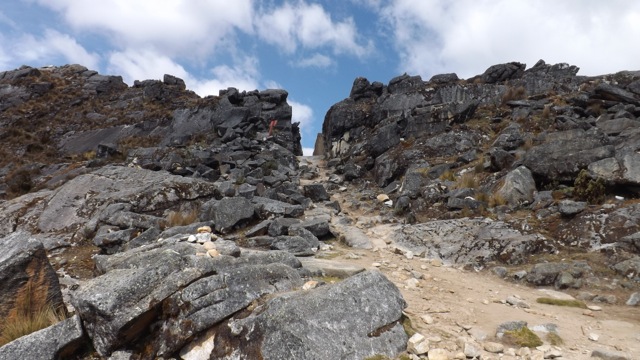
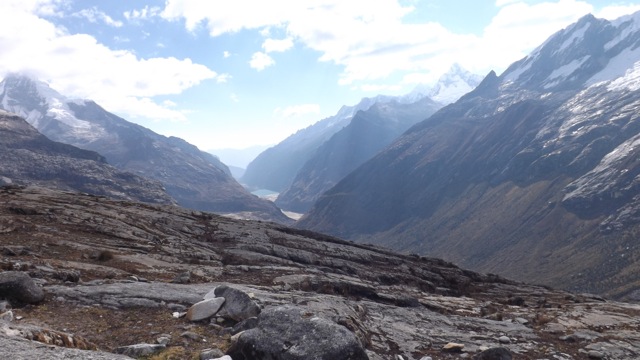
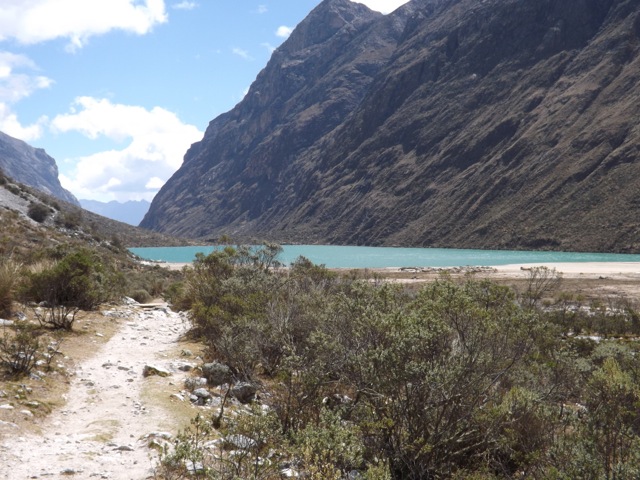
I climbed slowly over small knolls and past several tarns – small mountain lagoons, with towering snow covered mountains and glaciers across from me. I came over a knoll to see the ridge line I still had to climb, with the small gap at the top that was the pass.

wpid-dscf2054-2013-09-13-13-321.jpg

I continued on and the higher I went, the harder it became. Every five steps I had to take a rest to get my breath back. I even took my pack off every 100m or so for a longer break. As I climbed, my rate got slower and with only about 50 metres to the gap I slowed to only 3 steps before resting. Then for the final few metres it was only one step before resting. So…slow… But I did have a good view back along the valley.

wpid-dscf2058-2013-09-13-13-32.jpg

When I finally went through the gap, I passed an altitude marker and slumped down on the other side in the sun, taking my pack off and uttering, ‘Thank f**k for that!”

wpid-dscf2062-2013-09-13-13-32.jpg

Down was a lot easier and I powered through the switchbacks below a massive white glacier…

wpid-dscf2063-2013-09-13-13-32.jpg

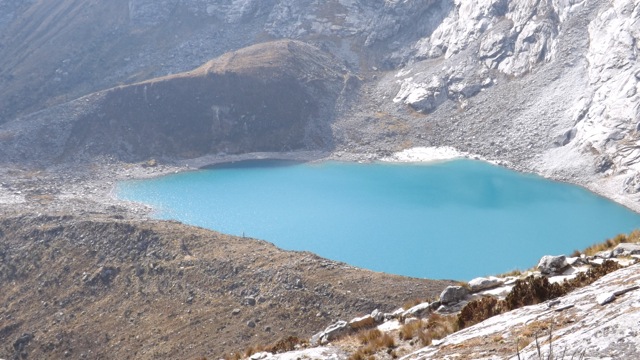
…and above an azure mountain lake.

wpid-dscf2067-2013-09-13-13-32.jpg

I could see tents in the distance and marched on feeling more energised that I was no longer climbing. I stopped only once before I arrived at the tents 2-3 kilometres from the gap only to find it was another tour group. So, I walked on across the flat river plains following the river.

wpid-dscf2065-2013-09-13-13-32.jpg

Eventually, passing another guided group, I found the tents of my group and set up camp.

Day 3

The main part of Day 3 takes only 3 hours, so to extend it most people climb to Laguna Arhueycocha.

We started the day climbing slightly to a higher valley. Slightly is still difficult at 4,000m.

wpid-dscf2070-2013-09-13-13-32.jpg

On reaching the valley we left our packs with covers on as it had rained overnight. Even walking along the high valley without packs wasn’t easy and after a couple of kilometres I arrived exhausted at the base of the wall that climbs up to the laguna. The rest of the group decided to climb it, but I opted to stay at the bottom. I’ve seen plenty of glacier lakes in this trip, so decided to save my energy.

wpid-dscf2074-2013-09-13-13-32.jpg

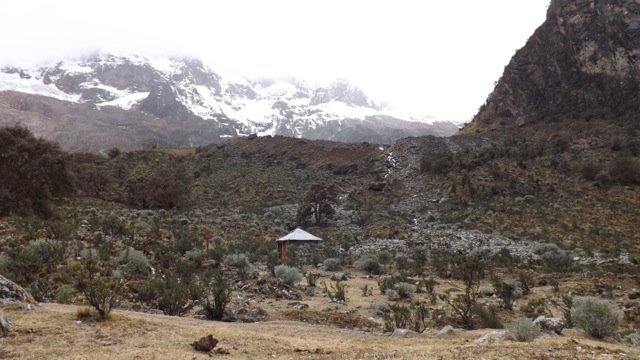
There were some buildings nearby, so I decided to investigate those instead. They were only 50m away, up a climb of about 5 metres, but even that was exhausting. The buildings were empty, but looked to have been a camping area with a place for donkeys. While I was there it began to snow a little.

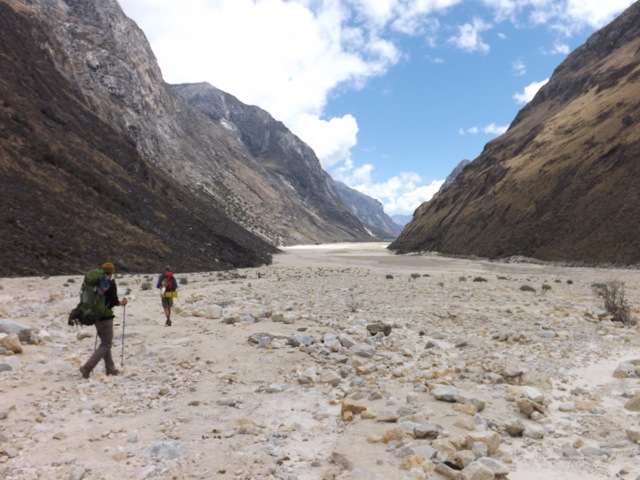
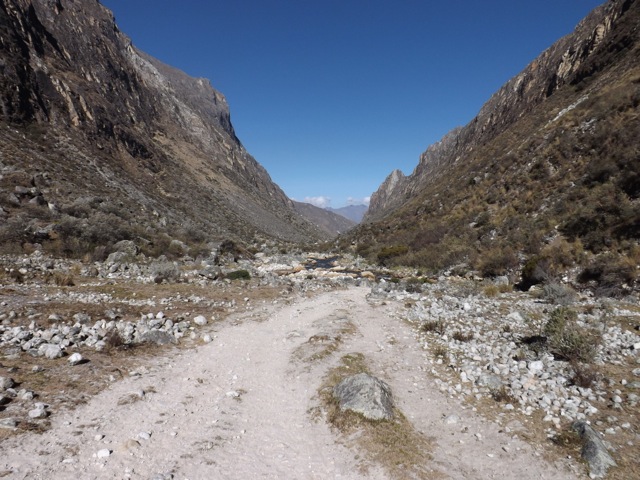
When the group returned, we headed back down the valley – an easier walk – donned out packs and climbed back down to the main valley. For the rest of the walk, we followed the valley and river along, firstly through a dry river bed thick with sand.

wpid-dscf2099-2013-09-13-13-32.jpg

Sand is difficult to walk on carrying a pack. We climbed about 10 metres up the other bank and followed the trail that undulated as it went. We passed along the side of a large laguna and took a break for lunch at the other end as we looked along the valley.

wpid-dscf2103-2013-09-13-13-32.jpg

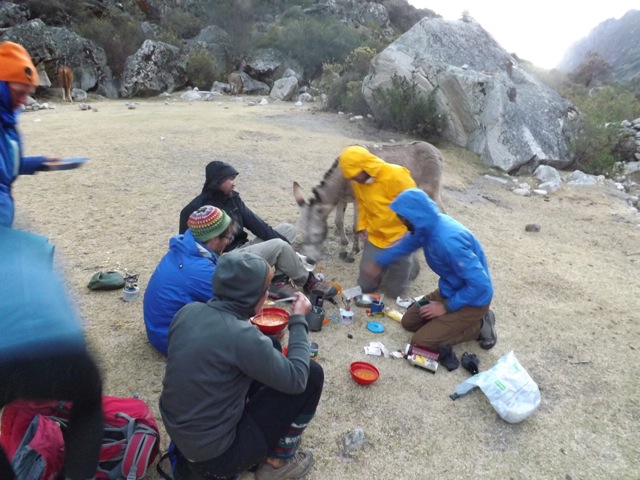
We were to pass another laguna, but it turned out to be little more than a marsh. Perhaps it’s larger in the rainy season. Cows, ponies, horses and donkeys were everywhere as we walked along the sometimes sandy, sometimes rocky trail. Eventually I saw the campsite ahead and marched off, arriving to a set of rocky walls at a place called Llamacorral. I pitched my tent as the others arrived and we began preparing dinner when we got a visit from a pony who decided he didn’t want grass for dinner.

wpid-dscf2105-2013-09-13-13-32.jpg

Later, we made a fire in a deep rocky fire pit and sat around talking for the evening.

Day 4

The sky was clear the next day, so after breakfast I packed up my things and headed off, walking ahead of the group for a change. Most of the day saw me walking the rocky track along the side of the valley as the river snaked its way through the landscape. There wasn’t much to see as I walked and after 90 minutes I took a short break off the trail. When I was putting my pack back on, I saw the group go past.

wpid-dscf2108-2013-09-13-13-32.jpg

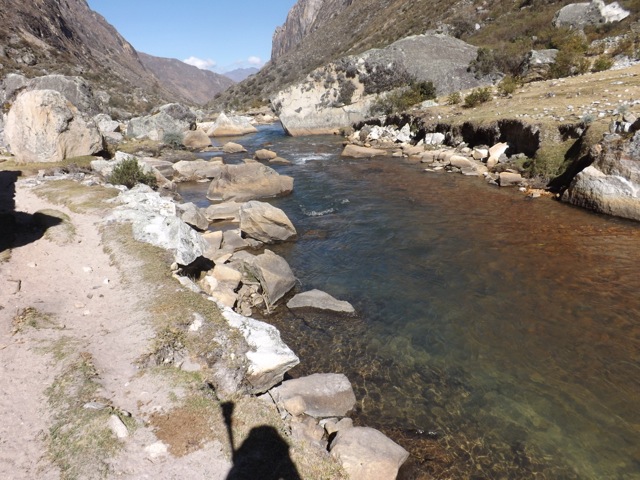
I marched after them, I saw a waterfall opposite which marked the halfway point of the day. For the rest of the walk, the trail descended following the river down through the gorge. With the sun high in the sky and the sandy trail, it was very hot. A distinct contrast from the day before with its slight snow.

wpid-dscf2112-2013-09-13-13-32.jpg

An hour later, I rounded a bend to find my group stripping down to their underwear at a nice spot in the river. The gingerly got into the freezing water. I was steaming hot, so I stripped down and threw myself into the river. No wading here, boys and girls, the only way into a freezing river is as quickly as possible. I was out just as quickly though and drying on the side.

Then, we were off again and 20 minutes later arrived at the end of the trail after passing a group of larger people heading back the other way. I wondered how they were going to manage the climbing. They were part of a guided group, so weren’t carrying much gear, but they didn’t look as fit as my group, and we struggled at times.

Five minutes after we’d signed out of the trail, we were walking past a house and the owner rushed out offering us cold soft drinks and beer. He told us he’d call a Collectivo – mini van – for us. It would take us to a larger town where another Collectivo would take us back to Huaraz.

As we were driven away in the van, we could see the gap from which we’d exited the hike and the surrounding landscapes.

wpid-dscf2126-2013-09-13-13-32.jpg

Conclusion

Because the trek was at such altitude, it goes down in my books as being the most difficult hike I’ve ever done. With day 2 being the most difficult day’s hike, even more difficult than day three of the Colca Canyon hike. Did my week in Lima at a low altitude cause me to lose the acclimatisation I’d previously gained in Bolivia and Northern Peru? Probably. I should have given it a couple of extra days in Huaraz before I did the hike. But these are the things you learn.

Next, I’m off north to the beach city of Mancora in far northern Peru before crossing the border into Ecuador. I’ll see what adventures await me there.

The Trail Wanderer.

Ica and the Huacachina Oasis, Central Peru

Ica is a small city in central Peru about 300 km south of the capital, Lima. Ica lies at the top of the Atacama desert that stretches south for over 1000 km into northern Chile. It’s the driest hot desert in the world (Antarctica is the driest cold desert), with parts receiving only 1 mm rainfall a year. The fact that Ica is in the desert is very obvious because it’s surrounded by massive sand dunes.

wpid-dscn3521-2013-09-3-14-54.jpg

As a size reference, that small black shape near the top is a dune buggy designed to carry 12 people…

wpid-dscn3522-2013-09-3-14-54.jpg

While Ica doesn’t have that much to offer the tourist, just west of the city is a place called the Huacachina Oasis (pronounced waka-chee-na). The oasis is literally a large pond surrounded by the massive sand dunes.

wpid-dscn3524-2013-09-3-14-54.jpg

A very small township has been built in a horseshoe in the gaps between the dunes and the pond; with hotels, hostels, bars, clubs and restaurants – the most popular being The Huacafuckingchina.

After arriving, checking into my hostel and having breakfast, I went for a walk around the pond. Five minutes later, I was back after having seen most of the town. So, I decided to take a ride across the pond on a pedal boat with a friend from the hostel.

wpid-dscn3531-2013-09-3-14-54.jpg

That killed another half an hour and while getting out of the boat at the end, I managed to drop my camera into the water. BUGGER! Guess I’ll be buying a new camera when I get to Lima… So, that ended my ability to take photos. Pictures from here on aren’t mine.

In the afternoon, I booked in for what most people come here to do… Sand boarding. Late in the afternoon, ten of us piled into dune buggy with the driver and drove madly across the dunes (madly is the only way possible on these sand dunes!) skidding and bouncing around before stopping at the top of a large dune.

For those that had previously snow boarded are able to sand board standing up, while the rest of us went down on our bellies.

wpid-huacachina21543-2013-09-3-14-54.jpg

The buggy then picked us up at the bottom and shot us off to another, taller and steeper dune; each one growing more and more intense. It was exhilarating to say the least, but two hours goes past far too quickly…

While the sand boarding is fairly inexpensive, hiring quad-bikes and touring the dunes is far more expensive. Beyond that, there’s not much to do and staying longer than a day leaves you to just sunbathe, if that’s your thing. Early the next morning, I caught the bus to Lima.

After a few days in Lima, I plan to travel to Huarez to do some hiking in the Cordillera Blanca – the White Mountains.

The Lone Trail Wanderer
Colca Canyon, Peru

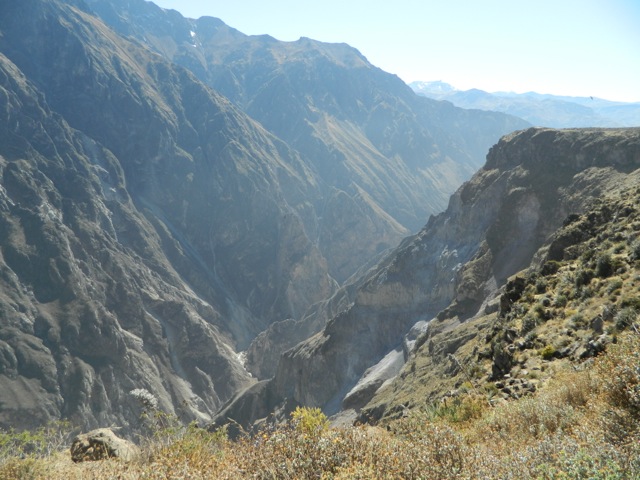
Colca Canyon is the third most visited destination in Peru and is twice as deep as the Grand Canyon in the United States. The canyon itself is just a massive yawning gorge in the middle of the vast tall mountain landscape of Peru. It’s an amazingly picturesque wonderland and a great place to spend a few days hiking.

wpid-dscn3421-2013-08-25-23-41.jpg

There are many tours into the canyon, most of them visit the same place, the tourist destination of Sangalle, also known as the Oasis. It has plentiful hotels and entertainment for those who wish to pay for a guide to lead them down the massive face of the canyon wall. And for those who can’t or don’t want to climb back out again, there are mules for hire. The Oasis…

wpid-dscn3484-2013-08-25-23-41.jpg

But a guided tour isn’t necessary. You can catch a bus from Arequipa to Cabanaconde, the township at the top of the canyon, and from there just walk into the canyon at your own timing and direction.

There’s actually quite a lot you can do in the canyon; numerous little settlements dotted across the other side, several archaeological dig sites, a waterfall high up in the mountains and a set of hot pools right on the river. You could spend a week here exploring. Plus, you don’t need camping equipment, cooking equipment or food, as it’s all available in the settlements (including beer). So, grab a couple of hundred Soles and get down there!

Day 1 – Arequipa to San Juan de Chuccho
Being picked up at 3 a.m. followed by a 7 hour bus ride is a god awful way to start a trek. Trust me on this! Especially when you’ve only managed 3 hours sleep the night before.

The bus arrived at Cabanaconde at 10 a.m. and in the heat, everyone else headed off with their guides to do their tours while I tried to find the start point of my solo hike. With the quality of the maps in general being poor and with no topographic ones at all, this was one of only tow navigation challenges I had. I asked one of the locals and was pointed out along the road the bus had come in along. A few hundred metres outside of town, I waved down a policia on a bike and he pointed me further on. At least I was on the right track. I eventually reached the San Miguel Mirador and looked back at Cabanaconde…

wpid-dscn3431-2013-08-25-23-41.jpg

…and across at a couple of the settlements on the far side of the canyon. These two are, Malata and Cosñirwa. These are just two of about ten scattered along the canyon.

wpid-dscn3434-2013-08-25-23-41.jpg

From the mirador I continued along the edge of the cliff following the wide trail to a large shelter with no walls. I stopped for lunch out of the heat. While it’s the middle of winter it’s still hot, reminding me of summer in Victoria, Australia, or late winter in Central Australia. Like those areas it’s dry, dusty and the sun shines brightly off the light coloured dust, making it annoying to discover that my sunglasses are broken. Yay! And I haven’t even started yet! Cheap Brazilian rubbish!

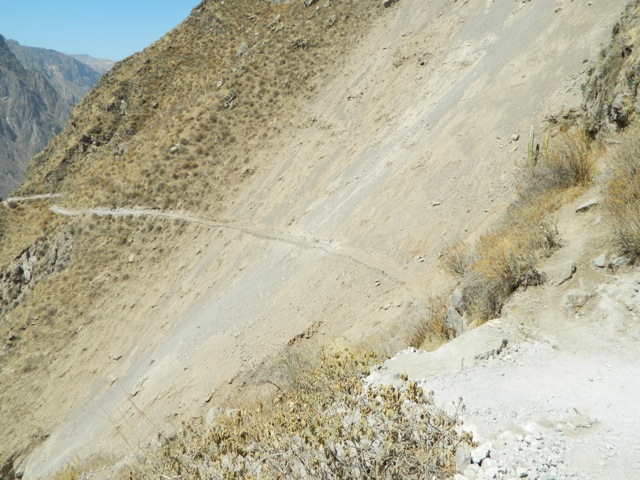
The trail is about 2 metres wide here and stays near the top of the cliff for a while. This path was recently closed because of rock slides blocking the path and while it’s officially open again, I’m still cautious.

wpid-dscn3444-2013-08-25-23-41.jpg

The trail continues on, always heading slightly downwards and I can see where the trail has been repaired in several places. The direct sunlight is very draining, not that I had much energy to start with. I come across some workman having lunch in a shelter and they point me the right way when the trail forks. The other way no longer functions, I guess.

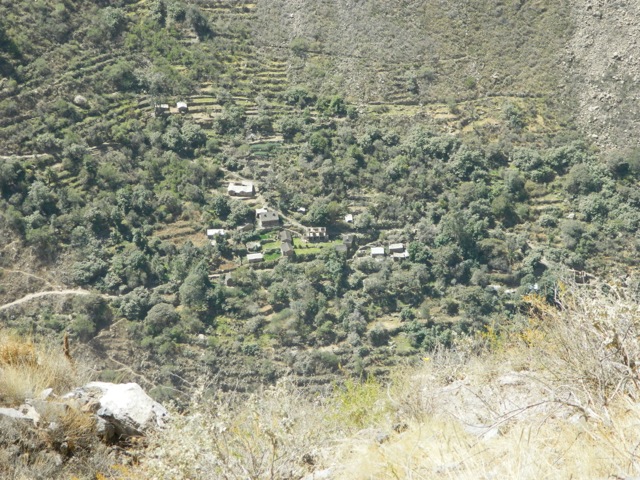
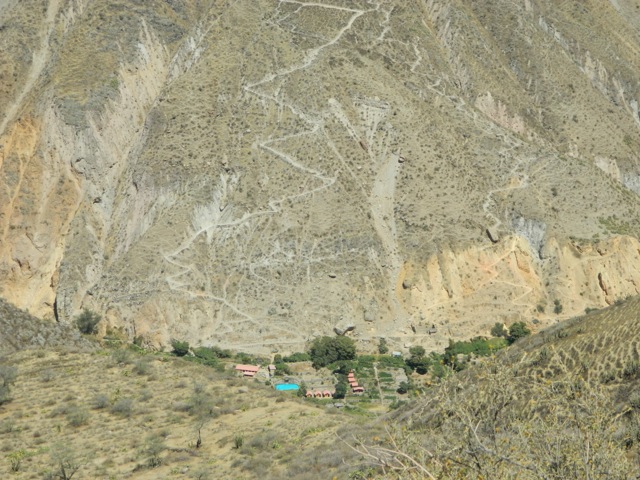
Soon I reach an area where the trail begins to zigzag down the mountain. I stop for a break and take off my boots to dry my feet – good practice on a hot hike. Looking down, I see the settlement of San Juan de Chuccho, my target for the day.

wpid-dscn3445-2013-08-25-23-41.jpg

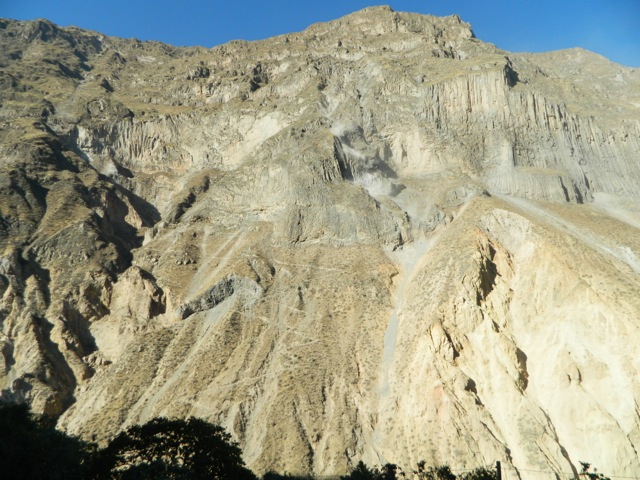
The trail zigzags steeply the entire way down the canyon wall and is long, hot and arduous. As I descend I see the bridge across the Rio Colca still several hundreds metres below that I’m aiming for with San Juan de Chuccho 50 metres up the hill beyond it.

wpid-dscn3449-2013-08-25-23-41.jpg

Finally, after hours in the sun I reach the bridge and take another rest. I see an arrow and the word Roy’s pointing off along the trail, so I when I muster the energy I follow. It heads further along the canyon then begins climbing to eventually come to the small set of clay huts that is San Juan de Chuccho. Roy’s, it would appear, is the name of a hotel here, the first one. I find the owner’s son – perhaps 8 – who takes me to a room. His mother appears moments later and takes me to a better one with a double bed, bathroom, hot shower, and a bay window looking directly across the canyon to the trail I’d just climbed down…

wpid-dscn3461-2013-08-25-23-41.jpg

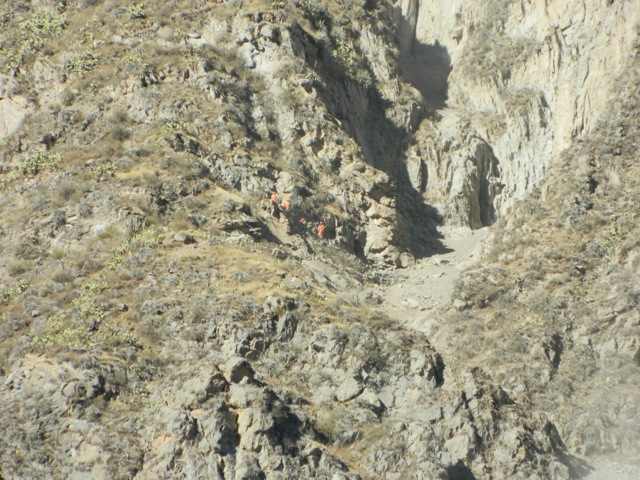
And high up on the trail, the tiny figures of the workers fixing the trail.

wpid-dscn3462-2013-08-25-23-41.jpg

The price of the room? 20 Soles or about US$7.50. Less than camping fees in many places in Australia. I bought a large bottle of beer, a large bottle of water for tomorrow and booked dinner, each for 10 Soles. That’s expensive for the beer and water, but they have to carry it in by pack mule, so I wasn’t complaining. It was a couple of hours to dinner, so I took a nap, then after dinner I collapsed into bed.

Day 2 – San Juan de Chuccho to Llahuar
After 12 hours of sleep I was made pancakes for breakfast! Hell yeah!

After breakfast I packed and was off. It was already hot when I left, heading up past another three hotels and onto the trail that would take me the length of the populated canyon face to the hot pools at the far end. The trail meandered its way along the side of the canyon for 30 minutes before rounding a corner and heading up a gully. Along the gully a water channel had been created sending water from the small stream directly back to San Juan de Chuccho. Further up the gully, the trail crossed a bridge and began zigzagging steeply up the bank. I climbed, stopping regularly in the heat. 30 minutes later I arrived at the top and into the village Cosñirwa (the first of the twin towns I showed 6 photos up).

From here a dirt road led through the village, but I don’t see a soul as I walked. On the other side of town, I follow the road up a little to the second town – Malata – a couple of hundred metres further on. I also don’t see anyone until a truck came rumbling up the road carrying passengers in the back. I guess this is the only form of bus in the canyon. I walked on and the trail forks, the road continues on, while an old trail leads up to it. I decide to follow the trail and about half way along, the footing becomes so precarious I couldn’t continue, but instead of heading back and taking the road like a normal person, I decide to climb up a rocky gully instead, about 30m with my 15kg+ pack. This was difficult and took time, but I got there with only a few scratches. I’m thankful for all that time I spent indoor rock climbing. Useful!

The road continued until I came to a small dugout in the rock wall where I was able to take shelter from the sun and again take my boots off. From my vantage point, I could see some of the ‘Oasis’ below and the steep zigzag trail leading down to it…

wpid-dscn3475-2013-08-25-23-41.jpg

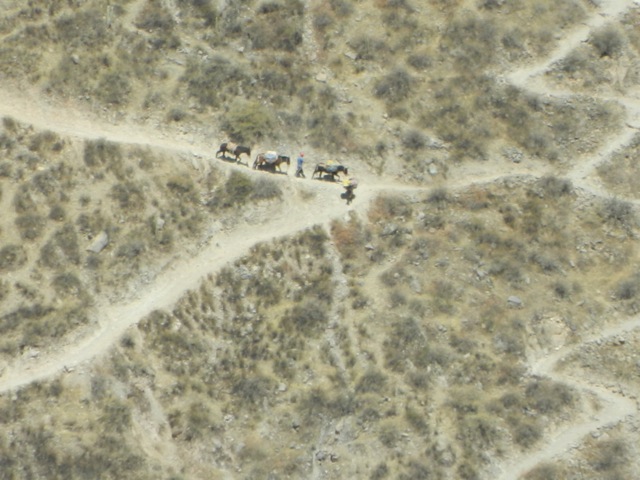
And while I watched I could see several groups climbing down it, including this laden mule caravan…

wpid-dscn3481-2013-08-25-23-41.jpg

Heading off again, I continued along the road as it slowly climbed towards mirador Apacheta, the highest point I’d climb on this side of the canyon. This gave me a view further along the canyon, with my destination down near the river.

wpid-dscn3488-2013-08-25-23-41.jpg

After a break, I headed off again down a dusty path that I consider to be rather dangerous, not because of the long fall of the side of a cliff, there is that but because of the potentially painful fall into one of the three varieties of spiked cacti here. Ouch!

wpid-dscn3491-2013-08-25-23-41.jpg

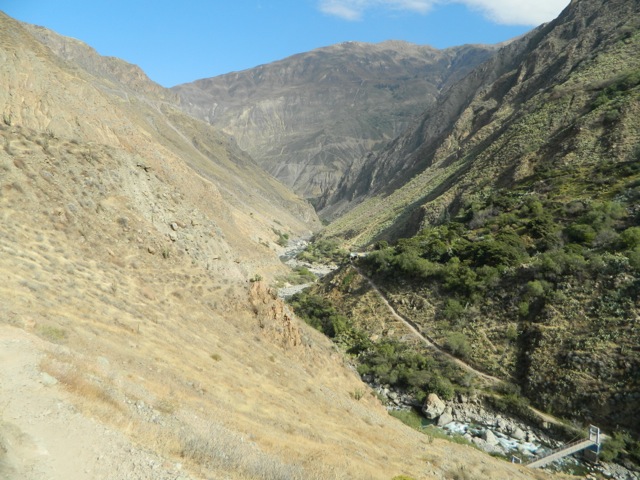
As I headed carefully along the trail to a road and then along it, I passed two small communities, stopping at the second one for a refreshing bottle of Coca Cola. After a zigzagging climb down the next short bank, I crossed the river and headed briefly up the trail to my destination, Llahuar – pronounced ‘ya-oo-ar’ with a rolled r at the end. Two Ls together is a y sound, so Llama is pronounced Yama.

I stopped to rest and cool off with a cerveza – beer – before being shown to the aguas calientes – hot pools – belonging to the hostel, where I soaked right next to the river chatting to a solo french trekker who was doing the same. A perfect way to end a hot dusty day of trekking. Tomorrow I climb the zigzagging trail up the 1000m tall bank to the top of the canyon and back to Cabanaconde to end this little adventure. While it’s going to be difficult, being under the constant sun the entire way will make it worse.

Day 3 – Llahuar to Cabanaconde
After another 12 hour sleep, today began overcast and with pancakes for breakfast. I guess it’s difficult to bake or keep bread here… After packing, and donating some money to the French guy who hadn’t brought enough, I set off. The code of the hiker, always help other hikers in need. I climbed back up to the settlement I’d bought the coke from the day before and looked down the valley to the bridge that would mark the beginning of the hardest part of my hike.

wpid-dscn3495-2013-08-25-23-41.jpg

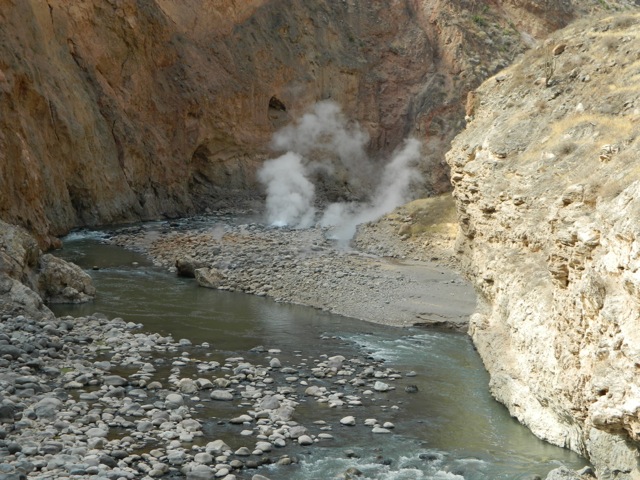
I followed the road down to the bridge and found a small natural geyser bubbling away next to the river.

wpid-dscn3497-2013-08-25-23-41.jpg

Then it was off up the trail and after climbing for 20 minutes I discovered I was going the wrong way, so had to head partially down again before finding another trail that lead me back up to the right trail. I didn’t need the extra work, but you get that. I began climbing and while it was generally overcast, and I was thankful to not be under the full sun, it was still warm. A way up the trail, I looked back down the valley to the tiny settlement of Llahuar and the pools at the edge of the river.

wpid-dscn3505-2013-08-25-23-41.jpg

A short time later, an aging local man casually comes climbing past me like he was walking up a slight hill. The trail was long and hard, and I stopped on many occasions for breaks. At point high on the canyon wall, the trail wound in along a deep gully, the first part that actually went slightly down before crossing a bridge at the top of the gully and again heading up the side of the mountain.

I finally reached the top of the canyon to discover the trail continued on along the top of the cliffs for another couple of kilometres, up and down several small hills before arriving in Cabanaconde. With the town finally in sight I quick marched to the centre plaza and found a hostel. It was a little crumby, but all I needed was a shower and a bed behind a locking door.

After my third 12 hour sleep in a row, I was on the bus and back to Arequipa, stopping briefly for a photo of the plains at the end of the canyon, before heading off again. On the way back, over the highest points – near 5000m above sea level – it snowed and I’m glad I wasn’t still in the canyon.

wpid-dscn3510-2013-08-25-23-41.jpg

Colca Canyon is a hikers’ wonderland, with so much to see. It’s not an easy walk, but for the fit there is plentiful places to visit and see, if you don’t mind climbing some pretty heavy trails with just a touch of altitude.

Next, I head north to the city of Ica, where I can gain access to the Paracas National Reserve, the Red Beaches and sand boarding.

The Lone Trail Wanderer
Arequipa, Southern Peru – Impressions

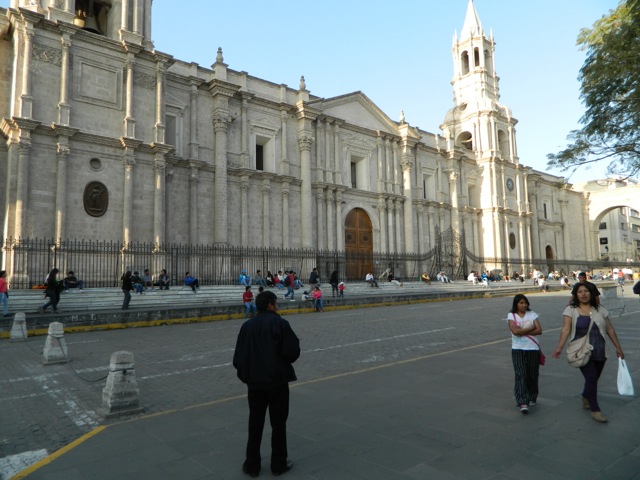
Arequipa is the second largest city in Peru with 900,000 people next to Lima (with 9 million) and is the capital of the south. The centre of Arequipa gives a similar impression to that of the ancient Incan capital Cusco, a ten hour bus ride away. A beautifully set up cobbled main plaza with cathedral on one side…
wpid-dscn3418-2013-08-25-14-36.jpg

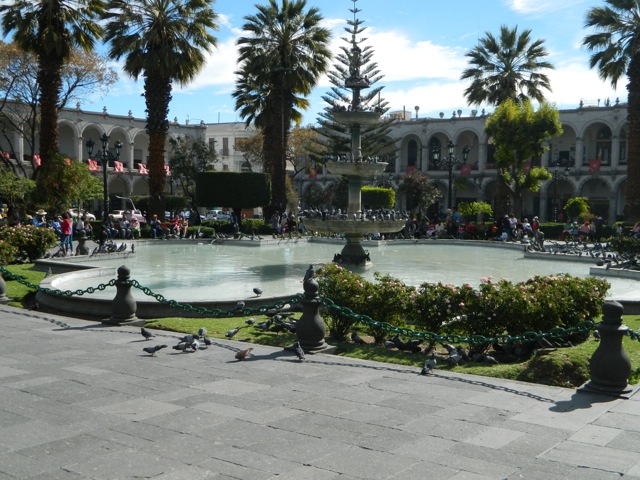
…and many tour agencies and restaurants trying to hawk for your business on the others.

wpid-dscn3513-2013-08-25-14-36.jpg

Peruvians seem fascinated by fountains and while there aren’t as many here as their was in Cusco, there are plenty. Along one side of the plaza is an open air mall with plentiful shops restaurants and the like.

wpid-dscn3514-2013-08-25-14-36.jpg

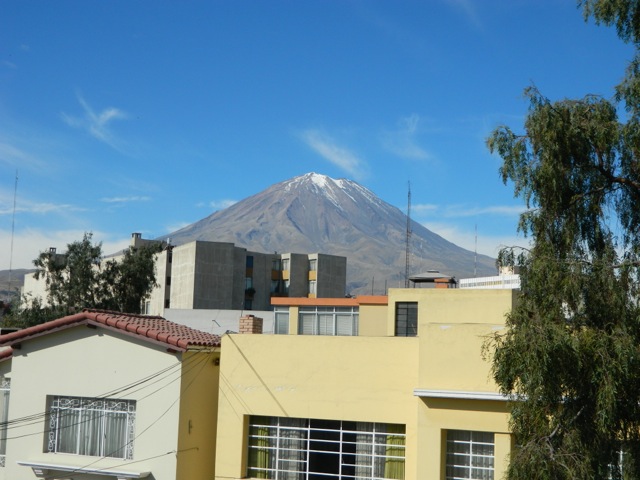
On the horizon outside the city is a tall range of mountains, and a solitary volcanic cone called Misti Mountain that’s said to spend most of the year surrounded in mist. Although I’ve been here a week and have yet to see it shrouded. It’s a two day climb up and down the 6000m cone.

wpid-dscn3518-2013-08-25-14-36.jpg

Between the city and the mountains is river where several groups host rafting, and while it’s only a short experience – 90 minutes max – the level 3 and 4 rapids are fun, although not as intense as my previous rafting experience in the Waikato, New Zealand.

wpid-img_0052-2013-08-25-14-36.jpg

There are plentiful museums and monasteries in the city, one hosted an exhibition known as the Ice Girl. In the time of the Incans she was sacrificed to the angry mountain gods. At 11 years old she had to walk 170 miles from Cusco before climbing Misti Mountain to die and ascend to live among the gods. She went willingly and it was seen as an honour to be sacrificed. Many similar sacrifices were made along the mountains from northern Argentina to Peru. Her preserved body is on display in a special glass freezer case.

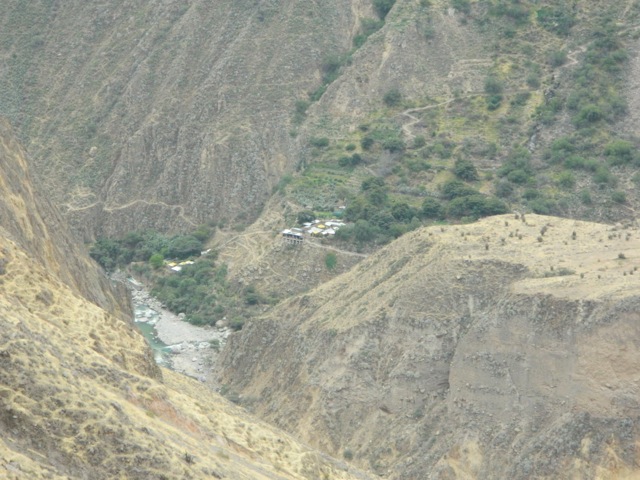
The most popular reason people come to Arequipa is for Peru’s third most popular tourist attraction, Colca Canyon. Colca Canyon is said to be the second deepest canyon in the world, twice as deep as the Grand Canyon in the US. I managed a 3 day solo hike through the canyon and it was amazing. A post of its own is coming shortly.

wpid-dscn3421-2013-08-25-14-36.jpg

Next I’m off to the city of Ica, south of Lima to see the Red Beaches of Paracas and do some sand boarding.

The Lone Trail Wanderer
Aguas Caliente and Machupicchu

After nearly six months travelling around South America, I’ve finally arrived at the most popular tourist destination on the continent, Machu Picchu. But there’s more here than just the ancient ruined city at the top of a mountain.

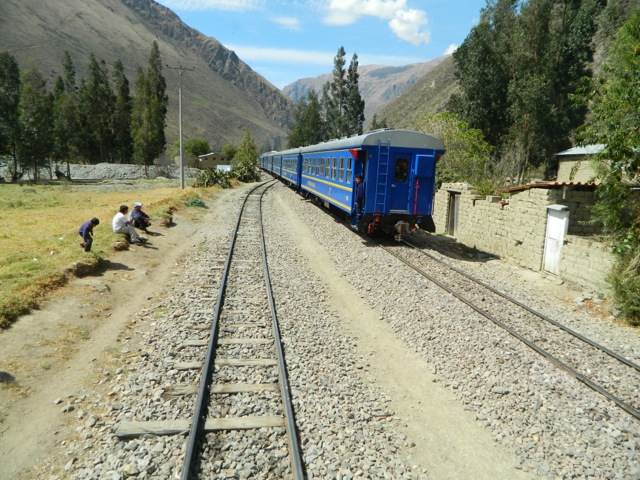
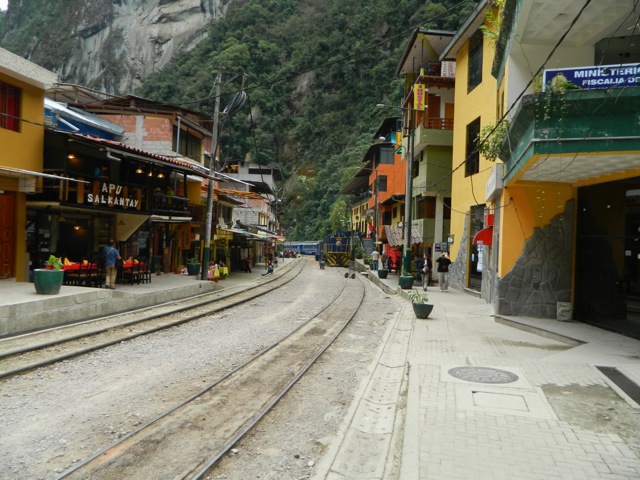
Located deep in the mountains, a 3.5 hour train ride from Cusco or 4 days via the Inca Trail, is a town called Aguas Calientes, meaning hot waters, or hot pools in Spanish. With no road leading into the town, there’s no other way to get than walk or catch the train.
wpid-dscn3288-2013-08-14-15-41.jpg

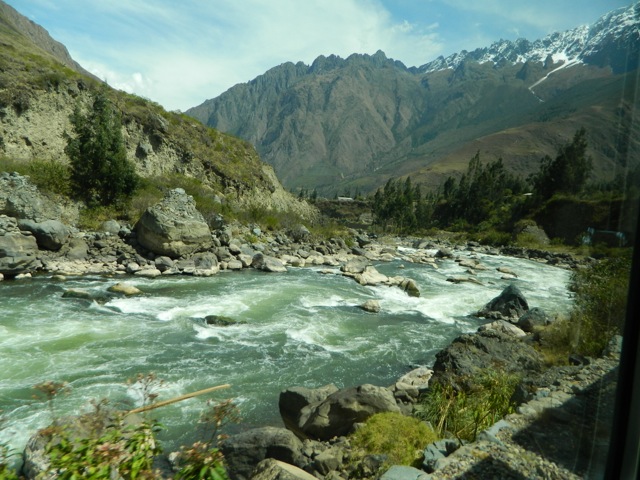
Aguas Calientes is a beautiful little town set on the side of the Rio Urubamba and nestled among the mountains. It’s purely set up for tourists visiting Machu Picchu, meaning if the ruins didn’t exist, neither would the town. There are a vast number of restaurants, hotels, hostels and massage places all for the pleasure of the tourist and the tourist dollar. With so many restaurants, the owners fight to get just a few customers in each night.

wpid-dscn3299-2013-08-14-15-41.jpg

I arrived by train at midday and set about investigating the town. With a plan to hike up the 2000 steps to Machu Picchu early the following morning, I headed out towards a nearby set of waterfalls only 45 minutes walk from the town. The trail leads you along the side of the train tracks that wind through the valley.
wpid-dscn3307-2013-08-14-15-41.jpg

When I got to the house with an arrow pointing at it and the word cataratas (waterfalls in spanish) on a sign I was sceptical as I couldn’t hear the waterfalls. So, I decided to just keep walking along the trail instead.
wpid-dscn3292-2013-08-14-15-41.jpg

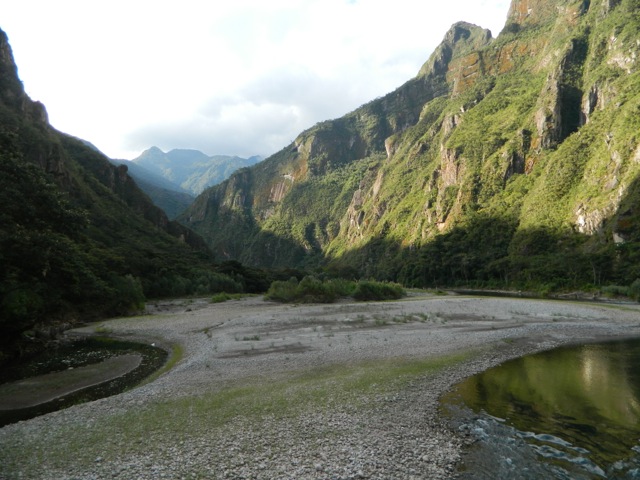
It was a pleasant walk with no hills, so I just kept going and going until I came to a place called Santa Teresa and decided to start back. The scenery was absolutely beautiful…

wpid-dscn3314-2013-08-14-15-41.jpg

What had begun as a 45 minute walk turned into a 5-hour hike. On the way back, I was able to see a single building from the ruins at the top of the mountain.

wpid-dscn3324-2013-08-14-15-41.jpg

While a casual 90-minute walk wouldn’t have been a problem, I wasn’t really prepared for the length I ended up walking. I wasn’t wearing the correct socks and managed to gain a couple of blisters, something that rarely happens to my feet.

The next morning I was up at 4.30 and getting ready for the climb to the ruins. The hostel is prepared for this as breakfast begins at 4am.

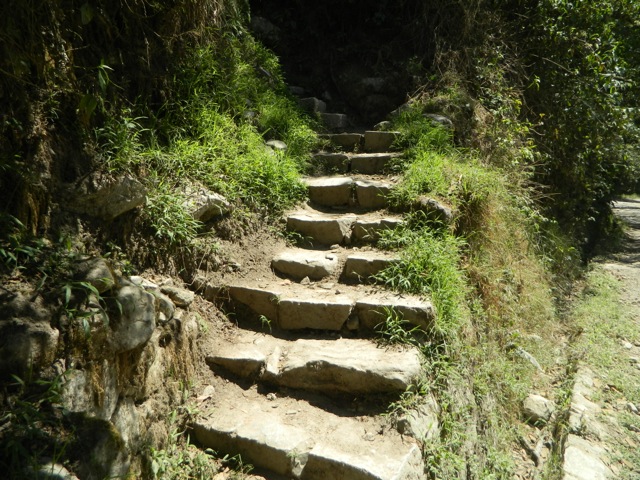
The 2000 steps climbing up to the ruins were built in typical Inca style, although with the road winding up the side of the mountain for the buses, I’m sure the stairs weren’t built by the Incans.

wpid-dscn3409-2013-08-14-15-41.jpg

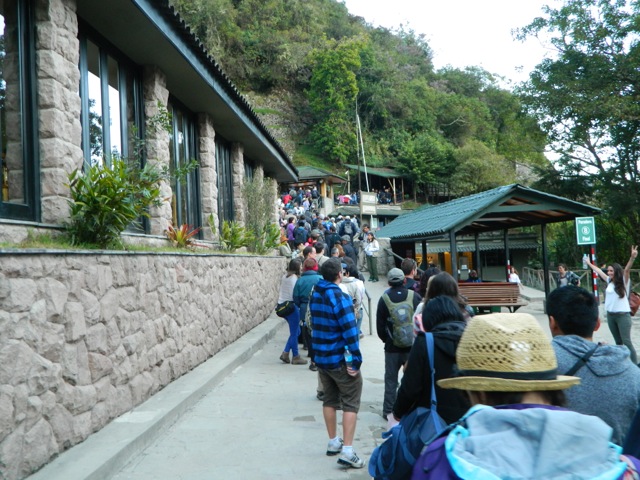
The stairs were strenuous on their own although I’ve climbed more difficult mountains, but add the altitude and it becomes challenging. (Add blisters and it’s even worse!) I made it just after 7 when the mass of tourists from the buses were trying to get into the city. This is what I’d expected and why I call Machu Picchu the Disneyland of South America.

wpid-dscn3326-2013-08-14-15-41.jpg

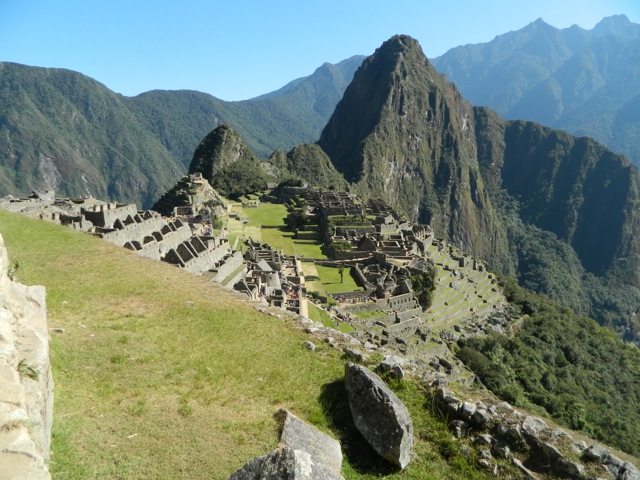
I finally got in just before the sun rose over the mountains to shine on the city, lighting it up the stone work in the pinkie yellow of first light.

wpid-dscn3340-2013-08-14-15-41.jpg

There’s a lot that can be said about the city, but much of it is speculation and not on my part. There are few signs but beyond telling you where the exit is, they don’t tell you anything about the ruins. No-one’s really sure what the full story behind the city is and I was only able to garner a small amount of information by listening in to the many guides around the different parts of the city.

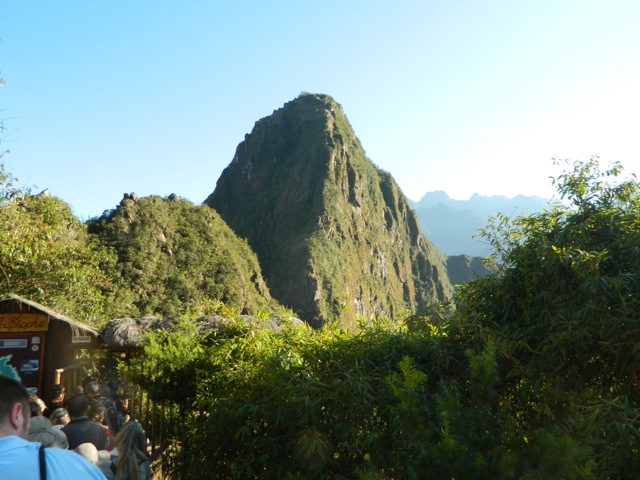
These two mountains are Huayna Picchu (the shorter) and Wayna Picchu. Wayna Picchu has a temple built atop it with a precarious path leading to it. You need to pre-pay to get to these mountains and I hadn’t.

wpid-dscn3353-2013-08-14-15-41.jpg

The ruins were discovered in 1911 when a local advised a US American that there was Incan architecture atop the mountain. He scaled the mountain and discovered the overgrown city.

wpid-dscn3358-2013-08-14-15-41.jpg

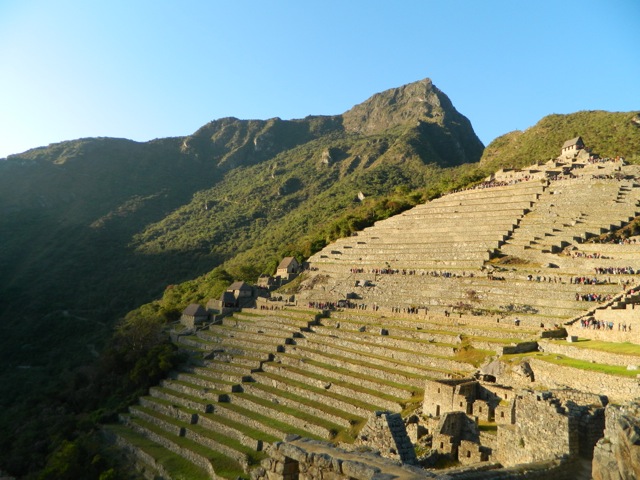
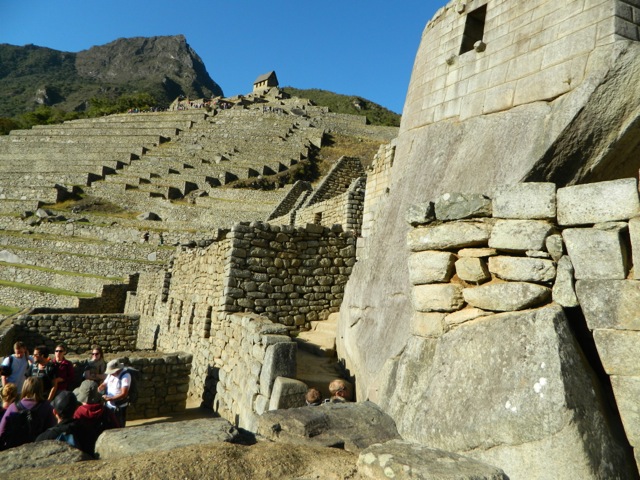
Machu Picchu was thought to have been built as the winter home of an Incan emperor and is said to have been abandoned before the spanish conquests in 1534. This is one of the many speculations of its existence. The house at the top of the tiers is the highest point in the city and the peak of Machu Picchu Mountain is behind it.

wpid-dscn3363-2013-08-14-15-41.jpg

The city was thought to be the lost city of the Incas but many think the lost city is another, larger city, several days away in the jungle. Other stories say that this was an Incan Concubine city for the emperor, with 100-200 concubines living here.

wpid-dscn3370-2013-08-14-15-41.jpg

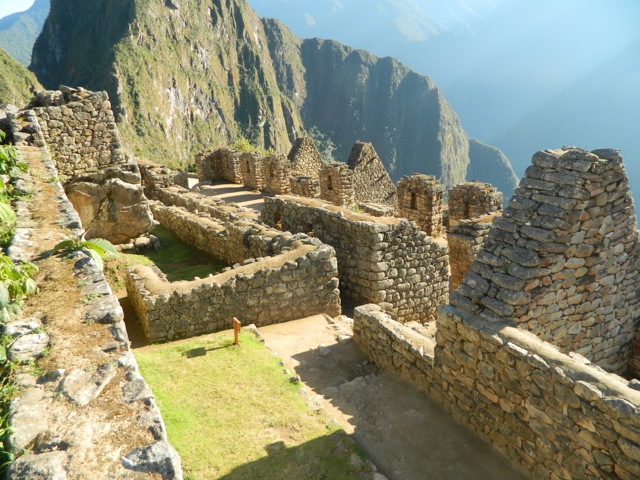
Nestled as it is on the top of a mountain, the city isn’t flat, with many terraces and stairs. Corridors were thin or closed off to protect areas of the ruins, meaning it could be slow going with all the tourists trying to get around.

wpid-dscn3390-2013-08-14-15-41.jpg

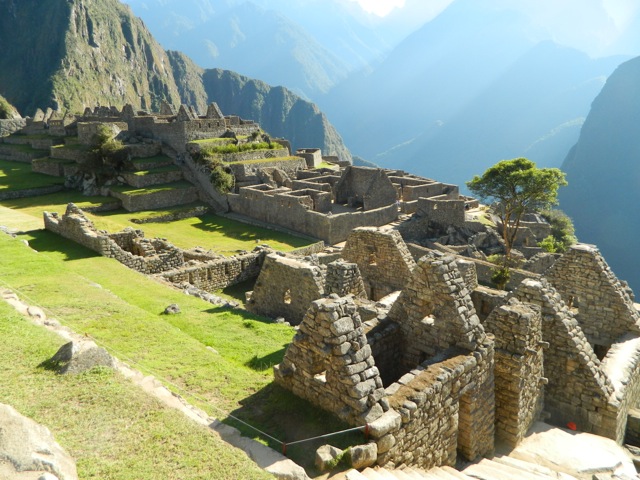
It takes about two hours to walk around the ruins, but even in the middle of winter it’s very warm during the day. There are large open grassy areas, possibly where crops were sown.

wpid-dscn3394-2013-08-14-15-41.jpg

At the end of my walk around the ruins, I decided to climb Machu Picchu Mountain. The stairs up the side were even steeper than those leading up to the city.

wpid-dscn3405-2013-08-14-15-41.jpg

I got to a spectacular viewing area about half way up (about the same height as Wayna Picchu). With the altitude, the heat and my general state of exhaustion I decided to forego the rest of the climb and headed back down again.

wpid-dscn3408-2013-08-14-15-41.jpg

I found my way to the exit and began descending back down the stairs to Aguas Caliente. At 30°C+ it was very hot going and exhausted, I finally reached the hostel and a welcoming shower.

While Machu Picchu is packed with people – 2500 are allowed there a day – that was the only downside of the ruins. The reconstruction of parts were great and the city overall is amazing. I certainly enjoyed my visit and while expensive, it’s something I had to do, unlike the Inca Trail, where the amount of people would have spoiled my enjoyment.

Next, I am off to Arequipa, a southern city in Peru in hope of hiking through Colca Canyon, a canyon twice as deep as the Grand Canyon in the US.

The Lone Trail Wanderer