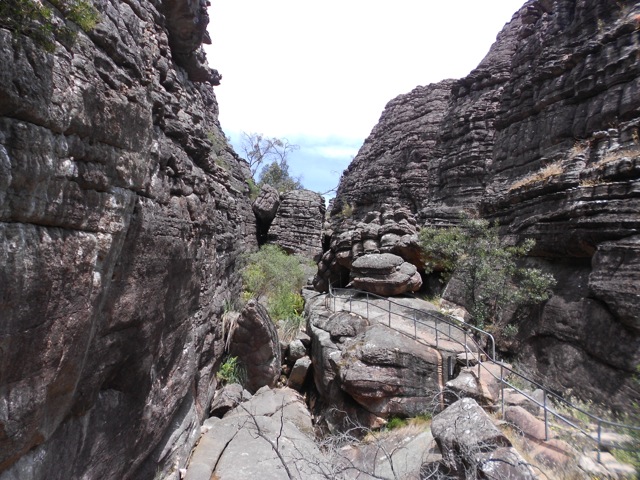
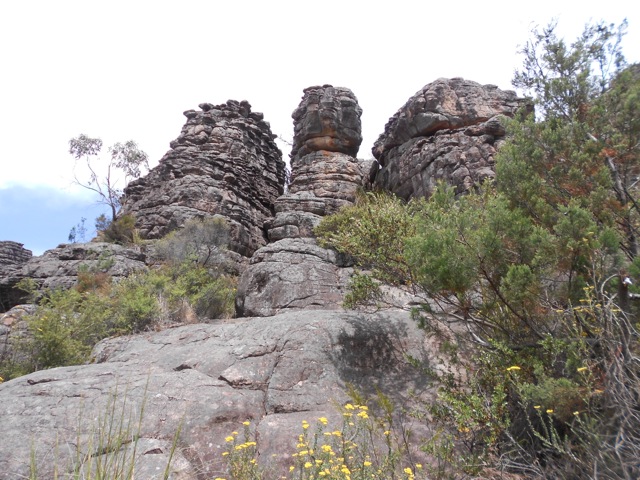
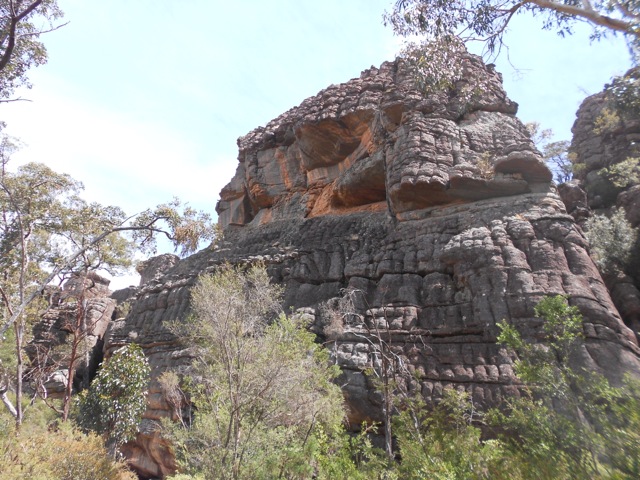
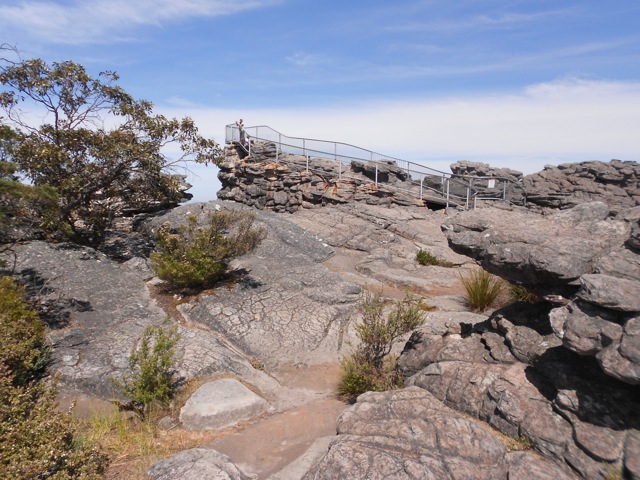
Mt Amos – Freycinet National Park – Tasmania

I had originally planned to walk the Penguin Cradle trail, rest for 3 days and then walk the Overland track. Well, after some contemplation, I decided to see more of Tasmania than just spend 18 days hiking and 3 days resting in between. So, I decided to do a tour of Tasmania instead. And my first stop is the Freycinet Peninsula.

wpid-dscn0695-2012-12-10-19-39.jpg

As I drove across Tasmania, I discovered there are mountainous national parks dotted all over the place. I could spend months here just walking all the wondrous places here.

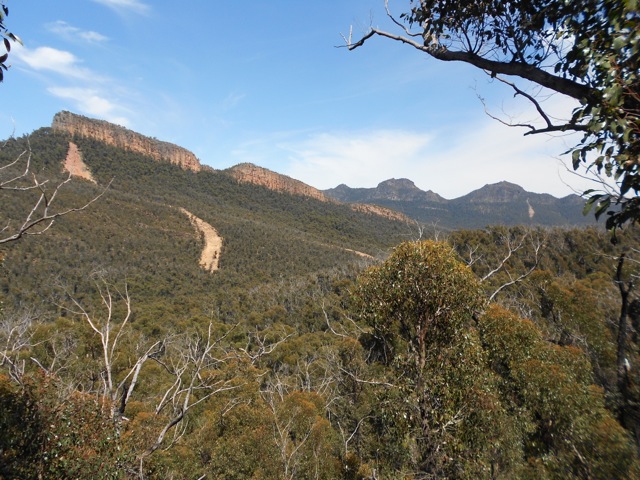
On the east coast, I glared out to sea and as I rounded the coast, I came to Bicheno, a small town with some small smooth granite hills and rocky islands in the bay. The Freycinet Peninsula is, perhaps, 20km south of Bicheno and I wasn’t expecting what I saw when I arrived at Coles Bay on the peninsula.

wpid-img_1453-2012-12-10-19-39.jpg

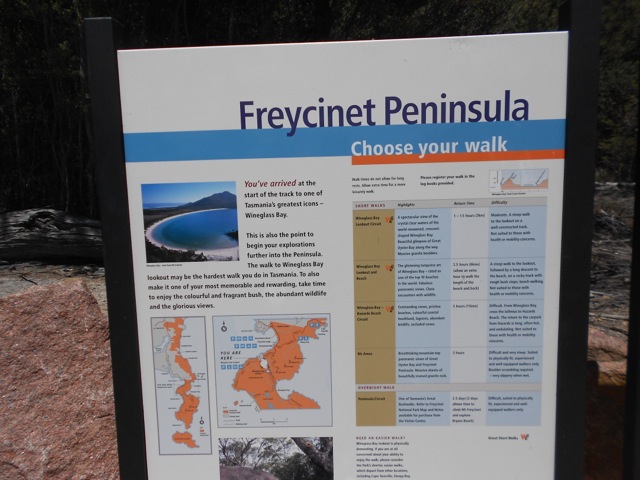
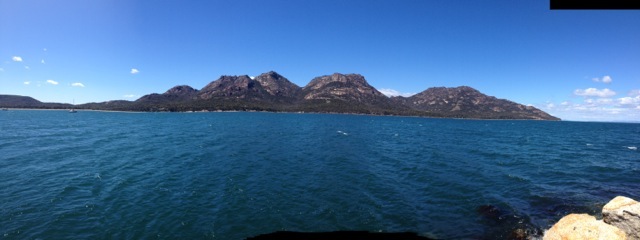
On the far side of the bay from the village is a line of granite mountains. I just sat there in the van with my mouth open. I had to find out more, so I drove to the Information Centre and discovered the walks in the region, and that there’s another set of taller mountains on the other side. If I’d spent more time researching, I’d have stayed longer and explored more.

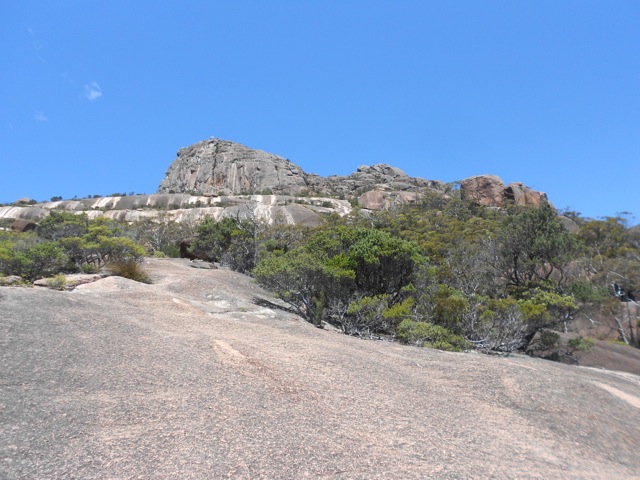
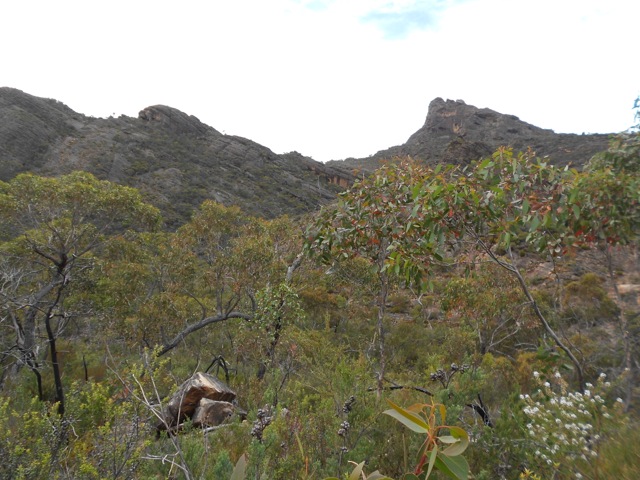
It rained overnight and there are plenty of warnings about climbing the mountain when wet, or should I say, to not climb. It was clear in the morning but decided to climb the most popular mountain – Mt Amos – in the afternoon once it had dried out a little. In the photo above, Mt Amos is the second one from the right. Not the tallest, but the most accessible even though it’s still described as being an arduous climb.

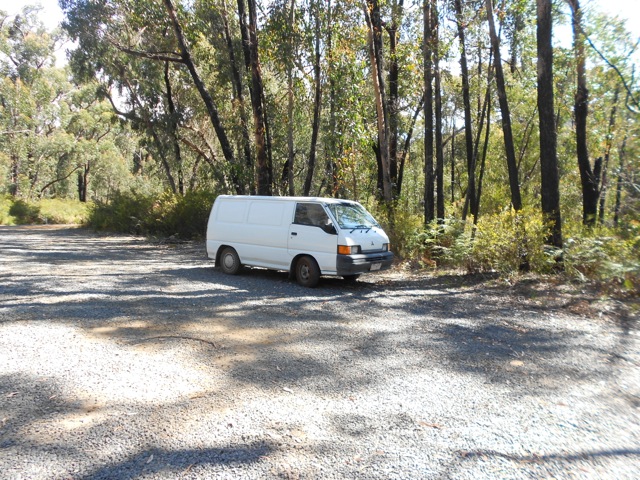
After paying the rather expensive park entry fee, I drove in and parked at the car park that is the beginning of most of the walks in the region. The rather large car park was almost full, but I was hoping that as Mt Amos was the hardest in the area, most people would take the easier walks.

wpid-dscn0697-2012-12-10-19-39.jpg

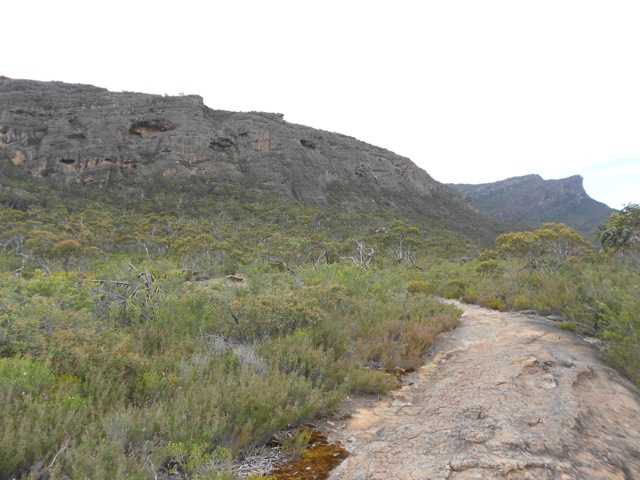
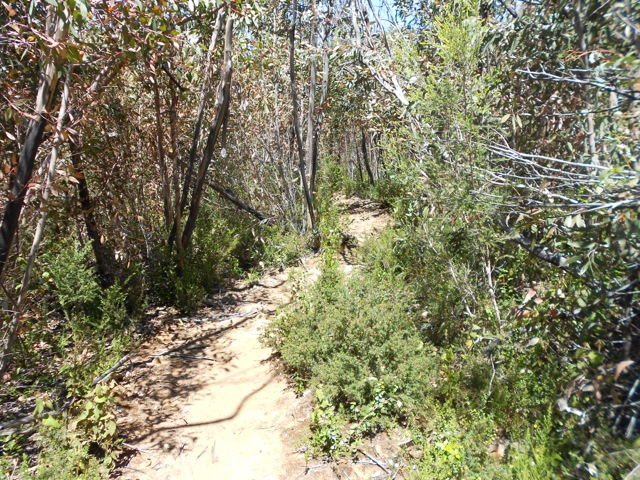
The trail started up a fairly easy sandy path that wound through the forest, but I soon came to a sign that warned of the arduousness beyond that point. I headed on and while the initial part wasn’t difficult, I could see why they would warn not to climb in the wet.

wpid-dscn0700-2012-12-10-19-39.jpg

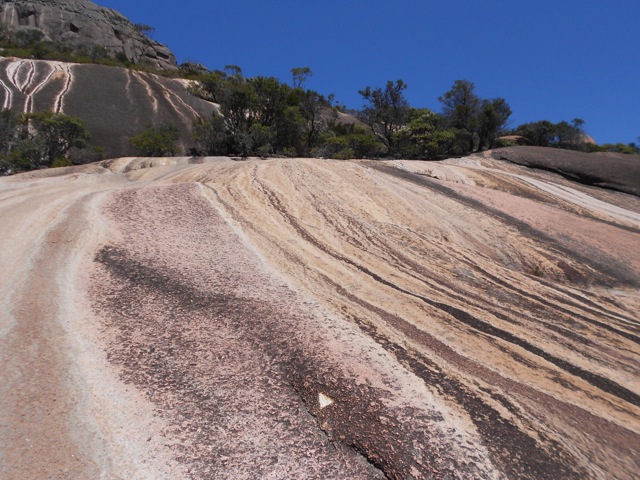
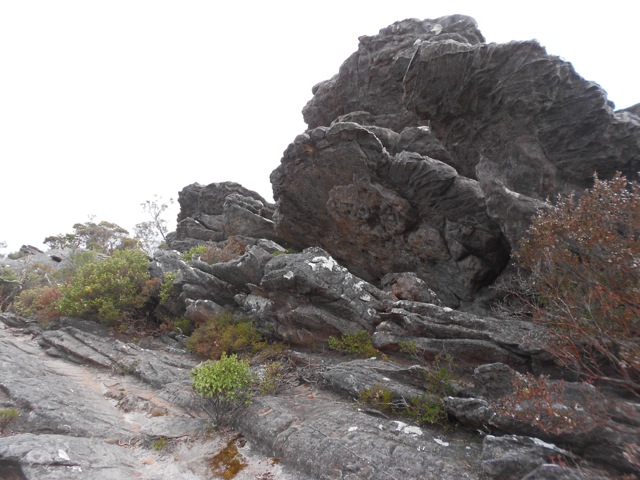
The fairly smooth rock ledges would indeed have been slippery, even to grippy hiking boots. But there were some interesting colours in the rock.

wpid-dscn0704-2012-12-10-19-39.jpg

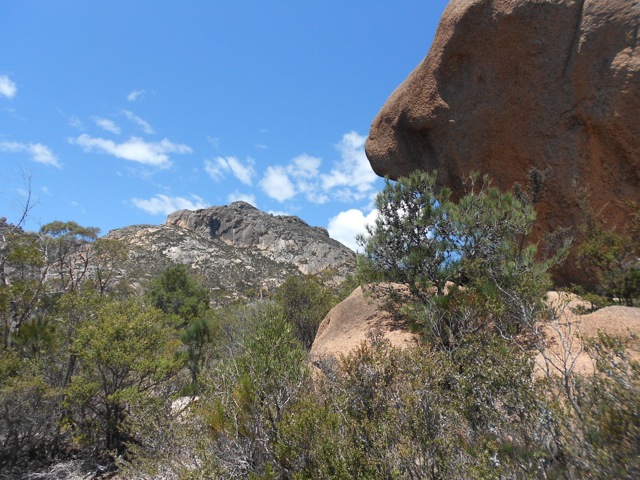
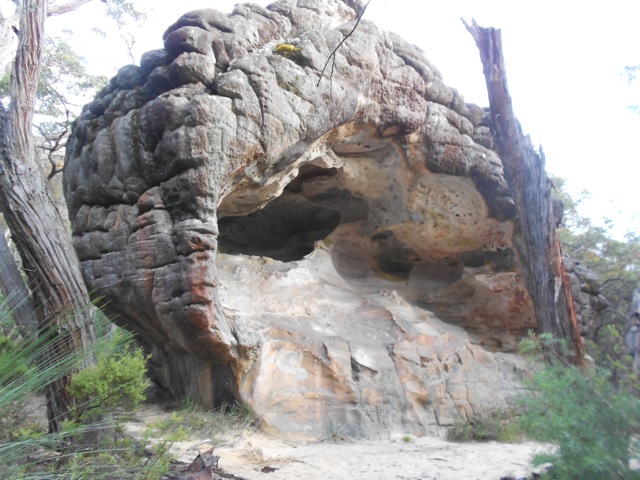
I climbed, with awesome looking boulders of various sizes dotting the mountain side.

wpid-dscn0702-2012-12-10-19-39.jpg

Behind me, as I climbed, the growing sight of the bay and the township of Coles Bay.

wpid-dscn0705-2012-12-10-19-39.jpg

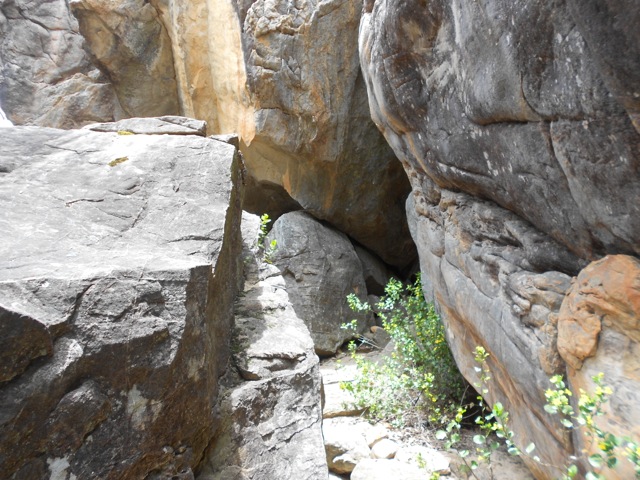
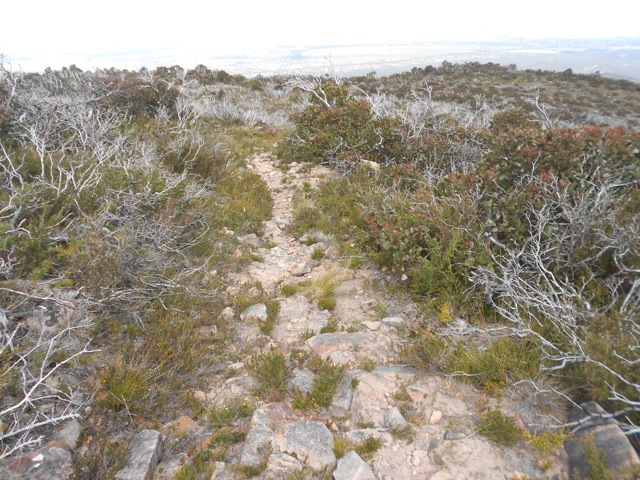
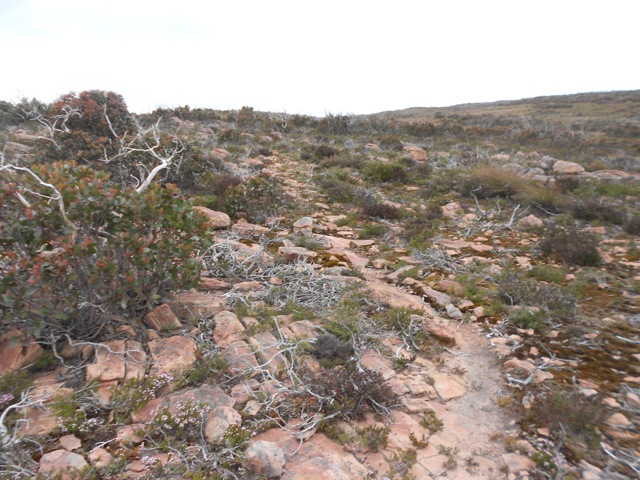
As these mountains tend to do, the climb became rather steep and with the slippery rocks, the trail followed small gaps created by water over the millennia up the side of the mountain. Even then, it was still fairly slow work. When I came to the top of this steep section, the area at the top of Mt Amos levelled out, well as flat as a rocky mountain top…

wpid-dscn0717-2012-12-10-19-39.jpg

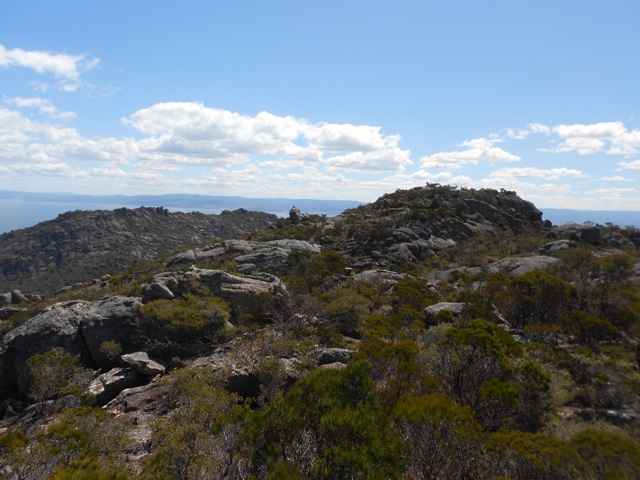
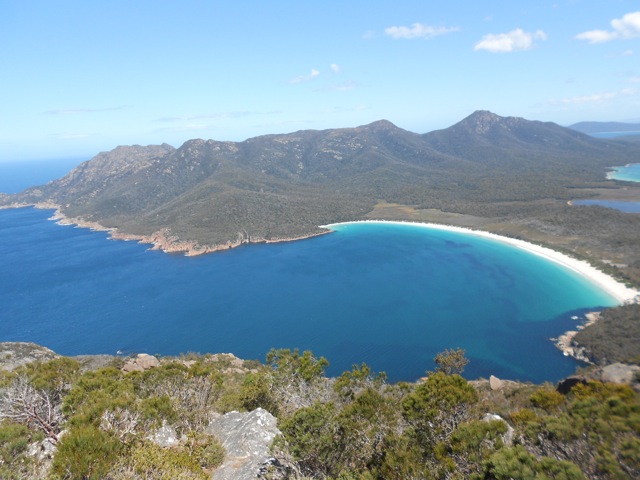
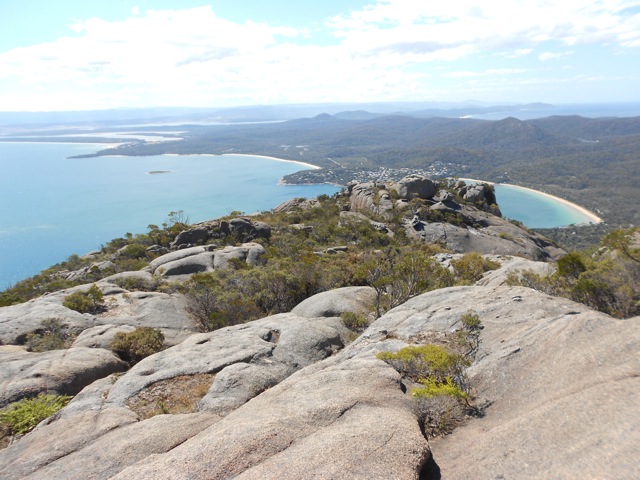
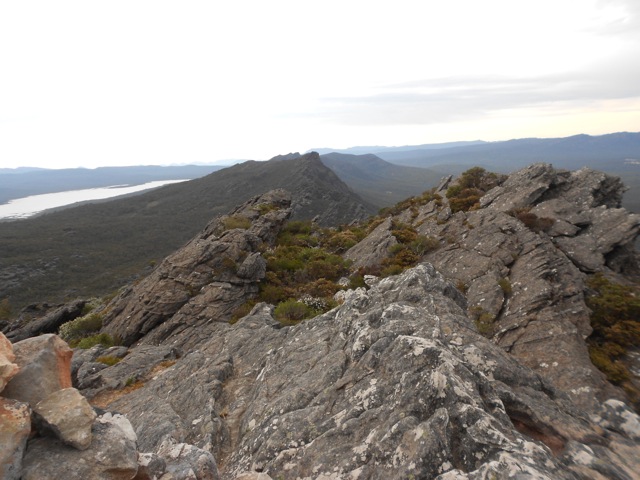
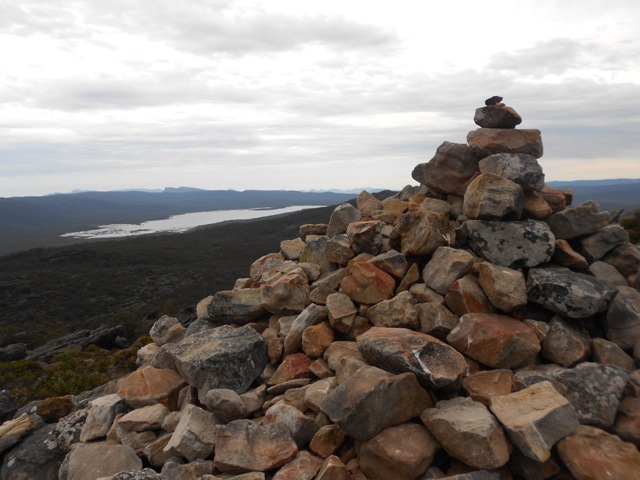
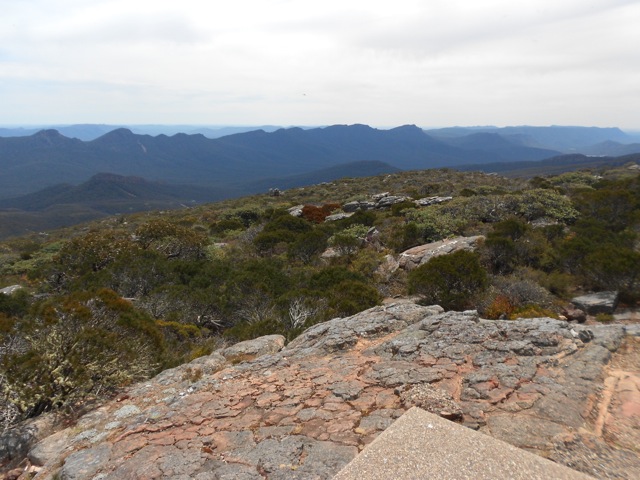
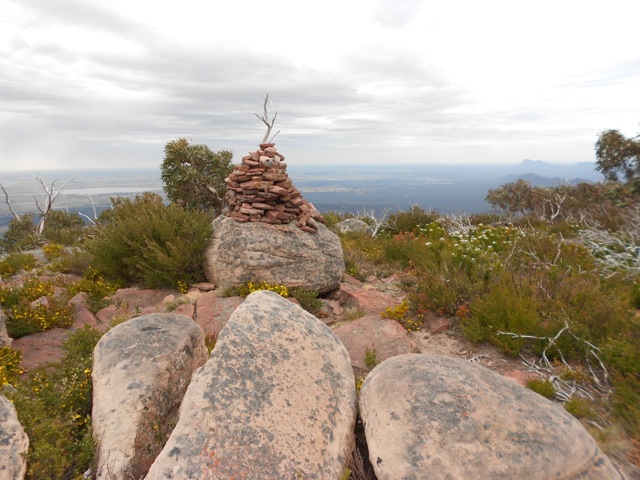
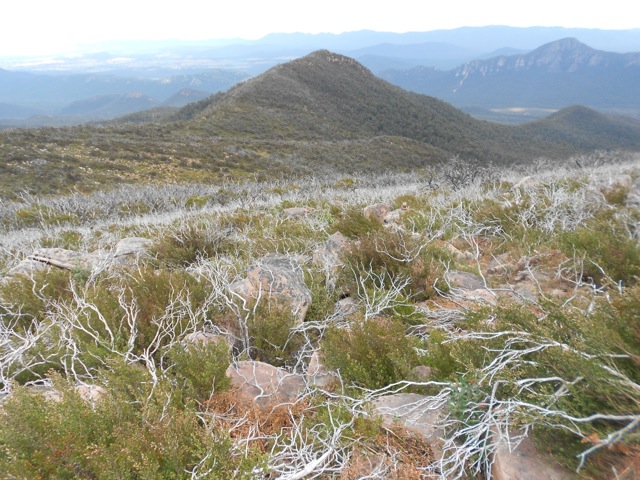
Mt Amos is fairly flat at the top, although there are several taller rocky areas. The trail led me to the highest one on the far side of the mountain. The view was amazing. A small spit joined the peaks I was on – known as the Hazard Peaks – with the larger set of peaks on the far side, the tallest one being Mt Freycinet. Between the two sets of peaks is the horseshoe shaped beach of Wineglass Bay.

wpid-dscn0715-2012-12-10-19-39.jpg

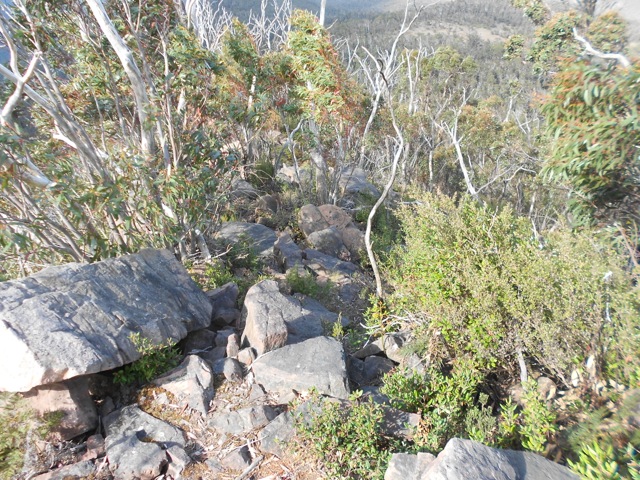
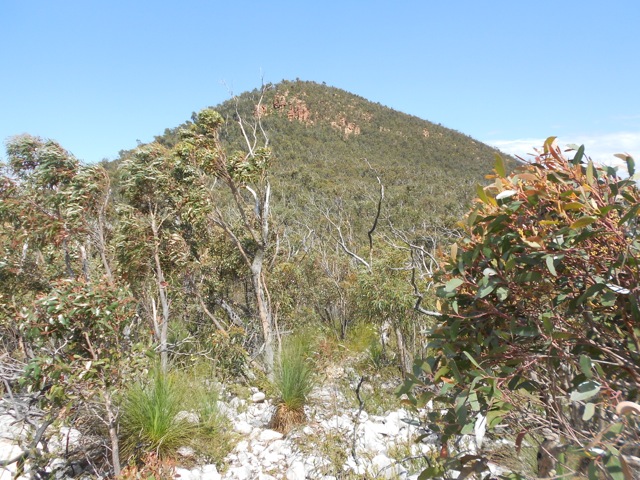
I climbed to several of the other spires, finding lesser known trails or just finding my own way as I’m prone to do. The views from all sides were simply amazing.

wpid-dscn0719-2012-12-10-19-39.jpg

I descended, taking the steeper sections on my butt, but found no troubles getting back to The Pointy Brick and the caravan park.

If this one walk is anything to go by, I want to return here one day. On this trip I have walked some amazing places in Australia, and this has to be one of the better ones. A great place in the world, The Freycinet Peninsula, South East Tasmania.

Next I’m off to Port Arthur to see what the Tasman National Park has to offer.

The Lone Trail Wanderer.

Organ Pipes National Park – Victoria

This evening I catch the Spirit of Tasmania to Australia’s southern most state. The Spirit of Tasmania is a cruise ship sized vehicle ferry and will take nearly 12 hours overnight to travel the 450km to Tassie. But that’s this evening… Until then I decided to kill some time and check out the Organ Pipes National Park.

wpid-dscn0678-2012-12-8-15-17.jpg

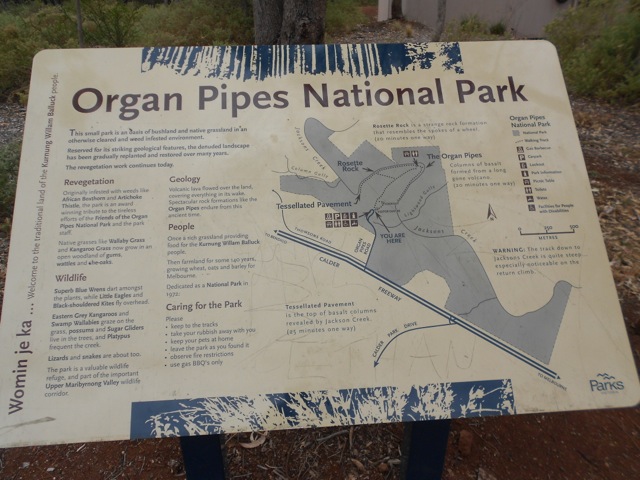
The Organ Pipes NP is 25km North West of Melbourne and is rather small. There is less than 2km of track, so yes, pretty small.

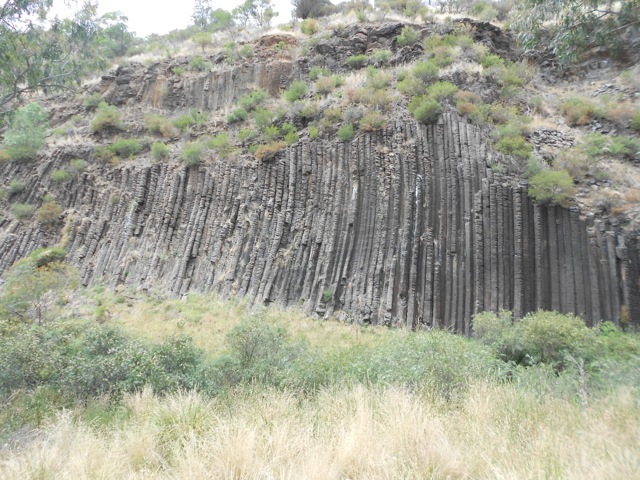
A road leads downhill to a short dirt trail which opens out on the Organ Pipes themselves – a set of vertical stone rods formed when lava flowed off the edge of cliff, hardened but doesn’t erode like the rock around it.

wpid-dscn0674-2012-12-8-15-17.jpg

Further down the trail is a rosette rock…

wpid-dscn0675-2012-12-8-15-17.jpg

… and a tesselated pavement complete with a shift couple getting busy in a hidden away spot at lunchtime on a Friday.

wpid-dscn0677-2012-12-8-15-17.jpg

But not much else.

After a brief chat to a pair of kangaroos, I was back in the van and heading off to wait for loading of the ferry.

Tomorrow, after arriving in Tasmania at 6.30am, I drive to Freycinet Peninsula.

The Short Trail Wanderer

Mornington Peninsula – Victoria

Today is a warm day in Melbourne and without any great plans, I pointed The Pointy Brick towards the Mornington Peninsula to see what I could find there. On a Great Ocean Road trip a few years back I stood on Queenscliff, on the other side of the harbour, and looked across. So, I wanted to look across from this side. It’s only 40km, so why not?

wpid-dscn0629-2012-12-8-14-551.jpg

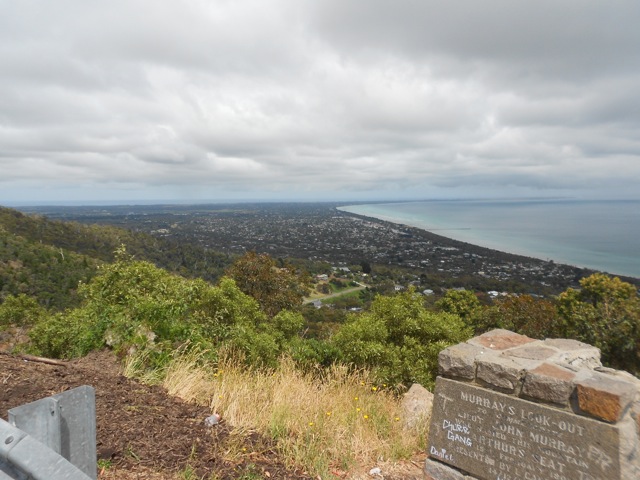
Half way along the peninsula is a hill known as Arthur’s Seat. I drove up for a look. It gave good views down the peninsula…

wpid-dscn0632-2012-12-8-14-551.jpg

…and back the way I’d come.

wpid-dscn0633-2012-12-8-14-551.jpg

It had been a bit wet and the low cloud prevented a distant look at Melbourne across the harbour.

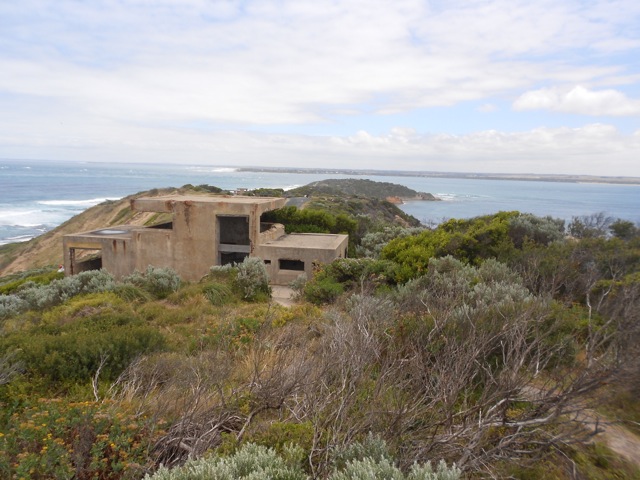
I drove on along the peninsula towards a little township called Portsea and the Point Nepean National Park beyond. Portsea is your typical beach township, but a cafe there makes the best Waygu beef cheese burger. I drove on to an information centre and further on to parking spot. There’s a 3.8km walk to Fort Nepean at the end of the peninsula, so I put on my walking shoes and headed out along the sandy trail.

During WWI this peninsula was fortified for war and the first actual shot of that war was fired from Fort Nepean. It said so on the information board.

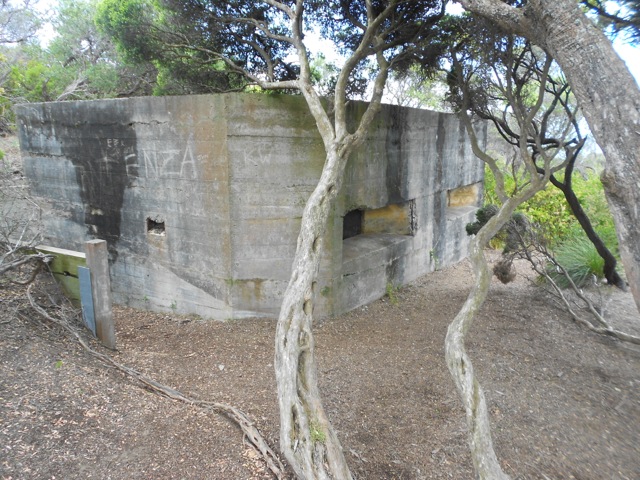
The initial couple of kms cut through vegetation until I came to an old bunker.

wpid-dscn0636-2012-12-8-14-551.jpg

This was to be the first of many dotted along both inner and outer coasts.

wpid-dscn0643-2012-12-8-14-551.jpg

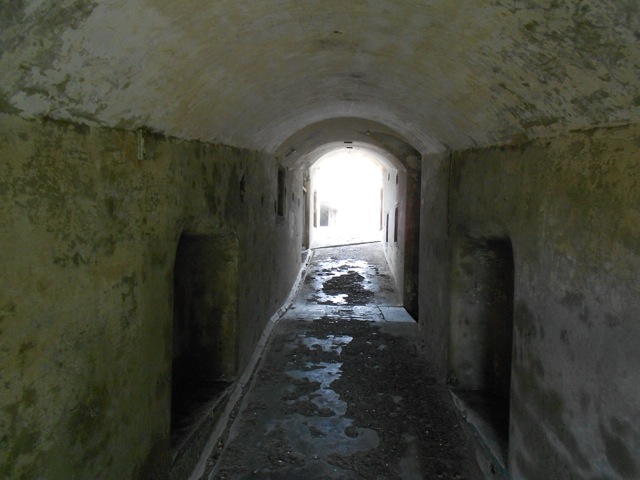
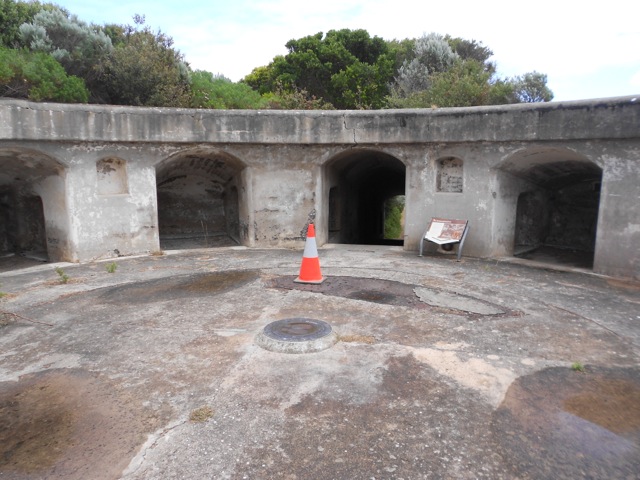
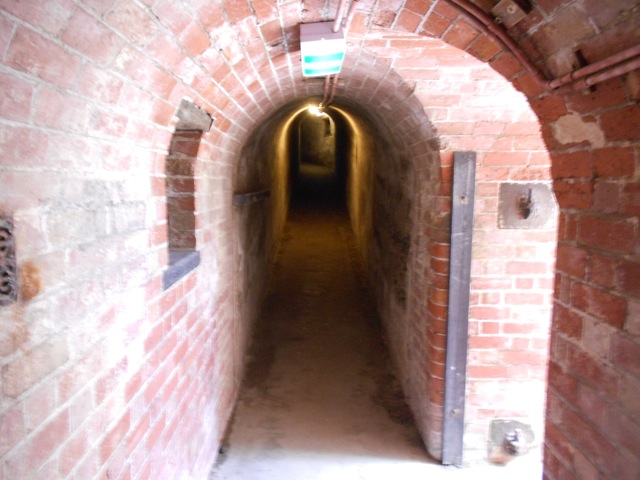
When I got to the first of the forts, I could walk into some of the rooms but others were closed off. Next was a set of barracks including a myriad of tunnels…

wpid-dscn0644-2012-12-8-14-551.jpg

…bunkers and gun emplacements.

wpid-dscn0645-2012-12-8-14-551.jpg

At the end of the peninsula…

wpid-dscn0666-2012-12-8-14-551.jpg

…the fort itself was complete with tunnels and gun emplacements at various different tiers.

wpid-dscn0662-2012-12-8-14-55.jpg

After checking out everything I could, I headed back to the van and back to the caravan park. Sometimes you have just got to get out there an explore, you just don’t know what you might find…

The Lone Ruins Wanderer

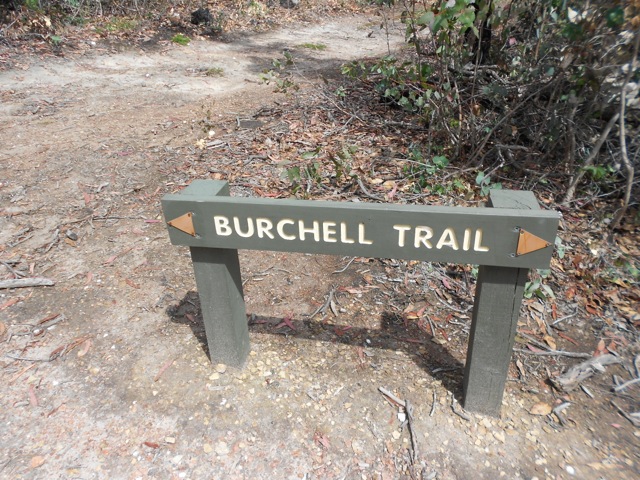
Burchell Trail – Brisbane Ranges National Park – Victoria

The Brisbane Ranges National Park is approximately 50km North West of Melbourne in Victoria.

The Burchell Trail is a linear 38km trail that can be completed over 3 days, although I only consider the first and last days as half days due to their shortness. If there was a centrally located camping spot I would do it in only two days.

wpid-dscn0620-2012-12-3-09-08.jpg

Day 1 – Boar Gully to Little River – 10.5km

Today the temperatures rose into the low 30s – thankfully not the 40 degree heat from yesterday – and the afternoon looked to have a shower or two. Because of the shortness of the day and the late sunset I wasn’t in a hurry to get started. I left the caravan park and headed into Bacchus Marsh to kill some time and wait out the heat of the day.

In the early afternoon, I drove to the Brisbane Ranges. Unlike the Grampians, which stand out against the plains with their jagged teeth, the Brisbane Ranges aren’t visible at all. I found my way to the Boar Gully camping ground and killed some more time putting together my food from the stash in my van. By mid-afternoon I was ready to go.

Most of the Brisbane Ranges is dry Eucalyptus forest and the trail follows either a wide dirt 4WD track or a two lane dirt road. I followed the trail as it meandered through the ranges for several kilometres going back and forth between the two different track types until it came to hill. If I sound a little excited, it’s because the hill was a change from the fairly flat and monotonous terrain. I climbed the other side and again wandered through the forest via the trail until it came out at a road that then opened the Little River Camping Ground. The weather had showered briefly during the afternoon, and was looking to grow worse. I pitched the tent, cooked dinner and set down for the night.

Day 2 – Little River to Old Mill – 17.5km

I was awakened by storms twice during the night. Once when I had just dropped off to sleep and again at about 3am. I had prepared the tent for heavy rain and watched as the water rolled down the outer sheet. It was too noisy to sleep, so as I waited for the storms to recede I read and watched for potential tent flooding. Thankfully, very little water got into the tent.

With the forecast today for high 20s, I packed up and headed out. The first tricky part was deciding what trail to follow. There was no marker at the camping ground telling you which way to go. I checked the map, and it suggested I follow the gorge to the left, so I picked one of the handful of trails and followed it along. Eventually I did find a marker several hundred metres away.

wpid-dscn0618-2012-12-3-09-08.jpg

The gorge was something different from yesterday and had a water running in it – no doubt from the heavy rains. I cross-crossed it for a kilometre until the trail climbed a hill to a road which then meandered through the forest again with the occasional small hill. Through the trees I caught the occasional view of plains towards Melbourne but nothing worth taking a photo of.

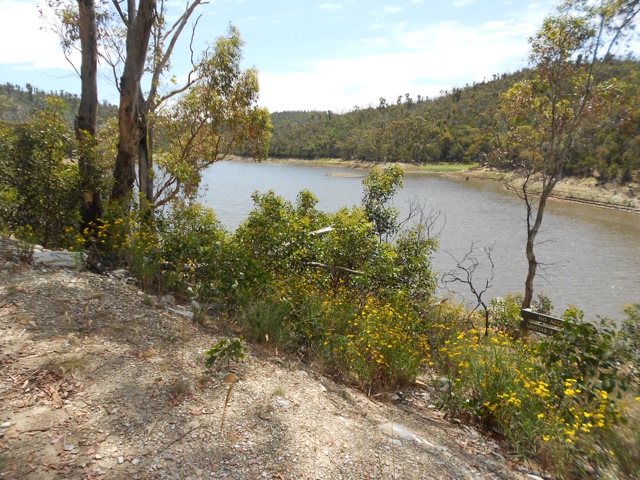
The trail changed in the early afternoon, heading downhill towards the Lower Stony Creek Reservoir. It headed down along a rocky trail – my first of this hike. After a time, I came to a part of the trail that was cordoned off by a red mesh fence and a sign: “Track Closed”. Apparently there had been some flooding and fire damage to this section. With few choices, I climbed the fence and continued. Along the trail, there were four cobbled fords on the path that were overflowing with quick flowing water from the reservoir. While I wouldn’t have recommended casual walkers try to cross, the crossings shouldn’t cause experienced walkers much issue. I found my way across each of them and while the bottoms of my boots got wet, they weren’t sodden, so I continued. On the other side, I came to the reservoir and stopped for lunch – and yes, it was worth taking a photo…

wpid-dscn0626-2012-12-3-09-08.jpg

After lunch, I climbed the hill along the reservoir road to a main road – a sealed one! – then across and along a dirt road for a few km until the camping ground appeared. Again, another nicely set out campsite. I lay my tent out in the sun to dry and hung out for the rest of the day, occasionally hearing people at the Fridays Camping Ground 500m down the hill. Fridays is the finishing point tomorrow, the walk taking me on a 10km round trip of the end of the National Park and bringing me back.

Day 3 – Old Mill to Fridays

I woke in the morning to rain, again. It let up long enough for me to cook breakfast and break camp. I headed uphill along the 4WD trail, across a dirt road and along another 4WD trail. The rest of the trail wandered through the National park, and for the most part was flat. Occasionally, it had a short dip and climb back up again. At one point, it walked along the side of a shallow gorge, then back to more of the same.

This last part of the national park was once a gold mining area, and near the end of the trail, I began to see some signs discussing areas where the mining had occurred. Not long after, I came out to the road a short distance from Fridays Camping Ground. The trail still had 500m to go and headed into the forest again. I guess I could have walked the 100m up the road to the end, but I like to finish things, so headed on. For half of the remaining trail, it headed downhill to suddenly start climbing back to Fridays. I honestly didn’t see the point – perhaps something happens seasonally here, but it seemed more like a, ‘go on, make them climb one last hill’ part of the hike.

I stopped for lunch at Fridays, happy to be finished then headed out along the wide road on my way back to the Pointy Brick – 18km or so away. When I got to the sealed road I got a lift 10km to a junction by a guy who used to do a lot of hiking in his younger days. From there there was only 4km walk along sealed roads to the Pointy Brick and the drive back to Bacchus Marsh.

I was disappointed with the Burchell Trail. It’s not a terribly exciting walk and there are few sights to see and thus the lack of photos. Also, while the topographic map is of very high quality, the poorly defined trail markings had me spending too much time wandering along trails hoping to find the next marker. Having a marker point into an intersection but not defining which way to follow is just frustrating.

On the plus side, it did provide a useful training hike for my coming 8 day hike in Tasmania, but I would not recommend this one beyond that.

Next, I have a few days off in Melbourne to visit friends and then off to Tasmania and a trip down the east side.

The Lone Trail Wanderer.

Mt Gar, Briggs Bluff Traverse – The Grampians

Of the three multi-day hikes in The Grampians, the Briggs Bluff Mount Gar Traverse was my second choice. Like the Major Mitchell Plateau, it’s only an overnight hike.
While there are several ways to do the hike, I decided on a more direct route between the two – park the Pointy Brick at one end, walk to the other end and hitch/walk back. It could be done in one very long day, but for the enjoyment, I decided to do it in two – to give me more time to check out the wonders. Well it wasn’t to turn out that way…

I drove the long way to the Rose’s Gap to avoid all the dirt roads and parked the Pointy Brick at the car park. I donned my pack and headed off. The initial walk is 1.3km to the Beehive Falls and is a flat and wide dirt track. Once you reach the falls – which is only a trickle – the track changes.

wpid-dscn0574-2012-11-27-13-50.jpg

As I walked, I could make out the wind blown rocks above.

wpid-dscn0569-2012-11-27-13-50.jpg

The track then became a rock ledge climb. It wasn’t hard and in short order I made it to the top of the initial cliffs.

wpid-dscn0580-2012-11-27-13-50.jpg

Undulating ground almost like a plateau spread out before me, with the jagged teeth of the peaks across from me.
wpid-dscn0582-2012-11-27-13-50.jpg

I stopped for lunch and to dry off as the day had started pretty warmly. After lunch I walked along the plateau following yellow arrows and the occasional cairn.

wpid-dscn0587-2012-11-27-13-50.jpg

It’s easy to lose the trail as lines of flat rocks go off in different directions. At a certain point the trail heads towards one of the jagged peaks and climbs around the side of it. I gained a bit of respite as it clouded over and became cooler. From the higher vantage, I could see it was raining along the plains, but by the movement of the clouds, the rain didn’t appear to be heading towards the mountains just yet.

I reached a turn off to Briggs Bluff, the northern most section of The Difficult Range – Mt Gar is also known as Mt Difficult. I decided to walk to the bluff without my pack, so hid it in a small cave…

wpid-dscn0588-2012-11-27-13-50.jpg

…more to protect it from sudden weather changes than rampaging wallabies. An older German couple had just come back from the Bluff, so I stopped and chatted to them about the rest of the walk before climbing the 1.4km to the top of the bluff. The bluff is purely rocky ground, with plentiful steep climbs.

wpid-dscn0592-2012-11-27-13-50.jpg

I crested the top and sat for a while looking out across Victoria which was being lashed with rain. I headed back when I noticed that the rain was on its way towards the range. I had just arrived back at my pack when a small scattering of rain started. I put on my pack cover and headed out. It was only 3.4km to the wilderness camp.

Across the top of the traverse it seemed that the only way is up. If I wasn’t climbing a short steep peak I had a long slow climb along the plateau. The rain didn’t last long and I made my way across the spectacular low ridge line towards Mt Gar. It rained again briefly and looking out west, a lot more looked to be on its way. It was only an additional 4km from the camp to the base of the range so I decided to forego the camping.

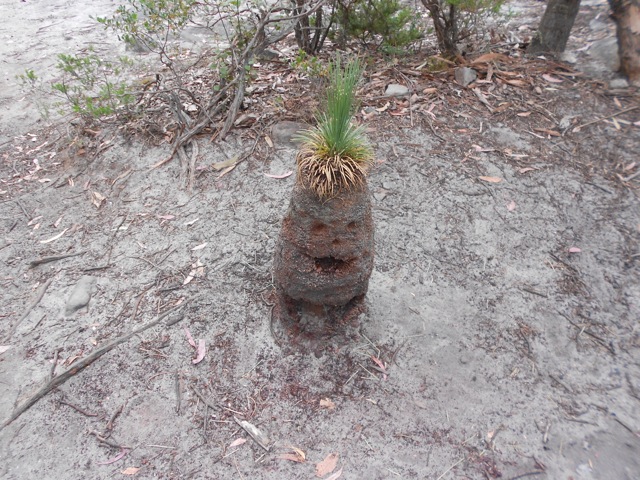
I did stop at the Mt Gar Wilderness camp, leaving my pack under the protection of a Grass Tree man.

wpid-dscn0596-2012-11-27-13-50.jpg

I climbed the rocky face of Mt Gar, similar to Briggs Bluff, there were steep rocky walls to climb, but not difficult as the name would suggest. At the top, spectacular 360 degree views…

wpid-dscn0602-2012-11-27-13-50.jpg

…including that of Lake Wartook.

wpid-dscn0597-2012-11-27-13-50.jpg

With the rain due in short order, I hurried back down to my pack and continued. The rain began and didn’t stop for an hour. 4km will generally take an hour to walk on a fairly flat trail, but this trail was anything but flat, and it continued climbing slowly.

It climbed around the side of some of the steep rocky peaks with thin trails and plentiful boulders to climb.

wpid-dscn0604-2012-11-27-13-50.jpg

I took care because of the rain, but found my boots didn’t slip much. A hiker must trust his boots. If they can grip a 45-50 degree angled rock they’re great. If they can do that in the wet as well, they’re brilliant. Mine are brilliant. I love my boots.

I continued meandering around the cliffs, heading downwards occasionally only to find I had to climb again. At some places I had to crawl through low gaps in rocks, in others I had to take the pack off and haul it after me.

wpid-dscn0607-2012-11-27-13-50.jpg

Eventually the rain ended and the track decided it had had enough as well and headed down. I had to take care as there were several steep rocky walls I had to scramble down on my butt, and as the trail grew slowly less steep, I came to the bottom, a place known as the wind cave.

wpid-dscn0611-2012-11-27-13-50.jpg

It was only 500m to the road and it I don’t get a ride, 6km along a bitumen to my van.

At the bottom I met up with the German couple, who were sitting around a fire. They’d seen only one car on the road and had walked back – although they didn’t have full packs to walk with. They graciously offered me a lift to the Pointy Brick which I accepted. I arrived back at the caravan park exhausted and sore. I’m glad I decided not to camp on the range as violent electrical storms wracked the Grampians that night with plentiful rain.

After a couple of rest days, I’m heading off to the Brisbane Ranges near Melbourne to walk the Burchell Trail – a three day hike.

The Lone Trail Wanderer

The Pinnacle – The Grampians

After finishing the Major Mitchell Plateau walk in the heat yesterday, I planned to do a short walk and see some of the sites of the Grampians without a pack. I headed off to Wonderland – the central portion of the Grampians where there are plentiful walks.

The car park is not far from Hall’s Gap and my intention was to walk up the Grand Canyon – a brief 100m climb through a canyon of rock.

wpid-dscn0534-2012-11-26-09-20.jpg

It was a fair struggle up the rocks in the heat – 31 degrees today – but the formations were awesome. When I came to a junction that offered The Pinnacle for just another 2km walk, I took the option (like I could have resisted!).

wpid-dscn0531-2012-11-26-09-20.jpg

The climb from there was arduous and didn’t seem to end, I passed various different rock formations and small caves…

wpid-dscn0542-2012-11-26-09-20.jpg

…resting like many other people were, in whatever shade I could find. In the end, it was not the steepness of the climb, but the heat that was the killer, sucking the energy from me as I climbed.

The Pinnacle is fenced off pinnacle of rock…

wpid-dscn0556-2012-11-26-09-20.jpg

…with brilliant reviews of the surrounding area including down into Hall’s Gap…

wpid-dscn0560-2012-11-26-09-20.jpg

…and along the ranges.

wpid-dscn0558-2012-11-26-09-20.jpg

While the walk back was all downhill and a lot easier. I’m am still thankful for the pool at the caravan park…

The Lone Trail Wanderer

Major Mitchell Plateau – The Grampians

The Grampians in West Victoria are a chain of mountains at the end of the Great Dividing Range which starts in Northern Queensland. It includes the Main Range National Park where I have enjoyed walking in South East Queensland and have documented elsewhere on this site.

The Major Mitchell Plateau is one of the handful of overnight hikes in the National Park and like the other two, is only an overnight hike. The Plateau is not a linear hike, meaning the beginning is not the end. I’m hoping to hitch a ride back to the beginning once I’m done. If I can’t, I’ll walk the 12km along the road back.

Day 1
wpid-dscn0460-2012-11-24-18-01.jpg

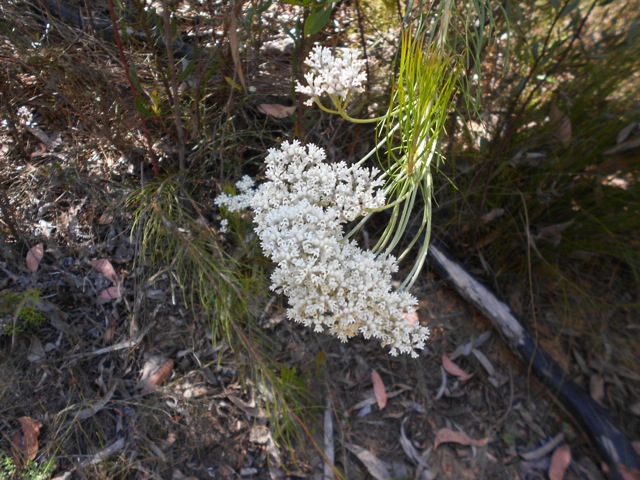
The Major Mitchell Plateau begins at the Grampians Tourist road – the main road heading through the Grampians. The car park is about 10km south of Hall’s Gap. After a brief downhill, the trail begins its slow steady climb along a dirt track towards the Mount Williams car park with plentiful wild flowers along its length.

wpid-dscn0470-2012-11-24-18-01.jpg

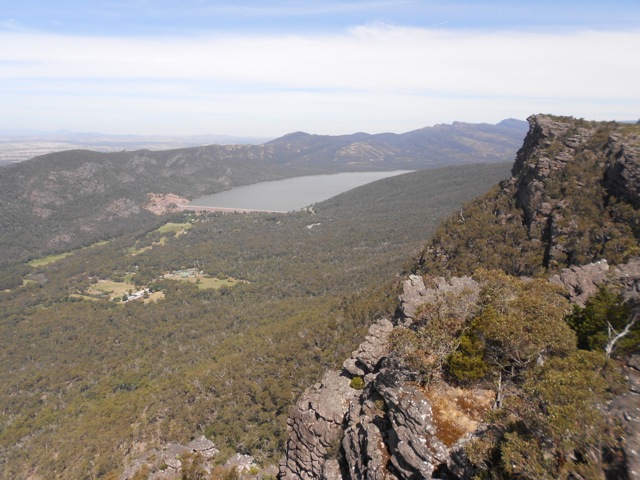
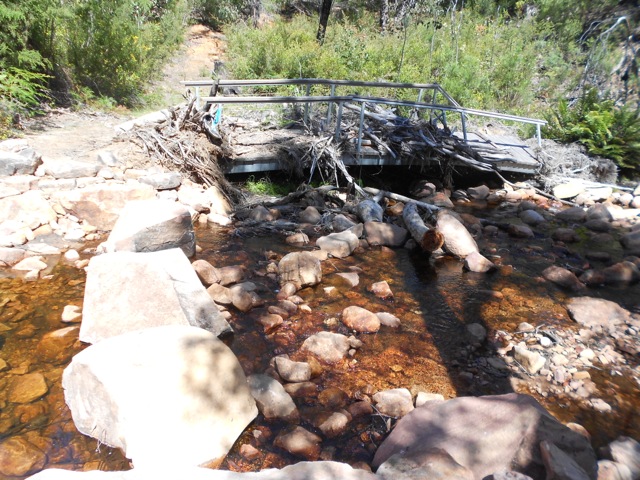
There are several creeks near the bottom where floods have destroyed the footbridges.

wpid-dscn0476-2012-11-24-18-01.jpg

As you climb, you can see the jagged ridge line of the Serra Range across the valley.

wpid-dscn0478-2012-11-24-18-01.jpg

I passed Cathedral Rock and continued on the steady climb, walking around the edge of a steep incline and passing many a rocky formation until I arrived at the car park. It was a warm day, so I took a break for lunch.

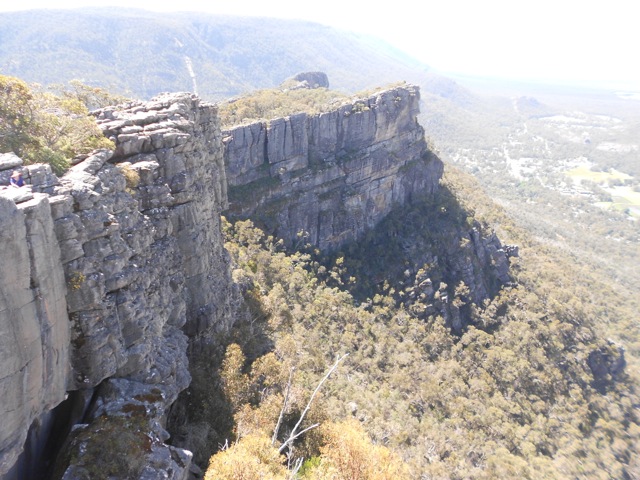
The climb to the summit is along a bitumen road at a brutally steep grade. The first couple of hundred metres are the worst and it evens out a little above that, but only a little. They describe the climb as relentless. I agree. I eventually made it to the summit with 360 degree views of the Grampians…

wpid-dscn0487-2012-11-24-18-01.jpg

…and inland Victoria.

wpid-dscn0491-2012-11-24-18-01.jpg

It was early in the afternoon, so I decided to ‘boots off and relax’ for a bit.

I eventually followed the trail to a radio tower then downhill towards a series of four knolls and finally down a very steep rocky path that sunk below the tree line…

wpid-dscn0499-2012-11-24-18-01.jpg

…which bottomed out at a small forest at the base of the plateau cliffs called Boundary Gap. I rested for a moment to prepare for the coming steep climb. And it was steep. I climbed through the forest until I broke the tree line and continued up a rocky path to the base of the rocky cliff faces, pausing frequently to catch my breath. The trail lead me scrambling through rocks up through the cliff face, ledge to ledge until I finally struggled over the edge.

wpid-dscn0504-2012-11-24-18-01.jpg

The top of the plateau has a lot of flat cascading rocks and plentiful hardy plants. As I walked the final kilometre to the camp, I came across an echidna with its head buried in an ant nest.

Just before sun went down and I retired to sleep, I noted the sky was red. Red at night shepherd’s delight.

Day 2

It was warm this morning when I awakened. I poked my head out of the tent and the sky was red. Red in the morning, shepherd’s warning. Now that’s confusing. Red at night AND in the morning?? I dunno. A delightful warning? Oh ho ho ho, it’s gonna rain!

After breakfast it started to spit. I don’t mind hiking in the rain, I just prefer to break camp first. The sky allowed me to pack and in short order I was ready to go. The trail headed further along the plateau’s undulating top, moving through rocky areas and skirting the often spiny plants that lived up here.

wpid-dscn0507-2012-11-24-18-01.jpg

The path meandered along the top of the eastern cliff line and I stopped from time to time to stare out across the plains of Western Victoria spread hundreds of metres below. I had to brace myself as I stood there. While the wind was not strong enough to push me off the edge, I didn’t want to be party to a freak gust.

Across the top of the plateau, there are plentiful flat stony areas and it could be rather confusing to navigate. However, apart from the occasional yellow arrow pointing the way, there were cairns that helped me navigate my way. The rain did not stay away for long, but it was slight and eventually stopped.

wpid-dscn0514-2012-11-24-18-01.jpg

At the end of the plateau there were a pair of cairns. I had been told that the descent was rather steep, but when I approached the edge it appeared fairly sedate. I descended to a ridge line that lead me to an unnamed peak where I stopped for a break and stared down the length of the Serra Range in all its glory. The sun finally poked its head out of the clouds and would cause the most annoyance; the day was forecast to be 33 degrees today.

wpid-dscn0521-2012-11-24-18-01.jpg

The descent from unnamed peak, however, was a lot steeper and I had to take care as I climbed down, not only for the potentially slippery roots and stones, but also the gusting winds. I made my way down as the temperatures soared and the cool breeze became a hot wind.

wpid-dscn0523-2012-11-24-18-01.jpg

At the base of the peak the trail met a 4WD track and a brief area of open grassy land. The trail soon converged with a track known as the Stockyard Track which continued on up a knoll to a former helipad site.

The rough track continued and I headed down the steep other side of the knoll towards a steep peak that stood out from the trail.

wpid-dscn0526-2012-11-24-18-01.jpg

In the heat, I hoped that the trail didn’t want me to climb it and as I followed it went around and between a pair of peaks before heading towards the road. I picked my way along the trail for another couple of kilometres until it finally ended at the road. I changed my sweat drenched shirt and began the 12km trip back to the The Pointy Brick. After only 2 minutes I was picked up by an older couple. He had hiked the plateau on numerous occasions and others had picked him up when walking to the end. The Code of the Hiker. I was thankful.

wpid-dscn0458-2012-11-24-18-01.jpg

Next, I’m doing an overnight hike around Mt Gar, still in the Grampians. It is also known as Mt Difficult. I hope it doesn’t live up to its name.

The Lone Trail Wanderer

Naracoorte – South Australia

On the road from Kangaroo Island to the Grampians, I stopped at Naracoorte, a town famous for its world heritage listed fossil caves. Naracoorte has a system of 26 caves of various sizes and is one of the major – but not the only – caving systems in South Australia.

The day before I arrived, I had pre booked an adventure caving session. Luckily a couple had also booked, as there is a minimum number.

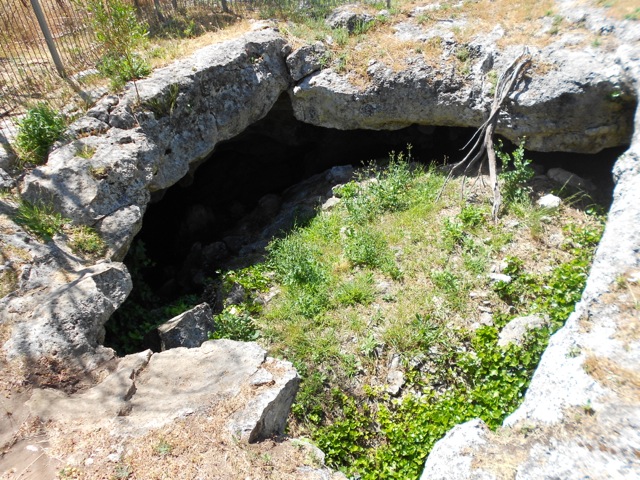
After a brief bit of training, we decided on a cave called the Blackberry Cave, because to has a lot of crawling around and tight spaces.

wpid-dscn0418-2012-11-24-18-01.jpg

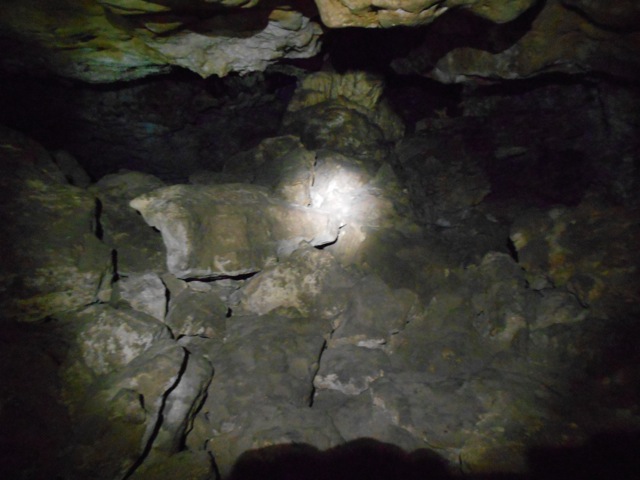
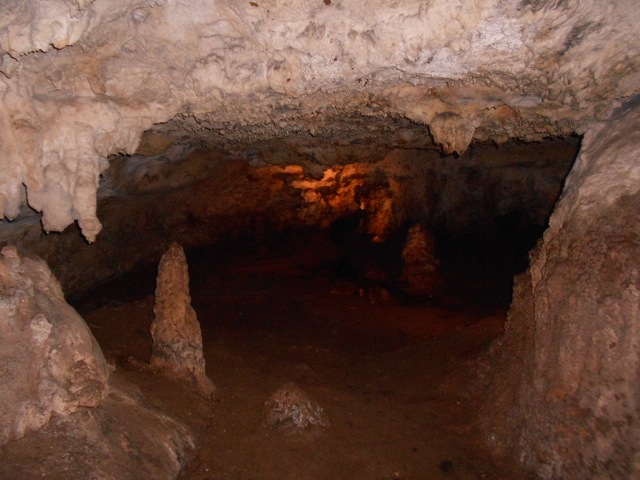
The three of us and our guide climbed into rooms of amazing rock formations. While it’s a short cave and not for the claustrophobic, there’s enough room to crawl around although even with the knee pads, I still sustained some bruising.

wpid-dscn0431-2012-11-24-18-01.jpg

We got to the bottom of the Blackberry cave after a 45 minutes where we were told of a short tunnel that circled back into the chamber. It was tight and I went down first. I slid in head first as per instructions and prepared myself for the next part. I pushed through a tight gap, but my thighs caught and I couldn’t get through. Not prone to panic, I pulled back a little and tried from a slightly different angle. I was eventually able to shuffle through and up out the other gap.

wpid-dscn0435-2012-11-24-18-01.jpg

Caving can be sweaty work even though there is a sustained 17 degree temperature down there. We scrambled back to the surface. A lot of fun. I’m looking forward to my next one.

wpid-dscn0436-2012-11-24-18-01.jpg

The three of us were able to wander unassisted around a larger cave system known as the Wet Cave.

wpid-dscn0438-2012-11-24-18-01.jpg

There will be the first of several instances of spelunking I’ll be doing on this trip, with plans to do some in every state.

wpid-dscn0441-2012-11-24-18-01.jpg

The Cave Wanderer

Kangaroo Island – South Australia

Adelaide to Kangaroo Island to West K.I. Caravan Park

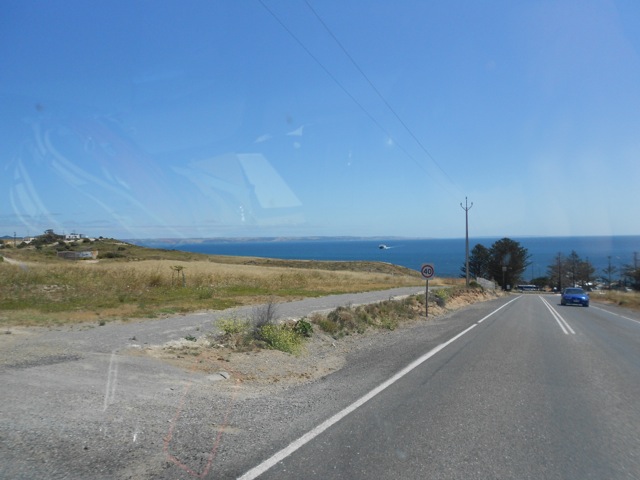
The road trip to Kangaroo Island was a mad 90 minute dash from Adelaide to Cape Jervis. Getting out of Adelaide was the hard part, it seemed like the city might not wish me to leave. A water main had stopped traffic on the Main South Road, and when I took an alternative, a car broke down right in front of me. Adelaide has a southern Expressway, but it’s one way only and time dependant as to which way. In the afternoons, you can only use to to get into the city, so I had to take the alternate route was fairly quick .

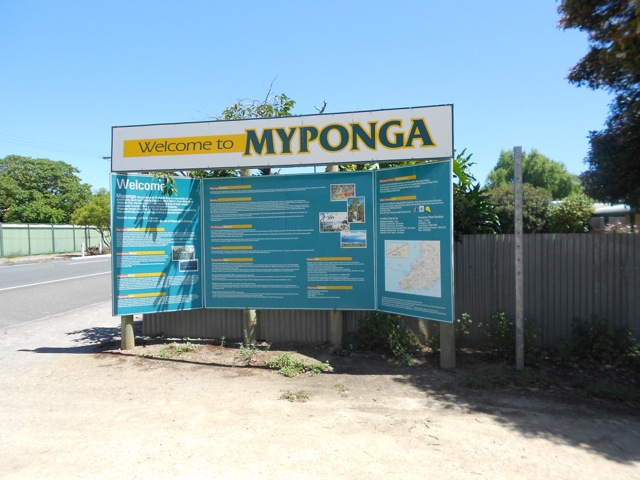
I raced towards the cape – the most southern point of mainland South Australia – passing through a town with a name I’m sure my brother would love: Myponga. I didn’t smell at all…

wpid-dscn0300-2012-11-19-19-17.jpg

As I raced towards the cape, I could see the ferry growing closer. I made it to the car park with 10 minutes to spare before we were loaded onto the ferry.

wpid-dscn0306-2012-11-19-19-17.jpg

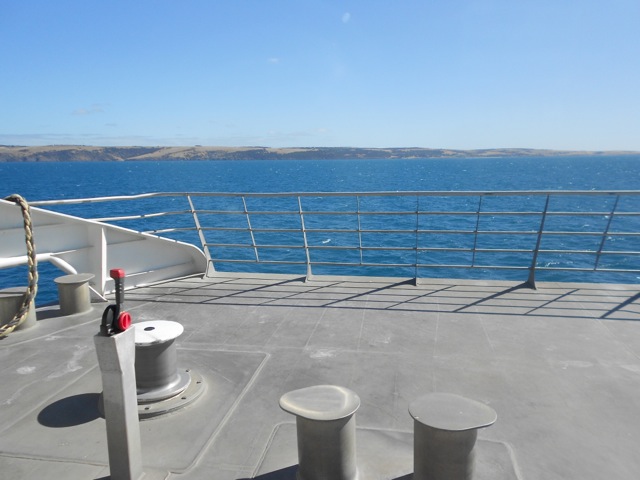
The ferry was a 45 minute ride to Kangaroo Island, and because of a pair of stock trucks on board, it smelled like cows. It arrives at the eastern end of the island and I had to get to the other end where I was staying, some 140km away. Yup, it’s a pretty big island.

wpid-dscn0313-2012-11-19-19-17.jpg

I was warned to be careful when driving at night or in the morning, as wildlife like to hang out on the road. I got to the caravan park without running anything over, but saw far more roadkill than I would have liked to.

Flinders Chase and Ravine des Casoars Wilderness Protection Area

wpid-dscn0324-2012-11-19-19-17.jpg

Ravine des Casoars

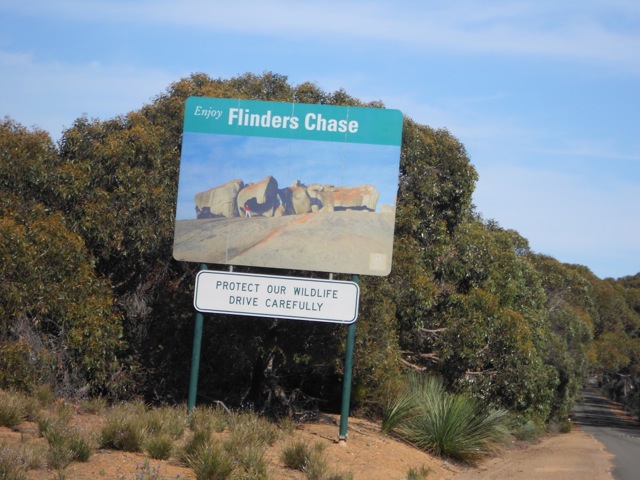
The western end of the island is a National Park and has many different walks and things to see. I chose the Ravine des Casoars hike, one of the hardest on the island. The start of the walk is about 45km from the camping ground and a two-thirds of that is over a very dusty dirt road with many areas of corrugation. This was slow going and took me over an hour to get to the site. I did stop briefly to watch a couple of Goanna’s fighting…

wpid-dscn0326-2012-11-19-19-17.jpg

The walk itself is along the side of a ravine, then drops down into the ravine to walk out to the beach. At the beach, there is golden sand and interconnecting limestone caves.

The walk itself was not difficult, but crossed several different types of terrain, rocks, stony ground, dirt and sand. The trail cut through trees for much of its way…

wpid-dscn0330-2012-11-19-19-17.jpg

…until it headed down into the ravine and then followed a stream out almost to the sea. One of the hardest parts was walking along the sand bank while trying to avoid falling in the water. There were plentiful Goannas along the trail, some more than a foot long, and far too many flies.

wpid-dscn0339-2012-11-19-19-17.jpg

The azure blue of the sea was lovely against the golden sand. The rock formations along the side were amazing. Unfortunately, I didn’t know about the caves until I was there and hadn’t brought a torch with me – something I will remember to bring on every short hike from now on.

wpid-dscn0348-2012-11-19-19-17.jpg

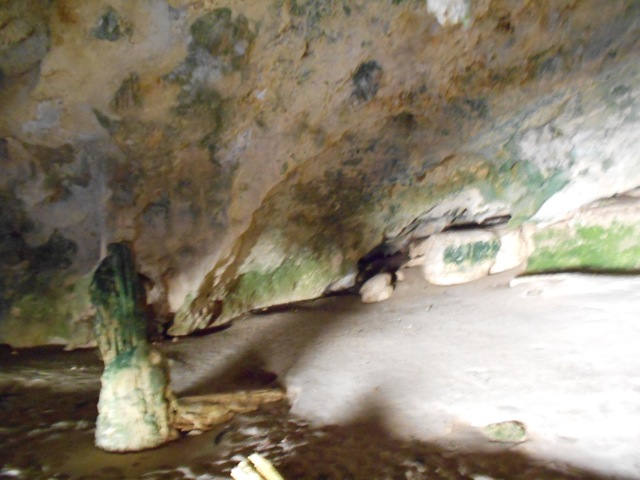
The caves were amazing, and disappeared into the darkness, some of them formed tunnels that connected with some of the other caves. If I had a torch and I would have explored further.

Admiral’s Arch

At the the southern most tip of the National Park…
wpid-dscn0368-2012-11-19-19-17.jpg

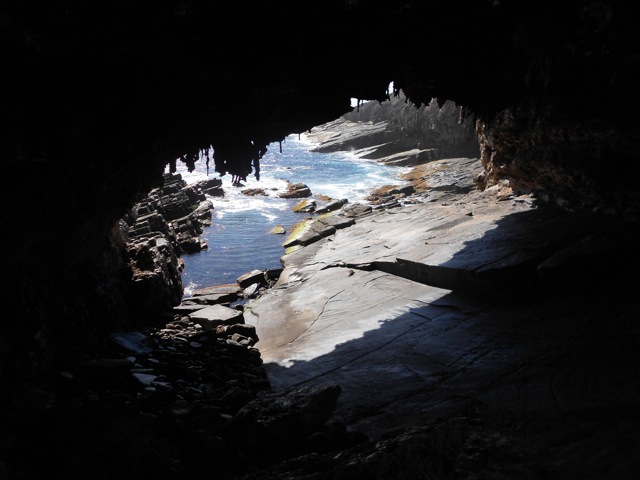
‘’’is the Admiral’s Arch. A natural arch of rock…

wpid-dscn0378-2012-11-19-19-17.jpg

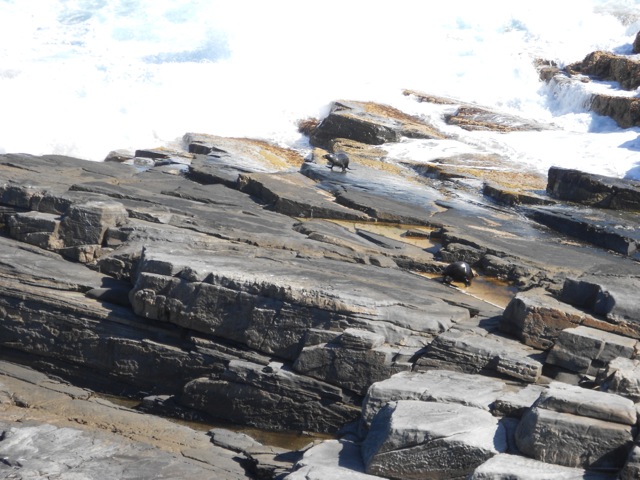
Near the arch were several New Zealand Fur Seals. If I was here a couple of weeks later, many more would have been here. They are all off out at sea mating, apparently.

wpid-dscn0375-2012-11-19-19-17.jpg

Remarkable Rocks

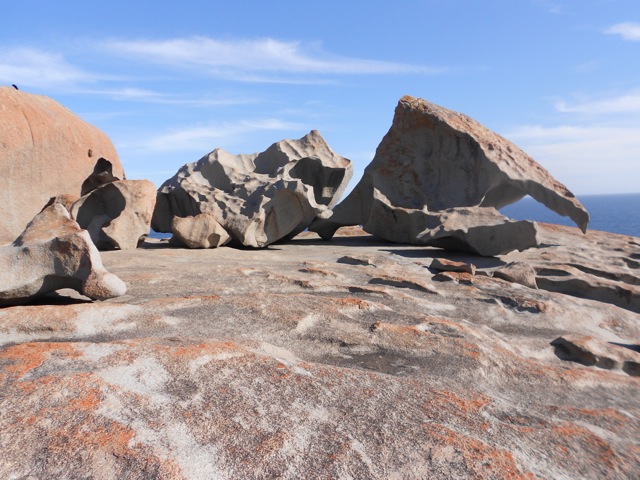
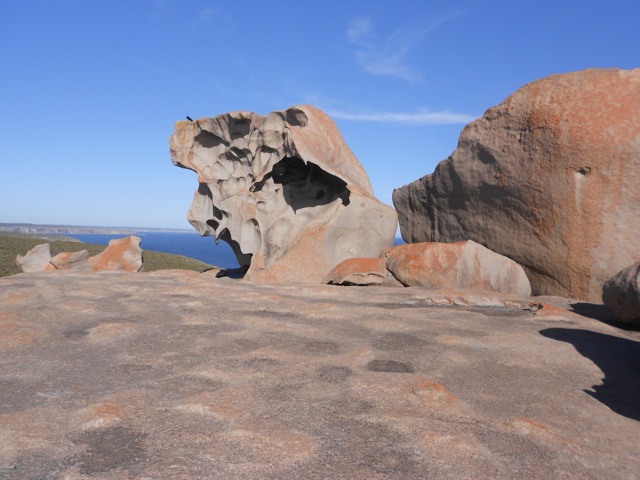
Not far from the Admiral’s Arch are the remarkable rocks.

wpid-dscn0389-2012-11-19-19-17.jpg

200 million years ago, a magma boil broke the surface and cooled. Over the millions of years, the rocks have been eroded leaving the unusual collection of massive rocks. The look like an artist created them. Remarkable, really.

wpid-dscn0390-2012-11-19-19-17.jpg

Seal Bay Conservation Park

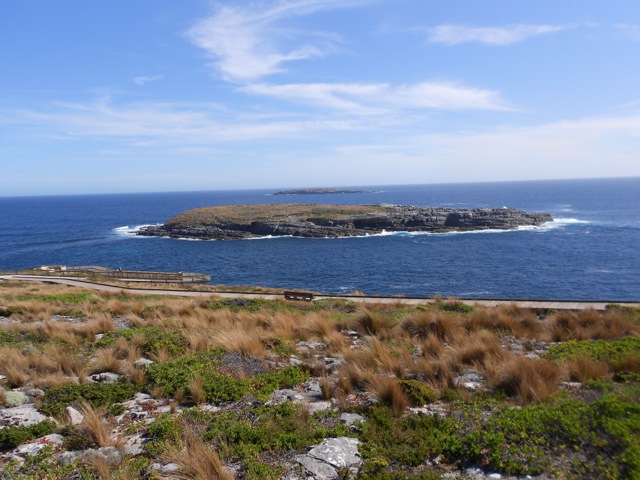
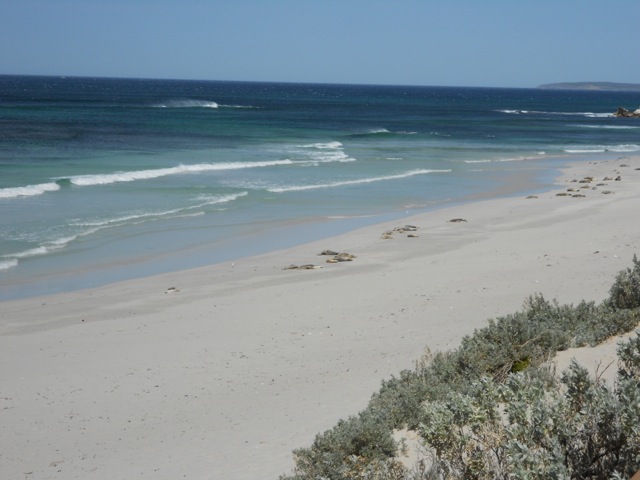
Along the south coast of Kangaroo Island is Seal Bay Conservation Park.

Walking along a long boardwalk, you can get right down near the Australian Sea Lions that have come to the shore to sleep .

wpid-dscn0409-2012-11-19-19-17.jpg

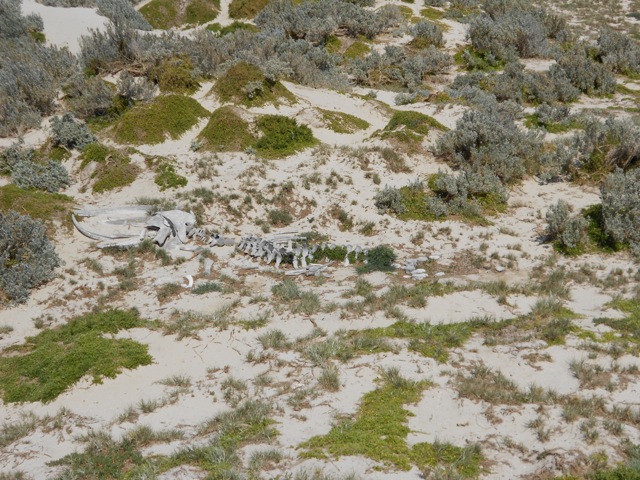
There is also the skeleton of a hump backed whale along the boardwalk also.

wpid-dscn0406-2012-11-19-19-17.jpg

Tomorrow, I head back to the mainland to Naracoorte for some Adventure Caving.

The relaxed on an island Lone Trail Wanderer

Yurrebilla Trail – 3 Days in the Adelaide Hills

The Yurrebilla Trail meanders its way through the Adelaide Hills and connects several different parks along it’s length. The 54 km walk crosses each of the parks and walks along the roads or properties that connect them. The hike can be completed in 5 days, but I decided to walk it in three, aiming to put in the biggest slog on day two as I wished to be back in Adelaide early on Saturday for my birthday dinner with my friends.

Day 1 – Bel Air National Park – Cleland Conservation Park

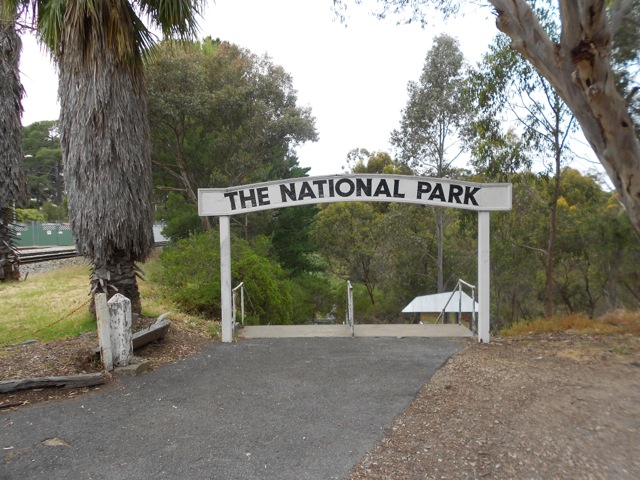
I parked The Pointy Brick (my van) at the end of the trail and walked 10 minutes to the nearest bus stop. After 25 minutes into Adelaide CBD, I walked to the train station and caught the train to Bel Air. 20 minutes later I walked into the Bel Air National park, the beginning of the Yurrebilla Trail.
wpid-dscn0163-2012-11-18-15-48.jpg

As I left the train, I was not the only one donning a hiking pack. It looked like a class of schools girls and their class leader was also walking some of the trail. From experience, school girl groups tend to make a lot of noise, so I was determined to put some distance between us. The Bel Air National Park is a maze of tracks, and while the Yurrebilla Trail is pretty well marked,

wpid-dscn0167-2012-11-18-15-48.jpg

there are a lot of tracks and it was confusing at some intersections. I soon came to Playford Lake and skirted around the edge, following the trail.

wpid-dscn0168-2012-11-18-15-48.jpg

I continued up a creek trail which turned from stones to dirt. The trail led to echo tunnel, a water flow tunnel that was too short for me to stand to my full 189cm and with a pack on my back, it was even hard to stoop to get through. I had to walk stooped along the water channel – which was dry – to get to the other end.

wpid-dscn0179-2012-11-18-15-48.jpg

Out of the tunnel, the real trail began and so did the climbing. I made my way up the trail past the occasional wild flower to the Lower Waterfall Lookout. The waterfall would have been lovely, no doubt if there had been water to actually fall from it.

wpid-dscn0185-2012-11-18-15-48.jpg

The track split and I followed pressed on along the Yurrebilla. I was a short distance along it when I saw the girls head the other way. Silence! I continued up the hill and could begin to see Adelaide below me through the trees. I left the Bel Air National Park and headed along the road at the top of the ridge with the inkling of a view almost to the sea.

wpid-dscn0193-2012-11-18-15-48.jpg

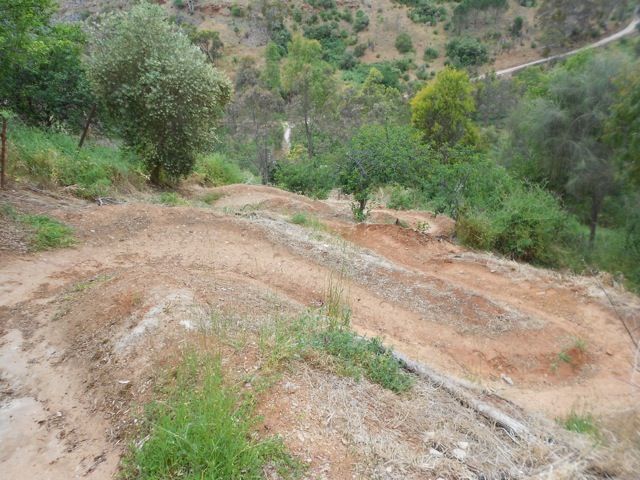
The trail began to descend slowly until we came to a steep embankment, where it wound back and forth 27 times before reaching the road at the bottom.
wpid-dscn0194-2012-11-18-15-48.jpg

The road led around through The Brownhill Creek Recreation Park for a couple of kilometres, the flowers along the sides bright and colourful.

wpid-dscn0198-2012-11-18-15-48.jpg

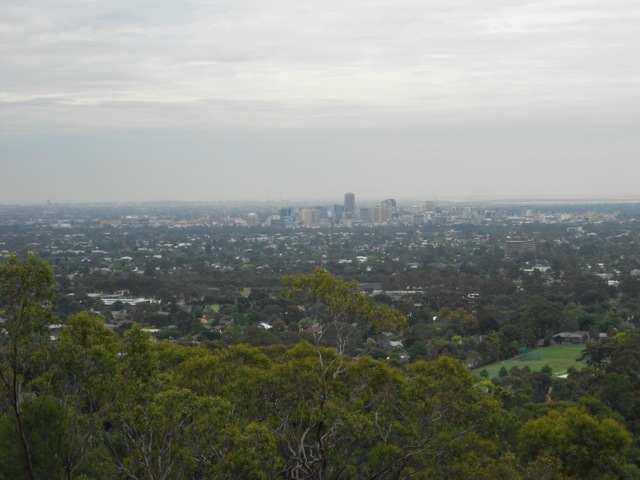
I split away from the park and headed up a steep path alongside a fairly new driveway. As I arrived near the top, I looked back at the full view of Adelaide spread out below me to the sea.
wpid-dscn0218-2012-11-18-15-48.jpg

I disappeared back into the trees and descended before climbing another taller hill giving views to the north. I crossed a large conservation area and then a series of private paddocks, where the cows glared at me menacing before I arrived at a highway.

wpid-dscn0223-2012-11-18-15-48.jpg

The trail followed the road for 2km, on a steady climb, until I reached the Cleland Conservation Park. While I was not allowed to camp in this park, I located a fairly hidden spot and erected my pirate camp. The hiking motto: Take only photos, leave only footprints. Tomorrow when I break camp no-one will know I was here.

As the night fell, I cooked dinner and as the wind picked up, watched the lights of Adelaide begin to shine.
wpid-dscn0227-2012-11-18-15-48.jpg

Day 2 – Cleland Conservation Park – Morialta Conservation Park

I was up early intent on packing before I was discovered. I’d heard an Asian man’s voice during the night, but when I went up to investigate, there was no-one there. And in the dark, the tent was not easily seen from anywhere near the road. After a quick breakfast, I headed off along the path.

It had rained briefly overnight and the wind had been rather intense. It was chilly walking through the park until the sun finally came over the hill. The trail was initially classic dirt/rocky trail but quickly joined another sealed path. The sealed path went for almost 2km and was where the majority of ‘wildlife’ could be seen, most of them jogging by in their tight leggings and tops. The trail split away from the sealed path and I left behind the ‘wildlife’ and anything else any interest. Beyond trees, the Cleland Conservation Park honestly didn’t have a lot going for it. There is a Wildlife Park in the middle, but I was intent on walking, so did not stop.

The Heysen Trail merged with the Yurrebilla Trail towards the end of the conservation park. The Heysen Trail is South Australia’s longest trail, running 1500km from Cape Jervis – where I’m catching the ferry to Kangaroo Island in a couple of days – right up towards Central Australia.

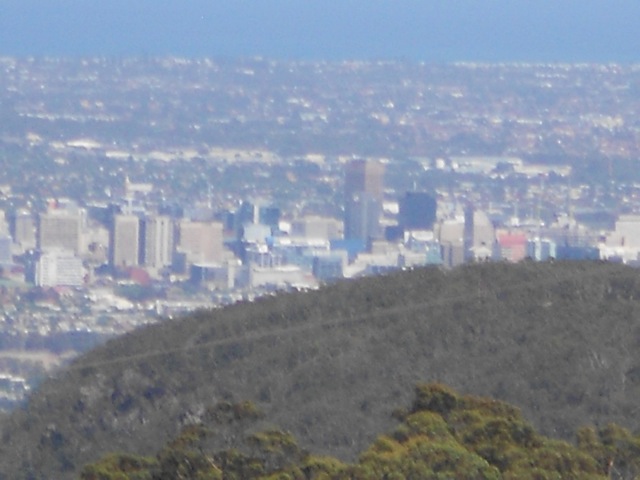
I left The Cleland Conservation Park late morning, and headed along a major road making my way past some nice properties with great views. The trail led me up past one of them to the top of a ridge and a fantastic view right across Adelaide with the sea beyond.
wpid-dscn0235-2012-11-18-15-48.jpg

I continued along the road and came to the top of the Horsnell Gully Conservation Park. I stopped for lunch before heading down the gully It reminded me of the Larapinta Trail on the thin rocky path, the hot air and the dry trees. Great! Near the bottom wildflowers were everywhere.

wpid-dscn0240-2012-11-18-15-48.jpg

The trail bottomed out at a dirt road which turned east past the ruins of the house belonging to the regions first settler. The road steadily climbed the hill and I pushed on section by section towards the summit. Just before the top, the trail left the road and walked briefly through the forest before arriving at a busy road. I crossed and dropped down to another slightly less busy road and it until I arrived at the township of Norton Summit. This was originally to have been my stopping place, but it was only early afternoon, and in South Australia, the sun doesn’t go down until after 8pm, later than the 5.30pm I’m used to from Queensland. I decided to stop for a rest at the Norton Summit Hotel. There should be a pub mid way in every multi-day hike!

After a plate of wedges and a beer or three I continued on. With 4 hours to sun down I headed down the road and past some old barns from the 1850s. I had a brief chat with a Kangaroo on the side of the road before finally arriving at the Morialta Conservation Park. I headed in and along a dirt road. I caught up to a Koala walking along the trail before the trail dropped into a gorge near a waterfall where the Heysen trail split off.

wpid-dscn0258-2012-11-18-15-48.jpg

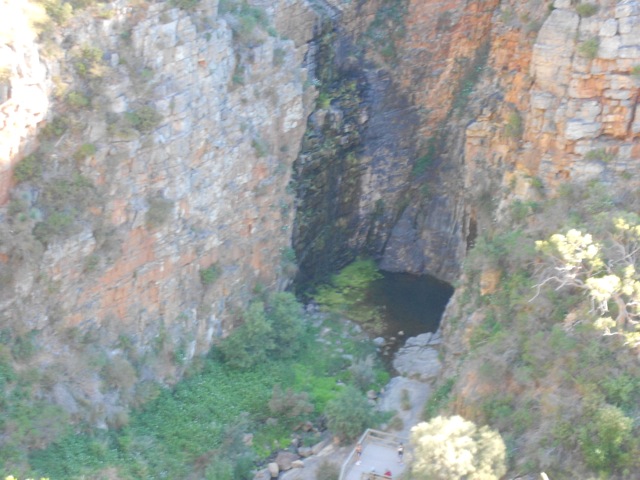
I continued along the gorge near plentiful wild flowers and followed the path up the side of a hill, climbing to the viewpoint of a second waterfall.
wpid-dscn0278-2012-11-18-15-48.jpg

I continued on until I reached the Deep View Lookout, which gave views along the gorge to Adelaide and back almost to the waterfall.

wpid-dscn0268-2012-11-18-15-48.jpg

After a 23km slog I was growing weary and set about locating a suitable site for my camp. I continued along the trail for another kilometre before seeing an open area of grass below. I went bush to discover the grassy area was fenced off. I found a spot just outside the fence and set up camp.

The wind was gusting very strongly, so I had to tie the tent off well. As darkness fell I watched the lights of Adelaide below light up. It’s funny how digital cameras make the lights of a city at night look like it’s on fire. As winds continued to buffet the tent, I went down to sleep.
wpid-dscn0282-2012-11-18-15-48.jpg

Day 3 – Morialta Conservation Park to Ambers Gully

Happy Birthday to me!

I awoke early, had breakfast and began breaking camp. My intention was to finish the final 13.3km of the trail by lunchtime so I could do a few things before dinner.

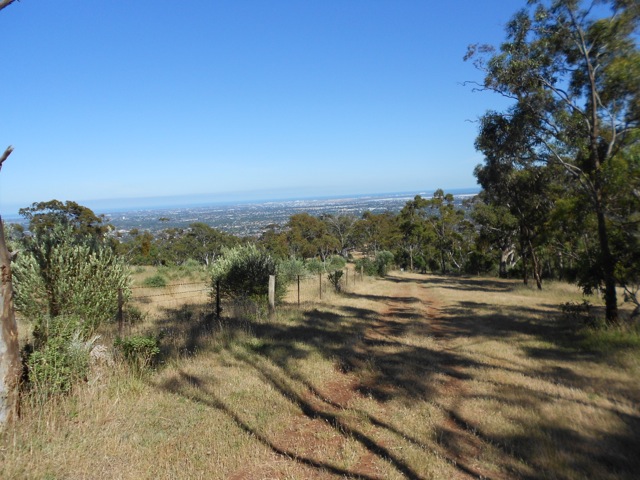
As I was climbing back to the trail, I saw a group go past. I followed and they were an older group training for a walk in Tasmania. After a chat, I headed off, wanting to put some distance between us – they were very chatty, and I wanted to get back to the serenity of nature. The rocky trail met a wide dirt road and I motored along it in the sun. The trail dipped and turned back on itself on a grassy open area which would have been good for camping if I had continued walking…
wpid-dscn0283-2012-11-18-15-48.jpg

I walked past the Fox Dam…

wpid-dscn0287-2012-11-18-15-48.jpg

…and up the Fox Hill Track to the summit and then back down again to a major road. The Trail led me along the road for a couple of kilometres, with racing cyclists going past regularly. With the jagged sides of the Black Hill Conservation Park left to go, I prepared myself for a rather hard climb. I was not let down, I started easily at a quarry and worked my way up a gentle slope that turned steeper. A kilometre in, I met a guy coming down, who told me he was going to be coming back up as soon as he got to the bottom.

wpid-dscn0290-2012-11-18-15-48.jpg

The road grew even steeper as I went, and in the morning heat, I pushed on. It was one of those mountains, just when you get to what looks like the top, it keeps going up. I came to a point where a wire grate had been laid to help vehicles up the steep climb and again,

wpid-dscn0293-2012-11-18-15-48.jpg

when I got to the top I was expecting the summit, but it pushed on further at the same steepness. I was close to the summit when the guy who I’d passed going the other way caught me. He too was training for Tasmania and walked this same walk every Saturday and Sunday morning. We walked the last 3km together, most of it downhill along the road and then down Ambers Gully along a dirt track and finally past Ambers Ruins – another old house left from over 150 years before. We passed a waterfall that my companion had never seen with water on it.
wpid-dscn0294-2012-11-18-15-48.jpg

It was not long before we arrived at the car park where The Pointy Brick had been waiting patiently for me.
wpid-dscn0296-2012-11-18-15-48.jpg

Overall, the Yurrebilla Trail is a great hike with excellent view across Adelaide and plentiful wildflowers. It’s clever how it connects the several parks together, although it did feel like I was walking along main roads a little too often. A hike I would recommend to anyone.
Tomorrow, I set off to Kangaroo Island…

The Lone Trail Wanderer.