Tag Archives: City

Arequipa, Southern Peru – Impressions

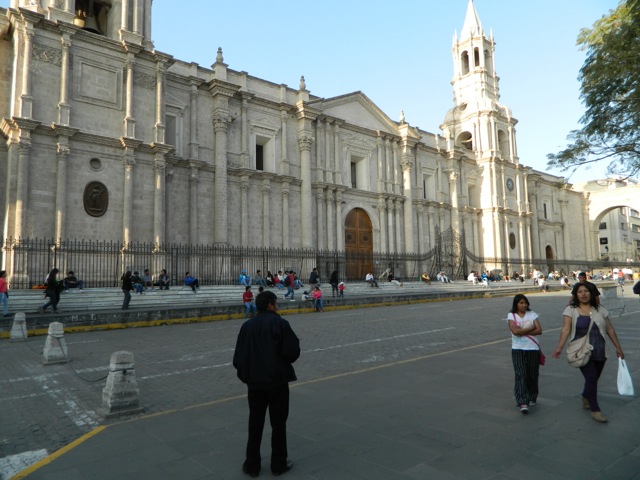
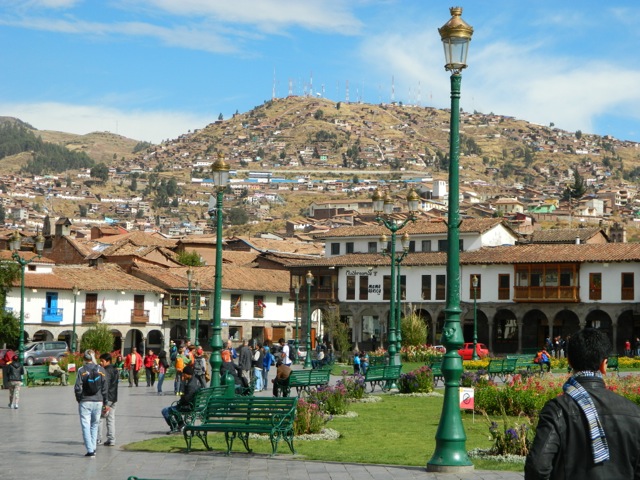
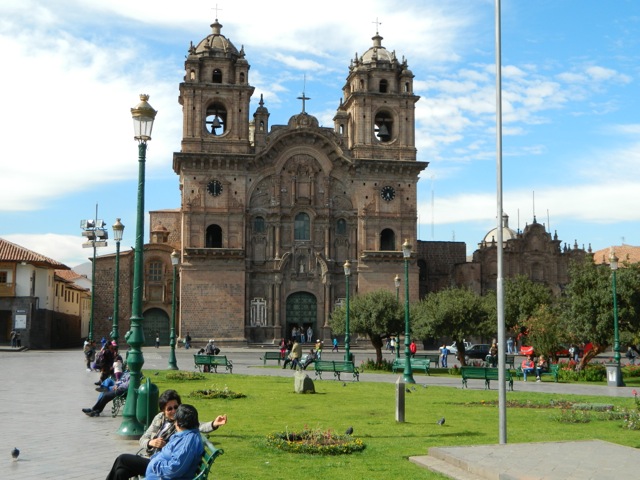
Arequipa is the second largest city in Peru with 900,000 people next to Lima (with 9 million) and is the capital of the south. The centre of Arequipa gives a similar impression to that of the ancient Incan capital Cusco, a ten hour bus ride away. A beautifully set up cobbled main plaza with cathedral on one side…
wpid-dscn3418-2013-08-25-14-36.jpg

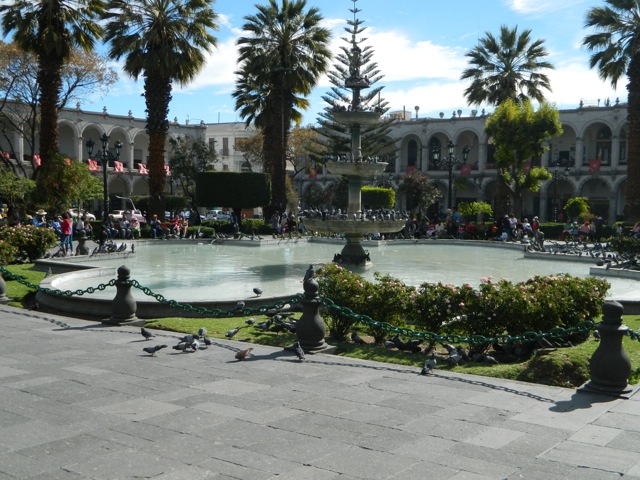
…and many tour agencies and restaurants trying to hawk for your business on the others.

wpid-dscn3513-2013-08-25-14-36.jpg

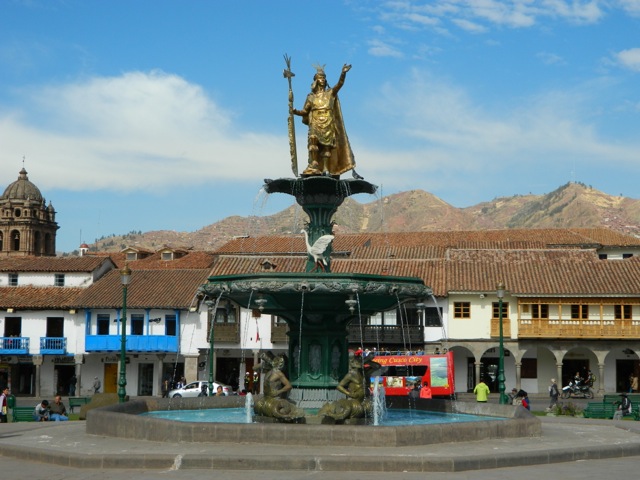
Peruvians seem fascinated by fountains and while there aren’t as many here as their was in Cusco, there are plenty. Along one side of the plaza is an open air mall with plentiful shops restaurants and the like.

wpid-dscn3514-2013-08-25-14-36.jpg

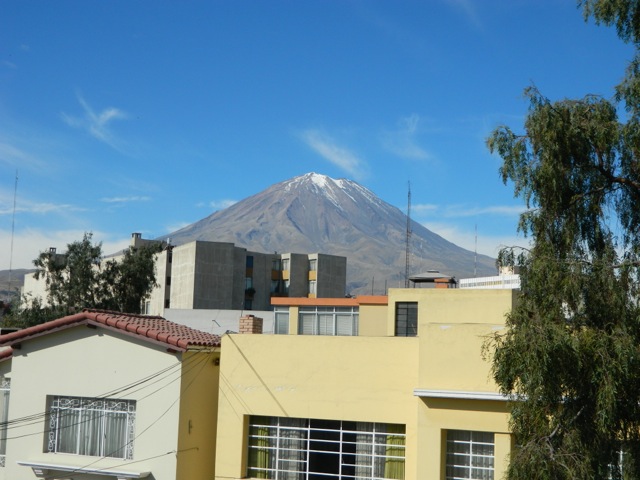
On the horizon outside the city is a tall range of mountains, and a solitary volcanic cone called Misti Mountain that’s said to spend most of the year surrounded in mist. Although I’ve been here a week and have yet to see it shrouded. It’s a two day climb up and down the 6000m cone.

wpid-dscn3518-2013-08-25-14-36.jpg

Between the city and the mountains is river where several groups host rafting, and while it’s only a short experience – 90 minutes max – the level 3 and 4 rapids are fun, although not as intense as my previous rafting experience in the Waikato, New Zealand.

wpid-img_0052-2013-08-25-14-36.jpg

There are plentiful museums and monasteries in the city, one hosted an exhibition known as the Ice Girl. In the time of the Incans she was sacrificed to the angry mountain gods. At 11 years old she had to walk 170 miles from Cusco before climbing Misti Mountain to die and ascend to live among the gods. She went willingly and it was seen as an honour to be sacrificed. Many similar sacrifices were made along the mountains from northern Argentina to Peru. Her preserved body is on display in a special glass freezer case.

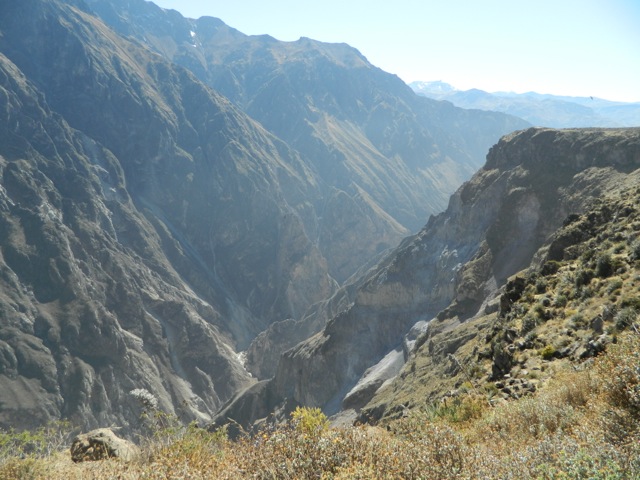
The most popular reason people come to Arequipa is for Peru’s third most popular tourist attraction, Colca Canyon. Colca Canyon is said to be the second deepest canyon in the world, twice as deep as the Grand Canyon in the US. I managed a 3 day solo hike through the canyon and it was amazing. A post of its own is coming shortly.

wpid-dscn3421-2013-08-25-14-36.jpg

Next I’m off to the city of Ica, south of Lima to see the Red Beaches of Paracas and do some sand boarding.

The Lone Trail Wanderer

Aguas Caliente and Machupicchu

After nearly six months travelling around South America, I’ve finally arrived at the most popular tourist destination on the continent, Machu Picchu. But there’s more here than just the ancient ruined city at the top of a mountain.

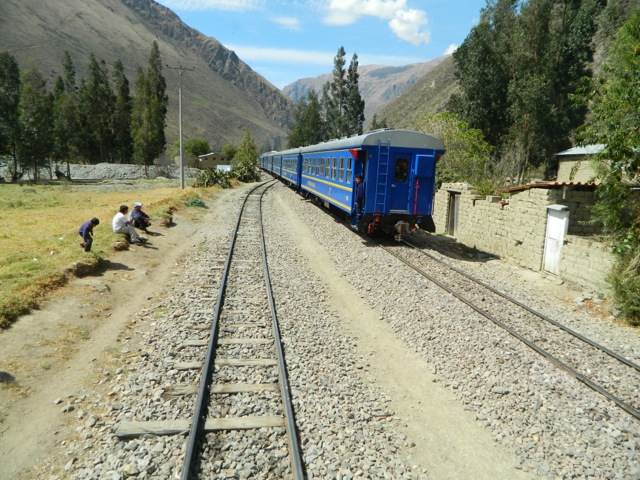
Located deep in the mountains, a 3.5 hour train ride from Cusco or 4 days via the Inca Trail, is a town called Aguas Calientes, meaning hot waters, or hot pools in Spanish. With no road leading into the town, there’s no other way to get than walk or catch the train.
wpid-dscn3288-2013-08-14-15-41.jpg

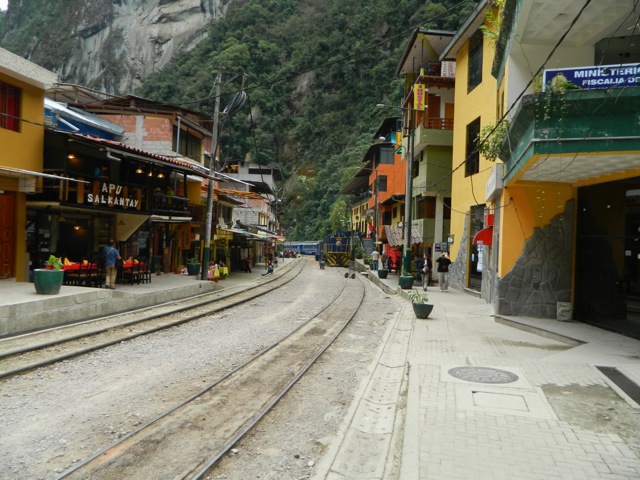
Aguas Calientes is a beautiful little town set on the side of the Rio Urubamba and nestled among the mountains. It’s purely set up for tourists visiting Machu Picchu, meaning if the ruins didn’t exist, neither would the town. There are a vast number of restaurants, hotels, hostels and massage places all for the pleasure of the tourist and the tourist dollar. With so many restaurants, the owners fight to get just a few customers in each night.
wpid-dscn3299-2013-08-14-15-41.jpg

I arrived by train at midday and set about investigating the town. With a plan to hike up the 2000 steps to Machu Picchu early the following morning, I headed out towards a nearby set of waterfalls only 45 minutes walk from the town. The trail leads you along the side of the train tracks that wind through the valley.
wpid-dscn3307-2013-08-14-15-41.jpg

When I got to the house with an arrow pointing at it and the word cataratas (waterfalls in spanish) on a sign I was sceptical as I couldn’t hear the waterfalls. So, I decided to just keep walking along the trail instead.
wpid-dscn3292-2013-08-14-15-41.jpg

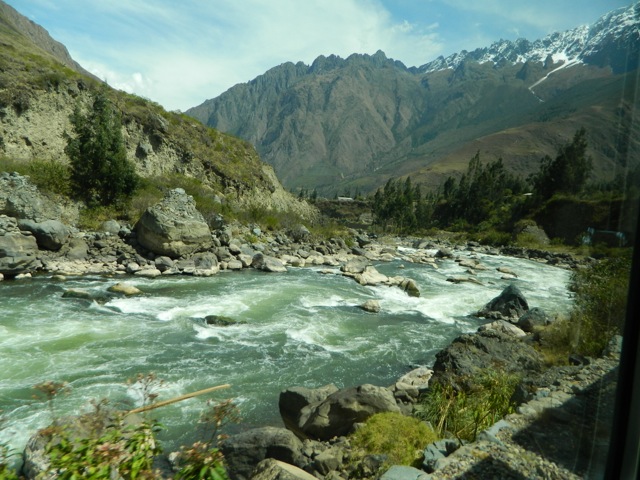
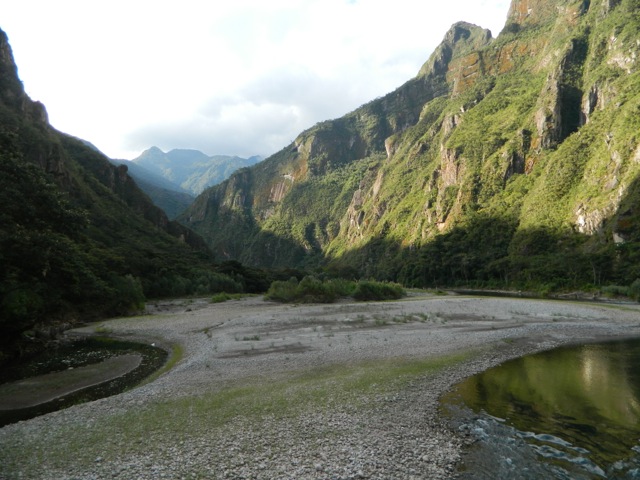
It was a pleasant walk with no hills, so I just kept going and going until I came to a place called Santa Teresa and decided to start back. The scenery was absolutely beautiful…
wpid-dscn3314-2013-08-14-15-41.jpg

What had begun as a 45 minute walk turned into a 5-hour hike. On the way back, I was able to see a single building from the ruins at the top of the mountain.

wpid-dscn3324-2013-08-14-15-41.jpg

While a casual 90-minute walk wouldn’t have been a problem, I wasn’t really prepared for the length I ended up walking. I wasn’t wearing the correct socks and managed to gain a couple of blisters, something that rarely happens to my feet.

The next morning I was up at 4.30 and getting ready for the climb to the ruins. The hostel is prepared for this as breakfast begins at 4am.

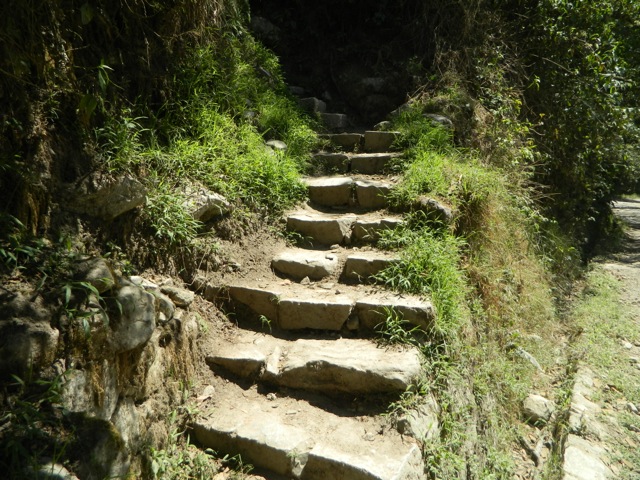
The 2000 steps climbing up to the ruins were built in typical Inca style, although with the road winding up the side of the mountain for the buses, I’m sure the stairs weren’t built by the Incans.
wpid-dscn3409-2013-08-14-15-41.jpg

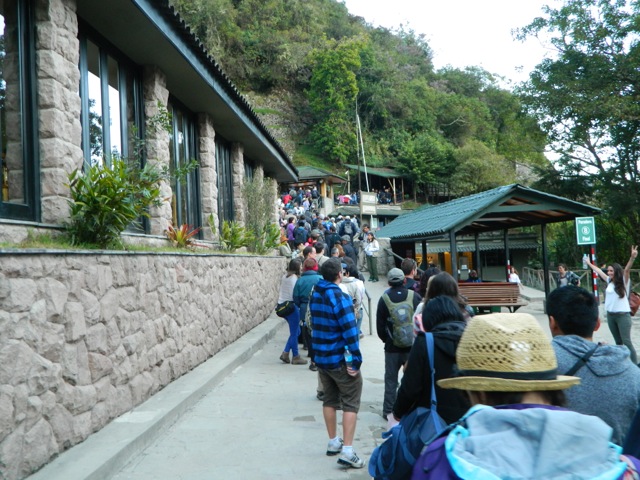
The stairs were strenuous on their own although I’ve climbed more difficult mountains, but add the altitude and it becomes challenging. (Add blisters and it’s even worse!) I made it just after 7 when the mass of tourists from the buses were trying to get into the city. This is what I’d expected and why I call Machu Picchu the Disneyland of South America.
wpid-dscn3326-2013-08-14-15-41.jpg

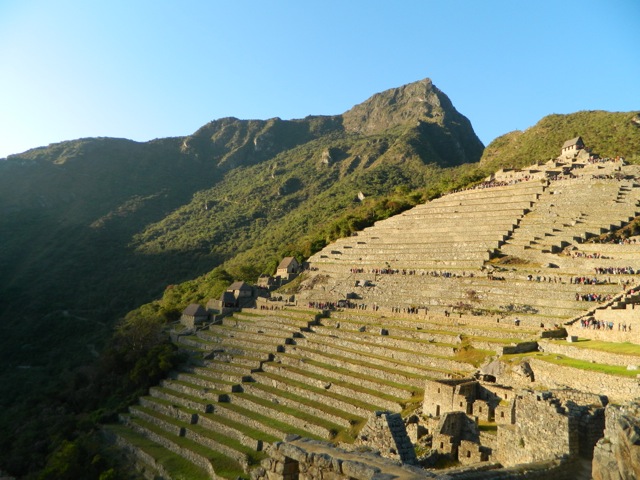
I finally got in just before the sun rose over the mountains to shine on the city, lighting it up the stone work in the pinkie yellow of first light.
wpid-dscn3340-2013-08-14-15-41.jpg

There’s a lot that can be said about the city, but much of it is speculation and not on my part. There are few signs but beyond telling you where the exit is, they don’t tell you anything about the ruins. No-one’s really sure what the full story behind the city is and I was only able to garner a small amount of information by listening in to the many guides around the different parts of the city.

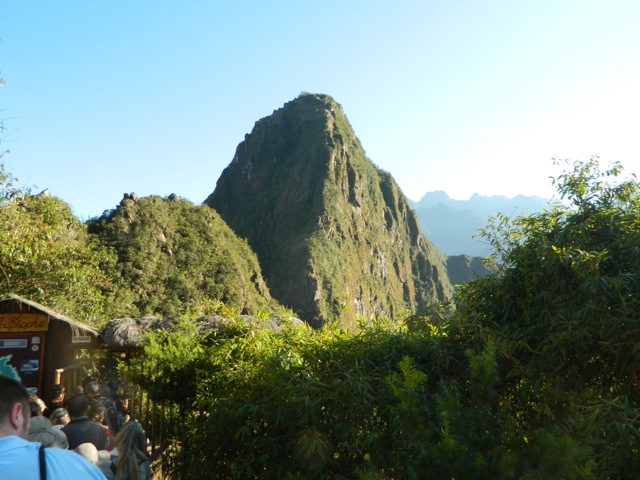
These two mountains are Huayna Picchu (the shorter) and Wayna Picchu. Wayna Picchu has a temple built atop it with a precarious path leading to it. You need to pre-pay to get to these mountains and I hadn’t.
wpid-dscn3353-2013-08-14-15-41.jpg

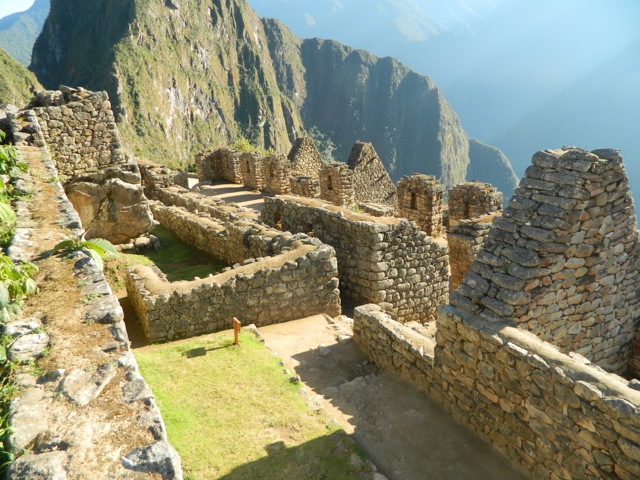
The ruins were discovered in 1911 when a local advised a US American that there was Incan architecture atop the mountain. He scaled the mountain and discovered the overgrown city.
wpid-dscn3358-2013-08-14-15-41.jpg

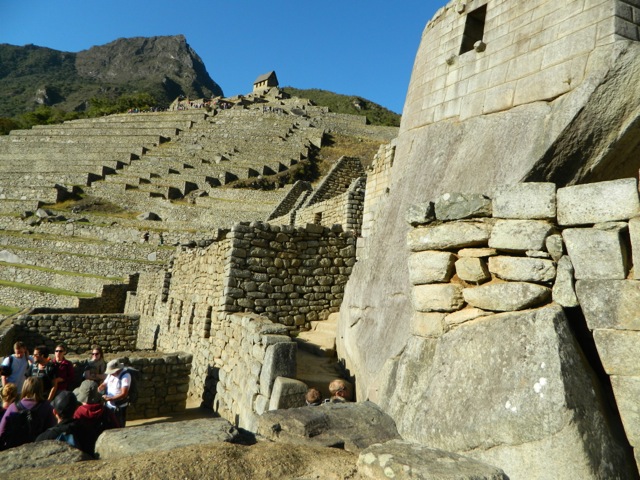
Machu Picchu was thought to have been built as the winter home of an Incan emperor and is said to have been abandoned before the spanish conquests in 1534. This is one of the many speculations of its existence. The house at the top of the tiers is the highest point in the city and the peak of Machu Picchu Mountain is behind it.
wpid-dscn3363-2013-08-14-15-41.jpg

The city was thought to be the lost city of the Incas but many think the lost city is another, larger city, several days away in the jungle. Other stories say that this was an Incan Concubine city for the emperor, with 100-200 concubines living here.
wpid-dscn3370-2013-08-14-15-41.jpg

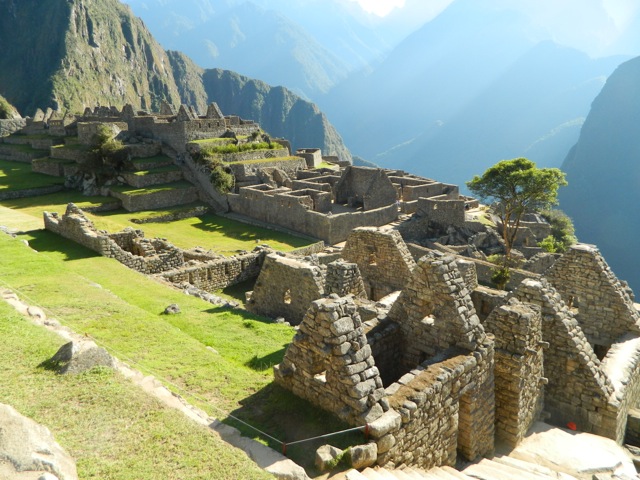
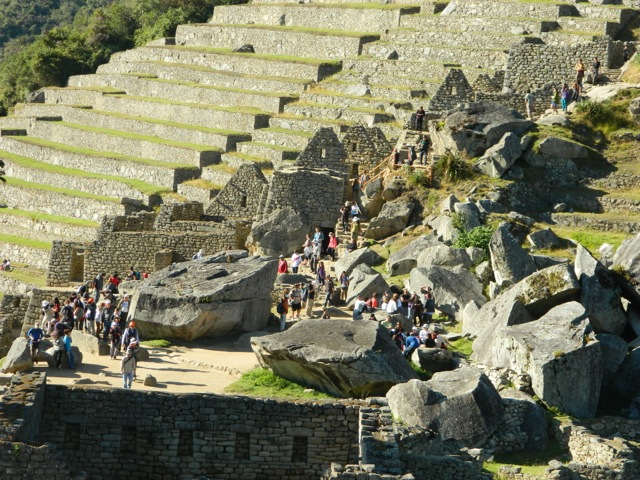
Nestled as it is on the top of a mountain, the city isn’t flat, with many terraces and stairs. Corridors were thin or closed off to protect areas of the ruins, meaning it could be slow going with all the tourists trying to get around.
wpid-dscn3390-2013-08-14-15-41.jpg

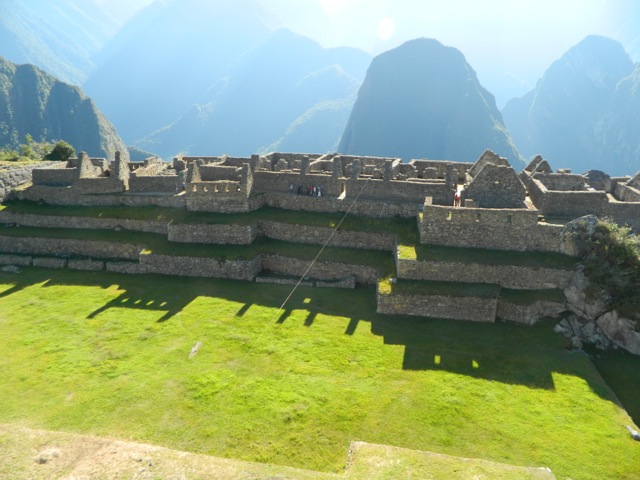
It takes about two hours to walk around the ruins, but even in the middle of winter it’s very warm during the day. There are large open grassy areas, possibly where crops were sown.
wpid-dscn3394-2013-08-14-15-41.jpg

At the end of my walk around the ruins, I decided to climb Machu Picchu Mountain. The stairs up the side were even steeper than those leading up to the city.
wpid-dscn3405-2013-08-14-15-41.jpg

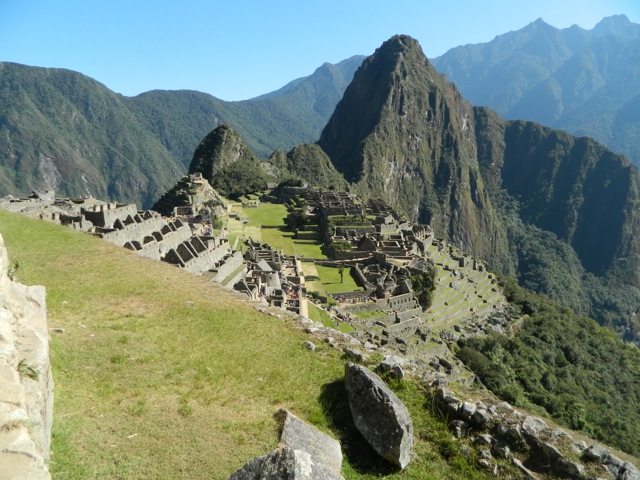
I got to a spectacular viewing area about half way up (about the same height as Wayna Picchu). With the altitude, the heat and my general state of exhaustion I decided to forego the rest of the climb and headed back down again.

wpid-dscn3408-2013-08-14-15-41.jpg

I found my way to the exit and began descending back down the stairs to Aguas Caliente. At 30°C+ it was very hot going and exhausted, I finally reached the hostel and a welcoming shower.

While Machu Picchu is packed with people – 2500 are allowed there a day – that was the only downside of the ruins. The reconstruction of parts were great and the city overall is amazing. I certainly enjoyed my visit and while expensive, it’s something I had to do, unlike the Inca Trail, where the amount of people would have spoiled my enjoyment.

Next, I am off to Arequipa, a southern city in Peru in hope of hiking through Colca Canyon, a canyon twice as deep as the Grand Canyon in the US.

The Lone Trail Wanderer

Cusco, Peru – Impressions

Cusco in Southern Peru is the historic capital of the Incan Empire from its establishment in the 13th century until the Spanish invaded in 1534 and sacked the place, destroying many of the Incan buildings so they could create their own city in its place. There are still a few Incan structures left, some temples and some think stone walls. Cusco was supposed to have been built in the shame of a Puma, a sacred animal of the Incans.

Like La Paz, Cusco is build in a bowl, although it’s nowhere near as large, only one or two of the bowl walls have housing built on them. And unlike La Paz, which is totally built using clay bricks, there’s not a single clay brick house in sight.

wpid-dscn3274-2013-08-10-16-15.jpg

Cusco is high in the Andes at around 3400m above sea level and has a lot of old spanish architecture dotted around the city…

wpid-dscn3273-2013-08-10-16-15.jpg

There are also many plazas around the central city and most have fountains. There are more fountains here than any other single place I’ve been to in South America. There are also more tourists here in Cusco than I’ve seen in one place elsewhere in South America. There’s good reason for this, Cusco is 71km away from the number one tourist site in South America; Machu Picchu. When walking around the city, there are groups of tourists 20-30 thick walking everywhere.

wpid-dscn3270-2013-08-10-16-15.jpg

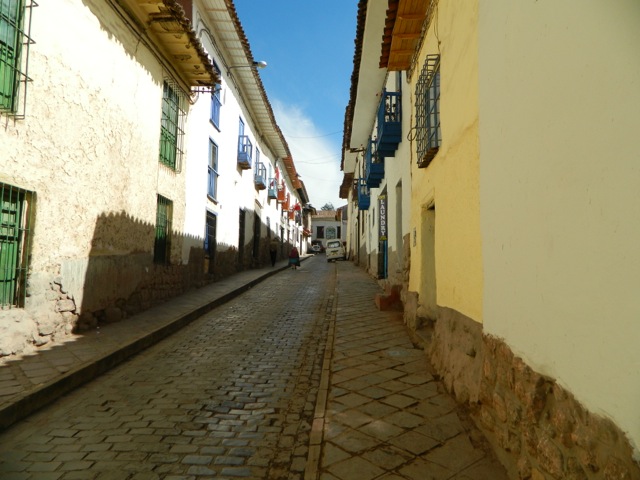
There are quieter places in Cusco, many of the roads around the city central are cobbled and rather quaint.

wpid-dscn3277-2013-08-10-16-15.jpg

Then, while in Peru, one must try one of the delicacies, deep fried Guinea Pig. I compare it to dark duck meat, and while it was nice, it’s not something I’ll be eating all the time.

wpid-dscn3279-2013-08-10-16-15.jpg

On the streets of Cusco, around the central plazas, are lots of hawkers trying to sell different tours and the like. they go along with the many, many tour operators stores everywhere. But tours aren’t the only thing they’re hawking, they also push massages, suggesting you’ll need one after climbing to Machu Picchu.

My next stop is a small town called Aguas Caliente, literally ‘hot waters’ or hot pools. It’s only 4km from Machu Picchu and other than the Inca Trail is the only way to get there. My aim is to be up at 4am to make the climb to the hidden city to be there at sunrise and to miss most of the tourists. And while I love to hike, I plan to not do the Inca Trail as I call it Disneyland, there are just so many people walking it that it goes against why I like to hike, the serenity and quiet of nature. There are plenty of other places in Peru to hike and I have a couple planned.

The Lone Trail Wanderer
La Paz, Bolivia – Impressions

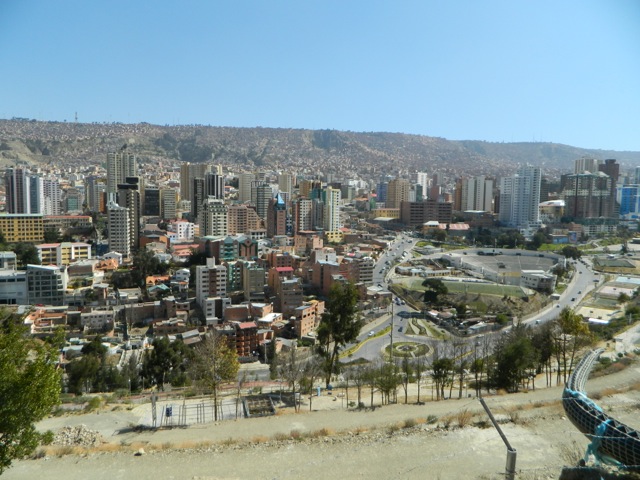
Nuestra Señora de La Paz (Our Lady of Peace) is Bolivia’s second largest city – after Santa Cruz de la Sierra – and is set high in the Andes mountains on the Altiplano (high plains in spanish). The city is built in a bowl, almost like a crater, with the rich and middle class living towards the lower areas in the centre. When the city began to expand the only way it could go was up, so in all directions the houses were built up the sides of the bowl. The poorer people of La Paz live in the brick buildings that span all visible walls. At night, the lights of the city are a marvel to see, both from the centre looking up and from the rim looking down.

wpid-dscn2896-2013-07-26-15-23.jpg

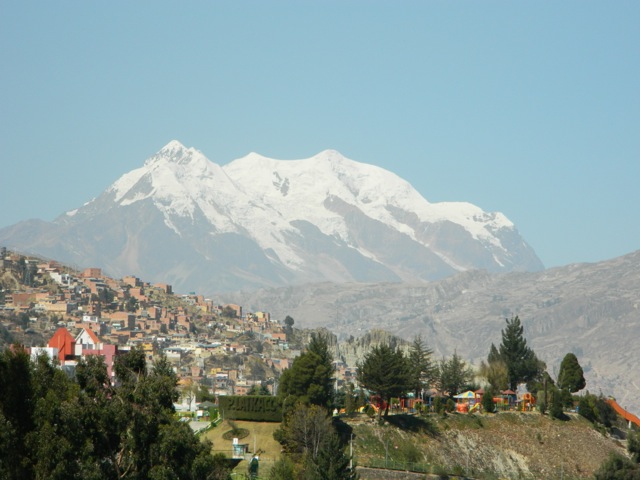
On the southern horizon of La Paz is Bolivia’s 2nd tallest mountain, Illimani, at just over 6,400m. Illimani is only the 18th tallest mountain in the Andes.

wpid-dscn3042-2013-07-26-15-23.jpg

As you arrive in La Paz by bus, you will no doubt travel around the top of the bowl and be amazed when you look down at the sprawling city below. However, for the first couple of days, the central city – no doubt where you’ll be staying – seems a little dirty and run down, with the calls of Bolivians trying to sell you whatever they can or the beggars silently holding their hands out to you. As you slowly explore the city over the first couple of days, it grows on you very quickly. There’s a certain charm about La Paz.

wpid-dscn3048-2013-07-26-15-23.jpg

La Paz has plentiful markets and shopping areas, but there’s a strange thing that I’ve found about Bolivia in general is that they don’t have just one store selling something, they have an entire block of small stores selling the same thing. As an example, I spent 2 days in the city of Santa Cruz before coming to La Paz and found a three story mall with about 100 shops in it, 95 of them selling mobile phones. Most of the stores were selling exactly the same models too. This is the same in La Paz, I walked through the hardware sales section of the central city and there were shop after shop selling exactly the same thing, with even smaller booth shops set up in front of the other shops selling the same thing also. It did make it easier when I was looking for a new sleeping bag, all the adventure stores were grouped together as well.

wpid-dscn3049-2013-07-26-15-23.jpg

The location of La Paz enables it to be a hub for many different activities, with plentiful hikes across the altiplano, the Death Road, and busses leaving for the jungle to the north or the salt flats to the south. In the city there are a couple of parks and miradors, but most things are just outside the city. When walking around the city, you will note a plentiful small plazas and the occasional piece of architecture. On one day, I caught a taxi to The Megacentre, a multi level mall with large movie theatre. When you enter the centre, you wander if you’ve left Bolivia.

wpid-dscn3051-2013-07-26-15-23.jpg

Lastly, unless you have come from the high areas of Peru or the salt flats, you are going to have to deal with the altitude. The lowest point of La Paz is 3,500m while the highest is 4,200m. So, for the first day in the city, you might have a serious headache and it will be hard work climbing the numerous hills or stairs, as the lack of air will have you gasping like crazy. There are plentiful ways to deal with altitude sickness, pre dosing with altitude pills, chewing on coca leaves, buying special coca powder (no, not cocaine, although that is derived from the leaves) or similar. After a few days it gets easier, although you may still have issues climbing steps.

My time in La Paz has been most enjoyable and I would recommend a visit if you are in the region.

The Lone Trail Wanderer
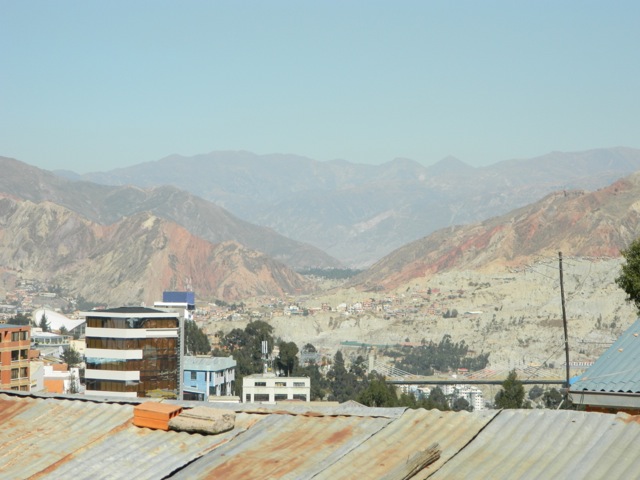
Rio de Janeiro, Brazil – Adventures

Rio de Janeiro is Brazil’s second largest city. There’s so much going on in Rio that it’s one of the more interesting and entertaining cities I’ve been to in South America. Rio is nestled among some monolithic hills on the edge of the bay similar to the Glasshouse Mountains on the Sunshine Coast in Queensland, Australia.

wpid-dscn2820-2013-07-8-15-35.jpg

The city is rather spread out with a pair of small national parks nestled within the city. And, unlike elsewhere in South America, there’s a decided lack of dogs in Rio. Which means there’s a lot less dog crap on the streets and that cats reign supreme in the city.

My 24 hour trip to Rio was my longest bus ride to date. Most buses I’ve travelled in have been semi-cama (half bed) – similar to many air line seats – while there have been a handful of full-cama – almost full bed. The bus to Rio was all full-cama and quite comfortable but it didn’t have a food service. This turned out well though as for al meals the bus stopped at buffet restaurants that charge by the kilogram .

When I arrived in Rio, I found it to be the dirtiest city that I’ve been in so far, with graffiti covering the majority of the buildings. It didn’t give me the safest feeling. I quickly caught a taxi to my hostel, which turned out to be a very small place with people jammed into 3 small rooms and very little else. One bathroom for 18 people is just not enough. The hostel was also in a central area of town and not in the more famous beach areas. It was very cheap, so I guess you get what you pay for.

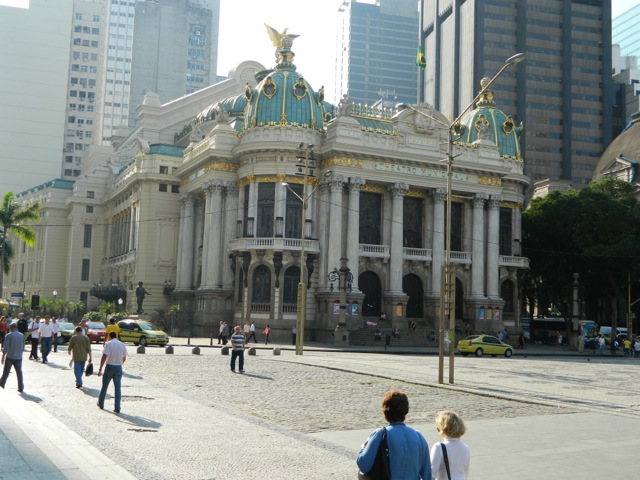
A couple of days later, I did a walking tour around the city to some of the more prominent sites in the central city and Lapa, the famous samba party suburb next to it. The city has many well designed buildings, churches, museums and municipal theatres.

wpid-dscn2709-2013-07-8-15-35.jpg

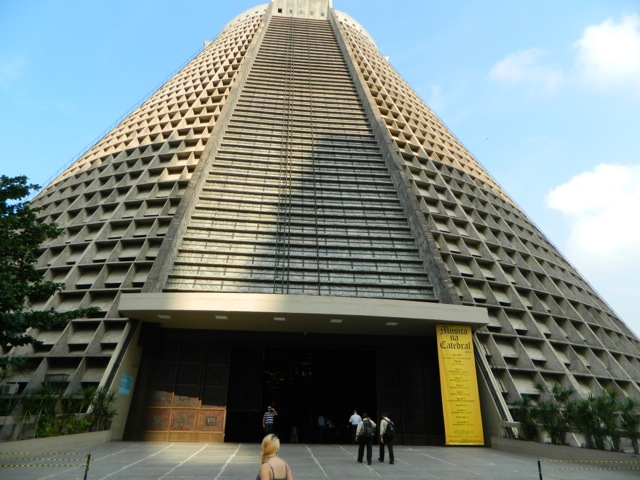
The cathedral is like no other cathedral I’ve seen.

wpid-dscn2705-2013-07-8-15-35.jpg

It holds 10 thousand and has amazing acoustics. Looking up from the inside…

wpid-dscn2708-2013-07-8-15-35.jpg

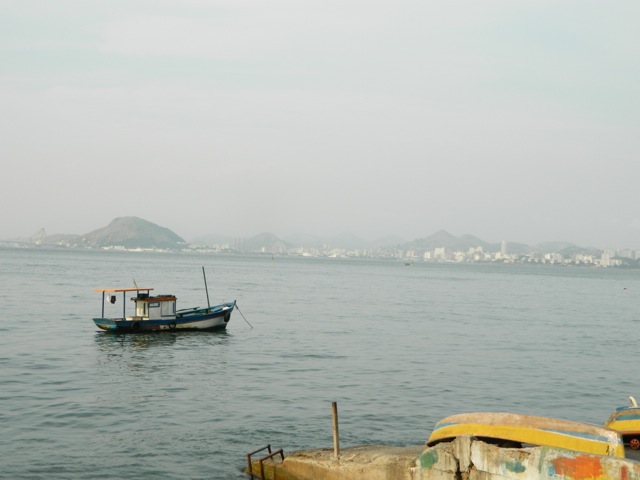
Then, from the central city you can look out across the bay to the suburbs on the eastern shore.

wpid-dscn2713-2013-07-8-15-35.jpg

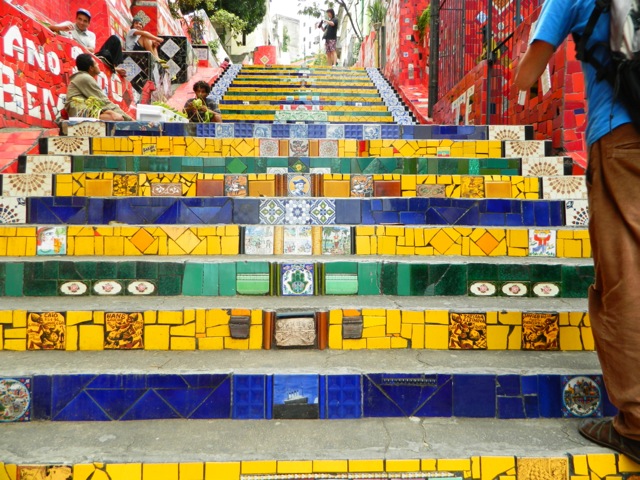
Next, I booked a full city tour, to do some more of the touristy things. It took me to the Lapa Steps built by a Chilean artist…

wpid-dscn2758-2013-07-8-15-35.jpg

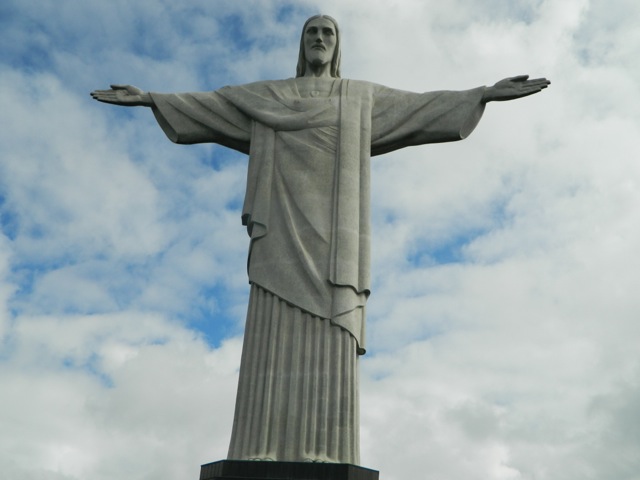
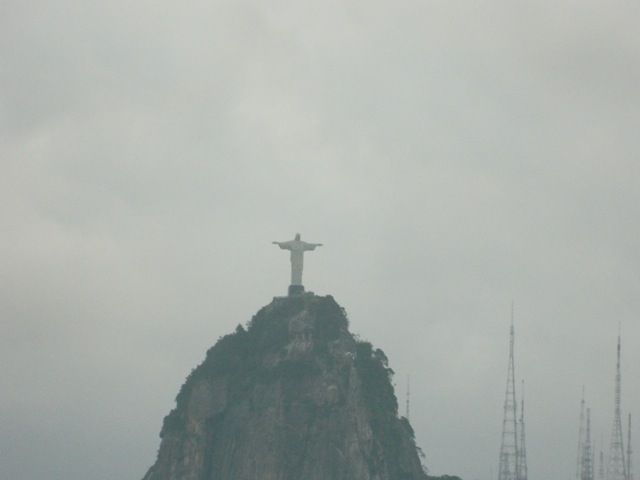
… to the Lapa arches, Maracanã stadium before up the mountain to see the most famous of attractions in Rio, Cristo Redentor – Christ the Redeemer.

wpid-dscn2736-2013-07-8-15-35.jpg

The hill it stands on gives great views over one part of the city and the peninsula that ends with Sugarloaf Mountain.

wpid-dscn2746-2013-07-8-15-35.jpg

Lasty, we were delivered to the end of the peninsula and took cable cars up to Sugar Loaf mountain. The views from both mountains are amazing.

wpid-dscn2767-2013-07-8-15-35.jpg

Getting to the top of the monolithic Sugar Loaf is a two step journey, the first up to Morro da RCA then up via the cable car another 1500m to Pão de Açúcar (Sugar Loaf Mountain).

wpid-dscn2784-2013-07-8-15-35.jpg

We stayed up there until sunset and watched the lights of the city appear below us. Definitely a spectacle to be seen.

wpid-dscn2807-2013-07-8-15-35.jpg

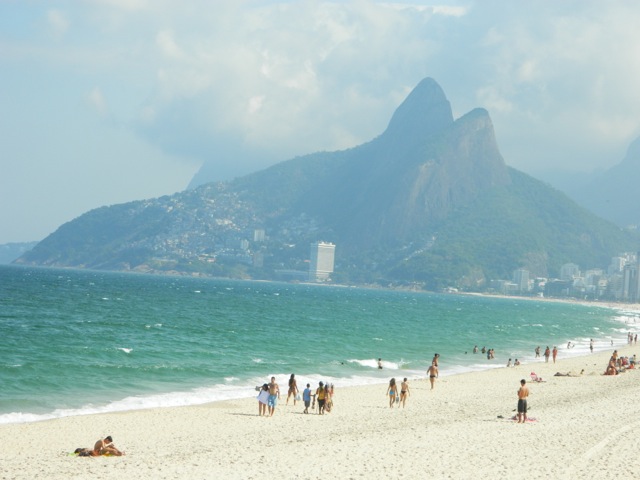
After a week in a tiny hostel in the city, it was time to move to the beach, so I booked three nights at a Copacabana beach hostel. On the second day, I hired a bike and rode the length of the busy Copacabana and Ipanema beachs.

wpid-dscn2809-2013-07-8-15-35.jpg

While it’s the middle of winter, it’s a beautiful 27ºC here and the beach has plentiful sun bakers, kite surfers and beach sports. The classic brazilian bikini is everywhere…

Rio de Janeiro has been an awesome experience. It feels more like a group of very different cities all merged in together.

Next I head towards Bolivia, stopping off in the Pantanal, the worlds largest wetlands…

The Lone Trail Wanderer

Buenos Aires, Argentina – Take 2

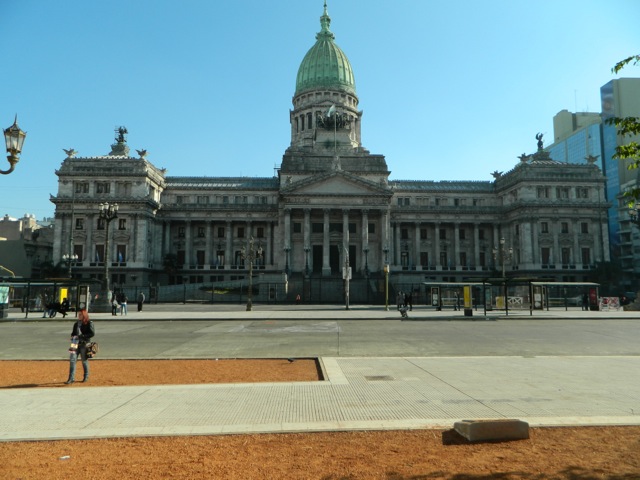
After several months travelling around the southern portion of South America I returned to my starting point of Buenos Aires. On my initial visit, I’d only spent 3 days there and hadn’t seen a lot of the city. On my return visit, I stayed 10 days to hang out with a group of locals I’d arranged to meet and to see some of the sights of the city, like the main courthouse.

DSCN2558

On my second visit I staying in the central suburb of Palermo at a hostel chain called Hostel Suites Palermo, which had an above average but nothing to rave about. Palermo is described as an up and coming suburb, but with homeless people living at the end of the block perhaps ‘slowly up and eventually coming’ is closer to the mark.

Buenos Aires has 3 million people and is quite spread out. Because of its size and with the lack of national parks in the province, walking around the city was where most of my exercise came from. One afternoon, I made plans to catch up with a new friend and walked an hour along one of the main streets lined with shops. When I finally got to the meeting point, the shops continued off into the distance.

DSCN2559

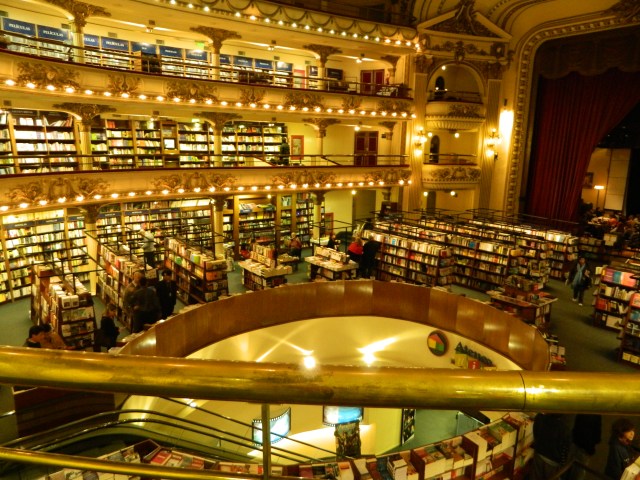
The next day, I walked in the opposite direction along the same street.  An hour later I arrived in the city centre and again shops had covered the entire distance and stretched on into the distance.  On my walk I stopped in at El Ateneo Grand Splendid, the bookstore to end all bookstores, an old theatre that had been converted into a book store. It’s the most famous bookstore in Argentina but has very few books in english.

wpid-dscn2555-2013-06-29-09-34.jpg

Near the centre of town is a large group of parks and on the next sunny day I wandered around a pond full of geese and sat reading on a bench as skaters and cyclists went by.

DSCN2523

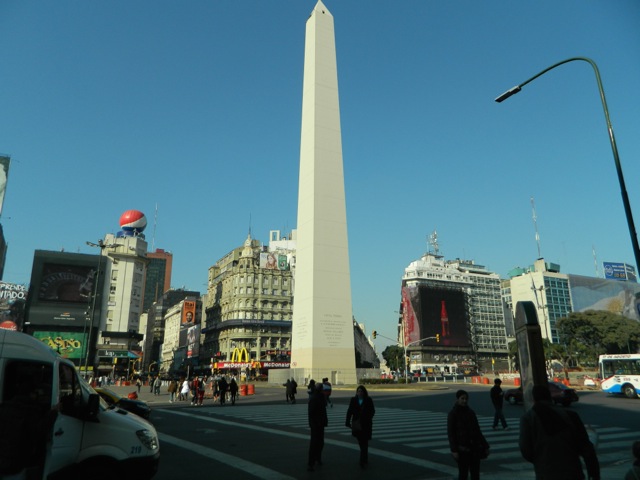
On the next day it was forecast to rain, so together with a girl I’d met at the hostel, we checked out some of the more cultural features of the city centre, several monuments which we called ‘boob monuments’, as they all contained carvings of topless women.  Then when it began to rain, we looked around several museums and galleries in the area.

DSCN2520

With Uruguay on the far side of aptly named Rio Uruguay, I caught a ferry across to Colonia on the next sunny day to tick that country off my travel list.

Overall, Buenos Aires felt different to my previous visit. But during that earlier I’d been suffering culture shock. The ever-present doggie doo was still a major problem in Buenos Aires. I did see a handful of people pick up after their mutt only to find the bags of doggie doo left in the middle of the footpath. Progress is slow…

Next I headed to my final Argentinian destination, Puerto Iguazú and the country’s other major attraction, Iguazú Falls.

The Lone Trail Wanderer
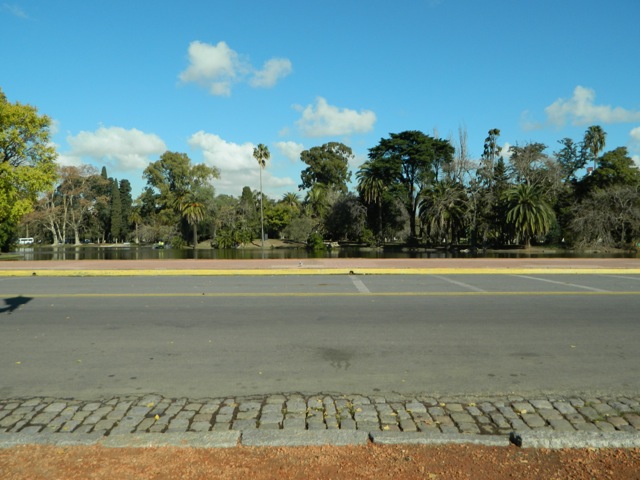
Córdoba, Argentina – Impressions

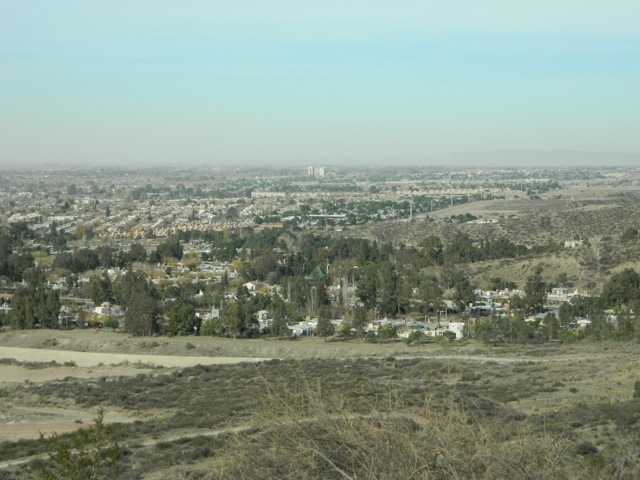
Córdoba is the city in the centre of northern Argentina. It’s the capital of Córdoba province and is the second largest city in Argentina.

After a short 12-hour bus ride from Mendoza, I arrived in the late afternoon and was promptly upgraded from a dorm to a private room by the owner. Thanks to both Turning Point Hostel and quiet season! The hostel had many outdoor areas, as much of the northern Pampas region of Argentina is desert, and had several travel inspired murals on its walls.

wpid-dscn2483-2013-06-14-18-05.jpg

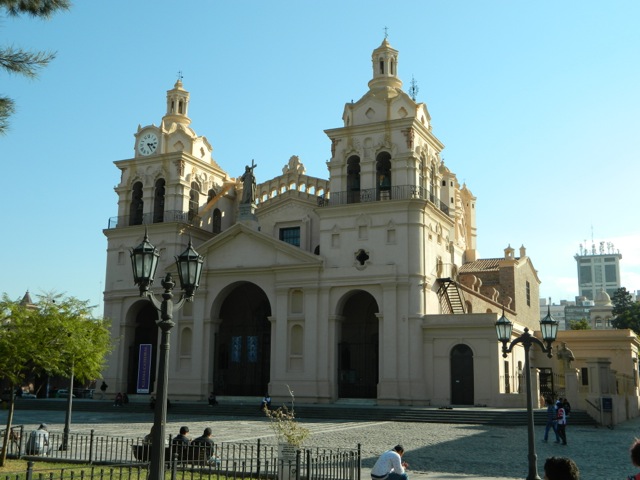
Córdoba is a large city and while it was more bustling than quaint Mendoza, it was quieter than hefty Buenos Aires.  A walk around the central city streets found a city full of churches and old architecture…

wpid-dscn2488-2013-06-14-18-05.jpg

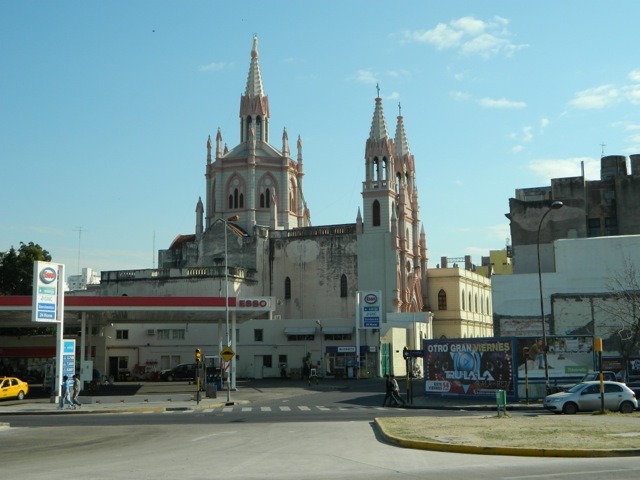
And more…

wpid-dscn2482-2013-06-14-18-05.jpg

But the further afield you walk, the more interesting the buildings become…

wpid-dscn2480-2013-06-14-18-05.jpg

Every Saturday and Sunday evening in one particular set of streets is a fair, with a massive array of stalls strewn everywhere. It’s insanely popular, meaning the place was utterly crowded and has stalls selling all of the usual home-made market style goods.

Lastly, I took a bus out into the country to Parque Nacional Quebrada del Condorito for a day hike in Condor Gorge.

DSCN2517

After Córdoba, I returned to the country’s big smoke, Buenos Aires, to take another look at the city I’d begun my journey in 3 months earlier.

Things to do in Córdoba:

  • Visit Jesuit temples
  • Hang out in Sarmiento Park
  • Catch a bus out to Parque Nacional Quebrada de Condorito

The Lone Trail Wanderer
Mendoza, Argentina – Adventures

My bus trip from Bariloche took 19 hours. For such a long trip there are two different seat types on the bus: semi-cama, similar to airplane seats, and cama, which means ‘bed’ in spanish. For the overnight trip I went for the more comfortable cama seats, although while better than the semi-cama was nothing like a bed.  Comfortable as it was, I only got half a night’s sleep I arrived in the desert city famous for its wine.

Mendoza is a city of 850,000 people and my hostel, Hostel Lao, was a few blocks from the bustling city centre. After spending so much time in Patagonia, with its small towns and cities, to come to a big city bustling with people was a shock to the system. But once I got used to it, the jewel that was Mendoza began to sparkle.

DSCN2460

Still exhausted from my bus trip, I went out clubbing with a group from the hostel until 6am. The night life of Mendoza on a Friday night was certainly good, although beyond the smelly fact that smoking is allowed in their clubs, there were few issues for our little group of ‘gringos’ and an awesome night was had.

After spending Saturday quietly recovering, on the Sunday a small group of us headed out to Auga Termas. 45 minutes from the centre of town, the thermal hot pools were set in a beautiful location, hidden in a gorge between rocky ridges…

wpid-dscn2443-2013-06-9-18-32.jpg

There were many different pools of varying temperatures. Inside, there was a mud pool where you cover yourself, let yourself dry before washing it off in the blast showers. Included in our visit was a huge buffet lunch, Argentinian style. We ate and ate then enjoyed a couple of bottles of fine Mendoza wine outside in the sun, before heading back to the pools. Before we left, three of us had full body massages. A fantastic day.

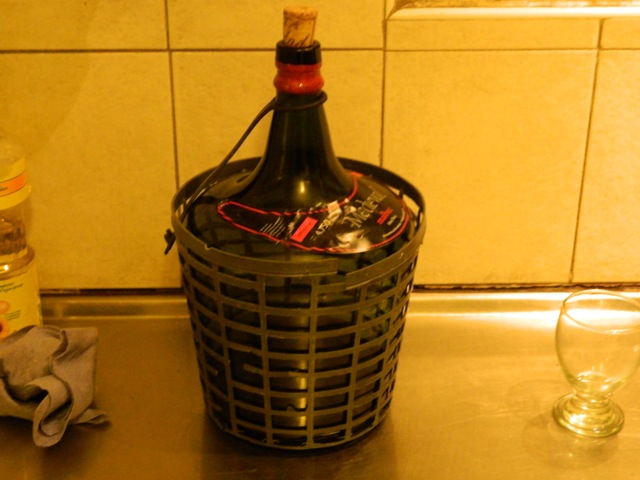
A couple of days later I moved to Hostel Mora, a cheaper hostel just around the corner. While Hostel Lao was supposed to be the best hostel in Mendoza if not the continent, in my opinion, Hostel Mora did it better. Pretty much all hostels in Mendoza offer a free glass of wine each night, while Hostel Lao offered it five nights a week, on arrival Hostel Mora opened this 4.75 litre bottle of Malbec…

wpid-dscn2450-2013-06-9-18-32.jpg

The weather in Mendoza was brilliantly sunny. It is the desert after all and after 3 months in the colder south, it was nice to feel warm again.

DSCN2448

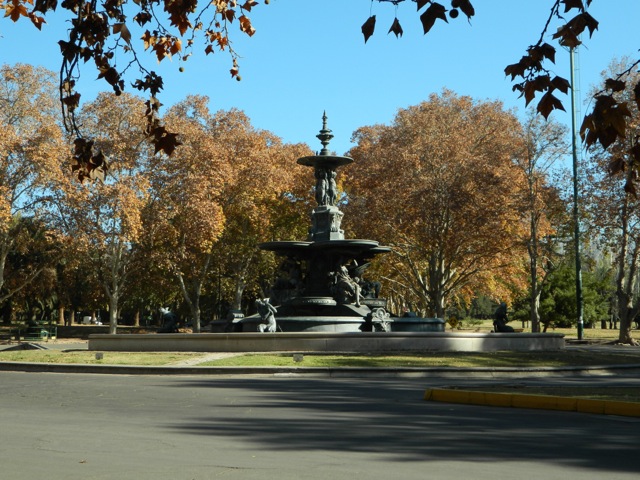
On the western side of the city is the massive Parque General San Martin and on the far side, another 45 minutes walk, is Cerro de la Gloria.  After a rough ten minute climb I made it to the top for good if not a little hazy views across the city. All trees in Mendoza are hand planted and watered using an irrigation system based on the snow melts of the Andes.

DSCN2456

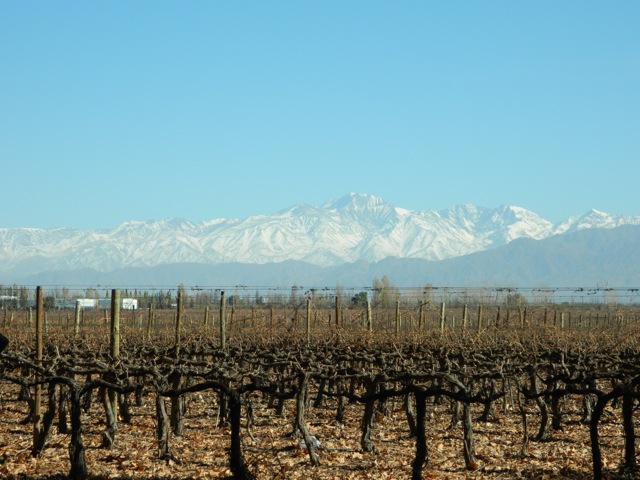
You can’t come to Mendoza without going on a wine tour. Some choose to be driven around but for the keen, bikes can be hired for next to nothing and a self-guided tour done.

DSCN2462

I’ve been particularly enjoying the Malbec, a type of red wine that is very popular in Argentina. Riding bikes around the roads of the wineries after many glasses sounds dangerous, but it was actually rather refreshing. So too was sitting at the bodegas drinking wine and enjoying the view…

DSCN2467

After eight days in Mendoza it was hard to say goodbye. I had such a fun time, drank an awful lot of wine and met some great people from all over the world.

Things to do in Mendoza:

  • Walk through Parque General San Martin
  • Climb the towering Aconcagua, highest mountain in The Americas
  • Cycle a wine tour around Maipu wine region
  • Cycle a wine tour around Luján de Cujo region
  • Visit one of the other 12 wine regions
  • Explore Witches Cave
  • Have a steak dinner in the city

Next I bused to Córdoba, the city at the centre of Argentina.

The Wine Cycling Trail Wanderer.

Osorno, Chile – Impressions

Just an hour by bus north of Puerto Montt is Osorno, a small city in the Lakes District of Northern Patagonia. Osorno sits under the volcanic cone of Volcán Osorno, is home of the National Cattle Ranch of Chile and has a heavy german influence.

wpid-montaje_de_osorno-2013-05-2-14-59.jpg
Collage courtesy of Wikipedia

Osorno is typical Chilean city with some very spanish markets, far too many stray dogs and cheap beer. I stayed at Hostal Vermont, 10 minutes walk from the bus terminal in the city centre. The main streets and shopping malls are characteristic of larger cities with many bustling shops and people.

I came to Osorno for one reason, a hike in the neighbouring Parque Nacional Puyehue called ‘Baños del Caulle’. The hike climbs the side of Volcán Puyehue to the rim, walks around the side and down to a set of hot springs, the ‘baños’. This had originally a 4-day hike but I discovered that two years earlier, an eruption on the baños side of the volcano had destroyed the hot springs. I decided to do the hike anyway, climbing to the volcanic crater and camping further down.

As I prepared for the hike, the hostel owner informed me that one of her previous guests hadn’t returned from the hike. Three other’s had seen him there and had returned, but he had not. This didn’t worry me, and it turned out two other guests at the hostel would be doing the hike also.

To get to the national park in low season I had to catch a bus to a point about 20km from the trailhead and hitchhike the rest of the way. I was finally picked up after walking 12km and dropped off at the hike’s registration point where I could see the cone rising into the clear blue sky. On arrival I was told the police had closed the hiking trails as they were conducting a manhunt for the missing man.

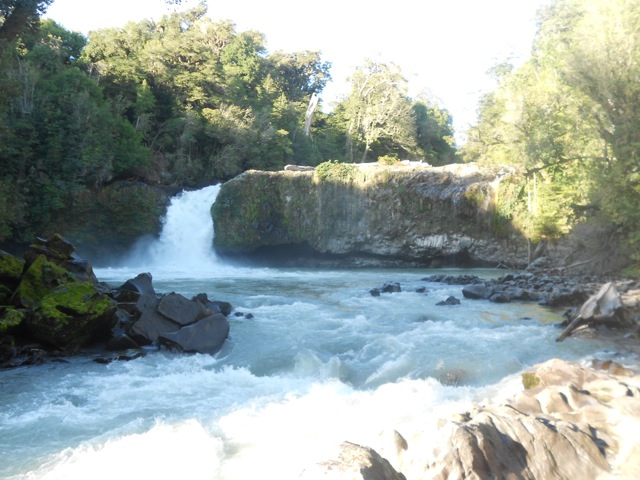
That night I stayed at a small hotel next to the National Park called Anticura.  Close by was the river and several waterfalls.

DSCN2253

By morning, they still hadn’t located the missing hiker and park was still closed  as they were continuing the search. The weather had also turned, so I decided to head back. I flagged down a bus heading from Bariloche, Argentina to Osorno and an hour later was back in town.

The next day, I boarded a bus to Pucón, the party capital of Chilean Patagonia, where I was planning a 6-day hike around a pair of volcanoes.

The missing walker did eventually turn up on day three of the man hunt.  He’d gotten lost on the route.

Things to do in and around Osorno:

  • Visit Lago Puyehue
  • Climb Cerro Pantoja
  • Relax in the Termas Aguas Callientes – Hot Springs

The Lone Trail Wanderer
Puerto Montt, Chile – Impressions

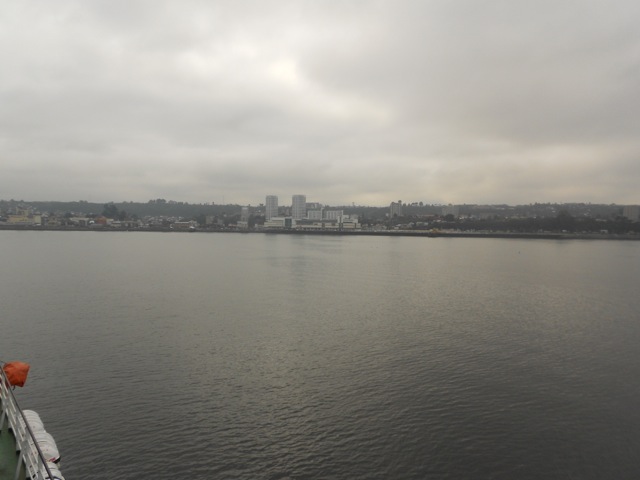
Puerto Montt is a large port city in the Lakes District of northern Patagonia, in Chile.  It’s also the northern port for the Navimag Ferry, on which I arrived in the city.

wpid-dscn2239-2013-05-2-14-57.jpg

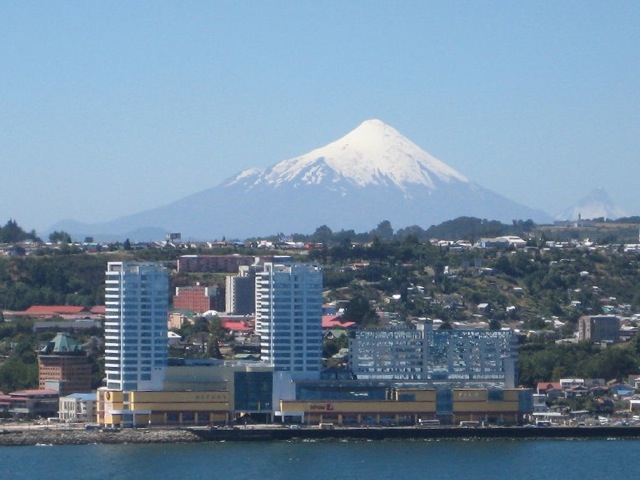
Puerto Montt is large and bustling compared to Patagonia and stretches around the top of the harbour. On a clear day, rising above the city to the north is Volcán Osorno, but as it’s late autumn, clear days are rare. Here’s what I would’ve seen at a different time, thanks to the magic of Wikipedia:

800px-Puerto_Montt_2009

I arrived at the ferry terminal and collected my bags before heading up the hill towards the hospedaje. A hospedaje (pronounced: os-pe-da-hey) is someone’s home that’s been converted into a hostel or Bed & Breakfast. They have a more homely feel, but being run by local families, they can struggle as much with english as I do with spanish. On this occasion, we got by with a mix of both. This was also the first double bed I’d slept in for some time, so it felt divine.

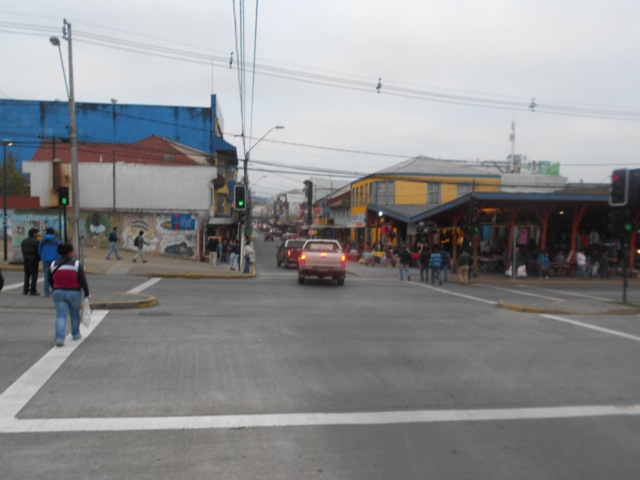
I was only in Puerto Montt for a couple of days, so I only explored the city centre. Ten minutes from the hospedaje is the main road and after spending so much time in small towns, small cities or at sea, I was a little unnerved by the sheer number of people crowding the street. In fairness, it was market day and the footpaths were filled with street vendors and local shoppers. Civilisation can be intense when you’ve been away from it for so long.  In comparison, Patagonia was very quiet.
wpid-dscn2243-2013-05-2-14-57.jpg

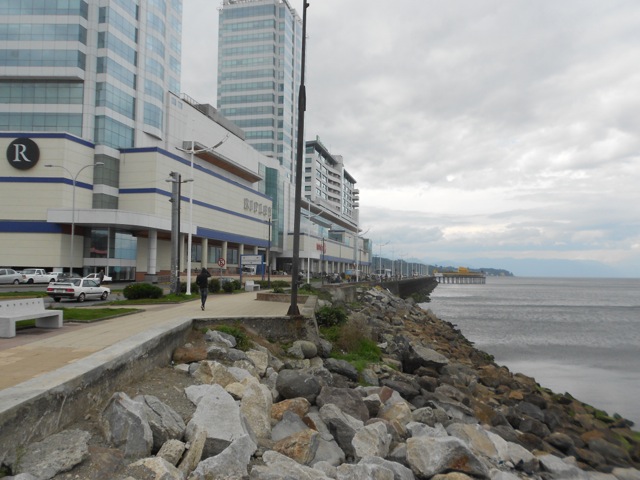
This above only shows the beginning of it. I walked through the masses and eventually, near the other end of the long main road, I found the first western fast food restaurants I’d seen in South America: McDonalds and KFC, of course! After months of cooking in hostels or eating local cuisine, I couldn’t resist but found that KFC doesn’t have that same KFC taste in Chile. At the very end of the main road I found a large shopping mall, another symbol of my return to civilisation.

DSCN2248

…and from the same spot, taken of the harbour…

DSCN2245

While I didn’t do a lot of exploring, here are a few things you can do out of Puerto Montt:

  • Climb Osorno Volcano
  • Walk around Parque Nacional Alerce Andino
  • Take a scenic drive along Seno de Reloncavi

After my couple of days, I caught a bus north to the city of Osorno.

The Lone Trail Wanderer